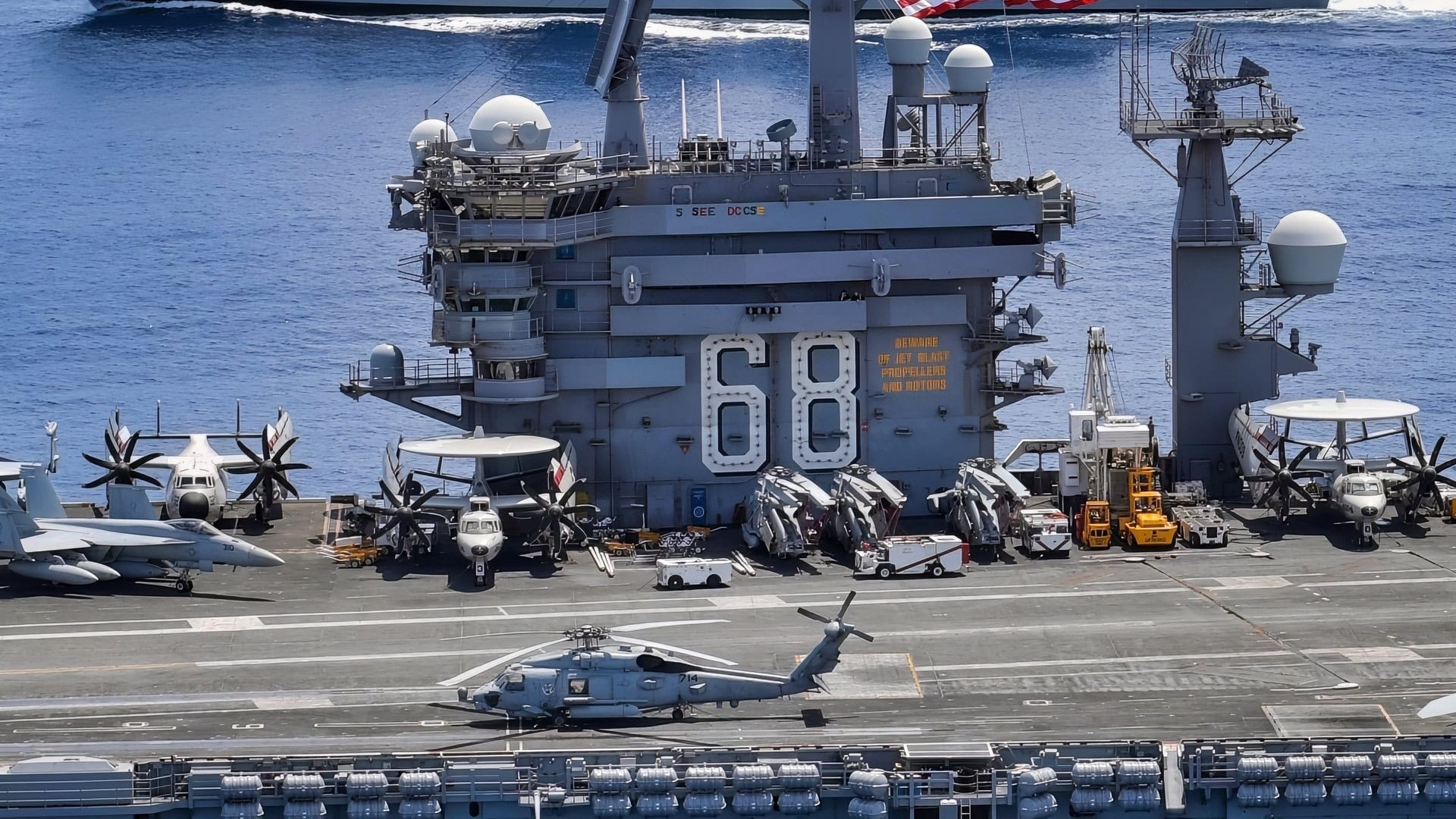
The oldest aircraft carrier in the United States Navy, the USS Nimitz, was slated to leave service this year. But the Navy has made other plans for the ship, now scheduled for deactivation in 2027, giving the Cold War-era carrier nearly another year of sailing.
The USS Nimitz will stay in service largely because of delays with her successor, the USS John F. Kennedy, which recently completed sea trials.
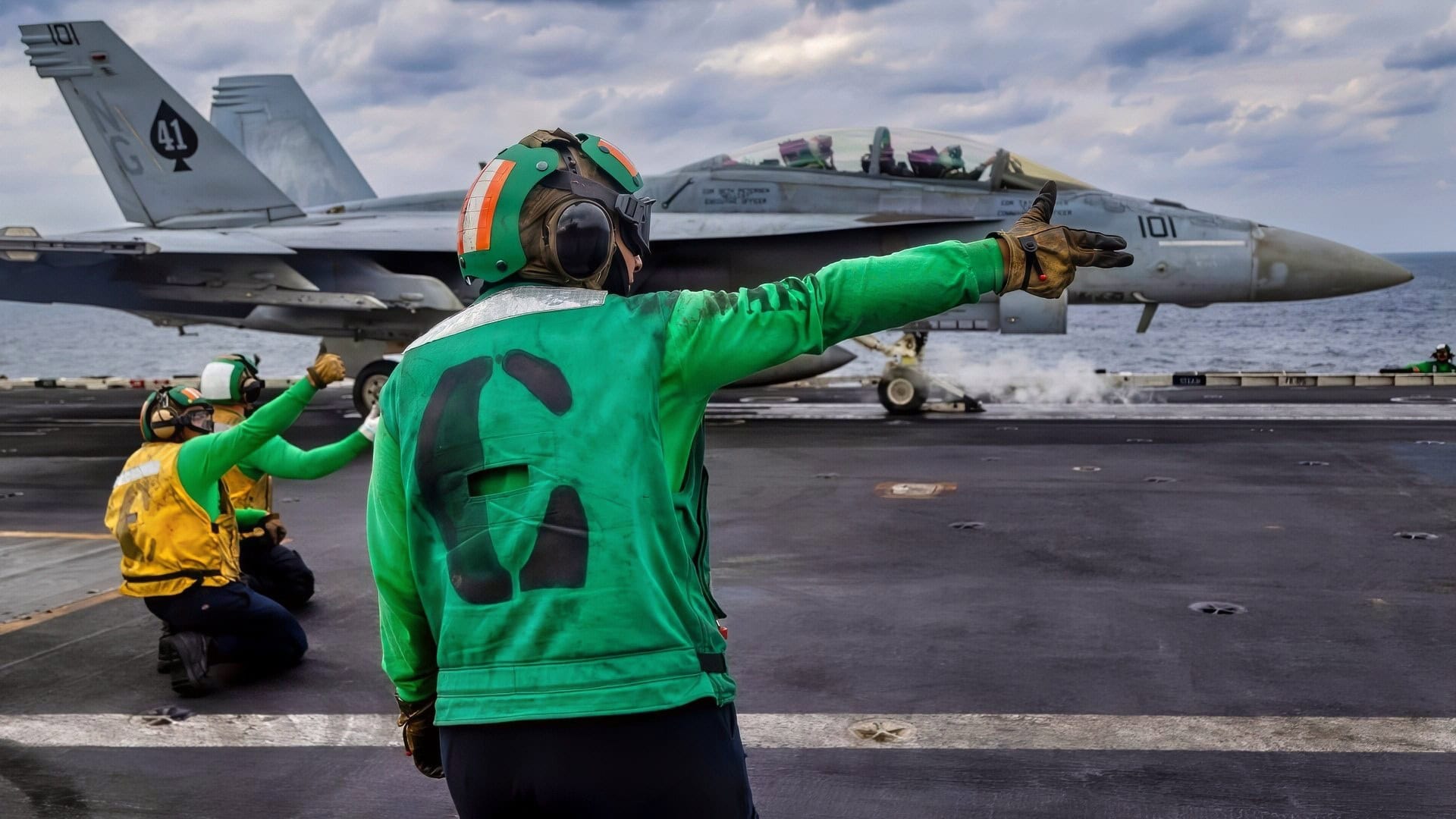
ARABIAN SEA (Jan. 28, 2026) An F/A-18F Super Hornet, attached to Strike Fighter Squadron (VFA) 41, prepares to launch from the flight deck of Nimitz-class aircraft carrier USS Abraham Lincoln (CVN 72) in the Arabian Sea, Jan. 28. Abraham Lincoln is deployed to the U.S. 5th Fleet area of operations to support maritime security and stability in the CENTCOM area of responsibility. (U.S. Navy photo by Mass Communication Specialist Seaman Zoe Simpson)
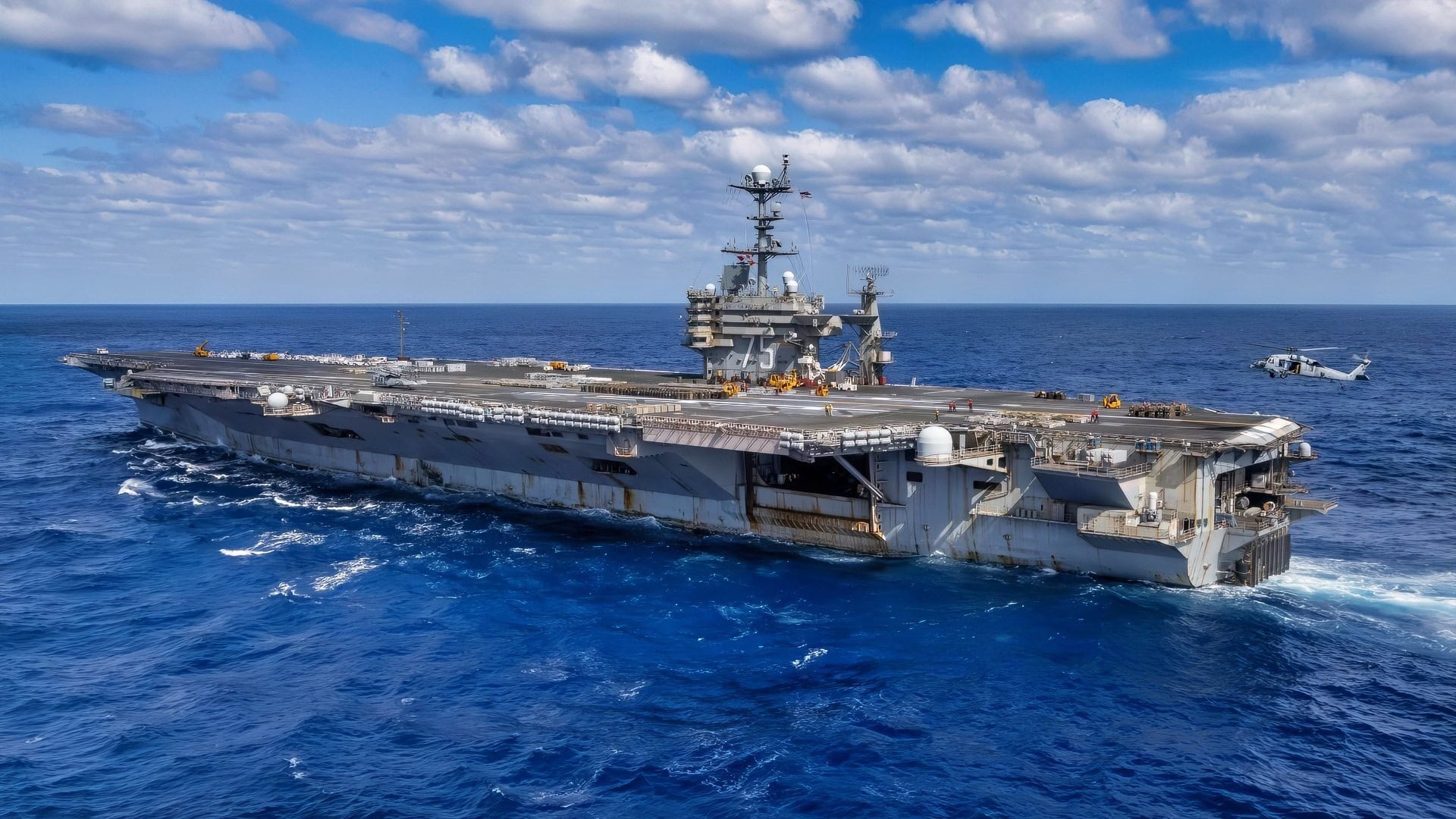
Aug. 4, 2025) An MH-60S Sea Hawk helicopter, attached to the “Dragonslayers” of Helicopter Sea Combat Squadron (HSC) 11, prepare to recieve ordnance from the flight deck of the Nimitz-class aircraft carrier USS Harry S. Truman (CVN 75) to transfer to the Lewis and Clark-class supply ship USNS Robert E. Peary (T-AKE 5) during an ammunition offload. Truman is currently underway in the Atlantic Ocean. (Photo by Mass Communication Specialist 2nd Class Mike Shen)
But the story is also more complex and part of a larger saga of an American carrier fleet caught between a slow, troublesome replacement program, a constrained American defense industrial base, and decades of service.
By Congressional Mandate
Congress requires the U.S. Navy to maintain at least 11 operational aircraft carriers under 10 U.S.C. §8062. The legislation is binding, and the U.S. Navy would have fallen below the statutory floor had the USS Nimitz retired before the USS Kennedy entered service. While Congress has granted exceptions in the past, those are not guaranteed.
This Congressionally mandated legislation is the crux of what has been dubbed the “Nimitz Gap,” the interval between the retirement of the USS Nimitz and the entry into service of its Ford-class replacement.
But a nominal eleven-carrier fleet of aircraft carriers does not necessarily mean all eleven are available at any time, and even brand-new carriers need trials, training, and workups before they can provide a combat-ready capability to naval commanders.
Multiple Crises Around the Globe
The bipartisan concern about the Nimitz gap problem is particularly pertinent today.
U.S. Navy carriers are being tasked with covering the Middle East, Europe, and the Indo-Pacific simultaneously.
Recent operations around Iran have drawn a significant share of carrier strike group operations, while the Western Pacific lacks a carrier after the USS George Washington redeployed to the Middle East to take over operations for the USS Abraham Lincoln.
A future crisis in Asia, particularly around Taiwan, could constrain the Commander-in-Chief’s options in that part of the globe.
Long-term Costs and Consequences
However, keeping the USS Nimitz in service longer has drawbacks.
The carrier was designed for a fifty-year service life but is now beyond that period, and a longer service life entails greater maintenance demands.
Obsolete components are harder to source. Even systems integral to carrier operations, like aircraft alnico and recovery equipment, are increasingly difficult to service after over half a century of use across multiple conflicts.
President Trump and the Golden Fleet
However, this already complex saga has a further complication.
President Trump has directed the U.S. Navy to return to steam catapults on future Ford-class carriers, rather than moving forward with the newer electromagnetic EMALS systems.
The U.S. Navy is also reportedly directed to move the Ford-class’ island from its current position far aft toward the middle of the ship — neither of which is a small adjustment.
EMALS is extensively integrated into the aircraft carrier’s electrical and structural architecture, and a return to steam-powered catapults would require a substantial redesign.
Moving the carrier’s island would also necessitate a redesign of flight deck geometry, internal arrangements, elevators, and other systems beneath the ship.
With two Ford-class carriers already under construction and another having recently finished sea trials, the time is particularly awkward indeed.
An extensive redesign would be disastrous for the carriers’ introduction into service. The USS Kennedy is already expected to enter service later than expected.
The USS Enterprise is anticipated around 2030, about 34 months behind schedule, and future Ford-class ships already face industrial-base constraints.
The Congressional Budget Office, a federal spending watchdog, has come to the conclusion that maintaining an 11-carrier force would require some ships to reach over half a century of service.
Sailing into the Sunset?
The USS Nimitz’s extreme longevity is less a success story than a symptom of a stretched defense industrial base struggling to meet the needs of a U.S. Navy tasked with global responsibilities.
Keeping the carrier afloat — because its replacement is behind schedule — is essentially an insurance policy against crises around the globe.
During a period of extremely heightened geopolitical tensions, when the United States may need to deter Russia in Europe, fight and later deter Iran in the Middle East, and prepare to meet a military challenge from China around Taiwan, the danger of the Nimitz gap is that the U.S. Navy may have too few modern, combat-ready aircraft carriers to meet multiple concurrent crises.
MORE – China’s H-20 Stealth Bomber Has a Problem
About the Author: Caleb Larson
Caleb Larson is an American multiformat journalist based in Berlin, Germany. His work covers the intersection of conflict and society, focusing on American foreign policy and European security. He has reported from Germany, Russia, and the United States. Most recently, he covered the war in Ukraine, reporting extensively on the war’s shifting battle lines from Donbas and writing on the war’s civilian and humanitarian toll. Previously, he worked as a Defense Reporter for POLITICO Europe. You can follow his latest work on X.