
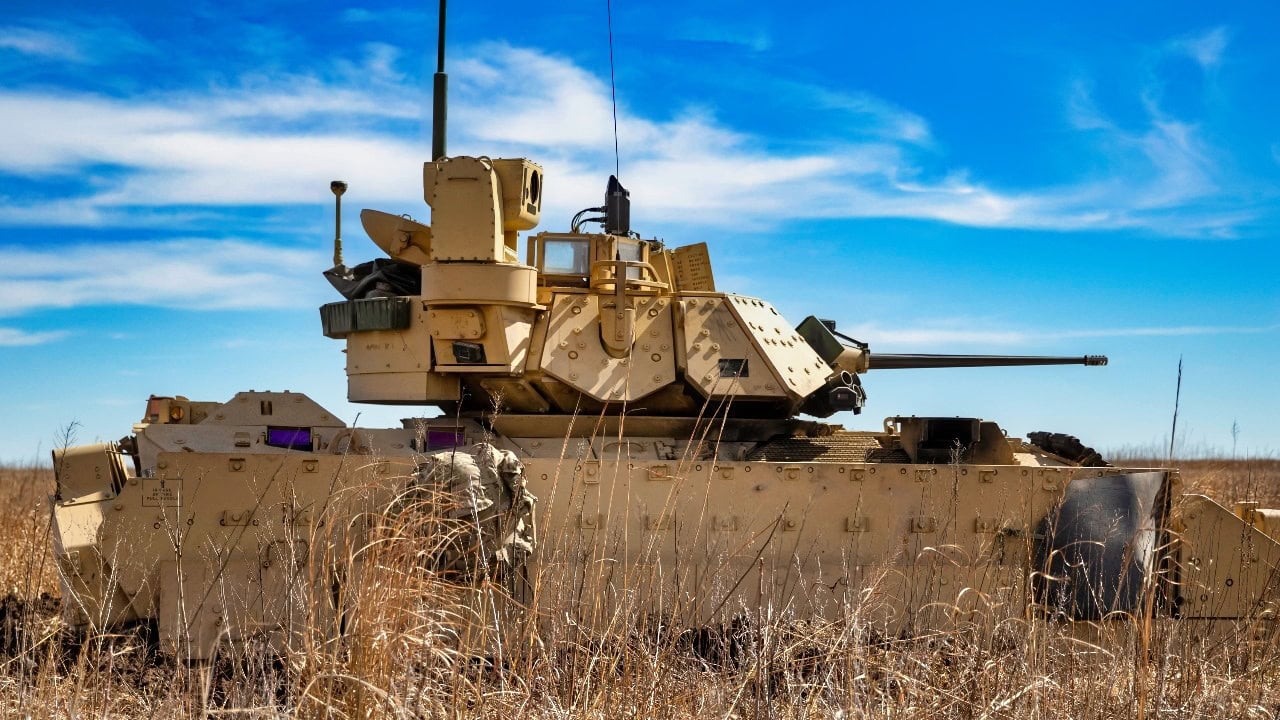
The M2 Bradley is recognized today as one of, if not the, greatest IFVs currently in service. Designed to operate alongside the Abrams and support infantry, the Bradley gained notoriety for its performance in the Gulf War and the ongoing war in Ukraine.
Less known is the development hell the M2 went through before it was finally accepted into service. As the first of its kind in the U.S., many Army officials were skeptical of the IFV concept and pored over design after design before finally settling on a prototype acceptable to all parties involved. Consequently, the Bradley was stuck in development for years before it was finally delivered to the troops.

M2 Bradley. Image Credit: Creative Commons.
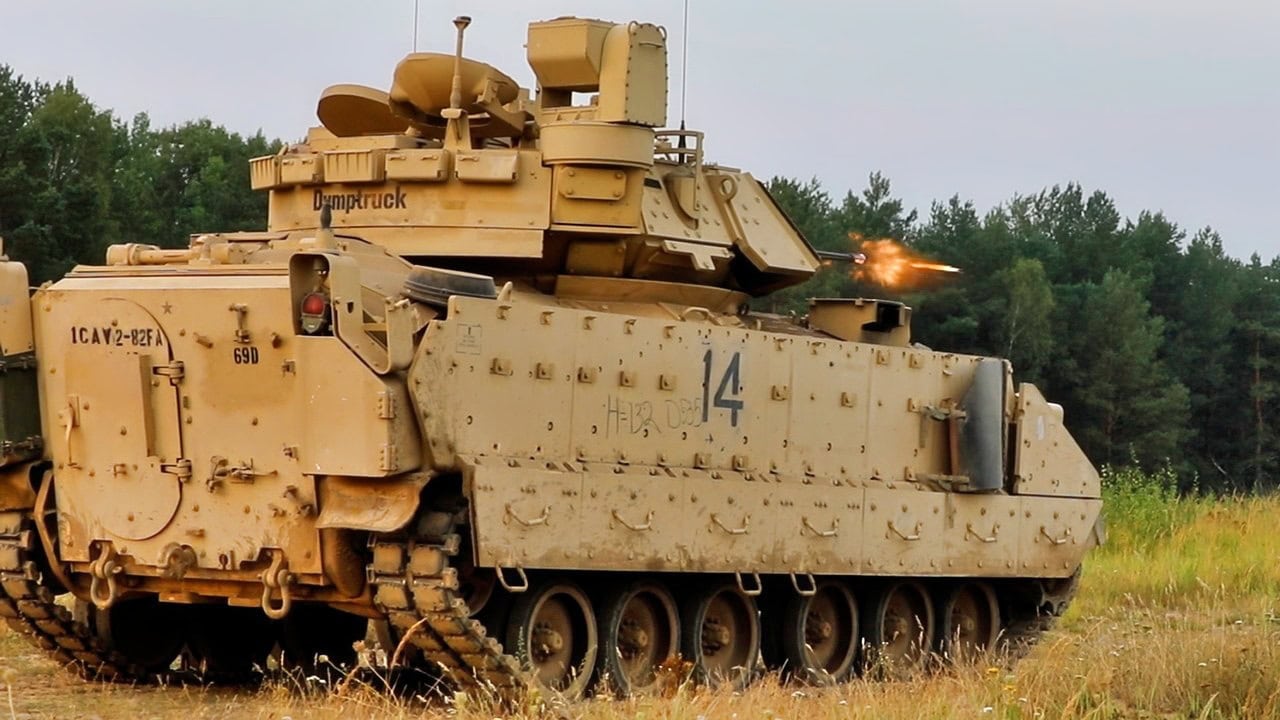
Troopers with 3rd Armored Brigade Combat Team, 1st Cavalry Division firing the 25mm canon on a Bradley fighting vehicle in order to zero the vehicles weapons systems at a range in Poland. Ranges such as these familiarize troopers with the vehicles systems in order to ensure combat readiness.
Development Hell: Finding an Answer to the BMP-1
The story of the M2 Bradley really begins with the Soviet BMP-1. First introduced in the 1960s, the BMP (literally translated: Infantry Fighting Vehicle) was a revolutionary concept.
It combined the troop-carrying capabilities of an APC with the armor and firepower of a light tank.
The initial BMP carried a 73 mm 2A28 “Grom” smoothbore gun that could effectively penetrate the armor of an M60 and the German Leopard 1. The BMP-2 later replaced this gun with a 30mm 2A42 autocannon.
The BMP was the world’s first IFV, and for several years, NATO had no analog. Creating a frontline combat vehicle that doubled as a troop transport was simply too risky, as the West viewed the concept as a deathtrap for any infantry onboard (the Red Army was, of course, unconcerned by the risks).
While the BMP-1 left a lot to be desired, it was still revolutionary in many ways.
In the 1970s, the U.S. finally attempted to build its own IFV to operate alongside its tank forces.
In addition to challenging the BMP, there were several other forces at play that were all influencing Bradley’s development.
For one, the development of the MBT-70 (later XM-1) was underway at the same time, promising a tank much faster than the M60.
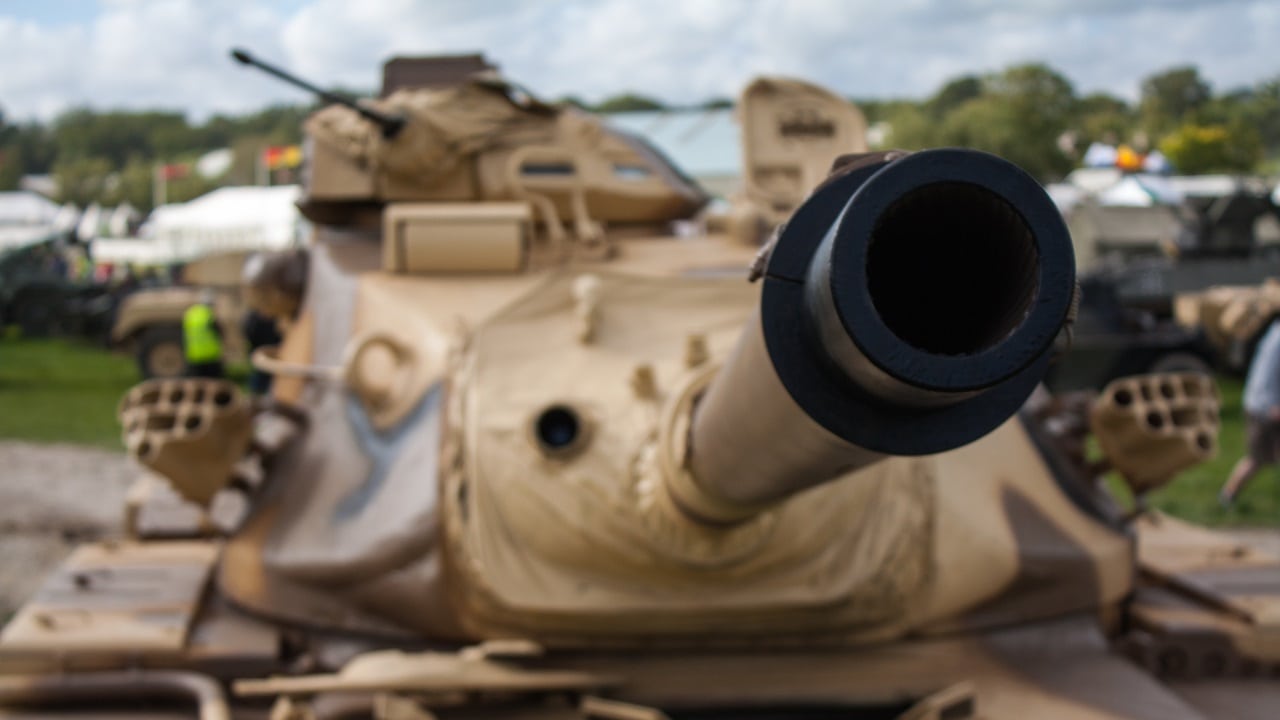
M60 Tank. Image Credit: Creative Commons.
This meant that modernizing the M113, as the Army had originally planned, was largely off the table. At the same time, the concept of the light tank was considered obsolete, with the M551 Sheridan finally retiring from active service.
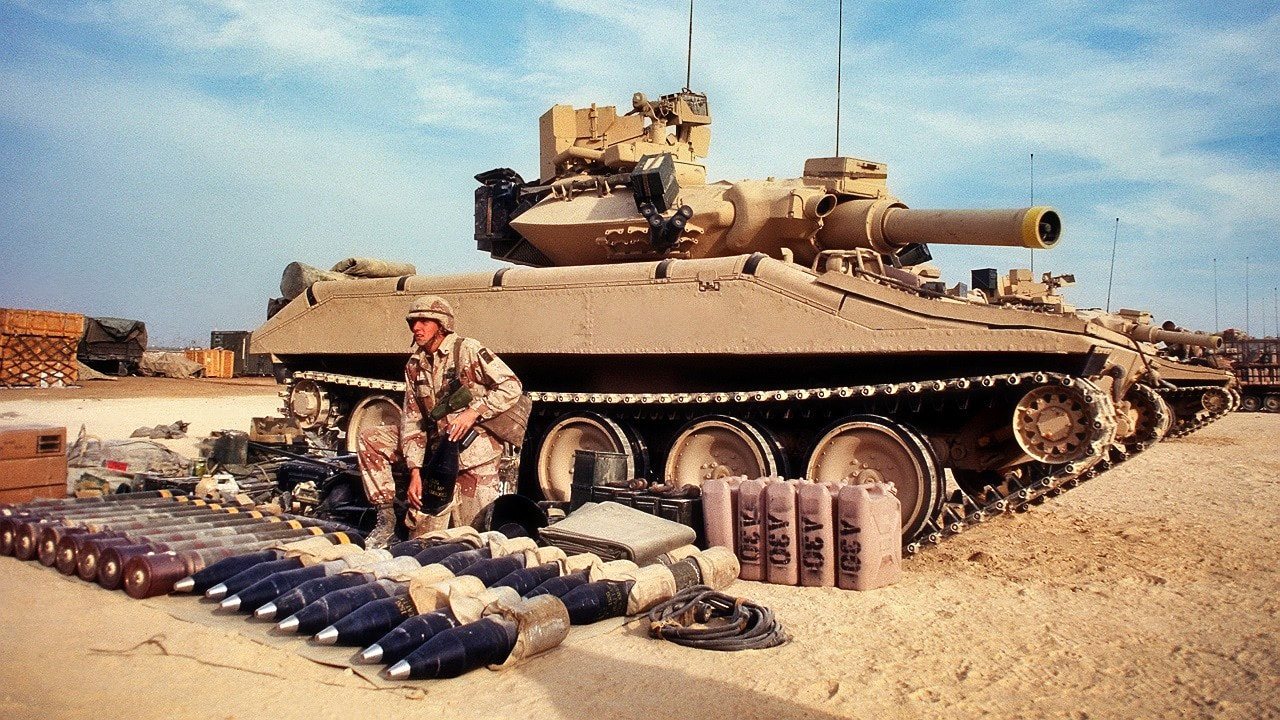
M551 Sheridan Light Tank. Image Credit: Creative Commons.
The idea of combining a light tank with an APC was therefore not looked upon with too much fondness by high command.
Consequently, after all the initial studies and concepts the Army went through, the U.S. spent many years developing its first IFV.
Developing America’s First IFV
The program that eventually spawned the M2 Bradley originally required a vehicle that was fast-moving, lightly armed, and armored.
Several initial attempts were made, all of which were nixed, including the MICV-65 and the XM800 Armored Reconnaissance Scout Vehicle in 1972. After the cancellation of the MBT-70 and lessons learned from the Vietnam War, the Army went through multiple designs and prototypes, all of which were eventually rejected.
In the late 1970s, Congress grew fed up with the project’s constant delays and cancellations and held several hearings before the House Armed Services Committee.
Finally, Congress consolidated the project into two branches: the XM2 and the XM3.
Both vehicles used a modified form of the experimental XM723 hull and shared many parts with the XM800.
XM2 had a smaller one-man turret, while XM3 had a two-man turret and two TOW missile launchers (these prototypes would eventually become the M2/M3 Bradley).
With the inclusion of the TOW missiles, however, XM3 had to sacrifice some troop space to carry extra missiles.
Both prototypes also carried the 25mm M242 Bushmaster cannon, which satisfied Congress and Army higher-ups.
Despite initial transmission problems, the development of these two vehicles proceeded more smoothly than before. In the end, the M2 Bradley was born as a compromise that best satisfied Congress and the Army.
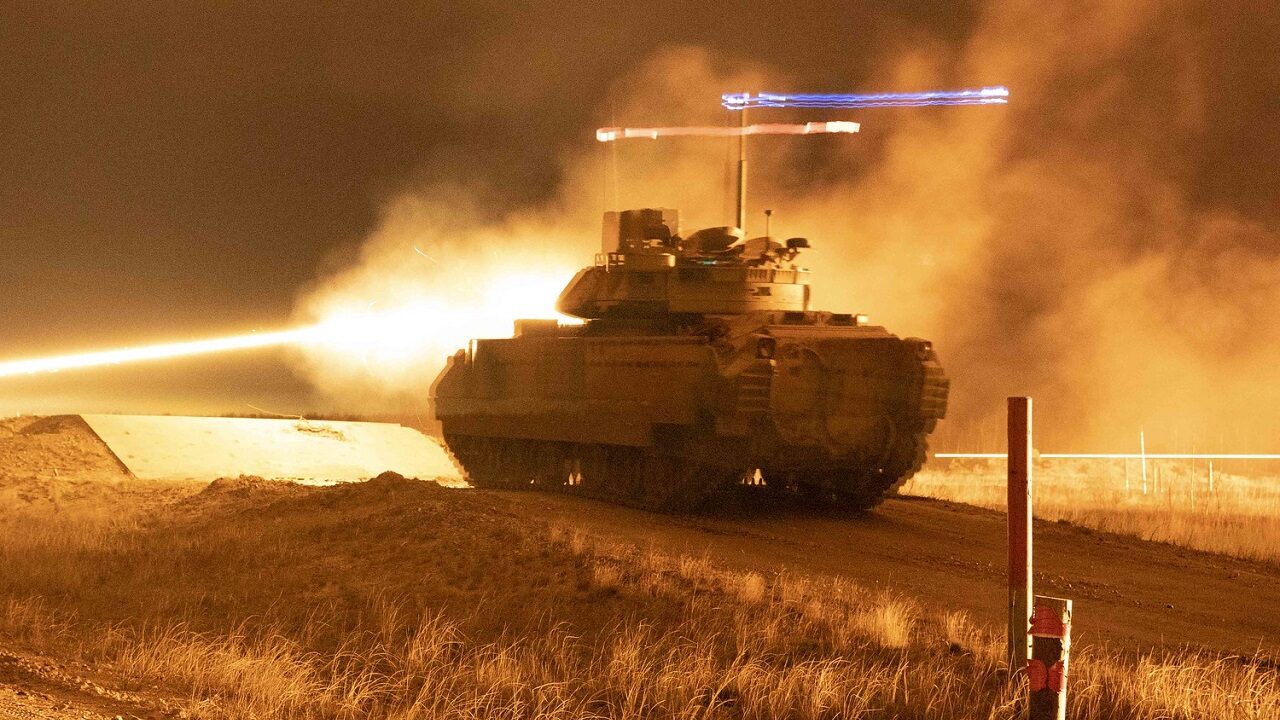
Soldiers fire a 25mm tracer round from an M2A3 fighting vehicle during an integrated night live-fire exercise at Camp Adazi, Latvia, Nov. 25, 2021.
It was designed to fulfill many different roles, although, as some officials cynically noted, it excelled at none of them.
The Bradley in Service
Even after the vehicle was finished, the drama never stopped. In 1984, Col James G. Burton, an official at the Office of the Secretary of Defense, advocated for comprehensive live-fire tests on fully loaded vehicles to evaluate their survivability.
Disagreements quickly arose during Bradley testing.
Burton insisted on a series of overmatch tests in which munitions known to easily penetrate its armor would be fired at the M2.
The Army’s Ballistic Research Laboratory disagreed, viewing the tests as a waste of time since everyone already knew the results.
The disagreements became so heated that testing was suspended, and Congress launched more investigations.
Burton later recalled many issues with Bradley’s troubled development in his book The Pentagon Wars: Reformers Challenge the Old Guard, which was later adapted into the satirical film The Pentagon Wars.
After the drama with Burton, further improvements increased Bradley’s weight by 13 tons beyond the original requirements.
Despite the drama surrounding the vehicle’s development and the overall lukewarm reception, it surprised everyone when it finally entered combat during the first Gulf War.
During Operation Desert Storm, the Bradley scored more tank kills than the M1 Abrams, and only 20 vehicles were destroyed throughout the war (17 of which were friendly fire incidents).
The M2 performed valiantly once again in Ukraine, although it suffered much greater losses.
The Bradley was praised heavily by its Ukrainian crews and even by the Russians who captured and studied several vehicles.
Despite the drama and troubles during its development, the U.S. Army had accidentally created one of the most beloved and irreplaceable IFVs in the world.
About the Author: Isaac Seitz
Isaac Seitz, a Defense Columnist, graduated from Patrick Henry College’s Strategic Intelligence and National Security program. He has also studied Russian at Middlebury Language Schools and has worked as an intelligence Analyst in the private sector.