
Vladimir Putin’s greatest vulnerability in Moscow was never the building everyone is watching. A Ukrainian weapon striking the Kremlin, even by accident, would be the most dramatic image this war has produced.
It would not be the most dangerous one, and that distinction matters more now than it did a month ago, because Ukraine just told the world it is building a weapon that would leave Moscow far less time to figure out what was actually happening.

Russian President Putin. Image Credit: Russian Federation.
Ukraine has hit the Moscow region on three of the last five nights with drone salvos numbering in the hundreds. Mayor Sergei Sobyanin put one night’s total at 637.
The strikes have killed several people and set a Wildberries warehouse on fire. This is a capital that has learned to live with a kind of persistent, low-grade dread, and Ukraine has been delivering that dread almost nightly for weeks.
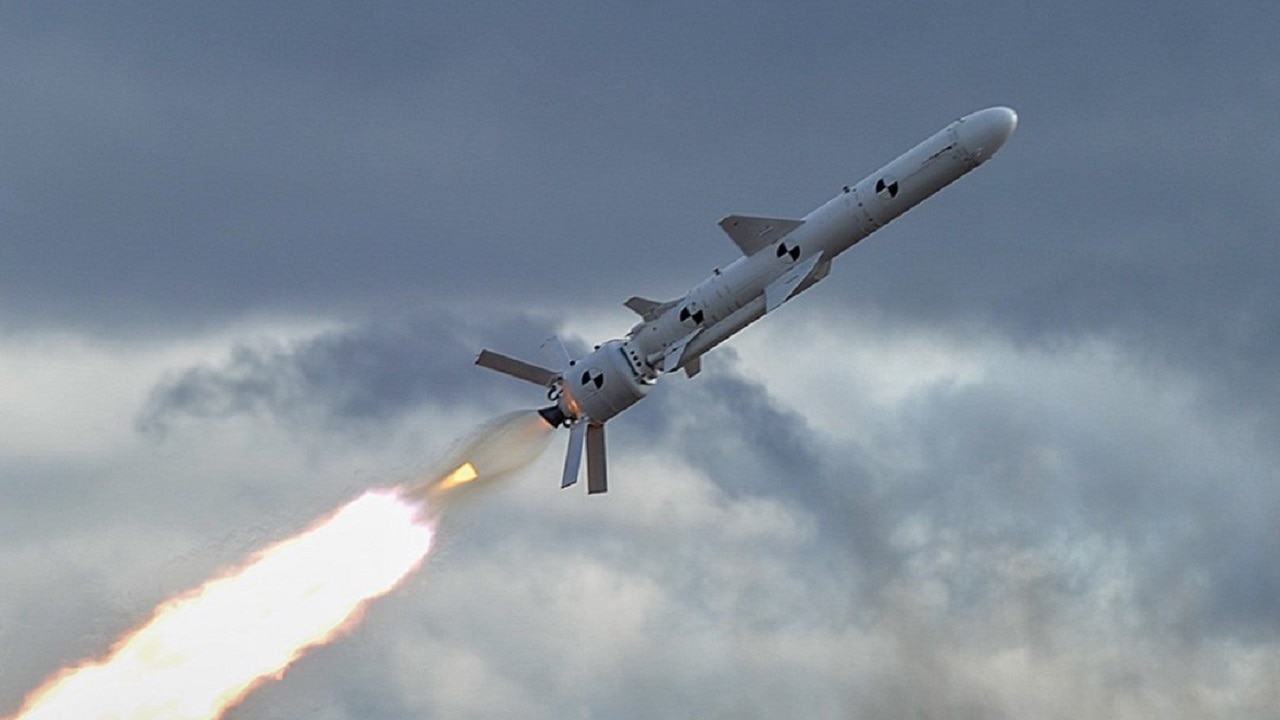
Then, on August 6th, Volodymyr Zelensky announced that Ukraine’s own ballistic missile has shown “strong potential” in testing.
The real question is what happens on day one if one of these missiles lands somewhere more sensitive than a warehouse.
Range Was Never the Problem
Ballistic missiles do not put Moscow within reach for the first time.
Drones already do that, night after night, at scale. The access already exists; the strategically important change is time.
A ballistic missile compresses the warning window to minutes, compared with the extended tracking and engagement window even a large drone raid gives Russian air defense.
Russia President Putin. Image Credit: Creative Commons.

Vladimir Putin. Image Credit: Russian Government.

Russian President Putin testing a new sniper rifle. Image Credit: Russian State Media.
That is a real change, and a serious one. It has nothing to do with which building in Moscow the missile happens to hit.
We Already Ran This Experiment
The nightmare scenario people keep describing, a stray weapon damaging the Kremlin and Putin lashing out in response, has a real precedent, and it is messier than the scenario assumes.
In May 2023, Russia said two drones struck the Kremlin and called it an assassination attempt on Putin.
Kyiv denied any role, and several Western analysts at the time suspected Moscow had staged the episode itself to justify a harder line; nobody ever settled who was actually responsible.
Whoever was behind it, what happened next is worth remembering.
Russia answered with a wave of intensified strikes on Kyiv and louder nuclear-adjacent rhetoric, real escalation but well short of the doctrine-triggering event the incident was treated as at the time.
Operation Spiderweb removes the attribution question entirely. In June 2025, Ukraine struck nuclear-capable strategic bombers deep inside Russian territory, not an office complex near one, and there was never any doubt about who did it.
Keith Kellogg, the Trump administration’s Ukraine envoy, said the risk levels would “go up” because Kyiv had hit part of Russia’s national survival system.
The rhetoric that followed was harsher than anything that came out of the Kremlin incident. In practice, what followed was not.
Where the Real Danger Sits
None of that means Ukraine’s ballistic missile program is low-risk. It also does not mean every asset connected to Russia’s nuclear forces carries the same weight.
Spiderweb hit bombers sitting on airfields, aircraft Russia can lose without losing its ability to see an attack coming or trust its own capacity to respond.
The risk simply sits somewhere other than where the current debate is looking. Russia’s revised nuclear doctrine, issued in late 2024, lists receipt of reliable warning of a ballistic missile attack among the conditions under which nuclear use can be considered.
That describes a condition that permits consideration, not a switch that flips automatically, and it should not be read more broadly.
Spiderweb’s aftermath is a decent illustration of the distinction holding in practice.
The sharper question is what Moscow reads into a target, not where the target sits on a map. Consider May 2024, when Ukraine struck Russian long-range early-warning radar installations.
Washington was concerned enough about that one to privately warn Kyiv that hitting infrastructure tied to Russia’s nuclear warning architecture risked strategic stability in a way ordinary battlefield strikes did not.
That warning was about function: whether a strike looked aimed at blinding or disarming Russia’s deterrent, or simply grinding down its conventional war effort.
Depth into Russian territory had nothing to do with it.
That is the distinction the Kremlin fixation keeps missing.
A missile that damages a government building in central Moscow is a political catastrophe and a propaganda gift to the Kremlin, but Russia has some experience absorbing exactly that kind of shock without reaching for its nuclear arsenal.
A missile that damages an early-warning radar station, a nuclear command node, or a facility tied to Russia’s retaliatory capability belongs to a different category of event.
Moscow can read that kind of strike as the opening move of an attempt to disarm the country, a possibility the Kremlin scenario never raises.
Kyiv’s intent may matter less in those first minutes than Moscow’s interpretation.
Russia gets to decide what a strike means, which is exactly why the categories need to be settled in advance rather than argued over in the hours after something goes wrong.
The Red Line Should Follow Function, Not Geography
For much of 2024, the real debate in Washington over Ukrainian deep strikes ran along geographic lines: how far into Russia allied-supplied missiles could travel, whether Moscow itself was off-limits, whether some invisible ring should be drawn around the capital.
That framework was already strained before this month’s drone campaign made clear that Moscow’s distance from the front buys it nothing.
A faster weapon strains it further, because there will be even less time to sort out exceptions once something is already in the air.
The more useful conversation with Kyiv skips the map.
It settles which categories of Russian infrastructure carry the kind of risk laid out above, regardless of how many miles separate them from the Kremlin, and it needs to happen now, while there is still time to be careful.
The output should be concrete: a standing understanding that flags Russia’s early-warning and nuclear command infrastructure for exceptional scrutiny before any ballistic-missile strike, not a vague commitment to caution.
That is a narrower and less politically satisfying conversation than drawing a red line around Red Square. It also happens to be the one grounded in how Russia has actually behaved so far.
If a Ukrainian missile someday does put a hole in the Kremlin, expect the coverage to be enormous, and, if the last three years are any guide, probably not the moment that matters most.
The mistake policymakers are most likely to make is treating visibility as a proxy for danger, when the facilities that actually anchor Russia’s nuclear deterrent are, by design, the ones nobody is watching. Kyiv can already reach Moscow.
Most nights this month prove it.
The real test for Washington is whether anyone can tell in time the difference between a target that hurts Russia’s war effort and one that makes Moscow wonder whether its deterrent is next.
About the Author: Dr. Andrew Latham
Andrew Latham is a professor of international relations and political theory at Macalester College in Saint Paul, MN. You can follow him on X: @aakatham.