
In December 1963, less than three weeks after the assassination of President Kennedy, Defense Secretary Robert McNamara picked up a phone and killed one of the most audacious aircraft programs the U.S. Air Force had ever attempted.
The X-20 Dyna-Soar, a winged, piloted spaceplane designed to skip across the top of the atmosphere at Mach 22, strike targets, inspect satellites, and glide home to a runway landing, was canceled a month before its fuselage was due to leave the assembly floor.

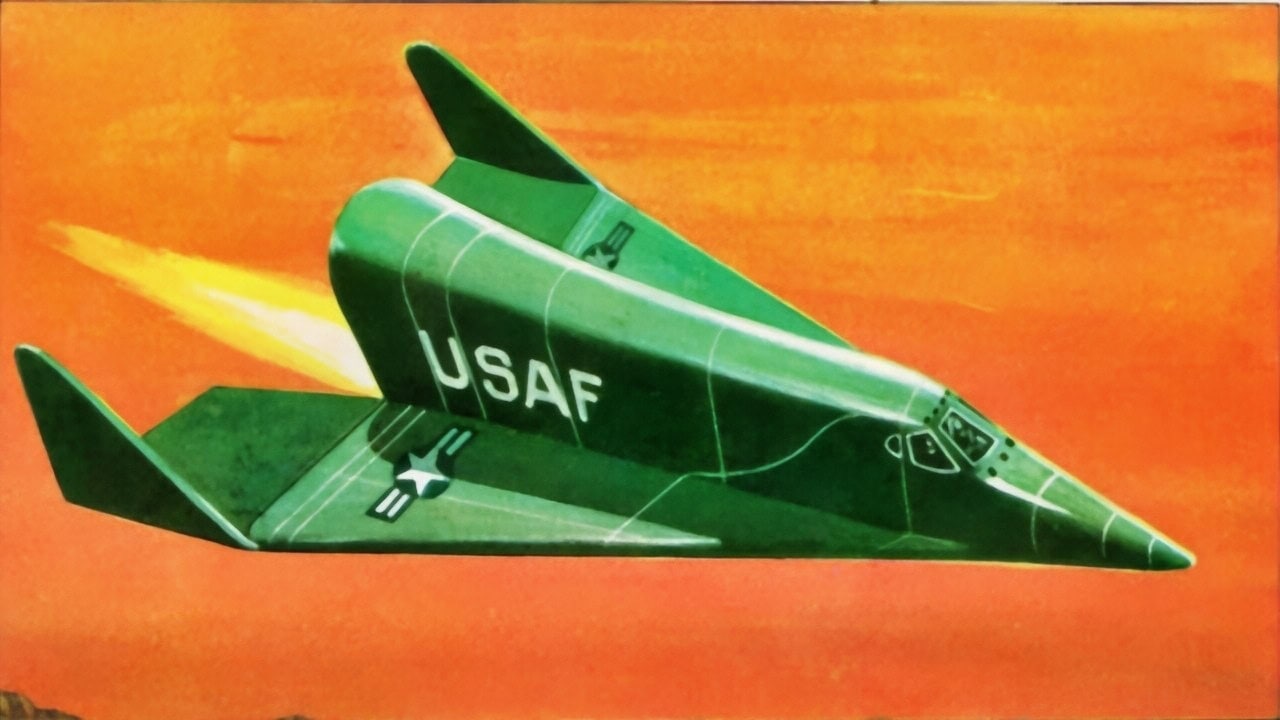
NASA X-20 Dyna-Soar space vehicle on reentry. (Artist rendering).
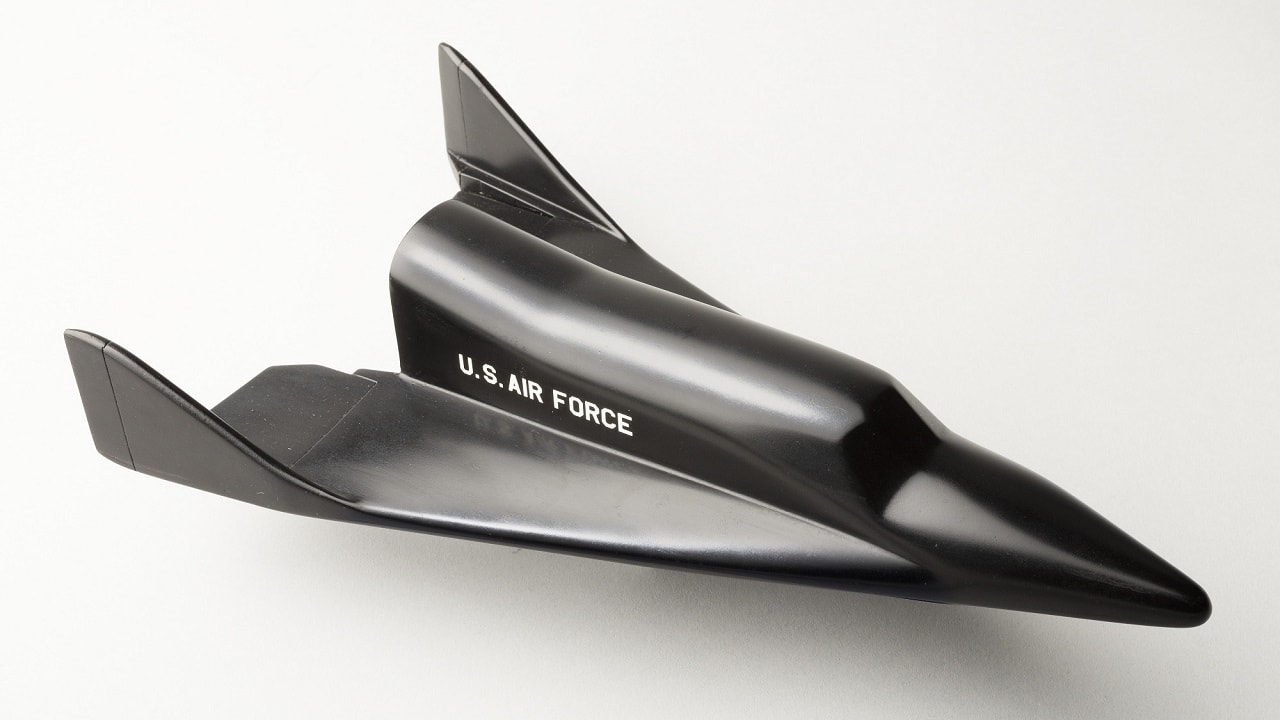
Model, Dyna-soar X-20.
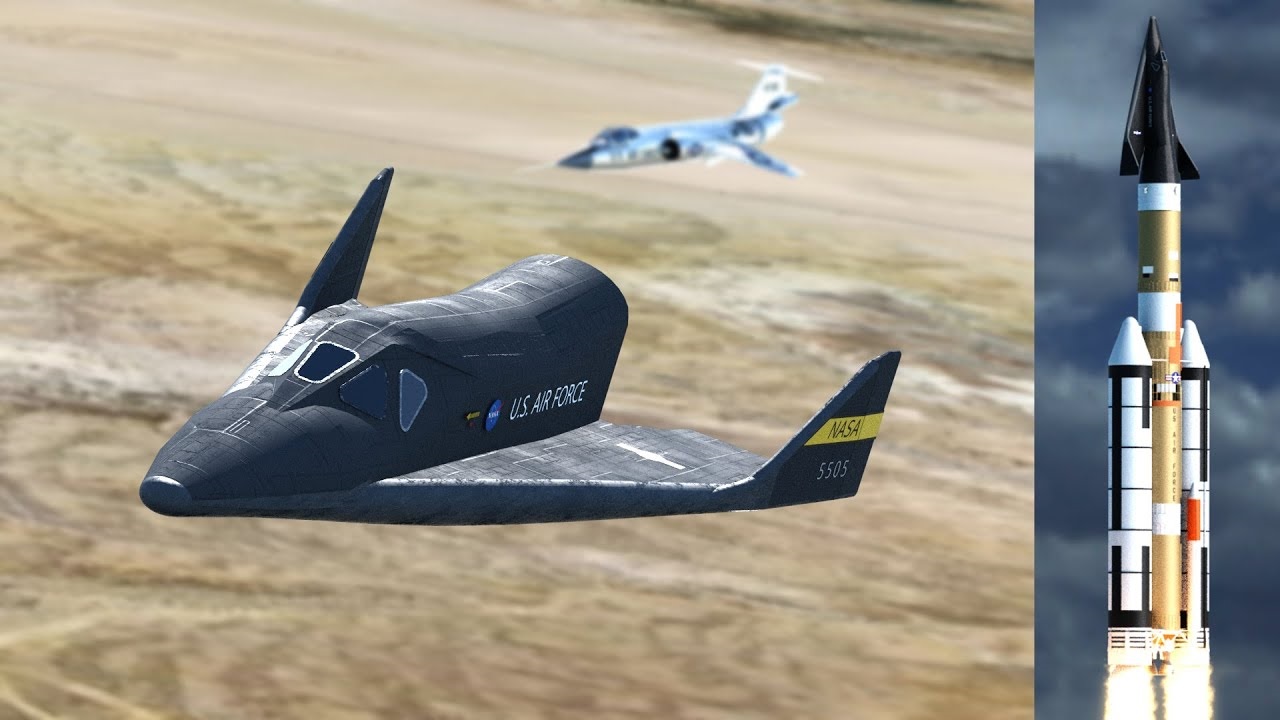
X-20 space plane. Image Credit: Creative Commons.
By the time McNamara pulled the plug on the program, the Air Force had already spent somewhere between $410 million and $660 million on it, with $600 million being the figure most commonly cited among aviation analysts.
Six decades later, the Air Force is quietly flying a machine that does almost everything Dyna-Soar was built to do. It’s called the X-37B, and it has been orbiting the planet, on and off, since 2010.
A Nazi Bomber Concept, Reborn During The Cold War
The Dyna-Soar’s lineage is stranger than most Cold War weapons programs. Its technical roots trace back to the “Silbervogel,” or Silver Bird, a suborbital rocket-bomber concept sketched by Austrian engineer Eugen Sänger and mathematician Irene Bredt in Nazi Germany.
The idea was to launch a piloted glider on a rocket, have it skip off the upper atmosphere like a stone across a pond, cross an ocean, and drop a bomb on a target before landing on the other side.
It never got past the paper stage during the war, but after 1945, former Peenemünde official Walter Dornberger brought the concept to Bell Aircraft in the United States; many former Nazis in the German rocket program were welcomed with open arms in the US, including Werner von Braun.
The Silver Bird concept evolved through several Air Force studies before formally becoming the Dyna-Soar program in October 1957, the same month the Soviet Union launched Sputnik.
That timing was significant.
Dyna-Soar’s mission list grew to include reconnaissance, orbital bombing, satellite inspection, and, pointedly, the sabotage of enemy satellites, a direct answer to the near panic Sputnik had created.
In 1962, the Pentagon gave the program its X-series designation, unveiled a full-scale mock-up in Las Vegas, and, by then, a small, secret cadre of military test pilots was already training to fly it. One of them was the future man who first walked on the Moon, Neil Armstrong.
An Airplane Pretending to Be a Spacecraft
What set Dyna-Soar apart from its contemporaries, Mercury, Gemini, and the Soviet Vostok, was that it wasn’t a capsule.
Those vehicles were blunt-body pods that reentered ballistically and splashed down under parachutes, with essentially no cross-range control.
Dyna-Soar was a lifting body with actual wings. It had a 20-foot span, a nickel-superalloy “hot structure” skin designed to radiate reentry heat rather than deflect it away, and a pilot who could bank, glide, and land on a conventional runway, much like an aircraft.
It would launch atop a modified Titan booster, cross into space, then use its lifting shape to stretch its reentry glide across thousands of miles before touching down under its own control.
This was the aim of the program, and also its problem.
Dyna-Soar’s engineers spent years chasing an extraordinarily hard reentry-and-cross-range problem while the vehicle’s actual military purpose kept shifting.
Was it a bomber, reconnaissance platform, satellite killer, or research aircraft? The constant shifting of purposes remains an issue today.
Meanwhile, NASA’s much simpler Mercury capsules were already putting astronauts into orbit, and Gemini was close behind.
McNamara’s Verdict Kills The Program
Robert McNamara, the numbers-driven defense secretary who’d overseen Ford Motor Company before running the Pentagon, was famous for subjecting weapons programs to hard cost-benefit review, and Dyna-Soar failed his test.
In January 1963, he ordered a formal study comparing the X-20 against NASA’s two-man Gemini spacecraft as a platform for military space missions.
The conclusion, as he put it, was that the Air Force had spent years obsessing over how to bring a pilot home from orbit without ever deciding what that pilot would actually do once there.
Dyna-Soar could not resupply a space station, sustain a long-duration orbital mission, or lift a substantial payload—and none of its proposed military applications had been developed despite the money already spent.
On December 10, 1963, McNamara formally canceled the program.
In something close to bureaucratic choreography, he announced its replacement the very same day: the Manned Orbiting Laboratory, a crewed reconnaissance station built around a modified Gemini capsule.
MOL would itself be canceled in 1969, also without ever flying a crew.
Dyna-Soar left behind no flight hardware, only a mock-up, a mothballed body of research on hypersonic hot structures and lifting reentry, and a handful of pilots, Armstrong chief among them, who went on to other famous missions in the space program.
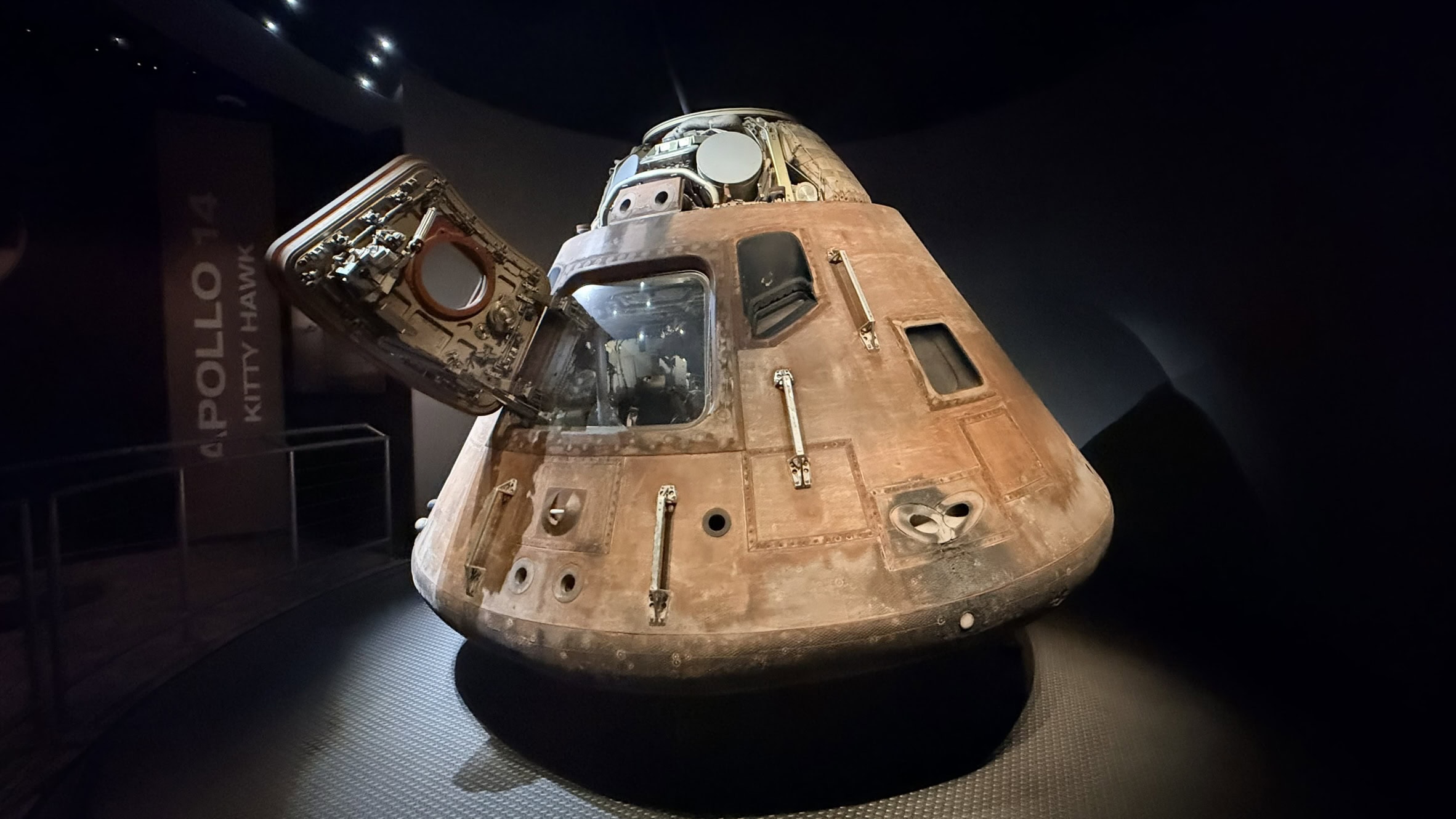
Apollo 11 Capsule. NASA Kennedy Space Center 19FortyFive Image Taken on June 28, 20226.
More Than Six Decades Later, an Answer Arrives Quietly
The X-37B Orbital Test Vehicle, built by Boeing and flown by the Air Force (and now the Space Force), is unmistakably Dyna-Soar’s technological descendant, even though no direct program line connects them. It looks like a miniature Space Shuttle.
It is a winged lifting-body spaceplane, launched on a conventional rocket, that spends months or years in orbit before gliding back through the atmosphere and landing on a runway like an airplane, which is exactly the profile Dyna-Soar’s engineers spent six years trying to perfect.
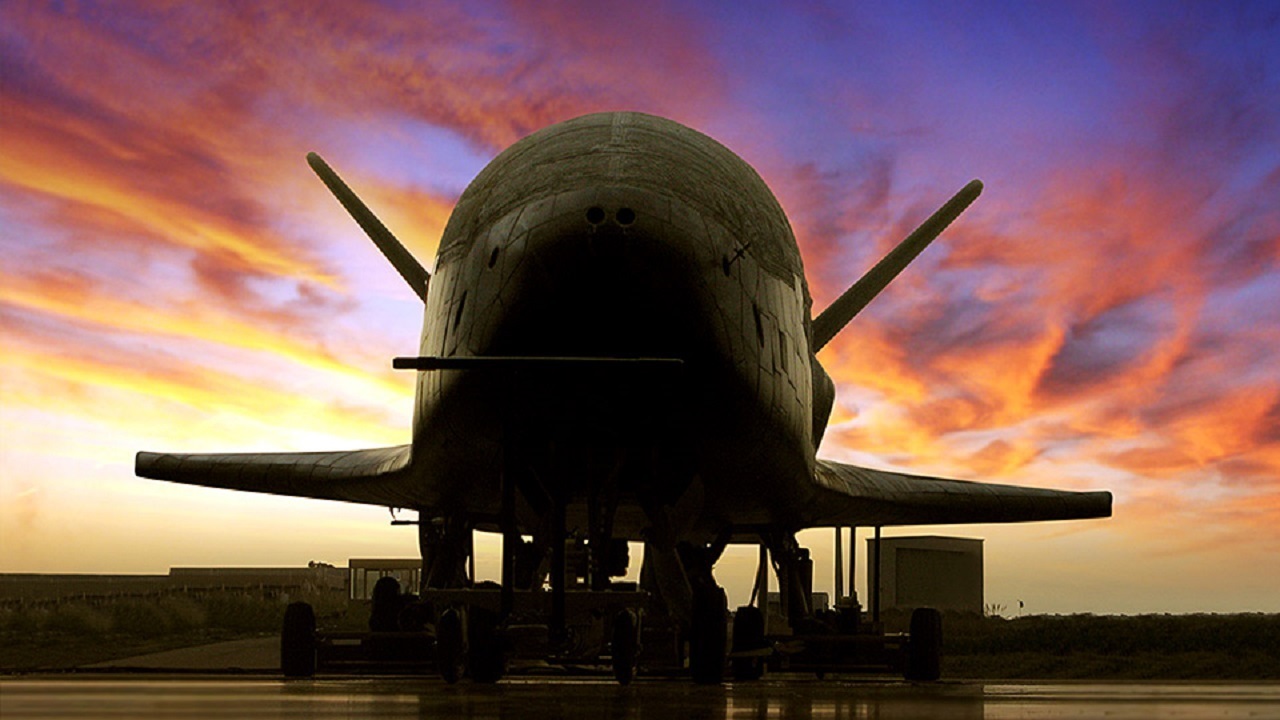
X-37B. Image Credit: Boeing.
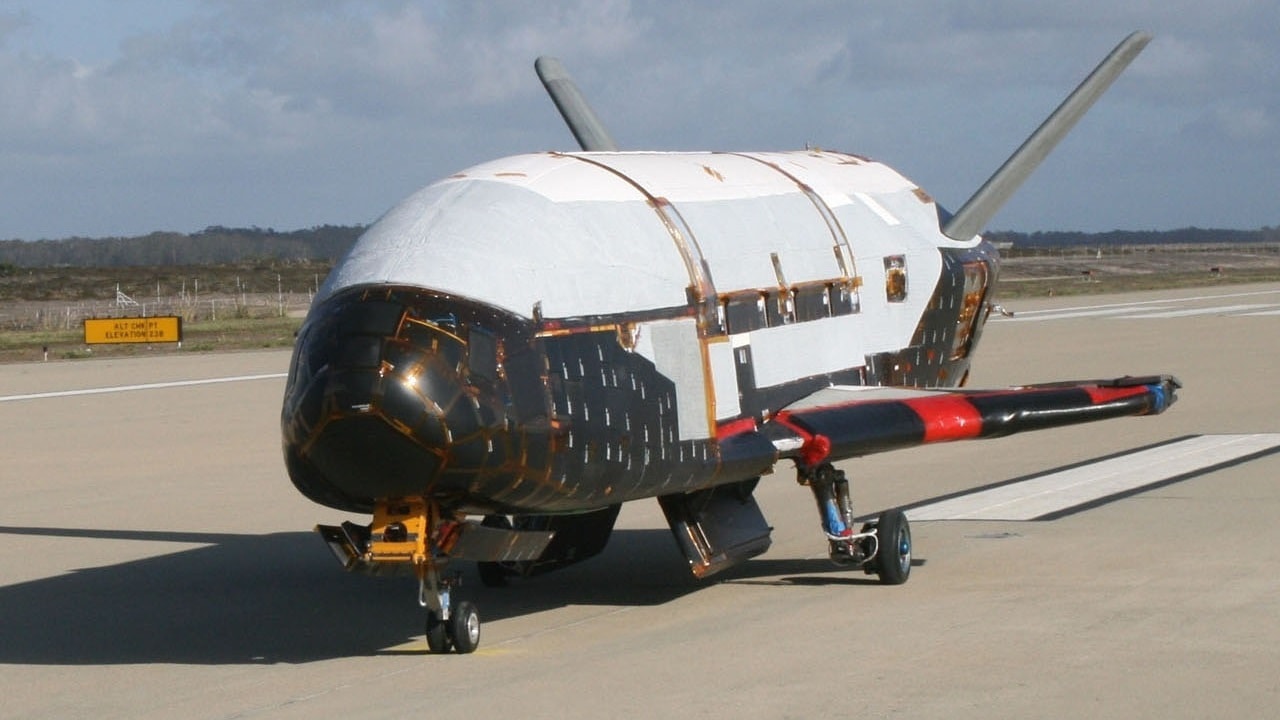
In a testing procedure, the X-37B Orbital Test Vehicle taxis on the flightline March 30, 2010, at the Astrotech facility in Titusville, FLa. (Courtesy photo)
The X-37B has flown seven successful missions lasting well over two years at a stretch, logging over 1.3 billion miles, testing sensors, materials, and experiments in orbit before returning to Earth largely under its own aerodynamic control.
The big difference is that Boeing no longer has to justify the presence of a pilot.
Dyna-Soar’s fatal weakness, a brilliant reentry solution bolted to a military mission nobody could pin down, all riding on a human being who needed life support, an ejection scheme, and a return itinerary, becomes moot when the vehicle is uncrewed.
The X-37B can loiter in orbit indefinitely, adjust its own timeline, and carry out exactly the kind of ambiguous, multi-purpose national-security missions that Dyna-Soar was criticized for never quite defining, without anyone needing to explain what a pilot was doing up there.
The Air Force still doesn’t fully disclose what the X-37B does in orbit, and it treats that opacity as a feature rather than the liability it was for Dyna-Soar.
The irony of the story is that the technology McNamara found too expensive to justify in 1963, hot-structure hypersonic reentry, a winged glider bridging the gap between spaceplane and aircraft, turned out to be perfect.
What was missing was the technological maturity, in guidance, materials, and above all autonomy, to fly it without a pilot whose mission had to be defensible in a Pentagon budget review.
The X-37B has now flown numerous missions since its 2010 debut, quietly doing the job the Dyna-Soar was built for, at a fraction of the political and financial risk McNamara once refused to accept.
Dyna-Soar didn’t fail because the concept was wrong. It failed because it arrived sixty-three years before the US was ready to fly it without asking who was in the cockpit. And it offers a glimpse of what future wars in space could look like.
MORE – The X-30 Was the Mach 25 Space Plane Dream
About the Author: Steve Balestrieri
Steve Balestrieri is a National Security Columnist. He served as a US Army Special Forces NCO and Warrant Officer. In addition to writing on defense, he covers the NFL for PatsFans.com and is a member of the Pro Football Writers of America (PFWA). His work was regularly featured in many military publications.