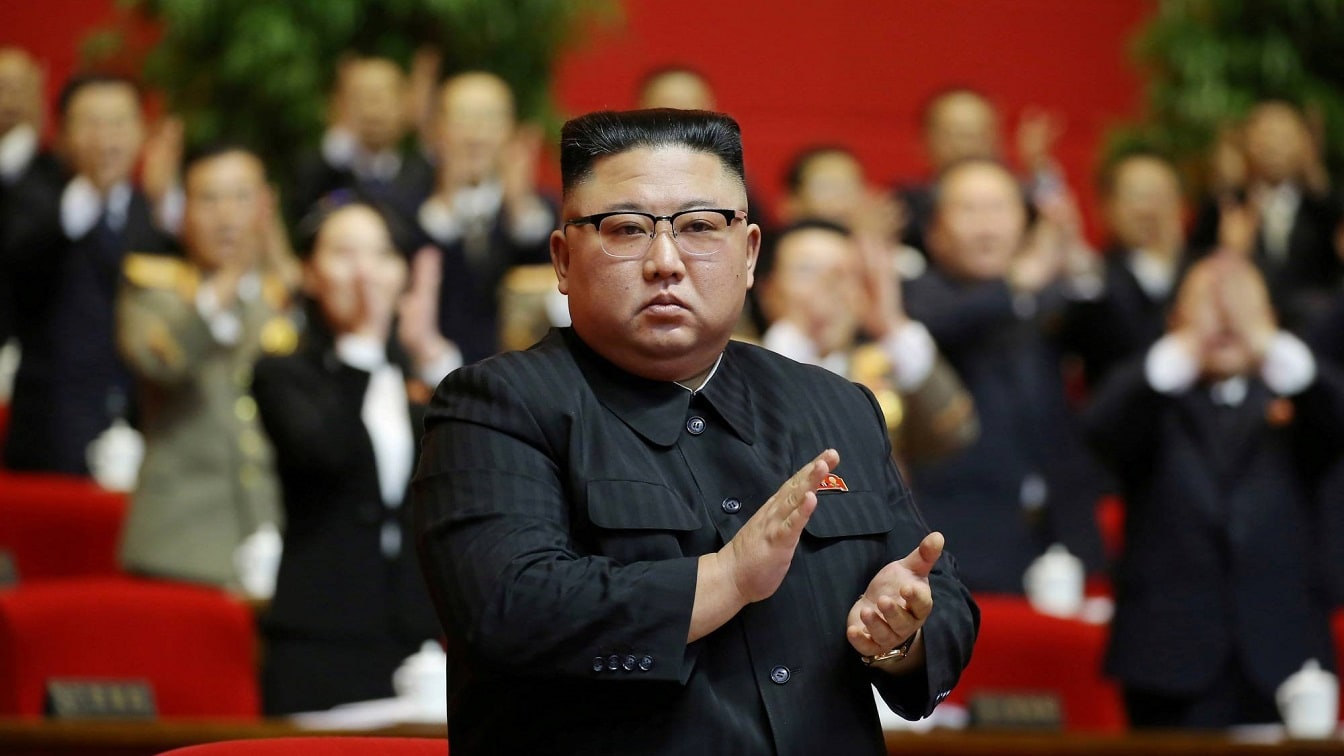
US President Donald J. Trump recently ordered a downsizing of the annual US-ROK war games held in South Korea. It is possible, though unconfirmed, that this was done at the suggestion of South Korean President Lee Jae Myung, whose left-of-center policy has thus far proven very conciliatory toward North Korea. To date, President Lee has not commented on his recent conversation with President Trump. What is clear is that both men appear to have the national interests of their respective countries in mind.
Why the War Games Matter
As these two great nations move forward in the coming months, I believe it will be important to consider that this big exercise and others like it are very important. Remember, it is a defensive exercise. But readiness is based on training, and militaries must train and equip for defensive capabilities just as they do for offensive capabilities. Thus, ordering a reduction in these war games could negatively affect the ROK-US alliance’s wartime capabilities.
In addition to the action taken regarding the exercise, known as “Ulchi Freedom Shield,” President Trump stated that in his conversation with President Lee, “I called him. I said, ‘Would you like to give us a little hand? We don’t need help with Iran, but if you’d like, give us a hand with Iran.’ He said, ‘No thanks,’ and I said, ‘Wait a minute. We have 39,000 soldiers over there, guarding you from Kim Jong Un, your next-door neighbor, and you’re not going to help us on a very easy military operation in Iran. That’s strange.”
It is unclear if the two current actions taken are related. What is clear is what the Ulchi exercises consist of. It is also very clear, yet relatively unknown, how and why South Korea has “skin in the game” regarding North Korea’s proliferation that has provided weapons systems, capabilities, and training to Iran that have been used against American forces and their allies since February of 2026. A review of North Korea’s actions with Iran is thus relevant.
Short-Range Ballistic Missiles: The QIAM
Perhaps the most important threat from Iran as the war with the United States and Israel has evolved has been the ballistic missiles, launched not only at US facilities and Israeli cities, but also at neighboring Islamic countries.
Thus, it is important to consider this capability and where Iran got it. The short-range ballistic missiles (SRBMs) that Iran has launched at key US facilities and at neighboring Arab states include a key system – the “QIAM.” The QIAM was developed and improved with North Korean assistance. The North Koreans had shipped about 200 Scud C’s to Iran by 1994.
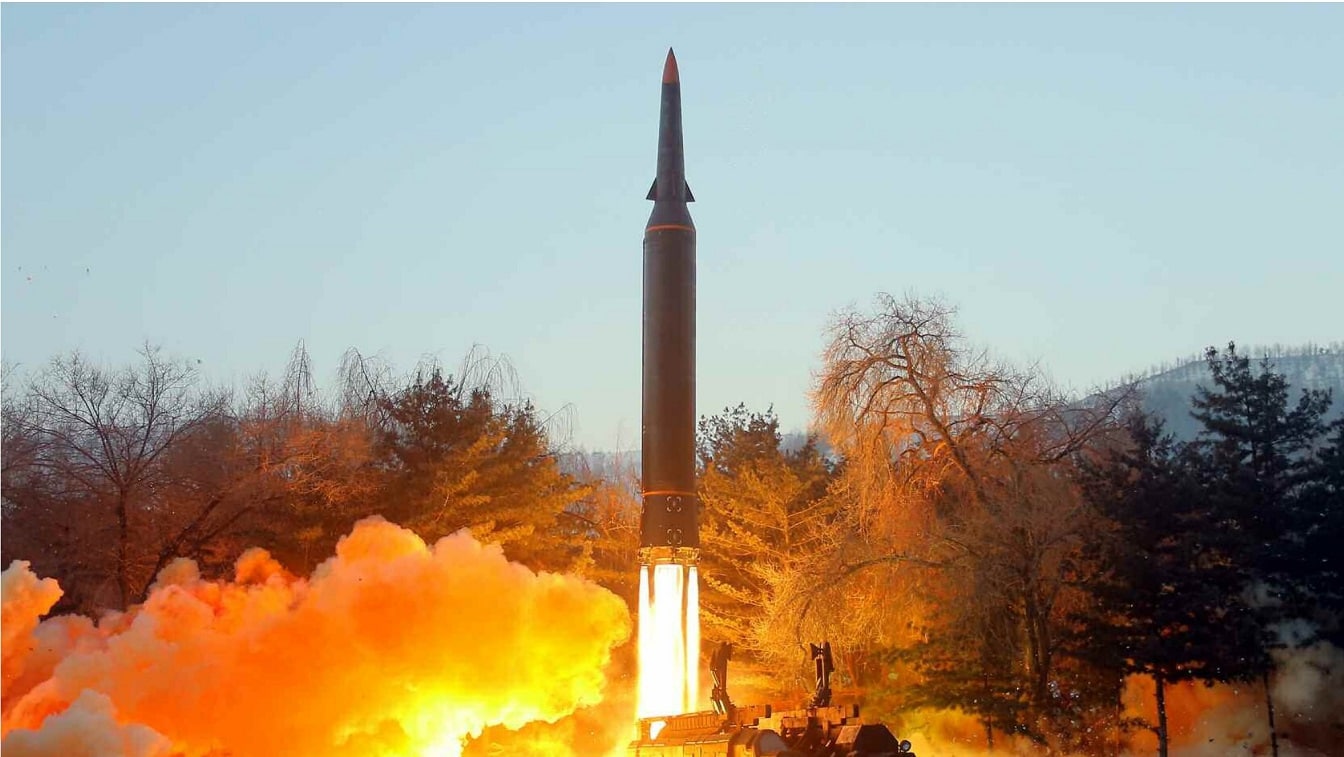
North Korea’s New Hypersonic Missile. Image Credit: KCNA/North Korean State Media.
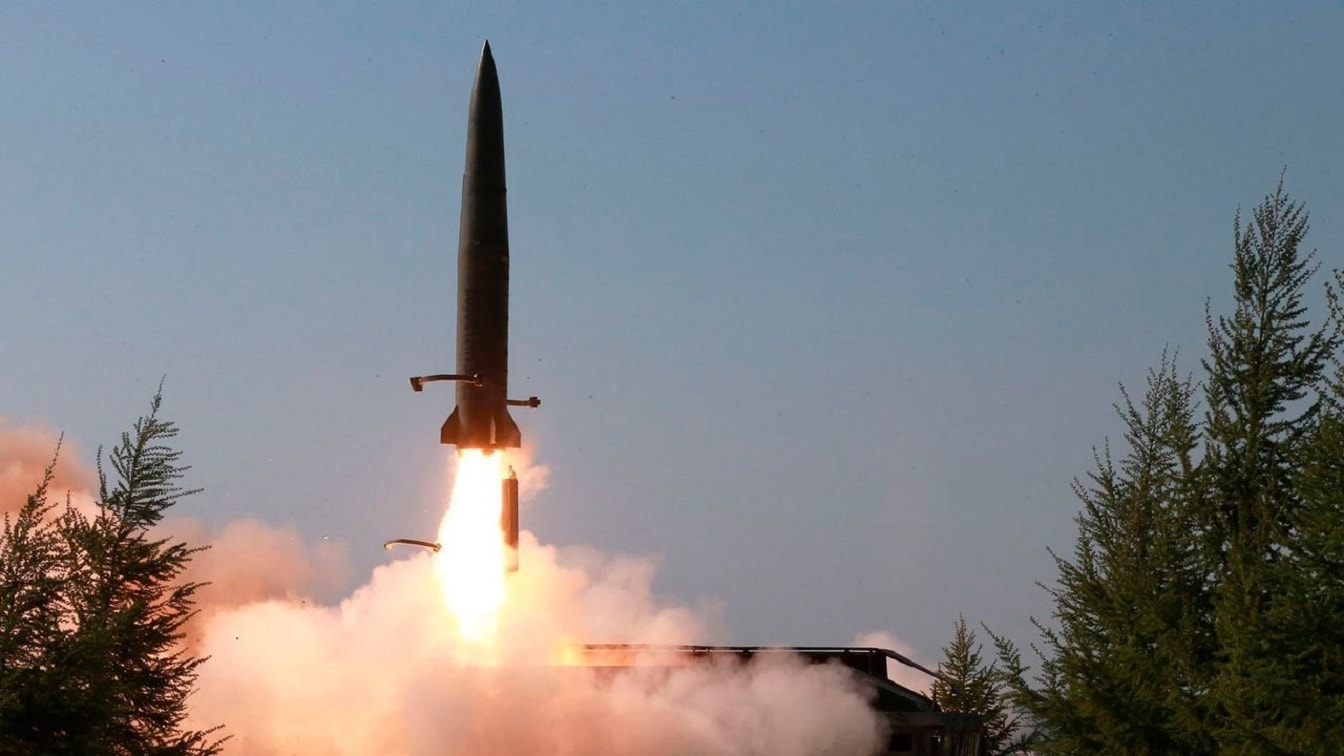
North Korea Ballistic Missile Test. Image Credit: Creative Commons.
The Iranians further contracted with Pyongyang to build a Scud C facility. But the facility still needed North Korean missile components and technical assistance. From this facility also came the “upgrade” to the Scud C, called the Qiam – now a widely used Iranian missile against targets within its range (up to 800 kilometers). In addition, according to the Wisconsin Project, “North Koreans reportedly helped build a large missile test facility at Emamshahr and a tracking facility at Tabas.”
Medium Range Ballistic Missiles: From No Dong to Shahab-3
And what of Medium Range Ballistic Missiles from North Korea to Iran used in the ongoing war? The North Koreans proliferated around 150 No Dong systems (an MRBM) to Iran in the mid-1990s. Much like the earlier Scud C factory, Tehran contracted with Pyongyang to build a No Dong facility in Iran. North Korean components and North Korean assistance were needed in the process to manufacture the missiles “indigenously” in Iran. The Iranians called this “new” missile the Shahab-3.
The Shahab-3 is almost an exact copy of the No Dong. With assistance from the North Koreans, the Iranians were then able to produce (at the No Dong facility) the Emad and the Ghadr. The Emad has a range of 1,750 kilometers, and the Ghadr has 1,950 kilometers. The Iranians have used these two systems to target not only Israel but also their Arab neighbors (including US bases located in these countries) throughout the ongoing first stages of this conflict.
The “Son of Musudan”: Iran’s IRBM
North Korea has, of course, also proliferated Intermediate Range Ballistic Missiles (IRBM) to Iran. This system is called the “Khorramshahr,” and the fourth version of this system, appropriately called the “Khorramshahr-4,” has been proven to carry a warhead larger than any other in Iran’s missile inventory, armed with what appears to be “cluster munitions.” But where would such a missile – with a warhead weighing up to two tons – originate?
Well, North Korea, of course. According to numerous press reports, and perhaps just as importantly, the US State Department on leaked cables published in WikiLeaks, the Iranians purchased 19 Musudan IRBM missiles from the North Koreans that were delivered in 2005. The Musudan has a range of 3,500 to 4,000 kilometers. The Iranian version has a much shorter range. But it also carries a much larger warhead than the original payload on the Musudan. Thus, the reported 2,000-kilometer range. If one is to simply do the physics, a larger warhead (much larger) with the same amount of thrust (the same engine as the Musudan) equals a missile with a shorter range yet more lethality upon contact. One could legitimately call this missile “son of Musudan.” It was – according to numerous reports – built with North Korean assistance.
The ICBM Connection
North Korea has also proliferated all of the components and technology necessary for Iran to have an ICBM. The components are based on the Ukrainian RD-250 engine and can be seen in the Hwasong-15, an ICBM that has been successfully tested three times. Thus, Iran essentially possesses the capability to build an ICBM based on North Korean components, technical assistance, and testing.
North Korea’s Hand in Iran’s Navy
Almost totally unknown to most analysts and even many Korea watchers, North Korea has also contributed to Iran’s naval capabilities. Fast Attack Craft (FAC) have been a major irritant in the waters off the coast of Iran for more than 20 years, but especially now. According to a publication of the Office of Naval Intelligence published in 2017, “Between 1996 and 2006, the IRGCN received approximately 46 FAC of various classes from China and North Korea. Depending upon the platform, they are equipped with torpedoes, short-range ASCMs, or both, and can reach speeds of 40-50 knots. The North Korean procurement effort included four distinct classes of torpedo boats, two of which are submersible/semisubmersible.
Both Chinese classes include short-range ASCMs. Iran has copied the North Korean Peykaap-class boat and is domestically producing it as a missile boat with Nasr (C704) ASCMs.” In addition, as most Korea watchers know, a North Korean Yono-class mini-sub sank the South Korean Corvette, Cheonan, in 2010. North Korea proliferated this same class of submarine to Iran (several of them). They then built a fabrication facility (“factory”) for the Iranians where they could “indigenously” produce it themselves. By the time the war broke out in March of this year, the Iranians had at least 14 Yono-class submarines – called Ghadir-class craft in Iran. It is unclear how many of the FAC or submarine craft have been sunk since the war with Iran. Both of these types of naval craft have been involved in the recent war against the US.
Underground Complexes: Why B-2s Were Needed
Yet another military capability related to the current conflict is North Korea’s underground complex building capabilities. Pyongyang has – for many years – assisted Iran in building underground complexes – hundreds of them. There are two key ways they have done this: 1) underground missile facilities, and 2) underground nuclear facilities – specifically at Natanz and Isfahan.
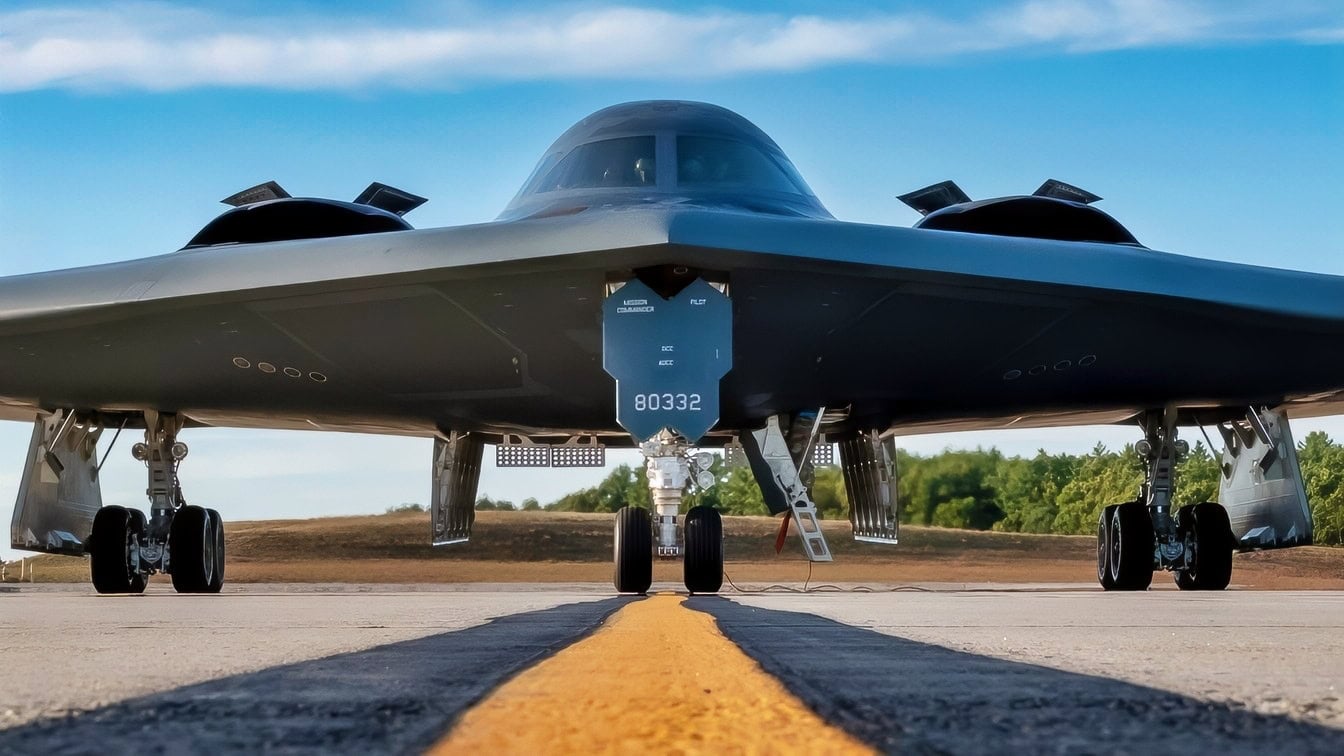
A U.S Air Force B-2 Spirit aircraft is shown on the flight line at Pease Air National Guard Base, New Hampshire, Sept. 20, 2025. The aircraft is the first operated by the 509th Bomb Wing to land at Pease ANGB, formerly Pease Air Force Base, since the 509 BW, formerly 509th Bombardment Wing, was stationed at Pease AFB and the active-duty base closed nearly 35 years ago. The lineage of the 509th BW traces back to the World War II Era when the 509th Composite Group dropped the atomic bombs on Japan. (U.S. Air Force photo by Staff Sgt. Joshua Hastings)
It was because of the skill and expertise with which North Korea built the facilities at Natanz and Isfahan that it took United States B2 bombers to take them out. As of the writing of this piece, there are still underground missile facilities that remain active. There is no doubt that the reason these facilities remain such a difficult challenge for both the United States and Israeli aircraft is because of the assistance North Korea provided Iran in building them.
Two Questions Worth Asking
There are two rather compelling points to consider in this analysis. The first is: Why are North Korea’s contributions to weapons being used against American and allied forces in the region almost completely unreported? The second is, with all of the obvious military proliferation from North Korea to Iran that has now been used against US and allied forces in the Middle East, one wonders why South Korea would be hesitant to support the US in its quest to end Iran’s rogue state behavior?
About the Author: Dr. Bruce E. Bechtol Jr.
Dr. Bruce E. Bechtol Jr. is a professor of Political Science at Angelo State University. He is also the president of the International Council on Korean Studies and a fellow at the Institute for Korean American Studies. The author of five books dealing with North Korea, his latest work is entitled North Korean Military Proliferation in the Middle East and Africa.
The author would like to thank David Maxwell of the Korea Regional Review, who previously published some portions of this analysis.