
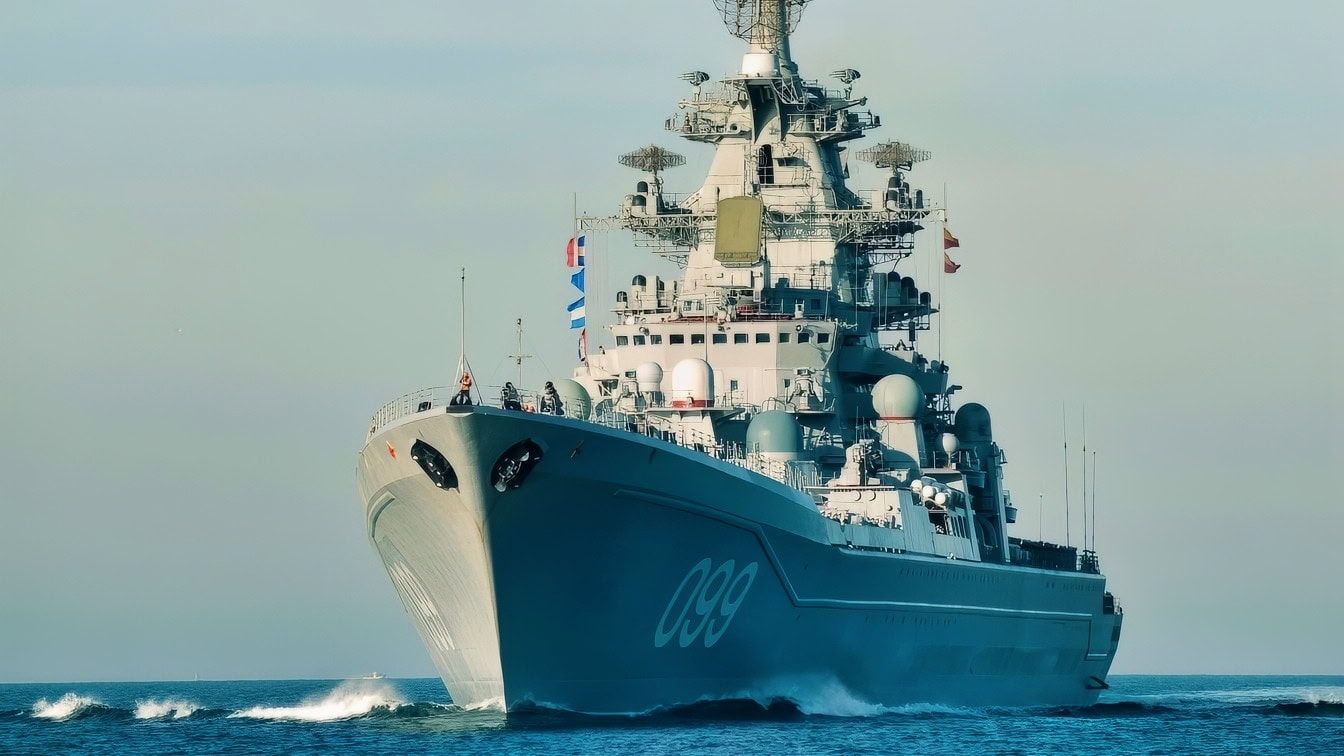
When the Soviet Union sent the battlecruiser Kirov to sea in 1980, the shock helped talk the United States into waking four mothballed battleships, a program that took six years and cost $1.7 billion for all four ships. Russia has now run the same play on itself, in a funhouse mirror: the effort to bring back a single ship of that same Kirov-class has consumed twenty-seven years, several funhouse mirrors, the rest of the class, and possibly the strategic logic of the ship itself. The Admiral Nakhimov finally went to sea in 2025. Whether Russia should be celebrating is a genuinely open question.
The Ship and the Mission: Meet the Nuclear Kirov-Class
The Project 1144 Orlan battlecruisers were the largest surface combatants built by any nation since the Second World War, 28,000-ton nuclear-powered giants designed to hunt American aircraft carrier groups with 20 enormous P-700 Granit missiles and to shield Soviet ballistic-missile submarines in their Arctic bastions.
Four were completed; Nakhimov, commissioned in 1988 as Kalinin, was the third. The modernization concept, Project 11442M, was straightforward in its ambition: gut the Soviet combat system and rebuild the ship around universal launchers.
The 20 Granit tubes gave way to 80 UKSK vertical cells able to fire Kalibr cruise missiles, Oniks anti-ship missiles, and the Zircon hypersonic weapon, layered with a rebuilt Fort-M air-defense stack and new close-in systems for a total arsenal in the range of 176 missile cells, the deepest magazine of any surface combatant afloat.
The mission set follows the hardware: flagship of the Northern Fleet, guardian of the Arctic bastion where Russia’s nuclear deterrent hides, a mobile Zircon battery able to threaten carrier groups and land targets alike, and, not least, a 32-knot statementlies hidden Russia still builds capitcapable of threateningal, repeated by Sevmash executives for a decade, was to make her the most powerful warship in the Russian Navy.
Why It Took Twenty-Seven Years
The timeline is the indictment. Nakhimov last sailed with the Northern Fleet in 1997 and was formally accepted for modernization at the Sevmash yard in Severodvinsk on August 14, 1999.
Then, for years, almost nothing happened: the ship’s spent nuclear fuel was not even unloaded until 2008, and the technical design was only finished in 2012. The actual modernization contract was signed on June 13, 2013, with delivery promised for 2018.
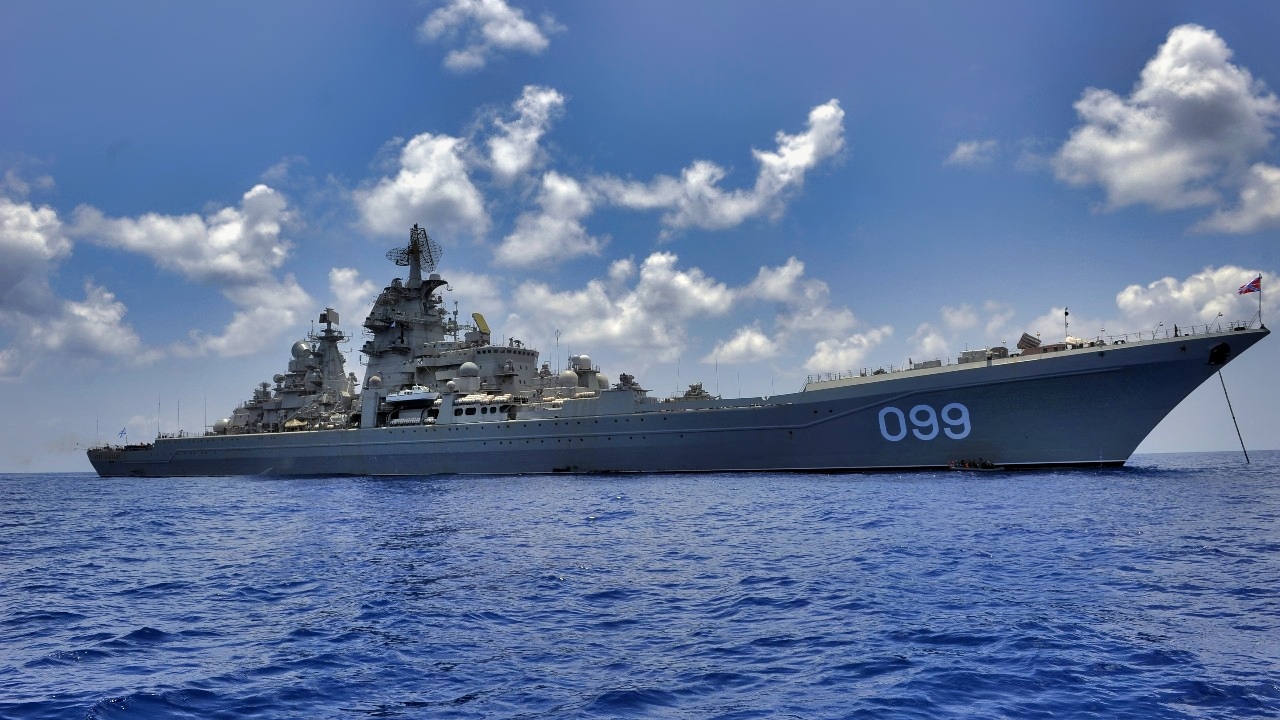
Kirov-Class Russian Navy. Image Credit: Creative Commons.
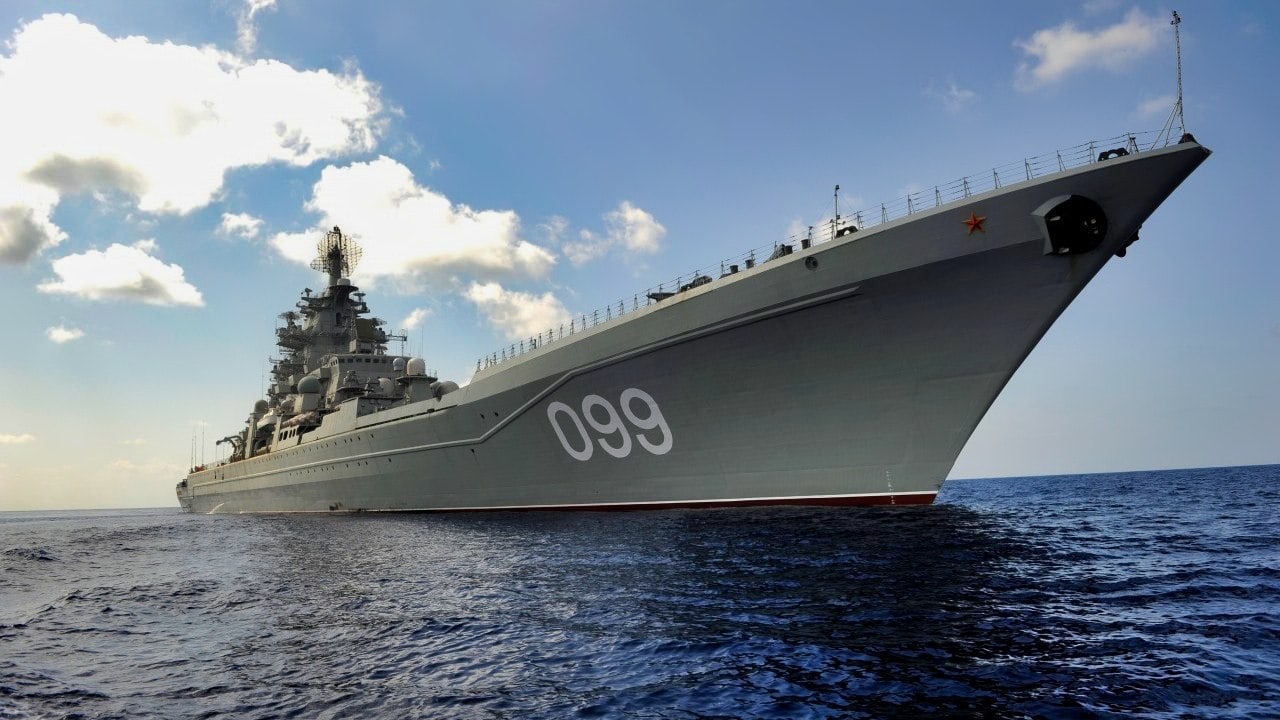
Kirov-Class Battlecruiser Russian Navy
The ship entered dry dock in October 2014, went back in the water in August 2020, and the promises kept pace with the slippage: in August 2020, Sevmash’s director general declared the work on schedule, with trials in 2021 and delivery in 2022; that December, a deputy defense minister inspected the yard and insisted the late-2022 delivery terms were not challenged. Delivery then moved to 2023, then later.
The ship did not go to sea until August 2025. The reasons stack rather than compete: funding that arrived in iandruptions, a scope that kept growing, sanctions that complicated components, the sheer complexity of reviving two nuclear reactors that had sat cold for two decades, and a shipyard whose true priorities lay elsewhere, because Sevmash builds the Borei and Yasen submarines at the heart of Russian strategy, and a one-off battlecruiser rebuild competed for the same workforce and floor space as the submarines that carry Russia’s deterrent.
The Bill for 1 Kirov-Class
The costs deserve their own accounting, because they ate the rest of the class. The 2013 contract was worth 50 billion rubles, roughly $667 million at the time. That figure did not survive contact with the ship: unofficial Russian estimates place the final cost near 200 billion rubles, about $2.67 billion, a fourfold overrun, and some Western assessments of the all-in price, across the full twenty-seven years of yard time, run to roughly $5 billion.
Nobody outside the program knows the true number, and the range itself, $2.7 billion to $5 billion for one refit, is the finding.
For comparison, the same money would buy five or more modern missile frigates carrying the same Kalibr and Zircon missiles across five hulls, rather than one, and America’s entire four-battleship reactivation in the 1980s cost about $5 billion in today’s dollars. The class paid the bill in ships.
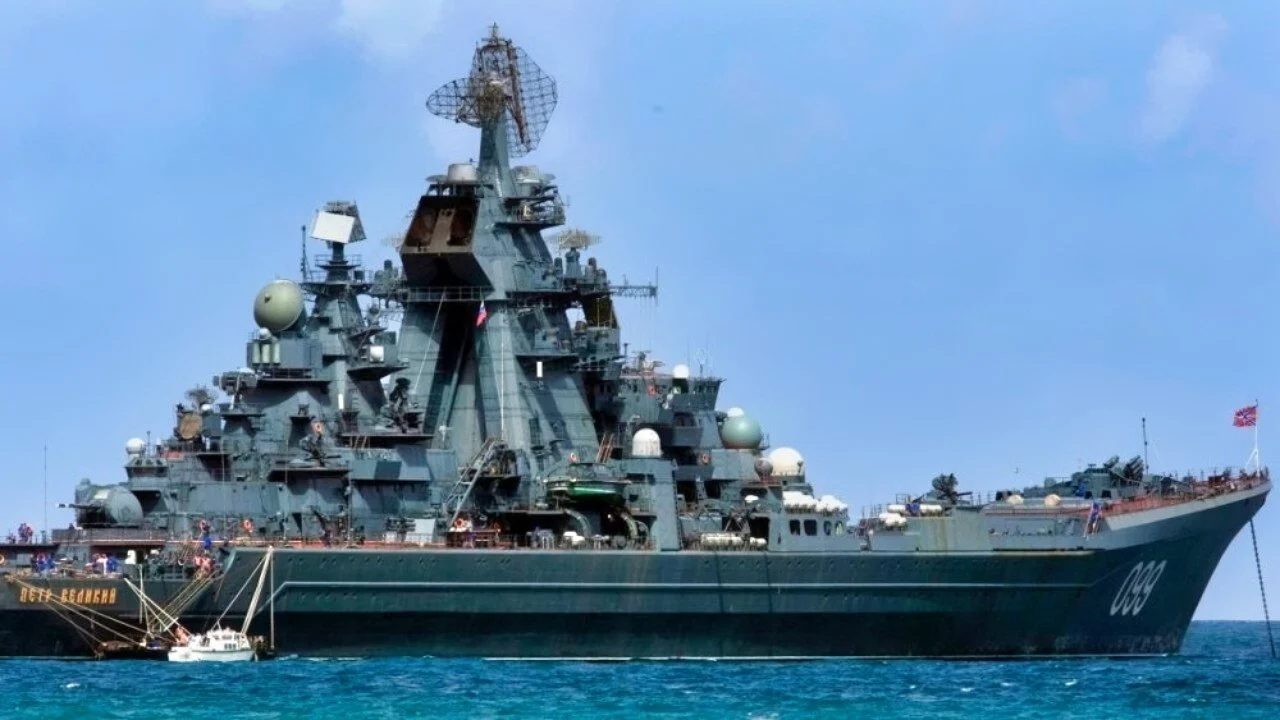
Kirov-Class Battlecruiser. Creative Commons Image.
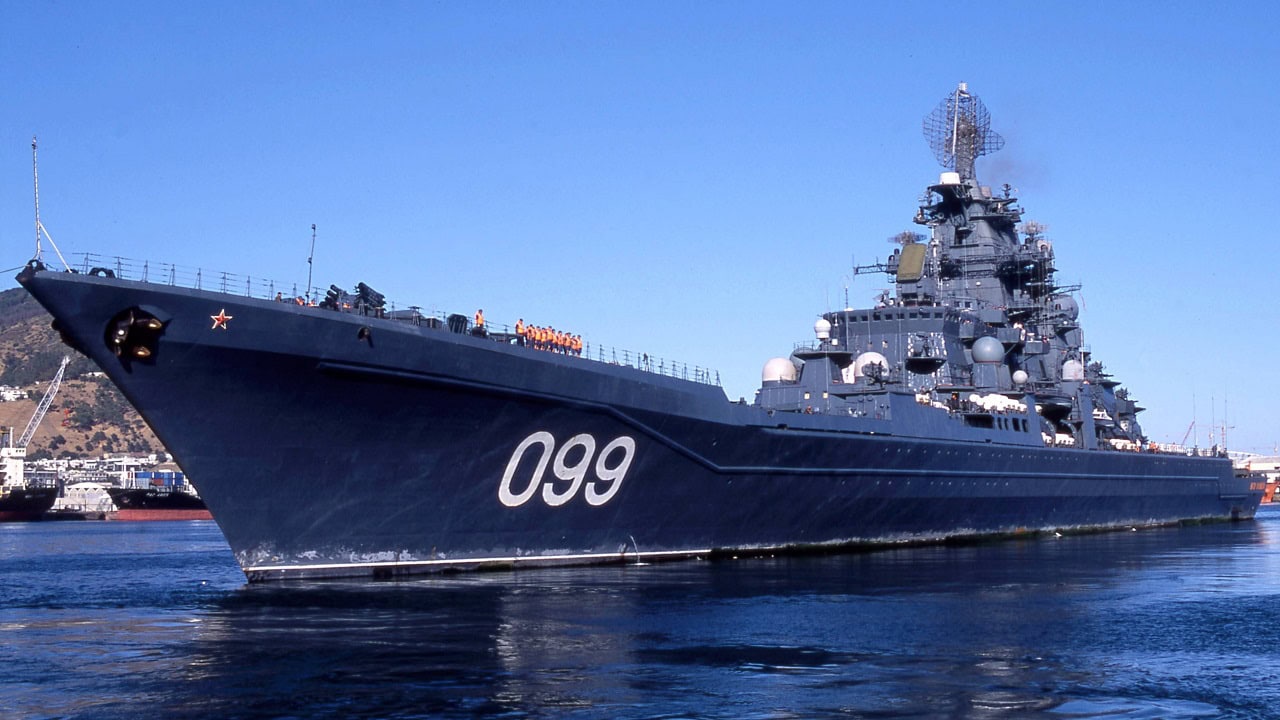
Russian Navy Kirov-Class Battlecruiser. Image Credit: Creative Commons.
The lead vessel, once Kirov herself, suffered a reactor casualty in 1990 and never sailed again, decaying at a pier with old fuel still aboard; the second, Admiral Lazarev, was formally retired in 1998 and went to dismantlement under a 5-billion-ruble Rosatom contract in 2021 after a Pacific Fleet revival was studied and abandoned. And the flagship Pyotr Velikiy, the only Kirov that stayed in service through the lean decades, has been laid up at Severomorsk since autumn 2022 and is widely expected to be scrapped rather than rebuilt, precisely because Nakhimov’s refit demonstrated what a second one would cost. The modernization designed to showcase the class will end it: one ship survives because the price of saving her killed the others.
Where It Stands Now
The recent progress is real. Nakhimov was refloated in July 2025 and moved under her own power that August for the first time in twenty-eight years, beginning factory sea trials in the White Sea.
Testing continued in phases through late 2025 and 2026, working through propulsion, sensors, and combat systems, and satellite imagery caught her running speed trials in Dvina Bay in June 2026, kicking up a wake her builders had waited a generation to see.
On June 25, 2026, she arrived at Severomorsk, the Northern Fleet’s home, still not formally commissioned, with Russia’s Navy chief indicating acceptance is expected during 2026 and independent trackers hedging toward late 2026 or 2027, since this program has never yet met a date.
Her crew is reportedly being built in part from Pyotr Velikiy’s, the ship she was meant to reinforce and will instead replace. The destination is the Arctic: flagship duty over the bastion, presence patrols along a Northern Sea Route Moscow increasingly militarizes, and the showcase role in the one theater where Russian naval power still operates from sanctuary.
The Battleship Question
Which brings the story back to where it started, because the Kirov class now faces the exact question its 1980 debut forced on the Iowa class. The case for Nakhimov is magazine depth and endurance: 176 cells, hypersonic weapons, nuclear range, and an Arctic where land-based air cover thins and a heavy ship can matter.
The case against is written in recent history. Russia’s own Black Sea flagship, the cruiser Moskva, was sunk in 2022 by a country without a navy, and Ukraine’s cheap drones and missiles have since driven the rest of the Black Sea Fleet from its home ports, demonstrating at sea what had long been argued in theory, that concentrating billions into one large, slow-to-replace hull invites exactly the kind of asymmetric attack that costs the defender everything and the attacker almost nothing.
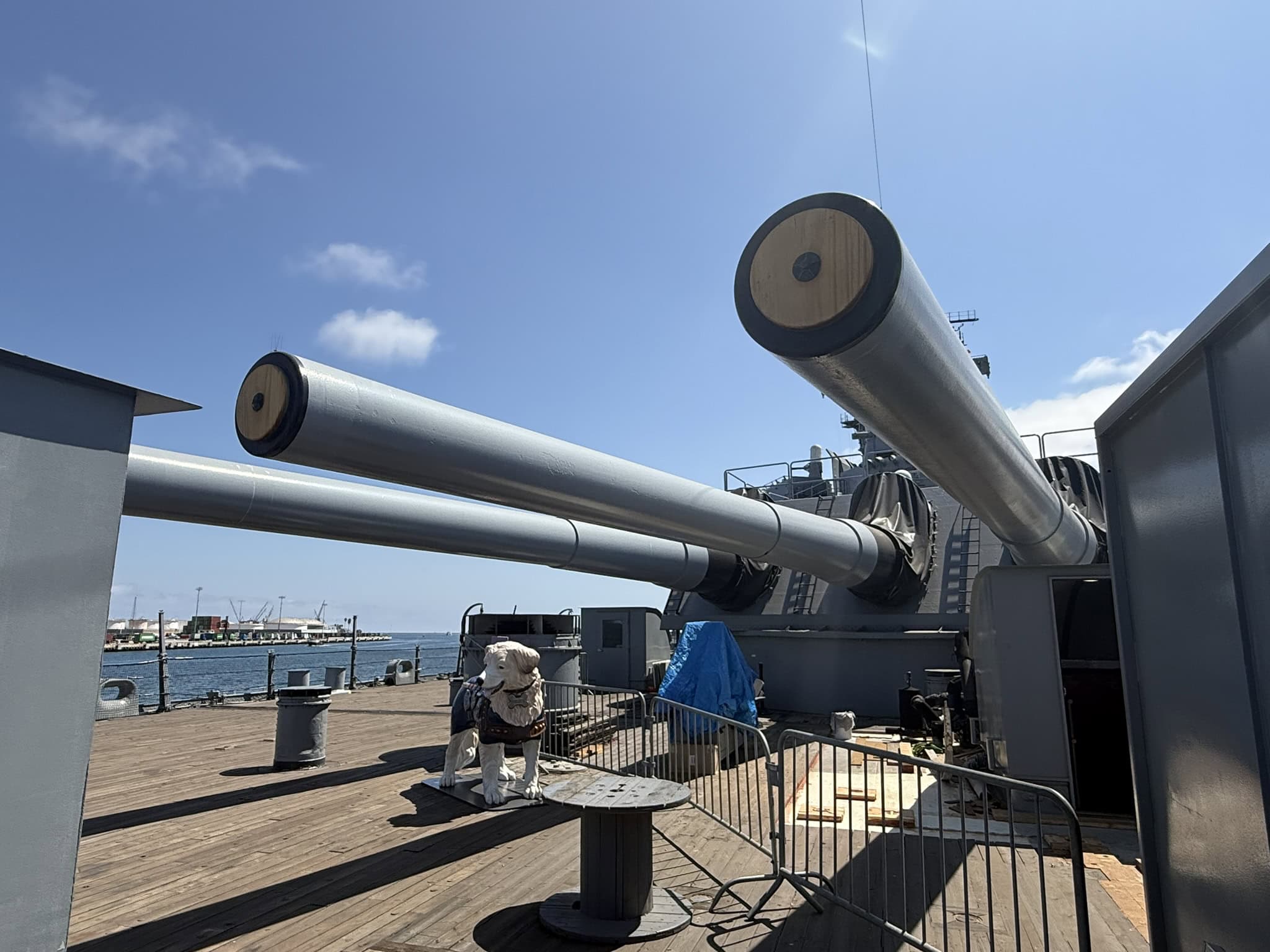
USS Iowa 16-Inch Guns. Image Credit: Harry J. Kazianis.
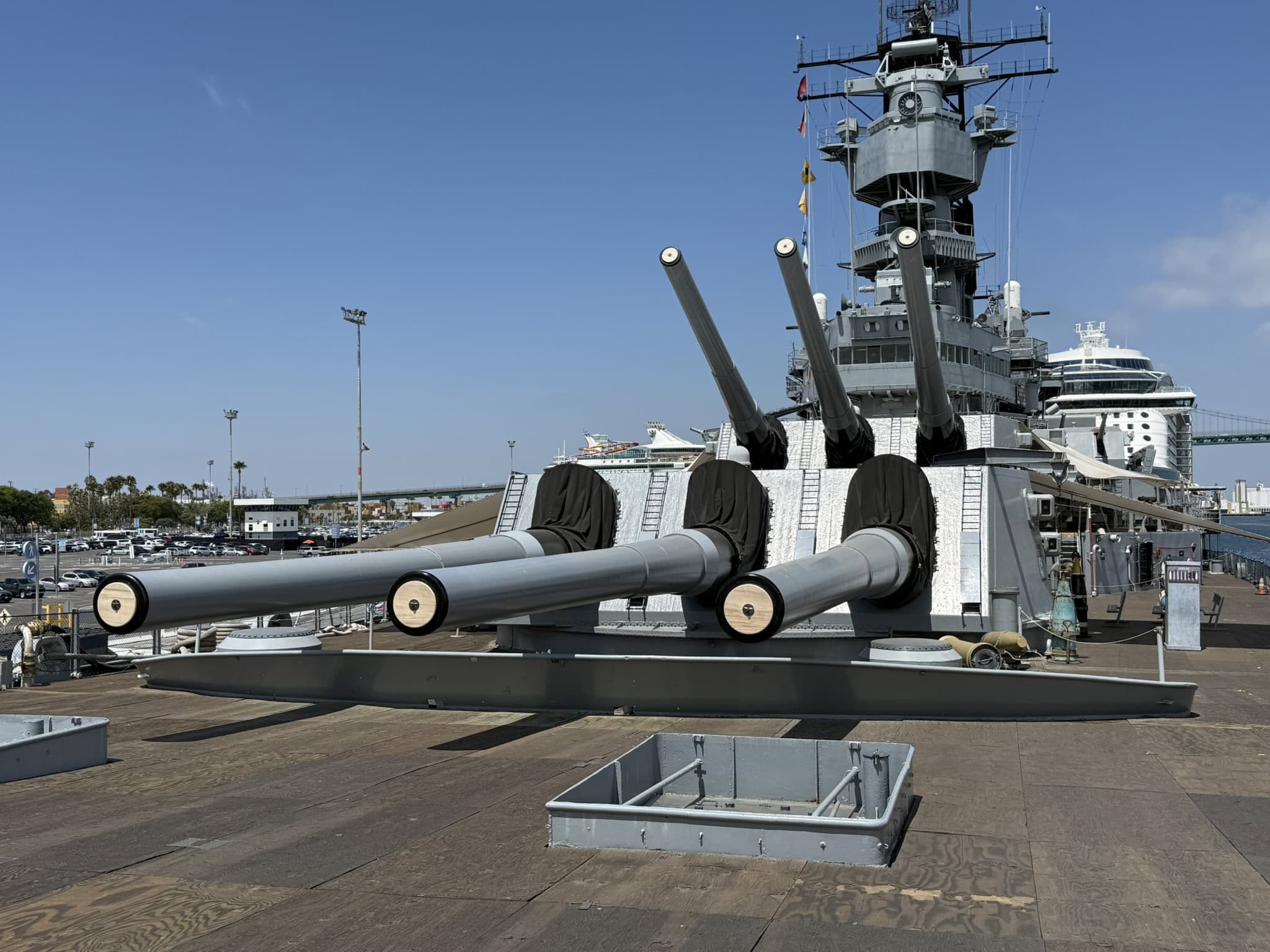
USS Iowa 16-Inch Guns. Image Credit: Harry J. Kazianis.
A single battlecruiser cannot be in two places, cannot be risked casually, and, once damaged, takes her entire capability class out of the war with her; the Sevmash queue behind her says a repair would be measured in years.
Nakhimov may prove a formidable Arctic fortress, or the most expensive drone target ever assembled, and the honest answer is that Russia has bet several billion dollars that it will never have to find out.
At Severomorsk in August 2026, the bet is visible from the pier: the rebuilt battlecruiser that is working up for an acceptance date that keeps sliding, and across the harbor, the flagship she bankrupted, waiting for the scrappers.
More: How the US Navy Rebooted the Iowa-Class Battleships
About the Author: Harry J. Kazianis
Harry J. Kazianis (@Grecianformula) was the former Senior Director of National Security Affairs at the Center for the National Interest (CFTNI), a foreign policy think tank founded by Richard Nixon based in Washington, DC. Harry has over a decade of experience in think tanks and national security publishing. His ideas have been published in the NY Times, The Washington Post, The Wall Street Journal, CNN, and many other outlets. He has held positions at CSIS, the Heritage Foundation, the University of Nottingham, and several other institutions related to national security research and studies. He is the former Executive Editor of the National Interest and the Diplomat. He holds a Master’s degree focusing on international affairs from Harvard University.

