
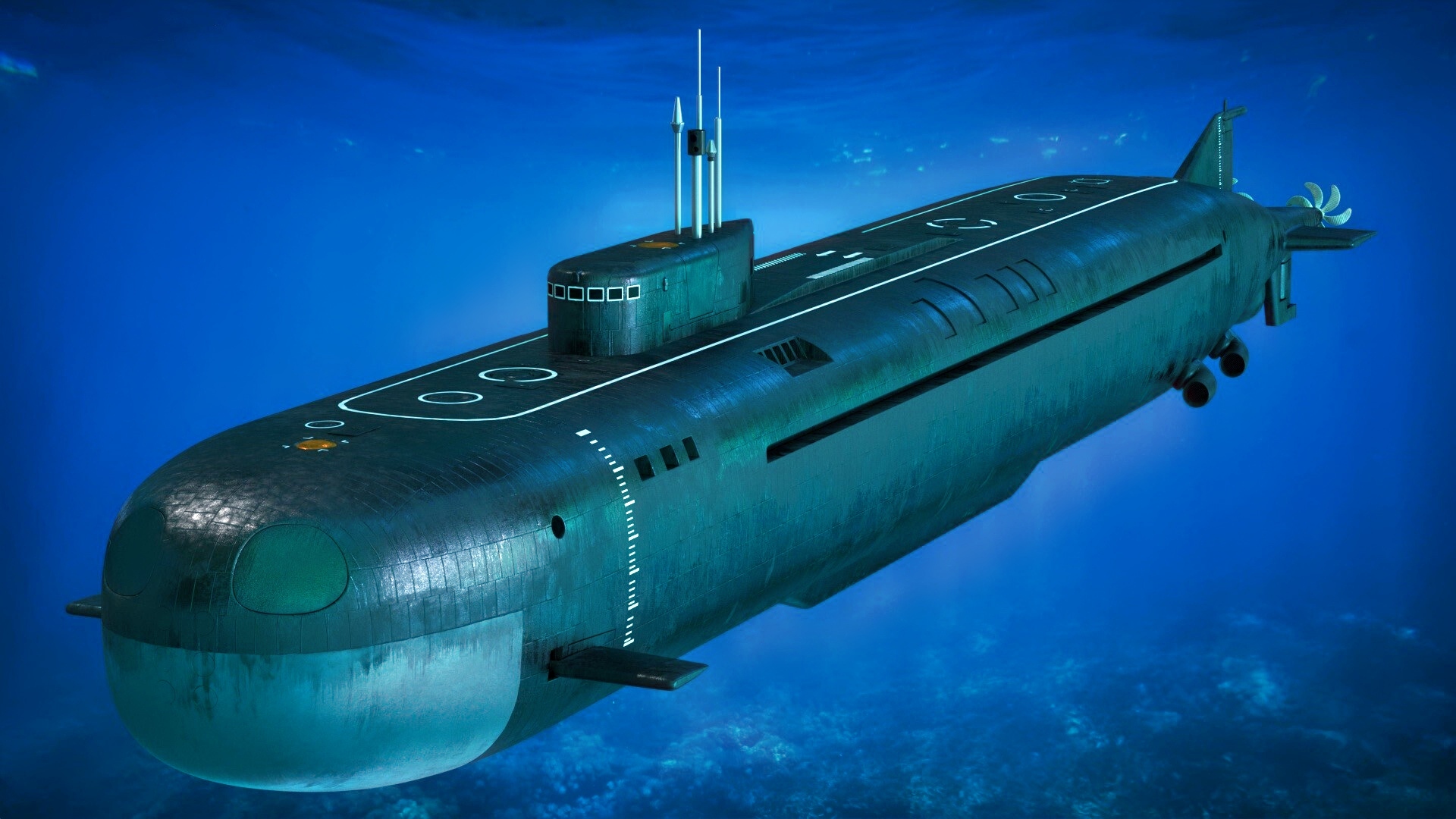
On August 25, the U.S. Department of the Navy released a request for information (RFI) seeking companies that can help develop a new air-launched torpedo for use from manned/unmanned aircraft.
The RFI was released by the Naval Air Systems Command (NAVAIR), working on behalf of the Navy’s Strike Weapons Program Office (PMX-201), and was issued by Portfolio Acquisitions Executive (PAE) Munitions.
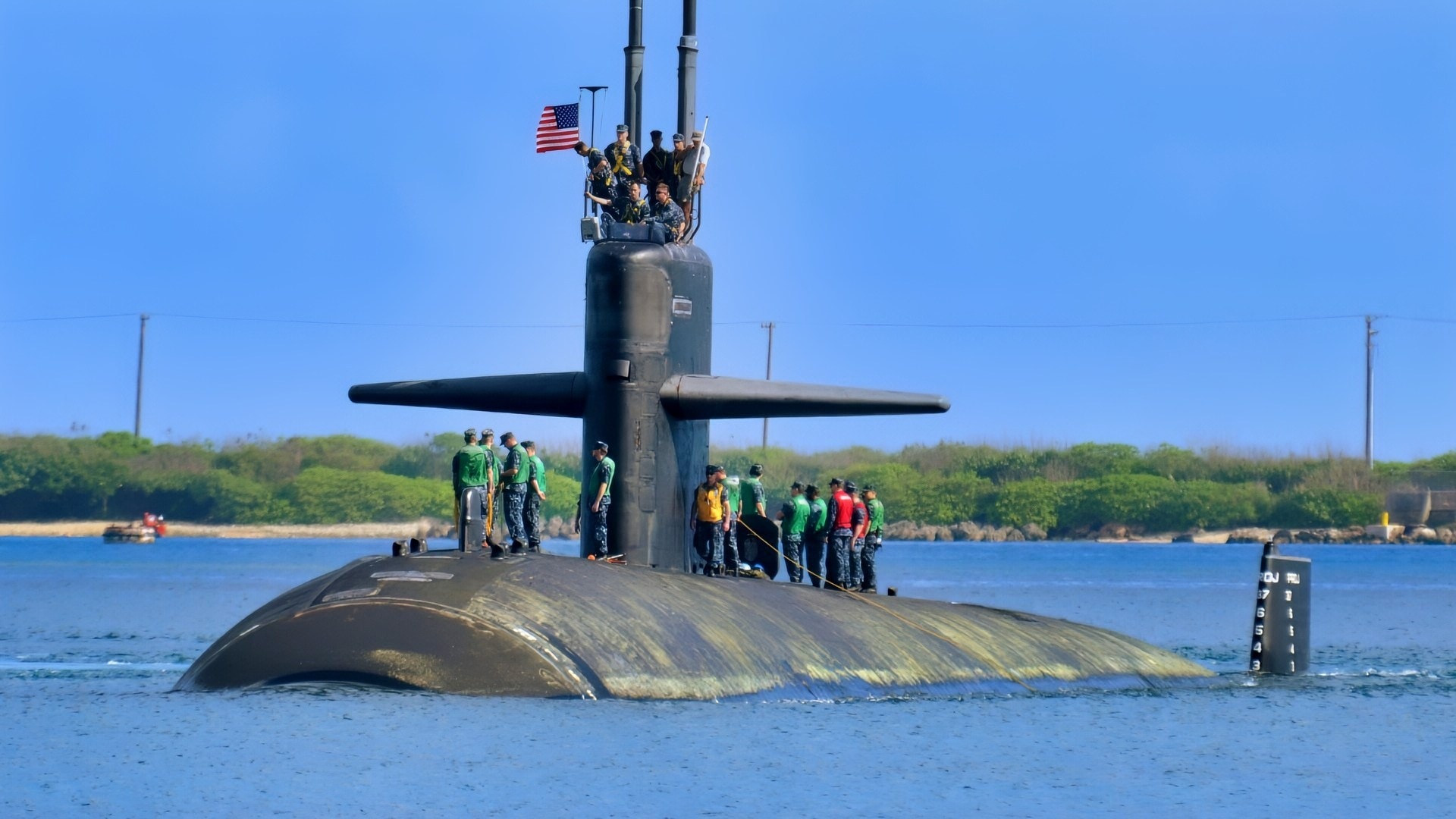
POLARIS POINT, Guam (May 7, 2013) The Los Angeles-class attack submarine USS Albuquerque (SSN 706) arrives in Apra Harbor, Guam, to conduct maintenance and liberty. Albuquerque is conducting operations in the U.S. 7th Fleet area of responsibility. (U.S. Navy photo by Mass Communication Specialist 1st Class Jeffrey Jay Price/Released)
The effort has been tentatively named the Silent Anvil Air-Launched Torpedo (SAA-LT). The SAA-LT seeks to address current limitations in the Navy’s inventory cost-effectively by developing a new type of anti-submarine torpedo capable of striking enemy torpedoes at greater distances.
What is SAA-LT?
Headed by PAE Munitions, the Navy is looking for a new type of torpedo that enhances the service’s anti-submarine warfare (ASW) capabilities. “PAE Munitions is committed to advancing Naval Aviation and delivering industry-leading capabilities directly to the warfighter,” the organization said in a statement announcing the RFI. “Today, we officially released a new Request for Information (RFI) on SAM.gov to explore the next generation of precision strike, air-launched solution, known as Silent Anvil Air-Launched Torpedo (SAA-LT).” This is an RFI, not a guarantee of a contract. The Navy wants to assess industry capabilities before moving forward with the contract.
The SAA-LT, per the request, is intended to operate with current U.S. military aircraft and future unmanned systems.
The weapon should be mounted on an external pylon or carried internally, thus eliminating the need for a new type of aircraft to carry it.
The Navy did not specify the desired size characteristics, but it will likely be too big to fit inside an F-35’s weapons bay.
The idea is that the new weapon will be deployable from the air, far from its target, then silently glide to the target area before striking like a regular torpedo.
This would enable the Navy to strike enemy submarines from greater distances without putting its pilots or drones in harm’s way.
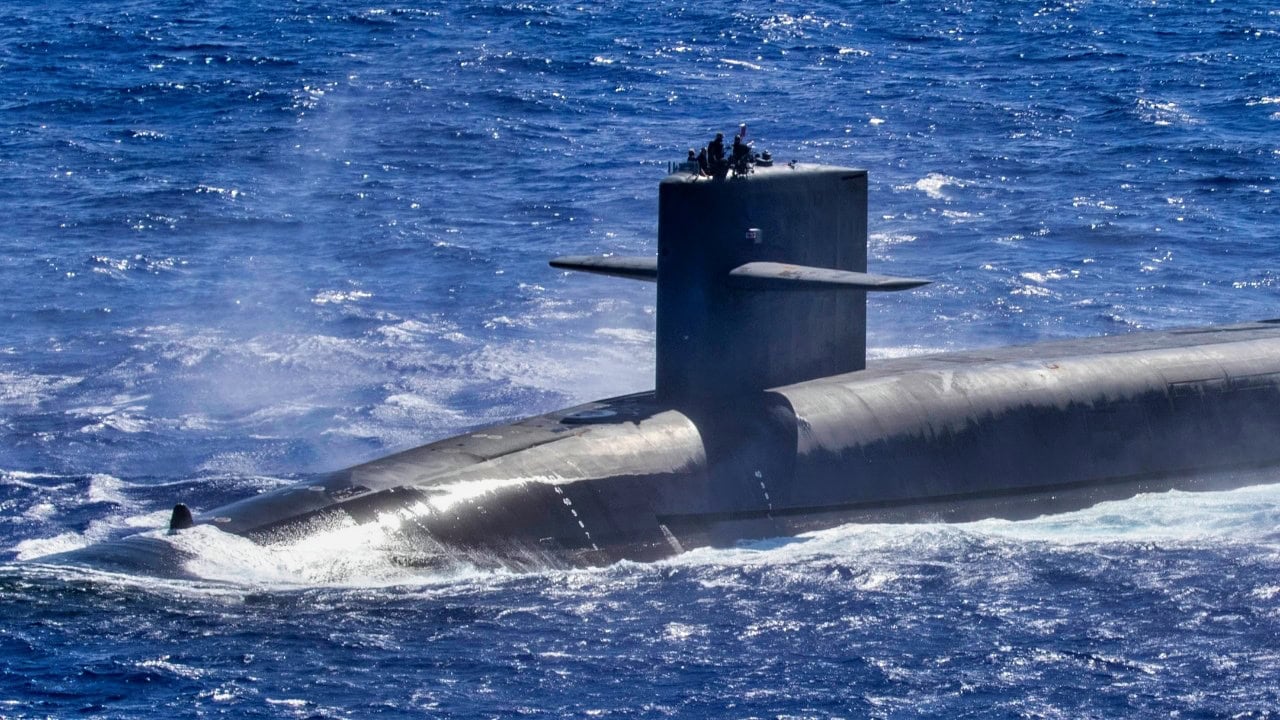
PACIFIC OCEAN (June 28, 2024) – An AS-332 Super Puma assigned to the Lewis and Clark-class dry cargo ship USNS Cesar Chavez (T-AKE 14) delivers supplies to the Ohio-class ballistic missile submarine USS Louisiana (SSBN 743) during a vertical replenishment at sea, June 28, 2024. The presence of the SSBN in the Pacific demonstrates the flexibility, survivability, readiness, and capability of the U.S. Navy submarine forces and complements the many exercises, training, operations, and other military cooperation activities conducted by Strategic Forces to ensure they are available and ready to operate around the globe at any time. Homeported in Bangor, Washington and currently assigned to Submarine Squadron 17, Louisiana is an undetectable launch platform for submarine-launched ballistic missiles, providing the United States with its most survivable leg of the nuclear triad. (U.S. Navy Photo by Mass Communication Specialist Seaman Andrew McPeek)
Turning Torpedoes into Glide Weapons
The Request gives contractors two ways to approach the program. The first is what it calls an “end-to-end” solution.
This would involve developing an entirely new system that integrates a glide system, a guidance system, and an underwater propulsion system into a single package.
This option is more technically challenging and likely much more costly, but would deliver a single all-encompassing product to the Navy.
The second option is much simpler.
It simply requires the manufacturer to produce a glide-kit that would carry an already existing torpedo to the target area before the torpedo does the rest of the work.
This solution is much simpler and more cost-effective, relying only on the current torpedo production (which is admittedly not very good).
The Navy hopes to have a working SAA-LT prototype within 18-months of any signed agreement, with the goal of producing around 180 prototype units three years after that.
To streamline the process, it said it intends to use a group called the Naval Air System Consortium to award agreements outside the slow federal contracting process.
The RFI is also open to foreign companies, provided they comply with U.S. arms export regulations under the International Traffic in Arms Regulations (ITAR). Companies interested in the program have until September 29, 2026, to respond to the Navy’s request. As of yet, there is no estimate of how much the program is expected to cost.
Why Does the U.S. Need SAA-LT?
The primary mission of the SAA-LT program appears to be improving U.S. ASW capabilities.
Current attack submarines use MK-48 Advanced Capability (ADCAP) heavyweight torpedoes and MK-54 lightweight torpedoes.
Aside from their high cost and current slow rate of production, these torpedoes are limited in their range.
As a result, attack submarines must get close to their targets to ensure maximum precision, which puts the submarine at risk.
Likewise, air-dropped torpedoes have to be deployed close to the target before the torpedo can lock onto and seek its target.
With SAA-LT, however, naval aviation can engage enemy targets from much farther away without putting pilots or aircraft in harm’s way.
The system is comparable to the JDAM glide kit, which turns a conventional free-fall bomb into a long-range guided munition.
The SAA-LT initiative also responds to the growing undersea capabilities of China and Russia. China, in particular, has massively expanded submarine production.
There are currently three major shipyards responsible for the production of the PLAN’s submarines, all of which have tripled their production capacity in the last couple of years and are on track to outproduce the U.S. Russia, meanwhile, maintains a strong submarine fleet and continues to produce nuclear submarines at a steady rate, though on a smaller scale than China.
The presence of both threats necessitates a new type of weapon capable of engaging these submarines at long range.
About the Author: Isaac Seitz
Isaac Seitz, a Defense Columnist, graduated from Patrick Henry College’s Strategic Intelligence and National Security program. He has also studied Russian at Middlebury Language Schools and has worked as an intelligence Analyst in the private sector.