
Summary and Key Points: The most consequential fact about Pearl Harbor is one of the least discussed: the water was about 40 feet deep. Ships that would have been gone forever in the open Pacific instead settled into harbor mud within reach of divers, pumps, and cofferdams. The US Navy got six of eight battleships back, and because they needed rebuilding anyway, it took the opportunity to modernize them – cage masts replaced by tower superstructures, anti-torpedo bulges added, and batteries of 5-inch guns, 40mm Bofors and 20mm Oerlikons fitted where the old anti-aircraft armament had been.
Why Japan Failed at Pearl Harbor:
Pearl Harbor is remembered as an attack that crippled the US Pacific Fleet.
And indeed, the Japanese attacked multiple battleships at Pearl Harbor, blunting the fleet sufficiently to allow the Japanese Navy to secure a new defensive perimeter across the Pacific.
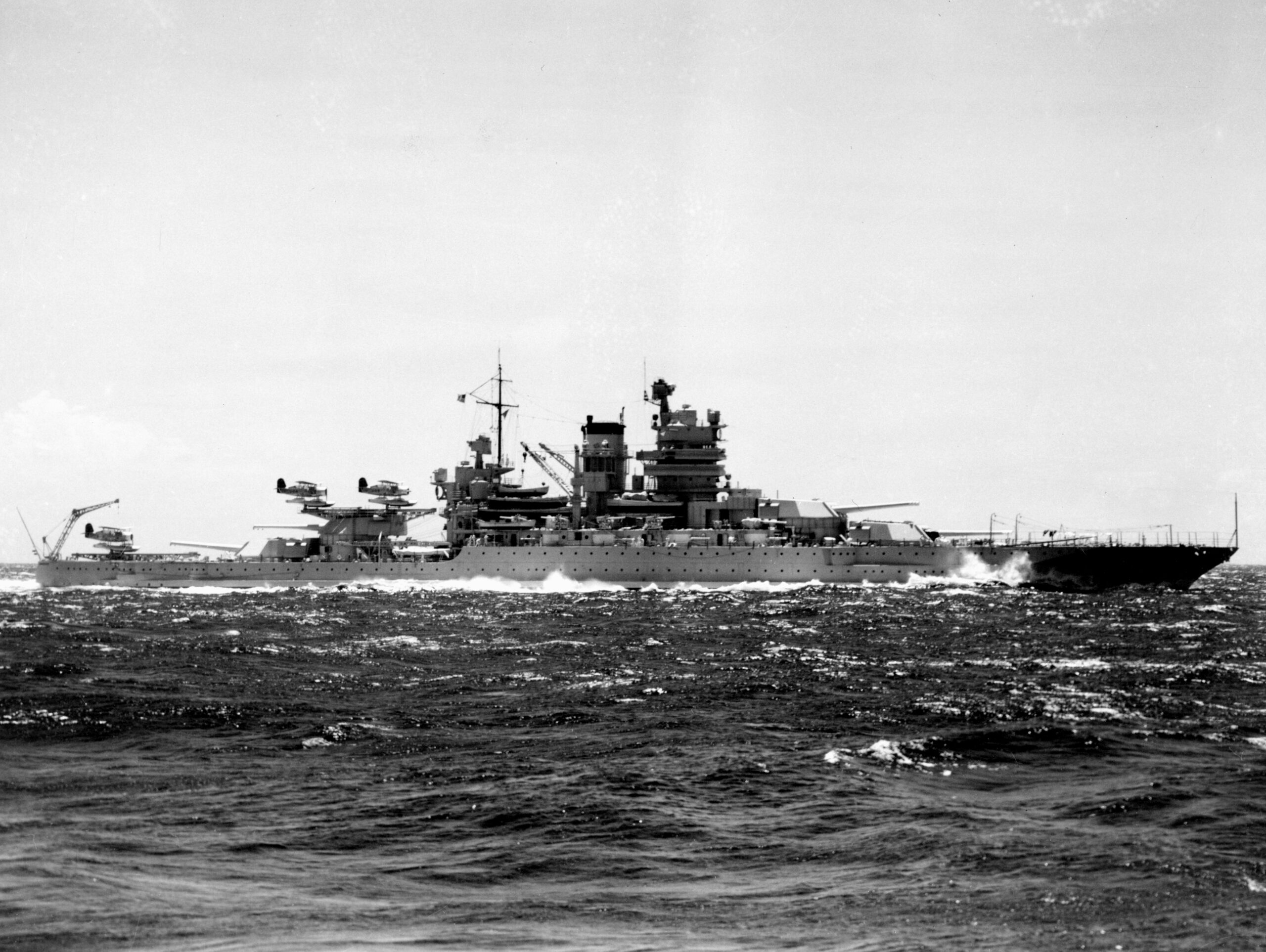
The U.S. Navy battleship USS Mississippi (BB-41) operating at sea during the later 1930s. She has three Curtiss SOC Seagull aircraft on her catapults.
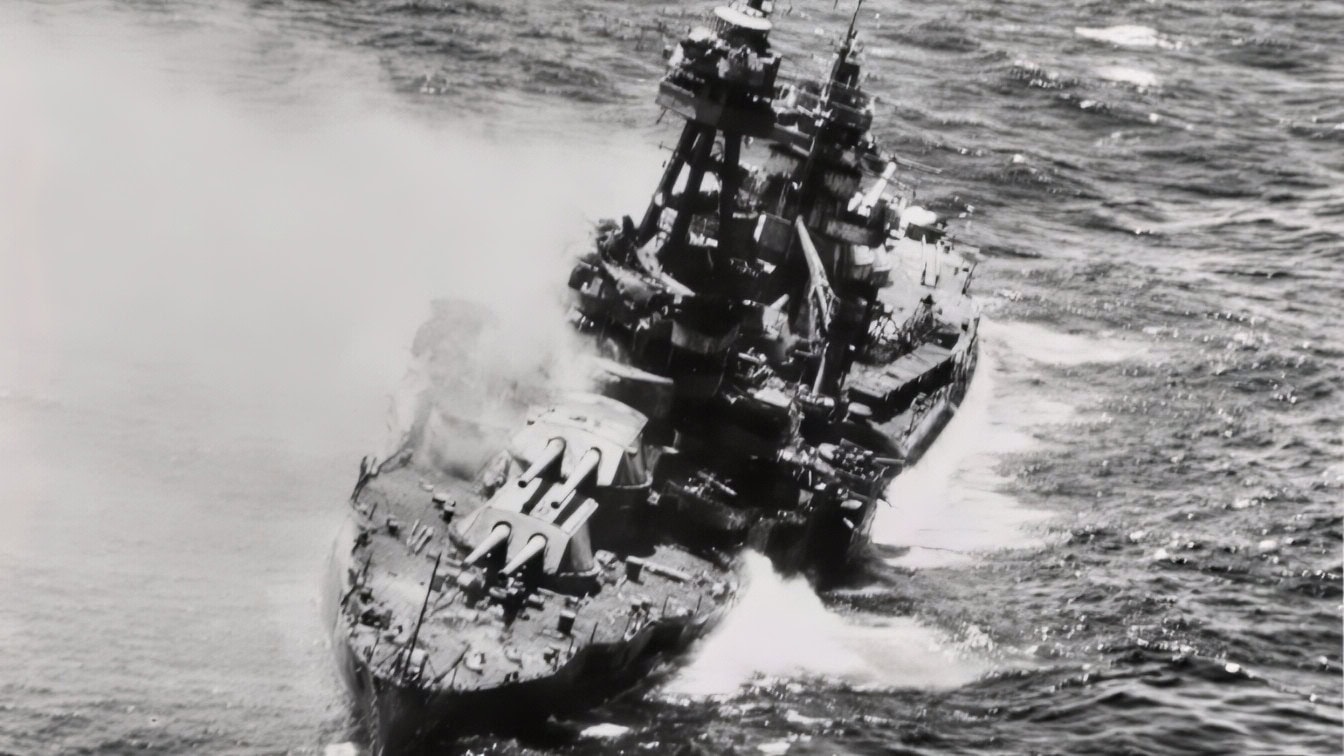
USS New York Battleship US Navy. Creative Commons Image.
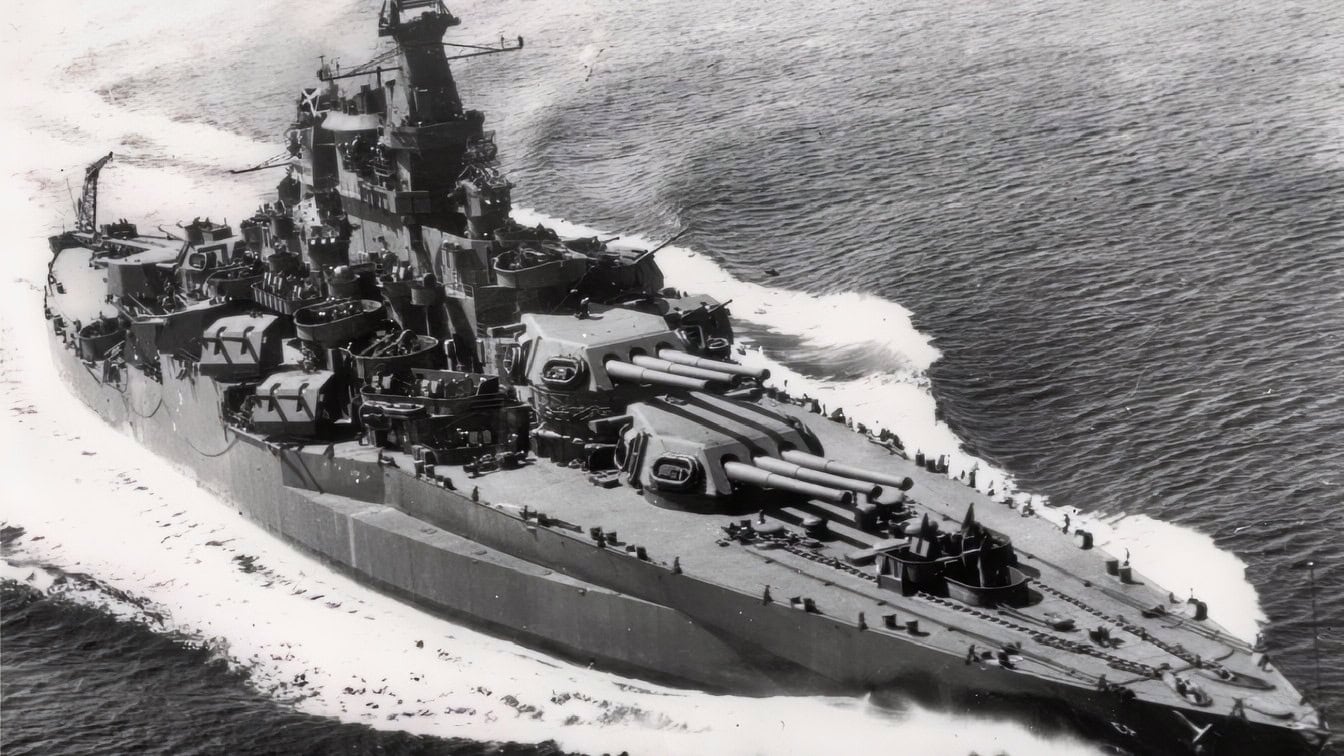
USS Tennessee Battleship US Navy Photo
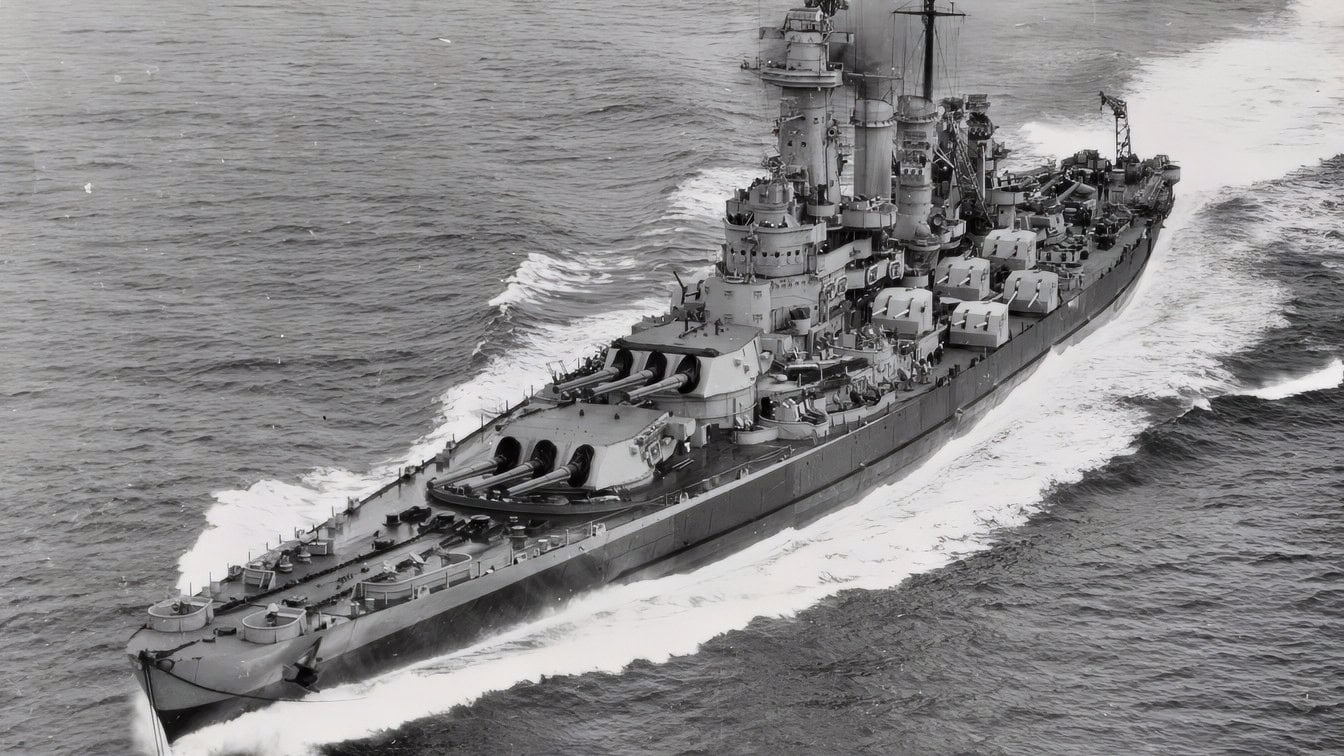
USS Washington Battleship Creative Commons Image
But the success of Pearl Harbor was relatively brief, for aspects of the attack are less commonly remembered.
Namely, the fact that the ships sunk at Pearl Harbor were sunk in about 40 feet of protected harbor water, not thousands of feet of open ocean.
Accordingly, the US Navy salvaged and returned to service six of the eight battleships sunk at Pearl Harbor. The Arizona was destroyed, of course, and remains today where she sank.
The Oklahoma was raised, though too badly damaged to justify returning to combat. But the rest survived, repaired and resurrected to be fired upon the Japanese fleet, serving as something of a ghost fleet.
Battle Damage Assessment
Three of the battleships damaged at Pearl Harbor were only superficially harmed and returned to service relatively quickly.
The Pennsylvania was damaged by bombs while in dry dock, but remained fundamentally intact.
The Maryland was struck by bombs, too, but protected from torpedoes thanks to her position inboard of Oklahoma, which took the brunt of the destruction.
The Tennessee suffered bomb damage and was temporarily trapped alongside the wreck of the West Virginia, but was later recovered structurally.
These ships were fortunate—they required only repairs rather than outright resurrection.
Resurrecting the Rest
The other vessels required something somewhat remarkable: a true resurrection. The Nevada is famous as the only battleship to get underway during the attack.
Japanese aircraft naturally responded by concentrating on her, for fear she could escape the harbor. She was hit with torpedoes and multiple bombs.
The crew eventually beached her deliberately rather than risk losing her in the navigation channel.
The vessel was refloated in February 1942 and enjoyed a fantastic second career, including Atlantic convoy duty, bombardment during Normandy, and eventually a return to the Pacific, where she bombarded Iwo Jima and Okinawa.
Indeed, a ship lost at Pearl Harbor ended the war shelling the Japanese who had previously sunk her.
The California was hit by two torpedoes and bombs before settling into the harbor mud. Salvaging her required more than simply pumping out the water.
First, engineers had to prevent water from immediately rushing back through the enormous holes punched in the hull.
Divers had to work in hazardous conditions around damaged hulls, wreckage, fuel, and flooded compartments to graft temporary patches and cofferdam-type structures that sealed damaged areas enough for pumping and refloating.
The effort paid off; California was refloated in March 1942 before being sent to Puget Sound for extensive reconstruction.
But arguably the most impressive resurrection was the West Virginia. After taking several torpedo hits and multiple bombs, she settled onto the harbor bottom.
Salvage teams had to patch massive underwater damage, pump flooded spaces, remove wreckage, recover remains, and restore enough structural integrity to float the 30,000-ton battleship again.
Again, the Navy was successful; West Virginia was refloated and sent to Puget Sound for reconstruction, where the Navy essentially rebuilt the 1920s battleship for the modern era.
Opportunistic Modernization
The repairs and reconstruction needed after Pearl Harbor gave the Navy a convenient excuse to modernize its old battle line.
The West Virginia, California, and Tennessee emerged afterward with dramatically altered appearances.
They removed old cage-mast architecture in favor of modern tower superstructures, and the hulls received large anti-torpedo bulges.
Stronger anti-aircraft batteries were also added, including 5-inch dual-purpose guns, 40-mm Bofors, and 20-mm Oerlikons.
Surigao Strait
On October 25, 1944, the Battle of Surigao Strait began as part of the larger Battle of Leyte Gulf. Japanese Vice Admiral Shoji Nishimura’s force advanced through the strait at night.
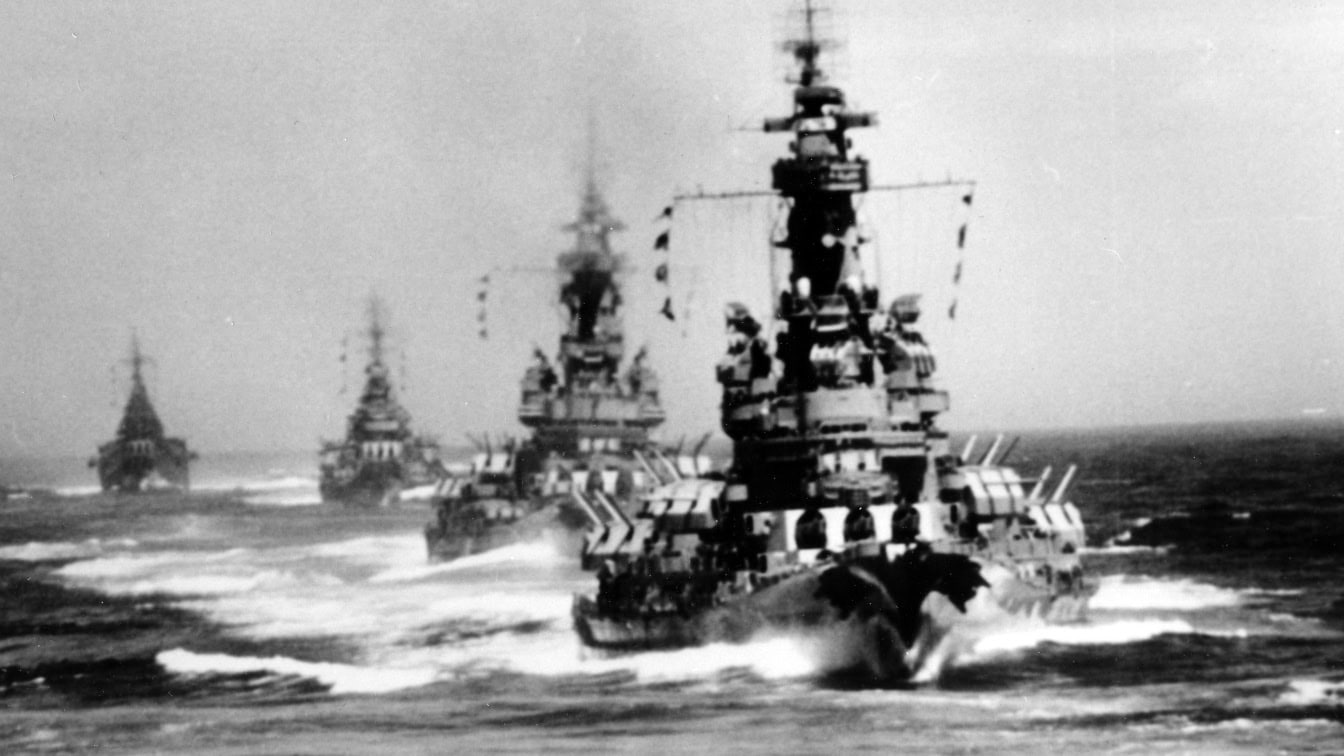
But waiting for the Japanese, under Rear Admiral Jesse Oldendorf, were six battleships: West Virginia, Maryland, Mississippi, Tennessee, California, and Pennsylvania.
Five had been at Pearl Harbor.
Three had been sunk or settled and subsequently rebuilt.
It was, in effect, a ghost fleet.
The Japanese force was shattered in what would become the last battleship-versus-battleship engagement in naval history—a perfect symmetrical ending for the ships lost at Pearl Harbor.
About the Author: Harrison Kass
Harrison Kass is a writer and attorney focused on national security, technology, and political culture. His work has appeared in Tablet, City Journal, The Hill, The Spectator, and The Cipher Brief. He holds a JD from the University of Oregon and a master’s in Global & Joint Program Studies from NYU. More at harrisonkass.com.