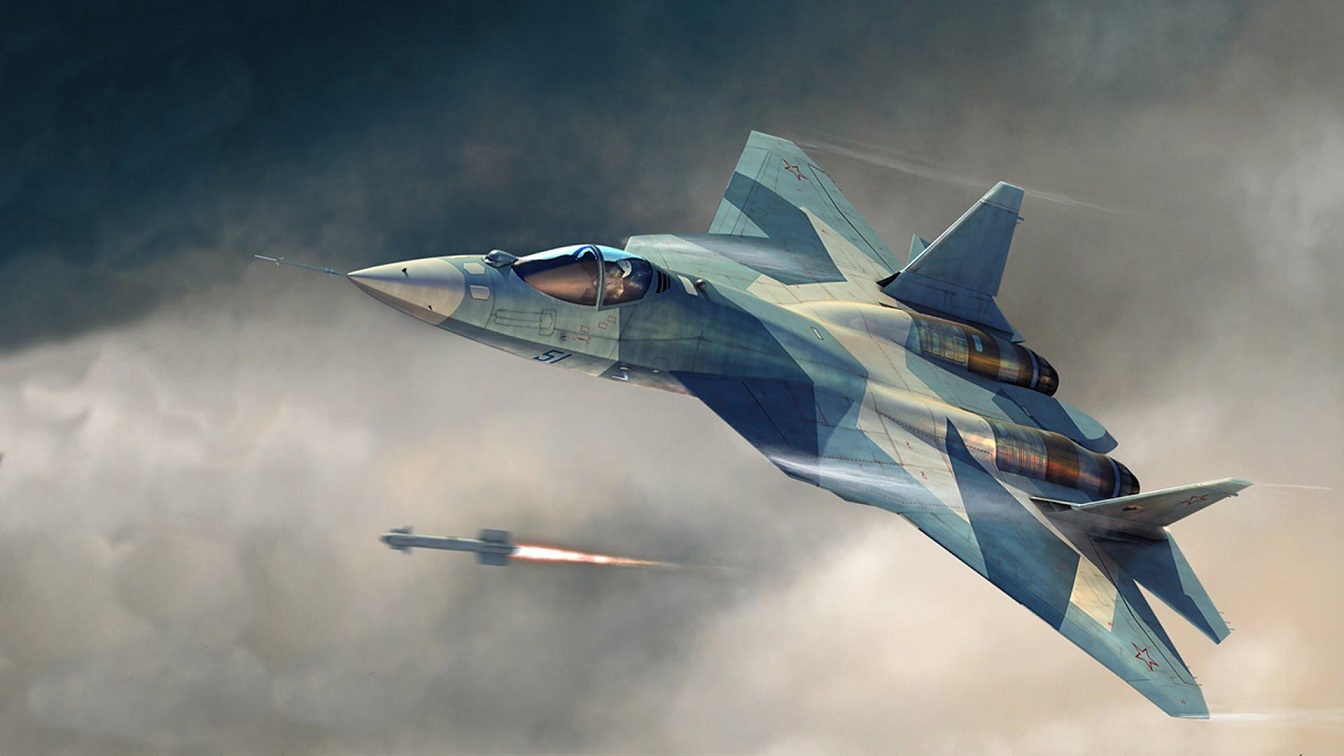
Summary and Key Points: Russia’s Su-57 Felon is, on paper, a remarkable aircraft — nominally fifth-generation, twin-engined, supermaneuverable, with an internal weapons bay and long-range capability. It is also one of the very few stealth fighter programs on earth that a foreign government can actually buy into. The F-35 is restricted to American partners and allies. China’s J-20 has never been offered for export. Moscow has been aggressively marketing the Su-57, and after years of trying, it has one confirmed foreign operator: Algeria, which is reported to have taken delivery of two aircraft against an order of roughly fourteen. Moscow says other contracts are signed, and deliveries will start this year. It has not named a single customer. And there is a plainer explanation for the thin order book than politics or price: estimates of the Su-57’s frontal radar cross-section range from about 0.1 to 1.0 square meters — compared with something in the neighborhood of 0.0015 for an F-35A.
Russia’s Su-57 Felon Stealth Fighter Challenge
Russia’s Su-57 is, on paper, a remarkable aircraft.
Nominally fifth-generation, twin-engined, and supermaneuverable, the aircraft has been keen to shop around to other countries eager to build out their air forces with the latest and greatest in Russian aerospace.
And while access to other stealth fighter programs, like the American F-35 program or China’s J-20 and J-35 aircraft, is difficult to secure, the Russian program has not proven an attractive alternative, and the fighter has enjoyed only limited success on the international export market.
Algeria is currently the only foreign operator that can be said with reasonable confidence to have taken delivery of the fighter jet.
While Moscow says it has signed further export contracts and will begin deliveries to new foreign customers sometime this year, it has not named those countries, and independent confirmation of those orders is lacking.
The jet may not have enjoyed much success despite being one of the few stealth programs open to foreign buy-in. It may not actually be that stealthy after all.
Stealth, or Lack Thereof
The Su-57 is a relatively large, twin-engine, twin-tail fighter designed for high speed, supermaneuverability, and long range, with an internal weapons bay and advanced avionics.
It mishmashes traditional Soviet-turned-Russian fighter strengths — raw performance — with some low-observable features. Serpentine air intakes, internal carriage of munitions, and other design features help minimize the fighter’s radar cross-section, a measure of observability to adversary radar.
But experts are skeptical of its overall stealth capabilities.
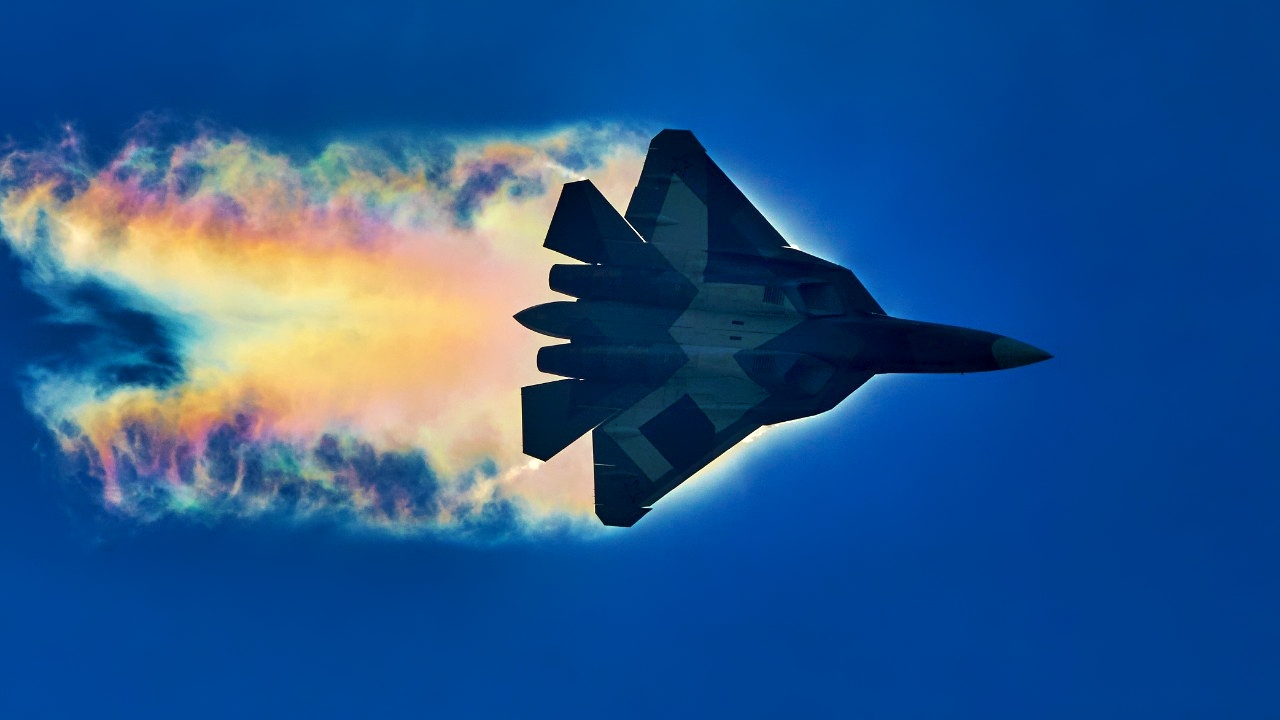
Russia’s Su-57 Felon Fighter

Su-57 Felon Fighter from Russian Air Force.

Su-57 and Su-75 Checkmate Russian Air Force.
Estimates of the Su-57’s frontal radar cross-section typically range from around 0.1 to 1.0 square meters, orders of magnitude larger than the roughly 0.0015 square meters estimated for the F-35A.
Some analysts have characterized the Su-57 as a stealth-lite fighter — in essence, a fourth-generation aircraft with partial low-observable features rather than a true fifth-generation, all-aspect stealth aircraft.
Su-57 Export Customers
Algeria is believed to be the first country and, as of now, still the only confirmed export customer of the Su-57.
There is evidence of Su-57s operating in Algeria since last year, and several sources cite an initial batch of two aircraft delivered, with a total order of about 14 jets.
Aside from Algeria, Rosoboronexport’s head, Alexander Mikheev, said earlier this year that orders for the jet include several Su-57 export contracts and that deliveries to new customers could start this year.
But identities, quantities, and contract details remain undisclosed. Until more information becomes available, those claims are considered speculative. Still, the lack of clarity has fueled intense speculation.
Iran, Kazakhstan, and potentially a Middle Eastern buyer have been considered, but none have been officially confirmed, and no independently verified deliveries have been reported.
India, once one of the more promising prospects for Su-57 exports, decided to eschew the fighter in 2018, and talks about local licensed production have not resulted in a publicly acknowledged deal between the two countries.
The Su-57’s export record, compared with that of what is perhaps its biggest rival, the American-led F-35 fighter family, is extremely thin.
Even if all the rumored and unverified export contracts materialize, they would still be for small aircraft fleets compared with the hundreds of F-35s exported to the United States’ friends and allies.
Su-57 Combat Record
The Su-57 has no verified air-to-air combat record. Since 2022, most independent assessments conclude that Russia has used the jet very sparingly over Ukraine, mainly to launch long-range missiles from within Russian airspace instead of conducting penetrating strikes or dogfights over contested territory.
Russian claims of stealthy deep strikes and Ukrainian claims of hits on Su-57s on the ground are contested by either side, though Oryx, an open-source tracking group, does list one Su-57 as damaged on the ground.
Production Prospects
Russia’s defense industry has been rerouted toward the wartime mass production of simpler, attritable systems to prosecute its ongoing war in Ukraine, at the expense of high-end programs like the Su-57, which faces potential bottlenecks in advanced components, engines, and skilled labor.
By early 2026, some estimates put the Russian Air Force’s Su-57fleet at roughly twenty to thirty aircraft, well below the 76-aircraft order that was to be filled by 2027-2028.
Legacy aircraft like the Su-35 and Su-34 are easier to build in volume and are in more immediate demand.
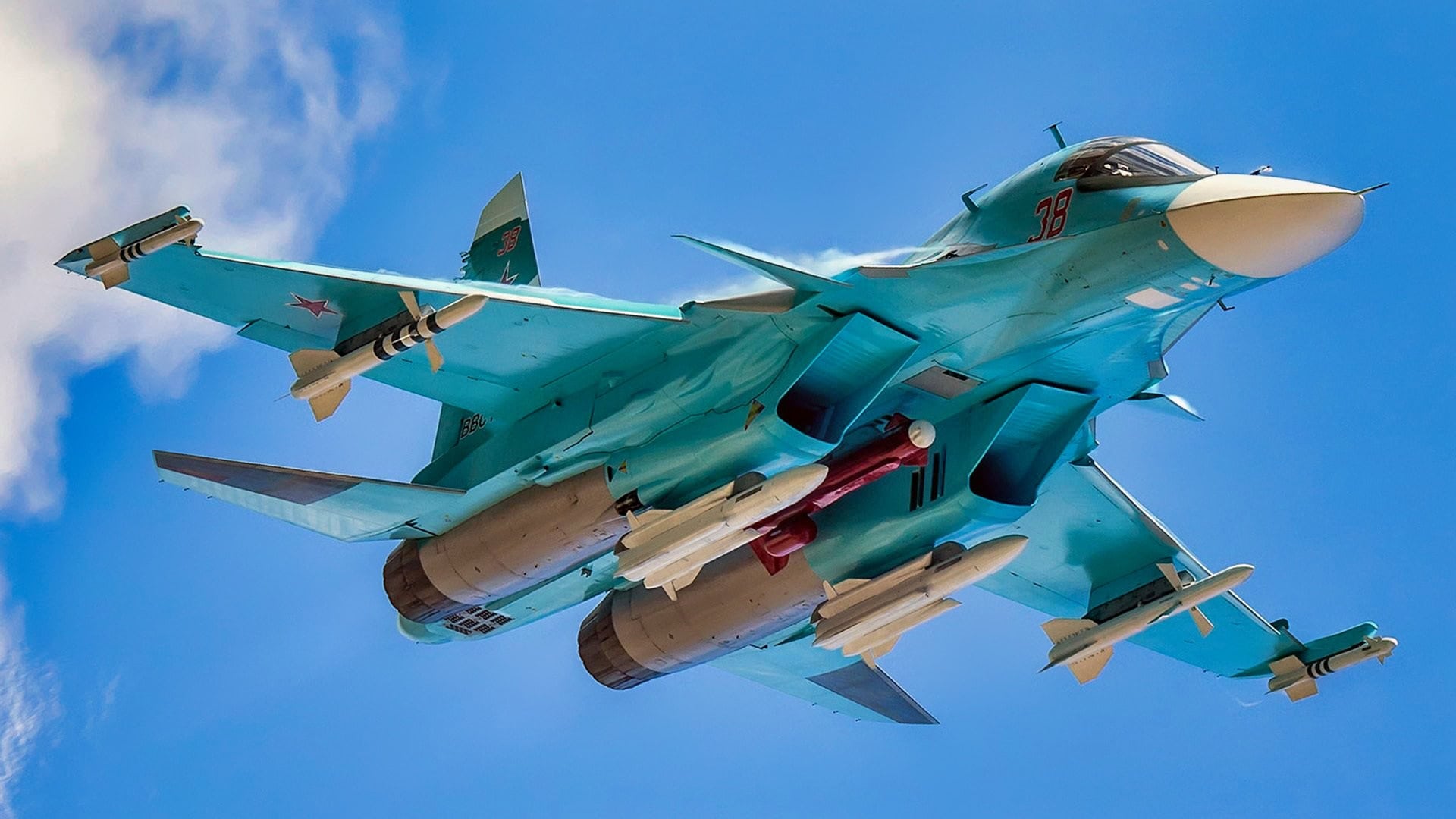
Su-34 Fullback. Image Credit: Creative Commons.
For countries eager to buy into the Su-57 program, one of the highest risks is not purchase price or political considerations but delivery.
Algeria’s reported plan to receive up to dozens of Su-57s by 2027 would require a production tempo that looks highly optimistic given competing domestic demands on Russia’s defense industrial capacity, sanctions on crucial components, and the Su-57’s extremely slow ramp-up.
Unless Moscow prioritizes foreign batches over its own force expansion, relatively small, staggered deliveries are far more likely than a rapid buildup of foreign Su-57 fleets.
About the Author: Caleb Larson
Caleb Larson is an American multiformat journalist based in Berlin, Germany. His work covers the intersection of conflict and society, focusing on American foreign policy and European security. He has reported from Germany, Russia, and the United States. Most recently, he covered the war in Ukraine, reporting extensively on the war’s shifting battle lines from Donbas and writing on the war’s civilian and humanitarian toll. Previously, he worked as a Defense Reporter for POLITICO Europe. You can follow his latest work on X.