
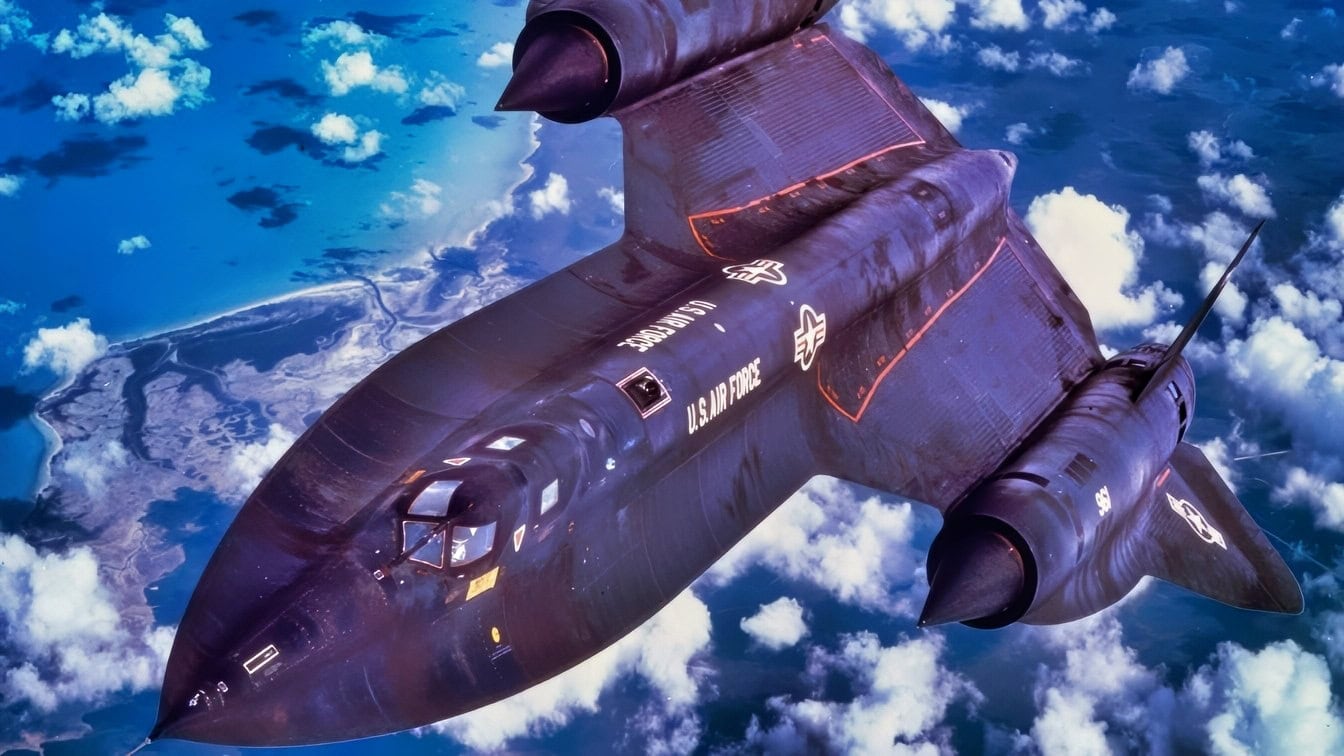
Summary and Key Points: The Lockheed SR-71 Blackbird landed from every mission measurably longer than when it took off. At its Mach 3.2 cruise, friction heated the titanium skin to around 620 degrees Fahrenheit on average and toward 1,000 at the chines and inlets — while the outside air at 80,000 feet sat near 70 degrees below zero. Hot metal expands, and pilots described the fuselage stretching three to four inches in flight across a 107-foot aircraft. A conventionally built airframe would have buckled, warped, or torn itself open. Kelly Johnson’s engineers did something else: they built it loose.
The SR-71 Came Back From Every Mission Several Inches Longer Than It Took Off. That Was the Design
The heat was a product of physics; no engine or material choice could avoid it.
An aircraft pushing through the atmosphere at Mach 3.2 like the SR-71 Blackbird compresses the air ahead of it and drags it violently along its skin; that compression and friction directly convert kinetic energy into heat.
The Blackbird cruised in air that was itself brutally cold, close to 70 degrees below zero Fahrenheit at 80,000 feet, and the friction still drove the skin to temperatures that pilot accounts placed at an average around 620 degrees Fahrenheit across the fuselage, with the nose chines and engine inlets running hotter still, toward 1,000 degrees at the hottest points.
The crucial difference from every other fast jet was duration.
A fighter can dash past Mach 2 and dive away before the heat soaks in, while the Blackbird held its speed for hours, so the entire structure reached thermal equilibrium at oven temperatures and stayed there.
Aluminum, the metal of ordinary aircraft, softens and fails well below those temperatures, which is why the airframe was built overwhelmingly from titanium alloy, a metal that retains its strength when hot, accounting for between 85 and more than 90 percent of the structure.
Titanium solved the strength problem and created a second one, because metal that gets that hot does not stay the same size.
An Airplane Built Loose on Purpose
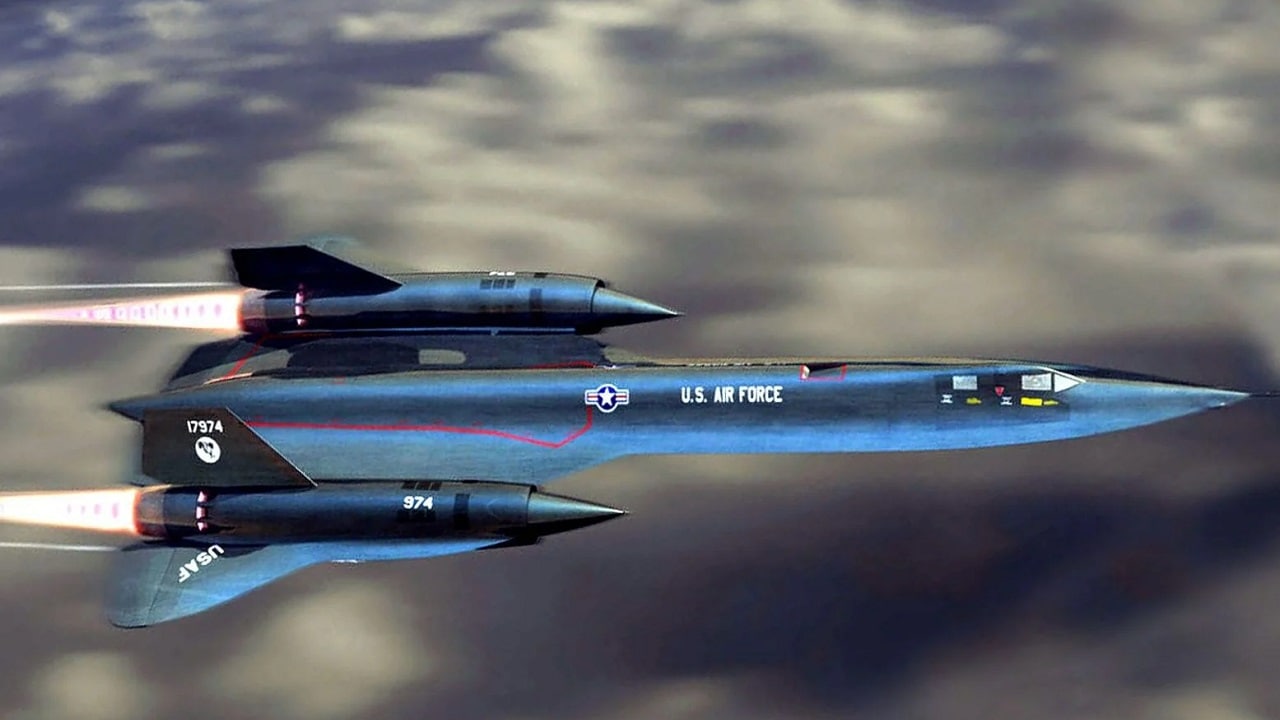
SR-71 Spy Plane. Image Credit: Creative Commons.
Heated metal expands, and at these temperatures the expansion changed the airplane’s dimensions in flight.
Veteran pilots described the fuselage growing by three to four inches in length at cruise, roughly ten centimeters of stretch in a 107-foot aircraft, as the titanium swelled with the heat.
A conventionally built airframe would have warped, buckled, or torn itself apart under that kind of movement, so Kelly Johnson’s Skunk Works engineers made a decision that still startles: they built it loose.
Panels were fitted with deliberate gaps and flexible joints sized so that everything would slide into proper alignment only at operating temperature, so a Blackbird sitting cold on the ramp looked almost shoddy, its skin gapped, its contracted edges razor-sharp.
The most famous consequence involved the fuel.
The tanks were part of the airframe and shared its expansion joints, so on the ground the cold aircraft leaked JP-7 fuel steadily onto the concrete, and ground crews worked around drip pans as a matter of routine.
The leaks were not a defect but the cold state of a design that sealed itself only when heat swelled the joints tight after takeoff, so the aircraft launched with a partial load and topped off from a tanker once airborne.
Manufacturing an airframe this way demanded tools and techniques that did not exist when the program began, and Lockheed had to invent them.
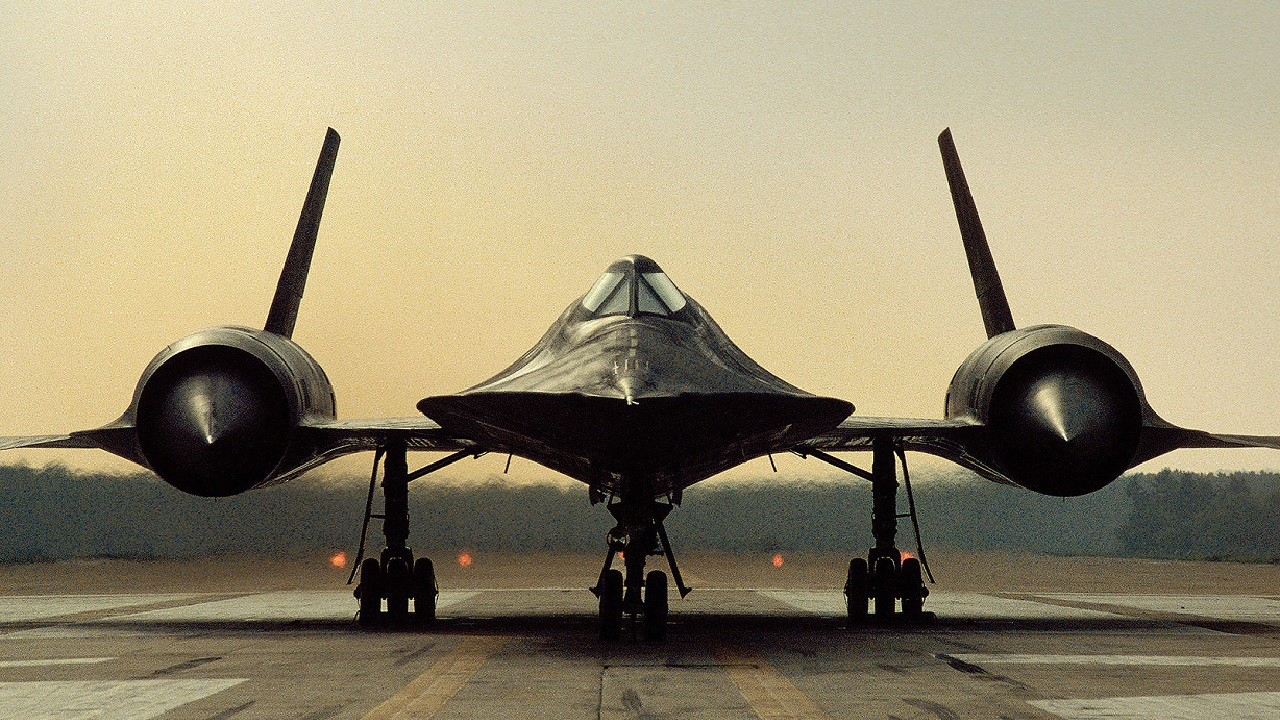
SR-71 Spy Plane. Image Credit: Creative Commons.
Corrugations, Quartz, and Black Paint
Three of the Blackbird’s most recognizable features were direct answers to the expanding skin.
The first is visible on the wings, where large sections of the titanium surface are corrugated, rippled in shallow grooves running parallel to the airflow, so the metal could expand and contract like an accordion without warping.
Smooth sheets would have buckled as they grew, and at Mach 3 the corrugations cost almost nothing, since the air skipped across the ridges and was even guided straight back along the wing.
Critics joked that Johnson had built a Mach 3 successor to the corrugated airplanes of the 1920s, and the joke did not survive contact with the results.
The second answer was in the windows, because ordinary aircraft glass would have distorted in the heat.
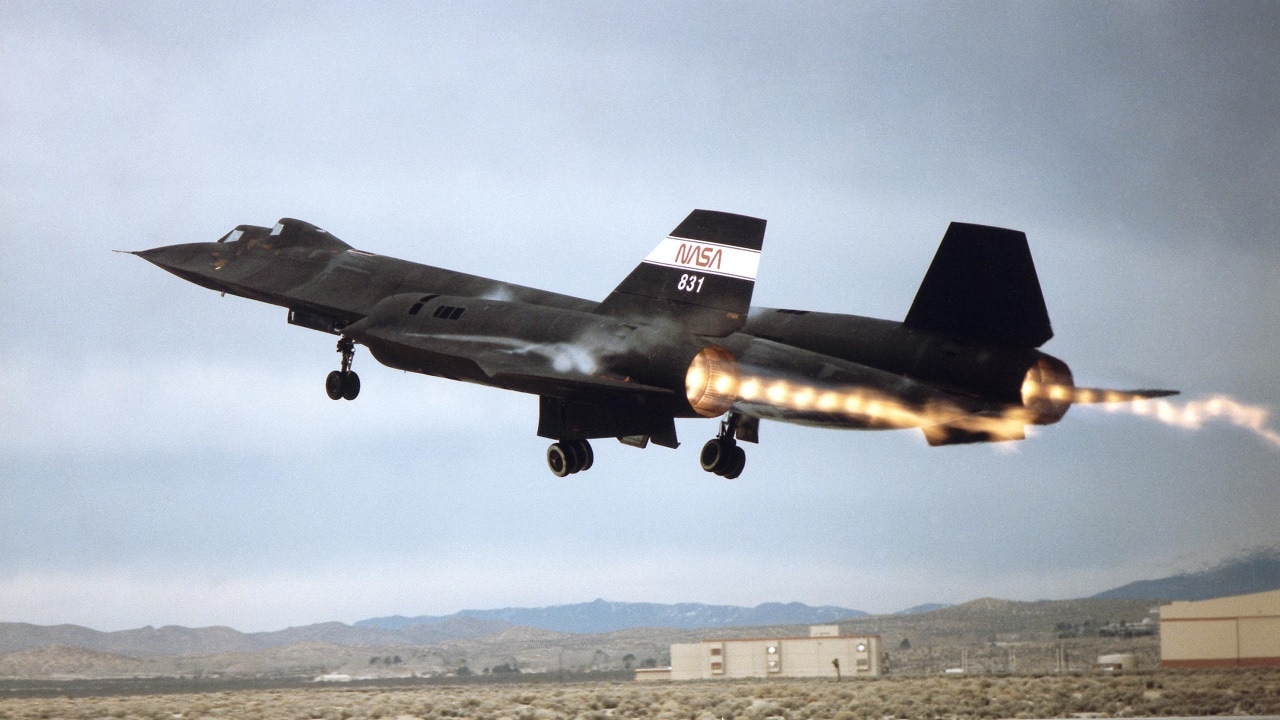
The image is of an SR-71 Spy Plane. Image Credit: Creative Commons.
Corning developed windows of high-purity solid quartz, a multiyear effort costing millions, so the crew had something to see through that could withstand 600 degrees on its outer face.
The heat still penetrated inward, and cockpit surfaces grew warm enough that crews described the inside of the canopy as feeling like an oven door to a gloved hand, and pilots occasionally warmed their meals against the glass.
The third answer was the color. The iconic black paint was a high-emissivity coating chosen to radiate heat away from the skin, lowering airframe temperatures by dozens of degrees, which made black a thermal decision before it was ever a name.
The Fuel That Carried the Heat Away
The joints kept the structure intact, and a separate system kept everything inside it alive.
The Blackbird’s JP-7 fuel doubled as the aircraft’s primary coolant, pumped through heat exchangers that pulled heat from the airframe, engine oil, hydraulics, and cockpit before the fuel ever reached the engines, arriving at the burners already hot.
The roughly 12,000 gallons aboard were, in effect, a flying reservoir for heat absorption, which is why the fuel had to be a blend stable enough to absorb that load without breaking down. The titanium held its strength, the joints absorbed the growth, the paint radiated what it could, and the fuel carried away the rest.

SR-71 Image: Creative Commons.
The Performance All That Heat Bought
The engineers accepted all of it, the stretching fuselage, the leaking tanks, the quartz glass, because the heat was the price of a performance envelope nothing else has ever matched.
The Blackbird cruised at Mach 3.2 at altitudes between 79,000 and 85,000 feet, covering 36 miles every minute and setting an absolute speed record of 2,193.167 miles per hour that still stands.
The limit on going faster was not power but temperature, since the flight manual capped the aircraft at Mach 3.3 to protect the engines from air entering the compressors above 427 degrees Celsius, meaning the same heat that stretched the airframe was the true ceiling on the fastest airplane ever built.
The engines themselves ran at full afterburner for hours, a regime no other aircraft sustained, and the speed and altitude the heat paid for made the Blackbird untouchable, with thousands of missiles fired at it across three decades and not one ever connecting.
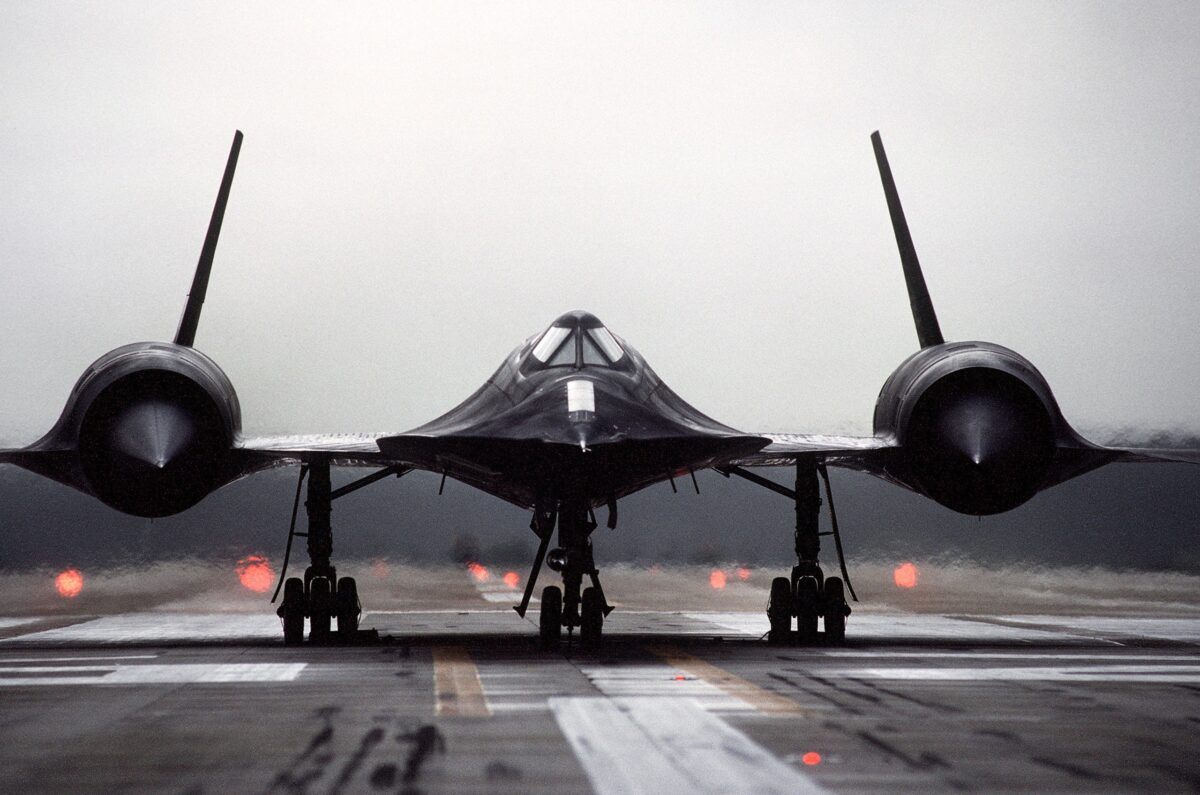
SR-71. Image: Creative Commons.
After landing, the aircraft radiated its mission back into the air, too hot for ground crews to handle until it had cooled, ticking and contracting back toward its ground dimensions, inches shorter than it had been over hostile territory an hour before.
The stretch was the visible signature of a machine operating at the edge of what metal and physics allow, an airplane that grew when it worked, and the fact that no aircraft flying today goes fast enough to face the same problem is the measure of what it achieved.
About the Author: Harry J. Kazianis
Harry J. Kazianis (@Grecianformula) was the former Senior Director of National Security Affairs at the Center for the National Interest (CFTNI), a foreign policy think tank founded by Richard Nixon based in Washington, DC. Harry has over a decade of experience in think tanks and national security publishing. His ideas have been published in the NY Times, The Washington Post, The Wall Street Journal, CNN, and many other outlets. He has held positions at CSIS, the Heritage Foundation, the University of Nottingham, and several other institutions related to national security research and studies. He is the former Executive Editor of the National Interest and the Diplomat. He holds a Master’s degree focusing on international affairs from Harvard University.

