
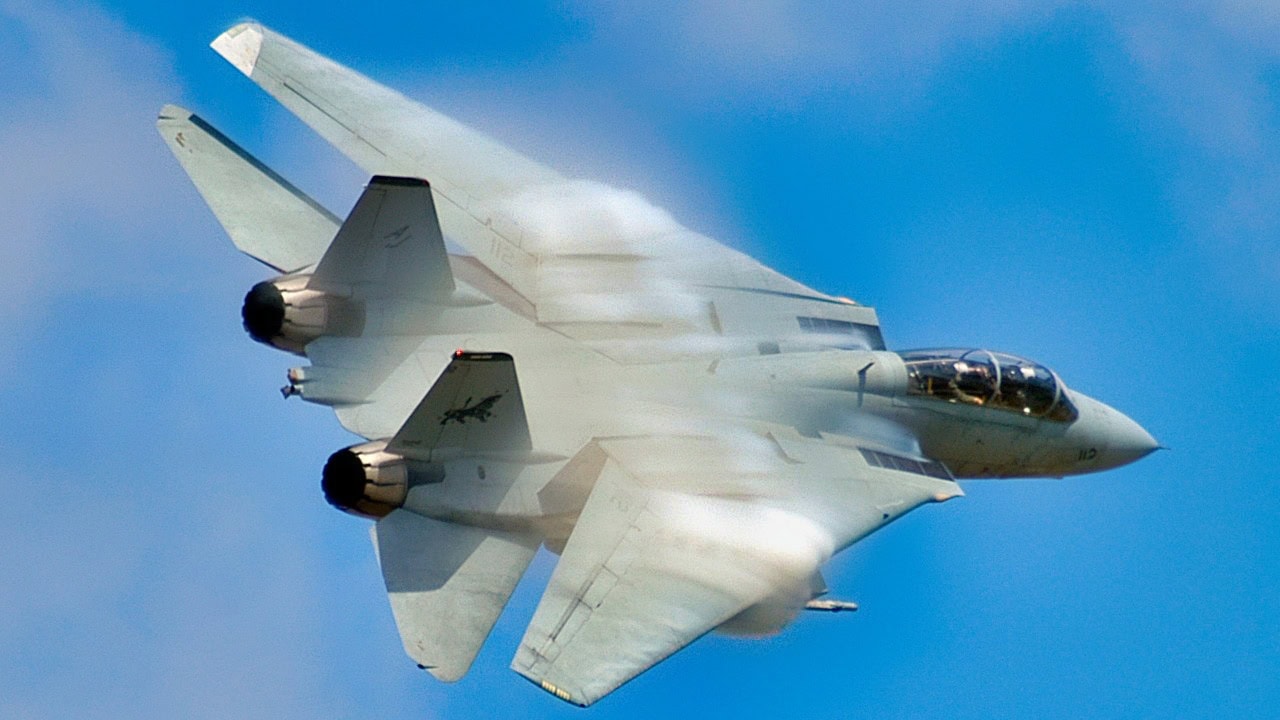
Summary and Key Points: The F-14 Tomcat made its last U.S. Navy flight in 2006, and two decades later, the fleet has nothing quite like it. Its successors, the F/A-18E/F Super Hornet and the F-35C, carry more advanced systems, and the F-35C adds stealth, but the Super Hornet tops out near Mach 1.8 and the F-35 near Mach 1.6, while the Tomcat could reach Mach 2.34. Grumman’s swing-wing interceptor was built to defend carriers against Soviet bombers at long range, and its retirement left a speed gap the Navy never closed.
Meet the F-14 Tomcat the US Navy Might Still Miss
The F-14 Tomcat is an old platform that has been retired for 20 years. During its service, the F-14 was the United States Navy’s aircraft of choice.
While other aircraft outperform it in specific metrics, the Tomcat possessed outstanding performance and a long range, making it the ideal naval aircraft. These capabilities were invaluable for carrier operations, allowing naval aviation to project power even further. Unfortunately, since its retirement, the U.S. Navy has not been able to find a suitable replacement that reaches as far as the F-14 did.
The US Navy’s One-of-a-Kind Fighter
The need for a long-range interceptor arose during the Cold War, when the U.S. Navy faced the threat of Soviet bombers and cruise missiles targeting carrier battle groups.
The F-14 was developed to replace the failed F-111B program (which sought to modify the F-111 for carrier operations) and was explicitly tailored for naval operations.
It was a two-seat aircraft, with a pilot and a radar intercept officer (RIO) on board.
It was equipped with advanced avionics and weapons systems that allowed it to detect, track, and engage multiple targets at long distances.
Its primary mission was to intercept incoming threats before they could reach the fleet, and this required not only powerful radar and missiles but also the ability to fly far from the carrier and remain on station for extended periods.
The range of the F-14 varied depending on mission profile and configuration. In a typical combat scenario, its combat radius was approximately 500 to 600 nautical miles, which translates to roughly 926 to 1,111 kilometers.
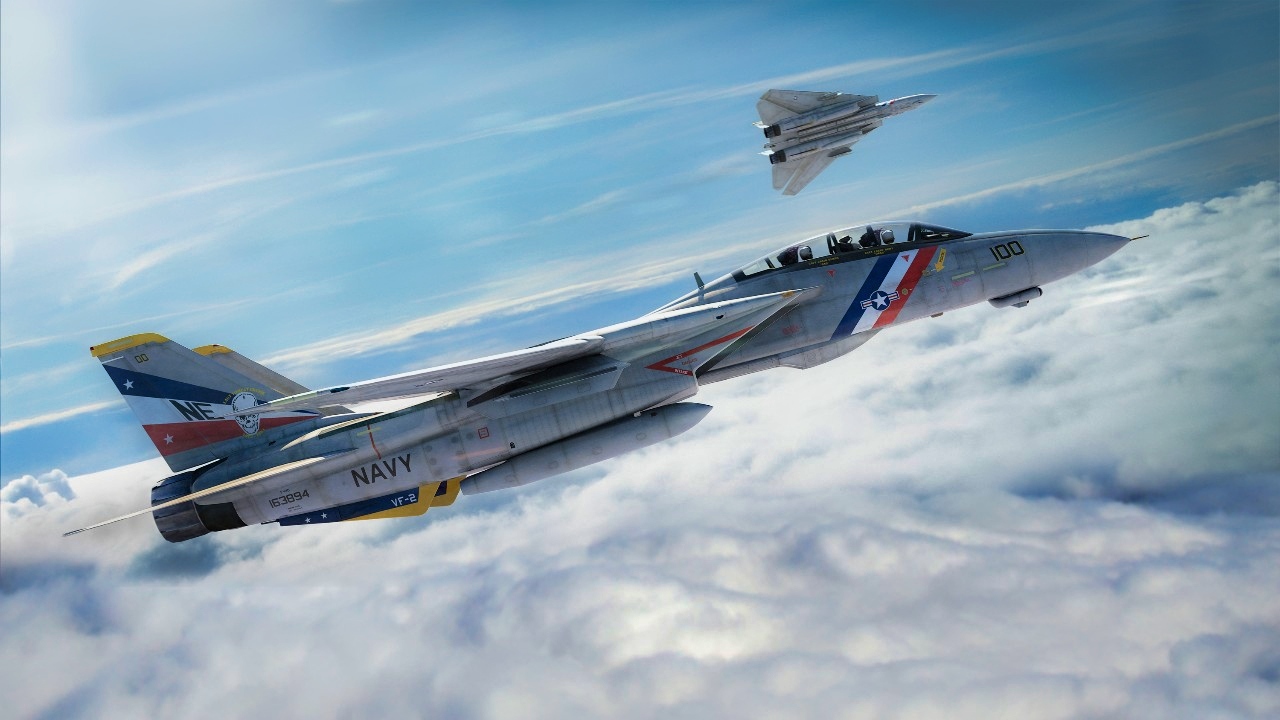
F-14 Tomcat US Navy. Image Credit: Creative Commons.
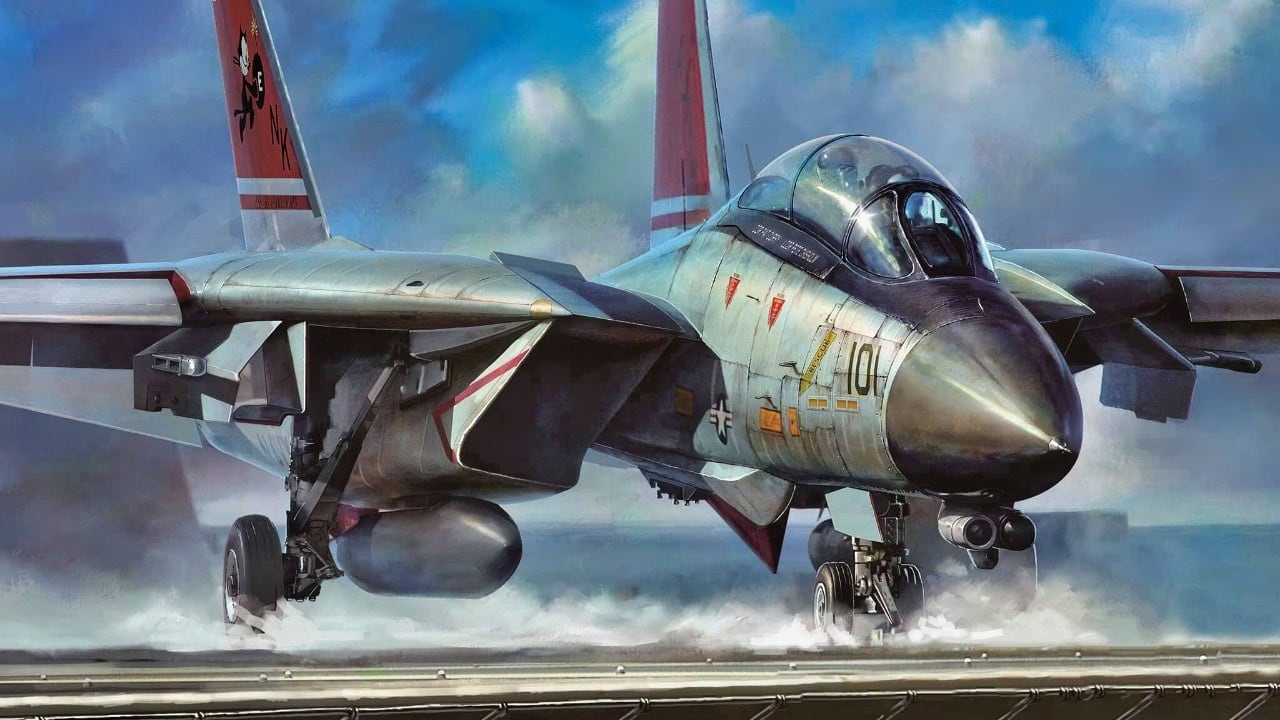
F-14 Tomcat Fighters. Image Credit: Creative Commons.
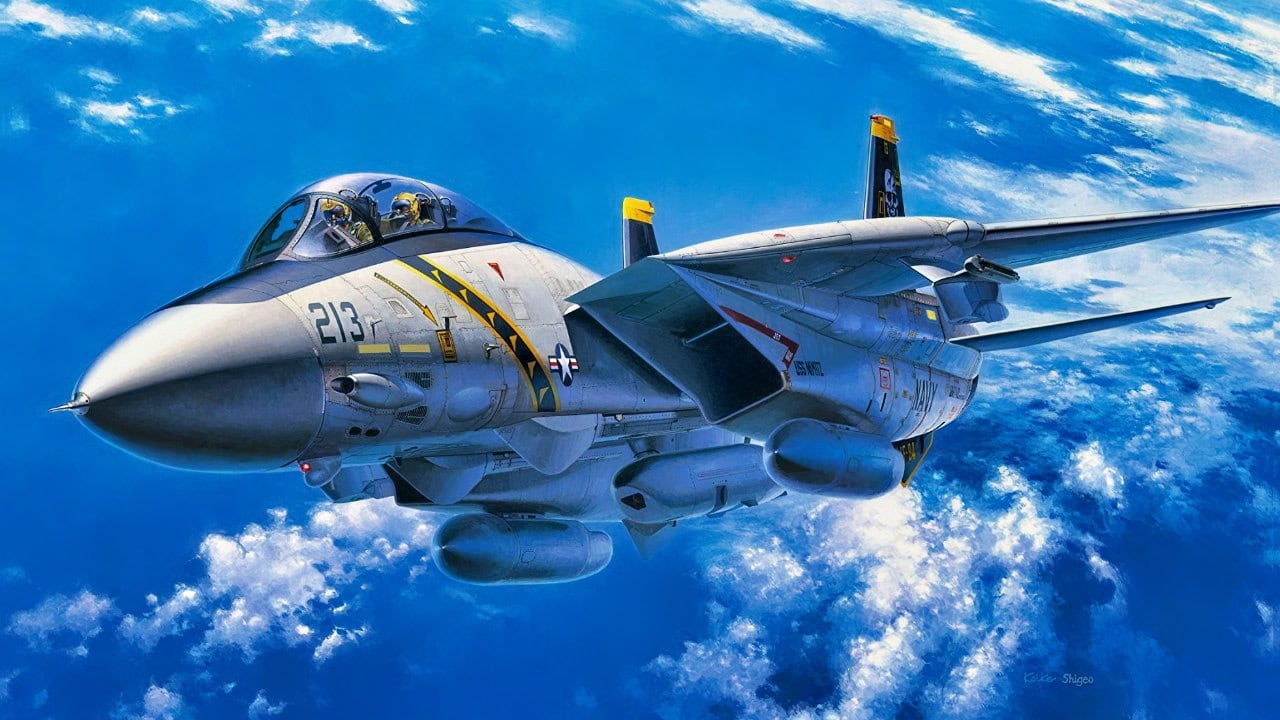
F-14 Tomcat
Toraft could fly out to a target area, engage, and return without refueling.
For ferry missions, when the aircraft was flown from one location to another without a combat load, its maximum range extended to about 1,600 nautical miles (2,963 kilometers).
With aerial refueling, the F-14A’s range became effectively unlimited, constrained only by crew endurance and mechanical limits.
How the F-14 Got Its Impressive Range
But how was the F-14 able to reach such impressive ranges?
First and foremost was its large internal fuel capacity.
The aircraft could carry approximately 16,200 pounds of fuel internally, providing it with substantial endurance without the need for external tanks.
This internal capacity was complemented by the ability to carry external fuel tanks, specifically, two 267-gallon drop tanks mounted under the fuselage.
These tanks could be used to extend the aircraft’s range during long missions and were designed to be jettisoneonecessary during combat to reduce drag and weight.
In combat, if necessary, the aircraft’s variable-geometry wing design.
The wings could sweep forward or backward depending on flight conditions. During takeoff, landing, or low-speed flight, the wings were extended to provide maximum lift and stability.
At high speeds or during cruise, the wings swept back to reduce drag and improve aerodynamic efficiency.
This adaptability allowed the F-14 to maintain optimal performance across a wide range of speeds and altitudes, which in turn contributed to fuel efficiency and extended range.
The Ideal Naval Interceptor
The engines also played a significant role. Early models of the F-14 were powered by Pratt & Whitney TF30 engines, which were known for reliability issues and poor fuel efficiency.
Later models, particularly the F-14B and F-14D, were equipped with General Electric F110-GE-400 engines.
These engines provided greater thrust and improved fuel economy, especially at cruise settings.
While the F-14 was not a true supercruise aircraft in the modern sense, the upgraded engines allowed it to sustain high subsonic speeds without relying heavily on afterburners, which consume fuel at a much higher rate.
Aside from its impressive range, the F-14’s engines enabled the aircraft to reach a top speed of around Mach 2.34.
This enables the Tomcat to respond to threats quickly and to travel great distances in a relatively short time.
To this day, the F-14 remains the fastest naval aircraft in U.S. service, with the F/A-18E/F and F-35 not even coming close.
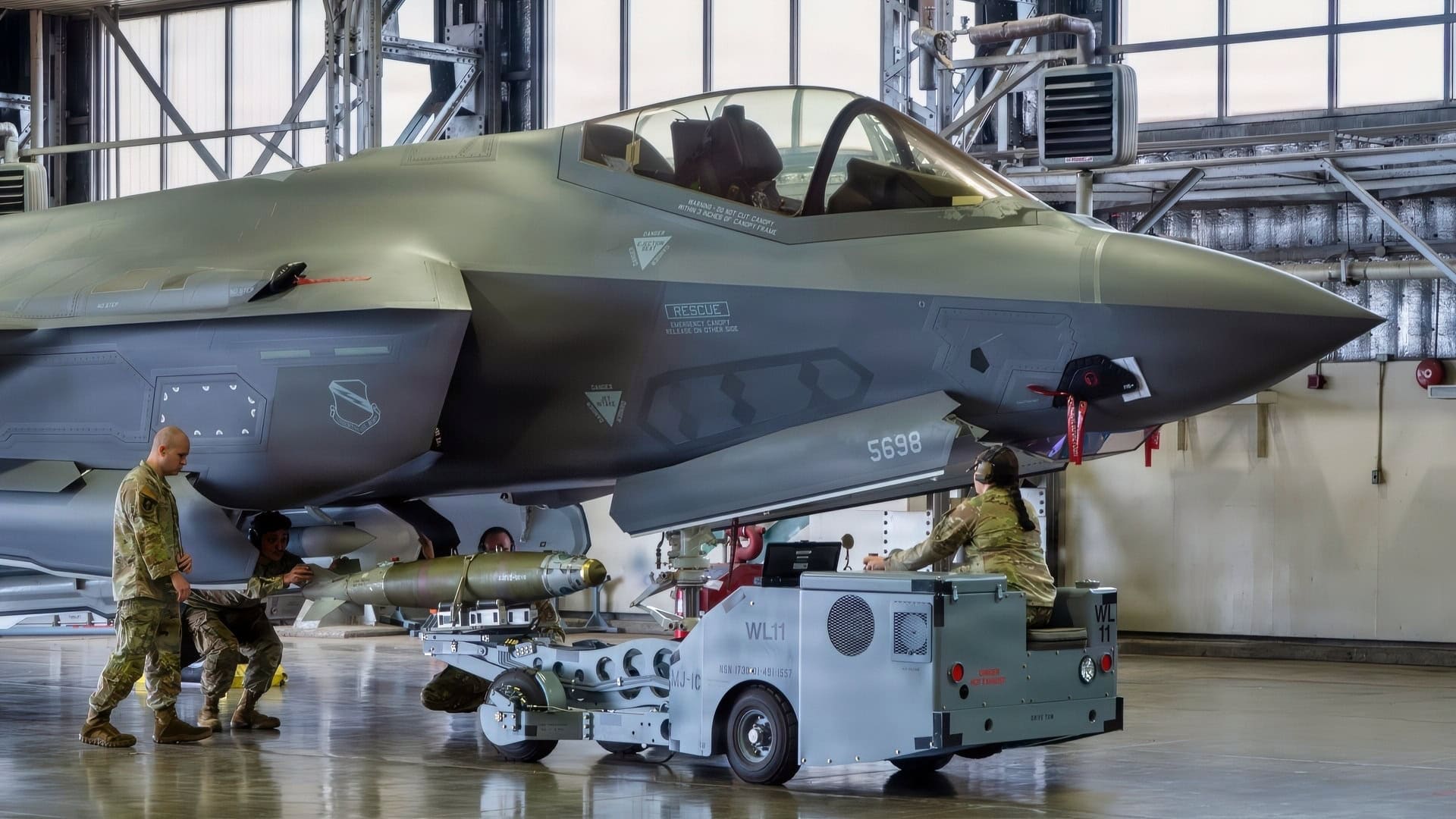
U.S. Airmen assigned to the 35th Aircraft Maintenance Squadron load a munition onto an F-35A Lightning II during a weapons loading demonstration at Misawa Air Base, Japan, Sept. 11, 2026. The demonstration highlighted the precision and technical proficiency required to safely generate combat-ready aircraft and sustain the 35th Fighter Wing’s ability to deliver airpower across the Pacific. (U.S. Air Force photo by Airman 1st Class Angelica Winther)
The Fighter the Navy Could Never Replace
In 2006, the Tomcat took its final flight before being retired for good from the U.S. Navy. It was replaced by the F/A-18 Super Hornet and then by the F-35B/C.
These fighters offered more advanced systems than the F-14, and after the Iranian revolution, retiring the F-14 ensured that Iran could not maintain and modernize its own F-14 fleet.
However, despite its replacements being more advanced in many ways, the U.S. Navy was never able to find another aircraft quite like the Tomcat.
The F-18 and F-35 are good aircraft, great even, but they lack the speed and the range that the F-14 offered.
The F-18 has a top speed of around Mach 1.8, and the F-35 is even slower, at around Mach 1.6 (slower still at sea level).
Furthermore, the F-14’s range remains unmatched by its successor.
The F/A-18 comes close with a total range of around 1,260 nautical miles, but it still falls short.
Granted, the F-35C has a higher combat range of 670 nautical miles, but it still lacks the speed and overall range of the Tomcat.
Retiring the Tomcat was necessary to prevent spare parts from falling into Iranian hands, but by doing so, the U.S. gave itself a minor setback. The F-14 was a one-of-a-kind aircraft that offered high speeds, extended ranges, and deadly armaments.
Many have argued that the F-14 should have been retained and modernized.
Unfortunately, what’s done is done.
The F-14 is no more. The best thing to do now is to learn the right lessons from the F-14 and apply them to future aircraft projects.
About the Author: Isaac Seitz
Isaac Seitz, a Defense Columnist, graduated from Patrick Henry College’s Strategic Intelligence and National Security program. He has also studied Russian at Middlebury Language Schools and has worked as an intelligence Analyst in the private sector.