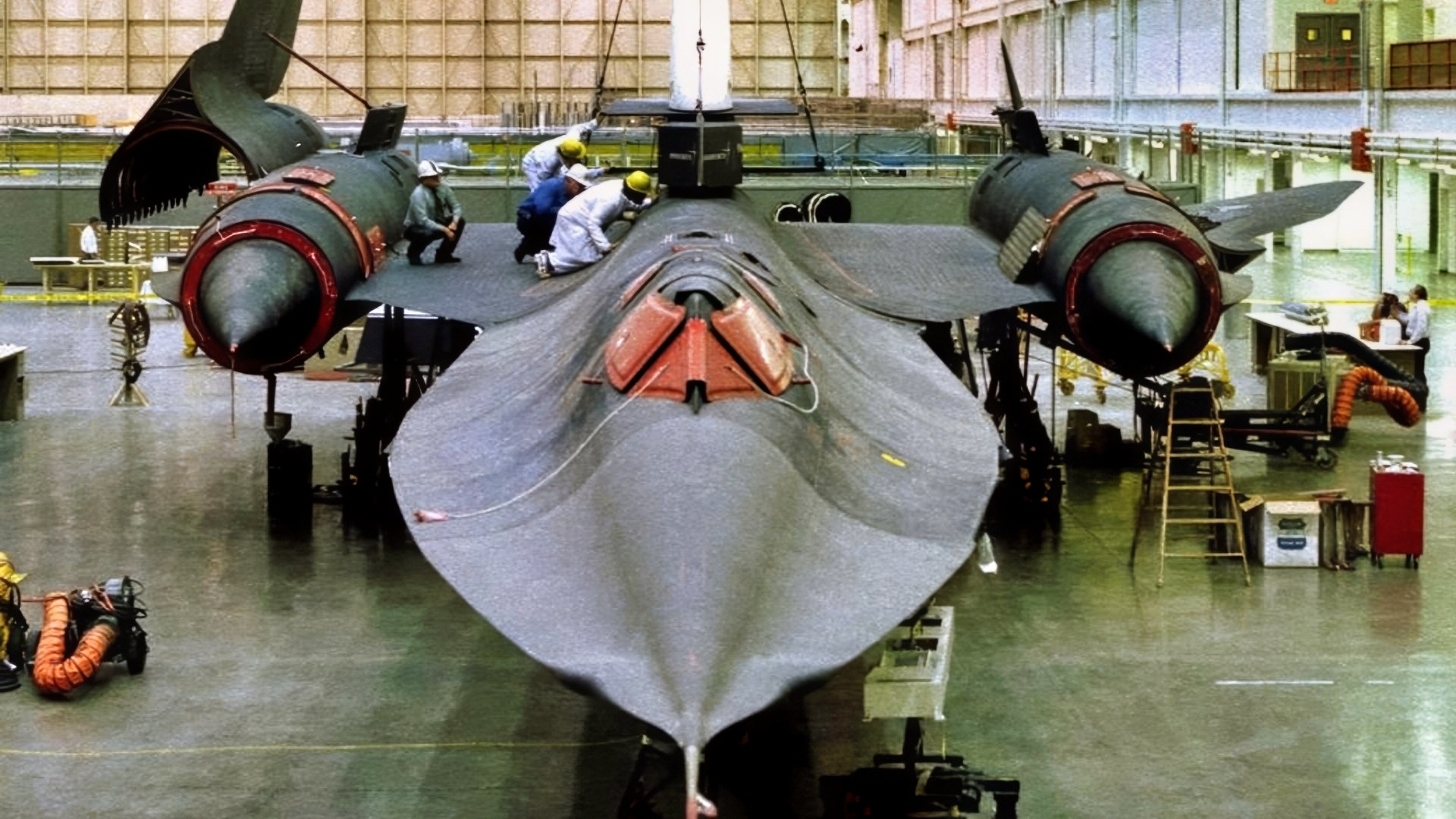
Summary and Key Points: Over the Eglin test range, a Lockheed YF-12 locked its radar onto a QB-47 target drone more than 100 miles away and 14.2 miles below it, then launched an AIM-47 Falcon from roughly 53 miles out and hit it. That was the 1960s: an aircraft cruising above Mach 3 at 75,000 feet, using radar built with electronics from the Kennedy administration. Between March 1965 and September 1966, the YF-12 fired seven of those missiles and killed six drones, and the one miss was traced to a mechanical fault in the missile rather than anything the aircraft did. Lockheed took the Blackbird, pulled the nose cameras out, put the Hughes AN/ASG-18 fire-control radar in their place, and installed three Falcons in internal bays, producing an interceptor meant to kill Soviet bombers before they reached North America. Three were built. None entered service.
The YF-12 Drone Story You Likely Never Heard
The U.S. built multiple iterations of the powerful, popular (though secretive at the time of its service) Lockheed SR-71 Blackbird.
Originally, the Blackbird was intended as a high-end, supersonic surveillance aircraft capable of penetrating the most advanced, well-defended Soviet territory.
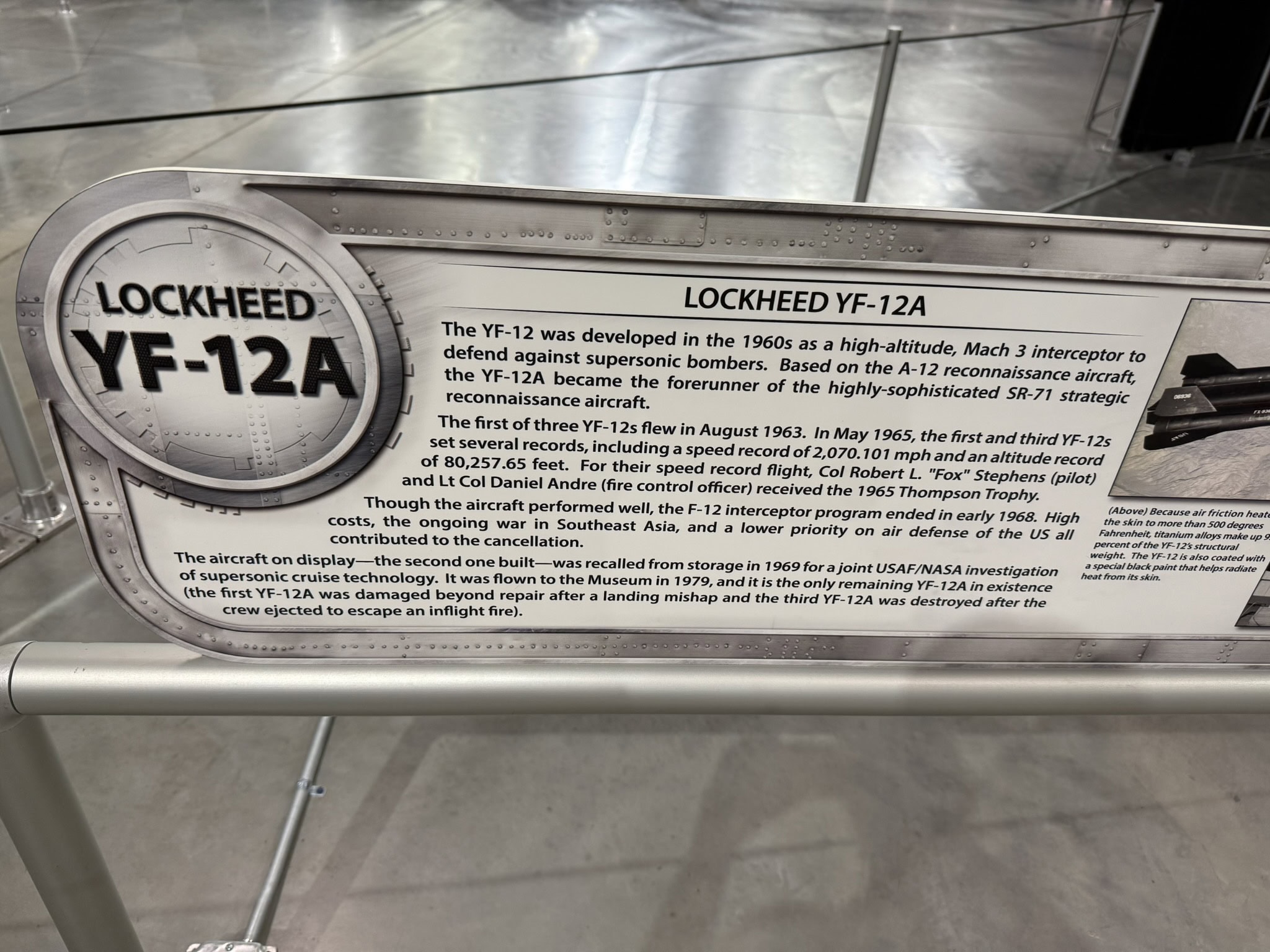
YF-12A. Image taken by Harry J. Kazianis at National Museum of the Air Force for 19FortyFive.com
But the plane’s success and the popularity of its engineering among military and intelligence officials proved so profound that Lockheed designed multiple lesser-known variants to handle a wide range of mission sets.
One such variant, developed in the 1960s, was the YF-12A, an interceptor.
Rather than simply photographing targets at extreme altitudes and supersonic speeds, the YF-12A was meant to identify Soviet bombers on approach to the United States and to destroy those bombers with powerful air-to-air missiles — all while traveling more than three times the speed of sound.
The YF-12A
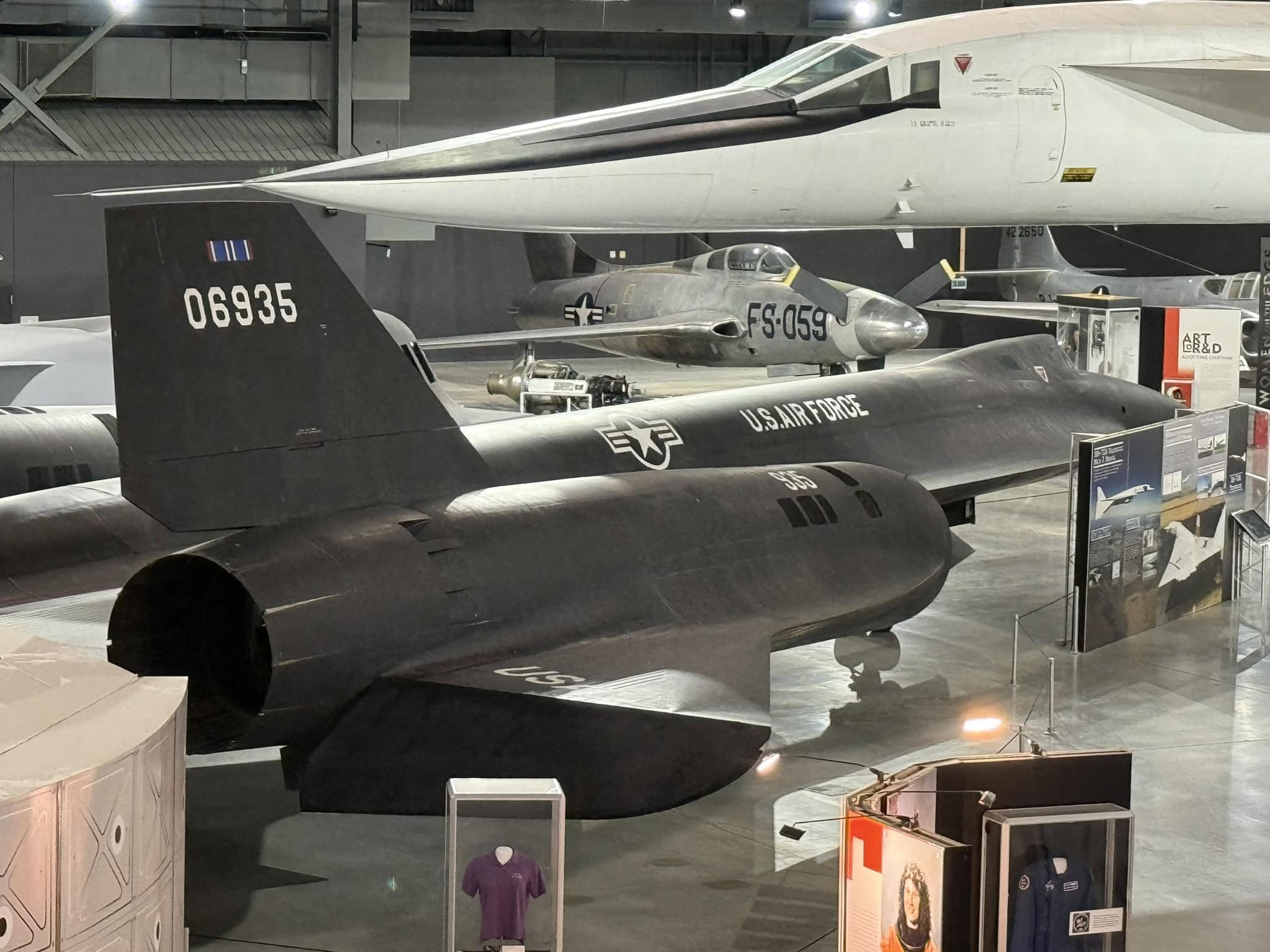
YF-12A. 19FortyFive.com Image from National Museum of the U.S. Air Force.
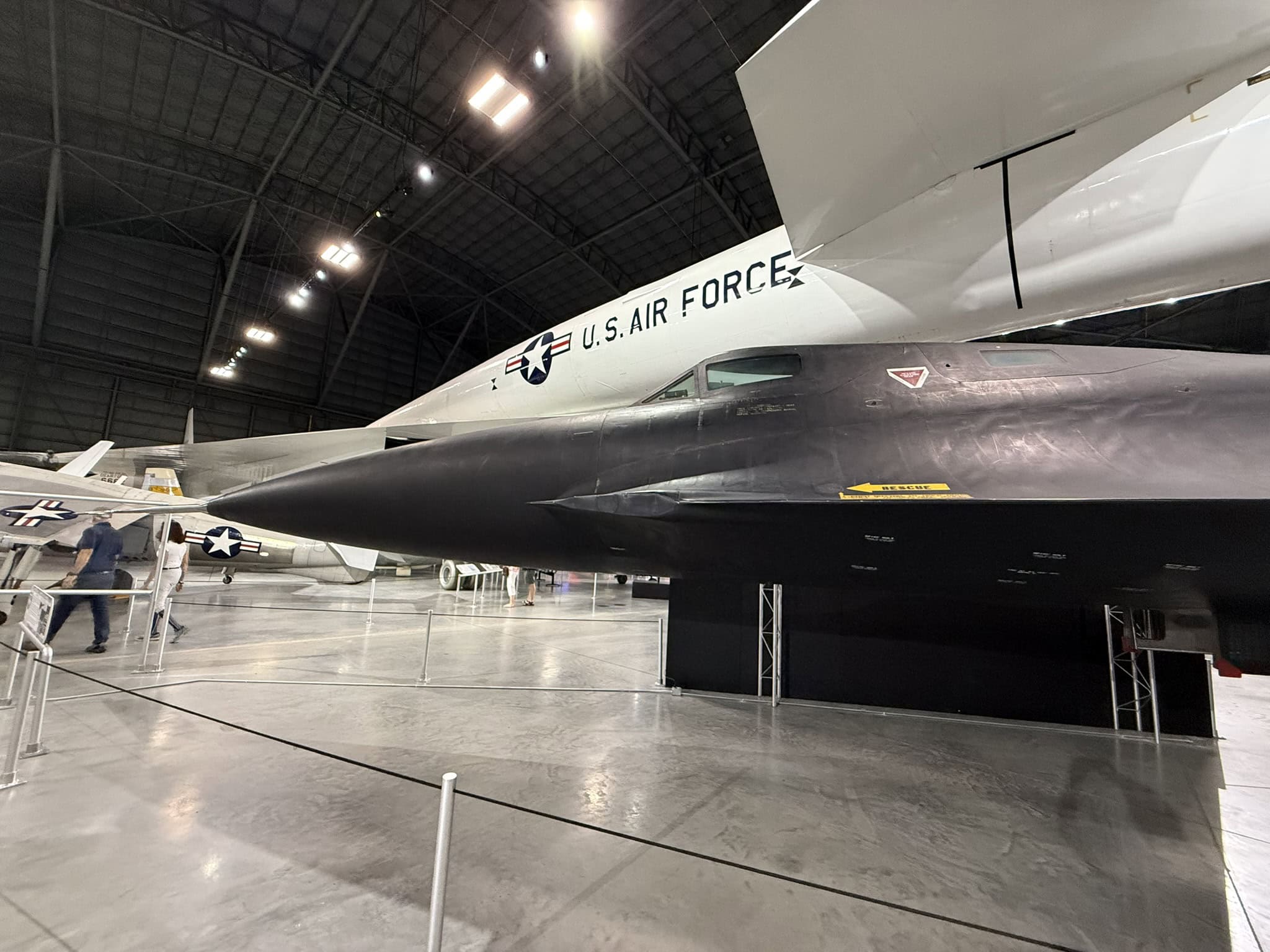
YF-12A. 19FortyFive.com Image from the National Museum of the U.S. Air Force.
Lockheed built three YF-12A aircraft.
The aircraft never entered full production.
However, it demonstrated significant capability.
One prototype reached its usual Mach 3.2 cruising speed at roughly 75,000 feet and successfully engaged a lower-flying aircraft.
When Lockheed created the YF-12A, test pilot James Eastham became its first pilot. That bird first cut through the skies on August 7, 1963.
The aircraft closely followed the design parameters of the SR-71 Blackbird (because it needed the same capabilities).
It possessed two powerful Pratt & Whitney J58 engines to ensure its high-altitude performance.
However, Lockheed had to substantially redesign parts of the plane.
That redesign was necessary to better support the interceptor mission the YF-12A was designed for.
One advantage the YF-12A had over the SR-71 was much greater radar capability.
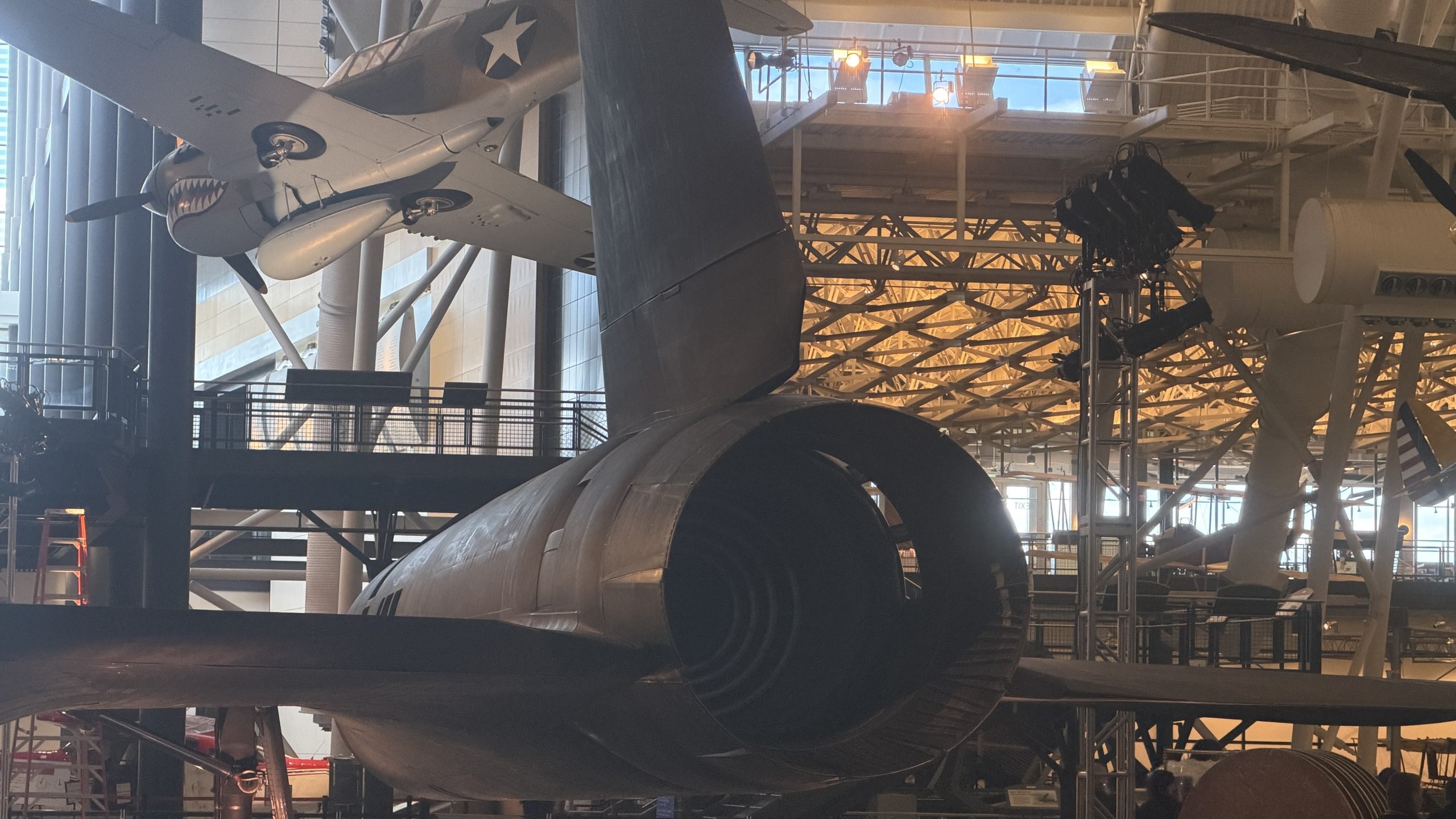
SR-71 Blackbird at the Smithsonian. Photo taken by 19FortyFive writer Christian D. Orr.
The aircraft carried the Hughes AN/ASG-18 fire-control radar and internal bays for three Hughes AIM-47A Falcon air-to-air missiles.
Lockheed engineers swapped out the SR-71’s surveillance equipment and made room for weapons.
The YF-12A’s enhanced forward section accommodated a larger, more advanced radar system (which an interceptor needed to spot Soviet bombers from farther away).
Because the YF-12A could travel at Mach 3.2 and fly higher than 80,000 feet, this system was already a lethal interceptor.
Pairing it with the AIM-47A air-to-air missiles and the Hughes AN/ASG-18 fire-control radar gave it an impressive offensive capability suite that its older SR-71 brother lacked.
The YF-12A also broke multiple records during its limited service.
An Incredible Shootdown
For example, on May 1, 1965, the YF-12 reached 2,070.101 miles over a closed course.
Another achieved a sustained altitude of 80,257.65 feet.
But this plane wasn’t needed just for high speed.
The Blackbird had that in spades.
The YF-12A needed to fire missiles reliably at those speeds and altitudes.
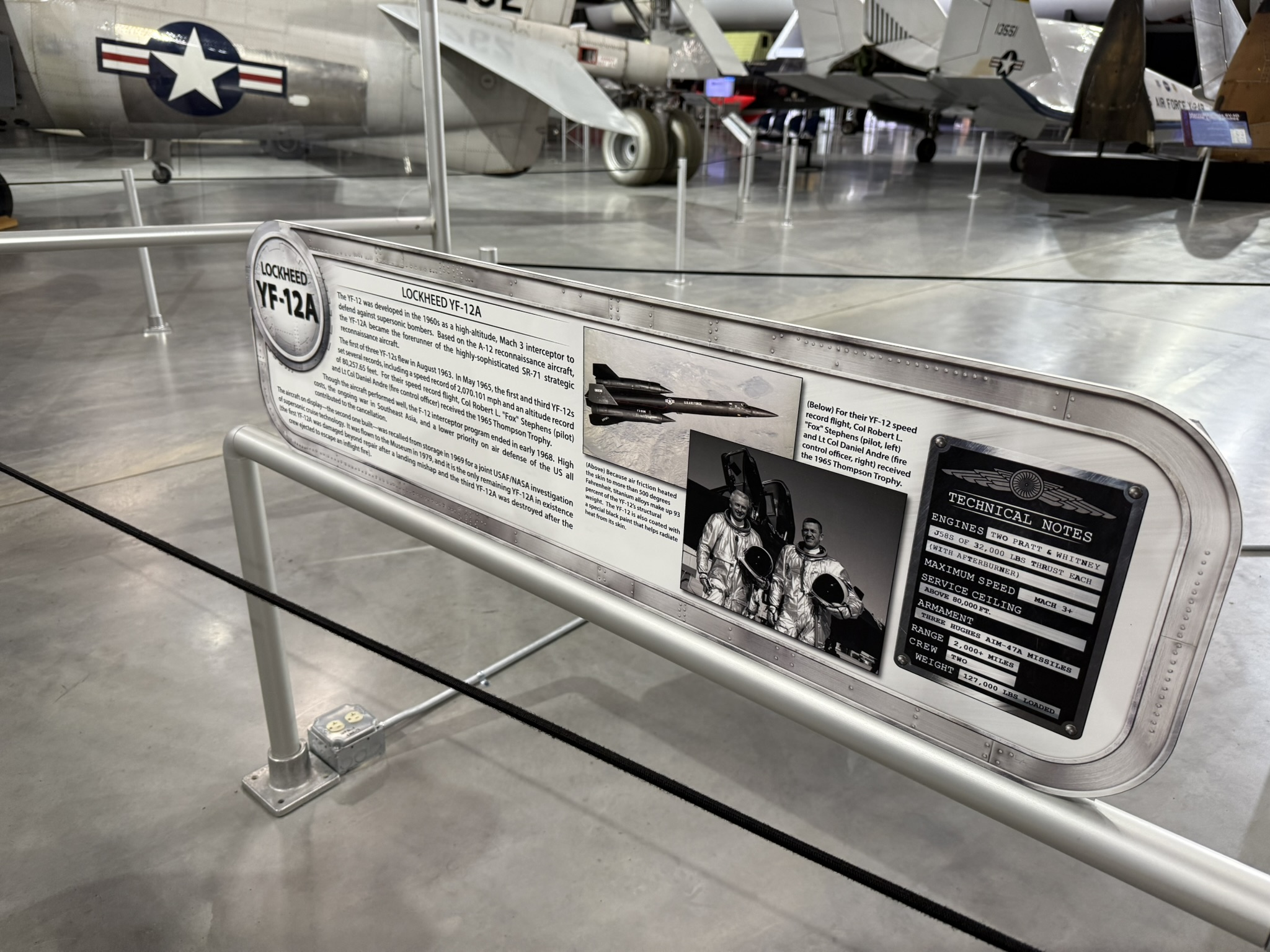
YF-12 display. 19FortyFive.com image taken at the National Museum of the US Air Force.
That’s where the AIM-47 comes in.
During one test of the YF-12A on March 18, 1965, the plane launched an AIM-47 at a Q-2C Firebee drone 36 miles away, with a closing speed exceeding 2,000 mph.
That missile successfully hit the drone.
Between March 1965 and September 1966, the YF-12 set multiple Air Force records with the AIM-47.
According to Aviation Geek Club, a widely respected online trade publication, the YF-12 launched the missile seven times, resulting in six successful shootdowns of these drone targets.
The one failure wasn’t because of the YF-12 itself. That failure resulted from a mechanical failure in the AIM-47 missile.
The most significant demonstration, however, came on September 21, 1966, against a QB-47 drone.
In that test, the YF-12A was traveling at Mach 3.2 at around 75,000 feet.
The QB-47 was flying lower and slower than the YF-12A.
So the YF-12A’s radar and weapons suite had to locate and then engage a smaller aircraft 14 miles below it while traveling substantially faster than the QB-47 drone.
To observers’ surprise, the missile test worked. The YF-12A’s radar found the QB-47 12 miles below it, traveling much slower, and then successfully launched the AIM-47.
That AIM-47, fired farther and faster than the QB-47, hit the drone.
This became known as a “look-down, shootdown” attack.
Test pilot Eastham recounted another incredible story.
This one happened over the Eglin test range in Florida against another QB-47.
At that time, the YF-12 locked onto the QB-47 from more than 100 miles away (and 14.2 miles below the YF-12). The AIM-47 was launched from around 53 miles away.
It successfully reached the distant QB-47.
The YF-12A had repeatedly proven its concept.
What Might Have Been
Yet, despite the successful tests, the YF-12A never entered operational service.
At the time, the United States was bogged down in the Vietnam War, and there was a declining priority given to continental defense against potential Soviet bomber threats.
Plus, intercontinental ballistic missiles were becoming so advanced that the threat really transmogrified from worrying about Soviet nuclear bomber threats to the homeland to being concerned about incoming ICBMs launched from inside the Soviet Union at the United States.
Still, the SR-71 Blackbird was such an impressive design that it spawned several potential variants, including the YF-12.
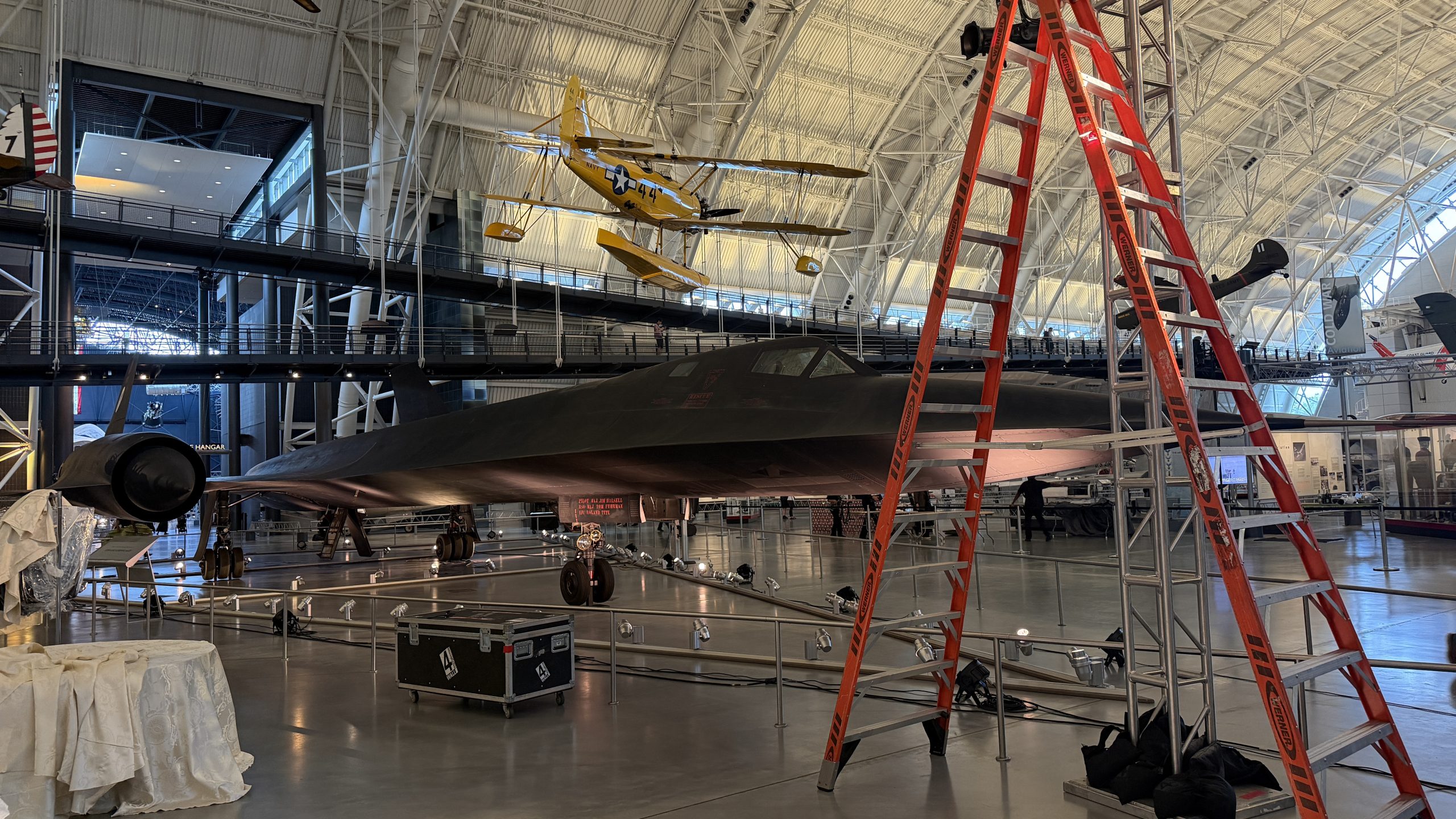
SR-71 Blackbird at the Smithsonian. Photo taken by 19FortyFive writer Christian D. Orr.
That variant might have been as successful at interception as the Blackbird was at surveillance. Sadly, we’ll never know.
About the Author: Brandon J. Weichert
Brandon J. Weichert is the Senior National Security Editor at 19FortyFive.com. He also manages The Weichert Brief on Substack. Weichert also hosts “National Security Talk” on Rumble. He is the author of four bestselling national security books, most recently A Disaster of Our Own Making: How the West Lost Ukraine (Encounter Books). Follow him via Twitter/X @WeTheBrandon.