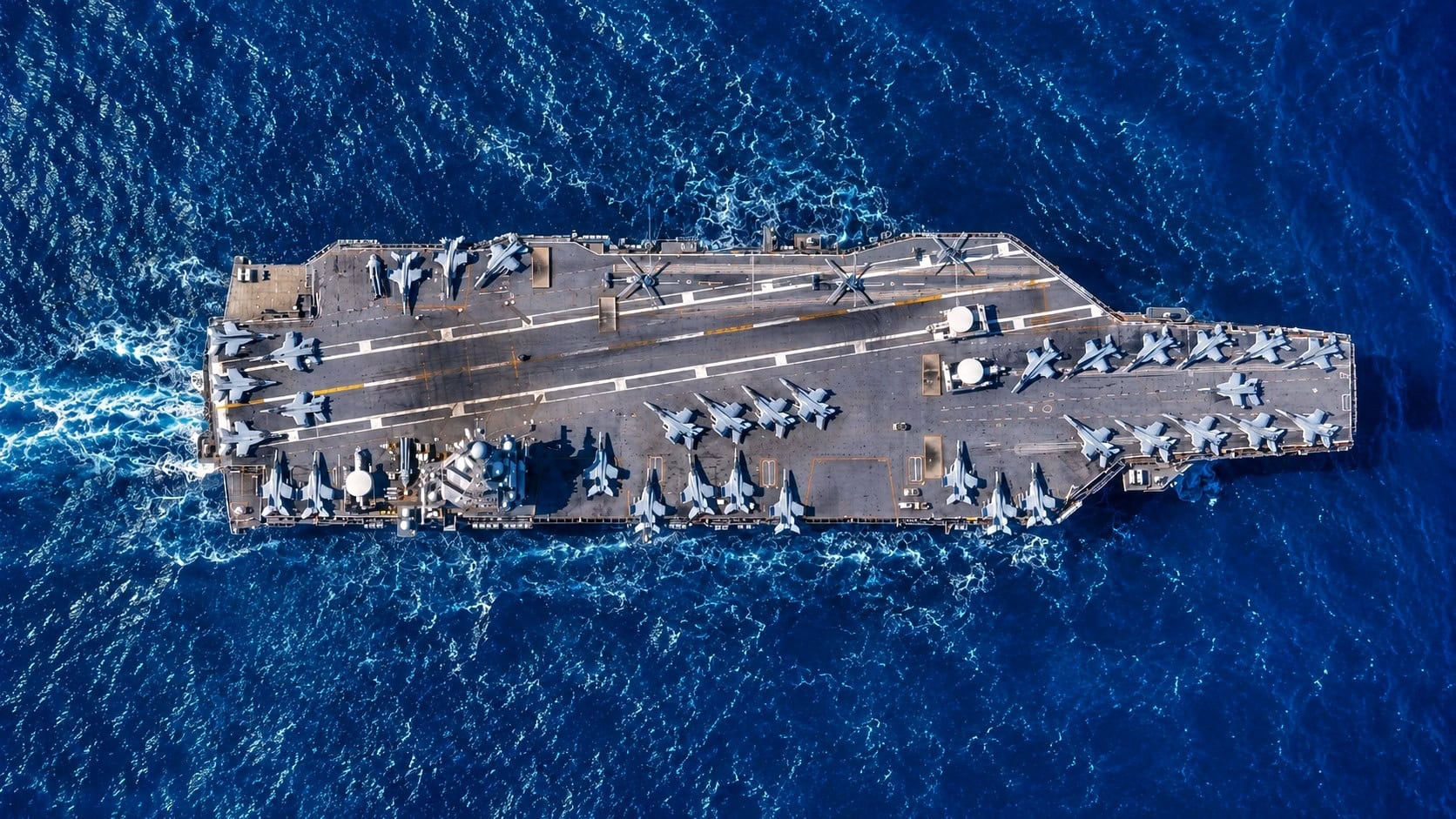
After the first steel cut in 2011, the Navy finally took delivery of the aircraft carrier USS John F. Kennedy (CVN-7) in August 2026. She is the second Ford-class aircraft carrier delivered to the fleet.
The Kennedy is reportedly 99% complete and will now conduct a series of tests and shakedown cruises before becoming operationally ready by March of 2027.

Aircraft Carrier USS Gerald R. Ford Diagram. Image Credit: Creative Commons.
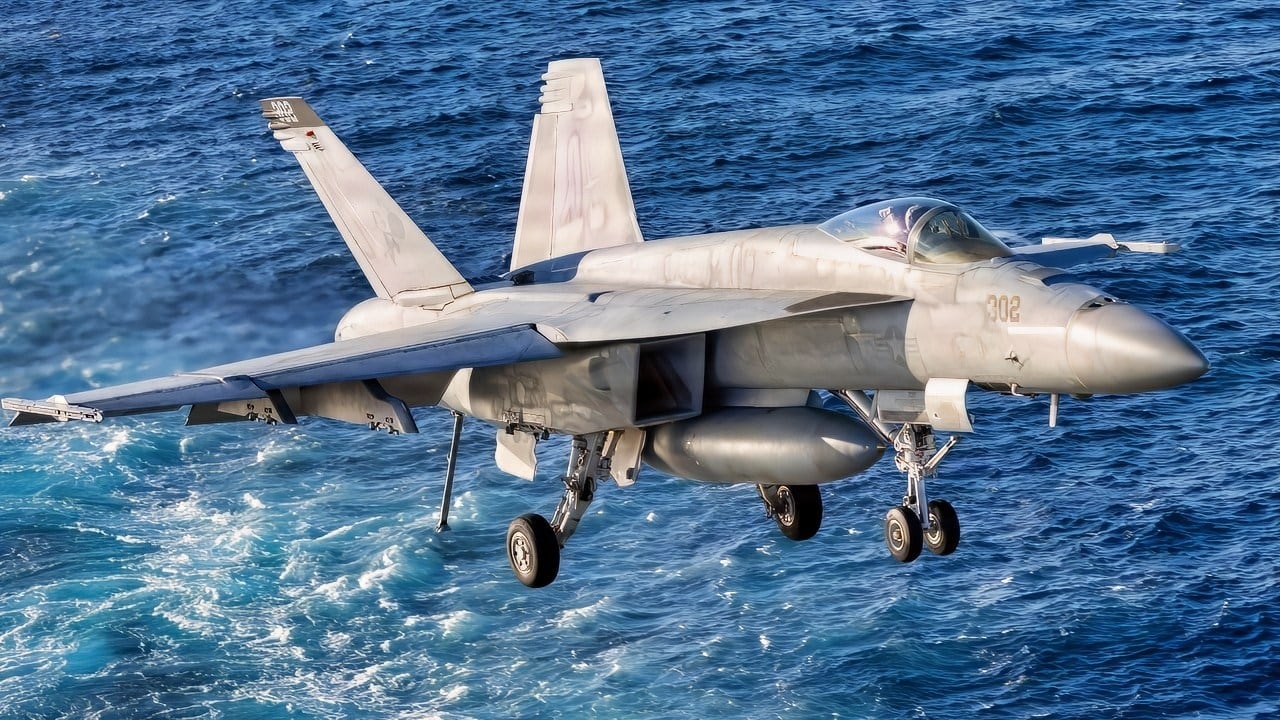
An F/A-18E Super Hornet aircraft approaches the flight deck of the world’s largest aircraft carrier, Ford-class aircraft carrier USS Gerald R. Ford (CVN 78), Nov. 17, 2025. U.S. military forces are deployed to the Caribbean in support of the U.S. Southern Command mission, Department of War-directed operations, and the president’s priorities to disrupt illicit drug trafficking and protect the homeland. (U.S. Navy photo)
The Navy is getting the Kennedy nearly four years after its planned 2022 delivery date and nearly $2 billion over its original $11.3 billion budget.
These delays and cost overruns could easily be blamed on the shipbuilder, Huntington-Ingalls in Newport News, Virginia.
Finished Ships Rarely Look Like They Did On Paper
Some of it is certainly due to a synchronization gap between when the design blueprints for the Ford-Class were finalized in 2004 and new technologies that emerged as the carriers were being built.
Naval Architects can draw a ship on paper in exacting detail, but once the first one is built and in the water, you find problems and areas for improvement you couldn’t anticipate until that first ship is out at sea and tested.
A good example is the four Iowa-class battleships during WWII.
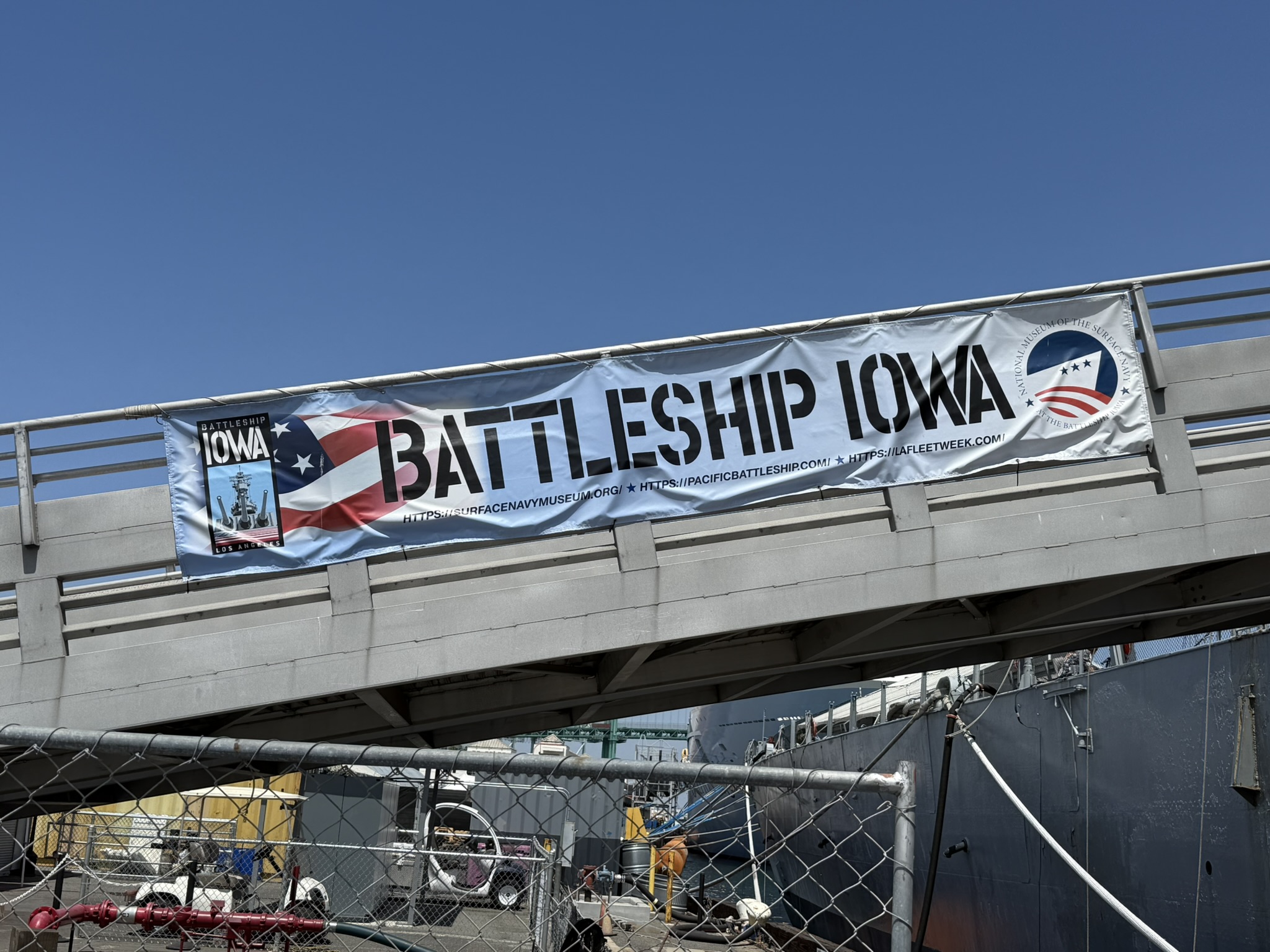
USS Iowa visit by 19FortyFive. August 2025 Visit.
The Navy received these four battleships within two years of each other.
Still, no two are exactly alike in armor layout and thickness, superstructure design, anti-aircraft armament, or even the deck materials.
The exigencies of war meant design changes while these ships were still on the ways.
The final two ships of this class, canceled when the war ended, would have differed substantially from their four sisters, with welded hulls to reduce weight, increased anti-aircraft protection, and a new internal underwater torpedo-protection system.
These changes to the planned six Iowa-class ships occurred over just five years.
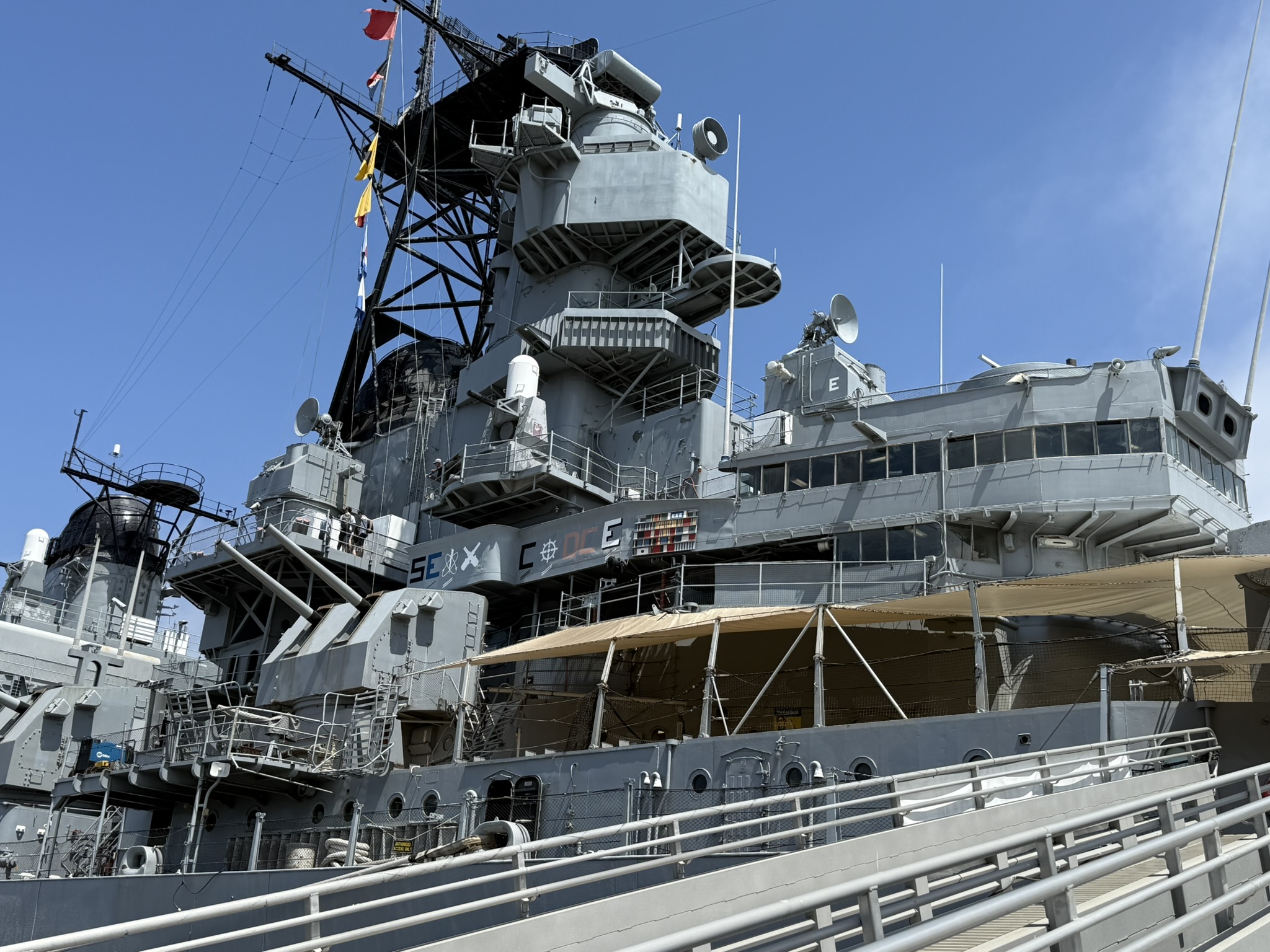
USS Iowa visit by 19FortyFive. August 2025 Visit.
The design of the Ford-Class aircraft carrier was completed in 1995. After that, no major revisions were made.
With an expected service life of fifty years, the final Ford-Class design tried to anticipate future advances in aircraft, sensors, and power requirements.
Still, when it takes twenty-two years to go from final blueprints to delivery, as it did with the USS John F. Kennedy, the technology advances are generational rather than incremental.
Radical New Technologies Required Radical Changes to USS John F. Kennedy
To give you some idea about what the world was like when the Ford-Class design was completed in 2004, Facebook had just started in a dorm room at Harvard.
American homes had a single computer for the whole family, with an expensive analog dial-up internet connection that required its own landline.
Nokia and Motorola dominated the cellular phone market, and you had to type basic messages on a two-inch grayscale screen.
A modern supercomputer is 30,000 times more powerful than in 2004 and draws about seven times as much electricity.
F-35C Lightning II, Fix The Carrier To Match The Plane
Unanticipated tech advances delayed the delivery of the Ford and now the Kennedy and required major carrier alterations to make them useful. Aircraft manufacturers used to build planes to the specifications of the Navy’s aircraft carriers.
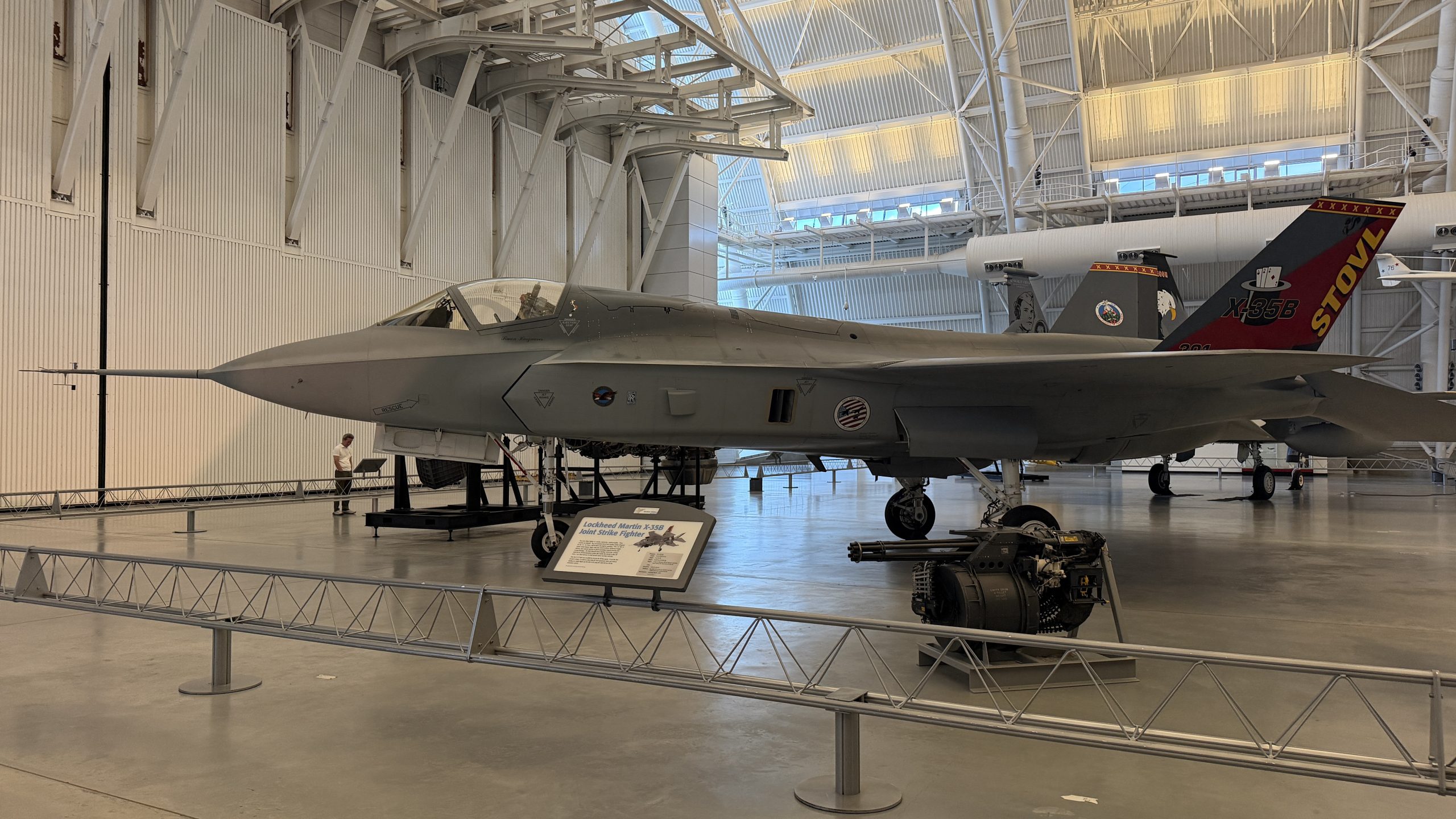
Then came the F-35C Lightning II Joint Strike Fighter, which almost requires the carrier to be built around the fighter.
The F-35C is about two tons heavier than the FA-18C and D models it will replace.
USS Iowa visit by 19FortyFive. August 2025 Visit.
That difference matters a lot for launch and recovery.
The F-35C is also longer and has a wider wingspan, which complicates handling and storing the Lightning II on deck and in the hangar below.
The F-35C’s sensors return a flood of information to the carrier’s computer systems that it must process quickly.
Finally, the Lightning II’s top-secret tech and systems require certain spaces on the ship to be Sensitive Compartmented Information Facility (SCIF) spaces for work on the aircraft.
Equipment once shielded from prying eyes with a vinyl cover now has to be shielded from being seen, heard, or even detected electromagnetically.
Unlike the USS Gerald R. Ford, which was delivered without being fully integrated to operate the F-35C, the Navy delayed delivery of the Kennedy to make the needed modifications while it was still under construction.
Those modifications included redesigned blast shields at the catapults, seawater-fed radiators, and heat-resistant materials that won’t melt under the F-35C’s 3,600-degree, blast-furnace-like exhaust.
New, advanced electromagnetic catapult and arresting gear systems that can precisely calculate the takeoff and landing weight of the F-35C and other aircraft to ensure safer launches and recoveries, where most Class-A Mishaps involving carrier aircraft occur.
While not a specific requirement for the F-35C, the Kennedy is being delivered with eleven Advanced Weapons Elevators (AWE).
Sortie rate, or the ability to quickly fuel and arm aircraft for launch, is a vital number for an aircraft carrier.
The AWE can lift 2.5 times the weight and get it to the deck 50 percent faster.
Because the new system is electromechanical rather than hydraulic, the AWE is less complex, easier to maintain, and requires fewer personnel to repair.
When the ten Ford-Class carriers are complete, you can expect that, like the Iowa-class battleships, they will be more like close cousins than true sister ships.
Taking the USS John F. Kennedy to Sea and Trying to Break It.
The USS John F. Kennedy is now at sea conducting her trials as a “Pre-commissioned” ship.
She is still considered under warranty and can be returned to Huntington-Ingalls for any problems that show up.
Unlike a new car where you are careful not to accelerate or brake too hard for the first five hundred or so miles, the Navy will drive the Kennedy like the Sea Police are chasing it with lights and sirens on.
USS Iowa visit by 19FortyFive. August 2025 Visit.
They will tax every system on board to the limits in the safe conditions of peacetime operations rather than hope for the best in wartime.
Once they are sure the ship’s systems are ready, they will move to the carrier flight operations phase, what the Navy has spent all this time and money on: launching and recovering aircraft at sea.
About the Author: Sean Spoonts
Sean Spoonts is the former Editor-In-Chief of SOFREP.com. A U.S. Navy veteran, he served as an Aviation Anti-Submarine Warfare Operator and Search and Rescue Helicopter Aircrewman. He is a military analyst, writer, and commentator whose work has appeared in Newsweek, CNS News, Ukrinform, and various military/veteran media networks and professional publications, including the Military Intelligence Professional Bulletin.