
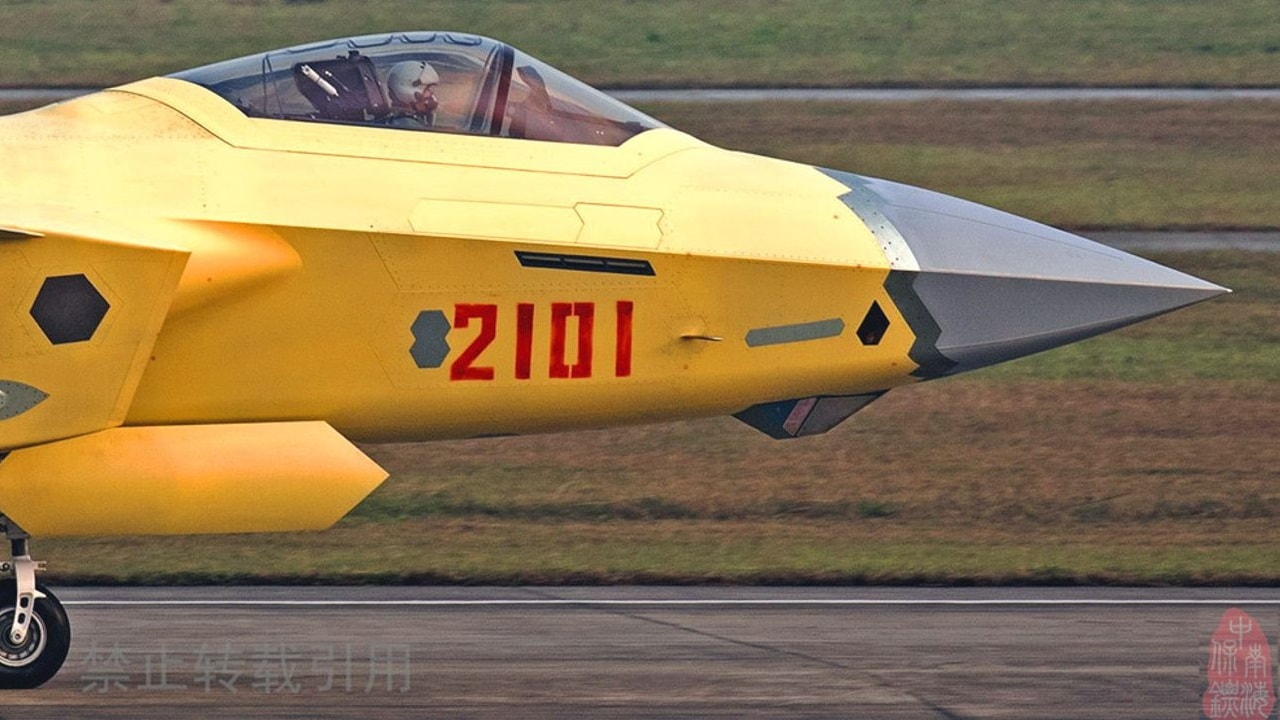
Summary and Key Points: Expert Harrison Kass reports estimates of about 520 Chengdu J-20 Mighty Dragons in PLAAF service, approaching the 550-580 F-35As the US Air Force had received by July 2026, with RUSI’s Justin Bronk counting 320-350 by end-2025 at roughly 120 per year and Andreas Rupprecht’s tracking near 500 by June 2026. The twin-engine, long-range J-20 isn’t exported; Kass argues mass matters, but F-22s, F-15s, Navy and Marine F-35s and allied fleets keep the US well ahead overall.
The J-20 Stealth Fighter Challenge Facing the F-35
China is rapidly expanding its fleet of Chengdu J-20 Mighty Dragon stealth fighters.
Recent estimates suggest the People’s Liberation Army Air Force (PLAAF) may already have about 520 J-20s, putting China close to the US Air Force’s F-35A inventory in numbers.
According to Aerospace Global News, the USAF had delivered approximately 550–580 F-35As as of July 2026. China’s J-20 production could soon close or reverse that numerical gap.
This matters because air superiority depends not only on technical capabilities but also on numbers and availability.
How Many J-20s?
China does not publish detailed, independently verifiable fighter inventory figures. Analysts rely instead on aircraft serial numbers, satellite imagery, production observations, and other open-source intelligence.
Justin Bronk of the Royal United Services Institute (RUSI) estimated that 320–350 J-20s were in service by the end of 2025, with an annual production rate around 120 aircraft.
In June 2026, open-source tracking by analysts, including Andreas Rupprecht and others, suggested that approximately 500 J-20s were already in service.
These estimates differ because production, deliveries, operational assignments, and aircraft readiness remain uncertain.
Even the lower estimate suggests China has substantial manufacturing capacity.
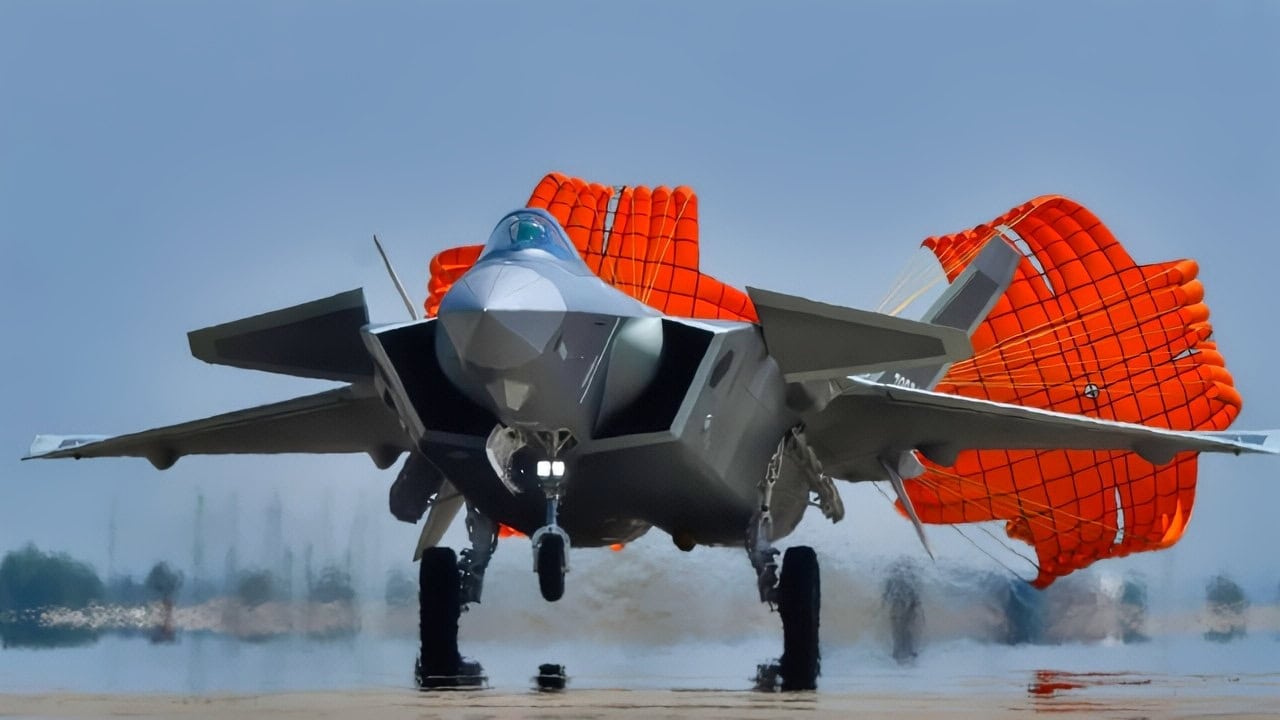
J-20 Stealth Fighter Landing. Image Credit: Creative Commons.
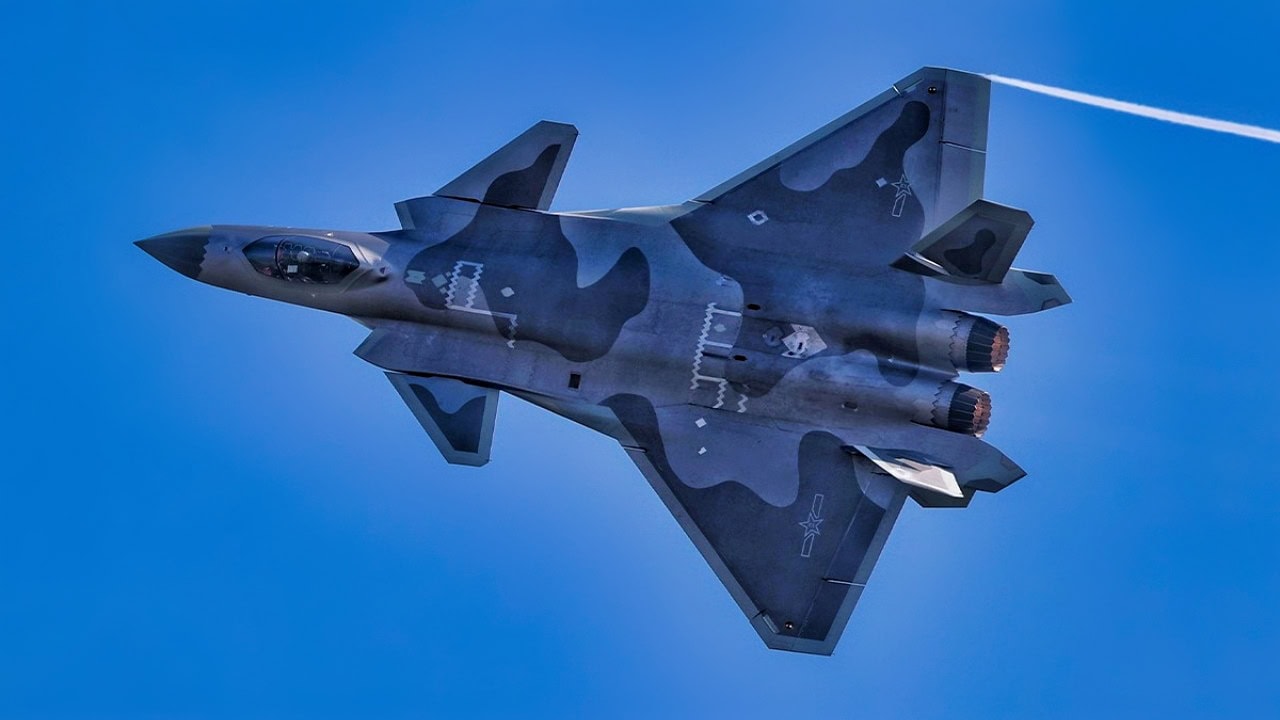
J-20 Fighter. Image Credit: Creative Commons.
Unlike the F-35, the J-20 is not exported, so production goes exclusively toward bolstering China’s indigenous air force.
If production continues at current estimated rates, the PLAAF could become the world’s largest single-service operator of fifth-generation fighters.
Comparing the J-20 and F-35
Both aircraft incorporate stealth shaping, advanced sensors, and internal weapons carriage.
However, the two jets were designed around somewhat different operational requirements.
The F-35A is a single-engine multirole stealth fighter that emphasizes sensor fusion, electronic warfare, networking, and strike capabilities.
It was designed to operate within an integrated American and allied combat network.
The J-20, meanwhile, is a twin-engine, long-range stealth fighter with a larger airframe and substantial internal fuel capacity.
Designed for air superiority and long-range engagements—including potential threats to American support aircraft—the J-20 is built for different missions.
While the F-35 is renowned for its sensor fusion and networking, the J-20 remains difficult to assess independently.
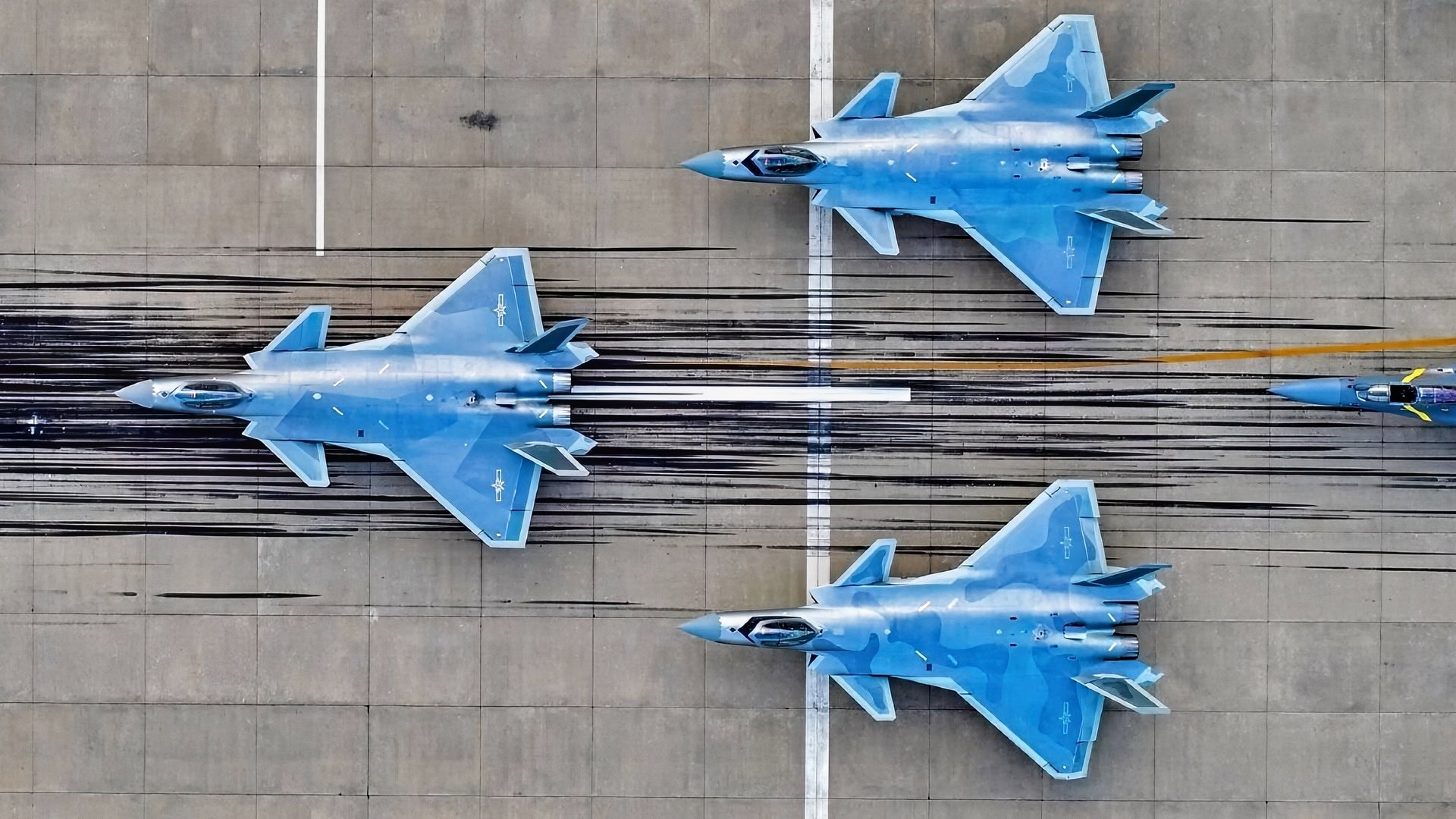
J-20S. Image Credit: Creative Commons.
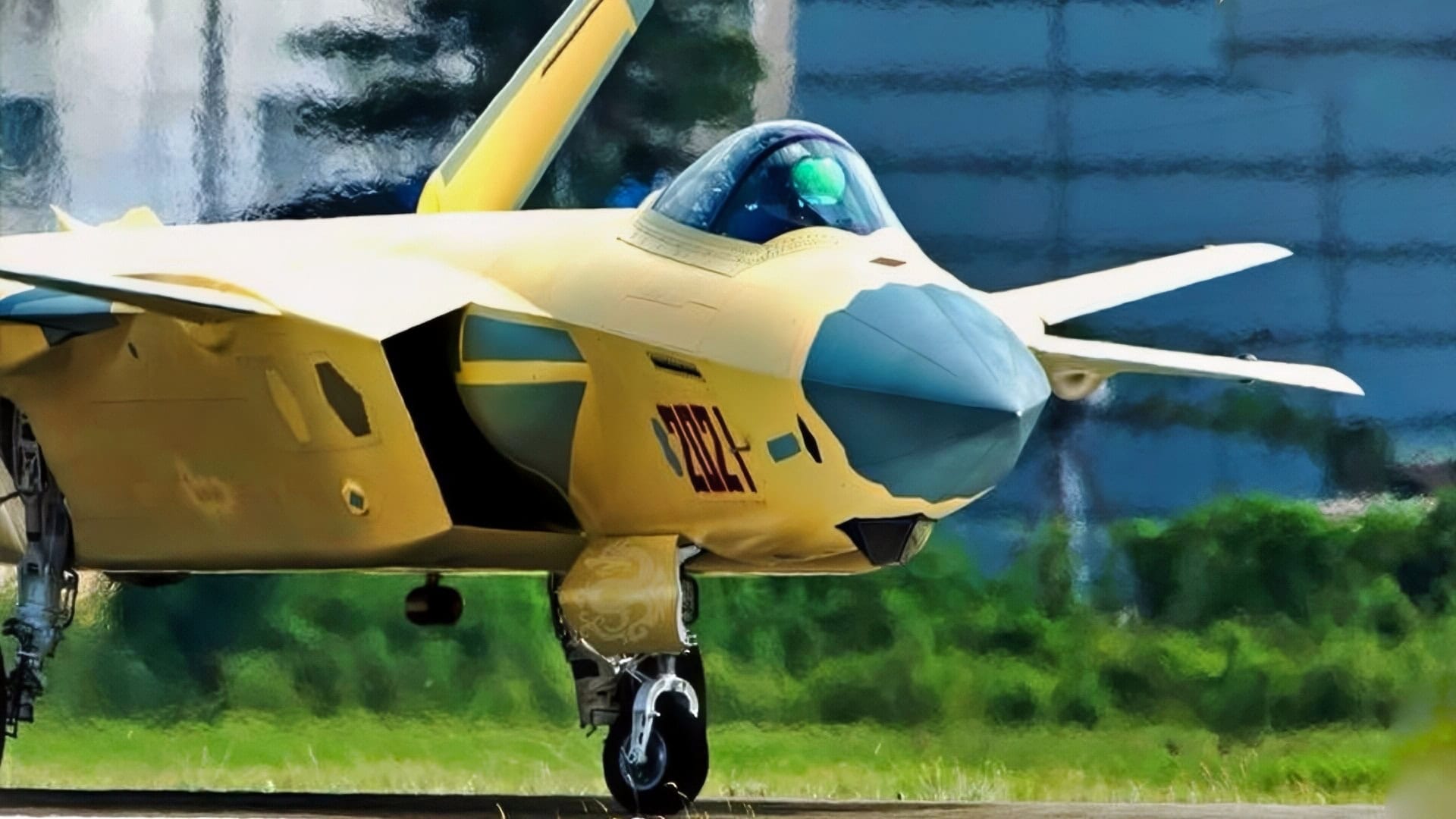
China’s J-20 Mighty Dragon in Yellow. Image Credit: Screenshot.
Its actual stealth performance, electronic warfare systems, sensors, and combat effectiveness are not fully known publicly.
It is reasonable to assume the F-35 is the more capable aircraft, given the US’s more well-established aerospace industry. But quantity matters, too, not just quality.
The Benefits of Mass
Technological superiority does not automatically guarantee victory against a numerically larger opponent.
A larger fighter force can potentially run more simultaneous missions, maintain greater operational coverage, absorb attrition, complicate enemy mission planning, and threaten multiple targets at once.
So even if an individual J-20 is less capable than an F-35, sufficient numbers could offset some disadvantages.
For example, larger formations could challenge American fighters while other Chinese assets targeted support infrastructure.
And the J-20 doesn’t operate in a vacuum; the force structure also includes J-16 multirole fighters, airborne early warning aircraft, ground-based radar networks, long-range surface-to-air missiles, and electronic warfare systems.
The J-20 should therefore be understood as part of a larger, more integrated combat system—a valuable asset in China’s A2/AD infrastructure.
But raw numbers can be misleading; combat effectiveness depends on readiness rates, pilot training, weapons inventories, maintenance, and many other factors where the US has decades of experience and an advantage over China.
The US Advantage
Comparing J-20 inventory exclusively against F-35 inventory isn’t quite fair to the US, which operates a complex and sophisticated air force, including F-22 Raptors, F-15s, F-16s, and a wide variety of enablement aircraft.
The US also has air components in the Navy and Marine Corps with their own F-35 variants and F/A-18s.
America also benefits from well-equipped allies, including Japan, Australia, and South Korea, who also operate the F-35.
So while China’s J-20 buildup reflects an increasingly capable PLAAF, a head-to-head numerical comparison of J-20s and F-35s hardly tells the whole story.
About the Author: Harrison Kass
Harrison Kass is a writer and attorney focused on national security, technology, and political culture. His work has appeared in Tablet, City Journal, The Hill, The Spectator, and The Cipher Brief. He holds a JD from the University of Oregon and a master’s in Global & Joint Program Studies from NYU—more at harrisonkass.com.