
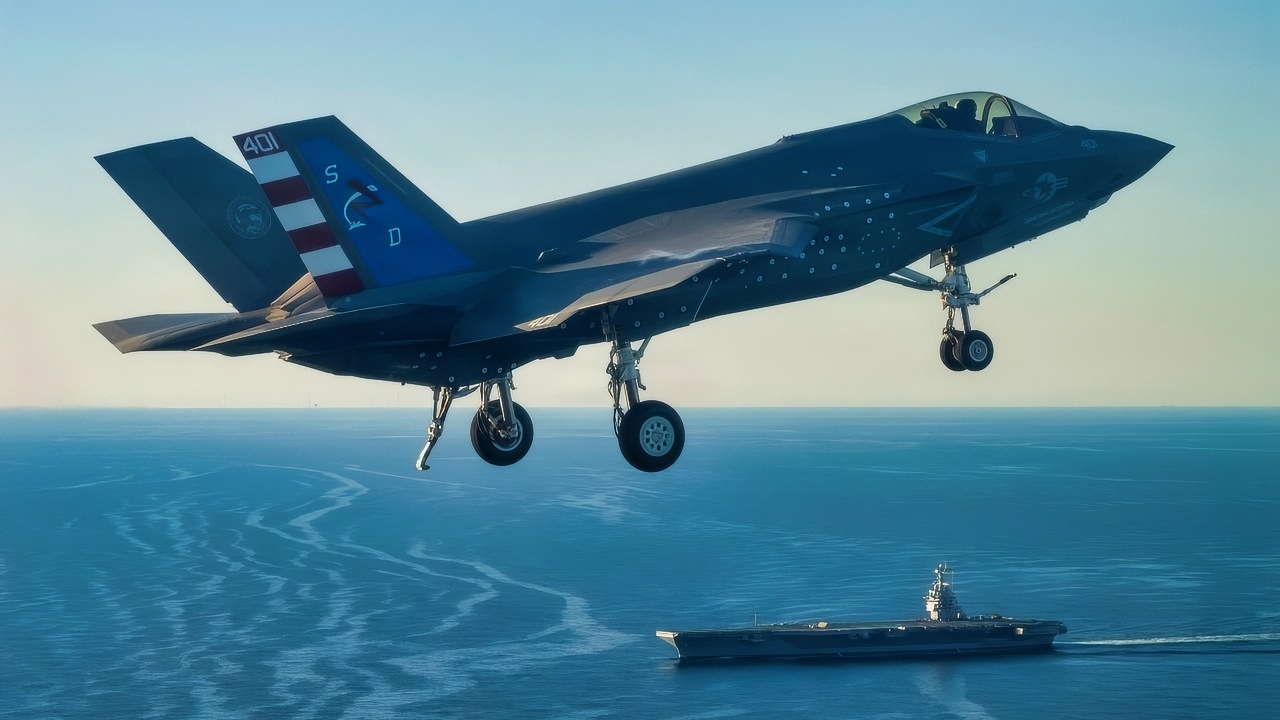
The Gerald R. Ford-class nuclear-powered supercarriers are the most sophisticated aircraft carriers in operational service today; the F-35C, the naval variant of the Lockheed Martin “Skunk Works” division’s F-35 Lightning II 5th-generation stealth fighter, is the most sophisticated fighter jet in operational service today.
The United States Navy has both of these high-tech weapons systems in its arsenal, so you’d logically think they’d be a match made in heaven, a natural pairing.
Instead, certain maladies have made the Ford-class flattops and the F-35C fighter an incompatible pair.
Fortunately, these aren’t irreconcilable differences, as the Navy is taking tangible steps to make this metaphorical marriage work.
Wait, What?? “Melt the Flight Deck?” What the Heck?!?!
Yes, you read that correctly. As this publication reported back in April, “the F-35C’s engine exhaust and thrust profile impose different thermal demands than those of the legacy F/A-18E/F Super Hornets…
The USS Gerald R. Ford’s jet blast deflectors and associated deck infrastructure require reinforced materials and upgraded cooling to withstand the high-tempo launches of F-35Cs.”
That’s right; as initially built, the Ford’s flight deck couldn’t withstand the heat from the proverbial “kitchen” of the Lightning II’s engine exhaust blast!
The F-35’s exhaust reaches temperatures of 3,600°F, apparently significantly higher than the temperatures generated by older warbirds in the USN arsenal, such as the 4.5 Generation F/A-18 Super Hornet multirole fighter and the EA‑18G Growler electronic warfare (EW) platform.
But Wait, There’s More!
As if that weren’t embarrassingly bad enough, there’s also the issue of the Skunk Works plane requires shipboard support systems tailored specifically for it.
In particular, these Gen 5 fighters need secure maintenance and logistics infrastructure, such as ODIN (OE Data Integration Network) and other specialized workspaces for low-observable upkeep.
Apparently, the designers and builders of USS Gerald R. Ford (CVN-78) failed to heed the words of the late great COL (USA, Ret.) David “Hack” Hackworth and CDR (USN, Ret.) Richard “Demo Dick” Marcinko, both of whom espoused the 7P’s principle: Proper Prior Planning Prevents Piss-Poor Performance.
Oh, the Irony…
Meanwhile, the Nimitz-class carriers—you know, the older class of USN supercarriers the Ford class is supposed to replace—have had no such issues hosting the F-35Cs, since they’ve been doing it for six years!
The Lightning II first commenced aircraft compatibility testing (ACT) in November 2014 onboard the venerable lead ship of the class, USS Nimitz (CVN-68).
The first Nimitz-class carrier to operationally deploy Lockheed Martin’s pride & joy was USS Carl Vinson (CVN-70) in 2020, after initial F-35C testing began on the Vinson in October 2017.
Okay, So What’s the Navy Doing About It?
Great question.
The ODIN accommodation issue is still TBD, as far as this writer can tell.
But recent reporting does indicate progress is being made in solving the flight deck heat compatibility quandary.
Enter the PCU John F. Kennedy (CVN-79), the second ship of the Ford class and the second aircraft carrier to bear the name of the WWII naval war hero who went on to become the 35th President of the United States. CVN-79 passed her acceptance sea trials in August, and not a moment too soon, as the JFK appears better equipped to handle the F-35C.
NOTE: “PCU” means “Pre‑Commissioning Unit,” the official USN jargon for a new warship that has been built and tested but has not yet been formally delivered and commissioned into active service; once that commissioning takes place, “PCU” is replaced by the “USS” designation, as in “United States Ship.”
According to a mid-October report by Alex Luck of Naval News, the Navy finally completed recovery and catapult launches of an F-35C on a Ford-class carrier when two such Lightning IIs, belonging to the “Salty Dogs” Air Test and Evaluation Squadron 23 (VX-23)—based at Naval Air Station (NAS) Patuxent River—and bearing tail numbers 401 and 403, did so aboard PCU JFK somewhere in the Western Atlantic.
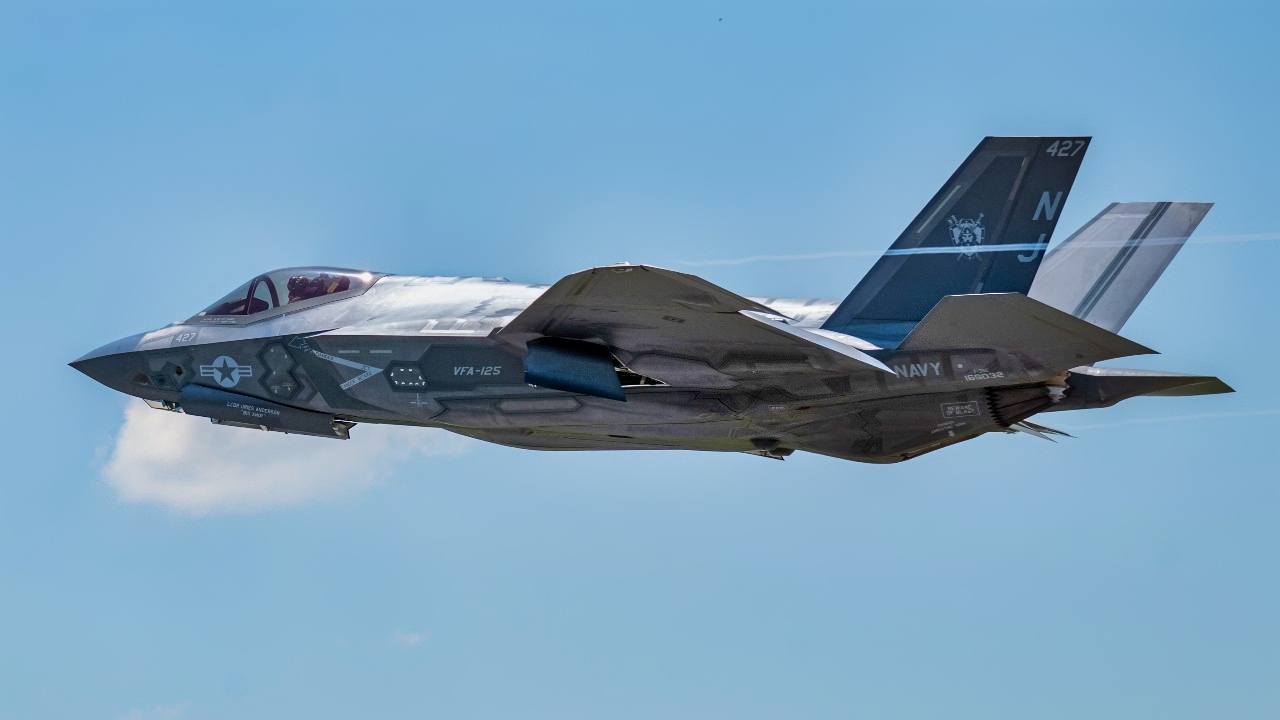
U.S. Navy Lt. Dave Hinkle, F-35C Lightning II Demonstration Pilot, performs during the 2021 Atlanta Air Show, Atlanta Regional Airport-Falcon Field, Ga., May 23, 2021. The U.S. Navy and Marine Corps’ carrier variant has larger wings and more robust landing gear than the other F-35 variants, making it suitable for catapult launches and fly-in arrestments aboard naval aircraft carriers. (U.S. Air Force photo by Staff Sergeant Thomas Barley)
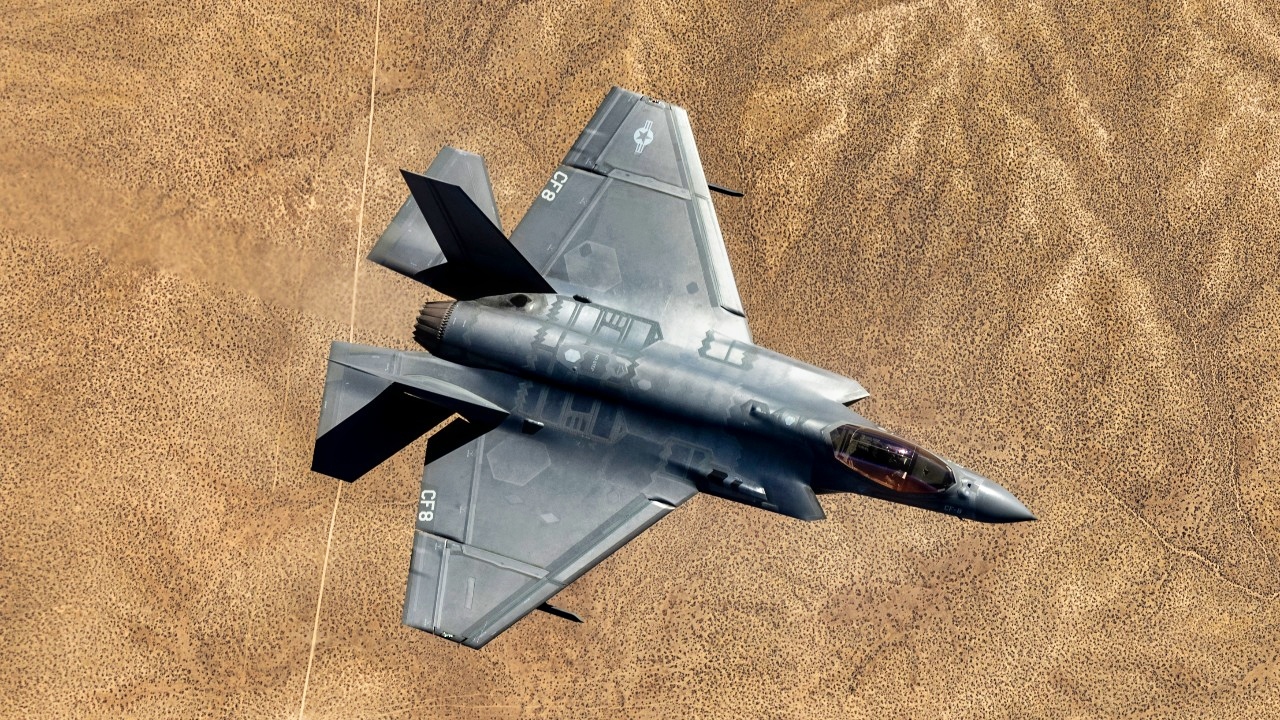
Maj. Nicholas Helmer conducts a mission over the Mojave Desert on October 8, 2024. The F-35C aircraft is assigned to the 461st Flight Test Squadron, F-35 Integrated Test Force at Edwards Air Force Base, California. The aircraft’s dual markings of United States Navy Air Test and Evaluation Squadron Nine (VX-9) and 461st FLTS represents the joint mission of the Integrated Test Force. The F-35 ITF includes people and aircraft from the United States Air Force, United States Navy, United States Marine Corps, foreign partners, Air Force Reserve Command 370th FLTS, and the Air Force Operational Test and Evaluation Center’s 31st TES. (Courtesy Photo, Lockheed Martin Edwards Team)
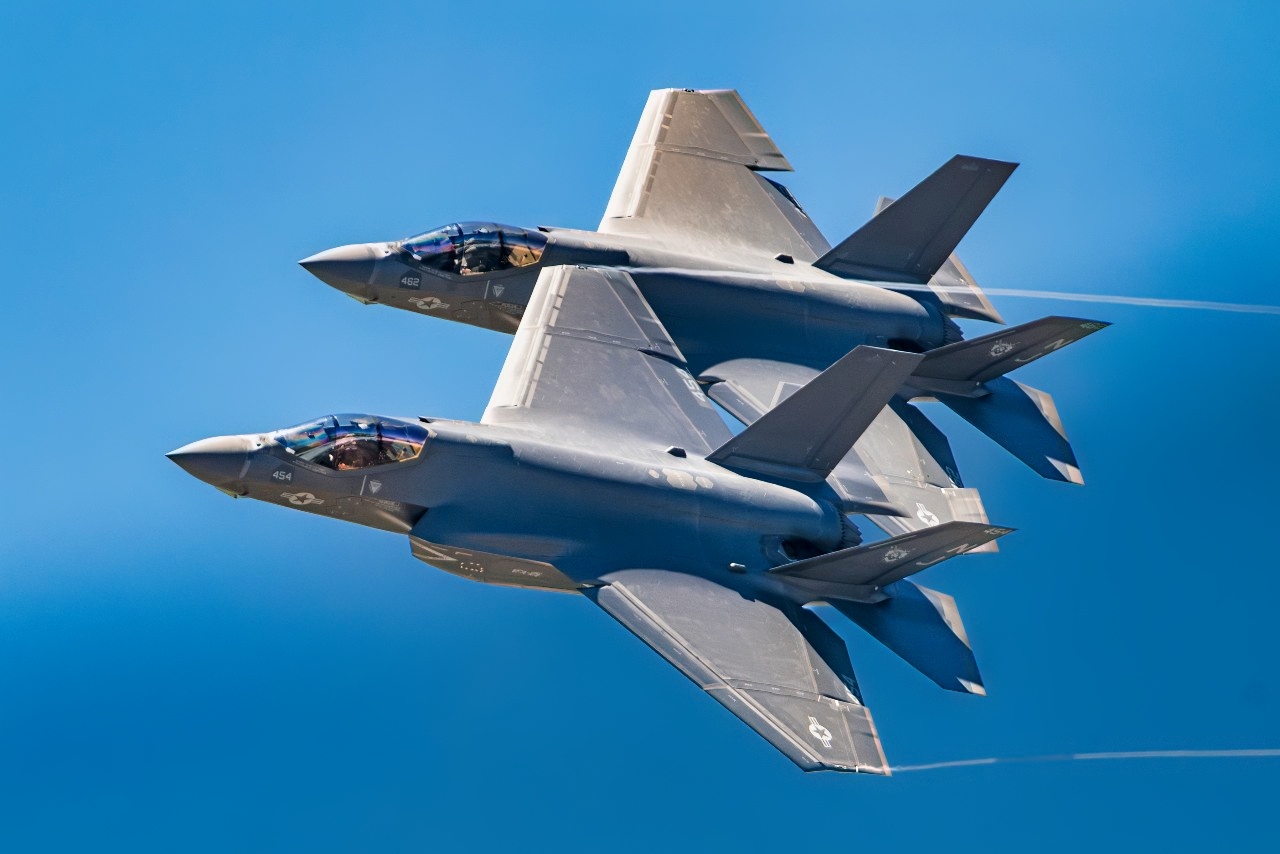
The U.S. Navy F-35C Lighting II Demo Team performs a flight demonstration at the Wings Over South Texas Air Show. This year’s air show marks Wings Over South Texas’s first return to Naval Air Station Corpus Christi since 2019.
Adding to the significance of this event was the successful testing of the stealth warbirds with the Ford class’s much-vaunted and ballyhooed Advanced Arresting Gear (AAG) and Electromagnetic Aircraft Launch System (EMALS).
The timing couldn’t be better, in light of the testing carried out by China’s People’s Liberation Army Navy (PLAN); as noted by Mr. Luck, “The Chinese ‘supercarrier’ [Fujian] conducted flight testing involving recovery and launch of several aircraft including the next generation J-35, an operational analog to the F-35C, using its own electromagnetic launch gear as early as March 2025.”
The Way Ahead and Future Concerns
If and when (1) the remaining ships in the Ford class are completed and (2) the Navy’s 6th Generation F/A-XX fighter program finally becomes a reality, we can only hope and pray that the engineering eggheads will remember the 7P’s principle this time around and have the Fords ready to accommodate them. Time will tell.
About the Author: Christian D. Orr
Christian D. Orr is a Senior Defense Editor. He is a former Air Force Security Forces officer, Federal law enforcement officer, and private military contractor (with assignments worked in Iraq, the United Arab Emirates, Kosovo, Japan, Germany, and the Pentagon). Chris holds a B.A. in International Relations from the University of Southern California (USC) and an M.A. in Intelligence Studies (with a concentration in Terrorism Studies) from American Military University (AMU). He is also the author of “Five Decades of a Fabulous Firearm: Celebrating the 50th Anniversary of the Beretta 92 Pistol Series,” whose second edition was recently published.