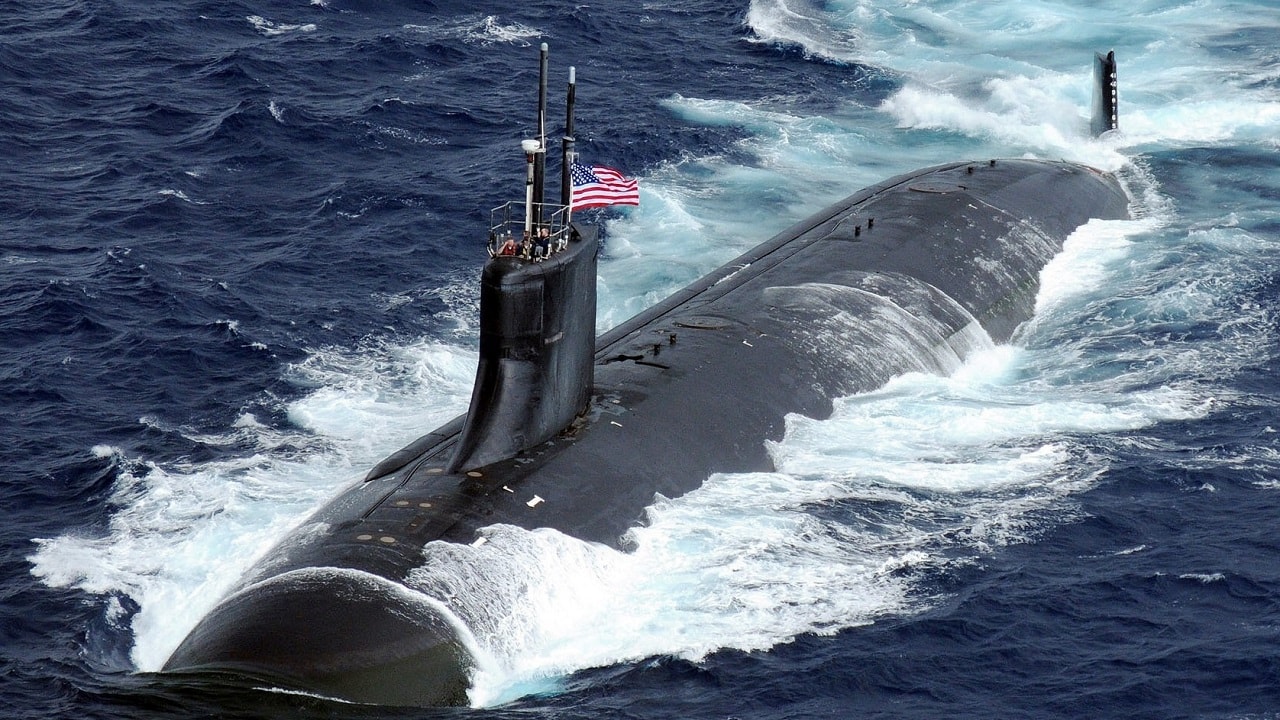
Key Points and Summary – A Hong Kong–based report recently claimed that Chinese researchers have developed a “groundbreaking” way to detect even the quietest U.S. submarines, including Seawolf-class boats, by sensing magnetic disturbances in their wakes.
-But as expert Caleb Larson explains, non-acoustic submarine detection is neither new nor uniquely Chinese.
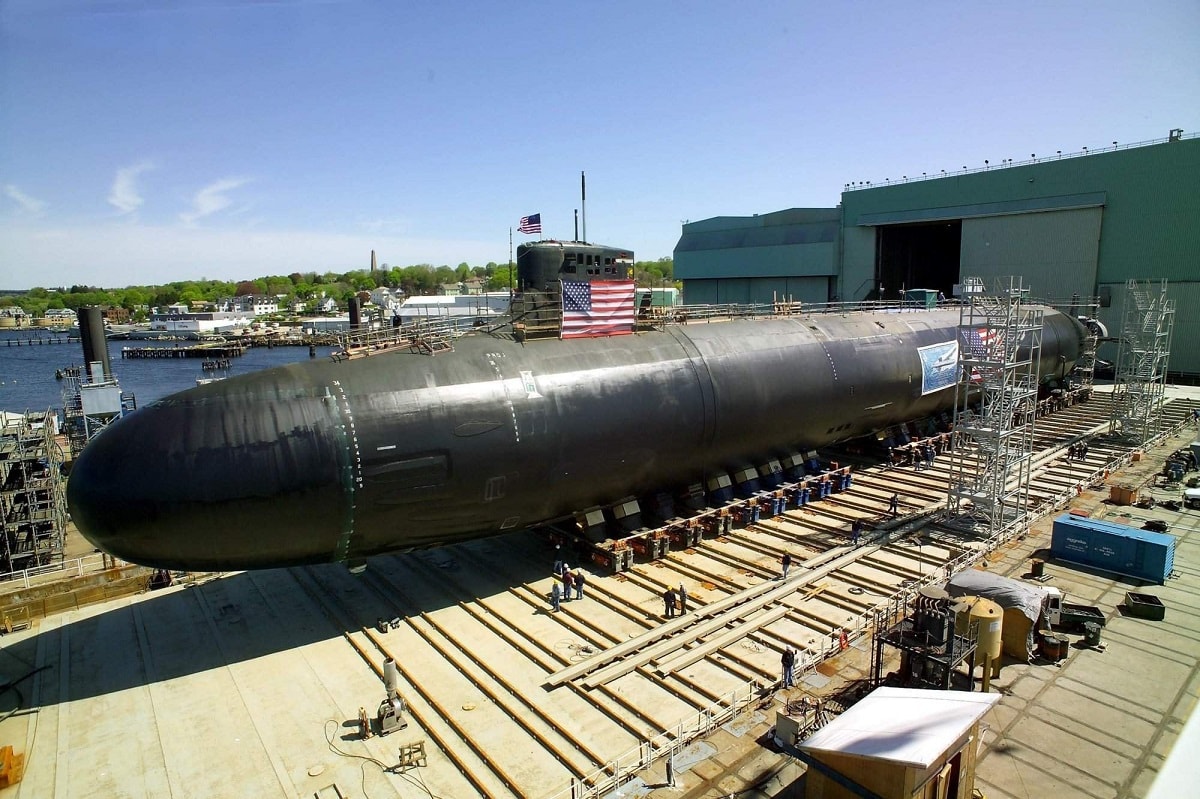
Seawolf-Class. Image: Creative Commons.
-During the Cold War, both the U.S. and Soviet navies experimented with magnetic anomaly detection and other alternative sensor suites, some of which still appear on platforms like Britain’s Trafalgar-class.
-China is clearly investing heavily in such capabilities, yet unverifiable claims and propaganda make it hard to separate real advances from hype—even as the undersea gap narrows.
Has China Really Found a Way to Track U.S. Navy Seawolf-Class Submarines?
One report earlier this year made waves with its headline, claiming that novel, ground-breaking technology from China had made the United States Navy’s Seawolf-class of submarines visible to new submarine detection methods.
The newspaper, which is headquartered in Hong Kong, opened on an ominous note, saying that the American submarine’s prowess underwater is fast eroding, “one magnetic ripple at a time.”
“Researchers with Northwestern Polytechnical University (NPU) in Xian claim to have developed a groundbreaking method to detect even the quietest underwater vessels by harnessing the magnetic fields generated by their wakes,” the South China Morning Post said, claiming that the discovery “could reshape naval warfare.”
Questions about the newspaper’s editorial independence and objectivity following its 2015 buyout by the Alibaba Group aside, the use of non-acoustic sensors to track submarines is far from a new, novel concept: navies around the world have been experimenting with alternatives to sonar for decades, beginning with American and Soviet forays into several technologies during the early years of the Cold War.
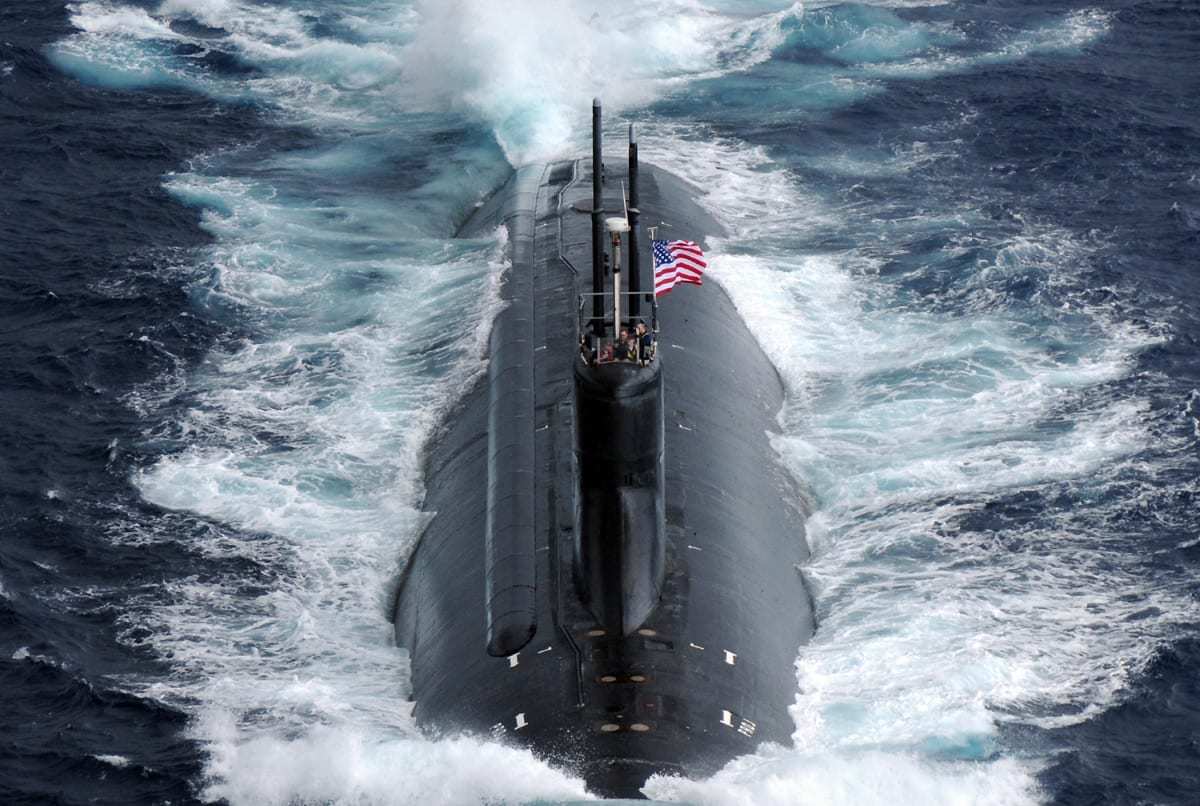
The Seawolf-class fast-attack submarine USS Connecticut (SSN 22) transits the Pacific Ocean during Annual Exercise (ANNUALEX 21G). ANNUALEX is a yearly bilateral exercise with the U.S. Navy and the Japan Maritime Self-Defense Force. (U.S. Navy photo by Mass Communication Specialist Seaman Adam K. Thomas/Released)
In 2021, an amateur photographer spotted a Royal Navy submarine, the HMS Talent, a Trafalgar-class attack submarine, with an array of sensors on its sail, almost certainly part of a non-acoustic submarine-detection package. Although it was not immediately clear when the sensor arrays were installed (one “bump” on the submarine’s nose, plus two seemingly analogous sensor-bedecked sensors on either side of the HMS Talent’s sail), that submarine was decommissioned in 2022.
Seawolf-Class in Trouble from China? Well…
But what are those odd-looking sensors for?
Like the aforementioned Chinese technology, some of HMS Trafalgar’s sensors detect other submarines without sonar by measuring differences in water density caused by submarine wakes.
The technology is, broadly speaking, similar to the Soviet Navy’s anomaly-detection system described by Popular Mechanics.
But detecting magnetic anomalies is only one method of non-sonar submarine detection.
The detection of various submarine coatings, hull corrosion, trace radiation from nuclear submarines, or even water temperature differences caused by underwater traffic can also be leveraged to find submarines.
Leveraging sonar to detect adversary submarines offers detection-range advantages but risks exposing the source of those sonar pings. And keeping oneself invisible underwater is crucial to submarine operations.
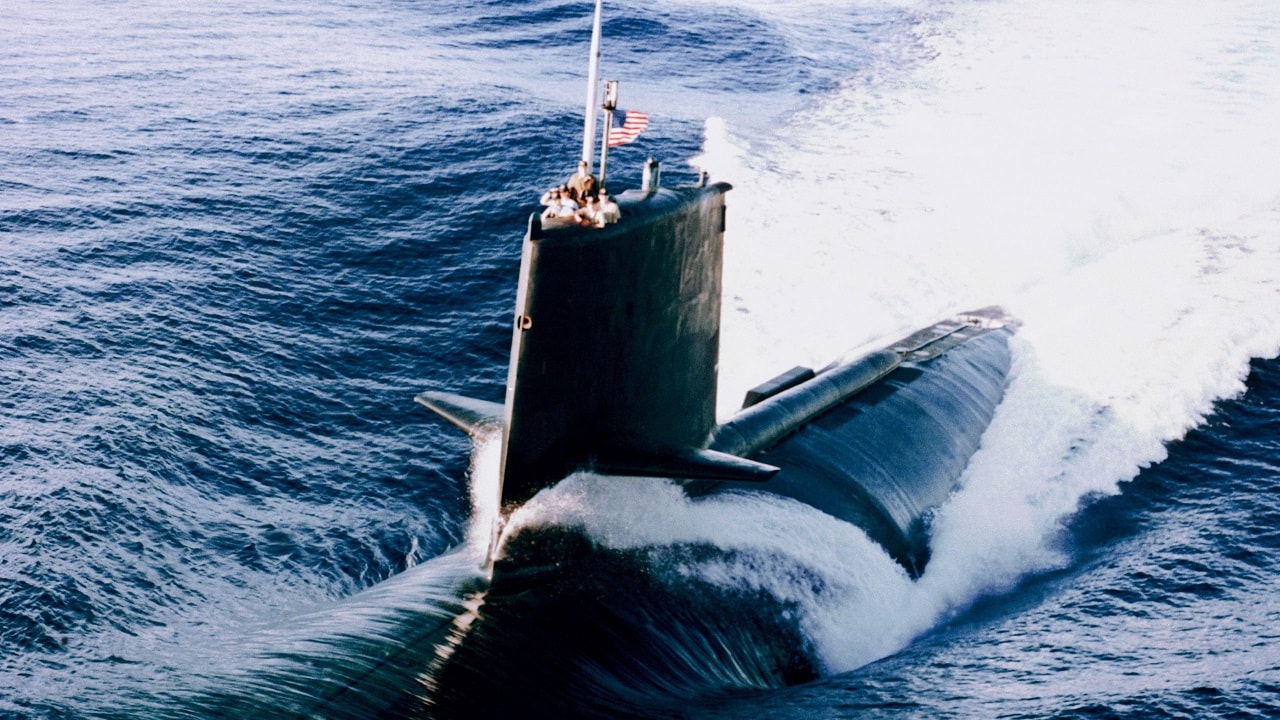
A port bow view of the nuclear-powered attack submarine USS SHARK (SSN-591) underway.
As one declassified intelligence document explains, “Soviet ASW aircraft, except TU-142s, use magnetic anomaly detection equipment for target localization and for limited area search. Since introducing this equipment in about 1960, the Soviets have deployed several MAD systems. The latest Soviet ASW aircraft, the Hormone helicopters, and the IL-38 May patrol aircraft are probably equipped with a new MAD system. May aircraft operate their system at about twice the altitude of earlier patrol aircraft, and tenuous evidence from helicopter operations indicates that the new MAD system has a detection radius about half again that of the earlier systems. The improved radius is estimated to be between 1,500 and 1,800 feet–large enough to justify small area searches by MAD-equipped aircraft.”
“Similar area searches at these higher operating altitudes have also been noted during recent Mail aircraft MAD operations, suggesting that some of these older aircraft may have been refitted with the new equipment.”
Is the Threat Overblown?
But how effective are sonar-alternative detection methods, given the 65-plus years of research that multiple navies around the world have invested in the technology?
It is an open question, but at the time of the 1972 report, the technology was seemingly still in development, and perhaps most effective for pinpointing the location of a submarine that was already detected or suspected to operate in nearby waters, suggesting that, at least at the time, the technology was more akin to a narrow searchlight rather than a wide array of floodlights in terms of detection.
During the Cold War, the United States Navy maintained a qualitative edge over its primary geopolitical adversary, the Soviet Navy.
Though both the Soviets and the Americans operated the world’s largest fleets of conventional and nuclear-powered submarines, replete with vast arsenals of nuclear and conventional weapons, Soviet submarine technology was, for the most part, considered less capable than its American counterparts.
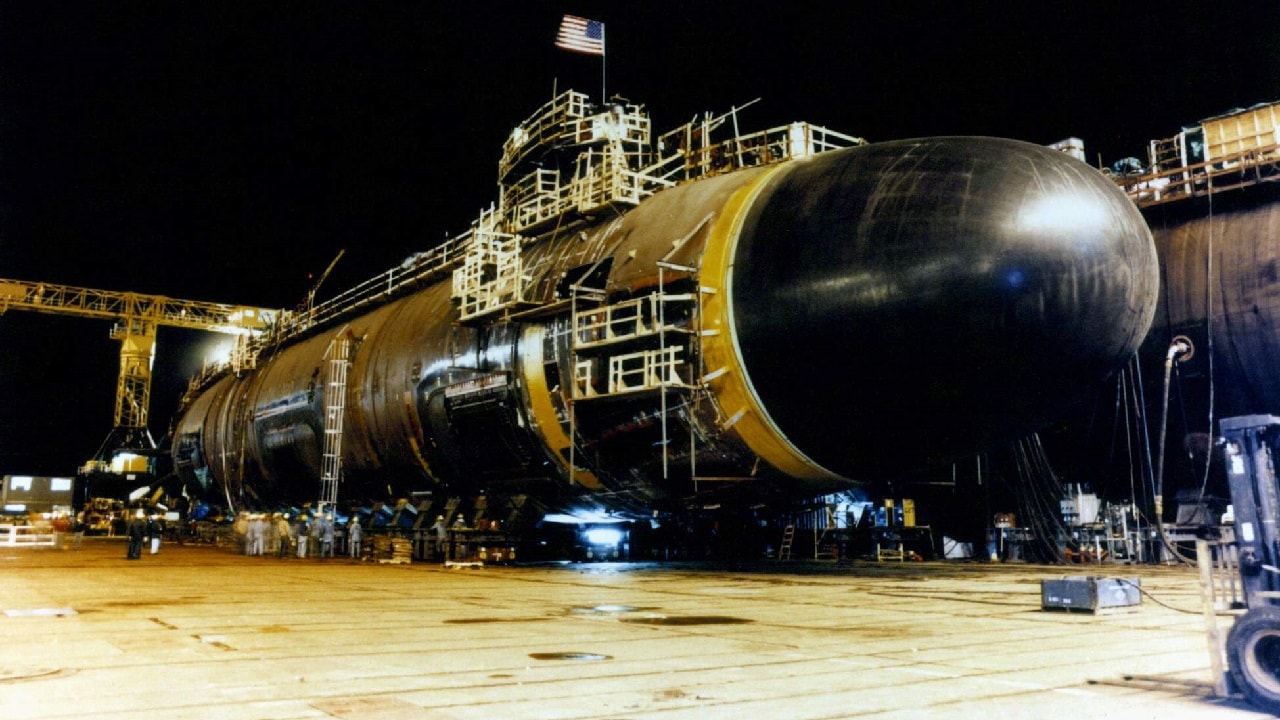
The first of a revolutionary new class of fast attack submarine, the Seawolf (SSN-21). Shown during construction at the Electric Boat Division of General Dynamics Corporation in Groton, Conn. She was christened by Margaret Dalton, wife of Secretary of the Navy John H. Dalton, on June 24, 1995.
Such is the state of affairs today with the United States Navy and the People’s Liberation Army Navy, or PLAN, the Chinese navy. However, the gap between two of the world’s leading naval powers is fast closing.
As one researcher with the Royal United Services Institute notes, “China’s submarine detection capabilities appear to be developing in ways that suggest that they may pose a robust threat to American SSNs operating in the first island chain. Should qualitative improvements be combined with a formidable manufacturing capacity, China will likely start to challenge US military maritime dominance under the waves.”
Combined with a lack of concrete arms-control agreements between Beijing and Washington, the potential for the PLAN to mount a serious challenge to decades of U.S. Navy undersea prowess is real.

SOUDA BAY, Crete, Greece (Oct. 15, 2007) – Los Angeles-class submarine USS Oklahoma City (SSN 723) arrives in Souda Harbor for a port visit. The submarine was operating in the Central Command area of responsibility for the past five months since departing their homeport of Norfolk, Va. U.S. Navy photo by Mr. Paul Farley (RELEASED)
But the researcher also notes that separating bluster from fact can be difficult. “Unverified claims of technological advancement are regularly championed in PRC sympathetic publications. It is therefore a legitimate question to ask just how concerning these undersea advancements are for Western military planners and strategists.”
So while the United States’ qualitative edge underwater could very well be eroding, Chinese detection methods are not as novel as they may appear at first blush.
About the Author: Caleb Larson
Caleb Larson is an American multiformat journalist based in Berlin, Germany. His work covers the intersection of conflict and society, focusing on American foreign policy and European security. He has reported from Germany, Russia, and the United States. Most recently, he covered the war in Ukraine, reporting extensively on the war’s shifting battle lines from Donbas and writing on the war’s civilian and humanitarian toll. Previously, he worked as a Defense Reporter for POLITICO Europe. You can follow his latest work on X.