
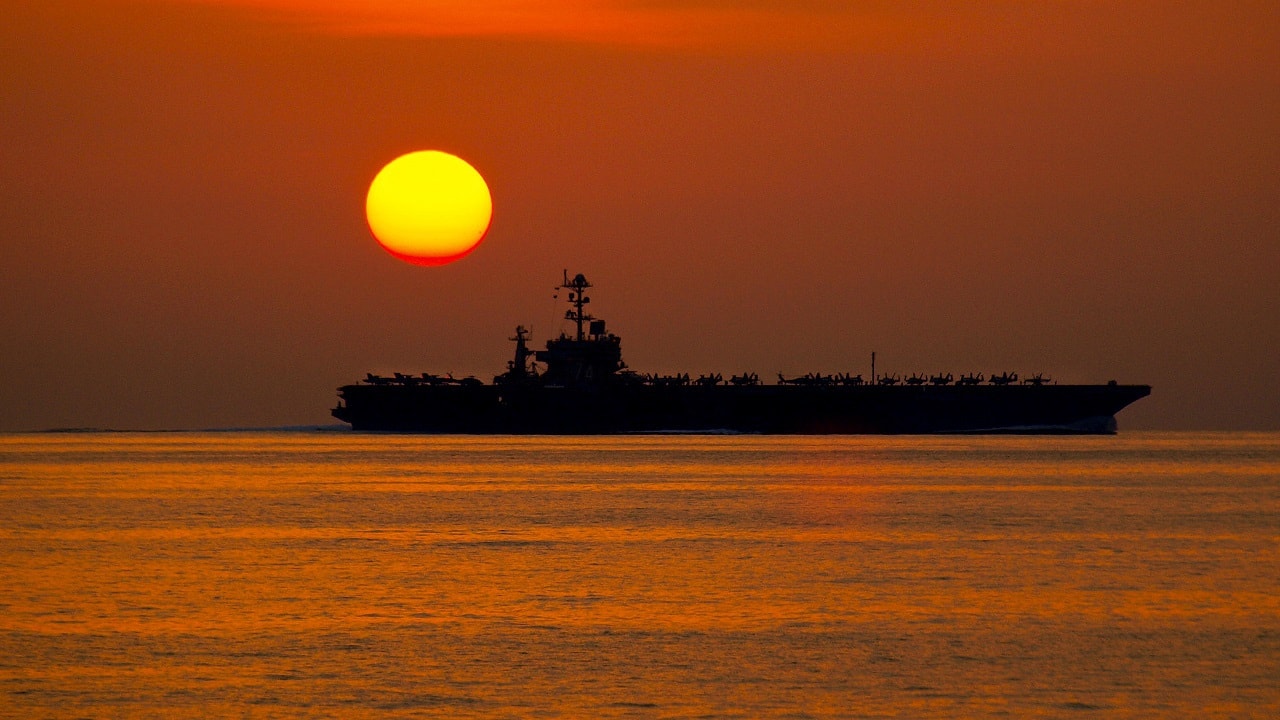
Synopsis: China’s anti-access strategy in a Taiwan war hinges on denying U.S. carrier strike groups access to the Western Pacific using massed missile fire.
-Three systems anchor the “carrier-killer” concept: the DF-21D for strikes inside the First Island Chain, the longer-range DF-26B designed to hold Guam and distant forces at risk, and the DF-17 hypersonic glide vehicle meant to complicate interception.
-Beijing pairs these weapons with a kill chain of satellites, radars, drones, and scouts to find and track moving ships.
-The challenge is proving real-time targeting under combat pressure—against layered U.S. defenses, jamming, decoys, and dispersed operations.
China Has A Plan To Sink U.S. Navy Aircraft Carriers: Thousands of Missiles
The Chinese military has built up its ballistic missile force and its arsenal of anti-ship missiles for one significant reason. To deny the US Navy aircraft carrier strike groups access to the Western Pacific in a war sparked by an invasion of Taiwan.
China’s “carrier-killer” strategy is based on three land-based missile systems. The DF-21D is the original, a medium-range ballistic missile (MRBM) with a maneuverable warhead designed to strike U.S. carriers inside the First Island Chain.
The DF-26B “Guam Killer” is a longer-range IRBM (4,000 km) that extends this threat to U.S. bases in the Second Island Chain. And the DF-17, China’s most dangerous missile which deploys a hypersonic glide vehicle (HGV).
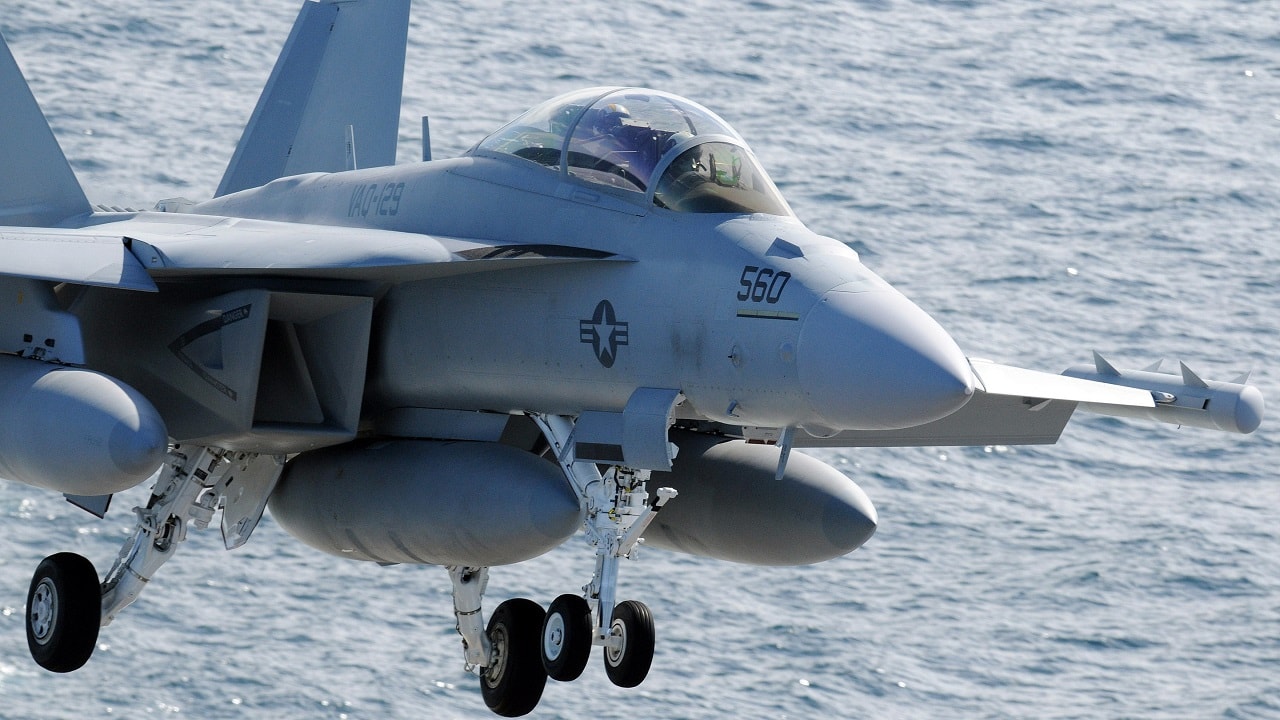
(Feb. 17, 2009) An EA-18G Growler assigned to the “Vikings” of Tactical Electronic Warfare Squadron (VAQ) 129 aligns itself for an at sea landing aboard the Nimitz-class aircraft carrier USS Ronald Reagan (CVN 76). The Growler is the replacement for the EA-6B Prowler, which will be replaced in the 2010 timeframe. Ronald Reagan is underway performing Fleet Replacement Squadron Carrier Qualifications in the Pacific. (U.S. Navy photo by Mass Communication Specialist 3rd Class Torrey W. Lee/Released).
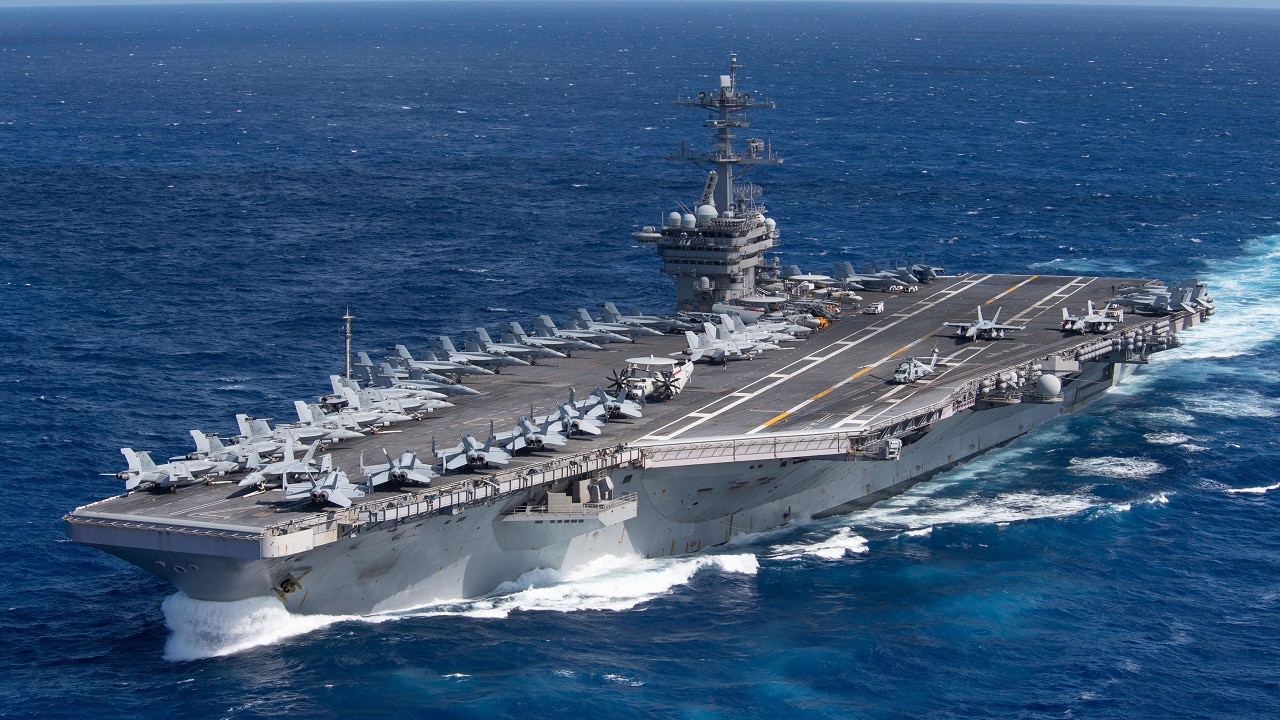
(Jan. 25, 2020) The aircraft carrier USS Theodore Roosevelt (CVN 71) transits the Pacific Ocean Jan. 25, 2020. The Theodore Roosevelt Carrier Strike Group is on a scheduled deployment to the Indo-Pacific. (U.S. Navy photo by Mass Communication Specialist Seaman Kaylianna Genier)
China test-fired an intercontinental ballistic missile into the Pacific Ocean last September, adding to already heightened tensions in the region where multiple countries have overlapping territorial claims, and both Beijing and Washington seek to project their influence.
Drew Thompson, a former U.S. defense official, said the test launch, which coincides with the U.N. General Assembly meeting in New York, “is a pretty blunt signal” to the international order.
“China is signaling that its forbearance has limits, that it is prepared to use its most powerful weapons to deter adversaries or punish them if needed if deterrence fails,” he said.
China’s Anti-Access/Area Denial Strategy
China’s “carrier-killer” missiles are a core component of its broader A2/AD strategy, intended to push U.S. naval forces beyond an effective strike range.
The strategy was influenced by a 1996 incident during the Taiwan Strait Crisis, when China felt humiliated by its inability to counter the presence of U.S. carrier groups.
“Kill Chain”: China has developed a sophisticated network of reconnaissance satellites, over-the-horizon radars, and drones to locate, track, and provide targeting data for its anti-ship missiles.
“Salvo Attack”: In a conflict, China would likely launch a coordinated, high-volume salvo of anti-ship missiles to overwhelm a carrier strike group’s defenses.
China’s Strategy in 3 Words: Thousands of Missiles
The People’s Liberation Army Rocket Force (PLARF) has an extensive array of thousands of ballistic, cruise, and hypersonic missiles designed to overwhelm an enemy’s defenses. Their strategy calls for them to launch as many types of missiles against warships, mainly against US aircraft carriers.
China has several different types of anti-ship missiles. The DF-21D is capable of rapid in-field reloading. This is a road-mobile, medium-range anti-ship ballistic missile (ASBM).It is equipped with a maneuverable re-entry vehicle (MaRV) and flies at hypersonic speeds during its final phase, making it difficult for existing missile defense systems to intercept, and has a range of 1,500 to 2,000 km.
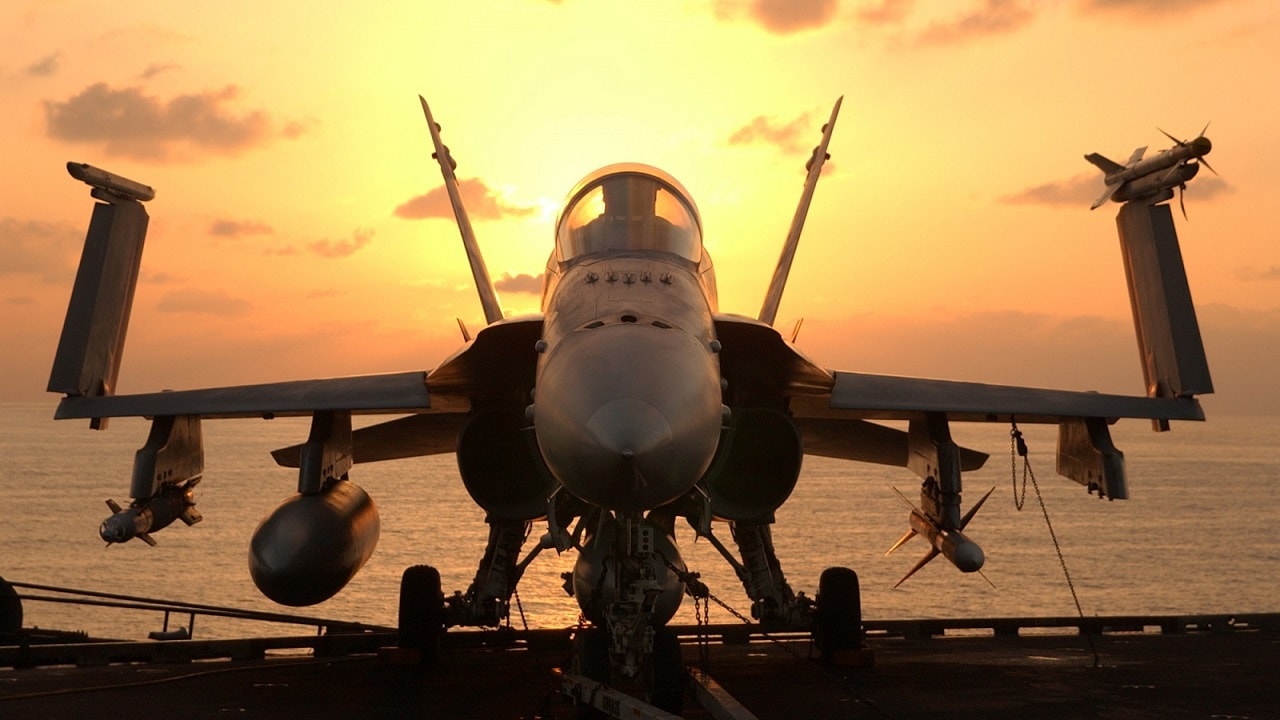
At sea aboard USS John C. Stennis, December 18, 2001 – After an early morning round of flight operations, an F/A-18 Hornet awaits the next round of combat flight operations aboard the USS John C. Stennis (CVN 74). Stennis and her embarked Carrier Air Wing Nine (CVW-9) are supporting Operation Enduring Freedom. U.S. Navy photo by Photographer’s Mate 3rd Class Jayme Pastoric
In 2013, the missile was tested against a ship target roughly the same size as contemporary U.S. aircraft carriers.
The DF-26 anti-ship ballistic missile variant can rapidly be swapped with conventional and nuclear land-attack warheads. It is capable of nuclear precision strikes, potentially with low-yield optionality.
In addition to conventional anti-ship and conventional and nuclear land-attack payloads, it is mobile and can be moved rapidly after firing. It has a range of about 4,000 km, which is sufficient to strike U.S. naval assets and military bases in Guam from mainland China.
Dubbed the “Guam Killer”, it is “enough to send all the American aircraft carriers within and beyond the Second Island Chain to the bottom of the sea”, said Yangtse Post military commenter Chen Gwangwen.
China has described the DF-21 and the DF-26B as “Carrier Killers.”
China’s numerous DF-17s have a hypersonic glide vehicle to evade U.S. and allied radar and ballistic missile defense. “The DF-17 has demonstrated a high degree of accuracy in testing, with one U.S. government official saying a test warhead “within meters” of its intended, stationary target. U.S. defense officials have also said the DF-ZF HGV performed “extreme maneuvers” and “evasive actions” in previous test flights,” a CSIS Missile Threat essay says.
However, accurate targeting also depends on the Chinese systems’ ability to track a moving American vessel and penetrate newer, more advanced missile systems.
The Chinese will have to fuse efforts to use satellites, over-the-horizon radars, airborne and maritime scouts, and drones to track and fix US aircraft carriers. While it sounds easy, it has never been proven in combat. This will also entail sending course corrections while the missiles are in flight.
China’s Submarine Fleet is Growing
Currently, the PLAN operates about 50 submarines, but the vast majority are diesel-electric boats, which limits their range and keeps them closer to the Chinese shore.
However, the PLAN is expected to have 65 submarines in the fleet by 2030. The US is rapidly expanding its anti-ship missile arsenal, including Tomahawk anti-ship Missiles and LRASMs.
Aircraft Carriers and Airfields Are Prime Targets
The Chinese ballistic missiles will also be targeted against U.S. military runways and taxiways in Japan, Guam, and other Pacific islands in the event of a Taiwan invasion to impede American airpower.
In a new Stimson Center report, “Cratering Effects: Chinese Missile Threats to US Air Bases in the Indo-Pacific,” the Chinese will attack US airbases and crater the runways and taxiways, basically ceasing air operations for days if not weeks.
The essay’s main point is that to restore its ability to project air power early in a war, the United States will need to outthink—not outspend—the PLA. The sobering message is that American air bases “can no longer be considered a sanctuary.”
U.S. Air Defenses And Countermeasures
The Chinese do have thousands of missiles that they can salvo against US aircraft carrier strike groups in the event of an invasion of Taiwan, which many analysts believe will happen by 2027.
The U.S. military continues to develop and field countermeasures to address the threat posed by these missiles.
The US will utilize a layered defense strategy. A carrier strike group isn’t a single ship. It brings multiple Aegis destroyers and cruisers, airborne early warning, electronic attack, decoys, and fighters, where they use a multi-layered defense system that includes:
SM-series missiles: For intercepting ballistic missiles in different phases of flight.
Electronic Warfare (EW): EA-18G Growler aircraft can blind or jam sensors and data links. Nulka active decoys and other shipborne deception tools can pull seekers off real targets in the terminal phase.
Close-in Weapons Systems: For a last line of defense, the Phalanx CIWS is a rapid-fire, computer-controlled, radar-guided gun that can defeat anti-ship missiles and other close-in threats on land and at sea.
Extended Range: Newer technologies, such as the MQ-25 Stingray unmanned refueling drone, can extend the range of carrier-based aircraft, allowing the carrier strike group to operate further from China’s missile range.
Dispersed Operations: The U.S. is exploring ways to counter the A2/AD strategy by using submarines, unmanned systems, and distributing forces across a broader area to complicate Chinese targeting.
Separating Myth From Reality
One thing to keep in mind is that all of these claims about China’s weapons capabilities come from China itself. As the piece from “War on the Rocks” that was cited earlier stated:
“China has the world’s largest bureaucracy to propagandize its greatest strengths while hiding (or at least dismissing) its greatest weaknesses. America, by contrast, ultimately bares all for all to see. It is an elementary analytical error to confuse the respective great powers’ “dirty laundry” with their “designer clothes.”
Obviously, this doesn’t negate any of the threats the US would face if war did break out between the two superpowers. Complacency is death in wartime.
“Even the finest sword plunged into salt water will eventually rust.” — Sun Tzu
The US would face a daunting task in an Indo-Pacific war with China, and while the mobile missiles would themselves be challenging to track and destroy, the Chinese Navy, which is crucial for the invasion of Taiwan, would not.
And the US Navy and Air Force would target Chinese carriers, and landing ships needed for an invasion. That in itself would be a problematic scenario for the Chinese to overcome.
The threat to US carriers is real, but it isn’t necessarily a guaranteed death sentence.
The Navy has been constantly upgrading the way it will fight in a shooting war with China.
About the Author: Steve Balestrieri
Steve Balestrieri is a National Security Columnist. He served as a US Army Special Forces NCO and Warrant Officer. In addition to writing on defense, he covers the NFL for PatsFans.com and is a member of the Pro Football Writers of America (PFWA). His work was regularly featured in many military publications.