
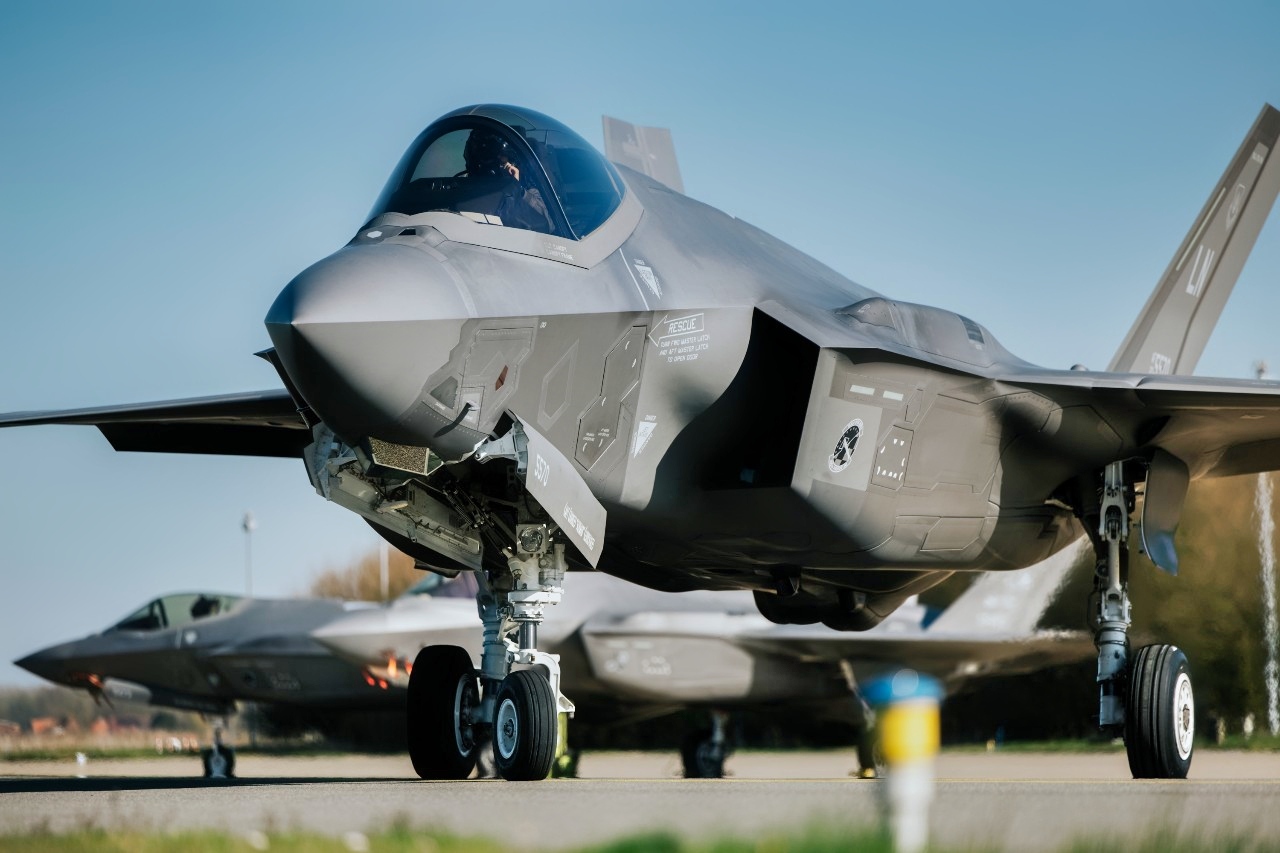
Key Points and Summary – A new Defense Department Inspector General audit puts a hard number on a problem the Air Force has been warning about for years: F-35s were available to fly only about half the time in fiscal 2024.
-That headline finding lands inside a broader downturn, with overall Air Force mission-capable rates falling to their lowest level in at least a decade.
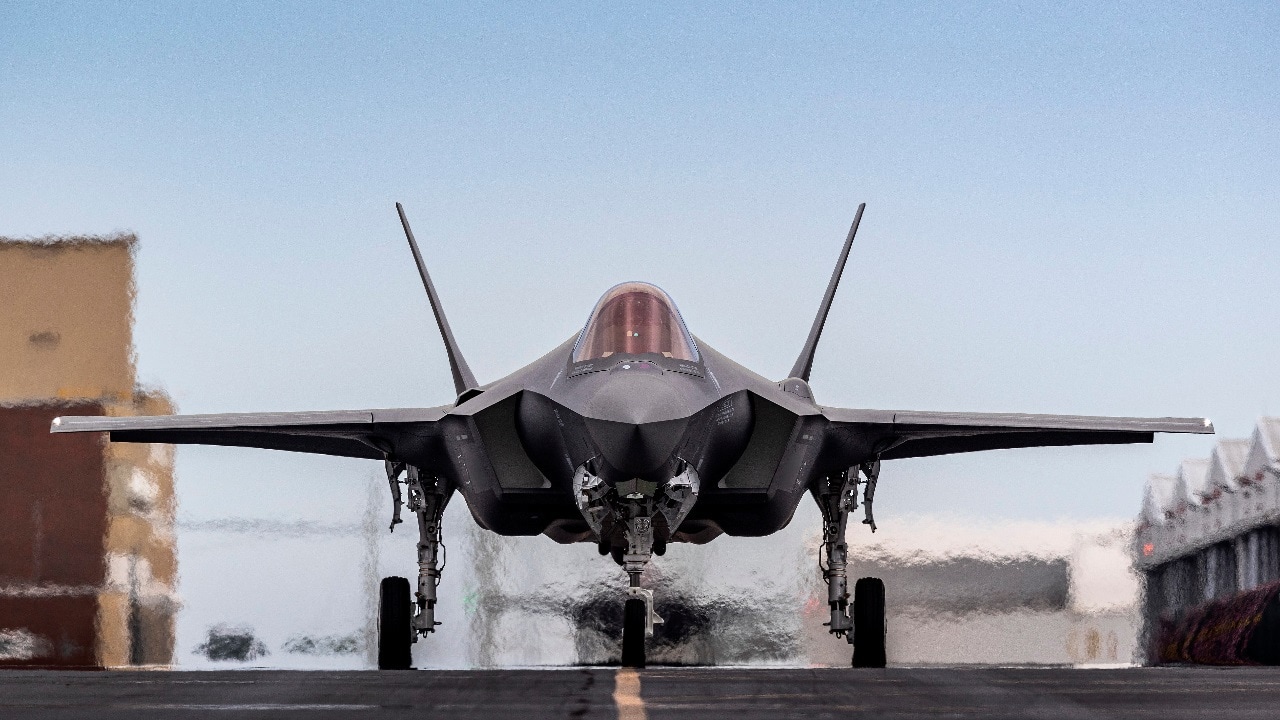
F-35 Stealth Fighter. Image Credit: Creative Commons.
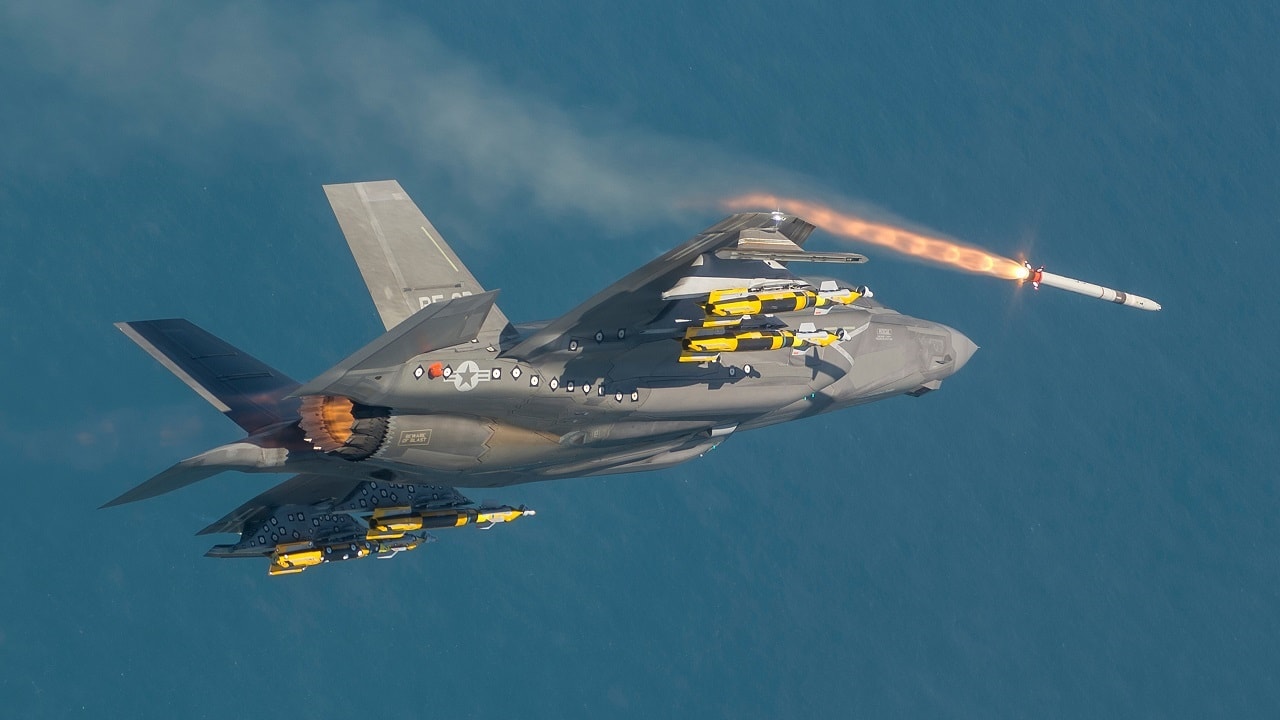
F-35. Image: Creative Commons.

US Air Force F-35 Stealth Fighter. Image Credit: Creative Commons.
-The report argues the issue is not just parts and maintainers, but accountability—sustainment contracts without enforceable performance targets and oversight that failed to bite when metrics slipped.
-The result is a force forced to triage readiness, prioritizing forward missions while the structural problems persist.
Fly, Fix, Fight for the U.S. Air Force: The F-35 Sustainment Wake-Up Call
As 2025 comes to an end, the U.S. Air Force’s aircraft readiness challenges have become truly urgent, as an independent watchdog report has revealed systemic sustainment problems affecting the service’s most advanced fighters.
A Defense Department Inspector General audit released in December found that the average Air Vehicle Availability rate for all F-35 aircraft in fiscal year 2024 was approximately 50 percent, meaning the jets were available to fly only half the time on average – well below minimum required thresholds and far below expectations for the Pentagon’s most expensive combat aircraft program.
But that’s not the entire story.
The finding only compounds longstanding, broader readiness trends in the Air Force that drew global attention in early 2025.
Data published by Air & Space Forces Magazine in February showed that overall mission-capable rates across all U.S. Air Force fleets dropped to 67.15 percent in fiscal 2024, the lowest in at least a decade and perhaps more than 20 years.
The concept of “mission capable” here means an aircraft can perform at least one of its core assigned missions on any given day, and historically, rates of 75 to 80 percent were deemed acceptable for most fleets.
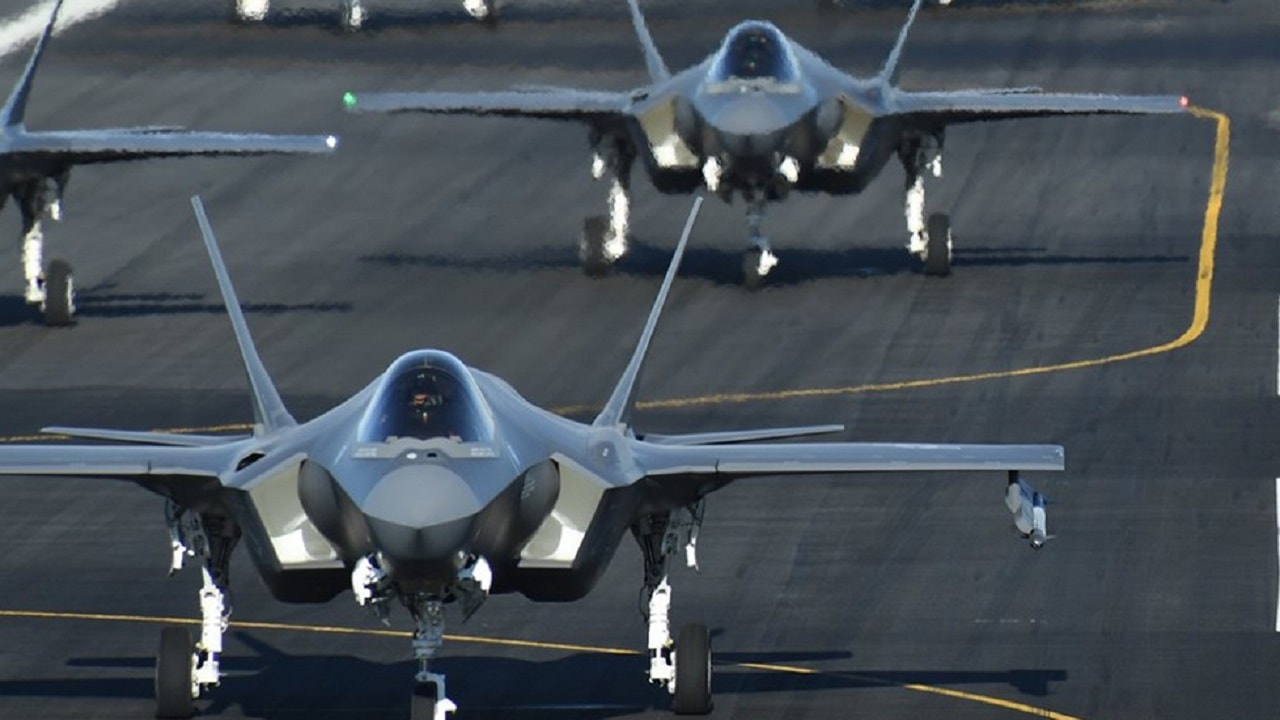
The active duty 388th and Reserve 419th Fighter Wings conducted an F-35A Combat Power Exercise with 52 aircraft at Hill AFB, Utah, Jan. 6, 2020. 388th Fighter Wing photo via Facebook.
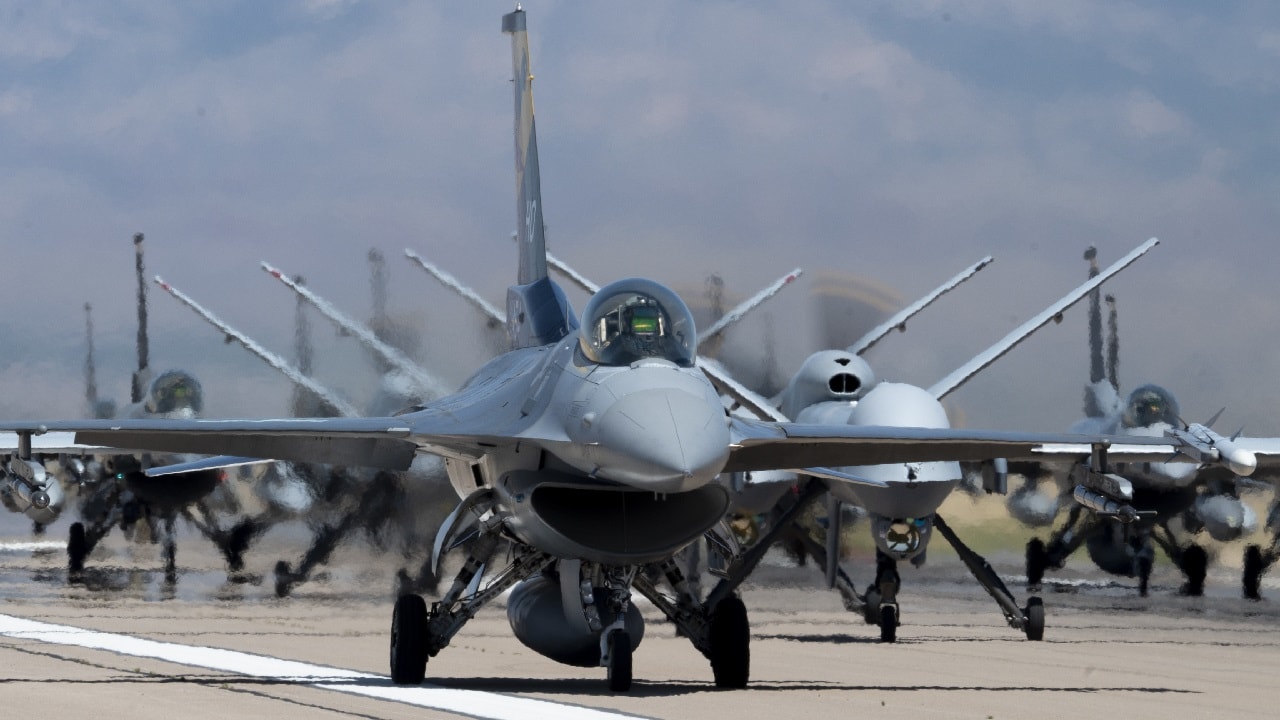
Forty-nine F-16 Vipers and MQ-9 Reapers assigned to the 49th Wing line up on the runway during an elephant walk at Holloman Air Force Base, New Mexico, April 21, 2023. The 49th Wing is the Air Force’s largest F-16 and MQ-9 formal training unit, building combat aircrew pilots and sensor operators ready for any future conflicts. (U.S. Air Force photo by Tech. Sgt. Victor J. Caputo)
These data now expose a serious readiness problem that had been deteriorating across platforms for some time and is now highly visible in the F-35. This fighter was intended to simplify sustainment and readiness through commonality across allied fleets.
The inspector general report specifically identified weak oversight of contractor performance as a central reason for the poor sustainment outcomes, noting that the F-35 Joint Program Office did not include measurable readiness performance requirements in key sustainment contracts and failed to enforce inspection, reporting, and government property safeguards, reducing accountability for Lockheed Martin, the prime contractor.
The F-35 program is the U.S. military’s most considerable procurement effort, with lifetime acquisition, operation, and sustainment costs projected to exceed $2 trillion.
Yet, its readiness results fall well short of minimum goals. According to the inspector general, the Pentagon paid roughly $1.7 billion under the sustainment contract without applying economic adjustments, even though metrics such as mission-capable and Air Vehicle Availability rates did not meet service-level contractual requirements.
Air Force leaders and legislators have been aware of the platforms’ sustainment problems for years as well. Independent analyses and reporting from the Government Accountability Office have previously documented that nearly half of U.S. F-35s were not ready to fly at times due to maintenance bottlenecks and parts shortages. Congress has repeatedly raised the matter, too.
Put the news in the context of broader U.S. Air Force readiness, and there’s a clear problem: while overall mission-capable rates declined service-wide in 2024, some individual fleets, such as the F-22 and B-1 bomber, also logged readiness rates of less than 50 percent.
The broader readiness downturn stems from multiple factors: aging aircraft increasingly difficult to maintain, spares shortages, and a maintenance workforce that is stretched thin across a number of legacy and modern platforms.
The Pentagon’s own Government Accountability Office has identified sustained drops in mission-capable rates for Air Force tactical aircraft over recent years, citing consistent problems with funding for spare parts and maintenance as the primary driver for the problem.
The Problem Multiplies for the Air Force
As long as these problems persist, the Air Force will face new challenges.
Operationally, low aircraft availability forces the Air Force to make tough decisions about how to allocate the limited number of ready jets.
The service already increasingly prioritizes aircraft deployed to forward operational theaters or critical missions – obviously.
That practice can leave home-based units with significantly lower availability, and that prioritization only masks deeper structural problems rather than solving anything. Instead of being fully prepared for any contingency, the Air Force is focusing limited sustainment resources on specific missions.
That does not change the fact that the Air Force (and by extension the United States) is now technically vulnerable.
Air Force leadership has acknowledged the seriousness of these trends, too. Chief of Staff Gen. Kenneth S. Wilsbach, in his first letter to the force after assuming office, laid out a simple three-word directive: “Fly, fix, fight.”
Wilsbach explicitly tied operational readiness to daily behavior across the service, arguing that leaders must remain connected to the aircraft and missions they oversee, stressing that time in the cockpit and inside maintenance units is essential to understanding readiness shortfalls and fixing them.
But while the Air Force may know how to fix the problems, ultimately it’s down to Congress and the White House to determine whether the service has the funding it needs to achieve its stated goals.
The F-35 sustainment findings in particular raise questions about the Pentagon’s ability to hold defense contractors accountable while managing some of the most technically complex aircraft systems in the world, too.
The inspector general’s recommendations are as follows: enforceable performance targets in sustainment contracts must be established, and stronger oversight mechanisms are now necessary to ensure that aircraft availability targets are not merely aspirational goals but contractual obligations.
As the Air Force looks toward 2026, the message from the data is clear. Without structural reform to sustainment oversight and contracting accountability, even the most advanced fighter aircraft in the U.S. inventory will continue to fall short.
About the Author:
Jack Buckby is a British author, counter-extremism researcher, and journalist based in New York who writes frequently for National Security Journal and 19FortyFive. Reporting on the U.K., Europe, and the U.S., he works to analyze and understand left-wing and right-wing radicalization, and reports on Western governments’ approaches to the pressing issues of today. His books and research papers explore these themes and propose pragmatic solutions to our increasingly polarized society. His latest book is The Truth Teller: RFK Jr. and the Case for a Post-Partisan Presidency.