
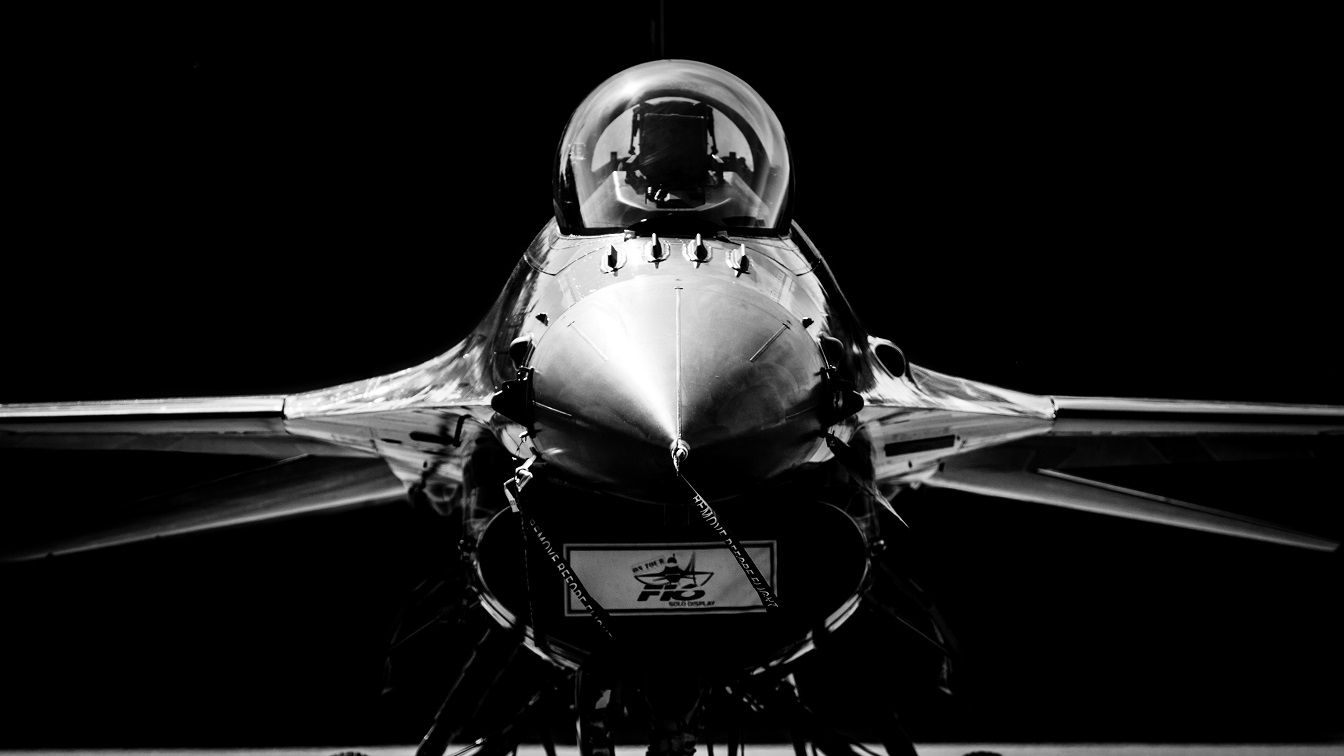
The F-16’s 2040s Plan: 12,000 Hours, New Radar, And A “Viper” Rebuild
The F-16 Fighting Falcon has been flying for almost 50 years. This is one heavily-updated warbird that just won’t quit.
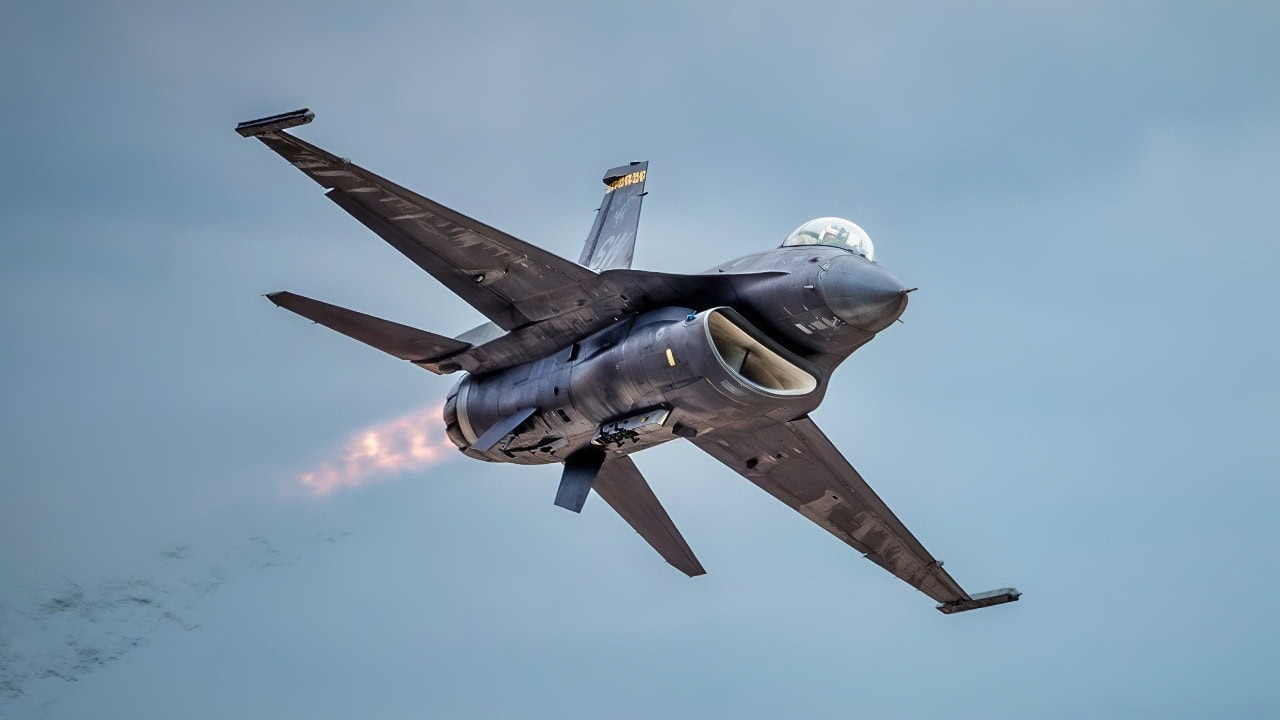
U.S. Air Force Maj. Taylor “FEMA” Hiester, F-16 Viper Demonstration Team commander and pilot, takes off for a practice demonstration at Shaw Air Force Base, S.C., Feb. 13, 2025. Hiester leads a team of Airmen charged with showcasing the combat capabilities of the F-16 Fighting Falcon for millions of spectators each year. (U.S. Air Force photo by Senior Airman Meghan Hutton)
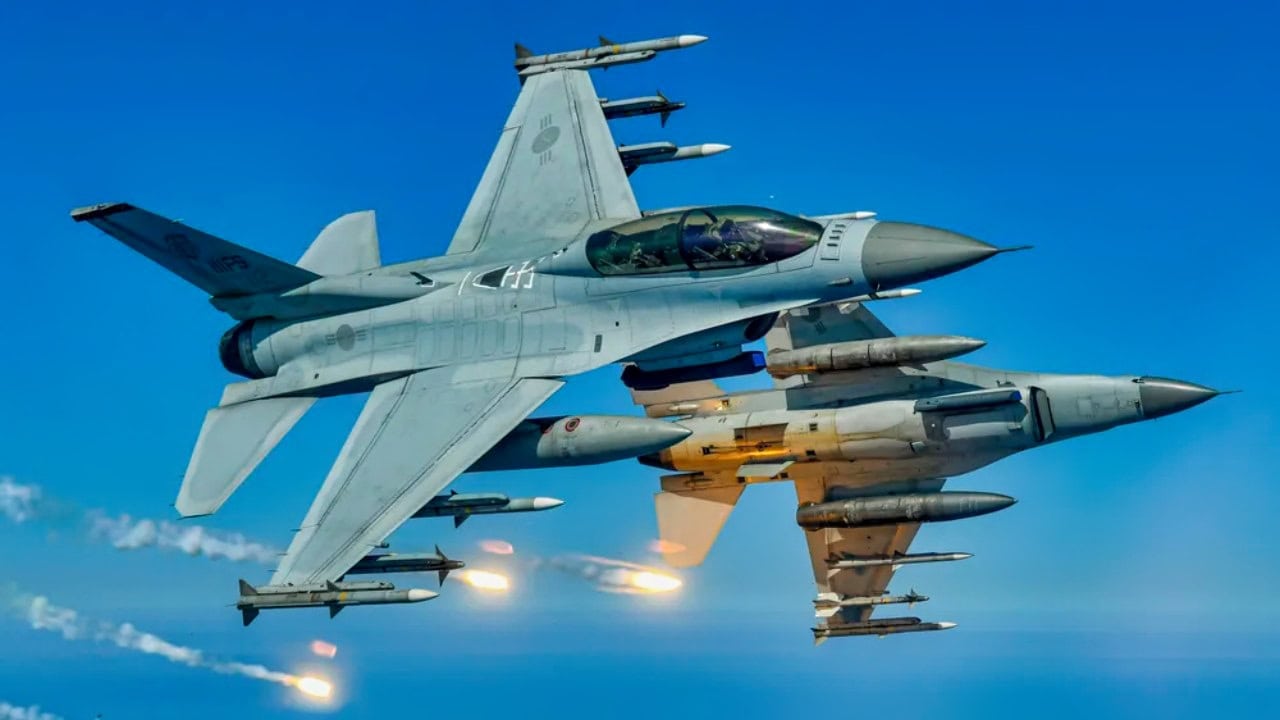
KF-16 Fighter. Image Credit: Creative Commons.
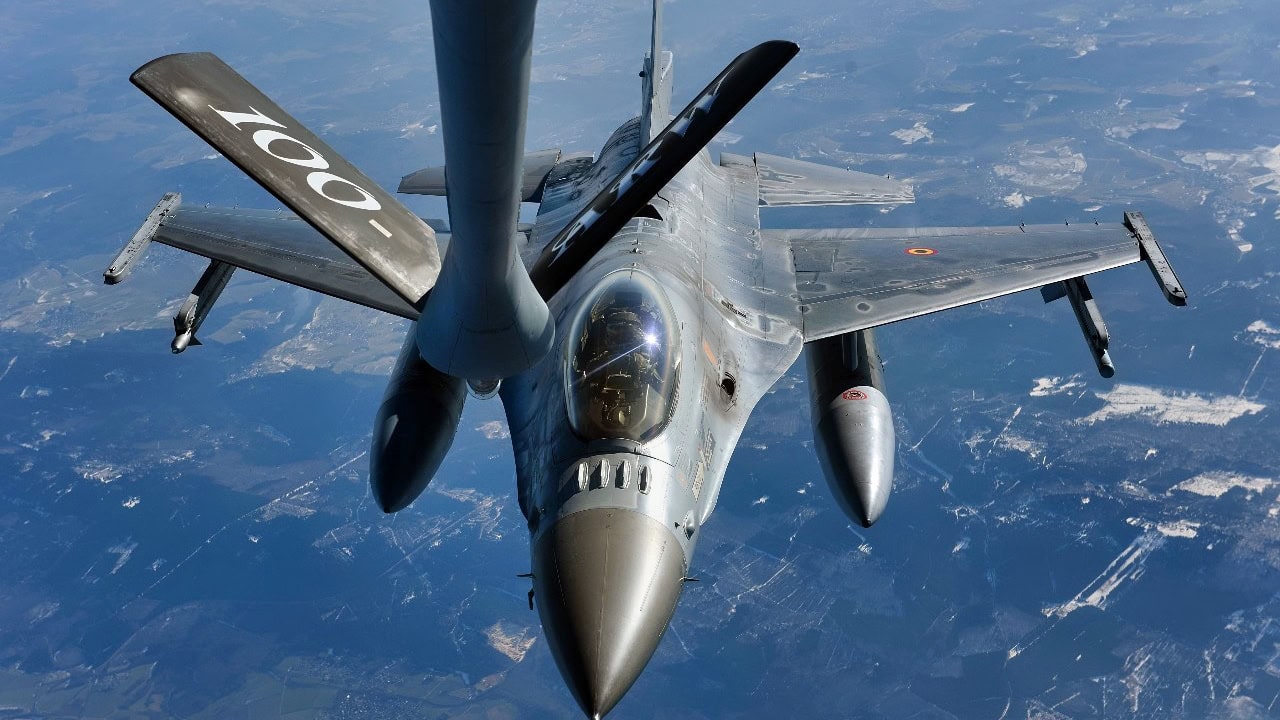
A Belgian Air Component F-16 flies behind a U.S. Air Force KC-135 Stratotanker from the 100th Air Refueling Wing, RAF Mildenhall, England, before receiving fuel over Germany, Feb. 23, 2018. The air refueling was part of a large force exercise with NATO allies including the Belgian, Dutch, French and German air forces. (U.S. Air Force photo by Airman 1st Class Luke Milano)
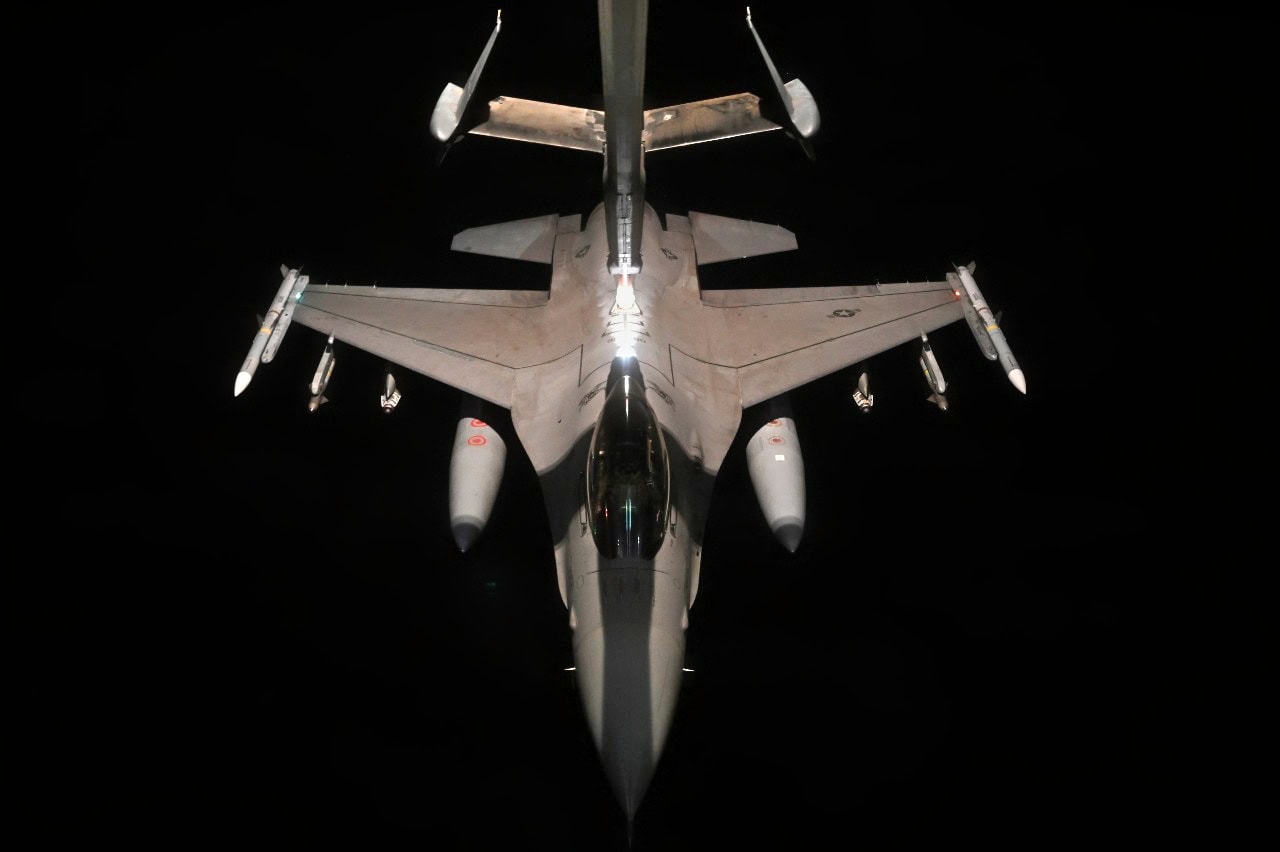
A U.S. Air Force F-16 Fighting Falcon assigned to the 77th Expeditionary Fighter Squadron, receives fuel from a KC-10 Extender assigned to the 908th Expeditionary Air Refueling Squadron, over an undisclosed location within the U.S. Central Command area of responsibility, Dec. 2, 2022. F-16 aircraft routinely conduct presence patrols within the CENTCOM AOR to reassure allies and ensure regional security. (U.S. Air Force photo by Staff Sgt. Gerald R. Willis)
It looks like there are no plans to retire all the F-16s anytime soon, and they could remain in the U.S. Air Force fleet until 2040 or later.
This fighter jet makes pilots smile, and many aviators have enjoyed flying it over the decades. The F-16 can be readily maintained and optimized for further missions in all kinds of weather and threat environments.
Spawned After the Vietnam War
After the Vietnam War, the Air Force needed to re-emphasize better dog-fighting and survivability from surface-to-air missiles. North Vietnamese air defenses were teaching the Americans deadly lessons during combat missions. A new airplane needed to be built to answer these threats and dominate combat until the Cold War could be won.
The Fighting Falcon Spread Its Wings During the 1970s
The F-16 emerged in the early 1970s and was introduced in 1978. The F-16 first incorporated fly-by-wire and sidestick controls, allowing for quick pilot uptake in training and long-term flight.
The maneuverability and speed were excellent. That bubble canopy was extremely clear and a pilot’s dream for maximizing visibility.
Can this airplane fly for another 15 years or more? The Fighting Falcon can still bring any air force into the modern age.
It is not stealth, but some radar-absorbing coatings have been incorporated in the most modern “Viper” version. The Viper’s electronic warfare capabilities are also a force multiplier.
New Updates Allowed It to Dominate the Cold War
As the 1970s gave way to the 1980s and 1990s, the F-16 continued to improve. The avionics were upgraded. Newer radar systems were added, and powerful high-thrusting engines were incorporated.
Global War on Terror Stalwart
The F-16 took on additional roles, including suppression of enemy air defenses and close air support.
These two mission sets would be a difference maker during the wars in Iraq and Afghanistan. The F-16 was able to bring the noise to help ground combatants survive to fight another day.
The Fighting Falcon became known for adaptability and reliability. This meant it could fly well even in the hot, dusty conditions of the Middle East.
The F-16 airframe is especially strong and survivable. The engineering and technical prowess are apparent, as it has been a platform that has stood the test of time across many combat operations.
Keeping the Air Forces Around the World Happy
The airplane has seen numerous improvements over the years, with new “Block” models constantly answering and adapting to variable conditions in the skies. The F-16 did not need to be replaced outright; it could be reconfigured to outlast the competition and exported to international air forces hungry for its diverse mission sets and robust tactics in peace or in war.
Could It Survive Against Fifth-Generation Fighter Jets?
However, by the time the F-35 and F-22 came online, the days appeared to be numbered for the F-16. This was still a fourth-generation jet, and it looked like it would be eclipsed by fifth-generation flight. Enemy air defense systems were improving, and near-peer competitors like China and Russia were developing stealth fighters such as the Su-57 Felon and J-20 Mighty Dragon. It appeared the F-16 would have no place in this environment.
The Ukraine Test
But then Russia invaded Ukraine, and the Kremlin assumed its fighter jets would create air dominance over the Ukrainians. President Volodymyr Zelensky clamored for the F-16 – knowing his pilots would take to it immediately. European allies began supplying the F-16 to Ukraine in 2024. Ukraine found that the F-16 could police airspace, provide close air support, and keep the Russians from attacking with its own fighter jets.
This use case breathed new life into the entire F-16 program in America. The jet is combat-proven and still a dream to fly. The airplane had many life-extension programs. New wing roots and fuselage sections strengthened the airframe. The airplane went from having a 8,000 hour limit to an 12,000 hour limit. This means extra years of flight time.
The Latest ‘Block’ of Improvements
The F-16 would add an AESA radar for better situational awareness. “This new radar provides greater range, improved target detection, enhanced reliability, and resistance to electronic interference compared to older mechanically scanned systems. Coupled with new mission computers, digital electronic warfare suites, and improved cockpit displays, these upgrades dramatically improve situational awareness and lethality,” my colleague Issac Seitz at 19FortyFive wrote.
Nonetheless, some older model F-16s have been retired from the Air Force. The latest version of the F-16 is the F-16 Block 70/72 or “Viper” series. It has the APG-83 Sabre AESA radar. There is a new mission computer and center pedestal display. A “Viper Shield” digital electronic warfare suite has been added too. There is also an infrared search-and-track system.
Keeping It Alive Until 2040
With all of these upgrades, could the F-16 Viper fly for another 15 years? That looks to be the case. No pilot assigned to the Viper would likely complain. This model should be relevant for many air forces, such as Taiwan, that desperately need a modernized version to fly against China, should there be a conflict over the skies.
The F-16 is one of the most successful fighter programs in military history. Highly upgradable features make it a tough customer and a popular export. It has proven its worth in the latest war in Ukraine, making its operators confident that it can be upgraded to fly against the best Russian pilots. The Viper version is top-notch, and its new capabilities shine.
Let’s get this warbird into more countries that need a boost to their air forces, with an airplane that is easy to fly and has significant improvements so it can serve into the 2040s.
About the Author: Brent M. Eastwood
Author of now over 3,000 articles on defense issues, Brent M. Eastwood, PhD is the author of Don’t Turn Your Back On the World: a Conservative Foreign Policy and Humans, Machines, and Data: Future Trends in Warfare plus two other books. Brent was the founder and CEO of a tech firm that predicted world events using artificial intelligence. He served as a legislative fellow for US Senator Tim Scott and advised the senator on defense and foreign policy issues. He has taught at American University, George Washington University, and George Mason University. Brent is a former US Army Infantry officer. He can be followed on X @BMEastwood.