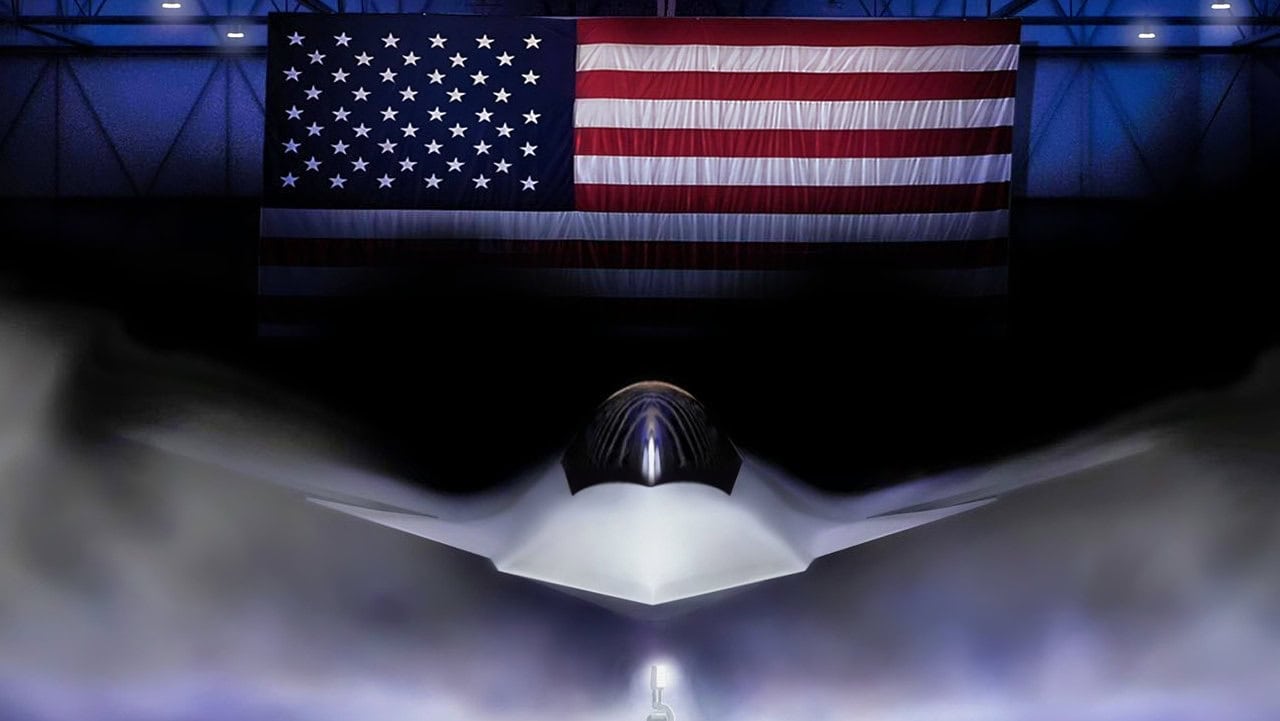
F-47 Engine Breakthrough: Why the NGAD Is Faster Than Expected
In the 10 months since US President Donald Trump announced Boeing as the selected winner of the F-47 NGAD program, much has been said about the aircraft’s design and requirements.
Among those noting the requirements are observations by the senior design teams at Chengdu and Shenyang aircraft corporations in the People’s Republic of China (PRC), stating that the design of the US 6th-generation or Next-Generation Air Dominance (NGAD) fighter aircraft is already obsolete.
Less discussed is the development and likely performance of the F-47’s engines. This parallel effort is officially referred to as the Next-Generation Adaptive Propulsion (NGAP) system.
The two major engine contractors in the US—General Electric (GE) and Pratt & Whitney (PW)—both have adaptive-cycle engines in development: the XA102 and XA103, respectively. The XA102 is actually an evolution beyond what was originally the XA100, a design that was initially developed under the Adaptive Engine Transition Program (AETP).
This engine was developed for the F-35 as a proposed replacement for the troubled PW F135 engine. The US Air Force (USAF) ultimately decided not to replace the F135 with the new GE design concept, citing budgetary pressures. The alternative option that the service elected to go with was to modernize the F135 design with an Engine Core Upgrade (ECU)
Adaptive Cycle Advantages
There are several benefits to the adaptive cycle design. GE’s testing of the XA100 proves that a “three-stream design” enables the engine to switch between high-thrust and high-efficiency modes. That results in 25 per cent better fuel efficiency, a 30 per cent increase in range, and 25 per cent faster acceleration.
This engine also doubles the mission systems’ cooling capacity.
The XA100 was also a “drop-in” fit for the F-35A and F-35C models and could replace the existing F135 motor without requiring significant modifications to the engine bay or aircraft structure. Had the USAF taken a longer view of a Mid-Life Upgrade (MLU) for the F-35, the XA100 could have been an optimal solution.
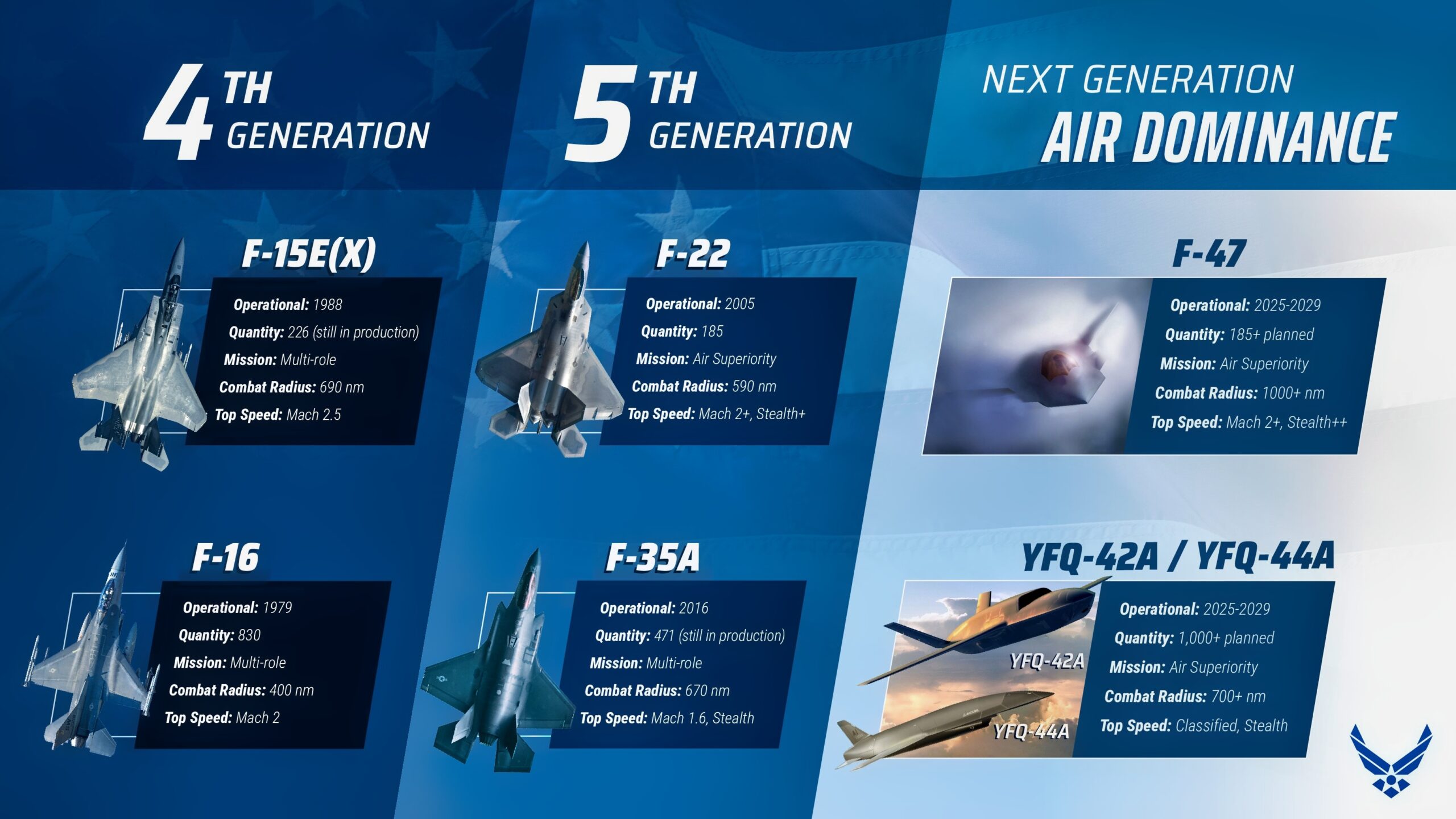
F-47 Infographic. Image Credit: U.S. Air Force
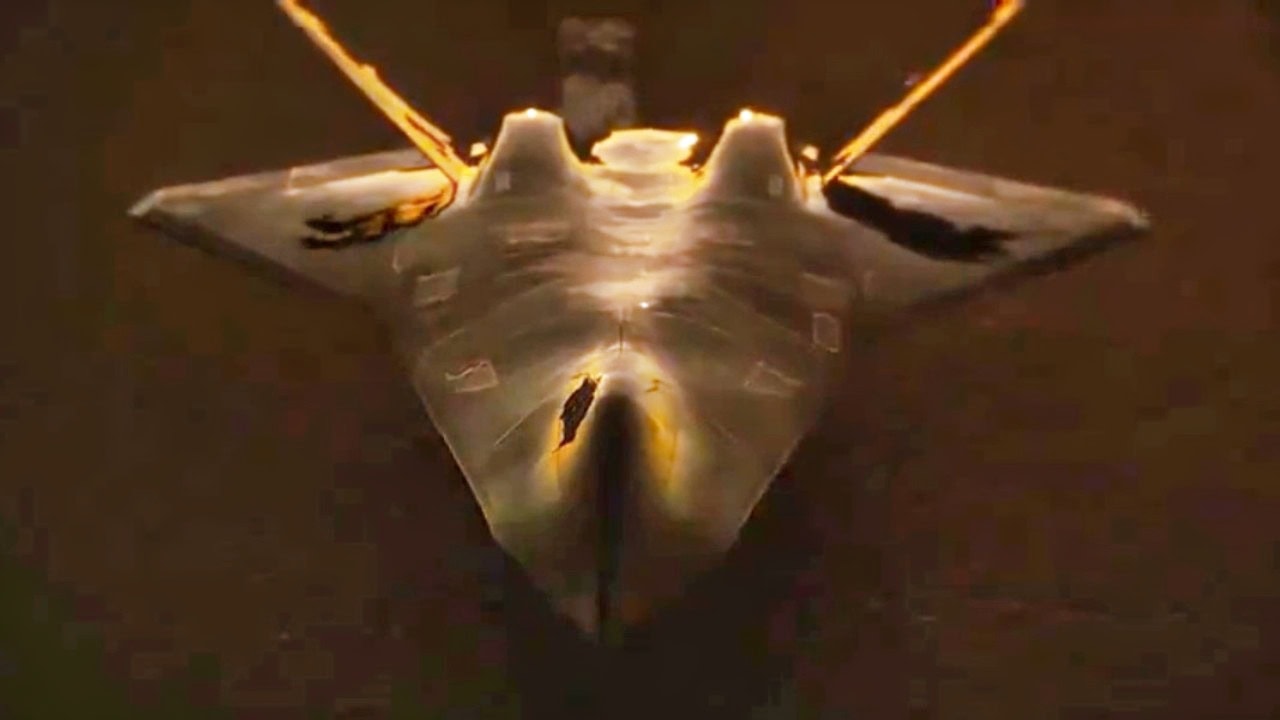
F-47 Fighter from Boeing. Image Credit: U.S. Air Force Screenshot.

Shown is a graphical artist rendering of the Next Generation Air Dominance (NGAD) Platform. The rendering highlights the Air Force’s sixth generation fighter, the F-47. The NGAD Platform will bring lethal, next-generation technologies to ensure air superiority for the Joint Force in any conflict. (U.S. Air Force graphic)
The adaptive technology seen in the XA100 is poised to enhance future combat missions by enabling longer-range operations. The engine’s interactive controls adjust airflow based on the pilot’s input. This optimizes operating efficiency and performance while accounting for varying flight conditions.
This engine design also introduced advanced propulsion innovations that had not previously been integrated into a fighter engine. Among these were additive-manufactured heat exchangers, rotating ceramic matrix composite parts, and a new digital engine control system.
NGAD Operational Objectives
The F-47 is the culmination of a program called Next Generation Air Dominance (NGAD), which was launched more than a decade ago. The program, officially a 6th-generation fighter, will replace the F-22, one of the two 5th-generation fighters in the USAF inventory, the other being the F-35.
What was not widely known at the time of Boeing’s selection as the F-47’s contractor was that the USAF and the Defense Advanced Research Agency (DARPA) had been working on the program for several years beyond just tabletop design studies.
The two agencies were flying X-plane prototypes well before the NGAD program’s source selection.
The F-47 will also be a different kind of platform than what has been seen before in the history of fighter aviation. It will not be a fighter jet, nor a multi-role fighter, but it will be the ultimate air superiority aircraft.
As such, it will feature not only a far more sophisticated level of stealth but will also be able to engage enemies on the ground and in the air directly.
Moreover, the pilot will be in control of the aircraft and will also be able to control wingman drones.
The plane will be equipped with the most advanced sensor suites in the world, and its weapons, some of which are also next-generation, will be capable of striking at extremely long ranges.
Thanks to these advances in propulsion, its performance will be unprecedented, and it will be capable of speeds of Mach 2 (1,535 mph/2,470 kph).
About the Author: Reuben F. Johnson
Reuben F. Johnson has thirty-six years of experience analyzing and reporting on foreign weapons systems, defense technologies, and international arms export policy. Johnson is the Director of Research at the Casimir Pulaski Foundation. He is also a survivor of the Russian invasion of Ukraine in February 2022. He worked for years in the American defense industry as a foreign technology analyst and later as a consultant for the U.S. Department of Defense, the Departments of the Navy and Air Force, and the governments of the United Kingdom and Australia. In 2022-2023, he won two awards in a row for his defense reporting. He holds a bachelor’s degree from DePauw University and a master’s degree from Miami University in Ohio, specializing in Soviet and Russian studies. He lives in Warsaw.