
Key Points and Summary – How did the JAS 39 Gripen ever get into a position to challenge the F-35 fighter in sales competitions like in Canada? Fighters like the Saab 29 put Sweden in that position. The Saab 29 Tunnan earned the nickname “Flying Barrel” for its stubby, rounded fuselage—but the shape hid a serious early-jet performer.
-Built as Sweden’s first swept-wing fighter, the Tunnan combined high-speed efficiency with excellent handling, proving it could chase, turn, and survive in harsh operating conditions.
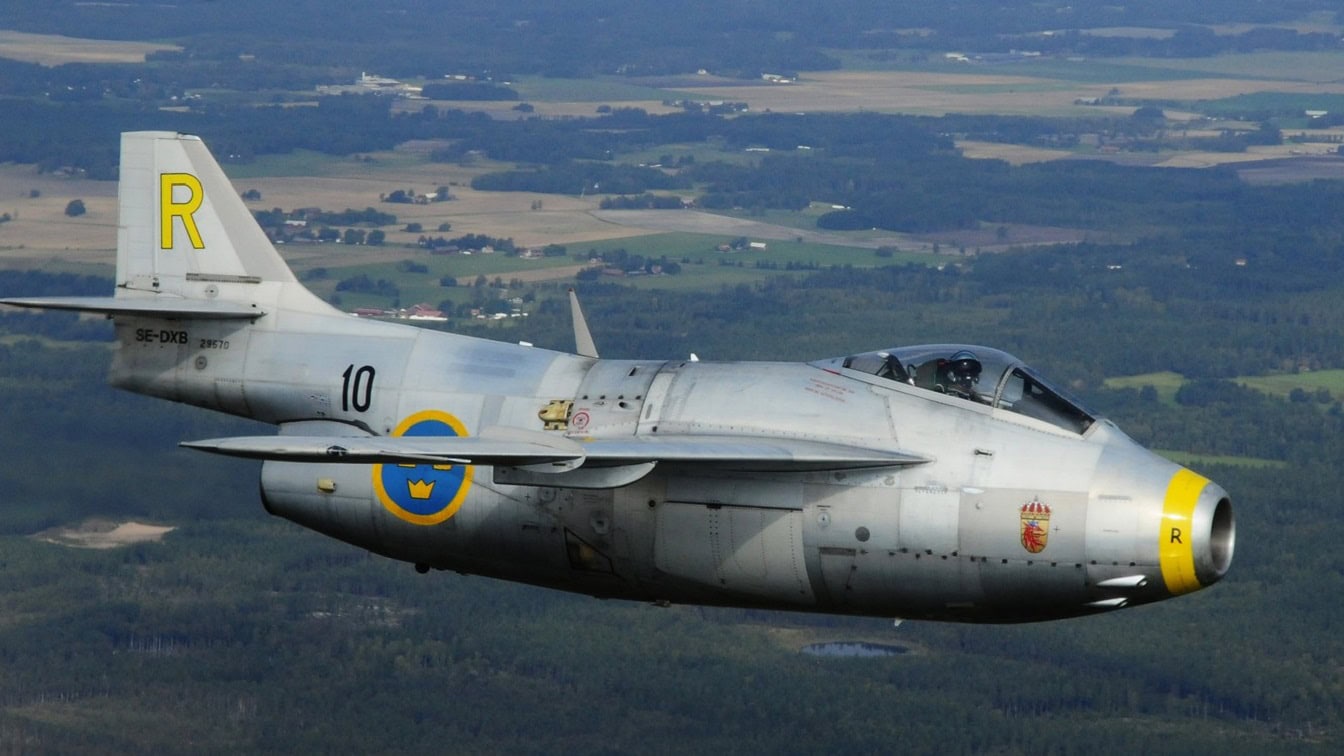
Saab J-29 Tunnan
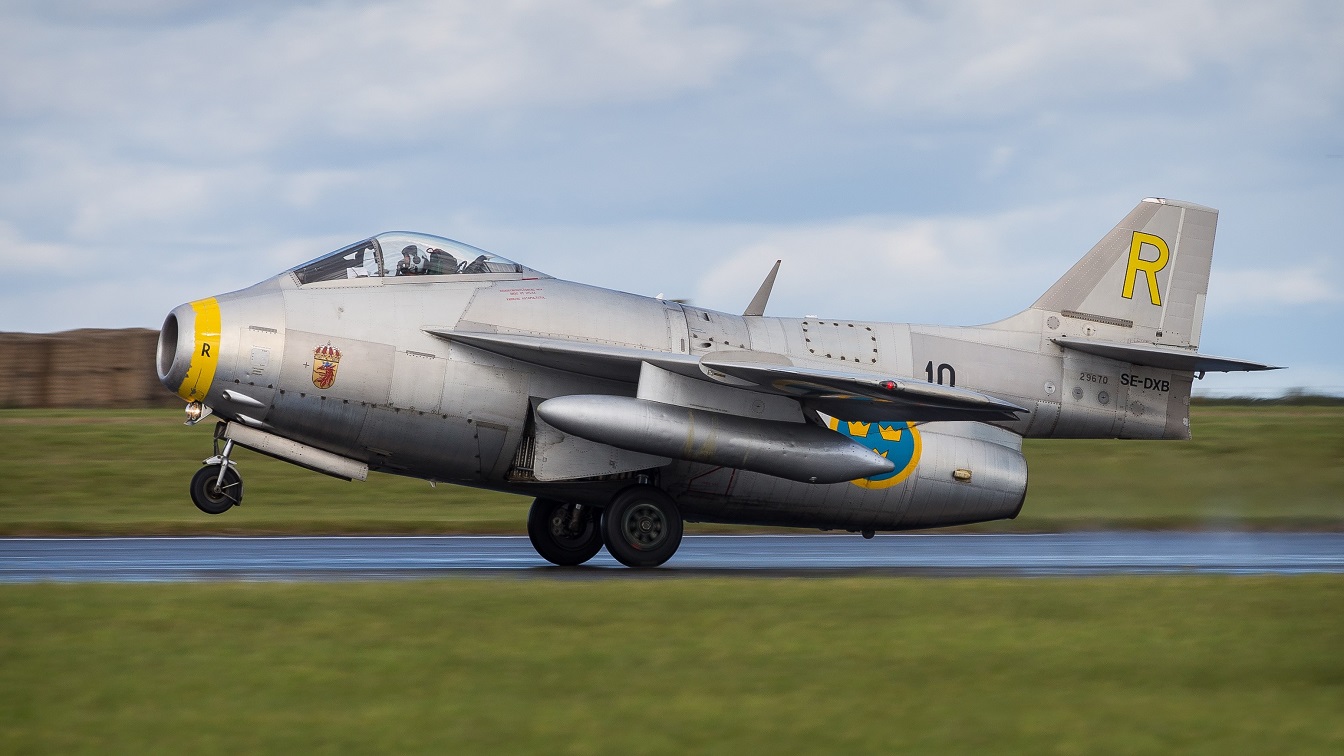
Saab 29. Image Credit: Creative Commons.
-Powered by a license-built de Havilland Ghost turbojet (later improved with afterburning variants), it delivered strong climb and top-end speed for its era while retaining fighter-bomber flexibility through external hardpoints.
-Its most notable operational work came with Swedish UN forces in the Congo, where it flew strike and reconnaissance missions and built a quiet combat reputation.
The Saab 29 “Flying Barrel” Looks Were Deceiving
The Saab 29 “Flying Barrel” was a highly successful and capable early jet fighter, praised for its surprising agility, speed, durability, and versatility as a fighter-bomber, even overcoming initial skepticism due to its barrel-like appearance.
It performed well in limited combat, set world speed records, and remained in service for decades, proving itself a robust and practical design that exceeded expectations.
The Saab 29 Tunnan, or “Flying Barrel,” saw limited but significant combat during the Congo Crisis (1960-1963) with Swedish UN forces, performing ground-attack and reconnaissance missions with success, including shooting down an enemy Harvard, with no recorded losses to the Tunnan itself.
It proved highly maneuverable and effective in real-world scenarios, demonstrating robust performance beyond its Cold War role as Sweden’s primary jet fighter.
Meet The Saab 29 “Flying Barrel”
The Swedish firm Saab used captured German documents from World War II to support its research on a new fighter jet in the early 1950s. Swedish defense manufacturers sought a new jet fighter that could break the sound barrier without sacrificing maneuverability.
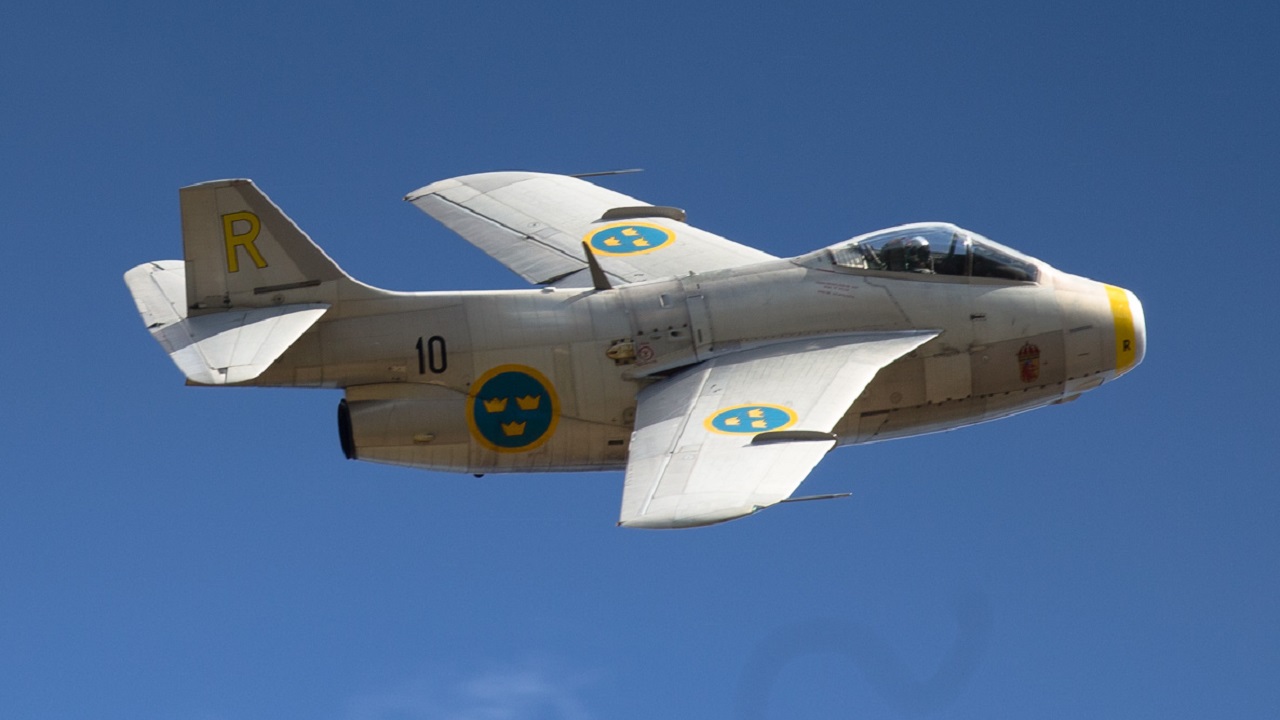
J-29 Tunnan. Image Credit: Creative Commons.
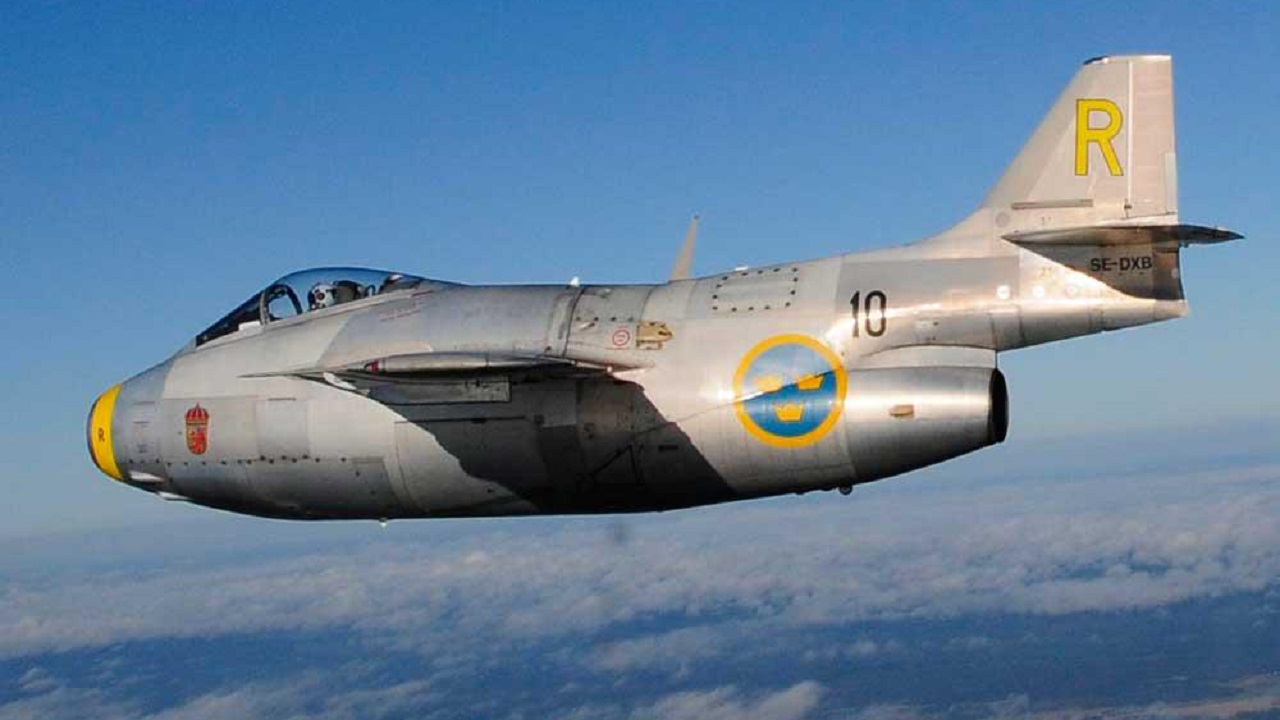
Saab 29. Image Credit: Creative Commons.
Saab engineers implemented a 25-degree swept-wing configuration, which significantly improved high-speed performance and reduced drag as the aircraft approached Mach 1 speed.
It was the first swept-wing European fighter after WWII, putting it in the same category as the US F-86 Sabre and the MiG-15.
The fuselage was rounded, which lent itself to the moniker, “the Flying Barrel,” a nickname that Saab was never thrilled with.
Saab 29 Tunnan Power Plant
In the early jet age, right after World War II, the new jet engines required a large internal volume for fuel and intake ducting; as a result, engineers had to make the fuselage as large as possible to accommodate the engines.
The Saab 29 Tunnan’s engine was primarily the British de Havilland Ghost turbojet, built under license in Sweden by Svenska Flygmotor as the RM2, providing around 5,000 lbs of thrust for its impressive speed and climb.
Later variants, like the J 29F, featured an upgraded RM 2B engine with an afterburner, significantly boosting performance and making it the first successful British-designed jet with an afterburner.
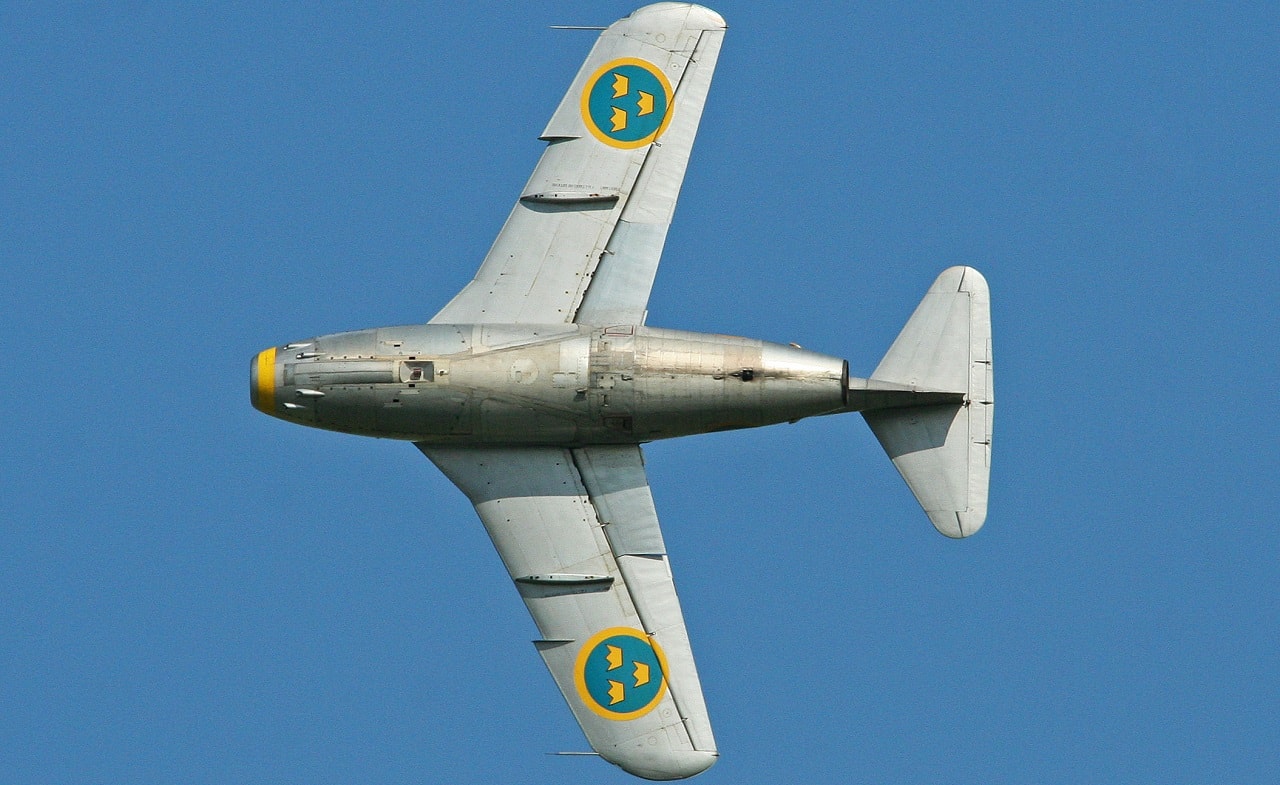
Saab J-29 Tunnan. Image Credit: Creative Commons.
This powerful engine enabled the Tunnan to exceed 1,000 km/h (650 mph) and compete with other early jets, making it a fast interceptor and fighter-bomber. The top speed of the Saab 29 was 1,060 km/h (660 mph, 570 kn), with a range of 1,100 km (680 mi, 590 nmi). The service ceiling was 15,500 m (50,900 ft), and the rate of climb was 32.1 m/s (6,320 ft/min).
Its Appearance Was Deceptive
The Tunnan, despite its unconventional beer keg shape, was consistently praised for its excellent maneuverability, stability, and responsiveness. It was fast, agile, and had an outstanding turning radius.
The Saab 29 performed well in the harsh Nordic environment, and the Swedish government produced 660 of the aircraft for its air force.
Austria would become the only other operator, ordering a total of 30 J-29s in 1961 and 1962. The Tunnan remained in service with the Austrian Air Force until 1972.
The Saab 29 Armaments
The Saab 29 was armed with four 20mm Swedish Hispano MkV under forward fuselage cannons, and equipped with eight inner hardpoints for rocket/missile pylons, and two outer hardpoints for drop tanks or incendiary bombs.
It could carry up to 3,000 pounds of ordinance.
Wartime Service During the Congo Crisis
The Saab J29 Tunnan served with the United Nations (UN) peacekeeping forces – the UN ONUC (“Organisation des Nations Unies au Congo”) – in the former Belgian Congo from 1961 to 1964.
The action marked the only combat for the J29 during its service. While the jungle terrain of Central Africa differed significantly from that of Scandinavia, the Flying Barrel was used effectively to strike enemy ground targets, delivering both cannon fire and rockets with no recorded losses.
The Tunnan also flew a reconnaissance mission in support of the UN peacekeeping force. Interestingly, following the UN operations, the aircraft deployed to Congo were scrapped rather than being relocated back to Sweden, as it was considered more economical to scrap them than ship them back, since they had already been replaced by more advanced fighters like the J32 Lansen and J35 Draken.
The Tunnan’s distinctive barrel-shaped profile and record-setting performance were among the icons of early jet aviation. The Tunnan was an essential aircraft in Sweden’s strategic development. The “Flying Barrel,” despite the nickname, which belied its agility, remains a symbol of Swedish engineering excellence and ambition.
The Saab 29 Tunnan represented a stepping stone to the JAS-39 Gripen of today.
About the Author: Steve Balestrieri
Steve Balestrieri is a National Security Columnist. He served as a US Army Special Forces NCO and Warrant Officer. In addition to writing on defense, he covers the NFL for PatsFans.com and is a member of the Pro Football Writers of America (PFWA). His work was regularly featured in many military publications.