

The F-117 Isn’t Gone: Why the Air Force Still Flies the Nighthawk in 2034
Every once in a while, some eyewitnesses will spot an F-117 Nighthawk flying in the skies somewhere in the state of Nevada.
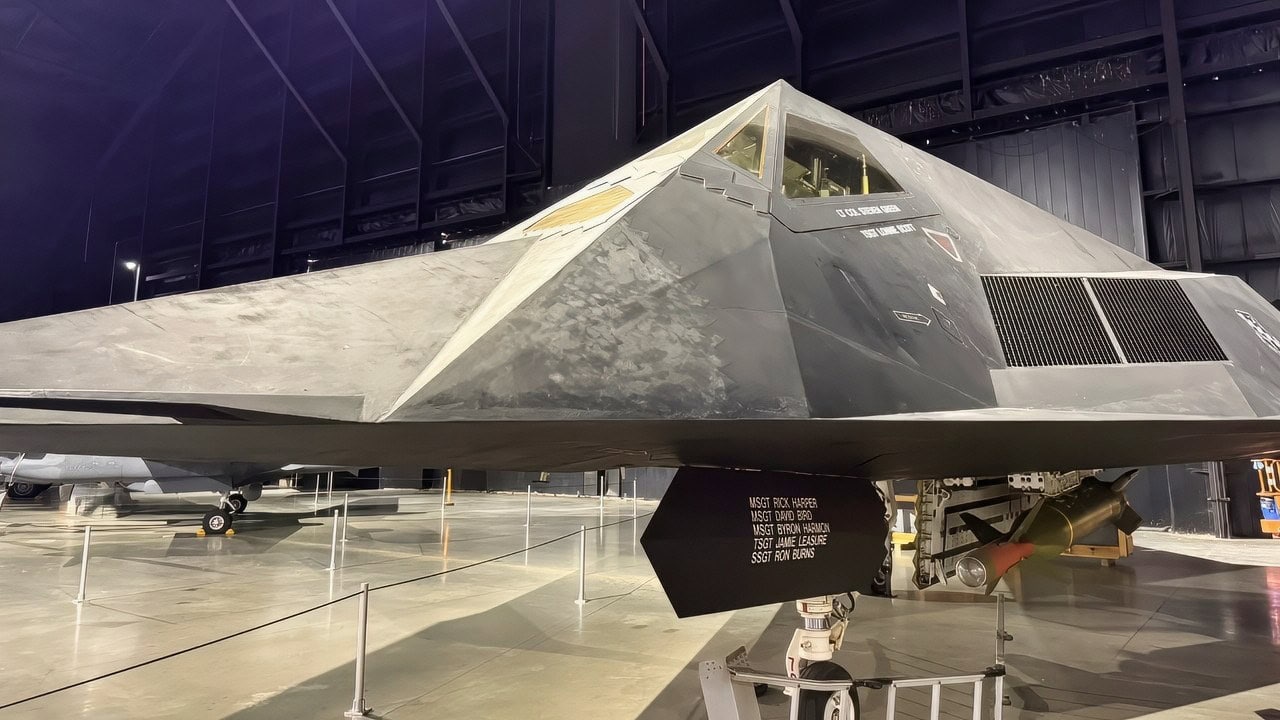
F-117A Nighthawk at USAF Museum. Image taken by 19FortyFive Owner, Harry J. Kazianis.
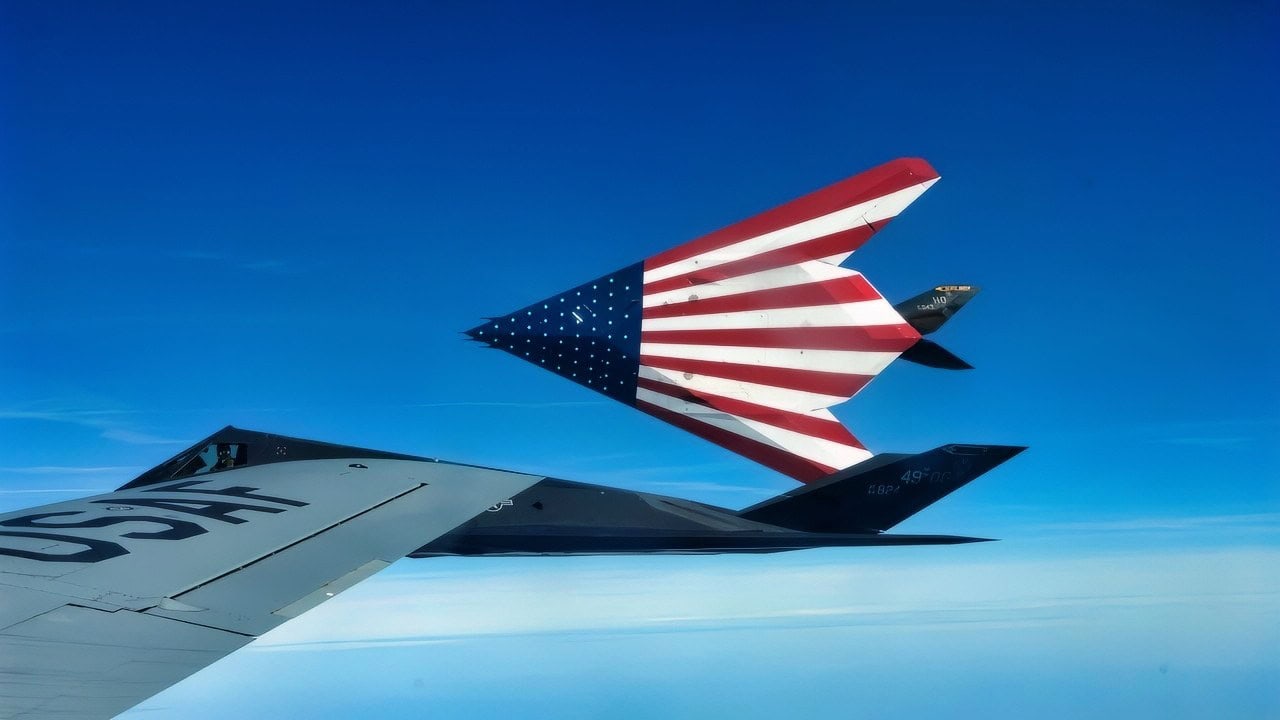
Pilots from the 121st Air Refueling Wing of the Ohio Air National Guard based at Rickenbacker IAP, refuel a pair of F-117 Stealth Fighters from the 49th Fighter Wing based at Holloman AFB in New Mexico. The aircraft is being retired and this was the last refueling operation of The Pilots on this mission were Major Paul Hughes, Captain Danny Slater and the Boom Operator was MSgt Bob Derryberry. The photographs are by SMSgt Kim Frey of the 121st ARW. The aircraft were at Wright Patterson AFB where the F-117 program is managed for an informal retirement ceremony. The F-117 is being replaced by the F-22 Raptor which also uses stealth technologies to avoid detection.
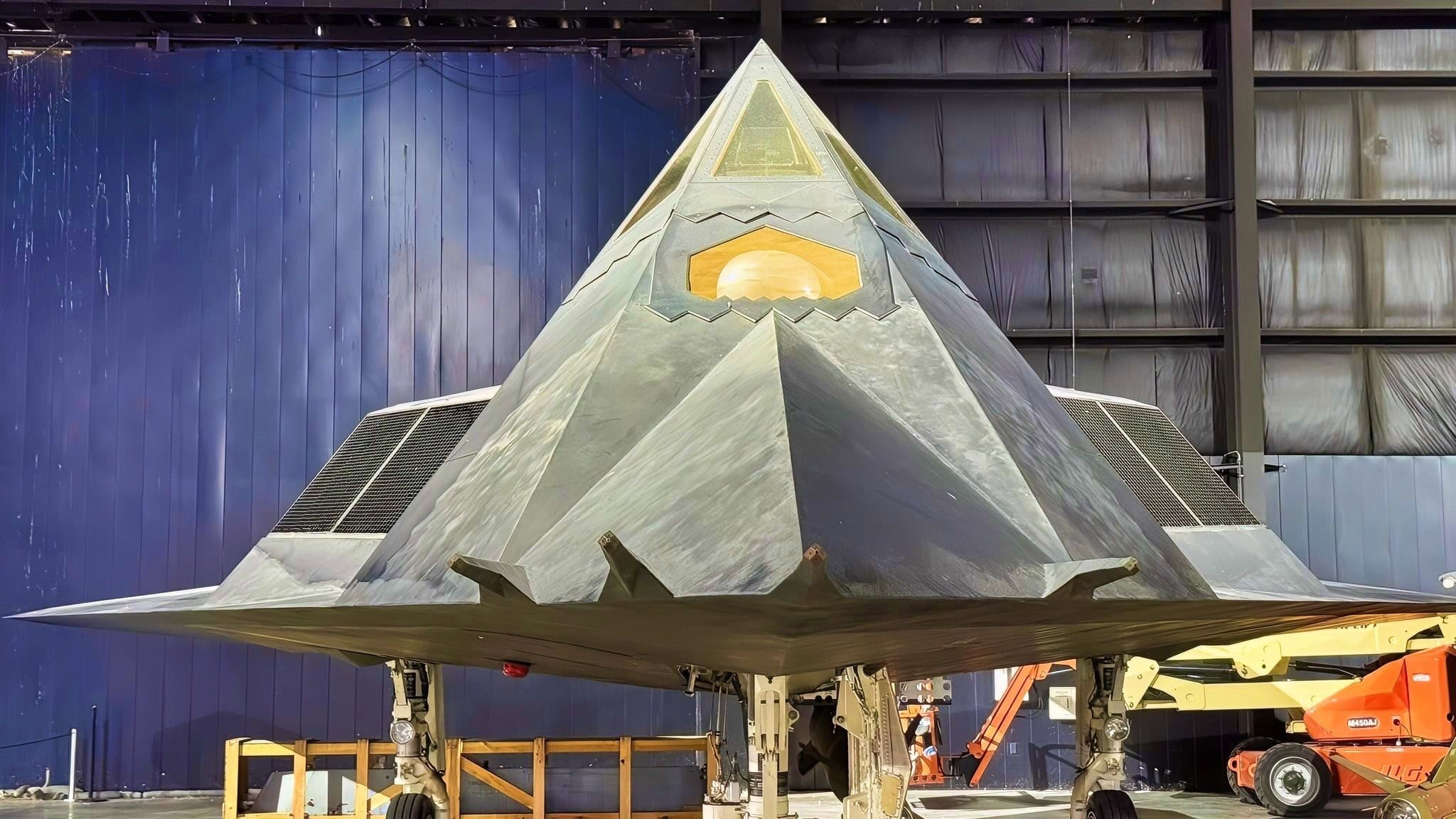
F-117 Nighthawk Stealth Fighter Harry Kazianis Photo
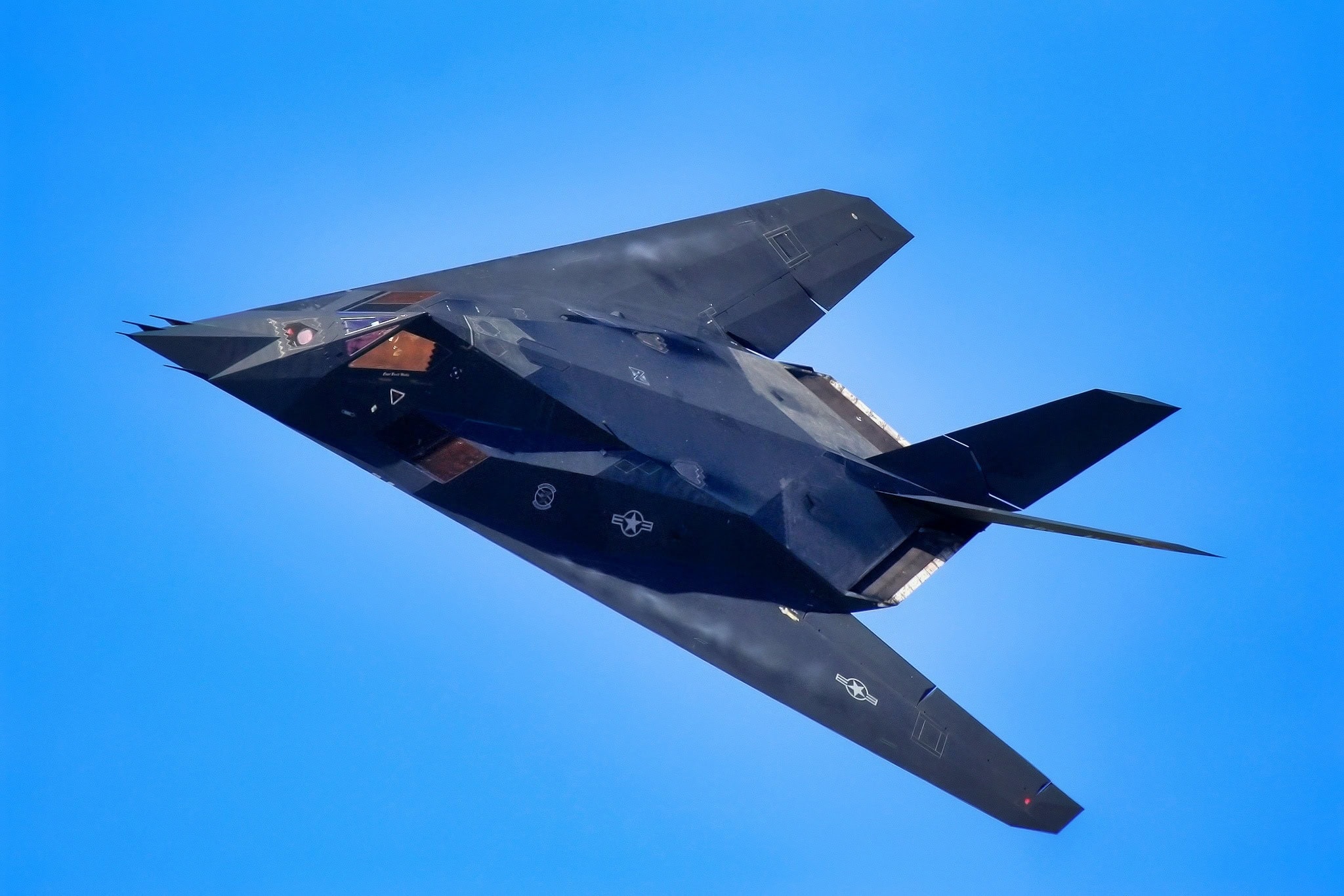
F-117. Image Credit: Creative Commons.
First developed in 1981, the F-117 was withdrawn from combat service back in 2008, yet despite this, the Air Force continues to fly these birds long after their retirement. As it turns out, the USAF still retains a number of Nighthawks for training purposes to simulate enemy stealth aircraft.
While the aircraft may not perfectly match the signatures of enemy stealth fighters, it still provides pilots with experience against low-observable targets.
F-117: Useless on the Battlefield, Invaluable on the Training Grounds
To understand why the F-117 remains relevant, it is important first to clarify why it was retired.
The aircraft was designed in the 1970s and early 1980s for a very specific mission: penetrating dense, radar-guided air defenses to strike high-value targets with precision weapons.
It was revolutionary in that role and proved extraordinarily effective in Panama, the Gulf War, and later conflicts. However, it was also fundamentally limited. The F-117 had no radar, no air-to-air weapons, no defensive maneuverability, and little ability to operate as part of a networked force.
As stealth matured, newer aircraft such as the F-22 and F-35 offered stealth combined with speed, sensors, electronic warfare, and data fusion. From a frontline combat perspective, keeping the F-117 made little sense when one modern aircraft could do far more with fewer compromises.
The key point, however, is that combat relevance is not the only measure of military value. When the Air Force retired the F-117 from operational squadrons, it did not erase the aircraft’s defining characteristic: it was still a real, crewed, stealthy jet whose low-observable behavior was well understood after decades of testing.
That combination is rare, and it becomes more valuable once an aircraft is no longer needed for warfighting.
At Tonopah Test Range Airport, the Air Force retained dozens of F-117 airframes in carefully managed storage, with a smaller subset kept airworthy for flight testing and training. This arrangement allows the service to draw on the aircraft’s unique attributes without treating it as a combat asset that must be preserved at all costs.
Simulating Enemy Stealth Fighters
One of the primary reasons the F-117 continues to fly is its value as a stealth adversary in training exercises. Modern U.S. pilots and air defense operators must be prepared to detect and defeat low-observable threats, including advanced aircraft fielded by China and Russia.
Training against such threats is much harder than training against conventional aircraft. Software simulations are limited in realism, and unmanned targets do not behave like piloted aircraft, making tactical decisions in real time.

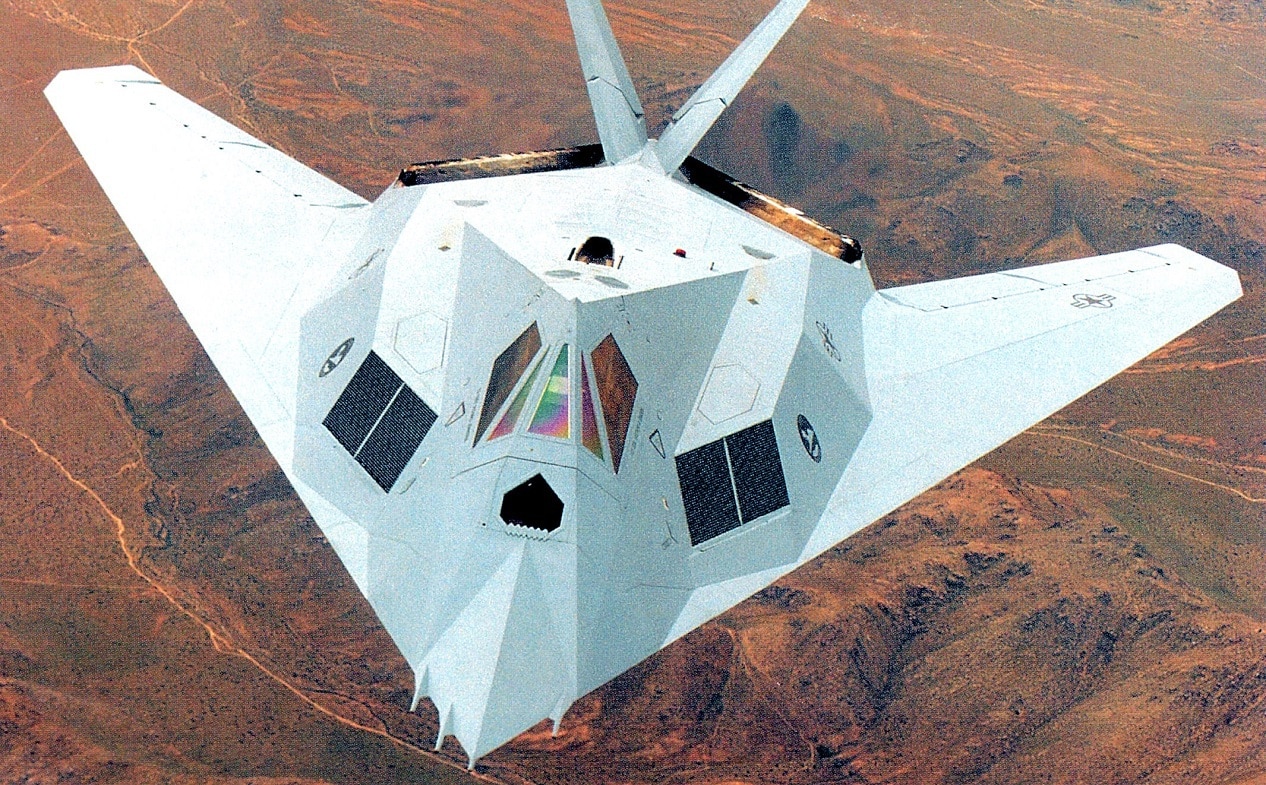
F-117 Stealth Fighter. Image Credit: Creative Commons.
The F-117 fills this gap by providing a human-crewed, low-observable aircraft that can fly unpredictable profiles and interact dynamically with defenders. Exercises that include F-117s force radar operators, fighter pilots, and commanders to grapple with the same uncertainty and compression of decision timelines that stealth imposes in real conflict.
Another closely related factor is cost. Modern stealth aircraft are among the most expensive and complex machines ever built, both to procure and to operate. Every training sortie flown by an F-22 or F-35 consumes finite service life, incurs high operating expenses, and potentially exposes sensitive technologies to unnecessary risk.
Using the F-117 instead allows the Air Force to conduct demanding stealth-related training without diverting frontline assets or burning precious flight hours on aircraft that are needed for real-world contingencies. Because the F-117 is already paid for and no longer central to combat readiness, it is a comparatively low-risk way to keep stealth training realistic and frequent.
Testing Anti-Air Systems
Beyond pilot training, the F-117 serves as a flying test platform for sensors and counter-stealth technologies. Stealth is not an absolute condition; it is a relationship between an aircraft and the systems trying to detect it.
As radar technology, infrared sensors, and data-fusion techniques evolve, they must be tested against real targets to validate performance. The F-117 is ideally suited to this task because its radar cross-section, infrared signature, and overall behavior are well documented. Engineers can use it as a consistent baseline to assess whether a new radar, tracking algorithm, or sensor fusion method actually performs better than earlier generations. This kind of validation is difficult to achieve with purely digital models and is often politically or operationally undesirable for highly classified next-generation aircraft.
The F-117 is also useful for broader tactical and doctrinal experimentation. Modern air combat is less about individual aircraft performance and more about how different systems work together under stress.
Exercises involving F-117s allow planners to explore how stealth assets interact with electronic warfare, long-range sensors, command-and-control networks, and non-stealth platforms.
Because the F-117 is stealthy but limited, it lets planners test concepts without revealing sensitive capabilities or committing cutting-edge aircraft to experimental roles. In this sense, the aircraft acts as a safe sandbox for exploring ideas that may later be applied to more advanced systems.
The F-117 is Here to Stay
The Air Force has not kept all remaining airframes in flying condition. Many are stored in controlled environments that prevent corrosion and degradation, allowing the service to reactivate them if needed while gradually drawing down the fleet through museum transfers and demilitarization.
This measured approach avoids the irreversible step of scrapping an asset that might still prove useful, while ensuring that only a sustainable number of aircraft are actively supported.
In January, multiple defense publications confirmed that the Air Force intends to keep the F-117 flying in limited roles until at least 2034.
That timeline aligns with the introduction of next-generation stealth platforms, new radar architectures, and emerging counter-stealth doctrines. Once those systems mature and alternative test platforms can fully replace the F-117’s functions, the aircraft may finally fade from active use. Until then, it remains an economical and uniquely capable tool.
About the Author: Isaac Seitz
Isaac Seitz, a Defense Columnist, graduated from Patrick Henry College’s Strategic Intelligence and National Security program. He has also studied Russian at Middlebury Language Schools and has worked as an intelligence Analyst in the private sector.