
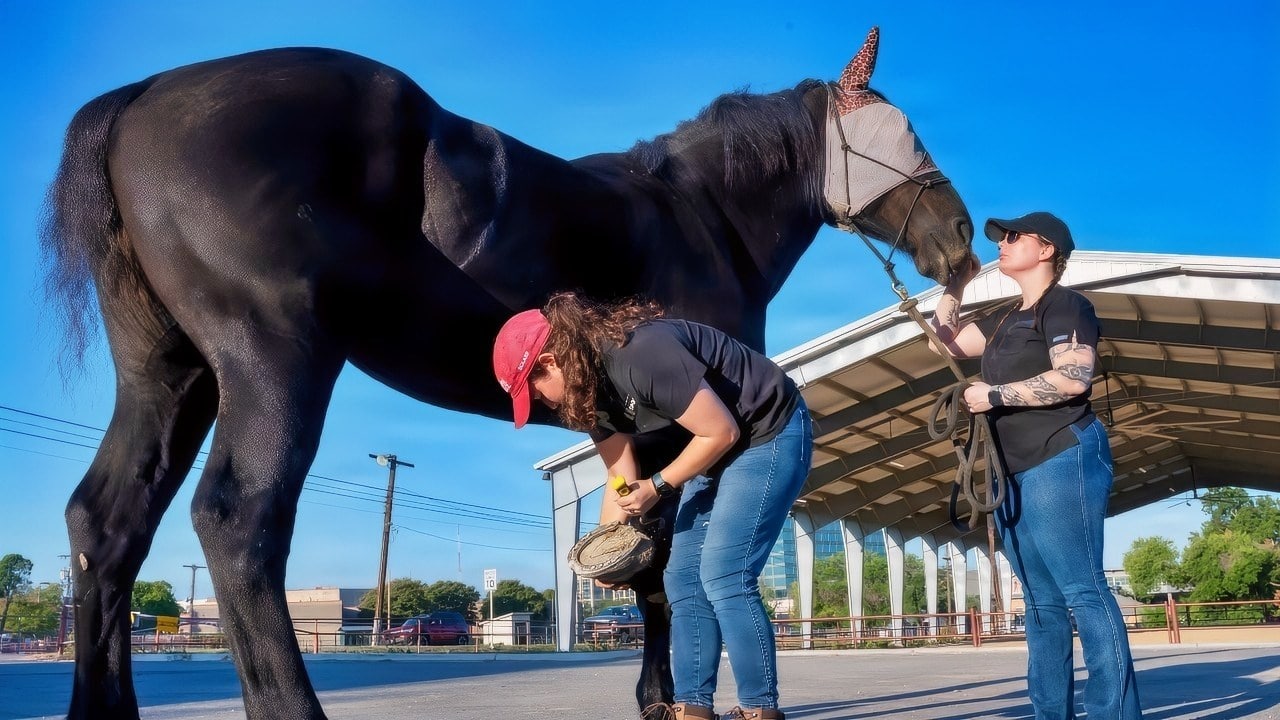
Key Points and Summary – The Army moved to shut down five ceremonial horse units and place more than 200 horses for adoption to redirect resources toward readiness and save money.
-Days before the new year, that decision was partially reversed: the Fort Hood and Fort Riley programs will remain, while three other units will still close and proceed with adoptions.
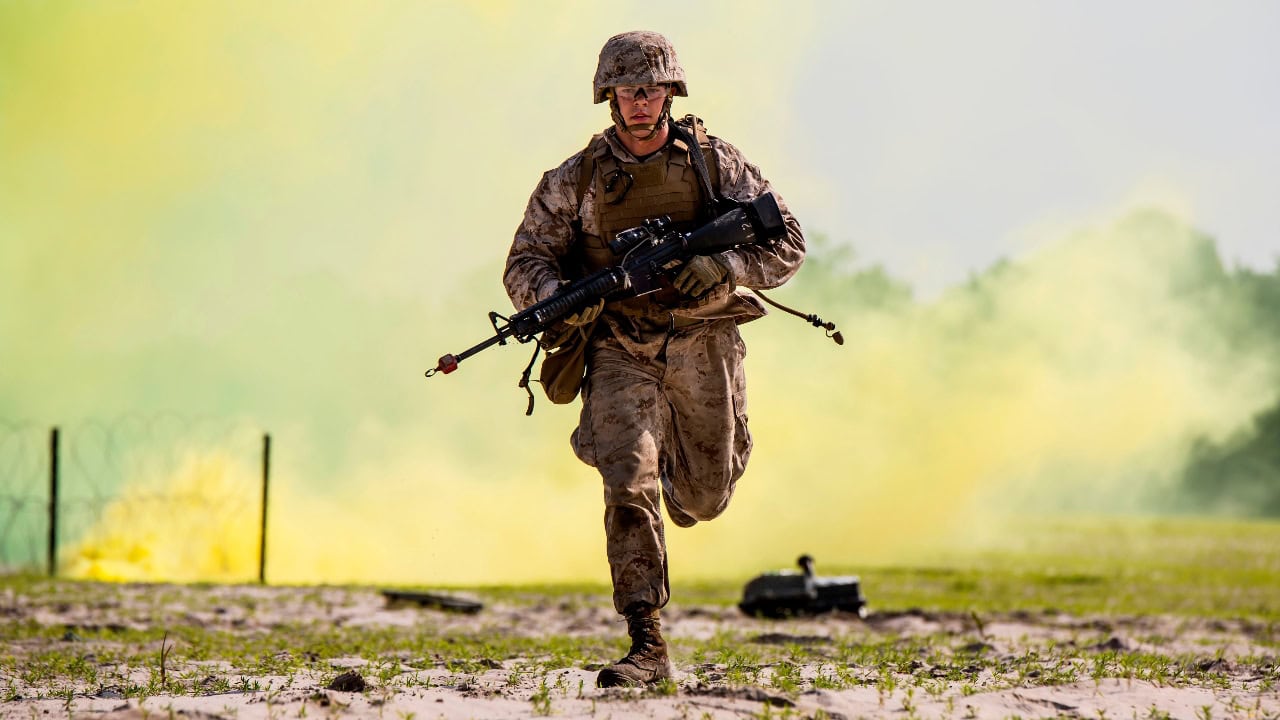
Lance Cpl. Alex Rowan, a combat engineer with 4th Combat Engineer Battalion, 4th Marine Division, stationed out of Bessemer, Ala., runs to take cover before the Anti-Personnel Obstacle Breaching System detonates during the SAPPER Leaders Course aboard Camp Lejeune, N.C., June 26, 2015. During the course, the Marines used assault and breaching techniques to clear a wire obstacle using line charges that utilized C4 explosives and their APOBS. (U.S. Marine Corps photo by Cpl. Krista James/Released)
-The Army says the two retained units deliver community engagement and unique capabilities that are hard to replicate, and they will be formalized as official programs.
-Alongside the reversal, the service announced a new “Army Equestrian” MOS (08H) to professionalize equine care and sustain the programs’ standards.
From JFK’s Funeral Horse to WWII and WWI: Why the Army Won’t Let the Horses Go
Back in July, the US Army announced that it was putting an end to five ceremonial horse units at Fort Irwin, Calif.; Fort Huachuca, Ariz.; Fort Riley, Kan.; Fort Sill, Okla.; and Fort Hood, Texas, affecting more than 200 horses.
The idea was to put the remaining horses up for adoption and transfer them out of the Army’s custody. Under that plan, a pair of Old Guard caisson units at the Military District of Washington and Joint Base San Antonio would have remained. Those horses are used frequently for military funerals, for Medal of Honor recipients, POWs, and those killed in action.
“We’re doing this to align more resources with warfighting capability and readiness,” said Steve Warren, an Army spokesman. The idea, Stars and Stripes reported at the time, would save the Army $2 million per year.
However, just before the new year, the Army announced a change of heart and announced that two of the five horse units will remain after all.
Per Stars and Stripes, the Army determined that the decision was partially rescinded “after determining the horses bring community engagement opportunities and capabilities that are difficult to replicate.”
The units at Fort Hood and Fort Riley will remain, while the other three horse units will close, with the animals placed up for adoption as planned. In addition, those two will be established as formal Army programs, and “serve as a link between the Army and the American people through public demonstrations, educational outreach, and participation in local events.”
“After careful consideration, the Army has determined that retaining these MWE programs is in the best interests of the force,” Col. James Fuhriman, assistant deputy for Army health affairs, said in the Army’s statement on December 30. “These programs provide unique capabilities and benefits that are difficult to replicate, and their continuation aligns with our broader commitment to readiness and community engagement.”
Per the report, keeping the two units will cost the Army about $1.2 million a year.
A New Specialty
The Army, at the same time as the reversal, announced the establishment of a new military occupational specialty (MOS), “Army Equestrian” (08H). It replaces the existing “military horseman” identifier (D2) and “creates a specialized career path dedicated to the professional care of military working equines.”
“Supplying trained personnel and animals allows us to maintain the program’s high standards,” Fuhriman said in a statement. “It empowers the Fort Hood and Riley MWE programs, much like The Old Guard, to continue their legacy of excellence in preserving the Army’s equine heritage.”
Horses at War
What is that heritage? Horses were a significant part of the majority of America’s wars.
“Horses have performed multiple roles throughout military history; they’ve been used for transportation, reconnaissance missions, cavalry charges, packing supplies, and communications,” a historical article from 2022, on American Cowboy said. “And—when taught to kick, strike, and bite—they became weapons nearly as deadly as those their riders were wielding. War horses also had a potent psychological impact on men in battle—their powerful presence could boost morale and courage, or instill uncontrollable fear in enemy troops.”
George Washington, going back to his leadership of the Continental Army during the American Revolution, was a noted horseman of his day. He had a horse named Nelson, who was gifted to him in 1778.
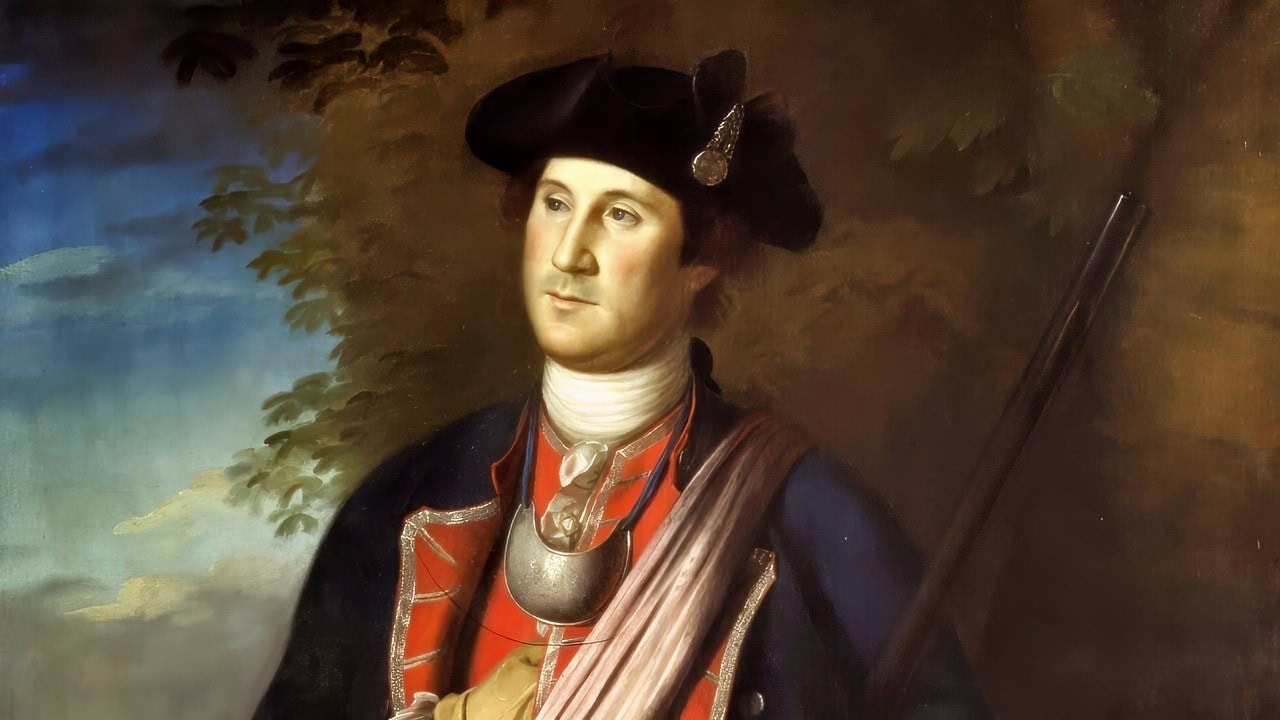
General George Washington Portrait. Image Credit: Creative Commons.
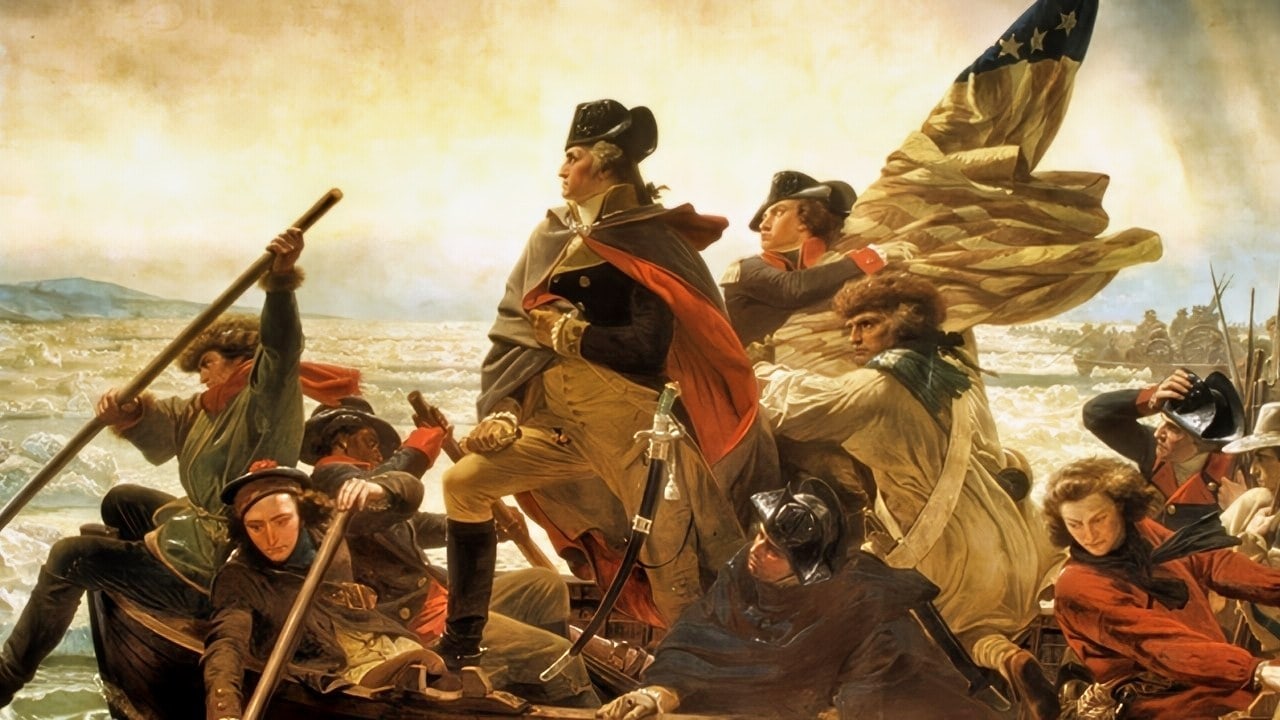
General George Washington. Image Credit: Creative Commons.
“Although it was another of Washington’s horses, Blueskin, who was most often memorialized by artists thanks to his striking grey coloring, Nelson was Washington’s favored mount during battle as he was far less likely than the jumpy grey to startle at the sound of cannon fire,” American Cowboy said. “Indeed, Nelson carried Washington through much of the Revolutionary War. In fact, Washington chose to ride Nelson during the history-changing surrender of Lord Cornwallis and the British Army in 1781.”
There were notable horses, that article noted, by generals on both sides of the Civil War, as well as by General George Armstrong Custer at the Battle of the Little Bighorn in 1876, where a horse named Comanche was one of the only survivors. The horse was one of just two in history to receive full military honors.
The other horse that received such honors, according to the American Cowboy account, was Black Jack, the riderless horse at more than 1,000 Armed Forces battles. The horse became famous for his role in President John F. Kennedy‘s funeral in 1963, and Jacqueline Kennedy purchased him in 1973.
“Black Jack has been a poignant symbol of our nation’s grief on many occasions over the years. Citizens in mourning felt a sense of dignity and purpose conveyed, a simpler yet deeper tribute to the memory of those heroic ‘riders’ who have given so much for our nation. Our people are grateful to Black Jack for helping us bear the burden of sorrow during difficult times,” President Richard Nixon once said.
Horses in World War I
The American Battle Monuments Commission published a 2017 article titled “Remembering the American War Horse,” which examines the surprisingly large role horses played in World War I.
“When the United States entered the war in 1917, a single American army division required 7,701 horses. The US Army had difficulty fielding adequate equine power in Europe,” the article said. “The U-boat threat, urgent demand for soldiers, insufficient French remounts, and a late 1917 equine epidemic hampered the American Expeditionary Forces (AEF). British Veterinary officers called the AEF organization appallingly inefficient. It was reported that 70 percent of AEF depot horses were ill, compared with 7 percent in British depots. This situation proved a perilous threat to the effectiveness of the AEF.”
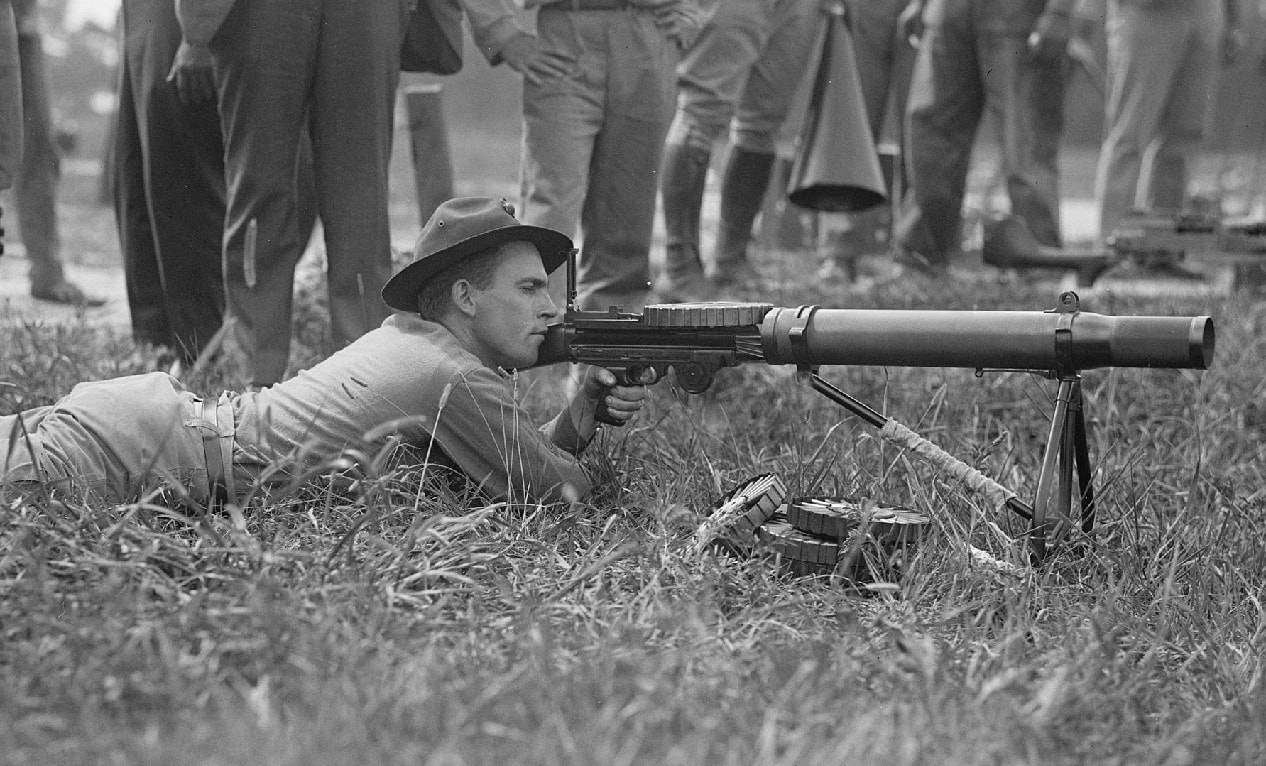
Lewis Gun. Image Credit: Creative Commons.
“The AEF moved rapidly to remedy the situation. Over 1,000 horses were cut from the divisional allotment. Plans were laid to cut 2,800 more by motorizing divisional artillery regiments. The AEF borrowed horse and motor transport from the French to facilitate the American offensives. Additional horses were purchased in France, England, and neutral Spain. In August 1918, American Veterinary Corps officers assumed key AEF staff and command posts in the Quartermaster Corps, combat divisions, and corps. By November 1918, conditions and organization of AEF remount services had improved significantly; however, a shortage of 163,000 equine still existed at war’s end.”
About the Author: Stephen Silver
Stephen Silver is an award-winning journalist, essayist, and film critic, and contributor to the Philadelphia Inquirer, the Jewish Telegraphic Agency, Broad Street Review, and Splice Today. The co-founder of the Philadelphia Film Critics Circle, Stephen lives in suburban Philadelphia with his wife and two sons. For over a decade, Stephen has authored thousands of articles that focus on politics, national security, technology, and the economy. Follow him on X (formerly Twitter) at @StephenSilver, and subscribe to his Substack newsletter.