
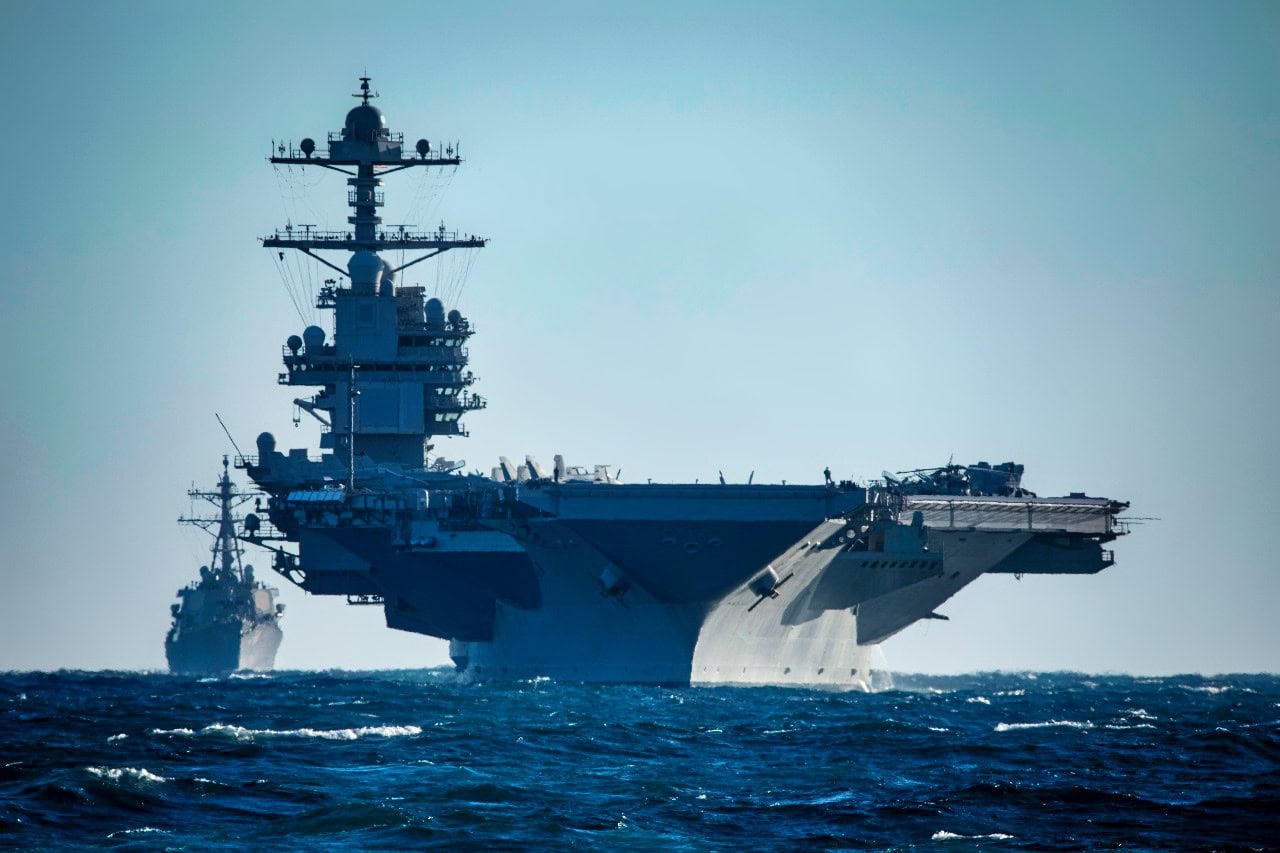
Summary and Key Points: U.S. sea power is still organized around aircraft carriers even as maritime conflict increasingly rewards forces that are hard to track and hard to hold at risk.
-Carriers remain unmatched political instruments—visible symbols that reassure allies and signal resolve—but that same visibility can constrain freedom of action once conflict becomes plausible.
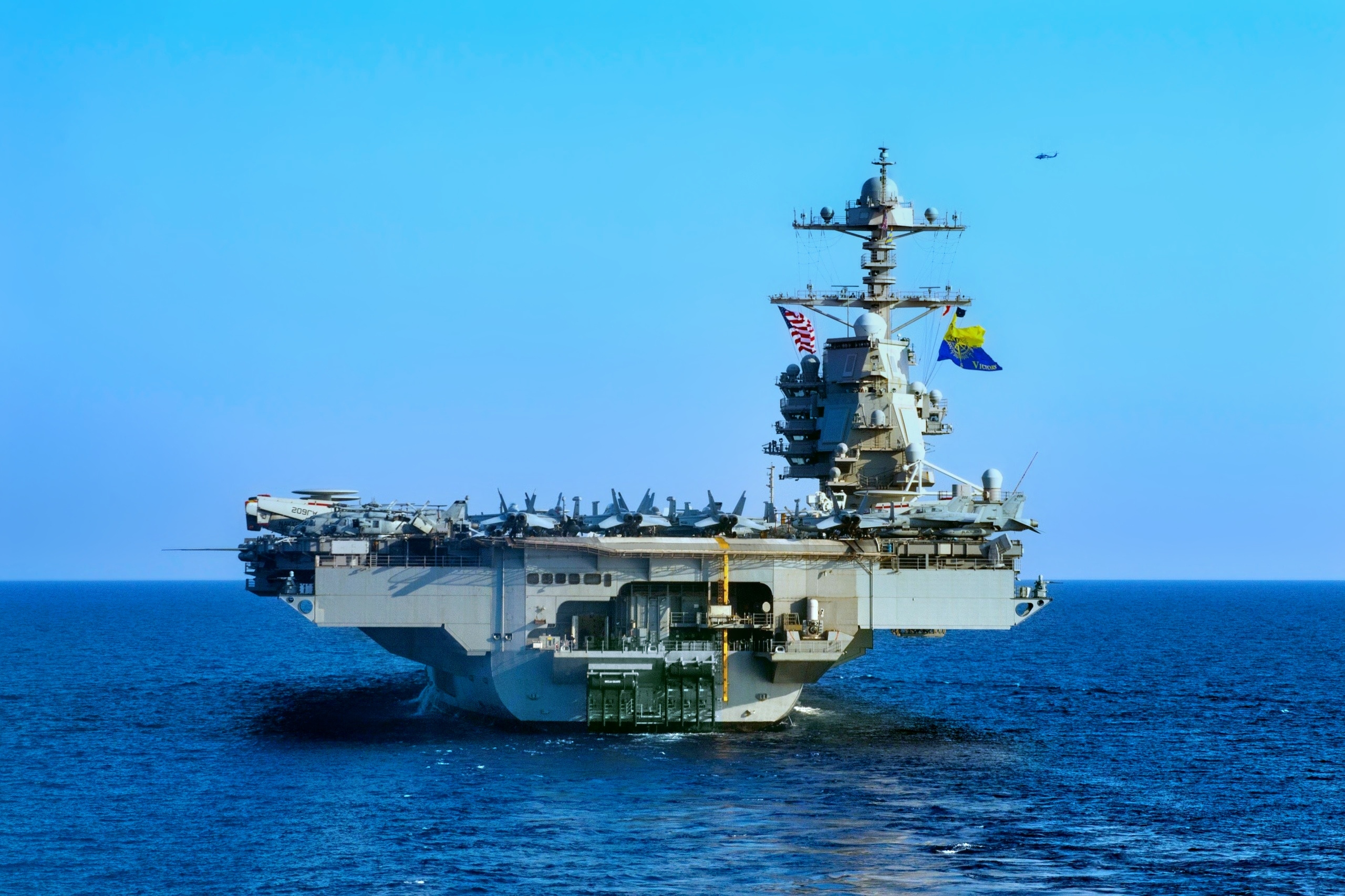
Ford-Class Aircraft Carrier. Image Credit: Creative Commons.
-The deeper challenge is organizational: doctrine, procurement, training, and fleet composition still orbit the carrier, even as wartime effectiveness now depends more on resilient networks, dispersion, and endurance.
-The risk is strategic credibility—if prized platforms impose political limits on their own use, competitors learn to discount them and test boundaries.
The U.S. Navy Doesn’t Need a New Aircraft Carrier—It Needs a New Organizing Logic
The United States Navy continues to organize itself around its most visible platform at a moment when visibility has become a strategic exposure at sea. Aircraft carriers still dominate planning assumptions, institutional habits, and public expectations, even as modern maritime conflict increasingly favors forces that are difficult to track and difficult to hold at risk.
That tension now defines the central challenge facing American sea power.
The question is not whether the carrier is obsolete.
The harder question is whether a platform built to project presence should continue to shape the organizing logic of naval power in an era shaped by long-range strike and constant observation.
This misalignment is no longer abstract. It influences how the Navy manages escalation, how it accepts risk, and how it signals resolve to competitors who have spent years studying American patterns of behavior.
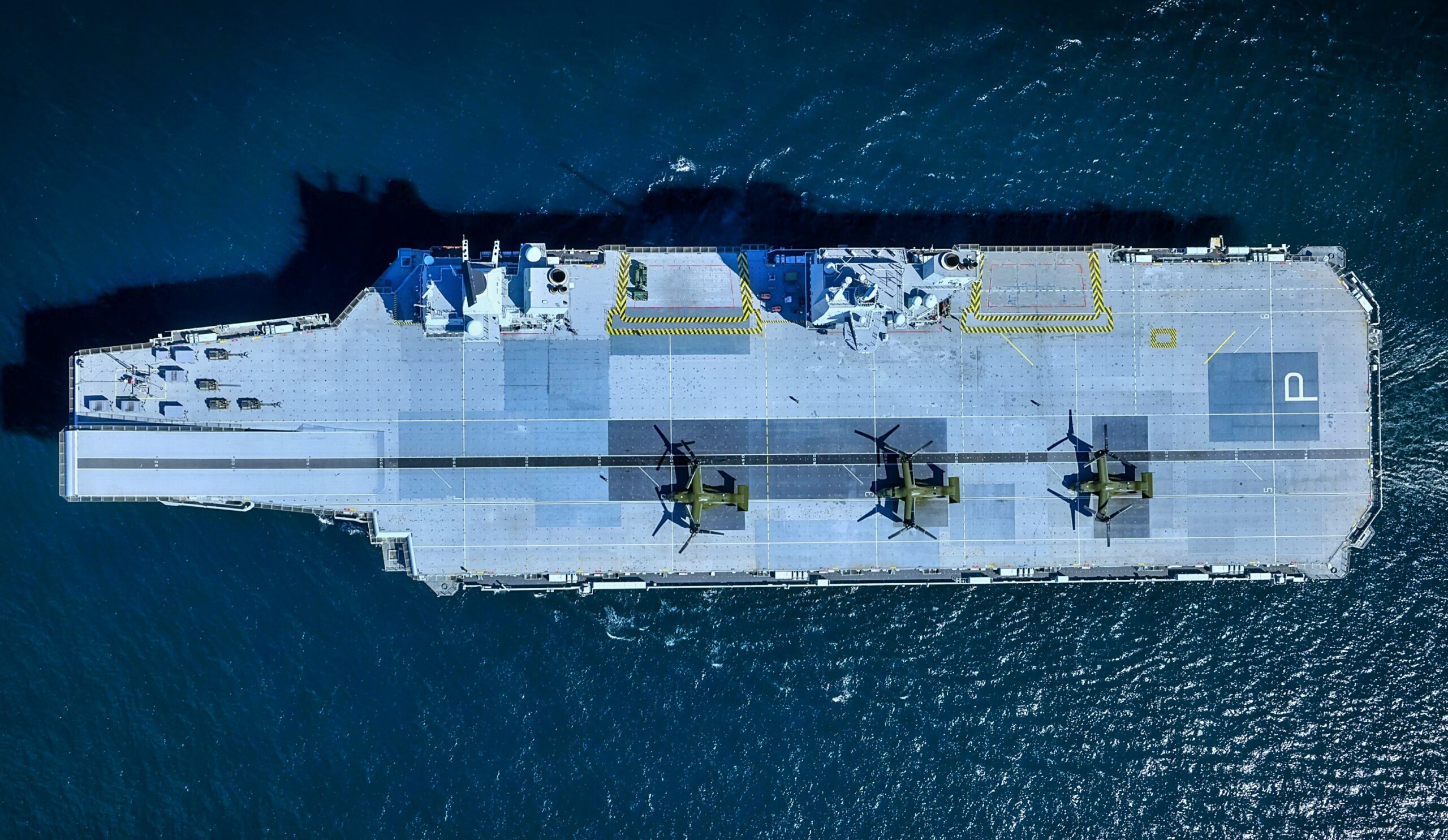
HMS Prince of Wales Aircraft Carrier. Image Credit: Creative Commons.
The danger lies less in what carriers can no longer do than in what their continued centrality prevents the fleet from becoming.
Aircraft Carriers and Political Power at Sea
Aircraft carriers remain powerful tools of political communication. They are immediately legible to allies, rivals, and domestic audiences in ways that other naval capabilities are not. When a carrier appears in a contested region, the signal is unambiguous. Commitment is visible. Presence is tangible. Intent does not require translation.
That political clarity still matters. In crises that fall short of war, carriers offer a flexible way to reassure partners and shape calculations without closing off diplomatic space. Their value in that role has not diminished. In some respects, it has grown as competition has intensified and reassurance has become harder to sustain.
What has changed is the relationship between that political utility and combat effectiveness. Modern maritime conflict places a premium on forces that can operate without advertising their location or posture. Advances in sensing and targeting reduce the margin for platforms that depend on visibility for influence. Carriers derive much of their political strength from being seen, yet that same quality constrains their freedom of action once conflict becomes plausible.
This does not render carriers obsolete. It does narrow the range of missions for which they are well suited. Problems arise when political usefulness becomes the default standard by which warfighting relevance is judged.
A Shift in the Organizing Logic of Naval Power
For much of the postwar period, the carrier sat at the center of how the Navy thought about combat at sea. Doctrine flowed outward from it. Procurement decisions assumed its presence. Training rhythms were built around its deployment cycle. The carrier functioned as the reference point that organized everything else.
That role has eroded quietly. The ability to generate meaningful combat effects now depends less on any single platform than on how different capabilities are connected and sustained. Naval power is increasingly taking the form of “mesh fleets” or networks of crewed and uncrewed platforms integrated through resilient command networks that can function under pressure.
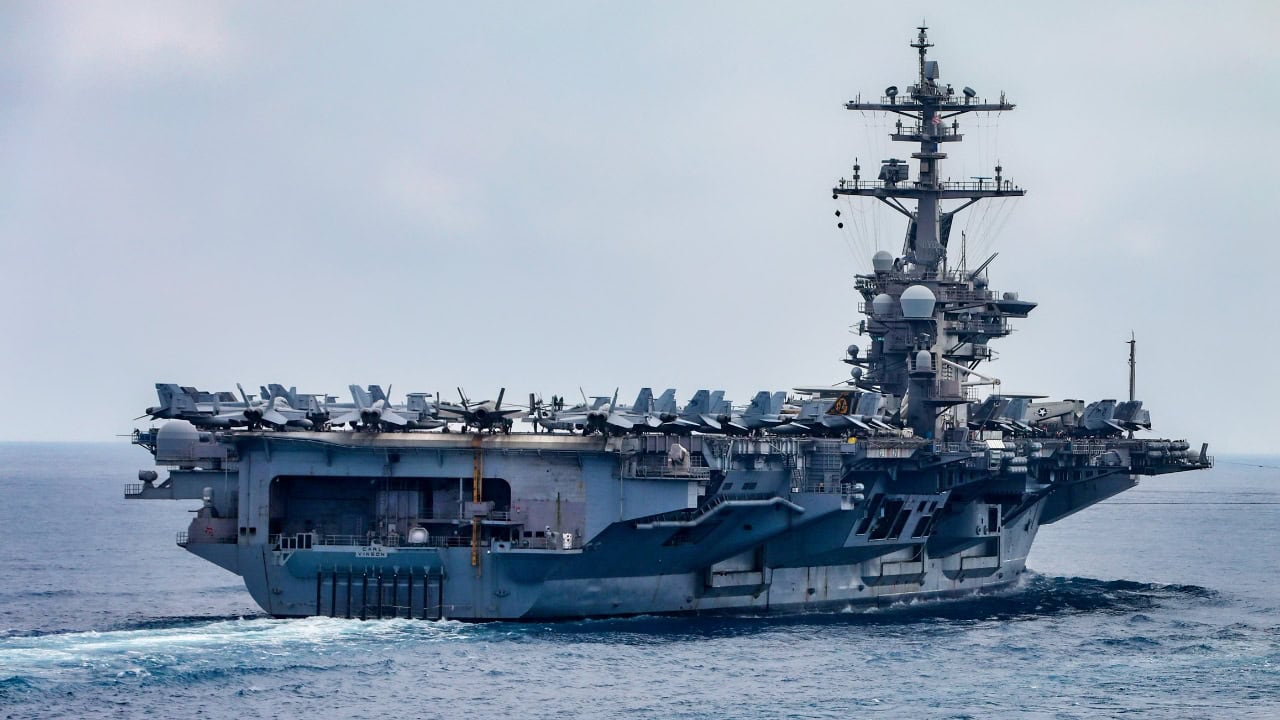
SOUTH CHINA SEA (Feb. 2, 2025) The Nimitz-class aircraft carrier USS Carl Vinson (CVN 70) conducts a replenishment-at-sea with the dry cargo and ammunition ship USNS Carl Brashear (T-AKE 7) Feb. 2, 2025. The Carl Vinson Carrier Strike Group is underway conducting routine operations in the U.S. 7th Fleet area of operations. (U.S. Navy photo by Mass Communication Specialist 1st Class Jacob I. Allison)
This is a change in organizing logic rather than a simple technological shift. Combat effectiveness now rests on integration and endurance rather than on concentration. Damage to one element degrades performance without collapsing the whole. Risk is distributed across the force rather than absorbed by a single focal point.
In practice, the Navy already plans to fight this way against a capable adversary. Concepts such as the Distributed Maritime Operations (DMO) framework emphasize dispersion, depth, and coordination across domains. What has not kept pace is the institutional imagination. The carrier still anchors assumptions about how the fleet should be structured and what kinds of risk are acceptable. That lag between operational reality and organizational habit has consequences.
The Cost of Holding on to the Old Logic
Treating the carrier as the organizing core of the fleet distorts force design in subtle but persistent ways. Escort requirements continue to shape surface fleet composition. Maintenance schedules are managed with an eye toward preserving continuous carrier availability. Training cycles reflect the need to keep a small number of platforms ready for political tasking.
The deeper cost appears in areas that do not lend themselves to visible signaling. Depth in munitions, resilience in logistics, and endurance in undersea operations struggle to command attention because they do not reinforce presence. These shortfalls matter most in prolonged conflict, where staying power determines outcomes long after initial moves have been made.
The strategic risk is not simply inefficiency. It is erosion of credibility. Power that cannot be employed under realistic wartime conditions becomes power that competitors learn to discount. Over time, rivals test boundaries with greater confidence, knowing that certain assets impose political constraints on their own use.
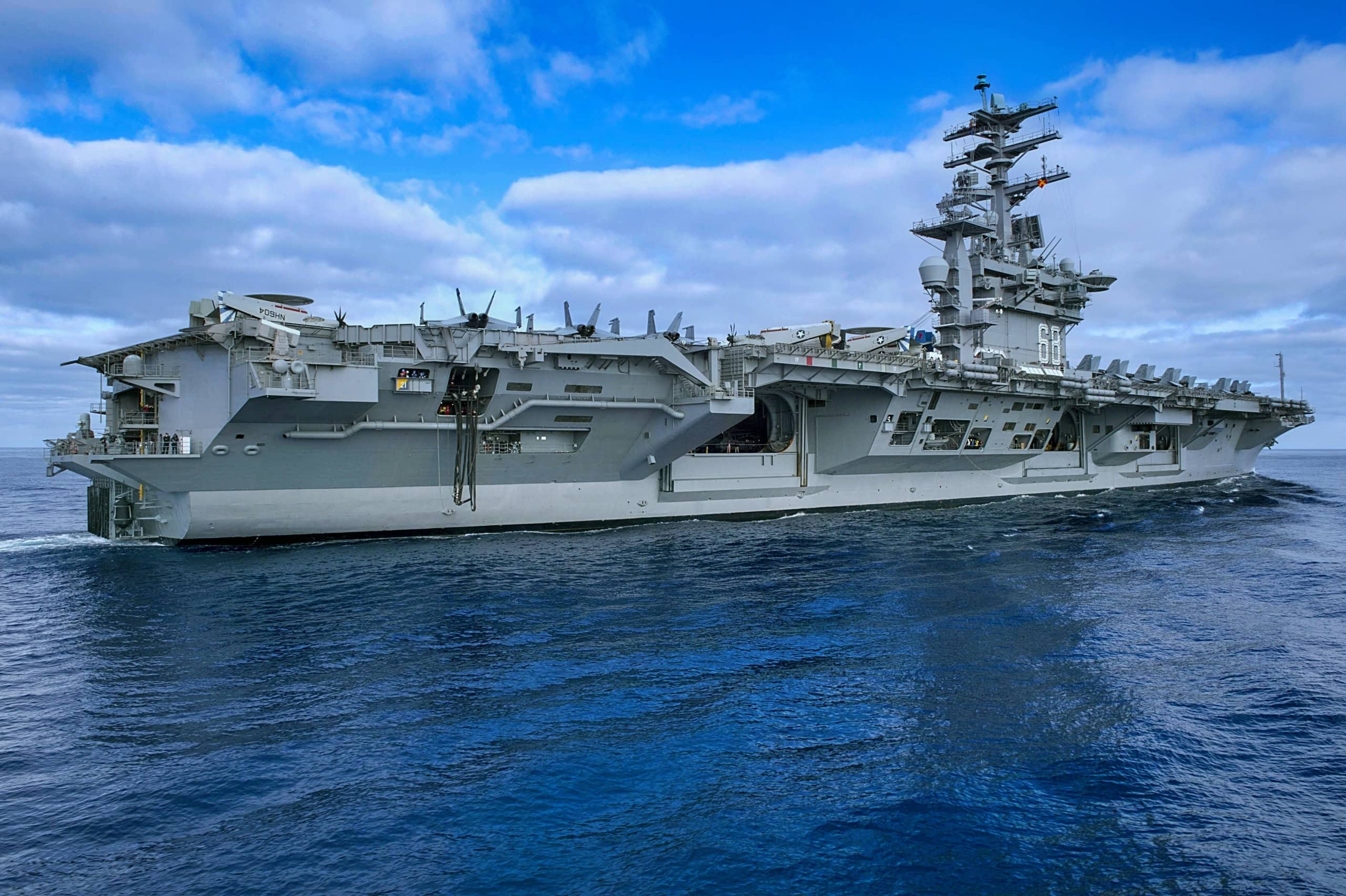
USS Nimitz Aircraft Carrier. Image Credit: Creative Commons.
This dynamic weakens deterrence even when intent remains firm. It encourages caution where clarity is needed, while rewarding probes that stay below thresholds associated with visible escalation.
What This Means for Aircraft Carriers Themselves
Once carriers are understood primarily as political instruments, their place in the force looks different. The argument for concentrating so much prestige and strategic risk in a handful of supercarriers becomes harder to sustain. Presence does not require maximal scale. It requires access, persistence, and flexibility across time.
Smaller aviation platforms could perform many reassurance functions without tying the Navy’s identity so tightly to assets that constrain wartime decision-making. Such platforms would not replace combat power. They would operate as access points within a broader organizing logic that places decisive military capability elsewhere. Their contribution would lie in political signaling rather than battlefield dominance.
This observation does not amount to a call for a specific procurement program. It follows directly from recognizing that political signaling and combat effectiveness now rest on different foundations. When those foundations diverge, forcing a single platform to satisfy both demands weakens each.
Power That Must Be Seen and Power That Must Survive
Modern naval power now rests on two distinct requirements. Some capabilities must remain visible in order to reassure allies and manage crises. Other capabilities must endure under threat in order to fight effectively against a capable opponent. Treating one platform as the solution to both demands strains credibility across the spectrum of competition.
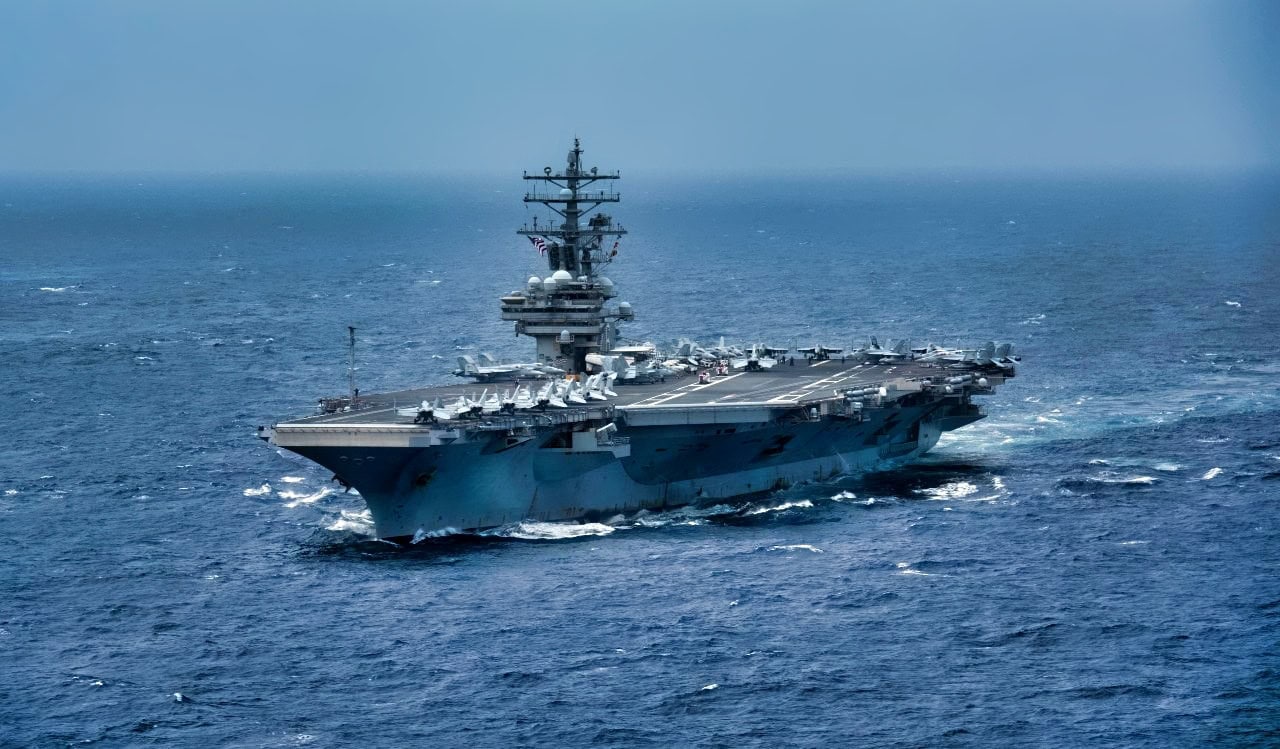
INDIAN OCEAN (June 24, 2021) The U.S. Navy’s only forward-deployed aircraft carrier, USS Ronald Reagan (CVN 76), steams in the Indian Ocean. Ronald Reagan, the flagship of Carrier Strike Group 5, provides a combat-ready force that protects and defends the United States, as well as the collective maritime interests of its allies and partners in the Indo-Pacific region. (U.S. Navy photo by Mass Communication Specialist 2nd Class Jason Tarleton)
The Navy does not need to discard its carriers. It does need to stop allowing them to define how maritime warfare is organized in theory and in practice. Organizing logic matters more than iconic platforms. When symbolism drives structure, adaptability suffers and risk management becomes distorted.
The Navy’s problem is not that carriers have lost relevance, but that they are being asked to anchor a form of naval power that no longer matches the way wars at sea will be fought. Presence still matters, and signaling still shapes behavior, yet those functions now sit alongside a harsher requirement for endurance under fire. Treating one platform as the answer to both needs confuses reassurance with readiness and visibility with leverage. A fleet organized around that confusion invites miscalculation by others and self-restraint by itself.
Naval power endures only when what is shown to the world aligns with what can actually be done when the world pushes back.
About the Author: Dr. Andrew Latham
Andrew Latham is a non-resident fellow at Defense Priorities and a professor of international relations and political theory at Macalester College in Saint Paul, MN. You can follow him on X: @aakatham.