
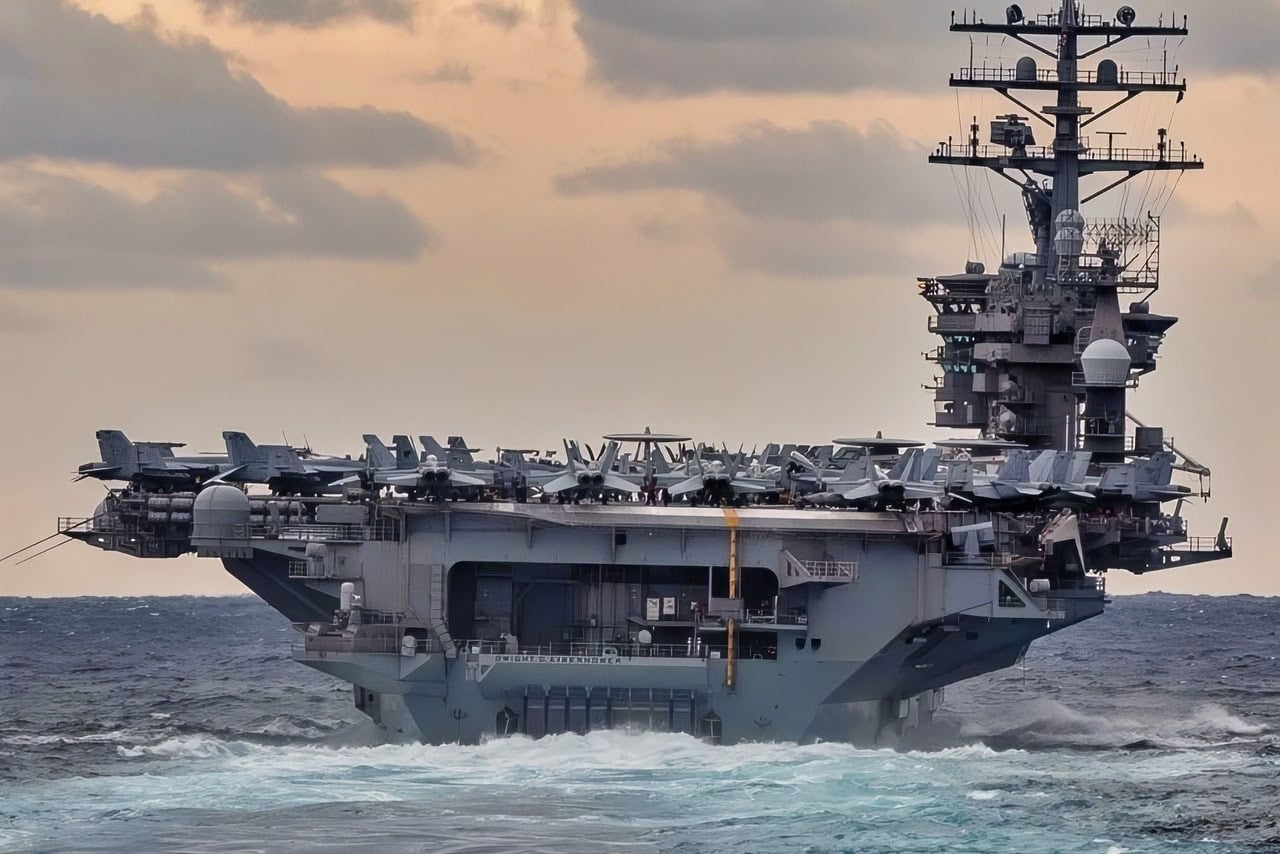
No, A Supercarrier Will Never Tip Over and Capsize in a Storm or Rough Water
Have you ever wondered if a U.S. Navy supercarrier could tip over and capsize in rough seas or a bad storm?
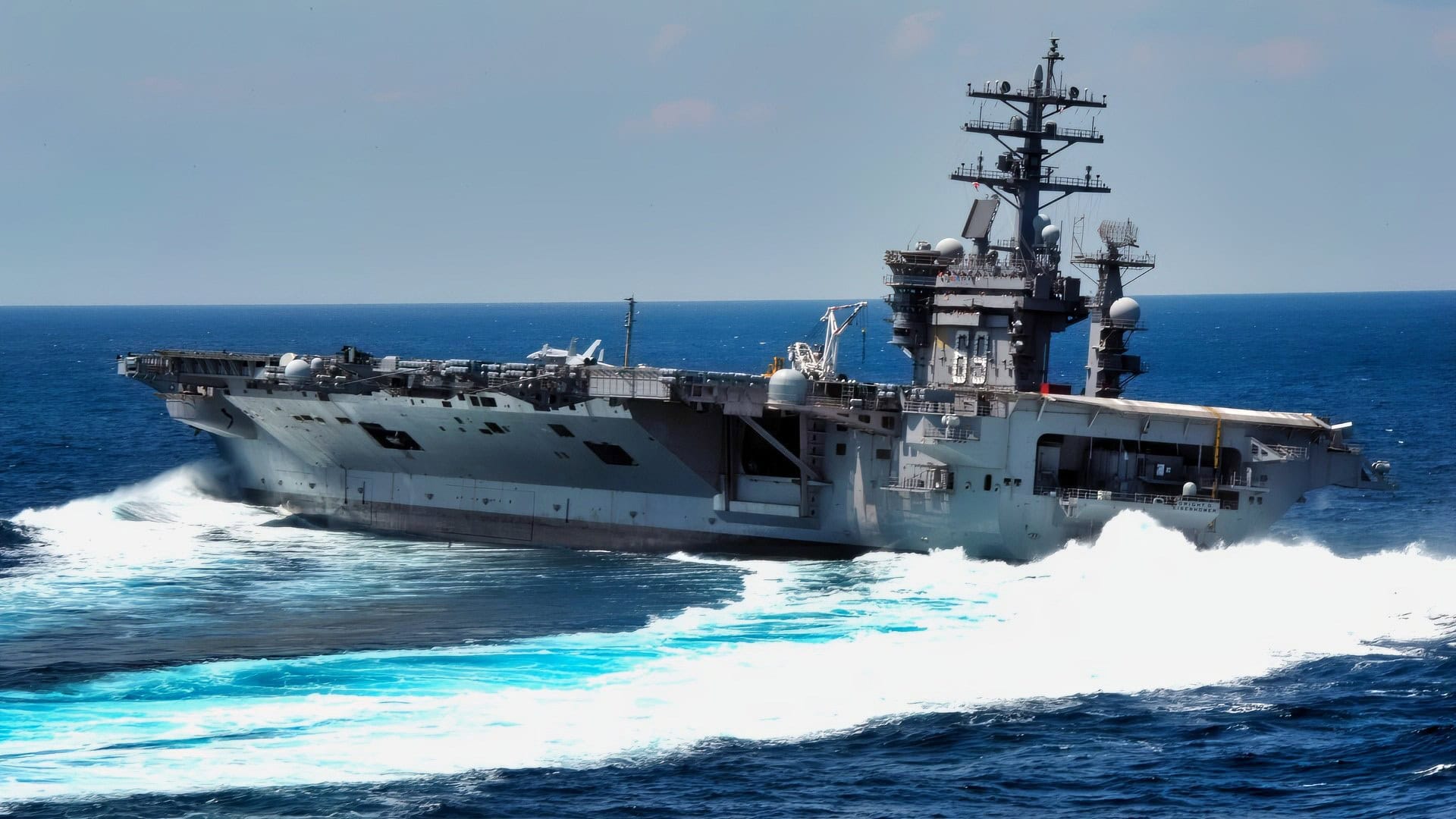
The Nimitz-class aircraft carrier USS Dwight D. Eisenhower conducts rudder turns during sea trials. Dwight D. Eisenhower completed a nine-month planned incremental availability at Norfolk Naval Ship Yard on June 10 and is scheduled to resume underway operations this summer.
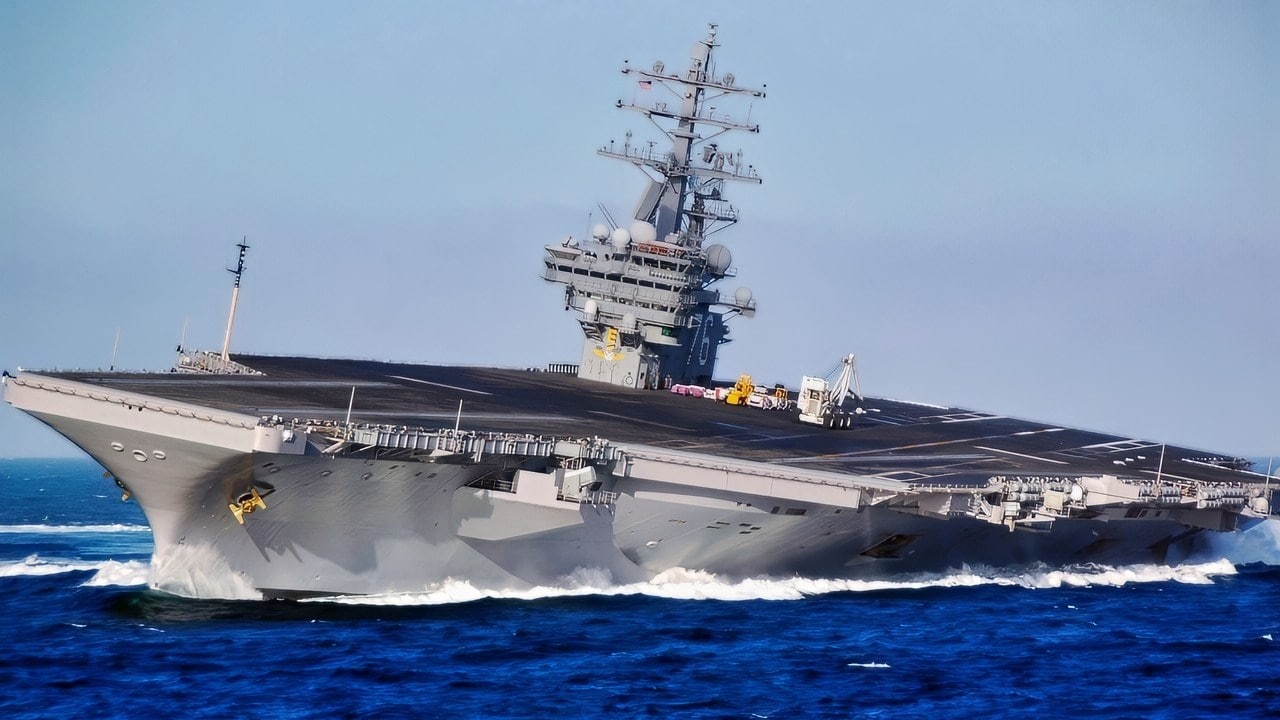
PACIFIC OCEAN (Oct. 30, 2007) – USS Ronald Reagan (CVN 76) conducts rudder checks as part of the ship’s Board of Inspection and Survey (INSURV) following a six-month Planned Incremental Availability. All naval vessels are periodically inspected by INSURV to check their material condition and battle readiness. U.S. Navy photo by Mass Communication Specialist 2nd Class M. Jeremie Yoder (RELEASED)
This would be a disaster for the U.S. Navy, which just spent more than $13.3 billion on the new USS Gerald R. Ford supercarrier, now part of a show of strength in the Caribbean.
The Caribbean is not known for having high waves, but there could always be a hurricane or rough storm that could do the worst to a carrier like the Ford.
But many decades of carrier operations have taught lessons to maritime designers and engineers. Carriers are tough customers, and they can withstand terrible ocean conditions and keep steaming through the sea without tipping over.
The Unique Design of an Aircraft Carrier Is Unique
Carriers have superstructures and knife-like hulls – a design that helps with buoyancy. You would be surprised to know that they are one of the most stable ships in the fleet.
Since a carrier has a higher center of gravity due to the ship’s height, it also has greater buoyancy. There is also a wide, flat bottom to the vessel that allows it to steam over the waves in a stable manner.
The displacement is balanced, as the armored flight deck is on the port side and the superstructure is on the starboard side. This keeps the ship from listing from side to side.
More Specifications of the Gerald R. Ford Supercarrier
The Gerald R. Ford, being so new and modernized, is a good carrier to study. Its length is easily over 1,100 feet, and it sails 250 feet above the water.
The draft is 39 feet, and there are 25 decks. Top speed is over 30 knots with two nuclear reactors and four shafts. The flight deck is heavily armored, and more than 75 aircraft call it home. There are between 4,500 and 4,600 sailors on board.
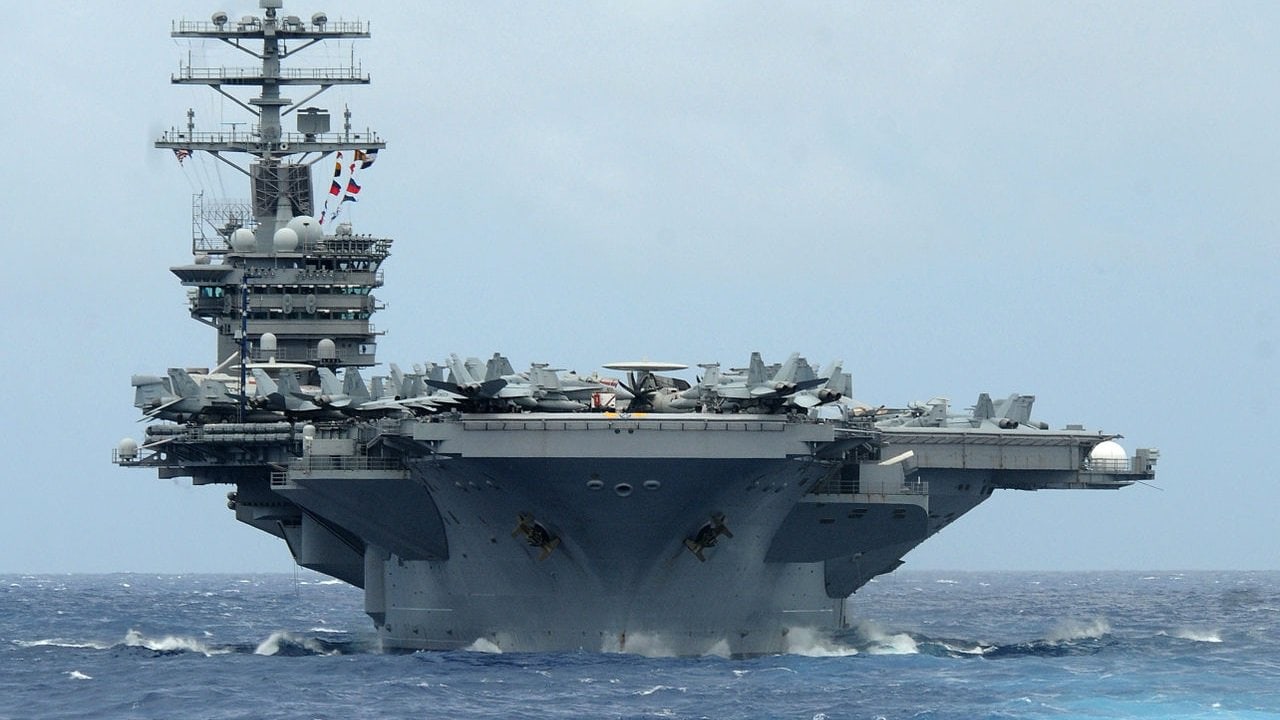
The aircraft carrier USS Nimitz (CVN 68) is underway during the Great Green Fleet demonstration portion of the Rim of the Pacific (RIMPAC) 2012 exercise. Nimitz took on 200,000 gallons of biofuel in preparation for the Great Green Fleet demonstration during Rim of the Pacific (RIMPAC) 2012. Twenty-two nations, more than 40 ships and submarines, more than 200 aircraft and 25,000 personnel are participating in RIMPAC exercise from June 29 to Aug. 3, in and around the Hawaiian Islands. The world’s largest international maritime exercise, RIMPAC provides a unique training opportunity that helps participants foster and sustain the cooperative relationships that are critical to ensuring the safety of sea lanes and security on the world’s oceans. RIMPAC 2012 is the 23rd exercise in the series that began in 1971. (U.S. Navy photo by Mass Communication Specialist 2nd Class Eva-Marie Ramsaran/Released)
“Carriers do not capsize, because their center of buoyancy is higher than their center of gravity. Buoyancy is derived from carriers being less dense than water.
While many of the individual components that make up the carrier, such as steel deck plating, are far denser and would sink on their own, when combined, they form the many hollow spaces inside a ship that allow it to float,” according to my colleague Maya Carlin, who was then writing for the National Interest.
The Stability Principle
If a carrier did begin to tip over, its center of gravity would rise higher and higher. This would require a huge amount of force from an explosion or from thoroughly rough seas. But the ship automatically rights itself as it rises. This principle makes them more stable.
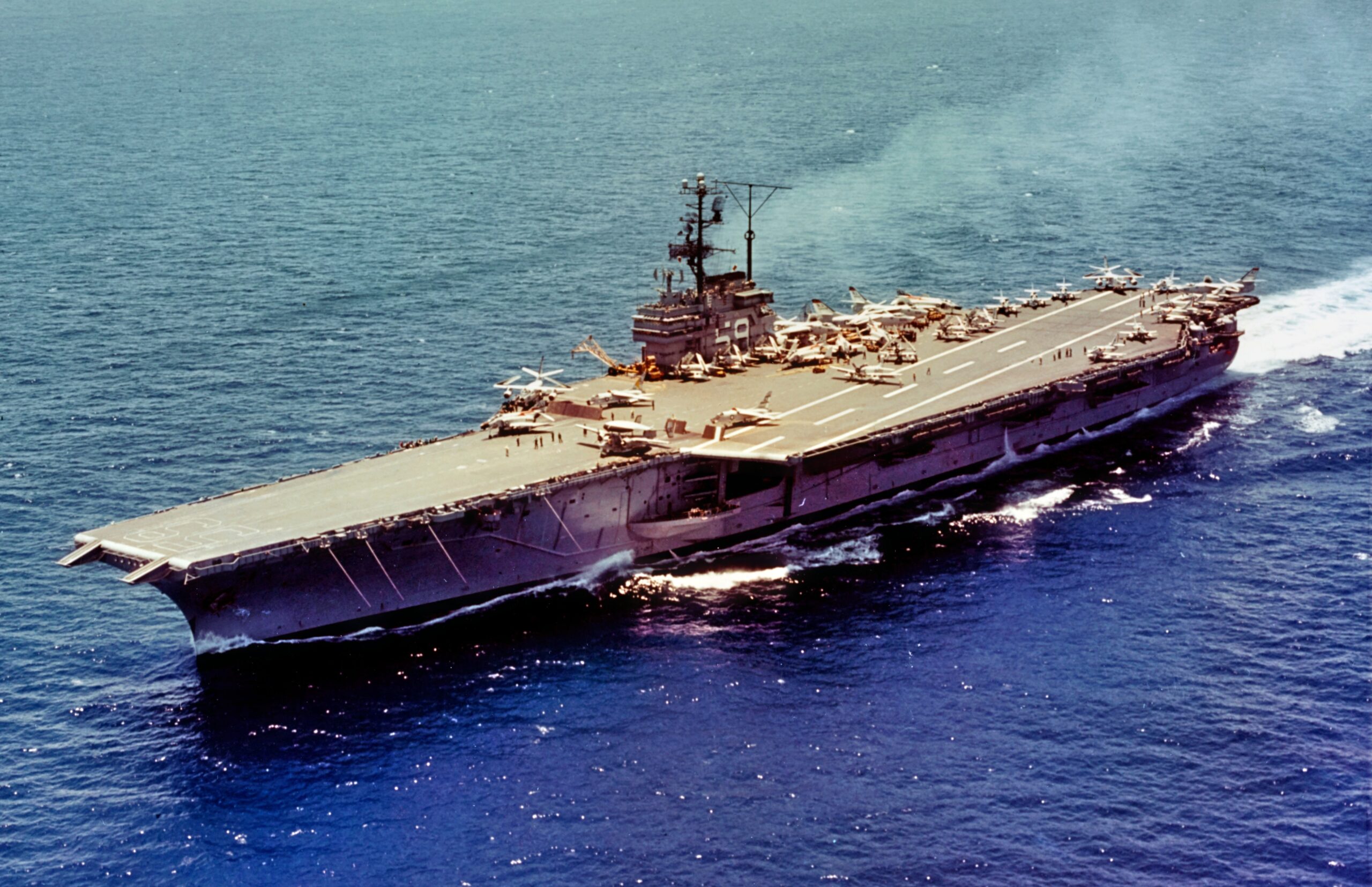
USS Forrestal Aircraft Carrier. Image Credit: Creative Commons.
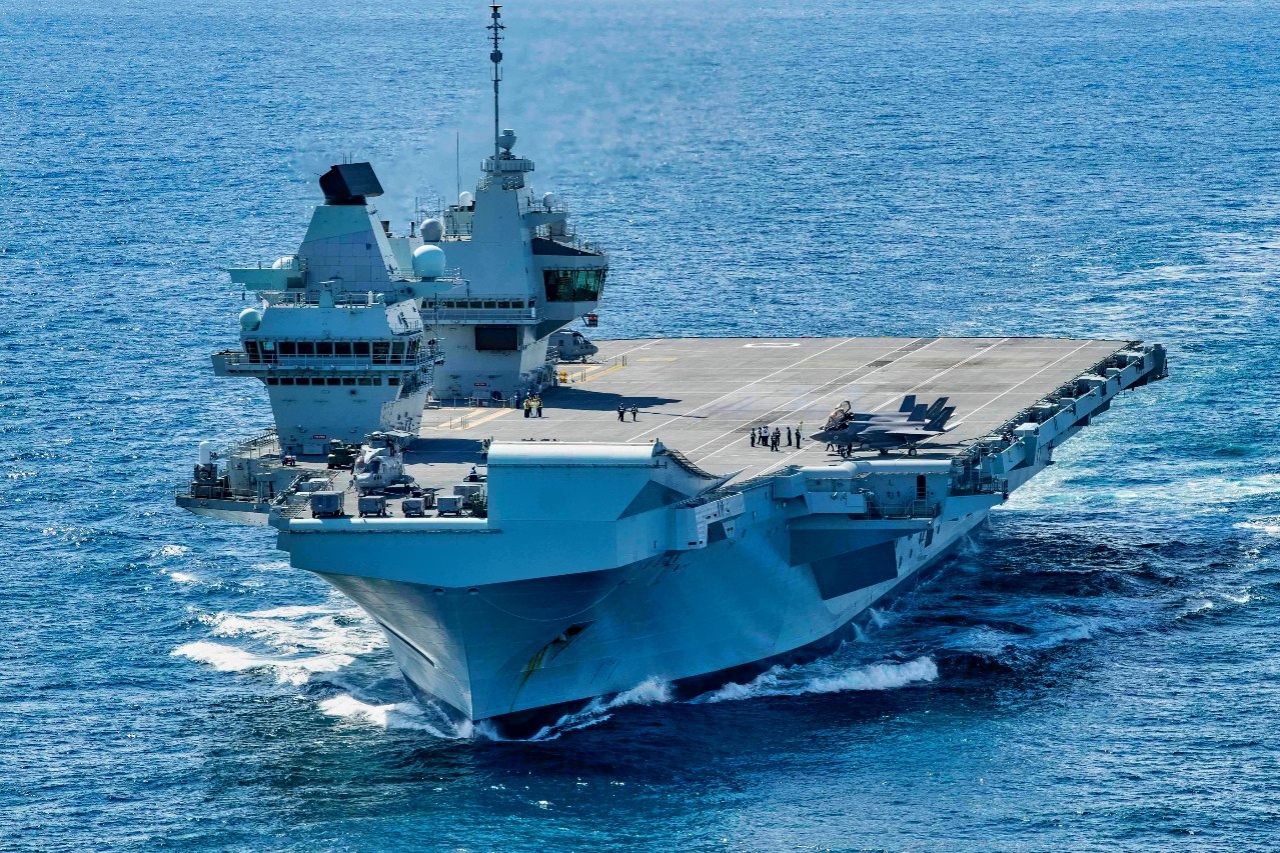
HMS Queen Elizabeth Aircraft Carrier. Image Credit: Royal Navy.
“While keen observers may note that carriers appear to taper into a narrow edge to slice into the water, once the ship is pulled into drydock, the truth is revealed. This narrowing extends only to the waterline. It is designed to reduce drag at the water surface. Beneath the surface, carriers have a wide, flat bottom, a very stable platform,” Carlin wrote.
The Aircraft Carrier Has Been Sailing for Over a Century
The starboard superstructure of supercarriers goes back to World War I.
This was a completely different design for the era, and many were surprised that such a heavy structure on one side of the vessel would still allow the ship to be buoyant and resist tipping.
The design made sense. Should the command tower be placed in the middle of the carrier, there would have been no room for launching and landing aircraft. With a wide flight deck, there would be more mass, leading to greater stability in storms or rough seas.
“Of note, the superstructure on nearly every aircraft carrier is on the starboard side of the ship. This is due mainly to the fact that the propellers on aircraft usually spin to the left when viewed from the cockpit, inducing a yaw, or pull, in that direction,” Carlin explained.
We Plan on Seeing the Gerald R. Ford In Person
We plan on visiting the Gerald R. Ford once it returns to port, if the Navy approves our request to tour it. Our photos will astound you with the size and shape of the supercarrier. Thankfully, the Ford will not capsize on its way home, and we will wait to hear from the Navy when we are invited to tour.
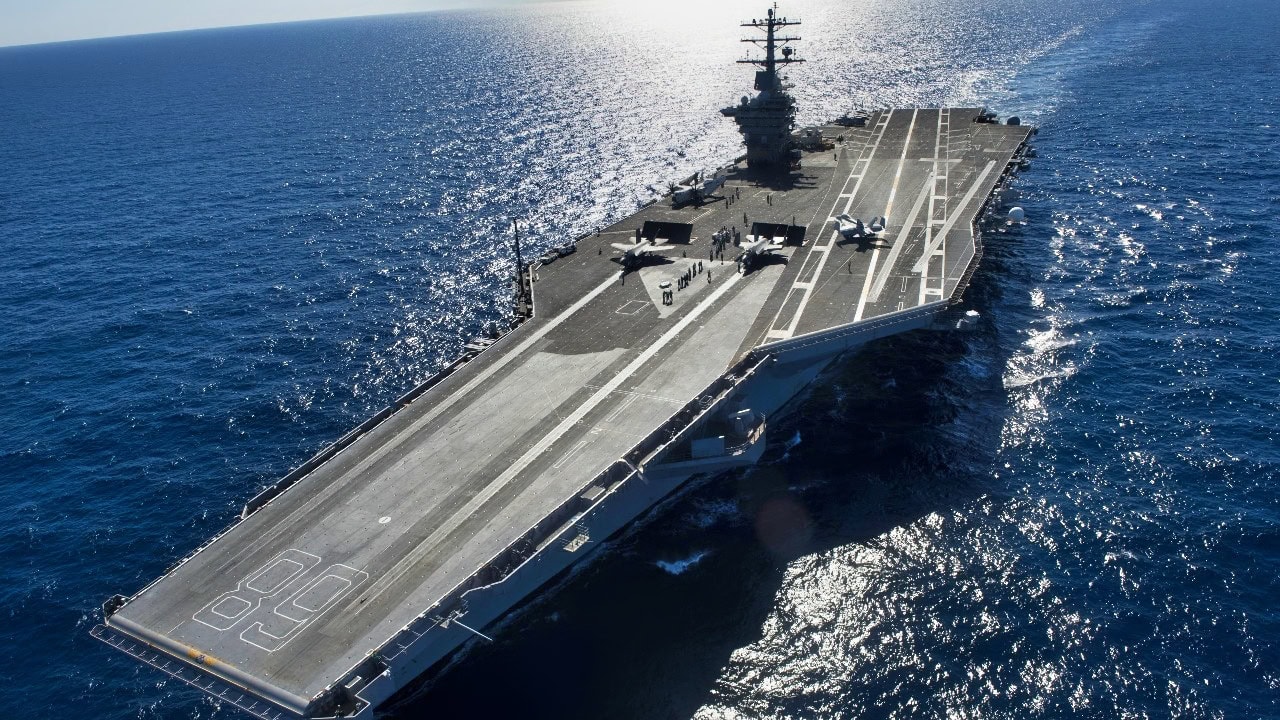
Ford-Class. Image Credit: Creative Commons.
Carriers are some of the most amazing ships in the world. I have only been on large civilian cruise ships, so if I can visit the Ford, it will easily be the biggest vessel I have ever seen in person.
Look for the new Ford-class USS John F. Kennedy, which is scheduled to be commissioned in March 2027. Another carrier we could visit in Norfolk, Virginia, will be the USS Nimitz, which is scheduled for retirement this year, unfortunately.
The Nimitz has served for over 50 years, and it will mark the end of a valiant life of service to the Navy, showing that a carrier can live a magnificent life without tipping over.
About the Author: Brent M. Eastwood
Author of now over 3,000 articles on defense issues, Brent M. Eastwood, PhD is the author of Don’t Turn Your Back On the World: a Conservative Foreign Policy and Humans, Machines, and Data: Future Trends in Warfare plus two other books. Brent was the founder and CEO of a tech firm that predicted world events using artificial intelligence. He served as a legislative fellow for US Senator Tim Scott and advised the senator on defense and foreign policy issues. He has taught at American University, George Washington University, and George Mason University. Brent is a former US Army Infantry officer. He can be followed on X @BMEastwood.