
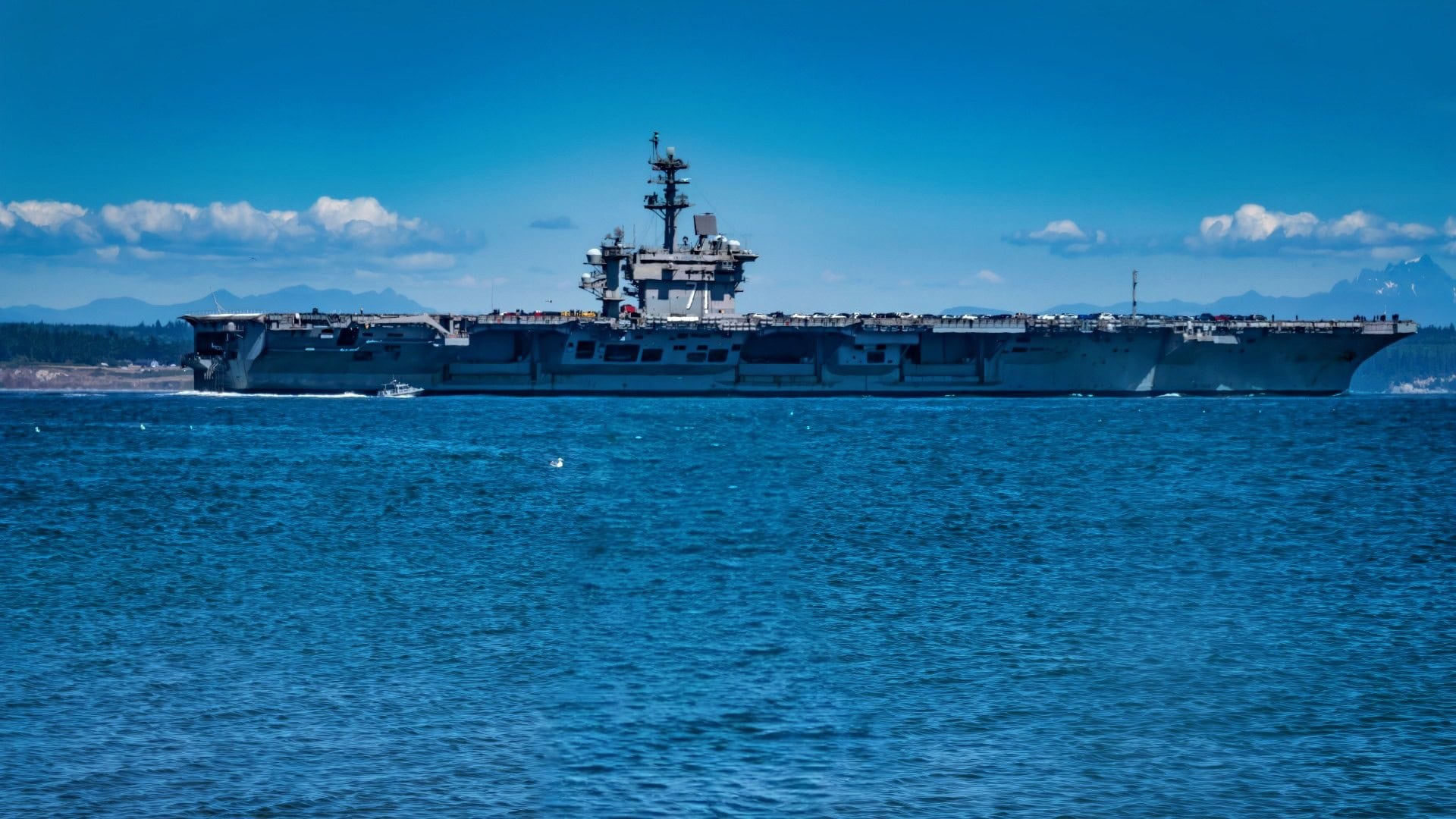
The Time A Submarine “Sank” A U.S. Navy Supercarrier In 2015
Aircraft carriers, or what many call the supercarriers, are the centerpiece of U.S. naval power and have been for decades. They project air power ashore, support sea-control operations, and shape U.S. deterrence strategies worldwide. But over the last decade, multiple demonstrations and analyses have shown that carriers are not invulnerable.
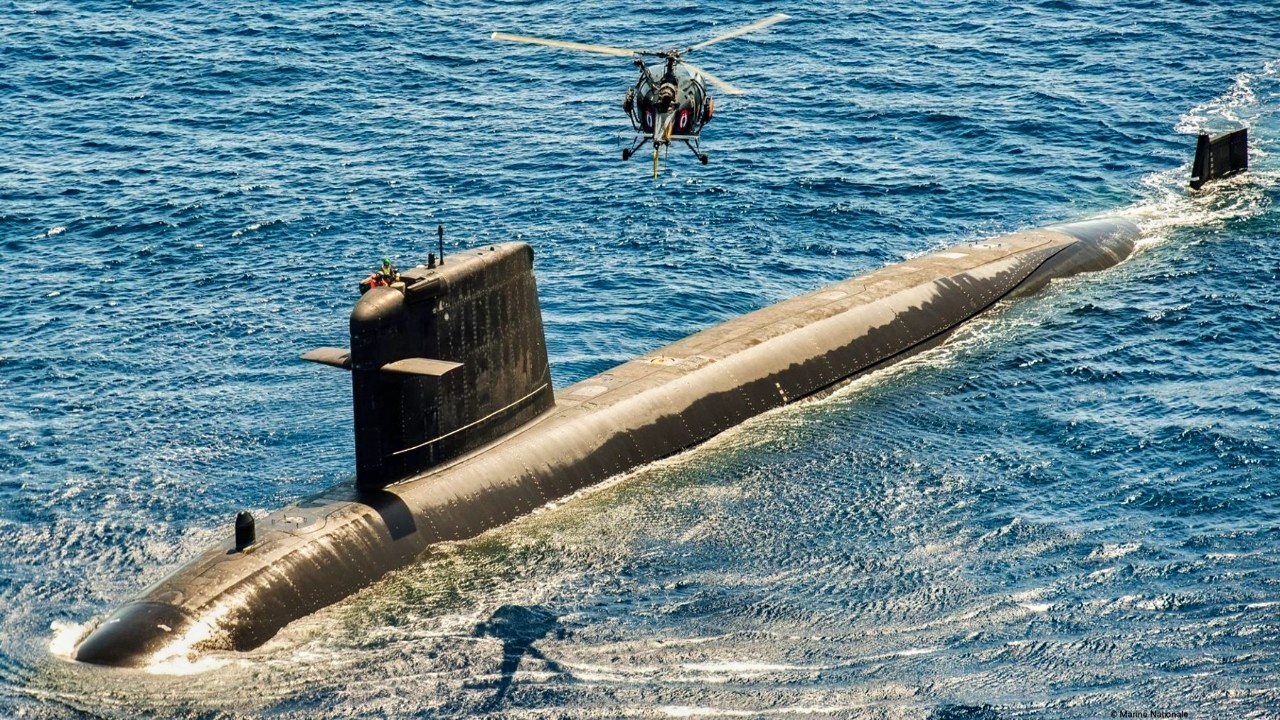
Rubis-Class French Navy Submarine. Image Credit: Creative Commons.
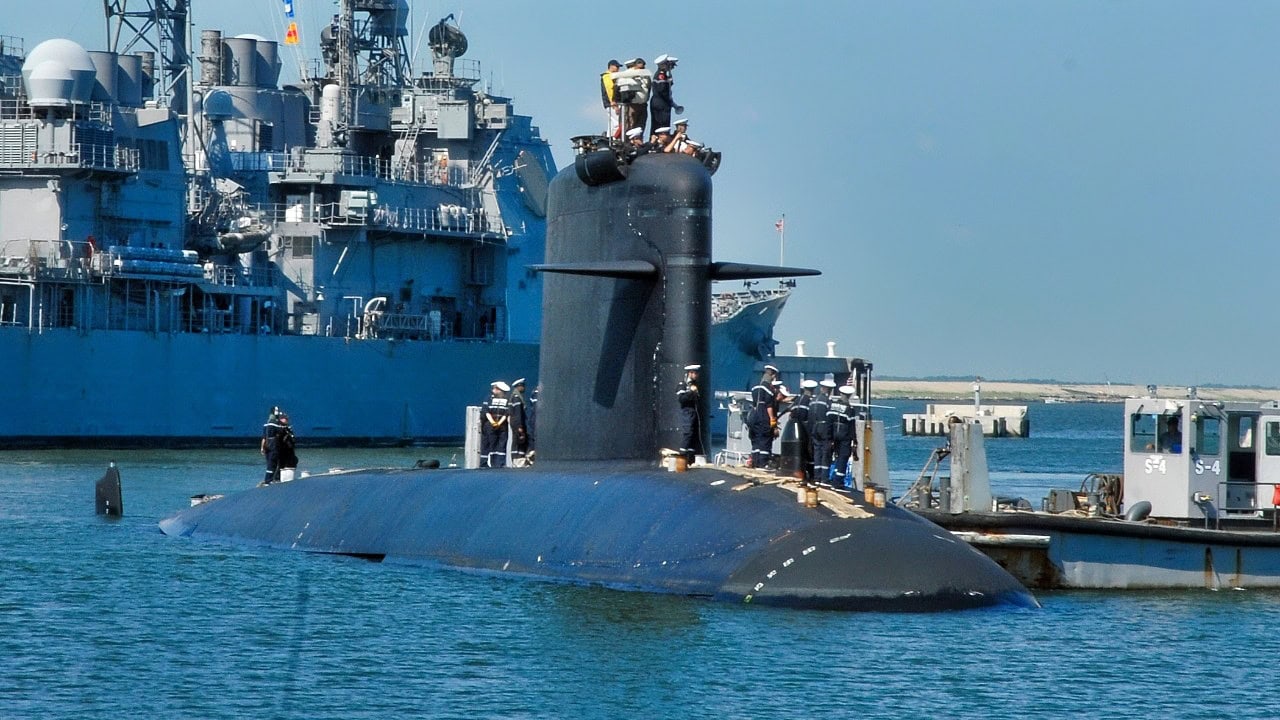
Rubis-Class: The French nuclear attack submarine FS Amethyste arrives at Naval Station Norfolk after completing patrol operations in the West Indies. Amethyste is making a four-day port call before joining the Theodore Roosevelt Task Group for Joint Task Force Exercise starting next week.
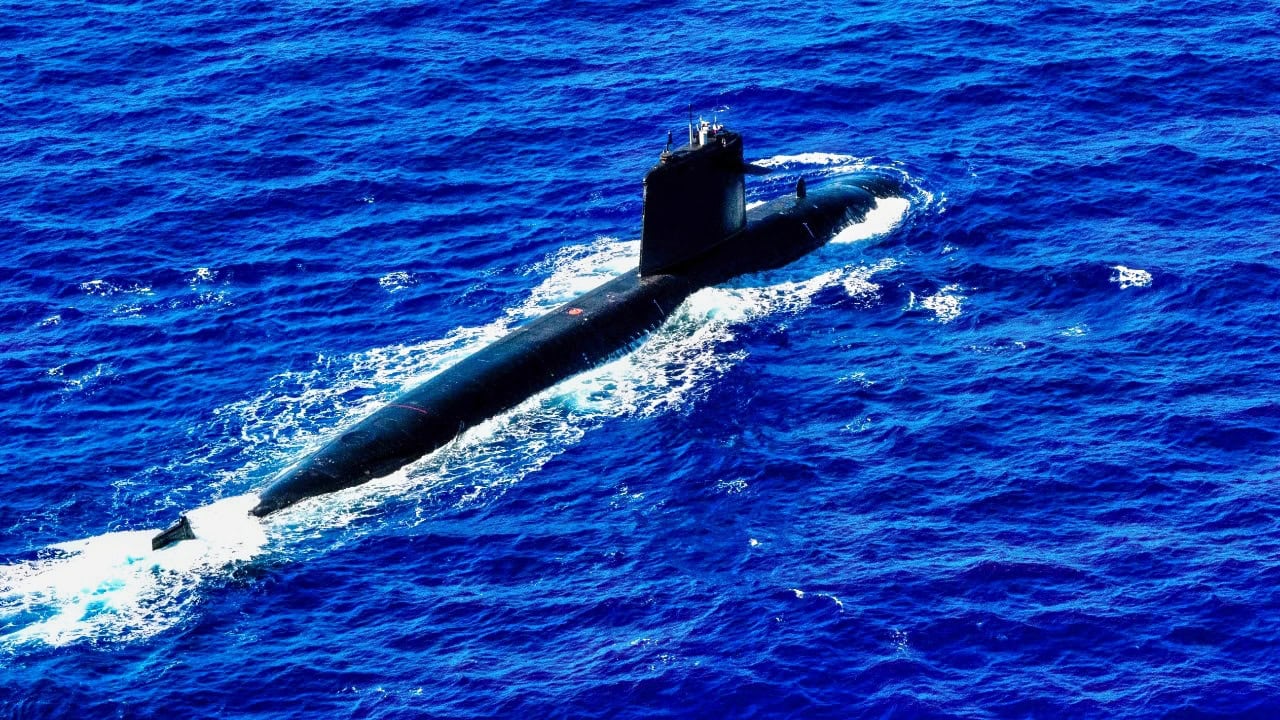
Rubis-Class Submarine from France
Modern threats – from quiet submarines to autonomous vehicles and long-range missiles – pose real challenges to current carrier strike group (CSG) defenses. The U.S. Navy recognizes these challenges and is adjusting its tactics and capabilities to maintain survivability in increasingly contested maritime domains.
Carriers are not obsolete – not by any means. However, without clear plans to adapt, they face significant tactical and operational risks in high-end conflicts. A 2015 joint exercise proved that.
What the 2015 Exercise Proved
One of the most cited cases in discussions about carrier vulnerability is the March 2015 joint exercise between the U.S. and French navies. In that drill, the French Rubis-class nuclear attack submarine Saphir penetrated the anti-submarine warfare screen of USS Theodore Roosevelt (CVN-71) and its supercarrier strike group.
Saphir operated undetected long enough to register simulated torpedo hits on the supercarrier and escort ships. This outcome was conducted under exercise rules and did not involve live weapons, but it indicated potential gaps in detection and tracking for high-value strike groups.
The key tactical factor in that scenario was acoustic stealth. Submarines are designed to minimize noise and avoid detection, and Saphir apparently exploited environmental masking and sensor limitations to remain below detection thresholds long enough to approach the carrier zone. Independent defense analysis underscores that quiet submarines remain among the hardest threats to locate and engage, even for well-resourced navies.
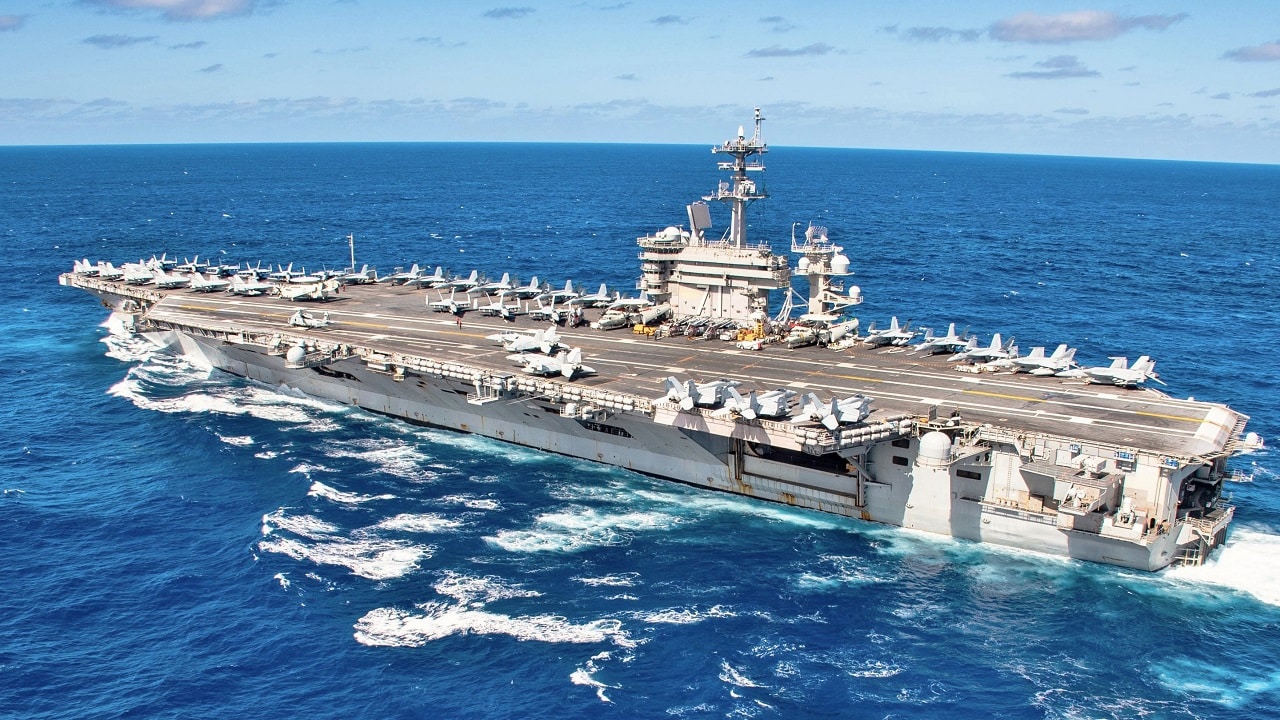
(Jan. 25, 2020) The supercarrier USS Theodore Roosevelt (CVN 71) transits the Pacific Ocean Jan. 25, 2020. The Theodore Roosevelt Carrier Strike Group is on a scheduled deployment to the Indo-Pacific. (U.S. Navy photo by Mass Communication Specialist Seaman Alexander Williams)
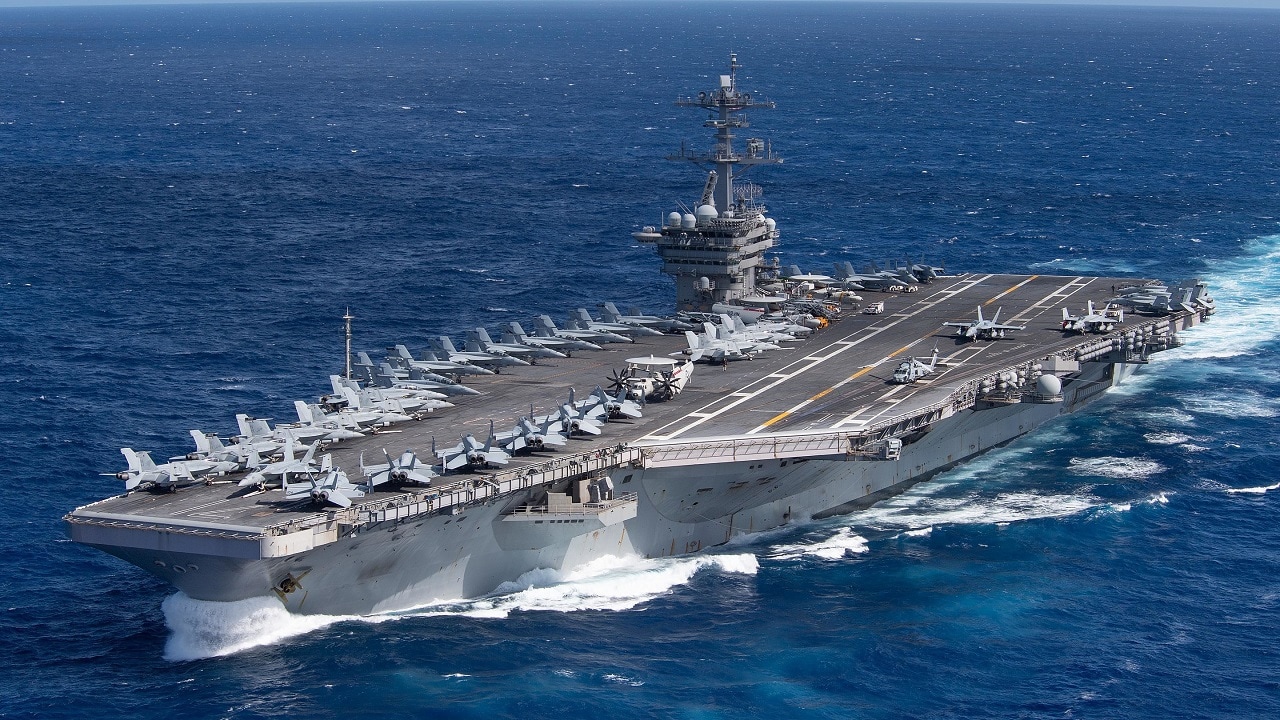
(Jan. 25, 2020) The aircraft carrier USS Theodore Roosevelt (CVN 71) transits the Pacific Ocean Jan. 25, 2020. The Theodore Roosevelt Carrier Strike Group is on a scheduled deployment to the Indo-Pacific. (U.S. Navy photo by Mass Communication Specialist Seaman Kaylianna Genier)
This does not mean U.S. ASW is ineffective. It does, however, mean that under the right conditions, adversary submarines can exploit gaps in layered detection networks – a feature of undersea warfare since World War II.
Drones, Missiles, and Autonomy Are the New, Emerging Threats
Since 2015, the threat environment has diversified beyond crewed submarines. Two categories in particular are reshaping threat assessments: autonomous platforms and long-range precision strike weapons.
In terms of unmanned undersea and surface vehicles (UUVs and USVs), the U.S. Navy and other advanced navies are investing heavily in these kinds of systems to perform reconnaissance, mine countermeasures, and similar missions. The Navy’s Manta Ray large uncrewed undersea vehicle, for example, completed full-scale water trials in 2024.
Smaller unmanned underwater drones are also becoming operational. A Yellow Moray UUV was successfully launched and recovered in 2025 through a submarine torpedo tube, proving there is a credible path for autonomous systems to operate from submarines without additional support vessels.
Then there are unmanned aerial vehicles (UAVs) and swarm drones. These are autonomous aerial systems, particularly expendable and semi-autonomous drones, which present new defensive challenges. The systems can be programmed to saturate air defenses and require rapid sensor processing – and as a result, force defensive systems and forces to use high-cost interceptors that were designed to take out far more expensive targets.
In terms of long-range precision weapons, the big threat comes from ballistic and cruise missiles like China’s DF-21D class of shore-based anti-ship ballistic missiles. These weapons are expanding the engagement envelope beyond traditional detection parameters, forcing carriers and escorts to operate under heightened alertness.
Those developments mean carriers must now operate in an environment where threats are more credible and numerous than ever before – and, they’re more difficult to detect.
How the Navy Is Responding
Current U.S. Navy strategy reflects the reality of these challenges. Rather than moving away from supercarriers, the Navy is changing how they operate and how its carriers are defended.
Current planning centers on integrating manned ships and aircraft with unmanned surface and undersea systems designed to increase the radius sensors can see and push detection farther from the carrier itself, rather than relying on escorts alone.
At the same time, the service is fielding more counter-drone defense systems, including the likes of Raytheon’s Coyote and Anduril’s Roadrunner-M, which are designed to defeat lower-cost aerial threats without expending expensive, high-end missiles.
What It All Means
Supercarriers are not going anywhere – at least, for now. They may be technically more vulnerable than ever, but defensive technology is adapting too – and the Navy’s response is to change tactics. Carriers still provide something no other naval platform can, after all: sustained airpower from international waters, independent of foreign bases.
That remains central to U.S. deterrence and crisis response planning.
What is changing is the threat environment around them, with China’s modernization effort now including expanded submarine forces and anti-ship missiles specifically designed to complicate U.S. naval operations in the Western Pacific.
The question is not whether carriers matter today, but whether the Navy can adapt fast enough to keep them survivable against the new threats – and prevent a real-life scenario comparable to the Saphir incident in 2015.
About the Author: Jack Buckby
Jack Buckby is a British researcher and analyst specialising in defence and national security, based in New York. His work focuses on military capability, procurement, and strategic competition, producing and editing analysis for policy and defence audiences. He brings extensive editorial experience, with a career output spanning over 1,000 articles at 19FortyFive and National Security Journal, and has previously authored books and papers on extremism and deradicalisation.