
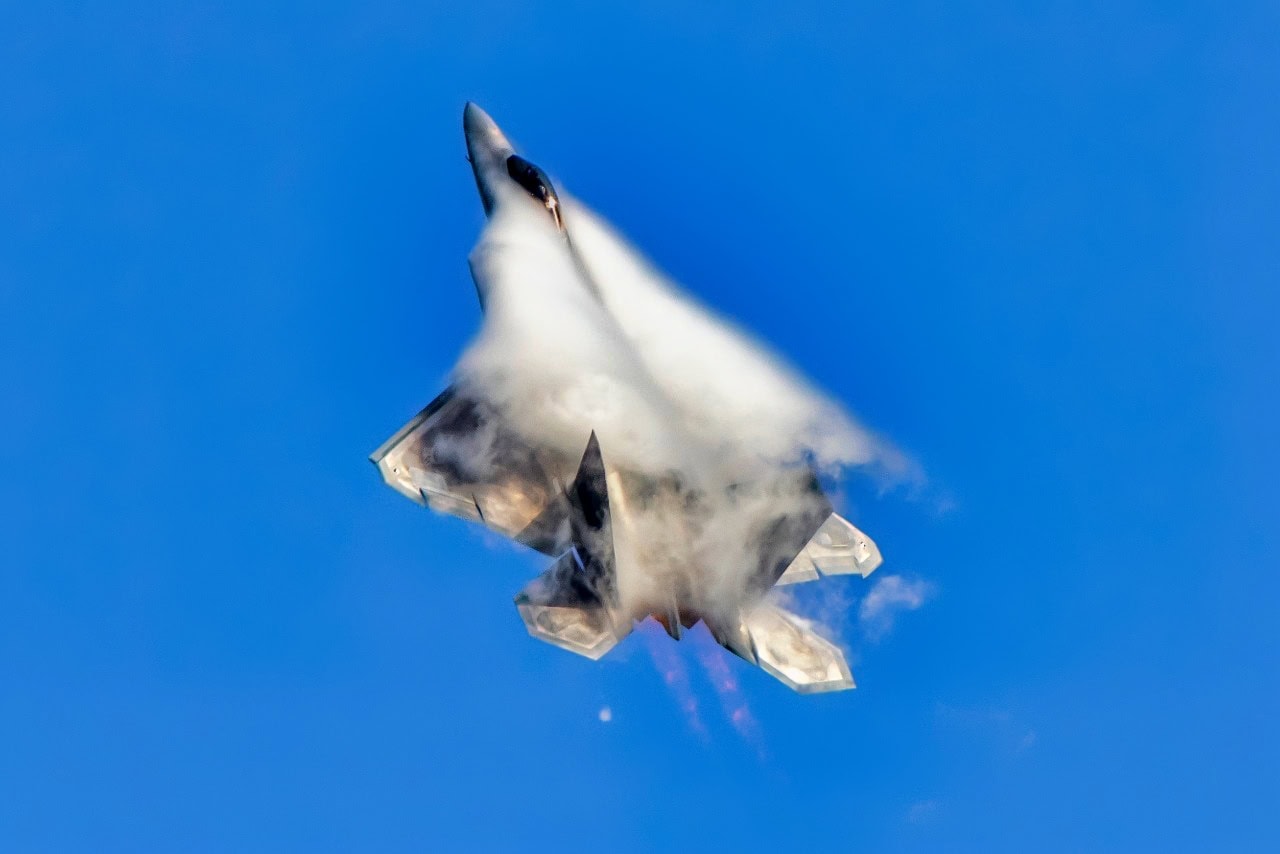
Summary and Key Points: A newly released U.S. Air Force investigation has determined that the fatal March 2024 incident involving an F-22 Raptor at Joint Base Elmendorf-Richardson was caused by human error rather than mechanical failure.
-The report details how Staff Sgt. Charles Crumlett was killed when a missile launcher was retracted while he was still inside the weapons bay, following a misinterpreted hand signal and a critical lack of visual oversight by the team chief.
-Investigators cited systemic issues, including inadequate supervision, training gaps among the maintenance crew, and a widespread misunderstanding of the aircraft’s “safe switch” functions.
Air Force Report: Human Error and Communication Failures Led to Fatal F-22 Accident at JBER
A newly released investigation by the U.S. Air Force has concluded that a maintenance mishap was the cause of a fatal incident involving an F-22 Raptor at Joint Base Elmendorf-Richardson (JBER), Alaska, in March 2024.
The report described how a combination of procedural failures, inadequate supervision, and poor communication – rather than a technical malfunction of the aircraft – was the cause of the death of Staff Sgt. Charles Crumlett.
The findings released by the Air Force Accident Investigation Board in late December 2025 revealed that the 25-year-old weapons load crew chief, assigned to the 90th Fighter Generation Squadron, suffered fatal head trauma while working inside the aircraft’s weapons bay.
The 32-page report concluded that the incident was preventable and stemmed from a series of human and organizational failures rather than flaws inherent to the F-22 aircraft/platform itself.
What the Investigation Found
According to investigators, Crumlett was part of a six-member maintenance team servicing the F-22’s configurable rail launcher (CRL), a retractable system housed inside the aircraft’s internal weapons bays that deploys air-to-air missiles.
At the time of the accident on March 15, 2024, the team was adjusting a restraint fitting on the right-side launcher when coordination between team members and communication began to degrade.
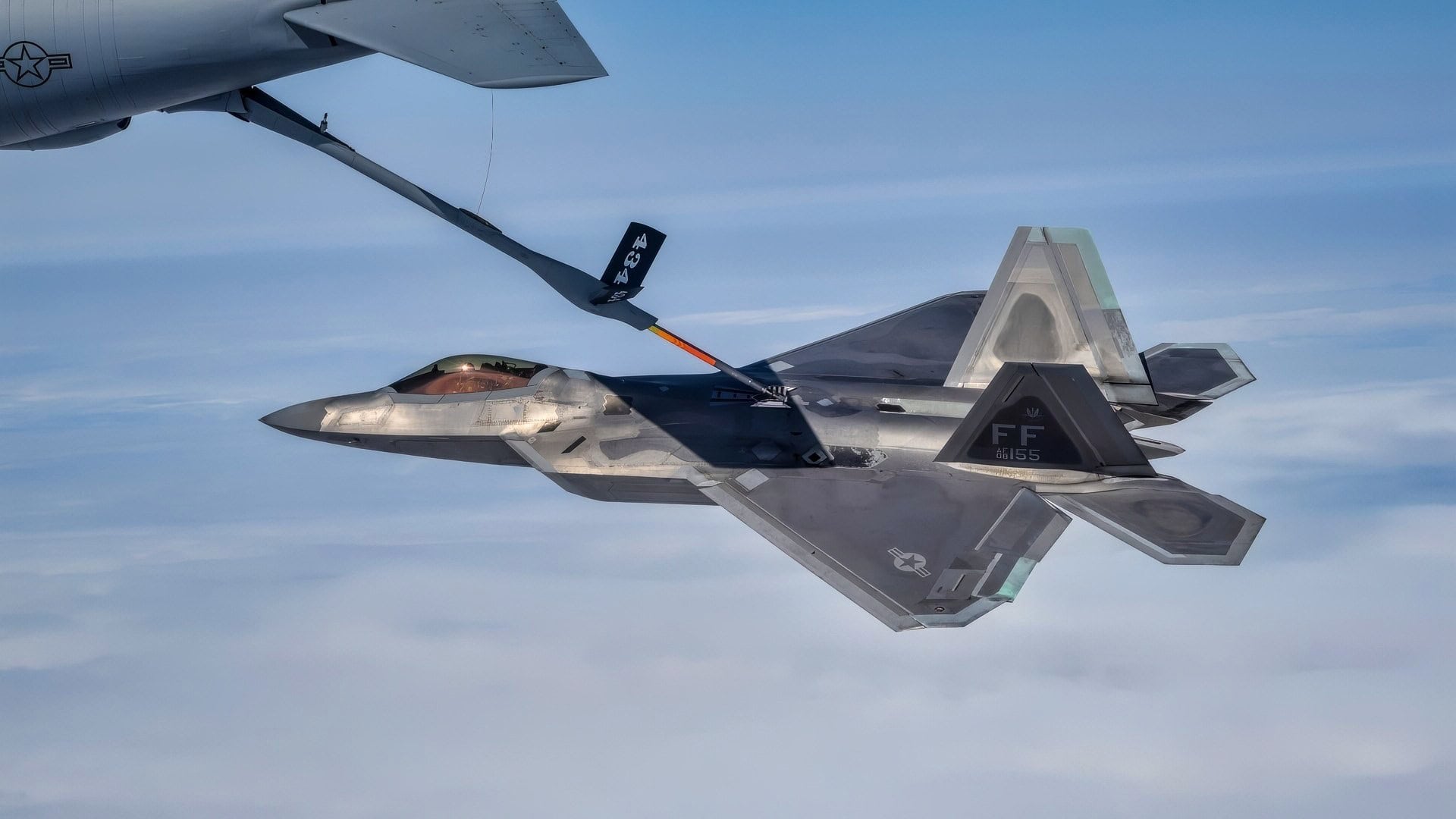
A U.S. Air Force F-22 Raptor and a KC-135 Stratotanker, assigned to the 434th Air Refueling Wing, Grissom Air Reserve Base, Ind., conduct aerial refueling over the continental United States, Aug. 21, 2018, during the Northern Lightning 18-2 exercise. Northern Lightning is one of seven Air National Guard joint accredited exercises held at a Combat Readiness Training Center and provides tailored, cost-effective and realistic combat training for participating units in a joint and multinational environment. (U.S. Air National Guard photo by Tech. Sgt. Mary E. Greenwood)
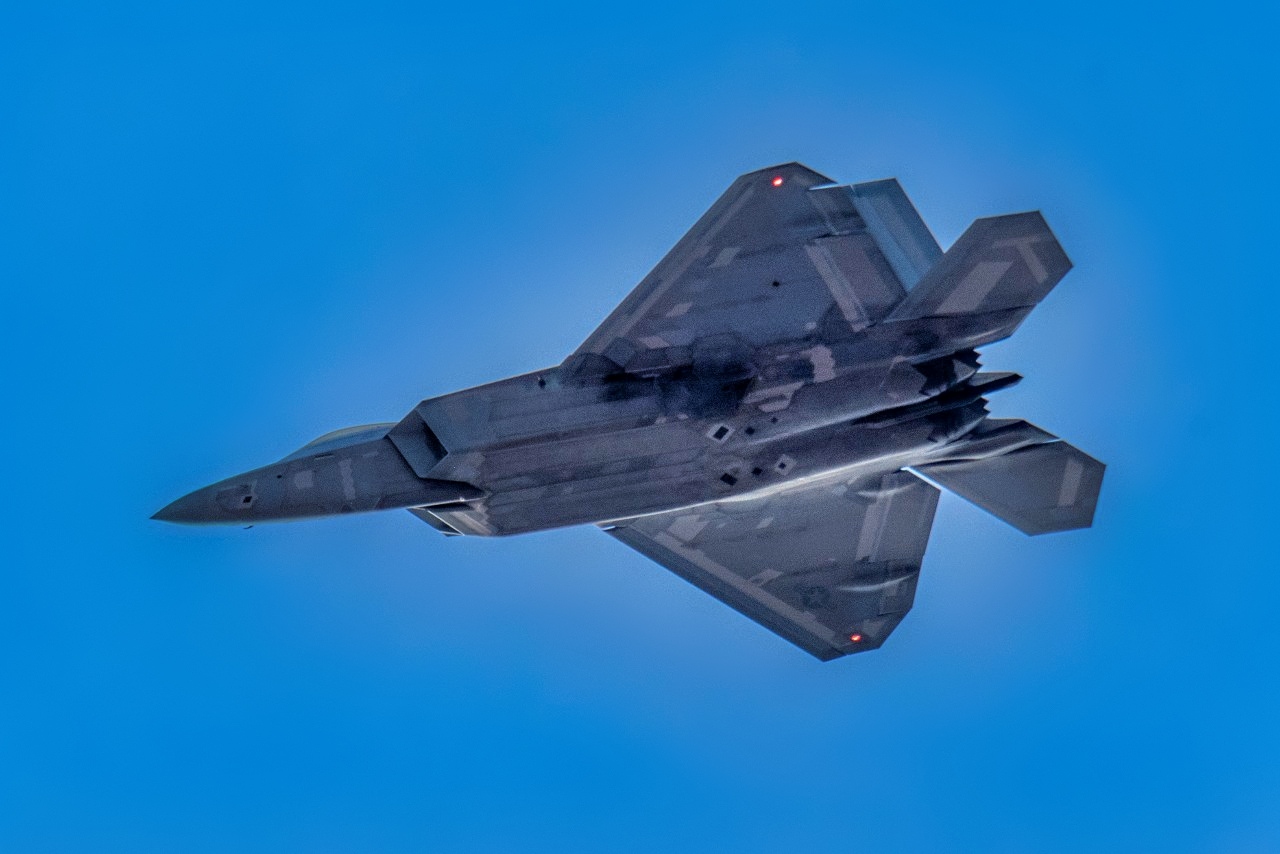
A U.S. Air Force F-22 Raptor assigned to the 3rd Wing conducts aerial practices at Joint Base Elmendorf-Richardson, Alaska, March 28. The F-22 is an American twin-engine, all-weather, supersonic stealth fighter aircraft and provides power projection across the Indo-Pacific region. (U.S. Air Force photo by Airman 1st Class Tala Hunt)
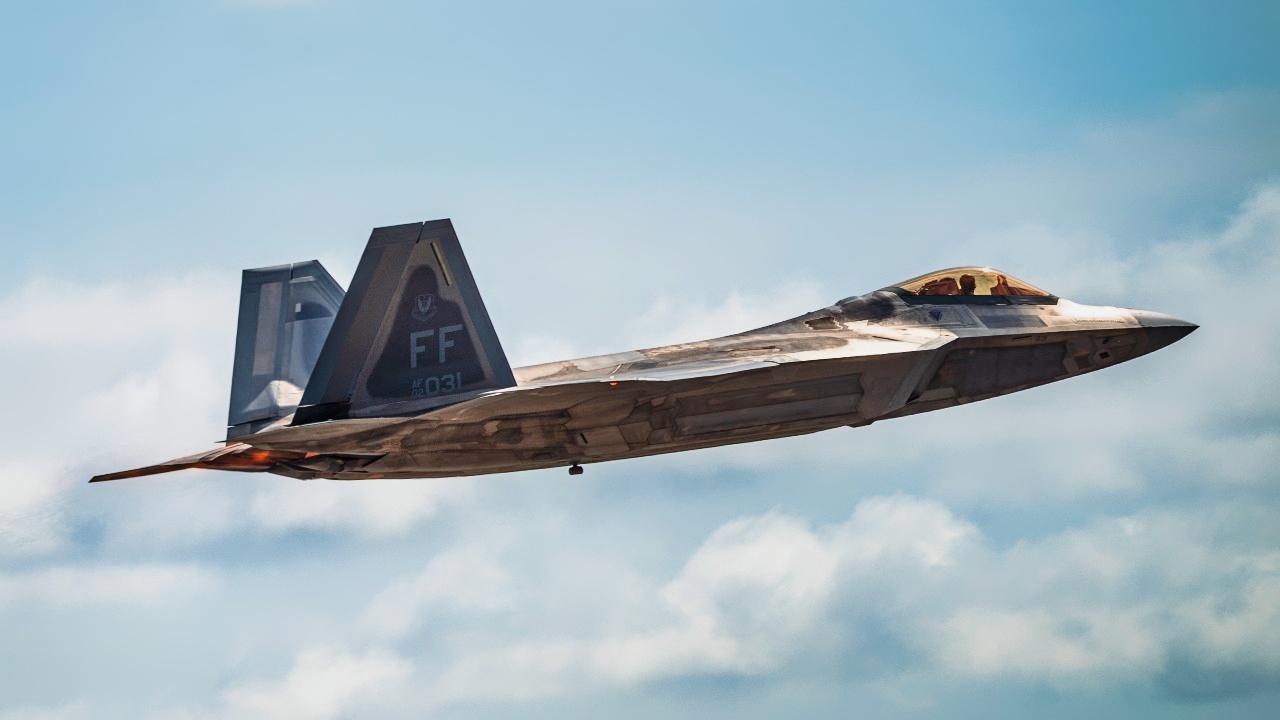
A U.S. Air Force F-22 Raptor assigned to the 71st Fighter Squadron, Joint Base Langley-Eustis, Virginia, takes off during Checkered Flag 25-2 at Tyndall Air Force Base, Florida, May 8, 2025. Air Combat Command’s Checkered Flag exercise simulates the full mobilization and deployment cycle, ensuring unit readiness for contingency operations. (U.S. Air Force photo by Airman 1st Class Zeeshan Naeem)
The report described how standard procedures were not followed, and instead of using a portable maintenance aid – a ruggedized computer designed to allow maintainers to operate aircraft systems while maintaining direct visual oversight – the maintenance team chief actuated the launcher using the aircraft’s cockpit display.
From the cockpit ladder position, there was no line of sight into the right-side weapons bay – a scenario that team members were explicitly warned about during training.
As the launcher retracted, Crumlett’s upper body remained inside the bay, causing his head to become trapped between internal structural components and causing immediate fatal trauma. The report concluded that the launcher was retracted while personnel were not clear – a direct violation of safety procedures.
The investigation also cited a failure to maintain supervisory direction over the team, with members conducting multiple tasks simultaneously without a clearly established leader for the launcher operation. The result was confusion over who had the authority to make decisions on system movement.
Noise from an auxiliary power unit also required maintainers to wear double hearing protection, forcing them to rely on hand signals instead of verbal communication.
Investigators ultimately determined that a thumbs-up hand signal was misinterpreted as an “all clear” – despite Crumlett still being inside the weapons bay.
Worsening that risk was a widespread misunderstanding of the aircraft’s safety systems. The report found that maintainers incorrectly believed that a “safe switch” disabled both the weapons bay doors and the launcher itself, when in fact it only secured the doors – creating what investigators called a false sense of security that encouraged unwarranted risk-taking.
“It seems widely believed that the ‘safe switch’ inactivates the operation of both the bay doors as well as the CRL itself when it specifically only secures the doors…This could engender an inaccurate sense of security in a maintainer and prompt them to take an unwarranted risk,” the report explained.
Training and Experience Gaps
The report also described how training and experience gaps within the maintenance team contributed to the fatality. Crumlett had prior experience maintaining A-10 and F-15 aircraft but had completed only academic training on the F-22 and had arrived at JBER in February 2024, only one month before the accident.
Three of the six team members involved in the tasks were still in training at the time of the incident, too.
Investigators concluded that the unit had not performed the specific maintenance procedure frequently enough to develop proficiency, meaning they were overly reliant on assumptions about how it should work.
The report noted that team cohesion steadily deteriorated throughout the task, with no clear leadership and conflicting directions undermining their situational awareness.
The findings come amid a series of other challenges associated with fifth-generation aircraft maintenance that are coming under greater scrutiny.
The F-22 Raptor is among the most complex and maintenance-intensive aircraft currently in U.S. service, requiring strict procedural discipline to ensure that work is performed correctly and safely, and extensive training for any team member to become proficient in sustaining the aircraft.
The Air Force has not announced disciplinary actions related to the incident, but similar investigations in the past have resulted in changes to training standards, supervision requirements, and procedural enforcement across the force.
Crumlett enlisted in the Air Force in 2016, served at Seymour Johnson Air Force Base before being assigned to Alaska, and received multiple commendations and achievement medals during his service.
The investigation determined that his death was not the result of a single mistake but systemic failures that allowed procedure, discipline, and supervision to erode during a high-risk maintenance operation.
About the Author:
Jack Buckby is a British researcher and analyst specialising in defence and national security, based in New York. His work focuses on military capability, procurement, and strategic competition, producing and editing analysis for policy and defence audiences. He brings extensive editorial experience, with a career output spanning over 1,000 articles at 19FortyFive and National Security Journal, and has previously authored books and papers on extremism and deradicalisation.