

Synopsis: Fleet Admiral Chester W. Nimitz believed leadership meant listening down the chain: “Some of the best advice…comes from junior officers and enlisted men.”
-His career began early at the United States Naval Academy, included a court-martial after running USS Decatur aground, and featured personal heroism rescuing a sailor.
-After Pearl Harbor, Franklin D. Roosevelt selected Nimitz to take command in the Pacific, where he helped turn the tide at Midway and ultimately signed Japan’s surrender aboard USS Missouri.
-After the war, he oversaw rapid demobilization and Operation Magic Carpet, bringing millions home.
Admiral Nimitz’s Best Leadership Lesson Came From Junior Sailors
“Some of the best advice I’ve had comes from junior officers and enlisted men.” – Admiral Chester Nimitz
Chester William Nimitz was born in Fredericksburg, Tex, in February of 1885, born to a mother who had recently been widowed. He went on to serve as one of the most notable Naval leaders in World War II, and his name was immortalized as the namesake of an aircraft carrier.
Raised mostly by his mother and grandfather, Nimitz was on the path towards a military career at an early age, even if he didn’t end up in the branch that he first envisioned.
“As a teenager, Nimitz met two officers from West Point, and he soon longed for an appointment to West Point,” his biography on the website of the National Museum of the Pacific War says.
“That was not to be, but he was offered a chance to enter Annapolis instead. He seized the opportunity with characteristic zeal. He left high school without a diploma when he was accepted to Annapolis in 1901 at age 16. Nimitz graduated seventh in his class of 114 on January 30, 1905.”
An Inauspicious Start
Nimitz’s career in command didn’t get off to the greatest start, according to his National Museum of the Pacific War biography.
“At the height of the Pacific War, Fleet Admiral Chester W. Nimitz commanded more than two million men and women, 5,000 ships and 20,000 planes, but one would not have predicted that distinguished future judging by Nimitz’s first command,” the bio said. “ In 1906, Ensign Nimitz commanded the USS Decatur, an old destroyer, which he ran aground. Although found guilty at a court-martial for ‘hazarding’ a Navy ship, the admiral who signed his first report stated, “This is a good officer and will take more care in the future.”
The future admiral, however, did win a Silver Life Saving Medal for an act of heroism which entailed “leaping overboard to rescue a drowning seaman while commanding the USS SKIPJACK, one of the Navy’s earliest submarines.”
In a letter to his future wife, Nimitz described the incident as “I had to go swimming yesterday, and it was awfully, awfully cold.”
After the first World War, Nimitz’s career included stints commanding Submarine Division 20 and Commander Battle Division One, as well as some time at the Naval War College.
Nimitz in the Second World War
Then, Japan attacked Pearl Harbor, and it was a pivotal moment in Nimitz’s career.
“Nimitz was serving as Chief of the Bureau of Navigation when the Japanese Imperial Navy attacked Pearl Harbor on December 7, 1941,” the National Museum bio says.
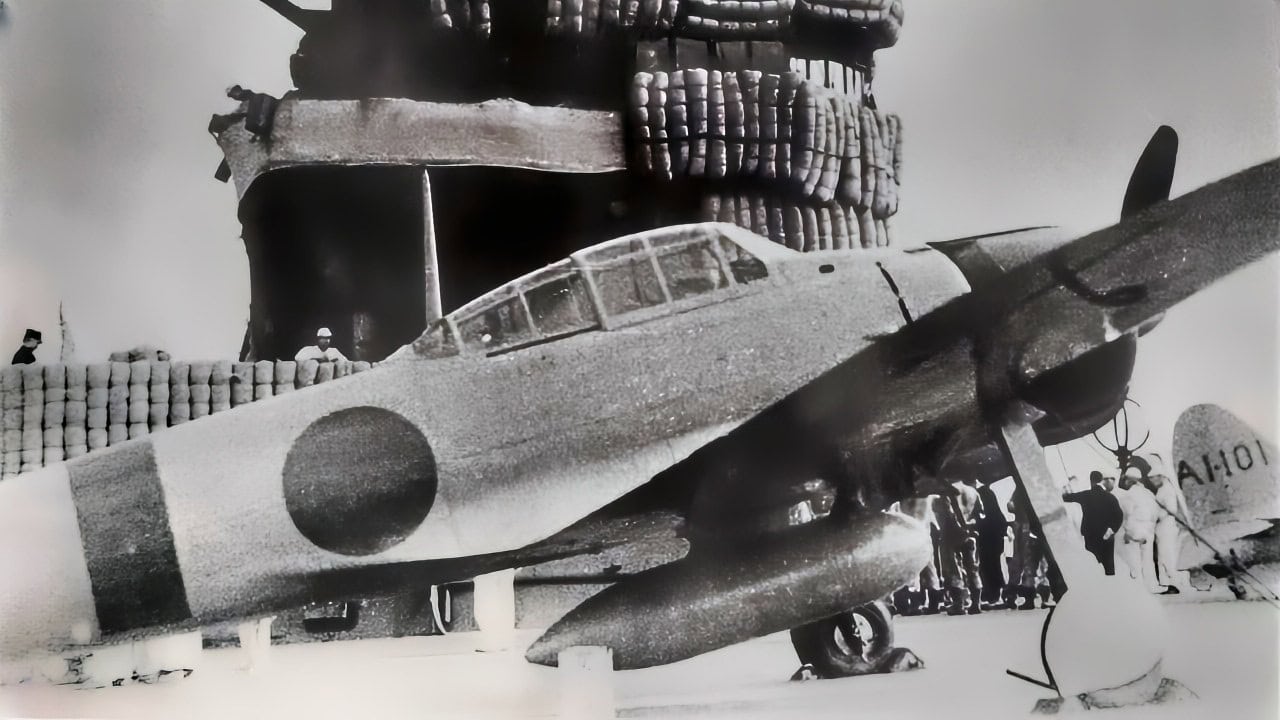
Pearl Harbor Attack 1941. Image Credit: Creative Commons.
“President Franklin D. Roosevelt chose Nimitz from among 28 flag officers, all of whom were senior to him, to take over command at Pearl Harbor. FDR ordered Nimitz to, ‘get the hell out to Pearl Harbor and don’t come back until the war is won.’ On December 31, Nimitz took command of the Pacific Fleet aboard the submarine USS Grayling (SS-209), and on the same day, he was promoted to Admiral.”
In World War II, Nimitz played a key part in the Battle of Midway and was described in the museum bio as “a congenial and accessible leader,” loved and respected by his sailors. In 1944 in Hawaii, he even hosted an “Old Texas Roundup” for all Texans serving in the Pacific.
In 1944, Nomitz was promoted to Fleet Admiral. And on September 2, 1945, he was aboard the U.S.S. Missouri to sign the Japanese Instrument of Surrender on behalf of the United States.
After the War
According to the Naval History and Heritage Command website, Nimitz was named the tenth chief in December of 1945 and held that title for two years.
“After brilliantly leading American forces to victory in World War II, Fleet Admiral Nimitz, the Commander in Chief, U.S. Pacific Fleet and Pacific Ocean Areas, hauled down his flag at Pearl Harbor and relieved Fleet Admiral King as Chief of Naval Operations,” the website said. “Accorded a hero’s welcome at home, the quiet, self-effacing officer described himself as merely ‘a representative of the brave men who fought’ under his command.”
His mission, during those two years? “rapid demobilization,” as well as getting soldiers home from the Pacific.
“He was faced with the perplexing problem of maintaining an effective fleet to carry out extensive operational commitments throughout the world,” that bio said.
“In the Pacific, naval vessels engaged in ‘Operation Magic Carpet’ brought home more than two million American servicemembers over a period of six months. Japanese, Chinese, Korean, and other troops were lifted to their homelands, as the Navy conducted operations in the disarmament and the transfer of control and occupation of territories previously held by the enemies.”
He returned to Texas after the war and died in California on February 20, 1966, just before his 81st birthday.
In 1972, the USS Nimitz was christened, assuring that the great admiral’s name would live on.
“To honor the accomplishments of Chester W. Nimitz, the United States Navy named its largest and most powerful class of aircraft carrier after the Fleet Admiral,” the PBS article said.
The Quote
The National Museum site of the Pacific War made it clear how important Nimitz’s team was to him.
“He built an aggressive team and boldly made the right moves in the Battle of Midway, that turned the tide of the war in the Pacific in favor of the U.S.,” the National Museum said.
According to a PBS article about USS Nimitz carriers and their namesake, Nimitz “effectively managed the war in the Pacific through superior leadership and teamwork.”
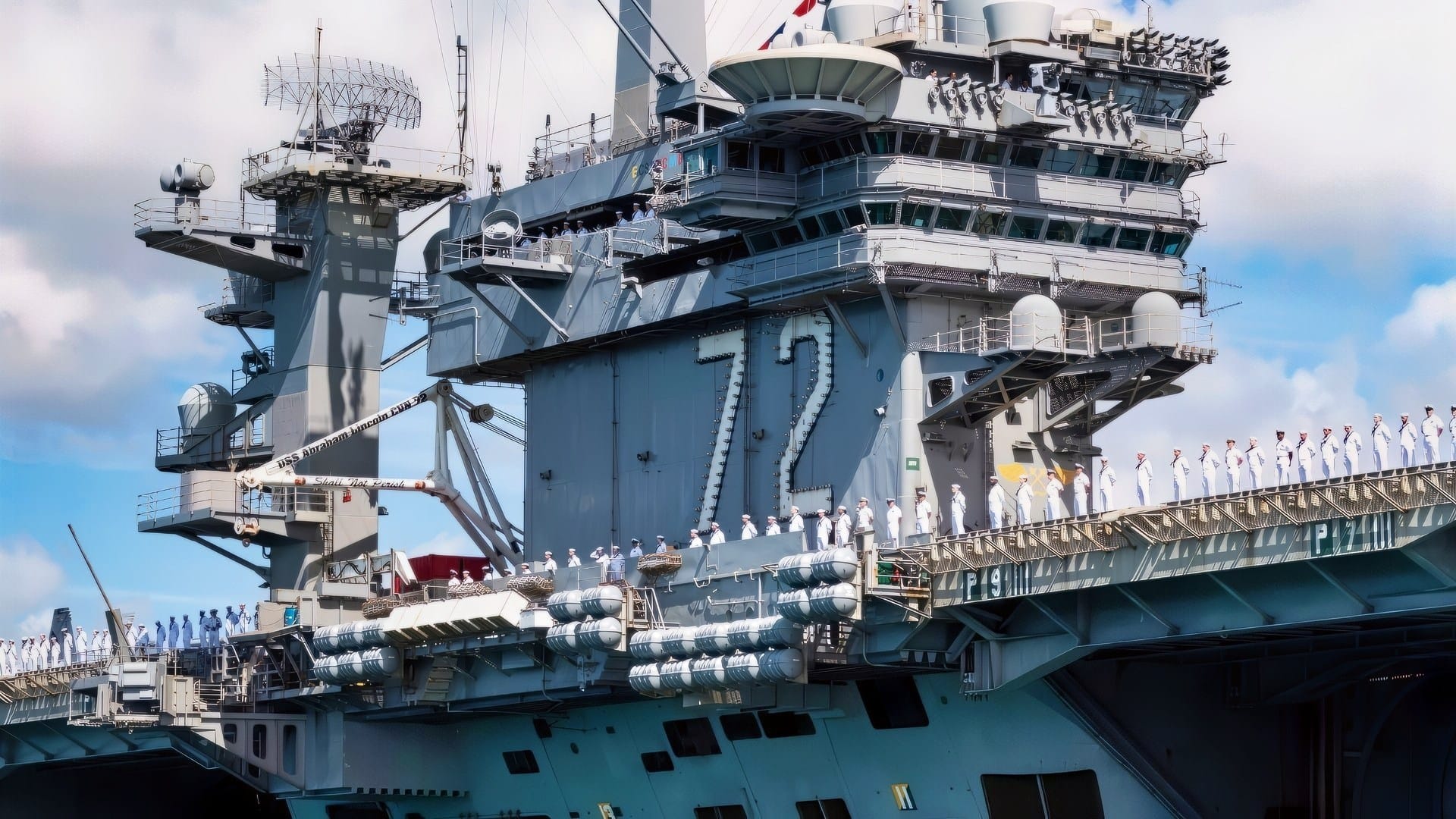
(June 28, 2022) – Nimitz-class aircraft carrier USS Abraham Lincoln (CVN 72) arrives at Joint Base Pearl Harbor-Hickam to participate in Rim of the Pacific (RIMPAC) 2022, June 28. Twenty-six nations, 38 ships, four submarines, more than 170 aircraft and 25,000 personnel are participating in RIMPAC from June 29 to Aug. 4 in and around the Hawaiian Islands and Southern California. The world’s largest international maritime exercise, RIMPAC provides a unique training opportunity while fostering and sustaining cooperative relationships among participants critical to ensuring the safety of sea lanes and security on the world’s oceans. RIMPAC 2022 is the 28th exercise in the series that began in 1971. (U.S. Navy photo by Mass Communication Specialist 1st Class Devin M. Langer)
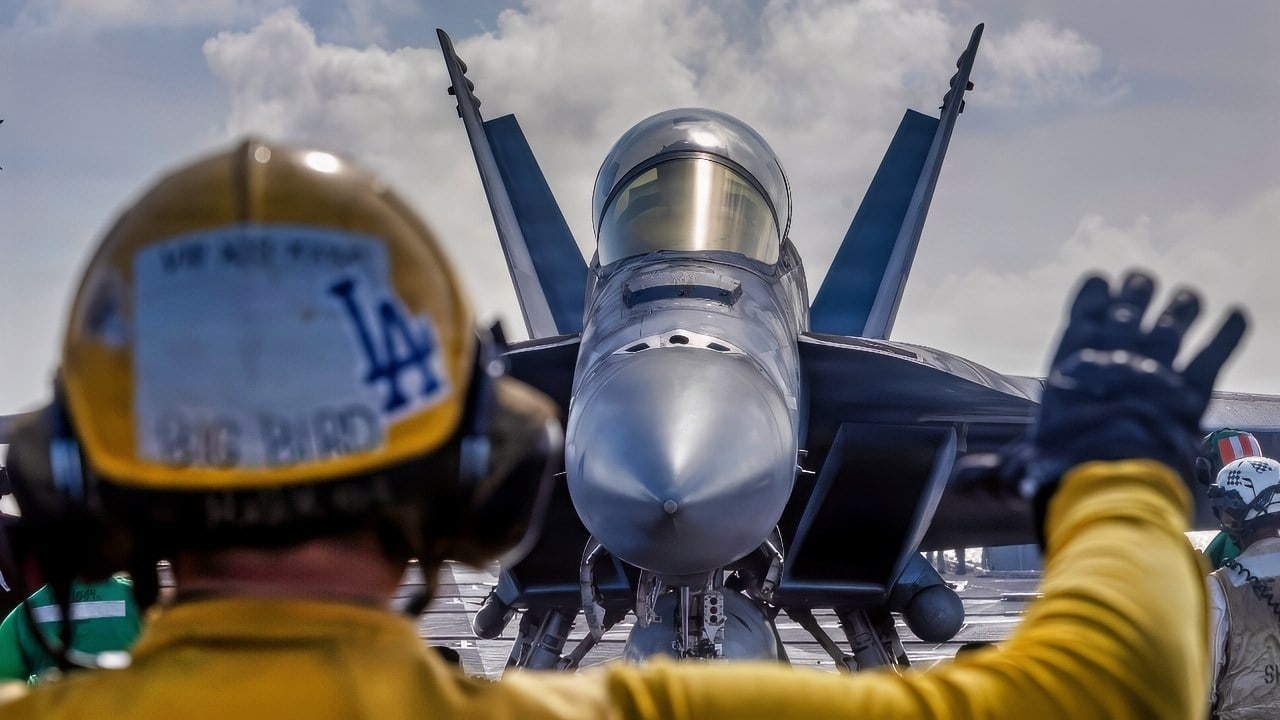
U.S. Navy Aviation Boatswain’s Mate (Handling) 2nd Class Michael Cordova directs an F/A-18E Super Hornet, attached to Strike Fighter Squadron (VFA) 14, on the flight deck of Nimitz-class aircraft carrier USS Abraham Lincoln (CVN 72) on Jan. 10, 2026. The Abraham Lincoln Carrier Strike Group is underway conducting routine operations in the U.S. 7th Fleet area of operations. Units assigned to 7th Fleet conduct regular Indo-Pacific patrols to deter aggression, strengthen alliances and partnerships, and advance peace through strength. (U.S. Navy photo by Mass Communication Specialist Seaman Daniel Kimmelman)
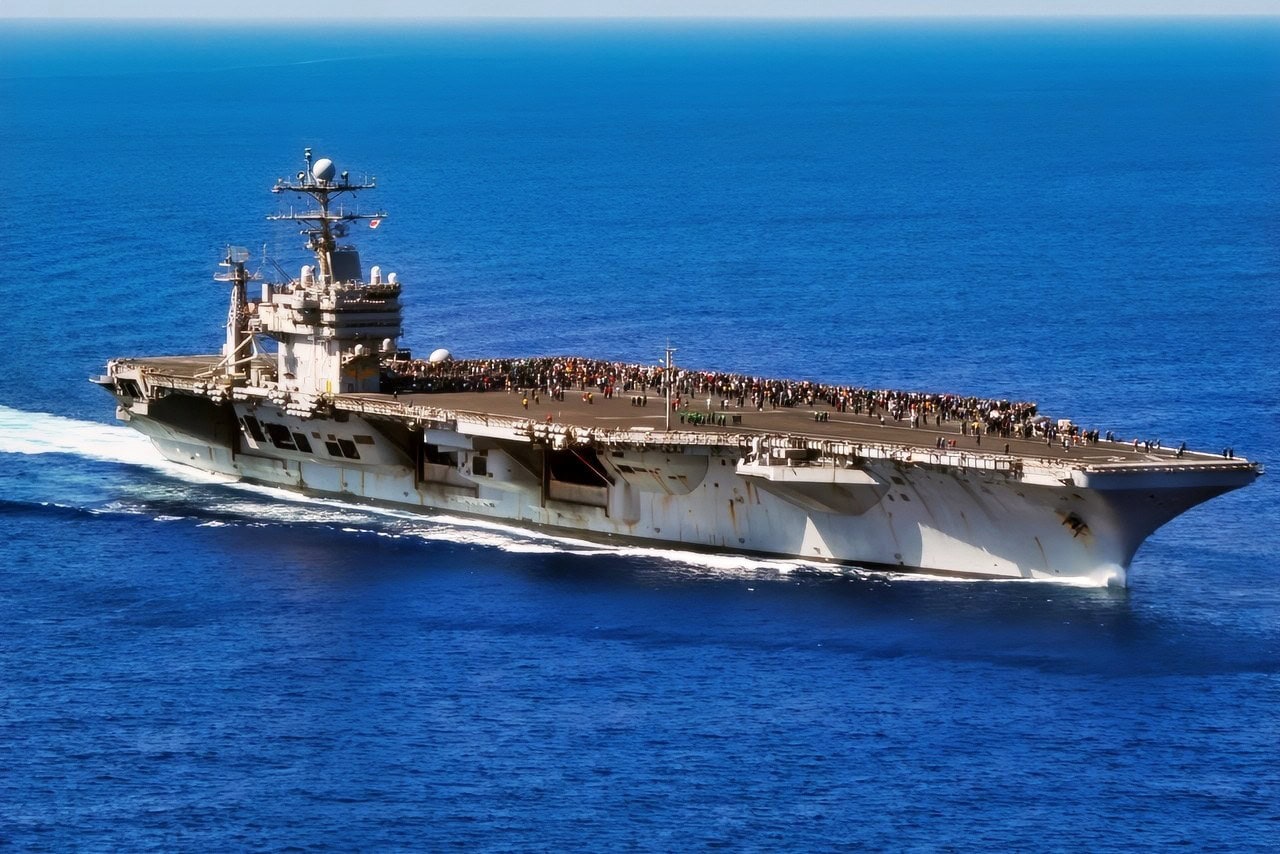
ATLANTIC OCEAN (Aug. 6, 2012) F/A-18 Hornets and Super Hornets from Carrier Air Wing (CVW) 2 fly in formation as MH-60S Seahawk helicopters assigned to the Golden Falcons of Helicopter Sea Combat Squadron (HSC) 12 fire flares during an air power demonstration above the Nimitz-class aircraft carrier USS Abraham Lincoln (CVN 72). Lincoln is returning to the United States after the completion of an eight-month change-of-homeport deployment during which she operated in the U.S. 5th, 6th and 7th Fleet areas of responsibility. (U.S. Navy photo by Mass Communication Specialist Seaman Zachary A. Anderson/Released)
“Leadership consists of picking good men and helping them do their best,” Nimitz once said, with the PBS article noting that he “hand-picked the men who served under him and took their advice whenever making a decision.”
“Some of the best advice I’ve had comes from junior officers and enlisted men,” he once said.
About the Author: Stephen Silver
Stephen Silver is an award-winning journalist, essayist, and film critic, and contributor to the Philadelphia Inquirer, the Jewish Telegraphic Agency, Broad Street Review, and Splice Today. The co-founder of the Philadelphia Film Critics Circle, Stephen lives in suburban Philadelphia with his wife and two sons. For over a decade, Stephen has authored thousands of articles that focus on politics, national security, technology, and the economy. Follow him on X (formerly Twitter) at @StephenSilver, and subscribe to his Substack newsletter.


Charles Hawkins
January 30, 2026 at 2:41 pm
I served CincPac WW2; as Marine Orderly. It was an honor and I respected this Officer and learned so much as a young military enlisted member.
Grant
January 30, 2026 at 7:46 pm
What a Great commander to give credit where credit is due. They respected him because he was a true leader and he respected them.