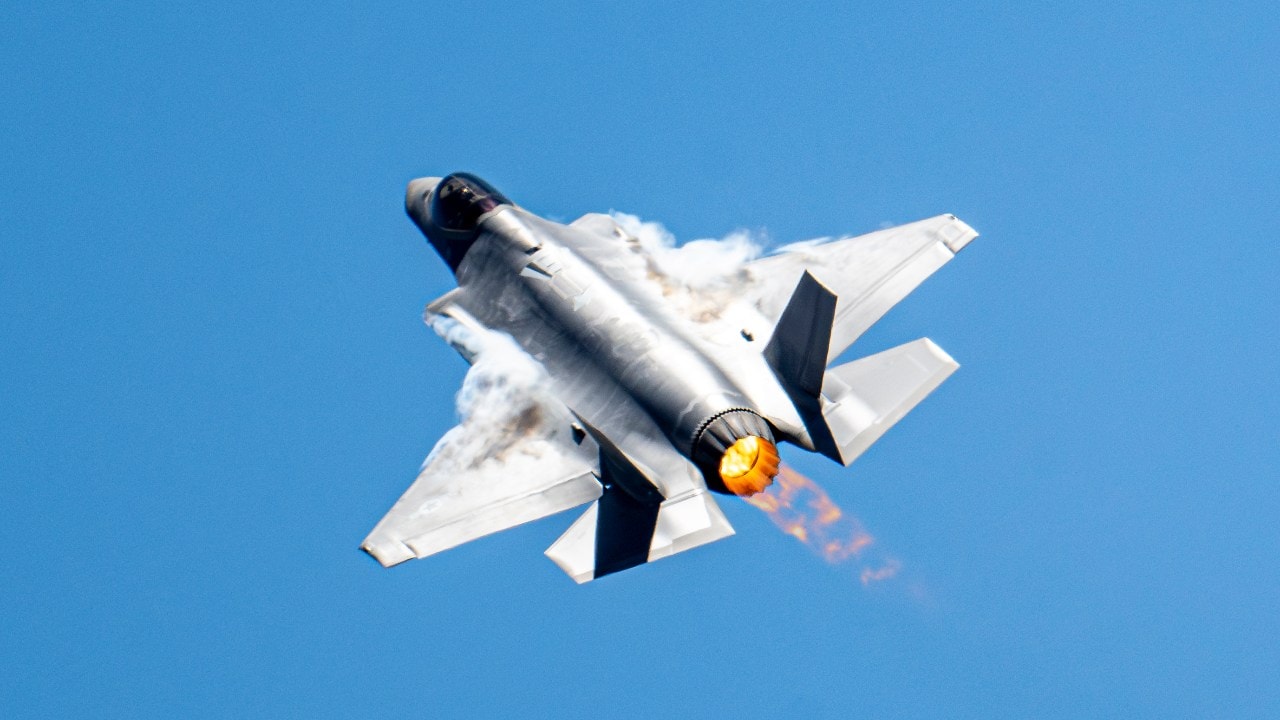
Summary and Key Points: Finland is officially transitioning into a fifth-generation power with the rollout of 65 F-35A Lightning II fighters. Replacing the legacy F/A-18 Hornet, these “flying sensors” will anchor a broader European Joint Strike Fighter network that is projected to reach 700 jets by 2030.
-While Moscow’s air doctrine remains focused on defensive buffer zones and long-range S-400/S-500 systems, the Finnish acquisition creates an unprecedented “situational awareness” gap.
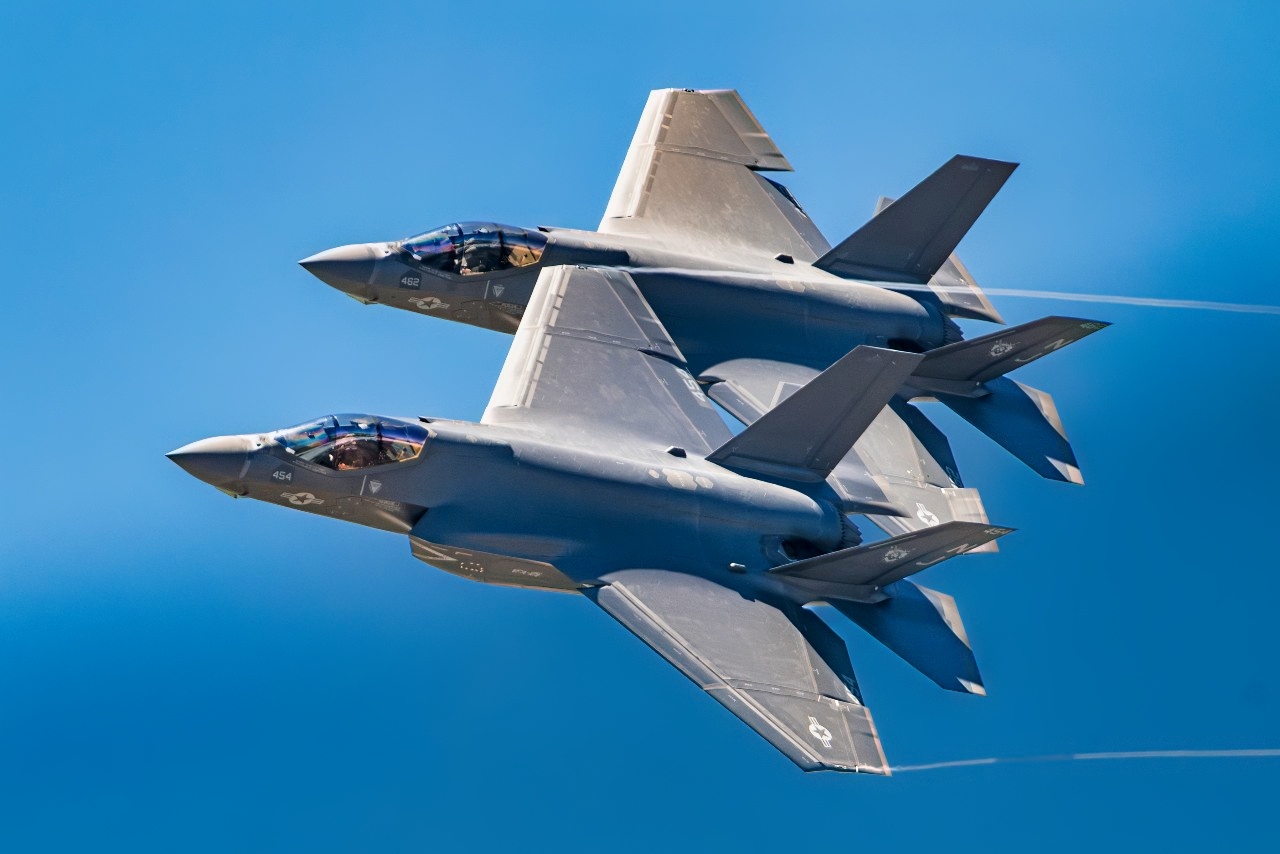
The U.S. Navy F-35C Lighting II Demo Team performs a flight demonstration at the Wings Over South Texas Air Show. This year’s air show marks Wings Over South Texas’s first return to Naval Air Station Corpus Christi since 2019.
-By choosing Lockheed Martin over legacy platforms, Helsinki is signaling that air deterrence has been achieved, even as critics argue Europe is overreacting to a Russia currently bogged down in Ukraine.
65 F-35A Stealth Fighters in Russia’s Backyard: Why Finland’s F-35 Rollout Changes Everything
Contrary to all the weeping and gnawing and mashing of teeth from America’s partners in Europe over the allegedly unacceptable, boorish behavior of US President Donald J. Trump toward them over the issue of Greenland, the Europeans—specifically, the Armed Forces of Finland—are more than happy to accept a tranche of 65 US-made Lockheed Martin F-35A Lightning II fifth-generation stealth multirole warplanes.
These planes will be replacing Finland’s fleet of US-made F/A-18 Hornets.
Europe Whines About America’s Leaders But Arms Itself with US Planes
It’s part of what many observers are referring to as a massive expansion of a European “Joint Strike Fighter (JSF)” network of F-35-equipped countries. Europe believes this will enhance NATO’s overall capabilities—especially given its perception of a rising threat from neighboring Russia.
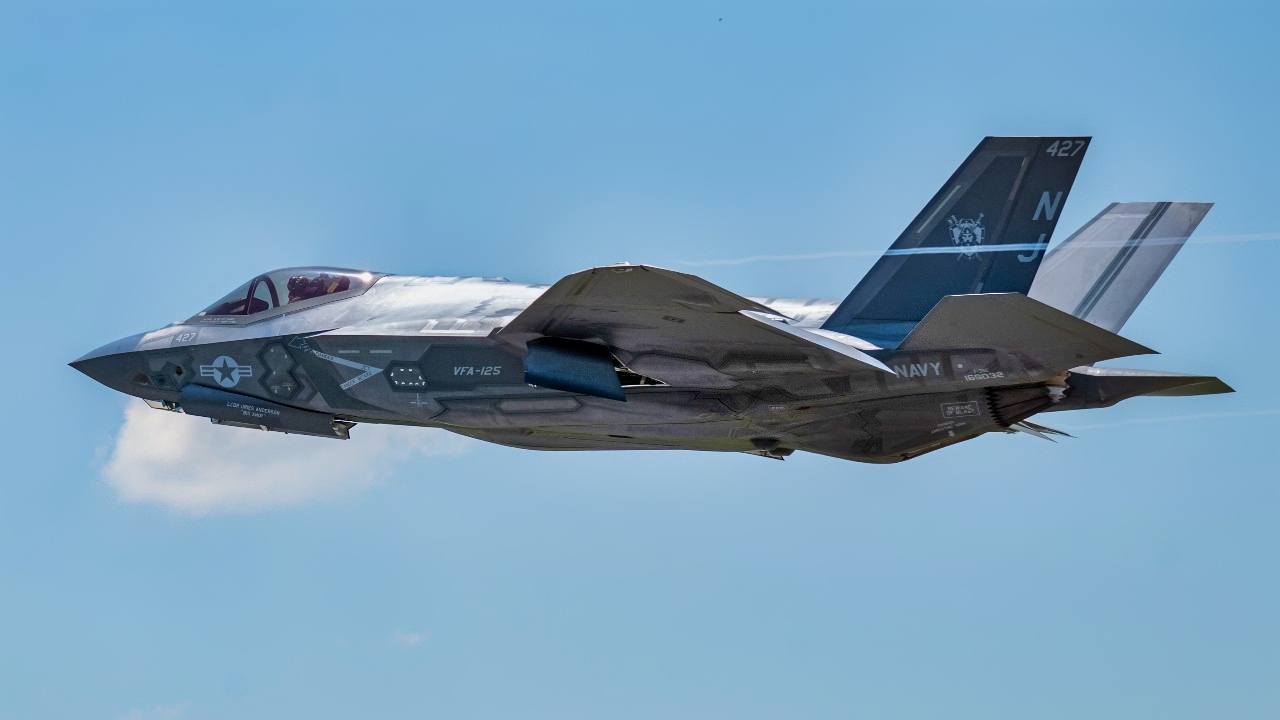
U.S. Navy Lt. Dave Hinkle, F-35C Lightning II Demonstration Pilot, performs during the 2021 Atlanta Air Show, Atlanta Regional Airport-Falcon Field, Ga., May 23, 2021. The U.S. Navy and Marine Corps’ carrier variant has larger wings and more robust landing gear than the other F-35 variants, making it suitable for catapult launches and fly-in arrestments aboard naval aircraft carriers. (U.S. Air Force photo by Staff Sergeant Thomas Barley)
What Europe is searching for is overmatch. In the case of the F-35 fleet, it has been built with extensive assistance from the United States, and the goal of air superiority over Russia’s air force has been achieved.
Europe Wants Overmatch, Not Balance
At least in terms of specific numbers of advanced warplanes. While the Su-57 “Felon,” Russia’s answer to the F-35, is not something to downplay, Moscow has not prioritized its mass production for several years.
All their efforts have fixated on building the materials needed for defeating NATO-backed Ukraine.
The Europeans (and Americans) are clearly signaling that they have reinforced their airborne deterrence in the years since the initiation of the Ukraine War. Let’s just run the numbers.
The Numbers Don’t Lie on Steath Fighter Firepower
Excluding the US contingent in Europe, European countries have received over 600 F-35 fighter jets. Those numbers, as you can tell, are only growing. Indeed, European projections indicate that as many as 700 F-35s could be deployed on the continent over the next decade.
On the other hand, the Russian air force is technically the second-largest air force in the world. It has a total of 4,200 military aircraft, including 800-850 active fighter jets and more than 700 dedicated attack aircraft. It is important to note, however, that these are apples-to-oranges comparisons.
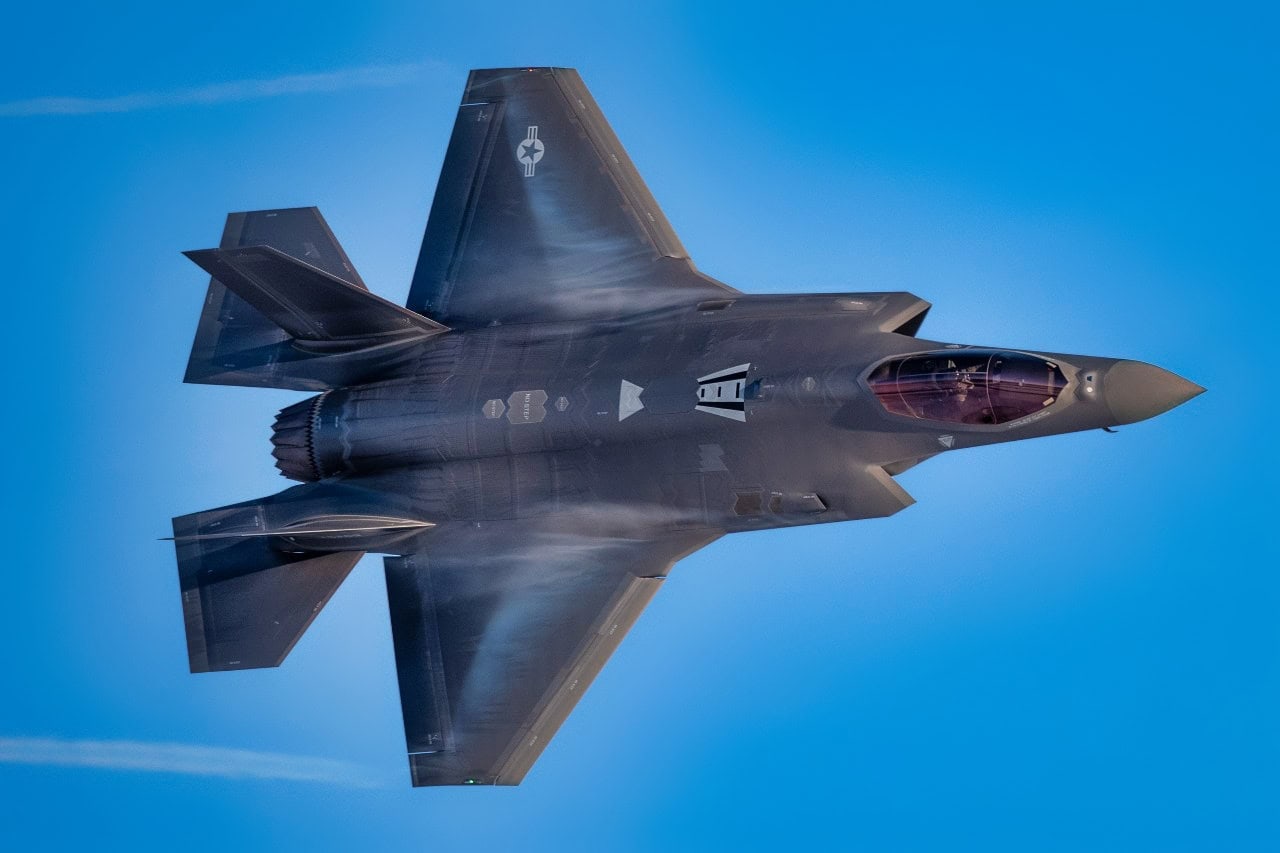
An F-35A Lightning II soars over Hill Air Force Base during a demonstration practice Jan. 10, 2020, at Hill AFB, Utah. The F-35 Demo Team is scheduled to perform at 22 airshows during the 2020 season. (U.S. Air Force photo by Senior Airman Alexander Cook)
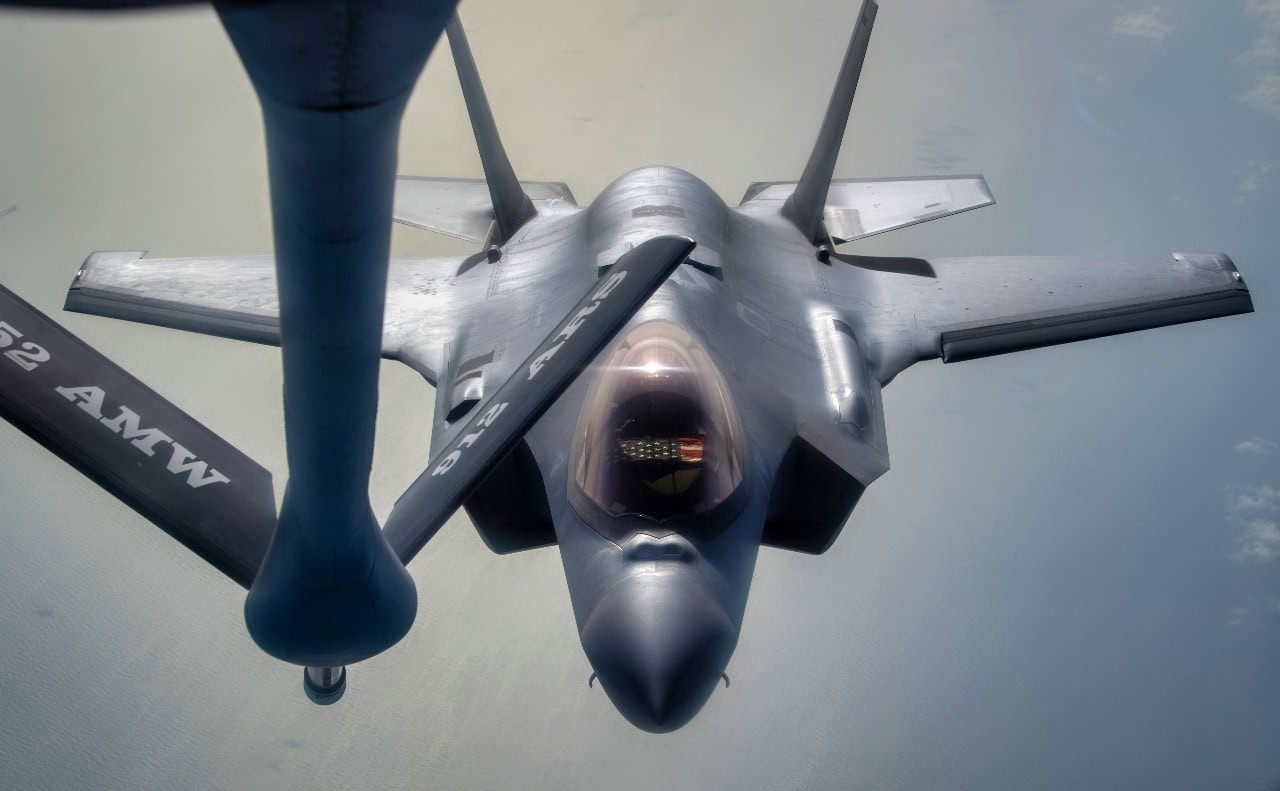
A U.S. Air Force F-35 Lightning II approaches a U.S. Air Force KC-135 Stratotanker over the U.S. Central Command area of responsibility, July 22, 2020. The F-35 Lightning II is an agile, versatile, high-performance, multirole fighter that combines stealth, sensor fusion and unprecedented situational awareness. (U.S. Air Force photo by Airman 1st Class Duncan C. Bevan)
After all, the warplanes Russia traditionally relies on are Soviet-era types, such as the Su-35, Su-30, and Su-34.
These airframes have proven effective in the war in Ukraine. But the Russians were forced to adapt their air war tactics to focus primarily on beyond-visual-horizon (BVR) strikes, due to the presence of NATO-provided air defenses in Ukraine. These tactics have worked well for Russia against Ukraine.
Russia’s Doctrine is Defensive
The question, of course, is whether such tactics would be effective against NATO, considering that NATO has its own air defenses (however dwindled after copious support has gone to Ukraine, depleting critical stockpiles), and the F-35 is technically more advanced than the bulk of the Russian warplanes in Russia’s air fleet?
Set aside arguments claiming the F-35 is overhyped (it is). The bottom line is that the number of F-35s in Europe is already impressive and, within a few years, will be more than sufficient to deter any potential Russian air attack (again, not counting the US force in Europe). And that’s the thing to remember here. Just what are the Russians seeking to do with their armed forces?
We’re presented with competing explanations from multiple Western elites.
On the one hand, the Russian Armed Forces are so weak that they are losing in Ukraine. On the other hand, though, the Russians are readying to enact a massive blitzkrieg into NATO-held Europe as soon as the year 2029. But this does not reflect the actual disposition of Russian forces.
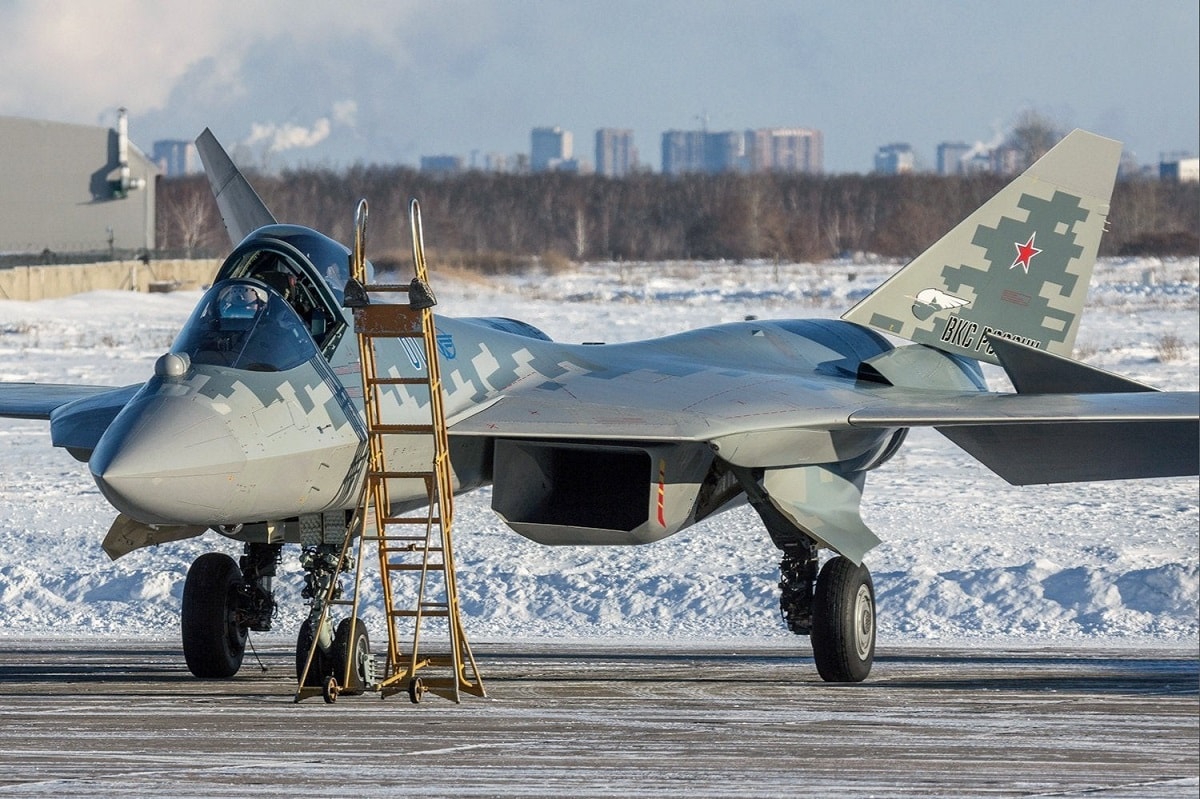
Su-57 Felon. Image Credit: Creative Commons.
The Russian Armed Forces are clearly assembled in a way that is primed for territorial denial rather than territorial aggrandizement.
Yes, the Russians invaded Ukraine.
In reality, however, the Russians have spent far more time and energy consolidating their vise-like grip on Eastern Ukraine and Crimea than they have at moving beyond those regions (that they already controlled before the war began, mind you).
Finland’s F-35s as the Final Proof
Given that so many vaunted fifth-generation F-35s are already in Europe, with many more on the way, how would the Russians effectively breach those defenses?
The answer is that Moscow is not going. Vladimir Putin has no real desire to conquer NATO’s European members. He’s attempting to do that which every Russian leader before him—going back to Ivan the Terrible—has struggled to do: create reliable buffer zones separating Russia’s core from their unruly neighbors (notably, in this case, from the Western powers).
Russia isn’t fixated on countering the massive number (and growing) of F-35s in Europe because Russia isn’t interested in invading NATO.
Russia is more invested in developing a comprehensive, layered air defense network consisting of systems, like the S-400 and S-500, than it is in building a rival force of fifth-generation warplanes to counteract (and overcome) the massive fleet of European F-35s that has been assembled.
There remain questions about the effectiveness of the S-400 and S-500 systems against American fifth-generation warplanes. Remember: in places like Syria, Iran during the 12-Day War, and Venezuela, Russian air defenses proved unable to so much as target F-35 warplanes, let alone shoot at them.
That’s because Europe has nothing to fear from Russia in terms of a potential invasion. It’s more like Russia fears an attack from NATO (which is one of the primary reasons behind their invasion of Ukraine back in 2022). That’s why the Russians are obsessively building a defensive perimeter that blocks all possible entry points from Europe into their territory.
Russian Air Defenses vs. Fifth-Generation Reality
It’s why Russia has prioritized the development and expansion of its national air defense capabilities over its Su-57 fleet. If anything, the Europeans are overreacting to events in Ukraine by spending gobs of money on more F-35s.
Alas, they have more than enough (especially when paired with America’s F-35s in the region) to repel a Russian air attack on NATO.
According to Warrior Maven, the first F-35As bound for Finland have already rolled out from the Lockheed Martin production line. They are expected to be formally delivered to Finland later this year.
Because these birds are not going to operate in an isolated fashion, they will form a flying network of sensors that are connected with other F-35s in Europe at any given time, the European F-35s will have a significant advantage in terms of situational awareness over the Russians if a fight ever did erupt between the two sides.
Europe’s Paranoia is Getting the Better of Them
But that won’t happen. Europe is delusional. Moscow doesn’t want to invade or attack Europe (unless the West attacks them first).
The F-35s for Finland (and Europe) demonstrate that deterrence between NATO and Russia in the air domain has been achieved. Europe and the United States should focus their industrial bases on developing robust air defenses and the ammunition to support them.
About the Author: Brandon J. Weichert
Brandon J. Weichert is the Senior National Security Editor at 19FortyFive.com. He was previously the senior national security editor at The National Interest. Weichert is the host of The National Security Hour on iHeartRadio, where he discusses national security policy every Wednesday at 8pm Eastern. He hosts a companion show on Rumble entitled “National Security Talk.” Weichert consults regularly with various government institutions and private organizations on geopolitical issues. His writings have appeared in numerous publications, among them Popular Mechanics, National Review, MSN, and The American Spectator. And his books include Winning Space: How America Remains a Superpower, Biohacked: China’s Race to Control Life, and The Shadow War: Iran’s Quest for Supremacy. Weichert’s newest book, A Disaster of Our Own Making: How the West Lost Ukraine, is available for purchase wherever books are sold. He can be followed via Twitter/X @WeTheBrandon.