
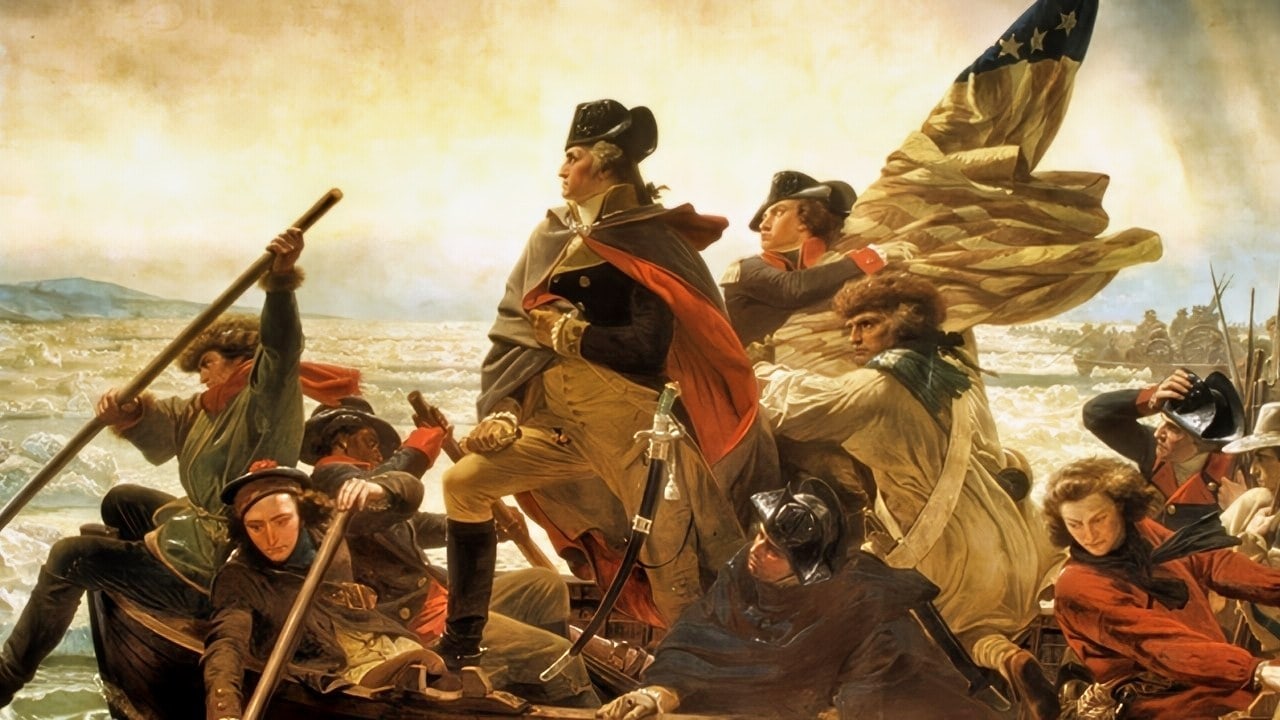
Summary and Key Points: Christian D. Orr, a senior defense editor and former Air Force officer, explores the early life of George Washington leading up to the American Revolution.
-This 19FortyFive report analyzes the pivotal influence of Washington’s half-brother, Lawrence Washington, a veteran of the War of Jenkins’ Ear, and the future president’s first career as a Virginia frontier surveyor.
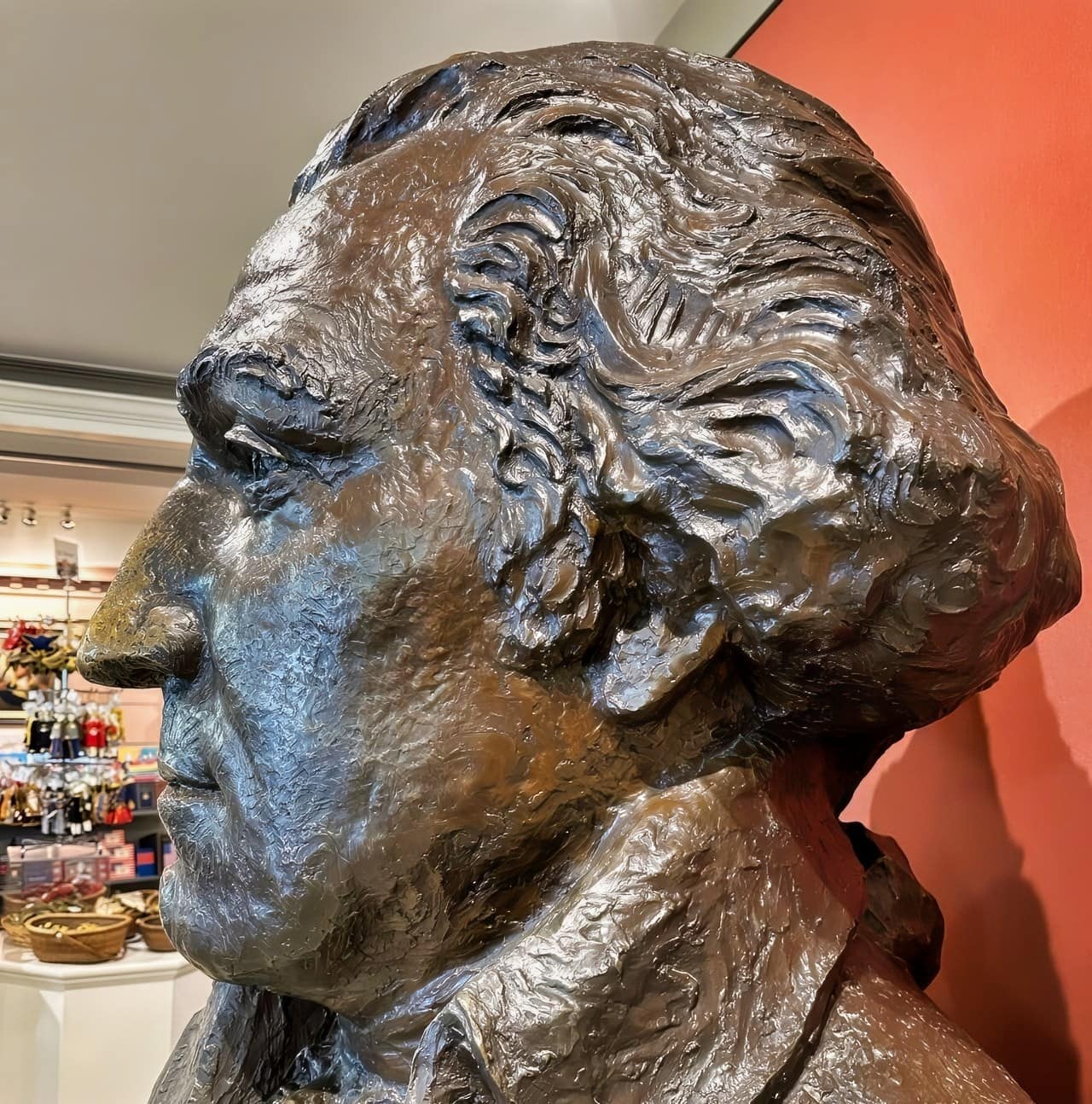
George Washington Bust at Mount Vernon. Image taken by Harry J. Kazianis for 19FortyFive back in 2022. All Rights Reserved.
-The analysis delves into Washington’s family lineage—including his parents Augustine and Mary Ball Washington—while examining his early forays into poetry and the 1751 journey to Barbados that defined his physical and professional resilience.
Quote of the Day By General George Washington: The Teenage Career That Shaped His Military Genius
“Real men despise battle, but will never run from it.” – George Washington
This quote belongs to George Washington, and it’s consistent with the viewpoints of a lot of America’s other Founding Fathers that, though war is an evil, it’s sometimes a necessary evil. (The American Revolution being the most germane case in point). It also brings to mind a quote from 21st century U.S. Army General Tommy Franks, who said that “No one hates war like a soldier hates war.” The unspoken addendum to that is that the soldier will fight on, out of a sense of duty and honor.
As I type these words, Presidents Day 2026 has already come and gone, but it’s still the month of February (Washington’s actual birthday took place on February 22, 1732). With this coming Fourth of July marking the 250th birthday of the United States of America, there’s no statute of limitations on mini-bios of the man rightfully known as “The Father of Our Country.”
Having previously focused the early part of Washington’s military career, as a young officer in the French and Indian War, this time we’ll look at the formative years that led to him choosing a military career in the first place. We will also take a deeper dive into his family’s background.
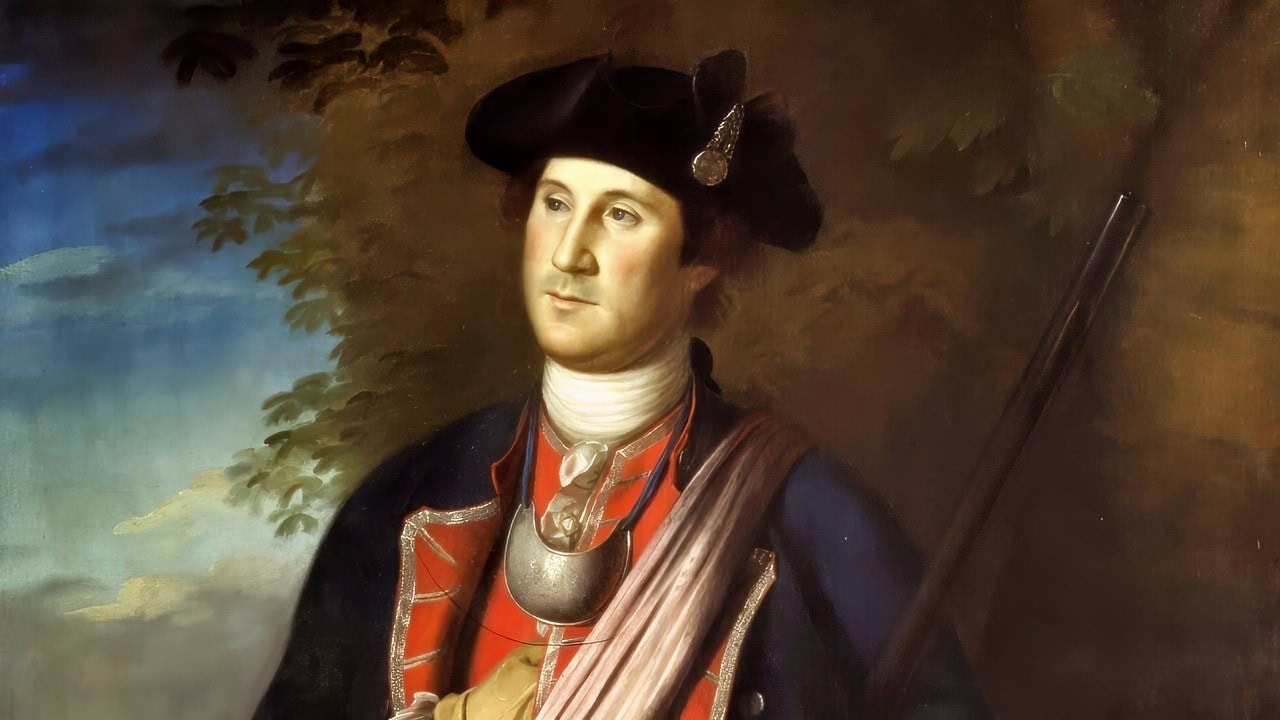
General George Washington Portrait. Image Credit: Creative Commons.
Parentage Profile
Like most of the Founding Fathers, Washington was born in Colonial America. (A notable exception was Alexander Hamilton, who was born in Charlestown on the Caribbean island of Nevis in the British West Indies, and grew up as an orphan in St. Croix). He was a subject of the British Crown. His birth took place at Popes Creek in Westmoreland County, Virginia. Little George only lived there until the age of three, when his family moved to Little Hunting Creek in 1735 before settling at Ferry Farm, near Fredericksburg.
George was the first of six children born to Augustine and Mary Ball Washington. As we’ve previously noted, little George did not have a close relationship with his father, who was a justice of the peace and a prominent public figure who had four additional children from his first marriage to Jane Butler. But what else do we know about “The Grandfather of Our Country?”
It’s known that he was born into a planter class sometime in 1694 (month and day unknown) in Westmoreland County, Virginia. True to form for the planter class, he owned several slave plantations, from which he derived the primary source of his wealth; Augustine also speculated in land development and owned an iron mine.
As for George Washington’s mother, Mary Ball, her own birth is somewhat shrouded in mystery. She was born sometime between 1707 and 1709 at either Epping Forest, her family’s plantation in Lancaster County, Virginia, or at a plantation near the village of Simonson, Virginia. Mary was the only child of Colonel Joseph Ball (1649–1711; a Burgess in the Colony of Virginia) and his second wife, Mary Johnson Ball (1672–1721).
Profile of a Half-Brother: Lawrence’s Lasting Legacy
Augustine died on April 12, 1743, when George was only 11 years of age, leaving the preteen lad to inherit Ferry Farm, while George’s half-brother, Lawrence Washington (born sometime in 1718 to Jane Butler and Augustine) was left to inherit Little Hunting Creek, renaming it Mount Vernon.
In sharp contrast to his distant relationship with his father, George had a very close relationship with Lawrence. This relationship is depicted in detail in the 1984 biographical CBS-TV miniseries George Washington. Lawrence made sure his kid brother was well taken care of. Among other gentlemanly pursuits, Lawrence trained his familial protégé in the fine artsof swordsmanship early on, as can be seen in the opening scene of the miniseries.
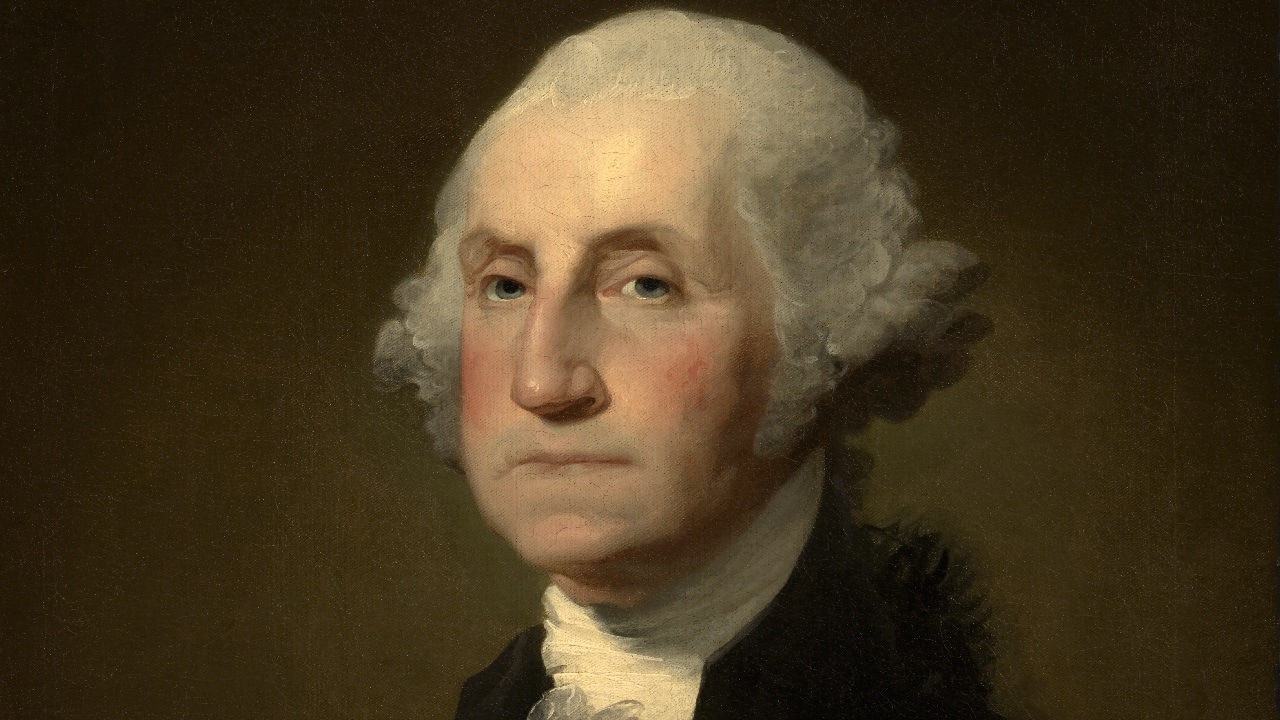
George Washington. Image Credit: Creative Commons.
Beyond being a literal and figurative big brother to George, Lawrence Washington was very much a member of the societal elite of Colonial America. He was commissioned as an infantry captain during The War of Jenkin’s Ear—King George II’s war in the West Indies against Spain—in 1739. He led his troops into battle during unsuccessful attack on Cartagena, Colombia in 1741, as well as attacks on the seaport of New Granada and against Panama and Guantanamo, Cuba.
After the war, in 1742, he was appointed Adjutant General for the Northern Virginia militia and was promoted to the rank of Major. Later, he was elected to the Virginia House of Burgesses in 1744
Sadly, Lawrence Washington died of tuberculosis on July 26,1752 at the age of 34, when George was only 20 years old. Lawrence had contracted the disease the year prior. Lawrence and George Washington embarked on a journey to Barbados (the only foreign trip George would take in his entire lifetime), spurred by the hope that the warm climate of that Caribbean island could help alleviate Lawrence’s condition. It went to no avail, but at least Lawrence had lived long enough to leave a lasting positive impact on George’s life.
George Washington, Teenage Surveyor
George Washington began his first career in 1748 at the age of 16. He was a surveyor, which was a respectable profession in 18th-century America and held the promise of social and financial advancement.
His first big break manifested when he was invited to join a survey party organized by his neighbor and friend George William Fairfax of Belvoir. The party’s objective was to lay out lots within a large tract along the western frontier of Virginia. Over their month-long expedition, George, who had already received a strong academic background in surveying via school exercises such as the Art of Surveying and Measuring Land, now gained real-life, hands-on experience living on the frontier. The long and winding roads—both literal and figurative—of this career path would soon lead him to embark on his second career in the profession of arms.
George Washington, Forlorn Teenage Love Poet?
Though George Washington later earned a reputation as a highly skilled dancer, he didn’t exactly have the sort of “ladies’ man” reputation that his fellow Founding Father Benjamin Franklin did.

Benjamin Franklin. Image Credit: Creative Commons.
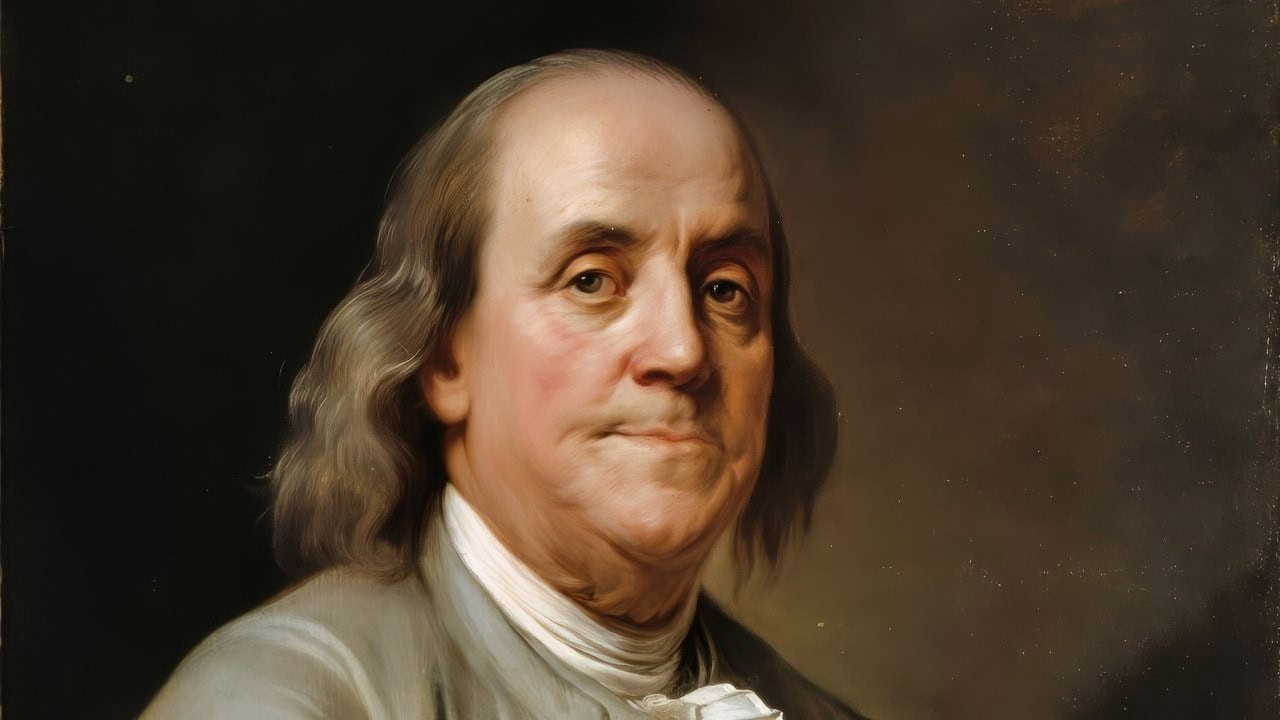
Benjamin Franklin. Image Credit: Creative Commons.
One wouldn’t typically apply the label “hopeless romantic” to George Washington. Yet, that experience as a surveyor, in addition to being a thrilling source of adventure for the teenage George, apparently inspired him to wax poetic as well.
Mind you, there is some debate as to whether Washington actually wrote the poems himself. The Library of Congress notes that, “Some scholars believe Washington did not write the poems commonly attributed to him, and that he copied them from a now unknown book.” However, until that “unknown book” is finally unearthed, other scholars will stick by their beliefs that these poems are in fact the lad’s original works. Courtesy of a segment of the George Washington’s Mount Vernon website titled “Washington the Love Poet,” here they are in full for your reading pleasure:
“From your bright sparkling Eyes, I was undone;
Rays, you have, more transparent than the sun,
Amidst its glory in the rising Day,
None can you equal in your bright arrays;
Constant in your calm and unspotted Mind;
Equal to all, but will to none Prove kind,
So knowing, seldom one so Young, you’l Find.
Ah! woe’s me, that I should Love and conceal,
Long have I wish’d, but never dare reveal,
Even though severely Loves Pains I feel;
Xerxes that great, was’t free from Cupids Dart,
And all the greatest Heroes, felt the smart.”
Upon further review, it can be deciphered that the first letter of each line spells out the name “FRANCES ALEXA.” Teenage George was making a thinly coded reference to his unrequited love interest of the time, Frances Alexander.
Frances was four years George’s senior and was the daughter of Philip Alexander (July 22, 1704 – July 19, 1753), a founder of the town of Alexandria, Virginia, just seven miles north of Mount Vernon. The Mount Vernon website adds that, “It’s not known why Washington never completed the poem. (After all, only a handful of lines remained, and he had already conquered the hardest letter, X.) Perhaps Washington’s eye was caught by another. Or perhaps his poem, which appeared under the date 1749-1750, was cut short for another reason—Frances Alexander became a married woman on February 16, 1749.”
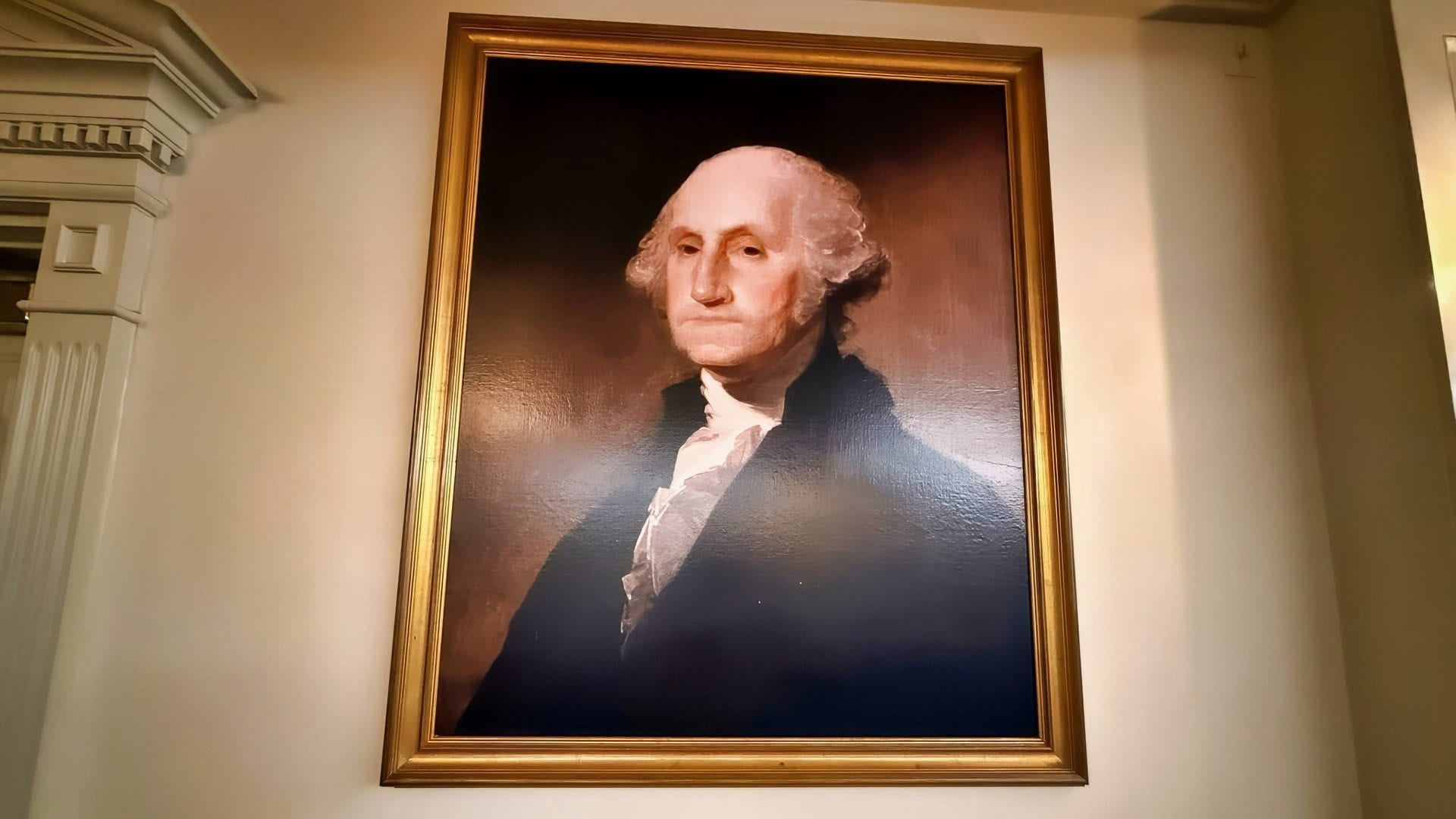
George Washington At Hall of Presidents at Walt Disney World. Image Taken by Harry J. Kazianis for 19FortyFive.com
Next comes this gem, the source of inspiration for which remains unknown:
“Oh Ye Gods why should my Poor Resistless Heart
Stand to oppose they might and Power
At Last surrender to cupid[‘]s feather’d Dart
And now lays Bleeding every Hour
For her that’s Pityless of my grief and Woes
And will not on me Pity take
Ile [sic] sleep amongst my most Inveterate Foes
And with gladness never with to Wake
In deluding sleepings let my Eyelids close
That in an enraptured Dream I may
In a soft lulling sleep and gentle repose
Possess those joys denied by Day.”
The website adds that, “It should be noted, however, that Martha Washington likely burned all of her correspondence with her husband. Whether any of those letters contained a poem for his beloved bride, history will never know.”
The marriage to his beloved Martha Dandridge Custis Washington didn’t take place until January 6, 1759, in the midst of the French and Indian War. George was a month shy of his 27th birthday by this time, while Martha was slightly more than halfway to her 28th birthday (born June 2nd, 1731).
About the Author: Christian D. Orr, Defense Expert
Christian D. Orr is a Senior Defense Editor. He is a former Air Force Security Forces officer, Federal law enforcement officer, and private military contractor (with assignments worked in Iraq, the United Arab Emirates, Kosovo, Japan, Germany, and the Pentagon). Chris holds a B.A. in International Relations from the University of Southern California (USC) and an M.A. in Intelligence Studies (concentration in Terrorism Studies) from American Military University (AMU). He is also the author of the newly published book “Five Decades of a Fabulous Firearm: Celebrating the 50th Anniversary of the Beretta 92 Pistol Series.”