
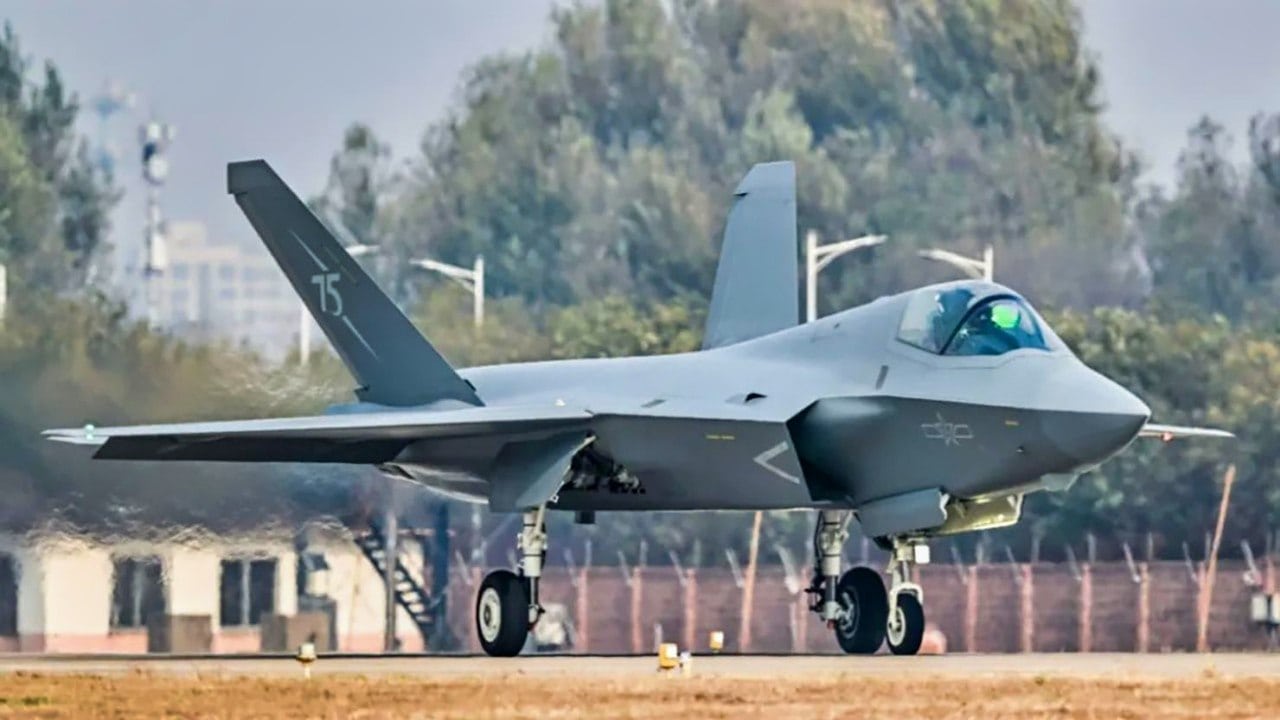
Summary and Key Points: The Shenyang J-35 “Gyrfalcon” is evolving from a developmental prototype into a mass-produced multirole platform designed for regional air dominance.
-While the land-based J-35A has entered service with the PLAAF, the naval variant is optimized for the Type 003 Fujian aircraft carrier using electromagnetic catapults (EMALS).
-Powered by twin WS-19 engines, the J-35 features a 12-missile “beast mode” and long-range PL-15 connectivity.
-Unlike the expeditionary F-35, the J-35 serves China’s A2/AD strategy by acting as a networked sensor node within the Western Pacific.
-With production targets reaching 300 units annually by 2030, China seeks to achieve quantitative stealth superiority.
-In 2 Words: China’s F-35?
“Beast Mode” Lethality: Why the J-35 and Its 12 Missiles Challenge the F-35
China’s J-35 fighter is widely described as an F-35 copycat because of its overall planform, which features twin canted tails, a blended fuselage, internal bays, and stealth shaping.
But the real question isn’t whether it resembles the F-35 visually—it’s whether it fills the same role.
While the J-35 likely borrows heavily from fifth-generation design cues and possibly intelligence, the jet is also shaped by China’s specific operational needs, particularly carrier aviation and regional A2/AD support.
What is the J-35 Fighter? Not Just F-35 Copycat…
The J-35 is China’s emerging fifth-generation stealth fighter. Often discussed as a stealth multirole fighter and a carrier-capable stealth fighter, this new platform is meant to complement the existing J-20.
While the J-20 is heavy, built for long-range air dominance and interception, the J-35 is more tactical, multirole, and potentially a workhorse platform.
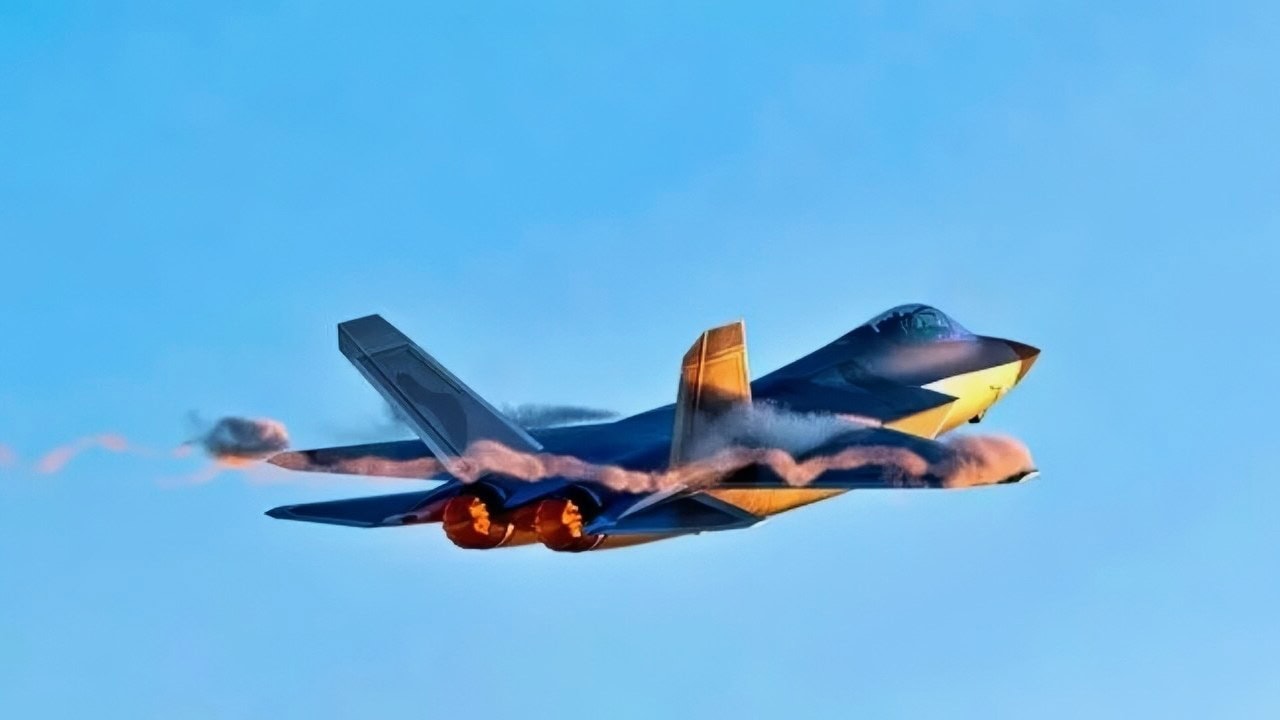
J-35A Fighter from China PLAAF. Image Credit: Creative Commons.
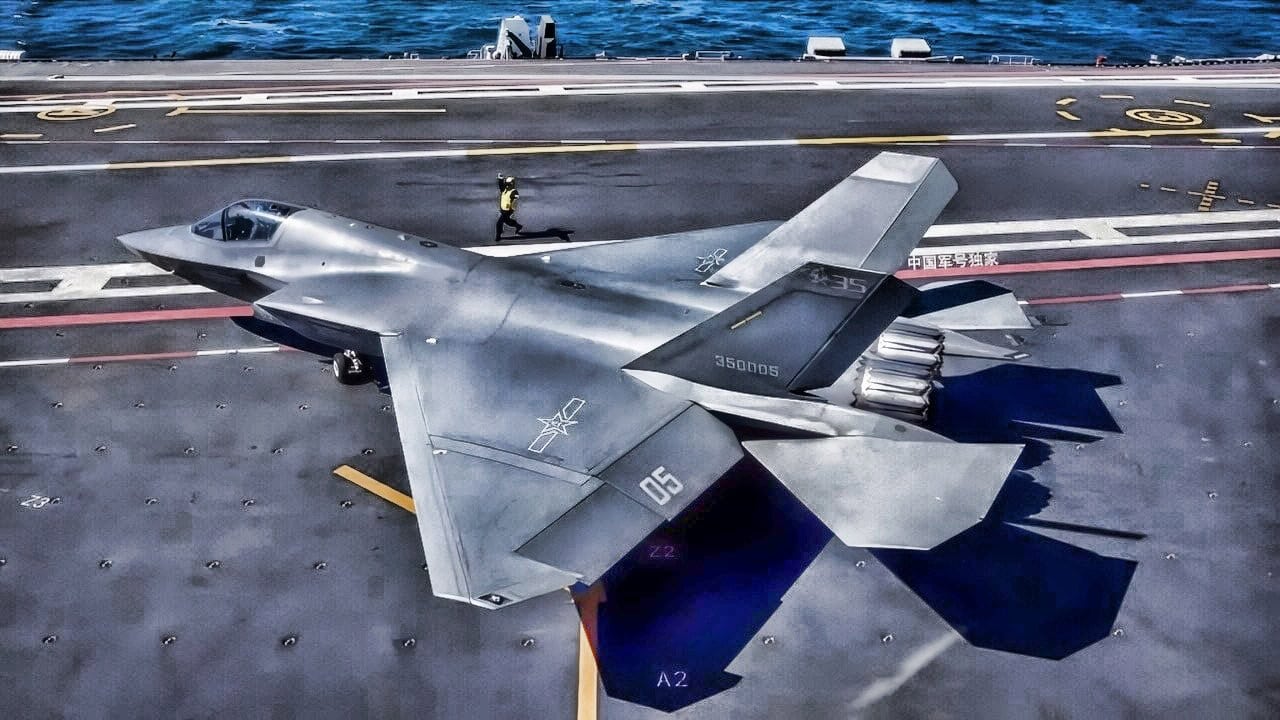
China J-35 Naval Stealth Fighter. Image Credit: PLAN.
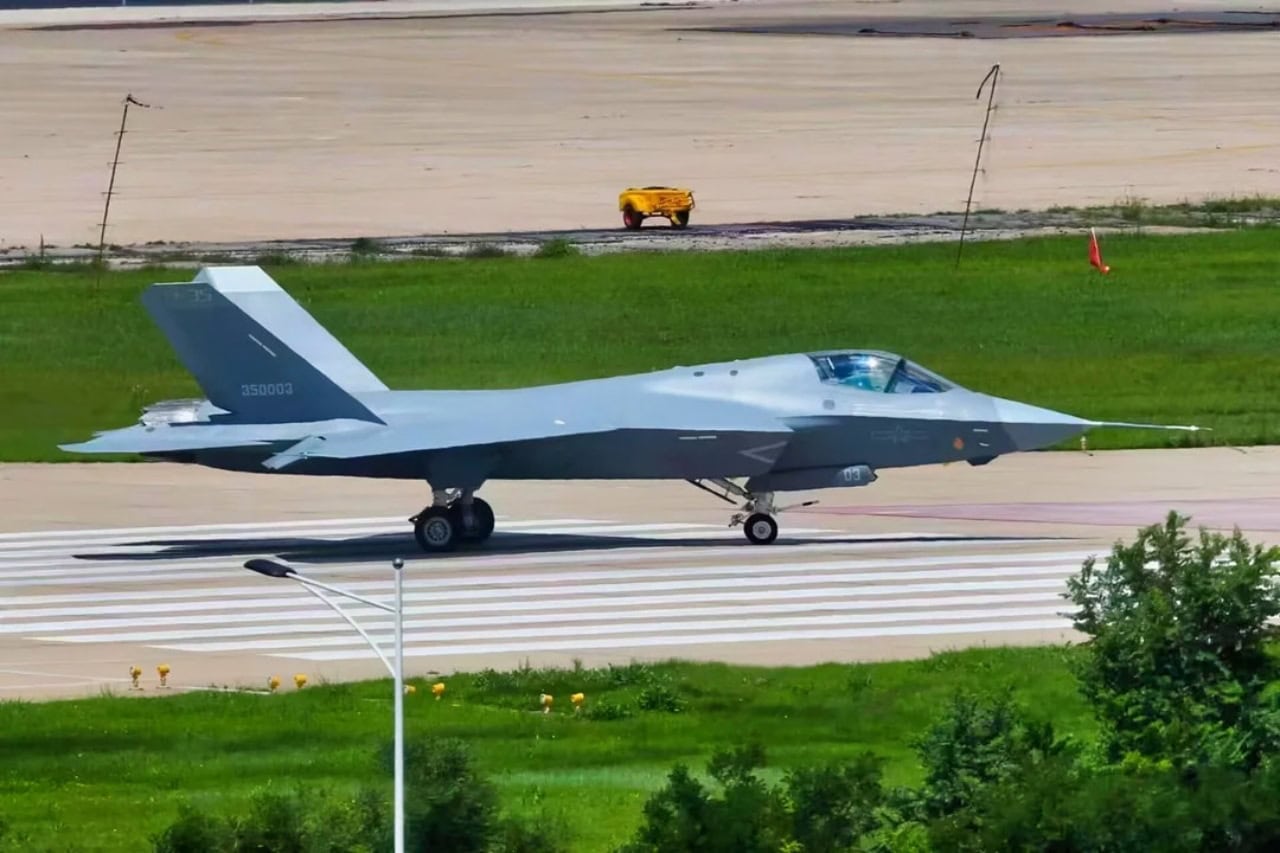
J-35 Fighter. Image Credit: Chinese Internet.
The fighter does share similarities with the F-35. The low-observable shaping cues are shared, including a chined nose, edge alignment, serrated doors, and internal weapon bays.
The general mission concept is also shared: a penetrating strike, high survivability in contested airspace, and a networked sensor/shooter role. But stealth geometry tends to be consistent across designers because the physics of low observability drive design choices, so the J-35’s shaping may not be plagiarism alone.
Copycat Clone?
The reason China is accused of plagiarizing the F-35 is that it has a documented history of accelerating development through reverse engineering, allegations of cyber espionage, and rapid iteration of foreign concepts. When this history is paired with the visual resemblance between the J-35 and F-35, the plagiarism narrative locks into place somewhat naturally.
While China’s new stealth fighter may reflect trends and habits in low-observability design imported into the Chinese industry, the resemblance between platforms alone does not automatically imply an equivalence in performance capability.
Important Differences: F-35 vs. J-35
The J-35 is not the F-35; several differences still favor the F-35.
First, engine and propulsion. The F-35’s F135 engine is a mature, high-thrust engine with deep sustainment infrastructure. China’s key historical hurdle, meanwhile, has been fielding reliable, high-performance turbofan engines at scale.
The fighter’s true performance will depend on the maturity of its engine (e.g., supercruise, sortie generation, maintenance burden). If the J-35’s engine is weak, it will affect not just top speed but operational readiness.
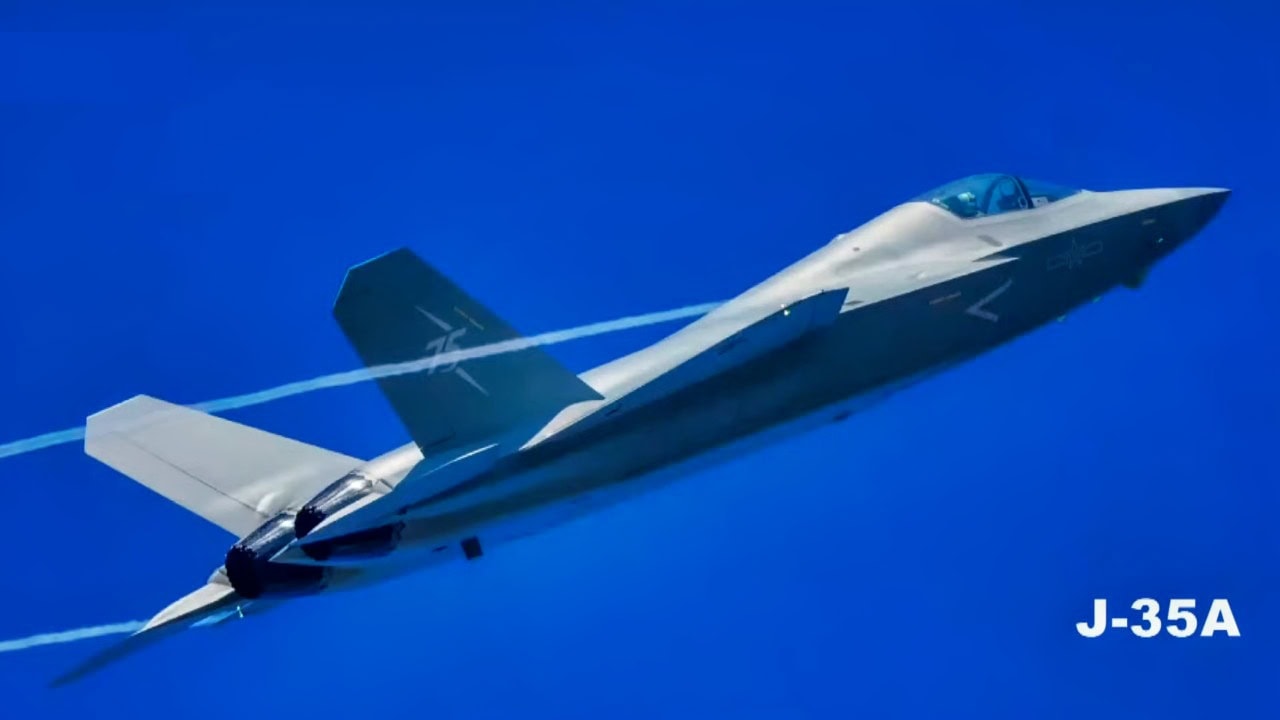
China J-35 Fighter. Image Credit: Creative Commons.
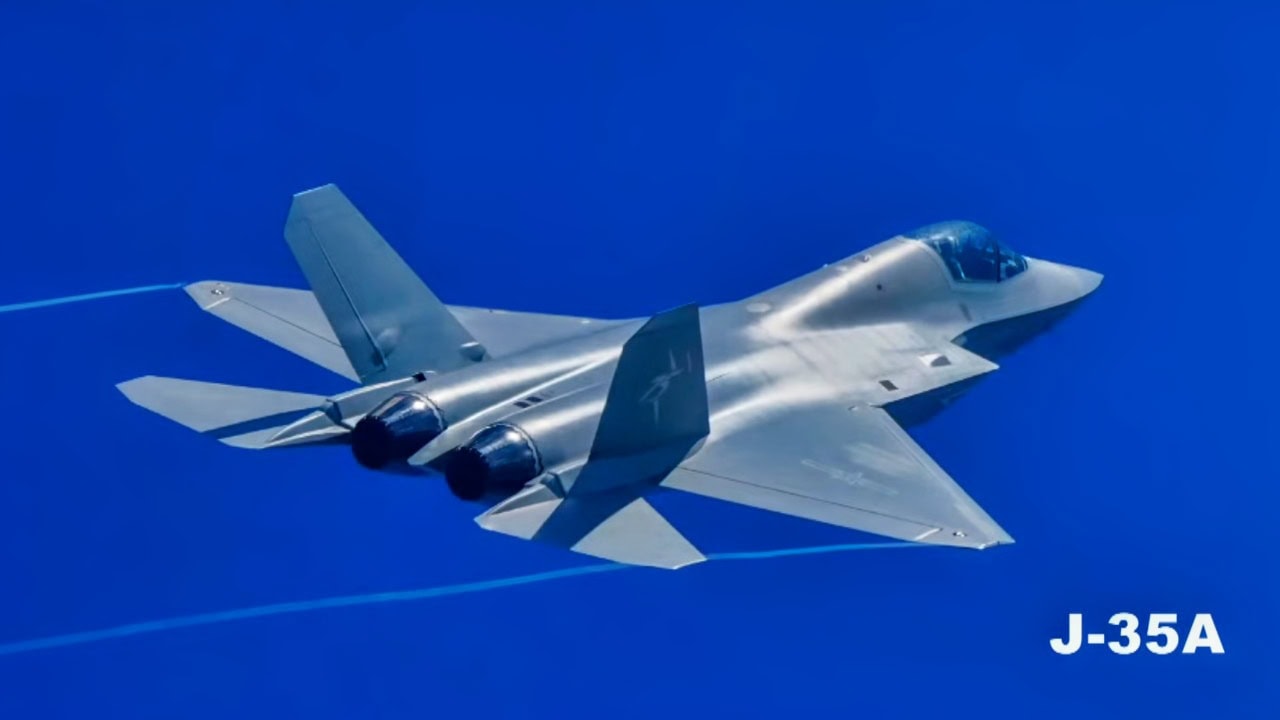
J-35 flying at Zhuhai Airshow 2024.
Second, the F-35’s defining advantage is not just stealth but sensor fusion, DAS-style distributed sensing, and networking/data links. The J-35 may field modern AESA radar and EOTS-like systems, but the fusion quality, pilot interface, processing power, and related capabilities are unlikely to match those of the F-35, which is essentially a flying software stack.
Third, China intends to use the new stealth fighter for naval aviation, bringing it closer to the F-35C conceptually.
Yet naval aviation imposes a broader set of challenges that the Chinese are still mastering; carrier operations require reinforced landing gear, corrosion management, low-speed handling requirements, folding wings, etc. China’s carriers and catapult systems are improving but still maturing.
Fourth, the F-35 is designed to support a coalition system for NATO interoperability, shared datalinks, and integrated kill chains with US ISR and space assets. The J-35, meanwhile, will operate inside China’s A2/AD umbrella with land-based SAM coverage, dense ISR, and proximity to bases. China doesn’t need this stealth fighter to operate as a global expeditionary platform like the F-35, but rather as a regional penetrator and sensor node.
What the J-35 Stealth Fighter Enables
The J-35 should provide China with a first-day-of-war strike capability against high-value targets such as air defenses, C2 nodes, airbases, and ships.
The J-35 will also provide stealth escort and air-dominance support for non-stealth assets such as the J-10 and J-16, capable of cueing long-range missiles and transmitting target data to other platforms. If the J-35 is carrier-based, it will extend the carrier group’s reach.
Strategically, the J-35 will need only to be a good-enough platform, produced in sufficient numbers, to complicate U.S. planning. Quantity matters in regional air defense, Aand if produced at sufficient volume, the J-35 strengthens China’s ability to contest airspace around Taiwan, the East China Sea, and the South China Sea.
For China to field a stealth naval fighter would mean reducing dependence on 4th-gen carrier fighters and enabling higher-risk operations closer to contested areas.
What We Don’t Know
But questions remain. China’s production scale and readiness rates are unclear. The J-35’s true stealth performance is unclear. Sensor fusion and EW performance under combat conditions is untested. The pilot training pipeline must be established and maintained. China will need to integrate the new carrier with still-maturing carrier technology.
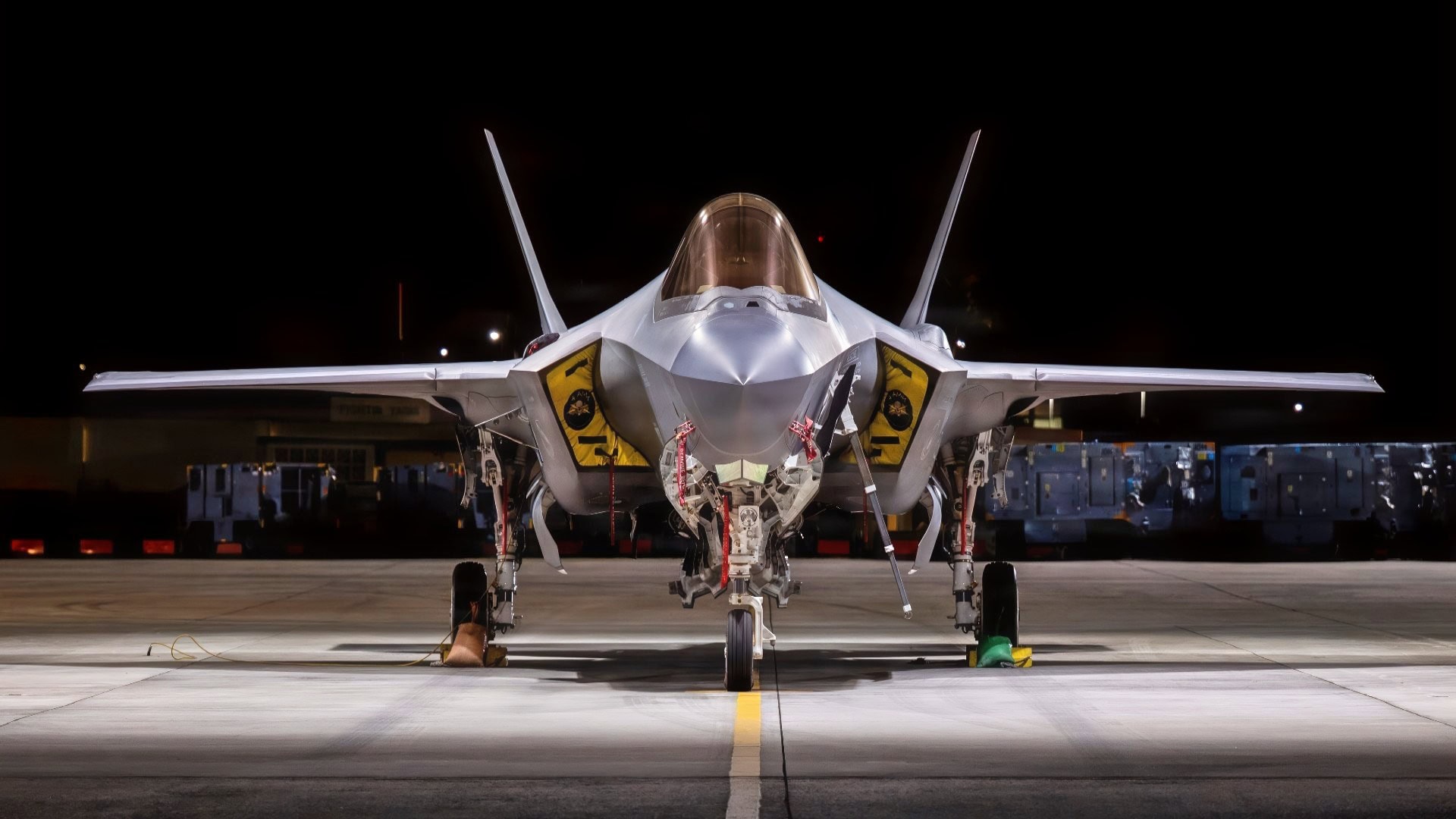
An F-35A Lightning II assigned to the 4th Expeditionary Fighter Squadron, deployed to Kadena Air Base, sit on the flight line during base-wide operational readiness exercise BH 26-1 at Kadena Air Base, Japan, Nov. 3, 2025. Kadena serves as a critical element in deterring potential adversaries through its demonstrated strength and commitment to regional security.
(U.S. Air Force photos by Senior Airman Jonathan Sifuentes)
Those are major systems that China is still working through, meaning the fighter is unlikely to have the real-world impact of the F-35 platform, at least in the immediate future.
So while the J-35 undoubtedly resembled the F-35, clearly not an accident, the J-35 will not mirror the F-35 in practice. Rather, the J-35 will serve China’s regional objectives, not the F-35’s expeditionary objectives.
To be effective, the fighter will need to be fielded at scale, with reliable engines, software, and stealth performance. But even if the J-35 falls short of the F-35’s performance metrics, the new Chinese platform could still raise the cost of air operations in the Western Pacific.
About the Author: Harrison Kass
Harrison Kass is an attorney and journalist covering national security, technology, and politics. Previously, he was a political staffer and candidate, and a US Air Force pilot selectee. He holds a JD from the University of Oregon and a master’s in global journalism and international relations from NYU.