

Summary and Key Points: A federal funding lapse triggered a partial government shutdown that shuttered public-facing attractions on Naval Air Station Pensacola, including the National Naval Aviation Museum. After stopgap funding expired at midnight on January 31, the base announced areas of public interest would close until further notice.
-The museum—one of the country’s premier collections of naval flight history—houses more than 150 restored aircraft across roughly 350,000 square feet, plus outdoor displays, simulators, cockpit trainers, and a large-format theater.
-The closure also blocks visitors who come for educational programs or to watch Blue Angels practice runs, pending new appropriations.
National Naval Aviation Museum Closes Indefinitely After Funding Lapse
The National Naval Aviation Museum – home to one of the country’s most significant collections of U.S. naval flight history – has closed to the public indefinitely after a federal funding lapse triggered a partial government shutdown.
The shutdown also impacted other public-facing sites on Naval Air Station Pensacola, cutting off access for visitors who typically come to tour historic aircraft, attend educational programs, or watch Blue Angels practice runs.
A Flagship Museum for Naval Flight History
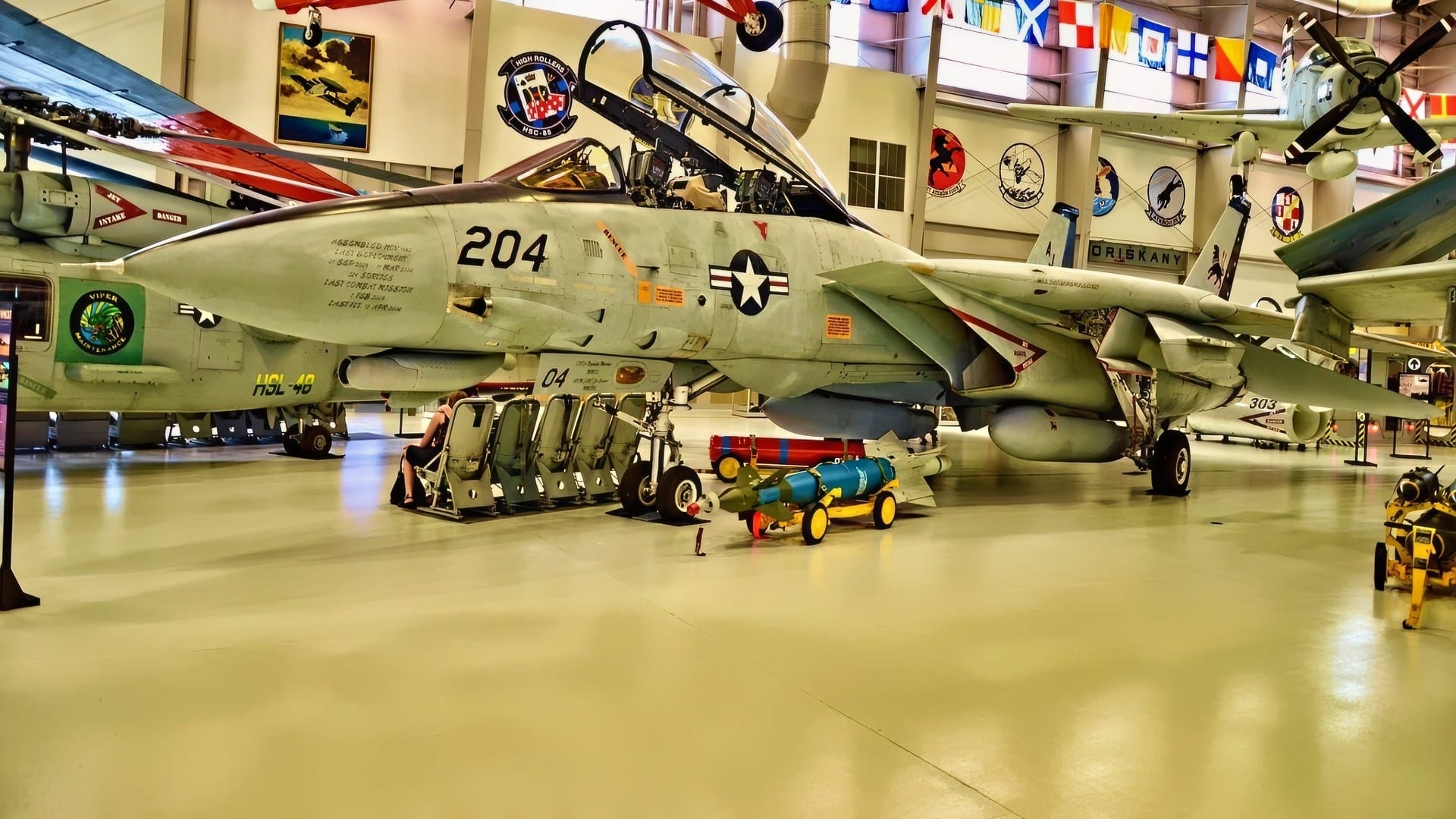
National Naval Aviation Museum. Image Credit: Creative Commons.
Located at Naval Air Station Pensacola, the museum describes itself as the world’s largest naval aviation museum and among Florida’s most-visited museums, with more than 150 restored aircraft and an exhibit footprint topping 350,000 square feet, plus outdoor display space.
The museum advertises attractions including flight simulators, cockpit trainers, and a large-format digital theatre, alongside galleries spanning early naval aviation through the jet age.
Some of the most well-known aircraft on display include variants of the F-14 Tomcat, alongside many other carrier aircraft types that defined Cold War and post-Cold War naval airpower.
Outside, the museum’s “Flight Line” area showcases additional aircraft tied to naval history and public interest, including the Blue Angels’ C-130 “Fat Albert,” as well as aircraft linked to landmark carrier operations.
National Naval Aviation Museum: Why It Was Shut Down
The decision to close the museum was made following a lapse in federal funding.
In a public notice circulated via official channels and published by regional outlets, NAS Pensacola stated that its public areas are closed until further notice due to the lapse, explicitly listing the National Naval Aviation Museum among the affected attractions.
Under the U.S. budget process, each fiscal year requires 12 annual appropriations bills to be passed by both chambers of Congress and signed by the president to fund government operations. If these bills are not enacted by the start of the fiscal year, the result is a government shutdown: federal agencies and activities that lack appropriations are forced to halt non-essential operations and close facilities that depend on those appropriations.
In this case, lawmakers failed to pass the remaining appropriations bills – including ones for Defense, Homeland Security, and several major federal functions – before the expiration of stopgap funding at midnight on January 31, 2026.
The Senate agreed on a funding package that combined five of the remaining bills with a two-week continuing resolution (CR) to keep the Department of Homeland Security funded, but the legislation did not reach a House vote in time. As a result, the Office of Management and Budget directed agencies to begin shutdown procedures at 12:01 a.m., affecting all unfunded departments and programs.
Negotiations were contentious because they were rooted in disagreements over spending priorities, but perhaps most controversial of all were the immigration enforcement provisions tied to Department of Homeland Security funding. Democratic senators insisted on changes to oversight of Immigration and Customs Enforcement in response to separate controversies over federal agents’ conduct and refused to back a funding bill that lacked those provisions.
Republicans, who control the House, declined to amend the spending package to satisfy those demands, leaving the Senate-passed deal stalled. With the Senate not voting again on expanded funding and the House absent a floor vote, the temporary funding lapsed and agencies moved into shutdown mode.
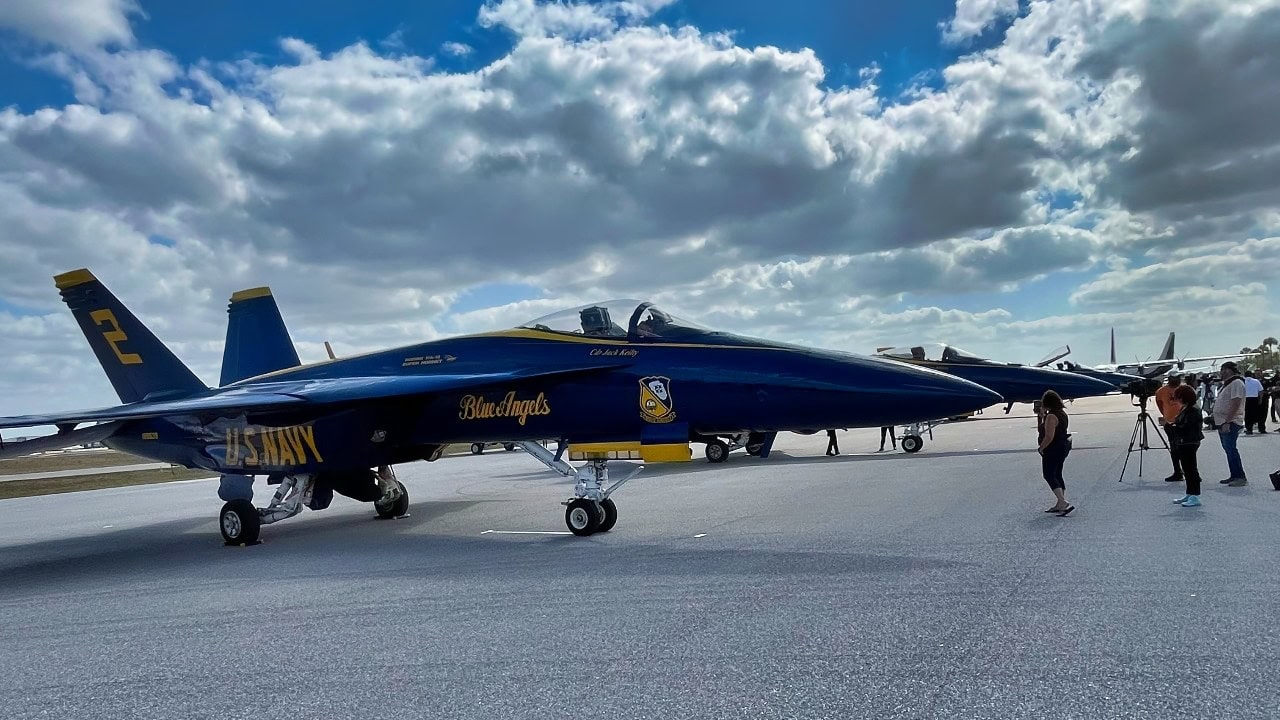
Blue Angels. Image Credit: 19FortyFive.com
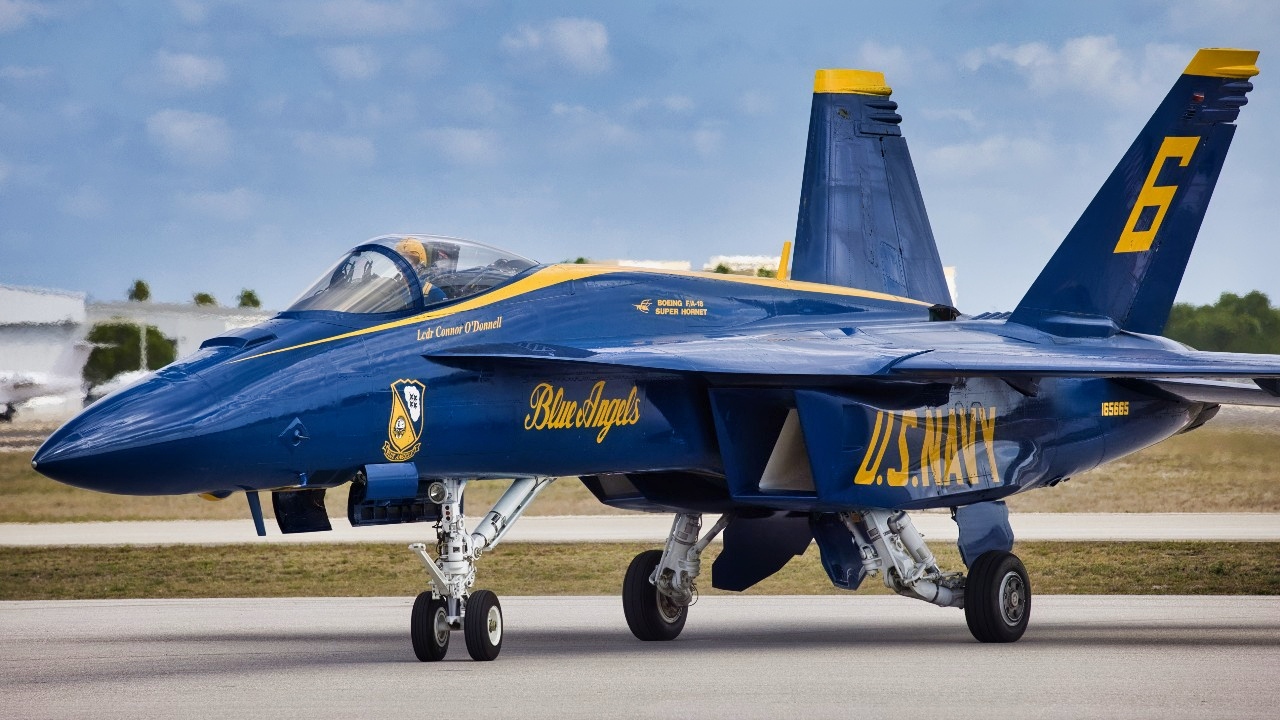
Blue Angels. Image Credit: 19FortyFive.com
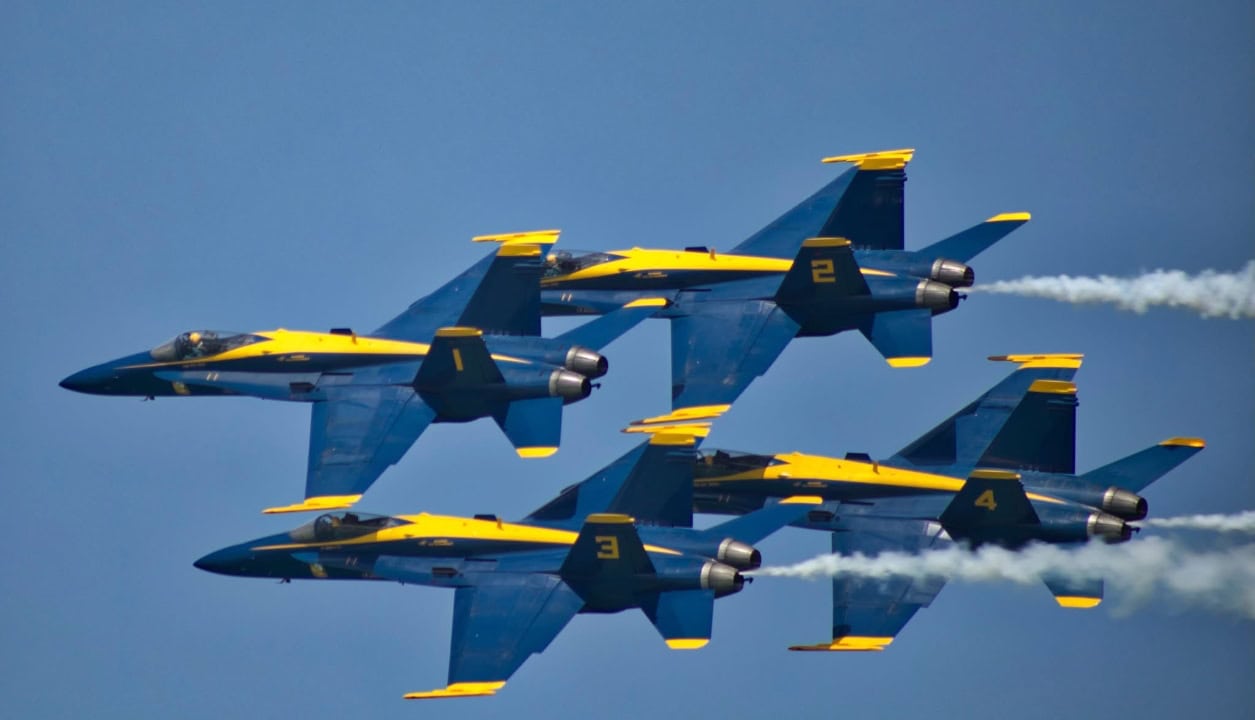
Blue Angels In Flight. Image Credit: 19FortyFive.com
Because the National Naval Aviation Museum operates on federal funds and staff support as part of Naval Air Station Pensacola’s public-access infrastructure, its operations depend on current appropriations – not past reserves or independent funding streams.
In a shutdown, federal museums that lack a separate funding stream are categorized as “non-essential” and must close until funding is restored. Let’s hope this indefinite closure is resolved soon.
About the Author:
Jack Buckby is a British researcher and analyst specialising in defence and national security, based in New York. His work focuses on military capability, procurement, and strategic competition, producing and editing analysis for policy and defence audiences. He brings extensive editorial experience, with a career output spanning over 1,000 articles at 19FortyFive and National Security Journal, and has previously authored books and papers on extremism and deradicalisation.