
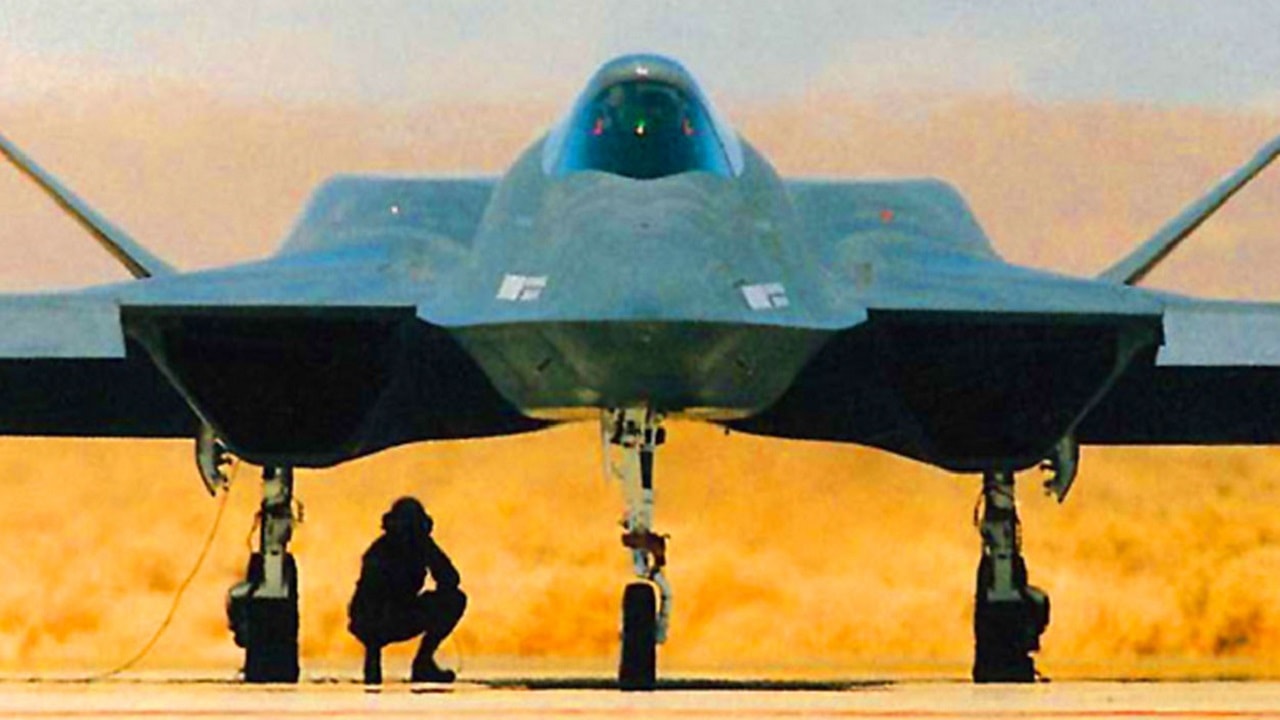
The Navy Almost Built a Carrier YF-23: The NATF-23 Story That Vanished in 1991
The YF-23 Black Widow II was a demonstrator aircraft built by Northrop Grumman to participate in the Advanced Tactical Fighter (ATF) competition.
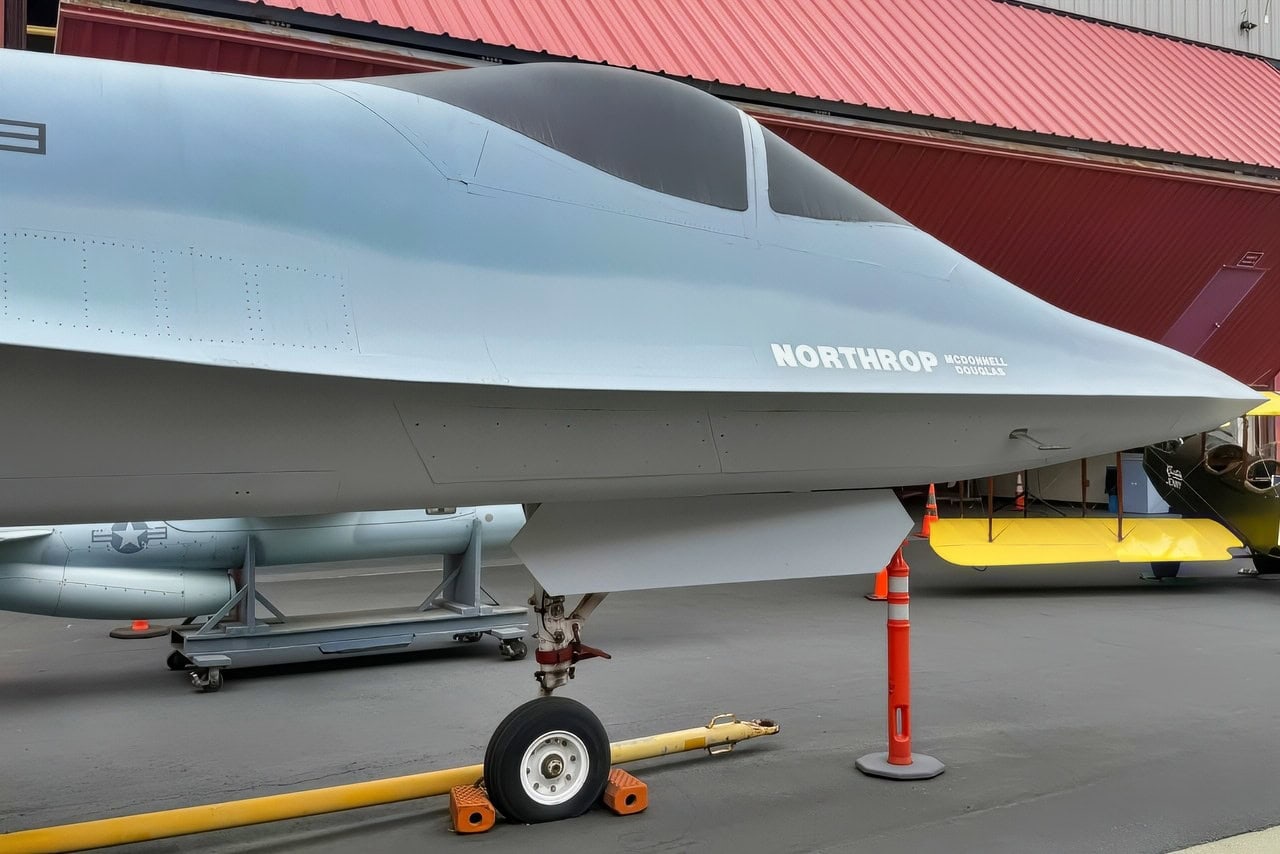
YF-23 Stealth Fighter. Image taken by Harry J. Kazianis for 19FortyFive.

YF-23 at the Western Museum of Flight. Image Credit: Harry J. Kazianis, 19FortyFive.com
In fact, the 19FortyFive.com team has spent numerous hours examining the only two YF-23 models. One is at the National Museum of the Air Force in Dayton, Ohio. The other is as the Western Museum of Flight. For reference, we have included images from the YF-23 visits conducted last summer in this article.
The YF-23 ultimately lost the competition to the YF-22, and ever since then, the aviation community has been locked into an unending debate about its merits and whether it was unfairly shafted. In the background of the affair, the U.S. Navy was planning to develop a naval version of the ATF to operate aboard its aircraft carriers.
As with the YF-23, plans for a Navy Advanced Tactical Fighter (NATF) would never materialize.
Why the Navy Wanted a Naval YF-23
To understand why the Navy considered an ATF derivative, it is helpful to recall the landscape of the late 1980s.
For myriad reasons, the F-14 Tomcat, which had been the cornerstone of naval aviation to that point, was being phased out of service.
The Navy required an aircraft with significantly improved survivability, extended range, and the ability to intercept targets at long range.
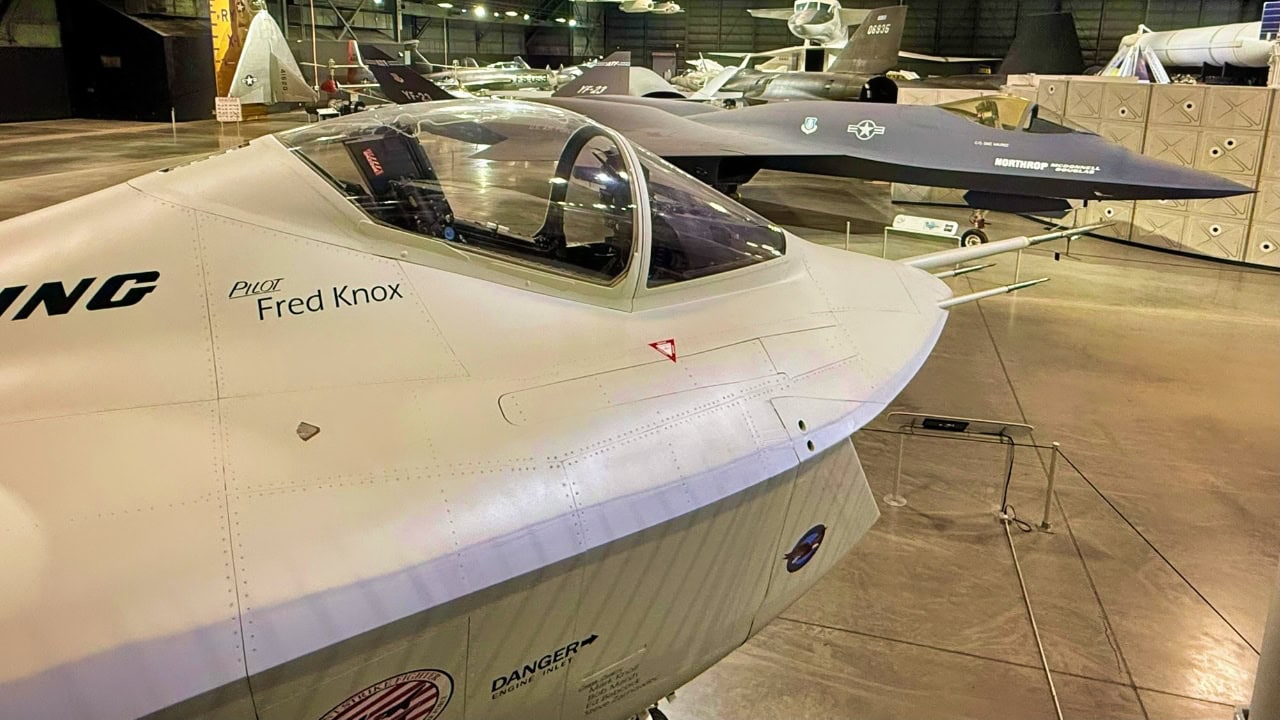
X-32 and YF-23 Together at U.S. Air Force Museum. 19FortyFive.com Image.
These criteria overlapped neatly with the Air Force’s push for stealth, supercruise, and advanced sensors.
The ATF program, initiated to counter emerging Soviet threats, provided a ready technological foundation, and Navy planners explored whether a naval version of whichever ATF won could assume the Tomcat’s role.
Among the two ATF contenders, the YF-23 held particular appeal for maritime air defense. Northrop’s entry was optimized for low observability, range, and high-speed efficiency, which made it ideal for BVM encounters.
In a blue-water context, where the mission is to detect, track, and kill bombers or cruise-missile carriers far from the carrier, those attributes are closely mapped to naval doctrine.
Compared to the YF-22’s celebrated thrust-vectoring and dogfight prowess, the YF-23 traded some post-stall agility for longer legs and a stealthier all-aspect signature, which in theory suited the Navy’s fleet defense problem set.
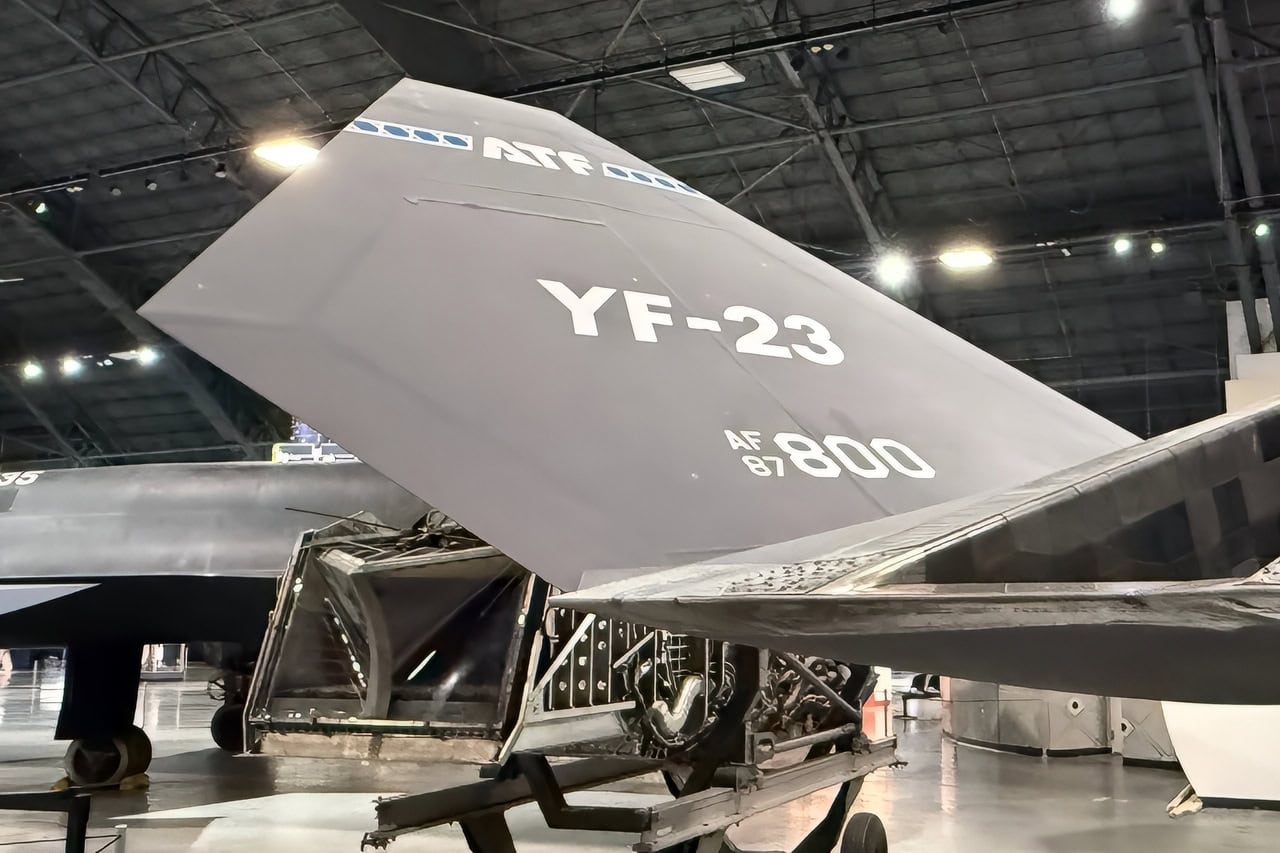
YF-23 Back End. 19FortyFive.com image.
The Problems of Nasalizing the ATF
Yet adapting a land-based stealth demonstrator into a carrier aircraft is never a matter of a few hooks and a paint job. The NATF-23 would have required substantial structural and aerodynamic changes, beginning with wing planform and strength.
Carrier approaches demand generous low-speed lift and precise handling in the groove, so proposals to navalize the YF-23 envisioned increasing wing area and reinforcing internal spars, while also hardening the fuselage for the shock of catapult launches and arrested landings.
The landing gear would have required a comprehensive redesign with reinforced struts and a strengthened nose gear, and the fuselage would require an integrated arrestor hook capable of withstanding repeated deck cycles.
Such redesigns add weight and shift the center of gravity, which in turn imposes additional aerodynamic and structural constraints.
Open-source technical commentary on the NATF-23 repeatedly emphasizes that these were not minor tweaks but deep surgery to the airframe’s load paths and flight-envelope assumptions.
The YF-23’s stealth profile further complicated its naval prospects. The aircraft’s smooth, blended surfaces and diamond planform were carefully sculpted to achieve a low radar cross-section. Carrier suitability would almost certainly have forced the addition of a wing-fold mechanism to meet elevator and hangar footprint constraints and embedding fold joints without compromising low observable edges and materials is a nontrivial design exercise.
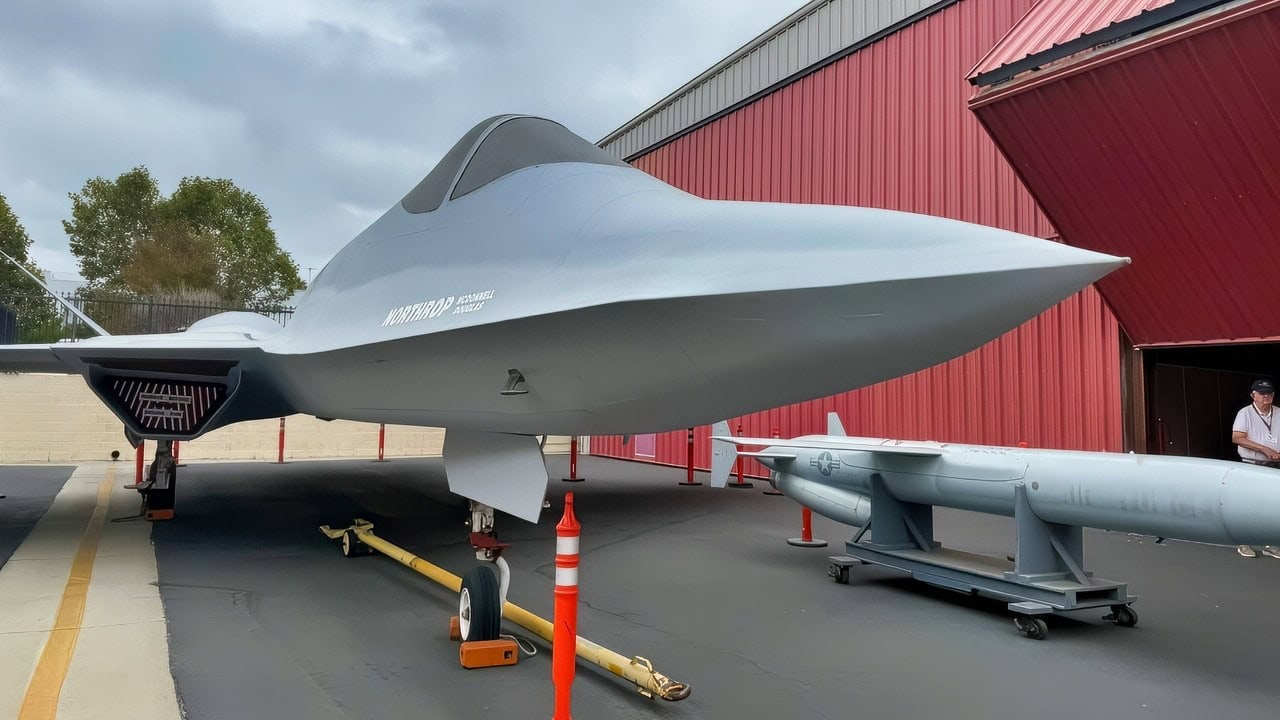
YF-23 at Western Museum of Flight. Image: 19FortyFive.com
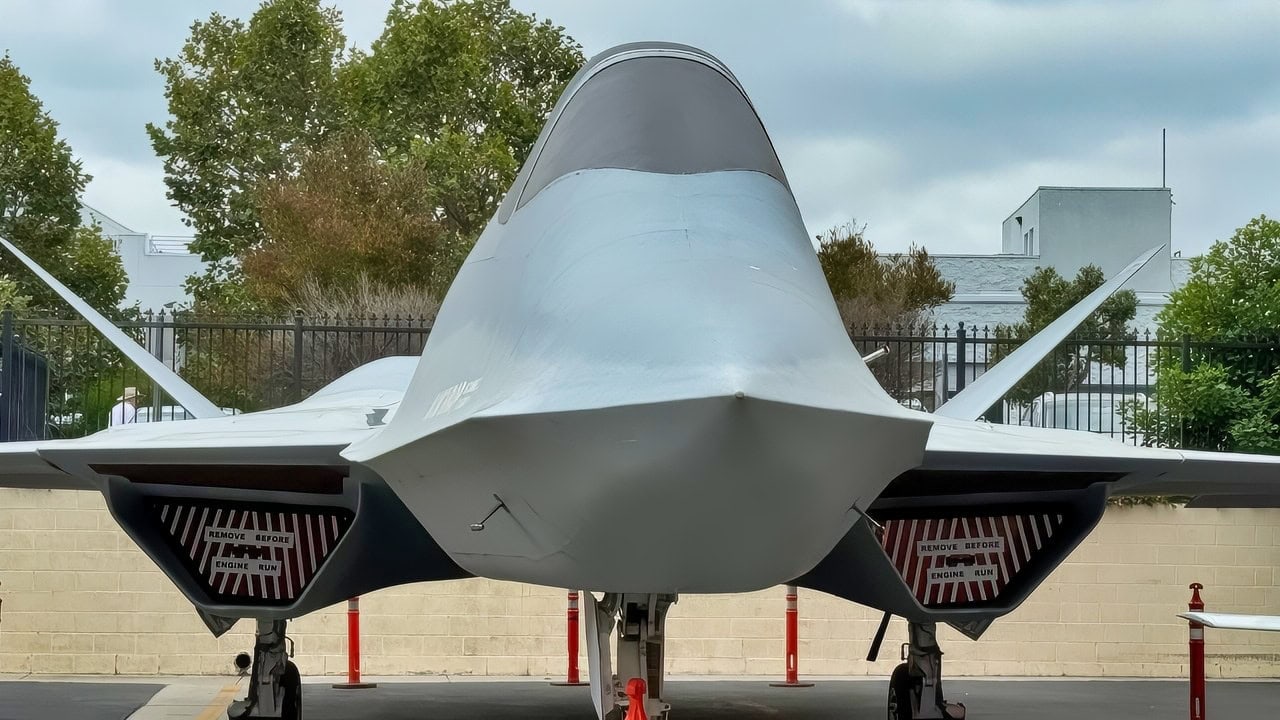
YF-23 at Western Museum of Flight. Image: 19FortyFive.com
Designers would have had to preserve the planform alignment and manage seam tolerances, so they did not become radar beacons when salt, grime, and deck rash took their inevitable toll.
Analysts revisiting the NATF-23 concept in light of modern Navy sixth-generation studies underscore that integrating folding structures into a stealth airframe was among the most delicate aspects of any naval ATF proposal.
The YF-23’s buried S-duct inlets and shielded exhausts reduced radar and infrared signatures, but they were tuned for high-speed efficiency.
The Navy’s recovery pattern, with high angles of attack and dynamic power corrections, stresses an engine-inlet-exhaust system in very different ways.
Some NATF-23 discussions suggested the potential need for exhaust modification and possibly the addition of thrust-vectoring or canard-like surfaces to enhance low-speed authority during carrier approaches and bolters, although the ATF prototypes themselves did not rely on thrust-vectoring for their baseline control.
Whether such features would have survived the stealth bill of materials is unclear, but the fact that the topic arose shows how far from a straight naval “conversion” the effort would have been.
The Naval Stealth Fighter That Could Have Been
As the Soviet Union dissolved in 1991, the existential raid threat that had underpinned the Tomcat’s original mission receded.

F-14 Tomcat. Image by 19FortyFive.com
Defense budgets tightened dramatically throughout the early 1990s, and appetite for a high-risk, high-cost navalization of a fifth-generation airframe evaporated.
The Navy opted instead for a more affordable and flexible path, evolving the Hornet into the F/A-18E/F Super Hornet and accepting the trade of extreme range and speed for multirole versatility, lower costs, and faster acquisition.
In official summaries, the Navy’s ATF exploration is described as having been set aside because of costs, a concise explanation that captures the broader currents of post-Cold War procurement as well as any paragraph-long brief could.
The NATF-23 reads like a fighter that simply arrived before its time.
It was conceived to meet a world that vanished just as it came into view, and its fortunes were yoked to a joint-service gambit that could not survive the budgetary and political climate of the early 1990s.
Yet its central idea feels more relevant now than it did the day the Navy folded the NATF tent.
If the next-generation carrier fighter emerges with a blended wing body, buried inlets, and a preference for reach and sensors over post-stall acrobatics, the ghost of the naval YF-23 will be there on the flight deck, realized at last in modern composites and code
About the Author: Isaac Seitz
Isaac Seitz, a Defense Columnist, graduated from Patrick Henry College’s Strategic Intelligence and National Security program. He has also studied Russian at Middlebury Language Schools and has worked as an intelligence Analyst in the private sector.