
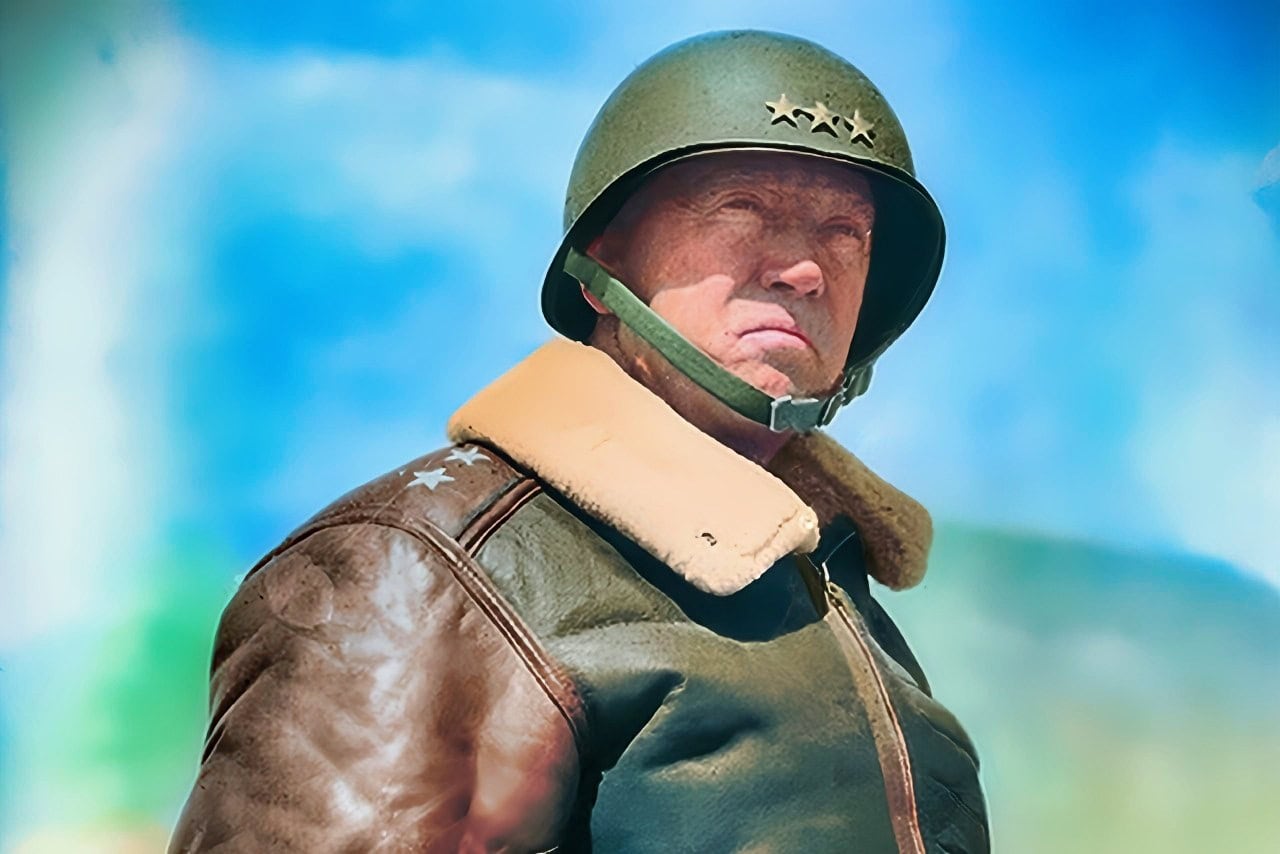
Summary and Key Points: Isaac Seitz, a Defense Columnist and Strategic Intelligence expert, explores the turbulent 1945 transition of General George S. Patton Jr.
-After leading the Third Army across the Rhine, Patton’s tenure as Military Governor of Bavaria collapsed under the weight of the de-Nazification controversy.
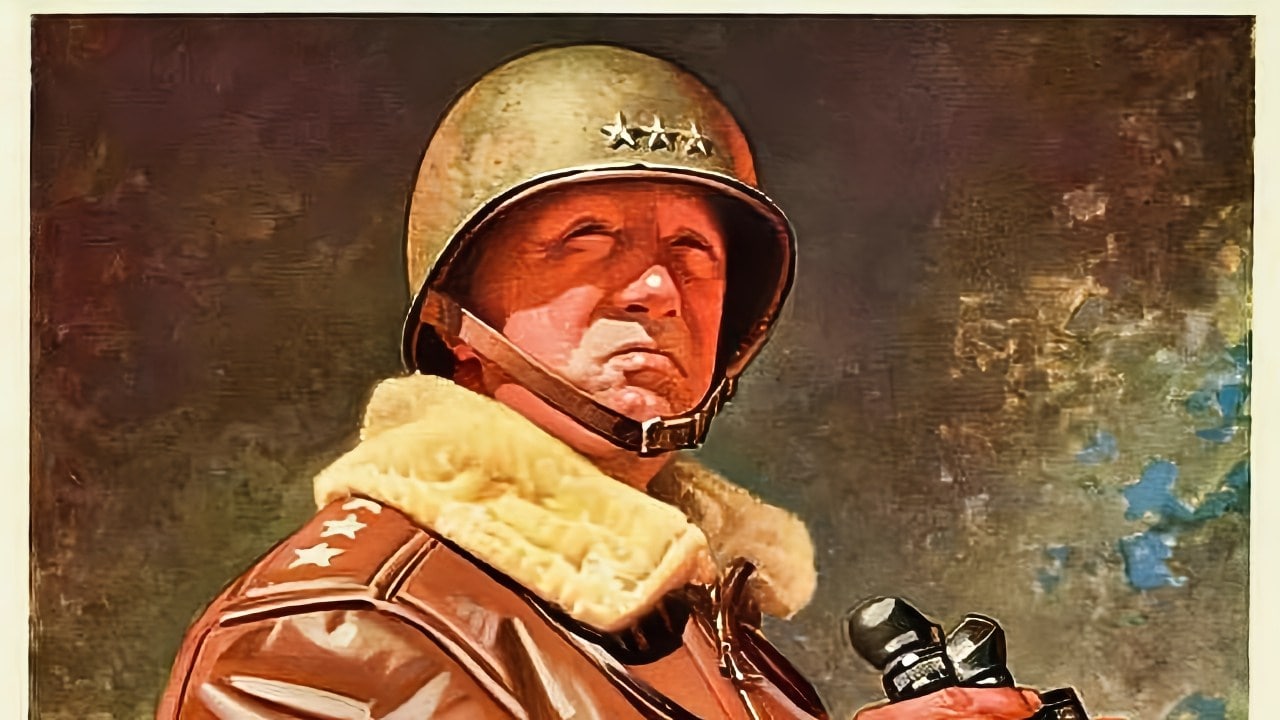
General George Patton. Image Credit: Creative Commons.
-His blunt comparison of the Nazi Party to U.S. political parties led General Dwight D. Eisenhower to relieve him of command.
-This 19FortyFive analysis scrutinizes Patton’s “exile” to the 15th Army and his subsequent fatal 1938 Cadillac crash in Mannheim, evaluating the legacy of a man built for war but broken by peace.
This Quote of the Day Finds U.S. Army General George Patton at a Crossroads
“I believe in the old and sound rule that an ounce of sweat will save a gallon of blood.” – U.S. Army General George Patton
General George S. Patton is remembered today for courage and leadership during the Second World War.
Under his command, the Americans drove the Germans and Italians out of Africa, liberated Sicily, and stormed through France. Despite his eccentric personality and his propensity to butt heads with other commanders (especially the British), Patton always fulfilled his assignments to the best of his abilities. When 1945 rolled around, Patton had to deal with his toughest assignment to date: the transition from a soldier to a civil servant.
The Final Moments of the War
General George S. Patton Jr. began the year 1945 at the height of his military fame, his Third Army carving an indelible mark across Europe as Nazi Germany collapsed under the weight of the Allied advance. His tanks had swept across France with unprecedented speed, liberated towns and concentration camps, and fought with relentless aggression in the culminating battles of the war.
In March, with the Rhine River standing as one of Germany’s last major defensive obstacles, he executed an audacious crossing at Oppenheim, a move that bypassed the planned ceremonial crossings of other armies and cemented his reputation for bold, fast, and fiercely competitive action.
Patton entered the spring of 1945 as perhaps America’s most celebrated field commander, convinced he was doing the work he had been born to do. Yet the end of the war would usher in a series of frustrations, political missteps, and personal conflicts that revealed the profound misalignment between Patton’s temperament and the world that emerged after Germany’s surrender.
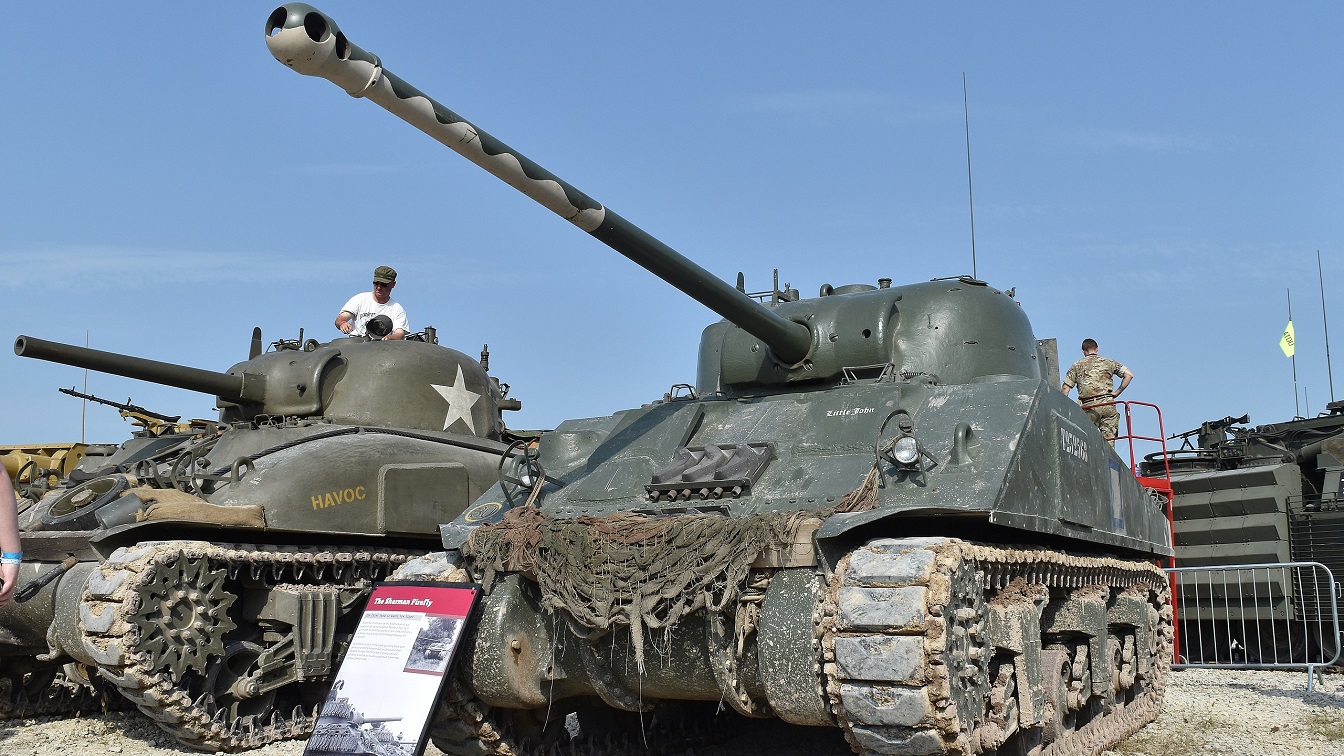
Serial No:- 16912 Official designation:- M4A4 Tank Medium 17Pdr. Total production:- 2,100-2,200 Main armament:- QF 17-pounder Anti-tank Gun The Firefly was a British modification of the M4 Sherman, with a 17 pounder gun replacing the usual 75mm. This gun was able to puncture the armour of a Tiger I or Panther, making the Firefly one of the few Allied tanks genuinely feared by Axis forces. This example comes from the Bastogne Barracks in Belgium, part of the Belgian Royal Military Museum. It was manufactured in the USA in 1942 and delivered to Europe in 1943 carrying the running number ‘USA 3017218’. It was converted to a Firefly in early 1944 and saw British service as ‘T232568’. She is fully operational and is seen in the ‘Tank Park’ after making a guest appearance at TankFest 2019. The Tank Museum, Bovington Camp, Dorset, UK.
When the guns finally fell silent in May 1945, Patton found himself confronting the uncomfortable reality of peace. As combat operations ceased, the U.S. Army reorganized for occupation, and Patton was appointed military governor of Bavaria while retaining command of the Third Army.
On paper, it was a prestigious position: he was responsible for a large swath of southern Germany during one of the most important transitional periods in European history. Yet for Patton, whose talents lay unmistakably in maneuver warfare, leadership under fire, and the orchestration of vast military operations, the assignment was an ill-fitting burden.
It required administrative precision, political sensitivity, and diplomatic skill all of which Patton either lacked or had no interest in cultivating. He believed deeply in order, responsibility, and discipline, but he was far less adept at the slow, bureaucratic work that accompanies nation-building.
The De-Nazification Controversy
Almost immediately, Patton clashed with American civil authorities over the policy of de-Nazification, which demanded the removal of individuals with ties to the Nazi Party from public positions. Patton felt the policy was impractical and, if applied rigidly, potentially disastrous. In his view, Germany needed experienced administrators, engineers, and civil servants to prevent collapse.
Many Germans had joined the Nazi Party not out of ideological zeal but because it was necessary for career advancement under the regime. To Patton, dismissing them en masse risked both chaos and the possibility that Germany would become fertile ground for Soviet influence. His strategic instincts remained sharp, and he saw the Soviet Union as the next major threat to Europe.
But Patton expressed these concerns with his typical bluntness, unaware or uncaring about how they would be interpreted in the charged political atmosphere of postwar Europe.
His unfiltered remarks attracted press attention and mounting criticism. In one notorious moment, Patton compared former Nazis to members of the Republican and Democratic parties in the United States, implying that party membership did not necessarily reflect one’s convictions. For journalists already wary of his fiery rhetoric, controversial statements, and past disciplinary incidents, this became a sensational story.
The American public, still learning of the full horrors of the Holocaust, reacted sharply. U.S. policymakers were infuriated. Allies questioned the stability of American occupation governance.
And Patton, convinced he was acting pragmatically rather than morally equivocating, found himself at the center of a political storm he was unequipped to navigate.
Patton Relieved of Command
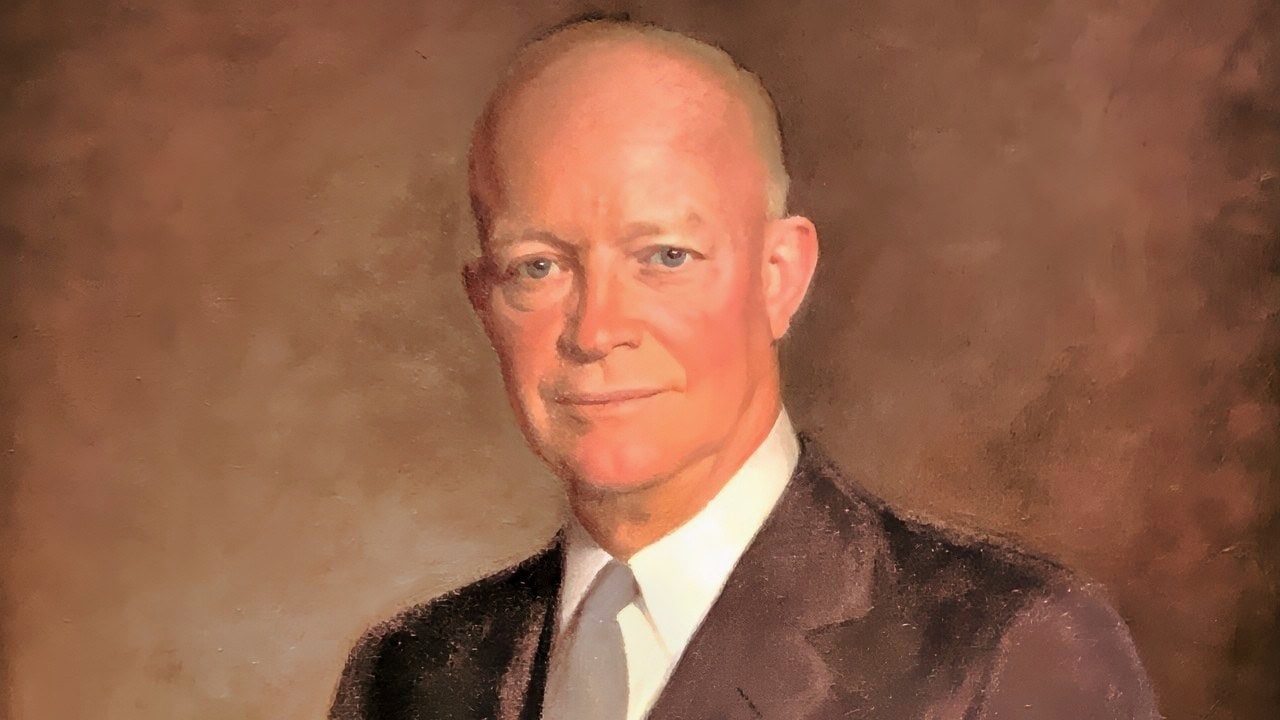
Dwight D. Eisenhower President. Image Credit: Creative Commons.
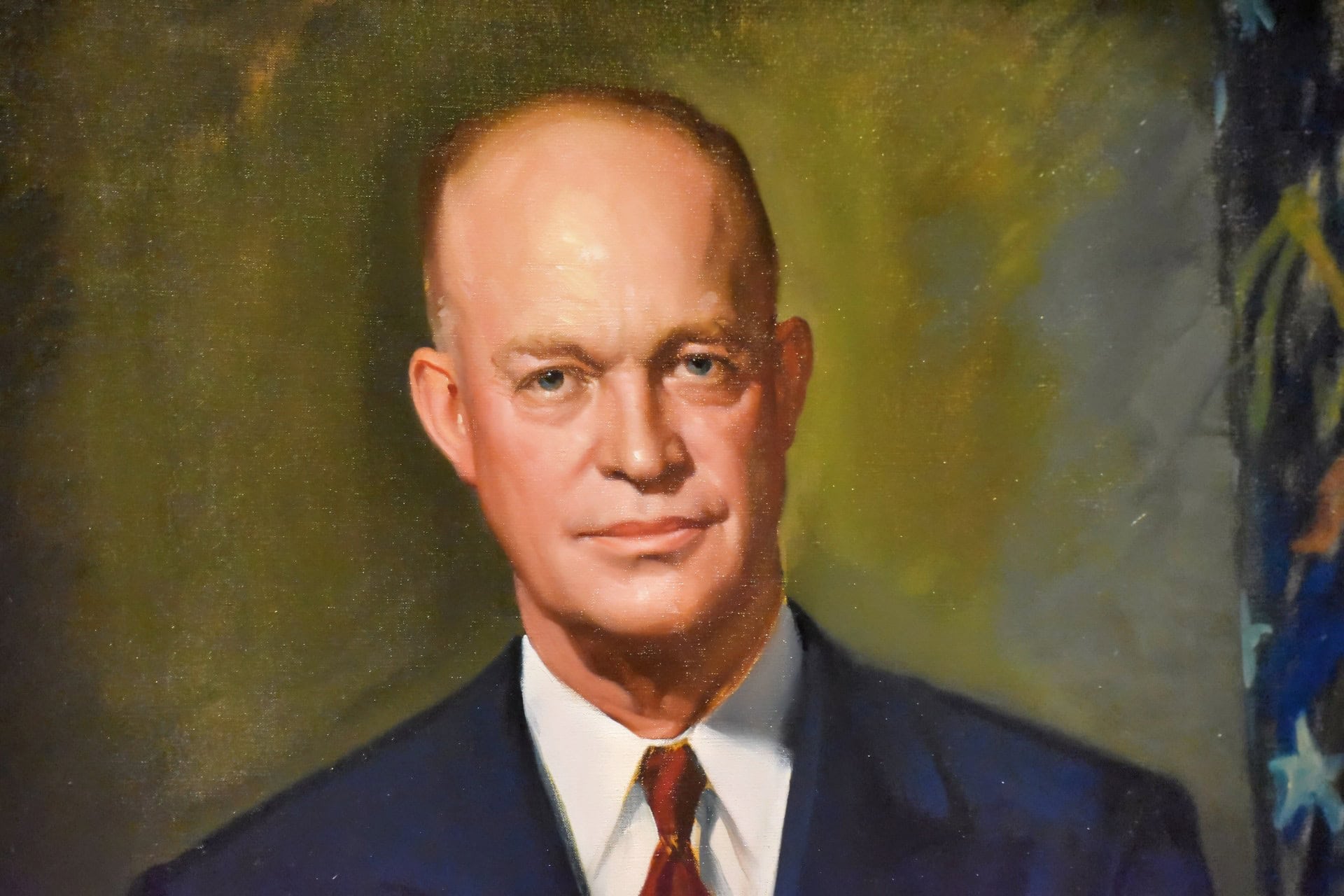
Dwight D. Eisenhower 19FortyFive.com Image. Taken on 1/23/2026 at the National Portrait Gallery in Washington, DC By Dr. Brent M. Eastwood.
General Dwight D. Eisenhower, now Supreme Allied Commander and Patton’s superior, faced intense pressure from Washington to rein in his former protégé. Eisenhower had always respected Patton’s battlefield genius, but he also knew Patton’s weaknesses. Again and again, he warned Patton to moderate his tone, reminding him that the war was over and that diplomacy mattered as much as tactics. But Patton neither tempered his speech nor adjusted his approach. Whether from stubbornness, a fundamental mismatch between his character and the demands of the moment, or a sense that his destiny still lay in war rather than peace, Patton remained unwilling to play a political role.
In October 1945, Eisenhower made a painful but inevitable decision. Under pressure to preserve the credibility of Allied occupation policy, he relieved Patton of command of the Third Army and reassigned him to the Fifteenth Army, an organization whose primary mission was not combat but the historical documentation of the European war.
It was, for Patton, an unmistakable demotion, and he felt the sting deeply. The reassignment to Patton was a symbolic exile into irrelevance, stripping him of soldiers, of purpose, and of the leadership responsibilities that had defined his identity.
Though he carried out his duties with formal professionalism, he confided to friends and to his diary that his career was effectively finished. The war was over, and in peacetime, he could not find meaning.
What Next?

General Patton Portrait. Image Credit: Creative Commons.
During his months with the Fifteenth Army, headquartered in Bad Nauheim, Patton supervised the compilation and review of historical studies, a necessary task but one for which he had little enthusiasm.
Yet he also had a lot of time for retrospection during this period. Patton, always a prolific diarist, spent hours reflecting on the war, leadership, destiny, and the looming threat of Soviet expansion. More than once, he suggested that the Allies had ended the war too soon or that they would one day regret allowing the USSR to dominate Eastern Europe.
His candid assessments were far ahead of their time in some respects, yet his manner of expressing them ensured that he could play no part in shaping the future military or geopolitical order.
At the same time, Patton contemplated retirement. He was only sixty years old, but he was exhausted, politically isolated, and disillusioned. He wrote to his wife, Beatrice, that he no longer felt he had a place in the Army or in the new postwar world.
He considered writing books, giving lectures, or returning to the United States to live quietly, perhaps on a ranch. But he was also restless and unhappy. Having lived his entire life preparing for war, excelling in war, and believing he was destined for war, Patton now found himself adrift.
Car Crash
On December 9, 1945, pathetically unaware of the tragedy to come, Patton prepared for what should have been an ordinary pheasant-hunting excursion. Accompanied by his chief of staff, Major General Hobart Gay, and his driver, Private Horace Woodring, he set out in his 1938 Cadillac for the countryside near Mannheim.
The morning was cold and uneventful as they traveled through the ruined landscapes of postwar Germany. Upon entering a railroad yard on the outskirts of Mannheim, however, their vehicle encountered an army truck that unexpectedly turned in front of them. Woodring attempted to brake, but the collision happened too quickly to prevent.
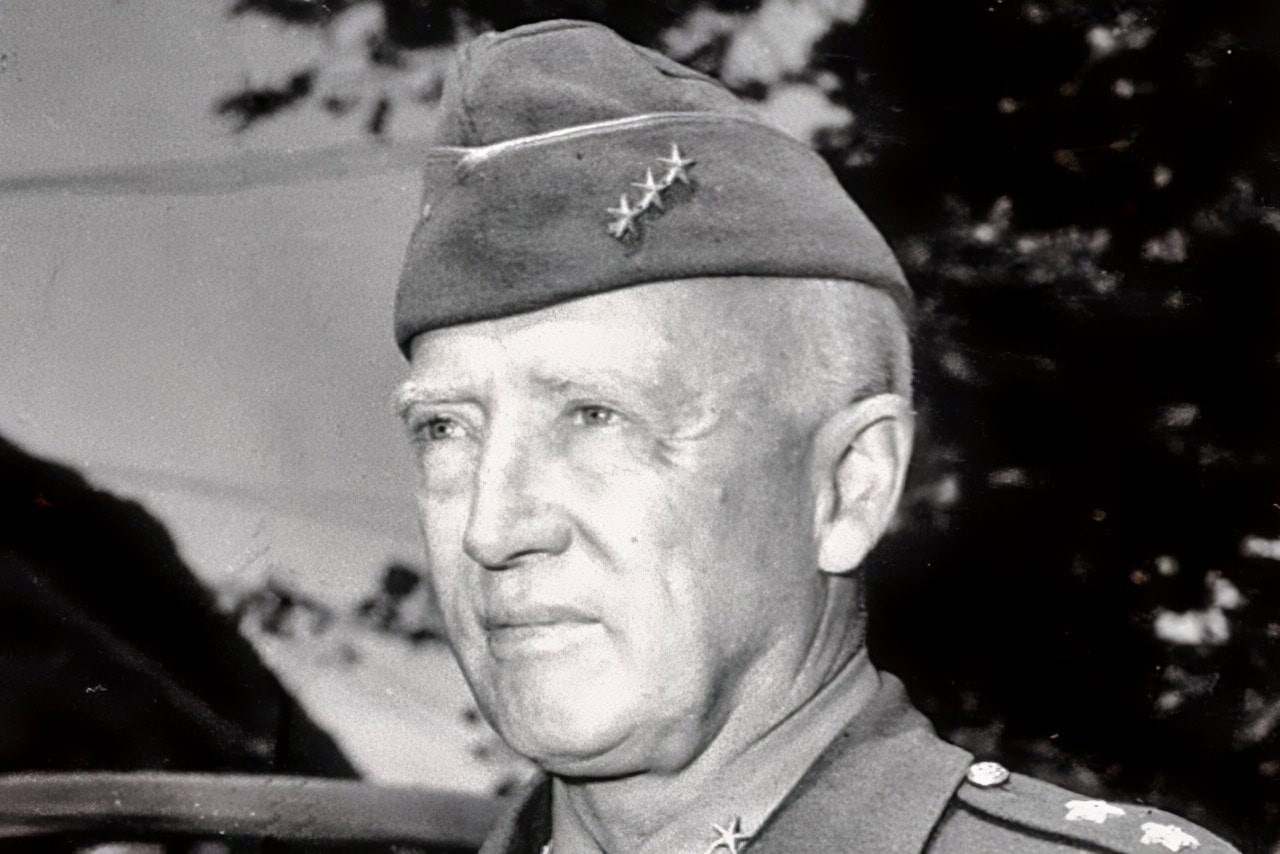
George S. Patton Quote of the Day. Creative Commons Image.
The impact was relatively minor, and the other occupants escaped unharmed. But Patton, seated in the back, was violently thrown forward, striking his head and neck against a partition. Almost immediately, he complained that he could not move. “I think I’m paralyzed,” he said. He was, indeed, paralyzed. Rushed to the 130th Station Hospital in Heidelberg, Patton was diagnosed with a severe spinal fracture between the third and fourth vertebrae, leaving him paralyzed from the neck down. For a man whose sense of self was inseparable from physical vigor, the injury struck at the core of his identity. Yet Patton faced his condition with his usual stoicism and dark humor, joking with nurses and reassuring General Gay that the accident was not the driver’s fault.
The Death of a Legendary General
By mid-December, doctors understood he would not recover. Beatrice remained at his bedside constantly. As Patton drifted in and out of sleep, weakened by pneumonia and heart failure, he reportedly spoke of his soldiers and of the battles that had defined his life. On the evening of December 21, 1945, General George S. Patton Jr. died quietly in his sleep, ending a life of extraordinary achievement, controversy, brilliance, and complexity.
He was buried at the Luxembourg American Cemetery, among the soldiers of the Third Army who had fought and died under his command. His grave, marked by a simple white cross, stood at the front of the cemetery rather than among the rows, symbolizing his position as their leader even in death.
The George Patton Legacy
Today, Patton remains a figure of fascination because he embodied the paradoxes of military leadership. He was a warrior of exceptional skill, a charismatic and demanding commander, a man of profound confidence and equally profound flaws.
His final months illustrate the difficulty of transitioning from war to peace, the tension between military necessity and political reality, and the personal struggle of a man who believed his destiny was inseparable from battle.
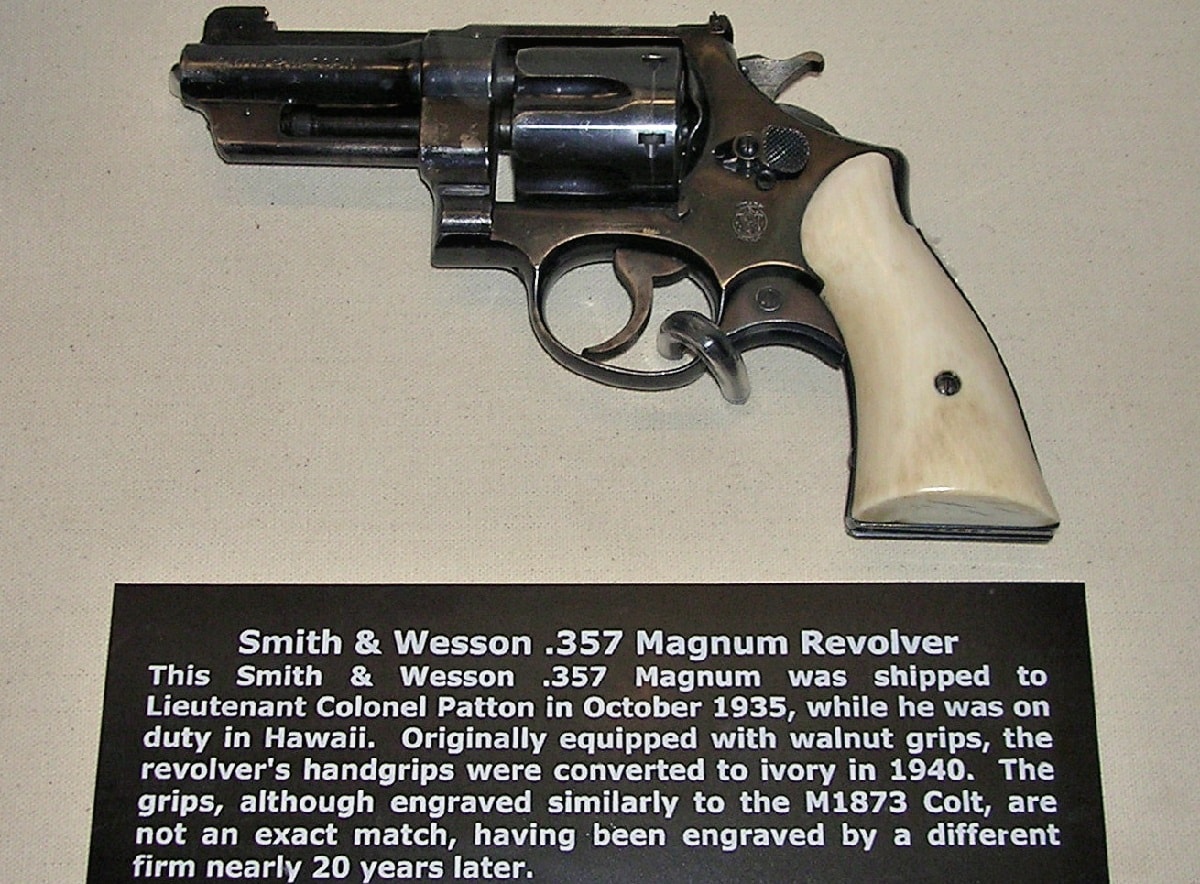
Patton’s well-known custom ivory-handled revolver.
Though his life ended far from the battlefield, the force of his personality, the impact of his accomplishments, and the depth of his contradictions continue to shape how we remember him. His final year, turbulent and brief, offers a poignant reminder of the costs of war not only for nations and armies but for the men who dedicate their lives to fighting it.
About the Author: Isaac Seitz
Isaac Seitz, a Defense Columnist, graduated from Patrick Henry College’s Strategic Intelligence and National Security program. He has also studied Russian at Middlebury Language Schools and has worked as an intelligence Analyst in the private sector.