
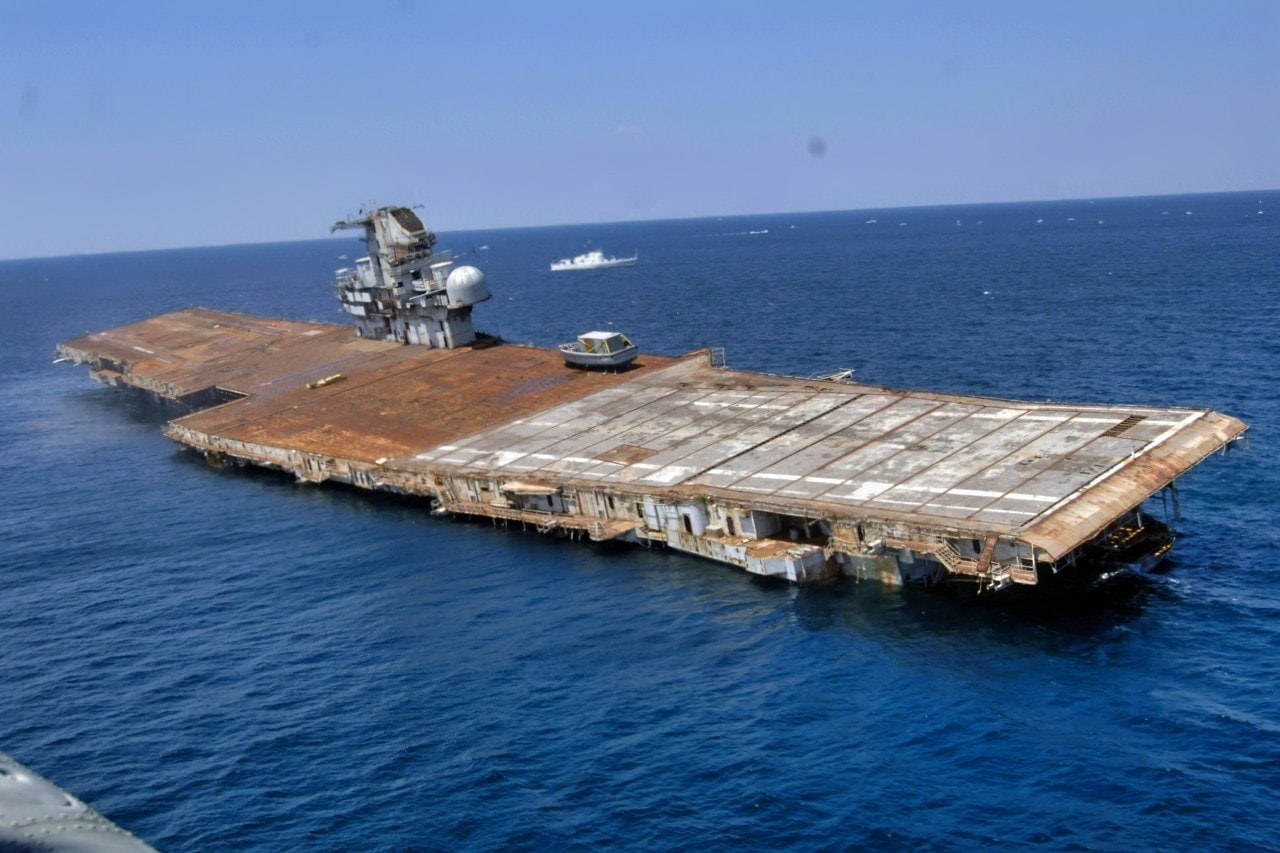
Summary and Key Points: The U.S. Navy’s SINKEX events use decommissioned ships as live-fire targets so crews can practice real-world maritime strike and gather hard data on how hulls fail under weapons impact.
-During Valiant Shield 24, the ex-USS Cleveland (LPD-7) was towed into position in the North Pacific and sunk after extensive environmental cleanup, sea-space clearance, and multi-service training.
-The exercise emphasized multi-domain coordination and weapons employment realism.
-Cleveland’s long service history stretched from Vietnam-era logistics and amphibious operations to disaster relief, counter-drug missions, and early drone support—before ending as a final training target.
USS Cleveland’s Final Mission: The Navy Sank Its Own Ship in a SINKEX
You may not know this, but the U.S. Navy conducts live fire gunnery practice against its own ships.
This is known as a sinking exercise or SINKEX. Surface warfare vessels, airplanes, and submarines can all rehearse attacks with their own weapons to simulate combat.
The Navy learns many lessons from these exercises. Sailors collect data about how much punishment a hull can take before it sinks to the bottom of the ocean.
Personnel become more familiar with their weapons and develop expertise. It is an excellent way to create an environment that uses a real target to give sailors an idea of what it is like to participate in a sea battle. Most of the time, gunnery from surface ships is conducted via simulators.
Sailors often do not have the opportunity to fire weapons at an actual target rather than a notional one.
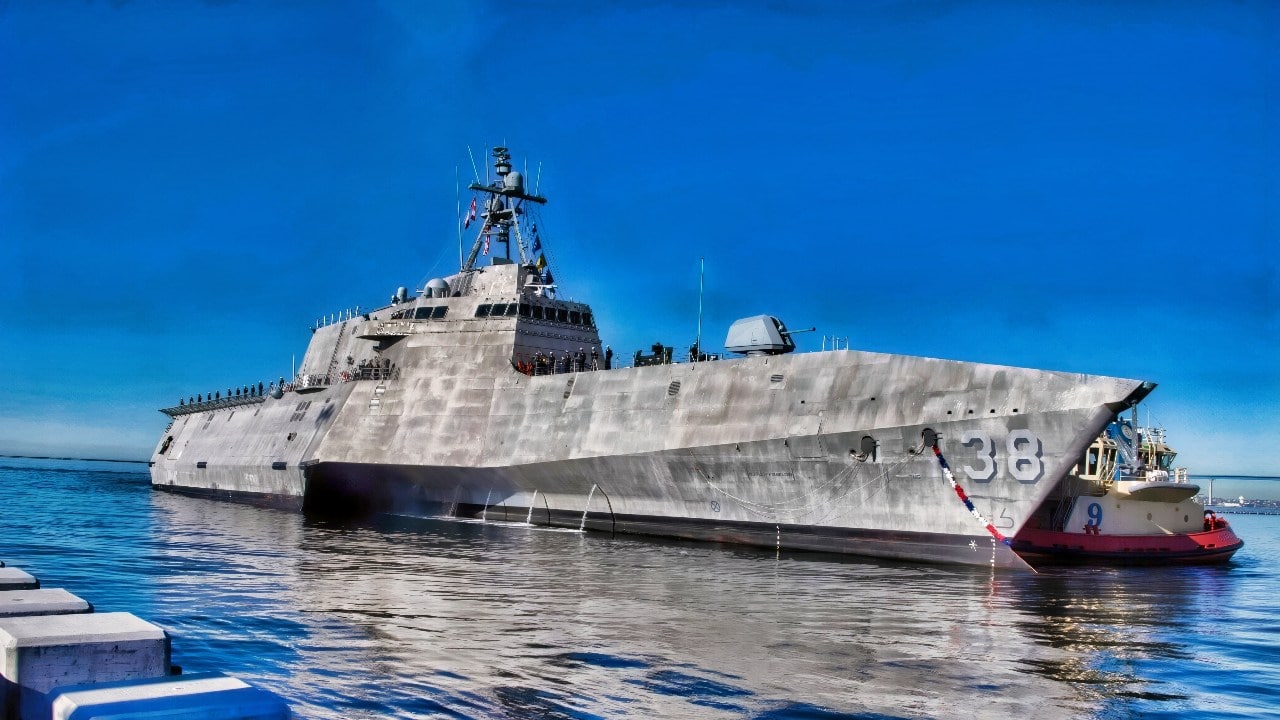
The Independence-Variant littoral combat ship USS Pierre (LCS 38) prepares to moor pier side during its arrival to its homeport of San Diego for the first time, Dec. 5, 2025. Pierre, the second U.S. Navy ship to bear this name, commissioned in Panama City, Fla. Nov. 15 as the final independence-variant LCS. Littoral combat ships are fast, optimally-manned, mission-tailored surface combatants that operate in near-shore and open-ocean environments, winning against 21st-century coastal threats.
What Happened to the USS Cleveland?
In 2024, the ex-USS Cleveland, a decommissioned Austin-class amphibious transport dock, was destroyed during the SINKEX. This happened 40 miles from land in the North Pacific Ocean. I’ll get into more details about how that happened, but first, allow me to explain more about the sinking exercise.
More Information About a SINKEX
One concern about a SINKEX is how the process can affect the environment. It is important to sink the targeted ship in an area that does not negatively affect sea life. For example, coral reefs could be damaged, and fisheries and habitats could be impacted. The Navy makes sure that all environmental concerns are mitigated before the SINKEX is executed.
Plus, the targeted ship must be cleaned of all chemicals, petroleum must be removed from the vessel’s compartments, and materials that contain mercury or fluorocarbons must be neutralized. SINKEXs are conducted in accordance with all environmental protection laws.
Clear the Seas
Also, a SINKEX cannot occur unless all other vessels are cleared from the area. There are no civilians in harm’s way, and the public is given a long warning ahead of the exercise.
Valiant Shield 24
In 2024, the Navy engaged in a SINKEX with the USS Cleveland (LPD-7) during Valiant Shield 24. That June, naval personnel engaged in exercises in the Pacific that included Guam, the Commonwealth of the Northern Mariana Islands, Palau, and at sea around the Mariana Island Range Complex.
“Valiant Shield 24 is a multinational, biennial field training exercise focused on integrating interoperability in a multi-domain environment. The exercise builds real-world proficiency in sustaining joint forces by detecting, locating, tracking, and engaging units at sea, in the air, in space, on land, and in cyberspace in response to a range of mission areas,” the Navy said in a news release.
This was a 12-day joint drill that included the Navy, Marine Corps, Army, Air Force, Coast Guard, and Space Force. The idea is for all the branches of service to be prepared for a multi-domain contingency or emergency that could even include a shooting war.
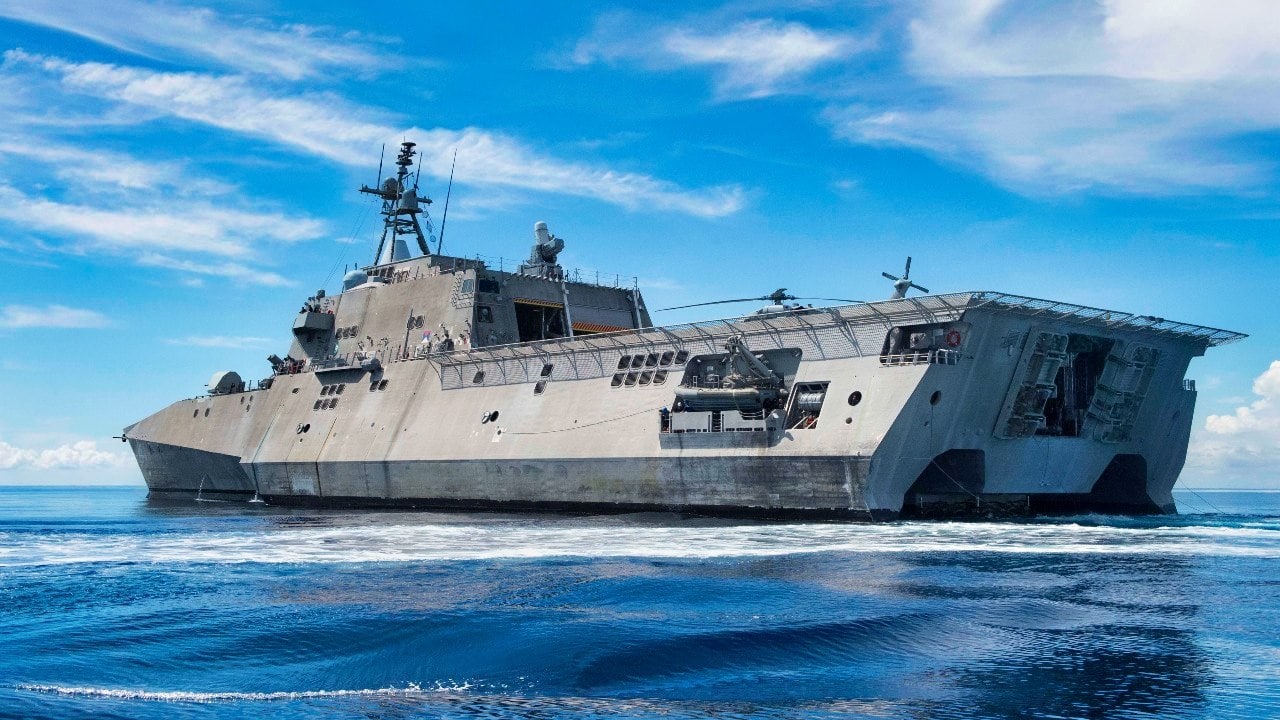
170623-N-PD309-122 BOHOL SEA (June 23, 2017) Littoral combat ship USS Coronado (LCS 4) transits the Bohol Sea during an exercise with the Philippine Navy for Maritime Training Activity (MTA) Sama Sama 2017. MTA Sama Sama is a bilateral maritime exercise between U.S. and Philippine naval forces and is designed to strengthen cooperation and interoperability between the nations’ armed forces. (U.S. Navy photo by Mass Communication Specialist 3rd Class Deven Leigh Ellis/Released)
The Valiant Shield exercises included Japan, Canada, and France. This is the first time the simulations featured navies from partner nations.
“Drills included maritime interdiction, counter-air operations, anti-submarine warfare, intelligence, surveillance, reconnaissance, and command and control,” the Navy said.
History of the USS Cleveland
The Cleveland served for more than 44 years. Its final deployment occurred in 2011 during the Pacific Partnership exercise. It made ports of call in Tonga and Australia, as well as at other locations in the Pacific, during the four-month mission.
Service During the Vietnam War
The Cleveland was laid down in 1964 in Mississippi and homeported in San Diego in 1967. That year, it sailed to Vietnam as part of a convoy. The Cleveland was the flagship during that deployment. The ship carried cargo and transferred supplies to Hue and Dong Ha. Its first combat action was during Operation Ballistic Arch, which was an amphibious raid and helicopter attack in Quang Tri province near the DMZ.
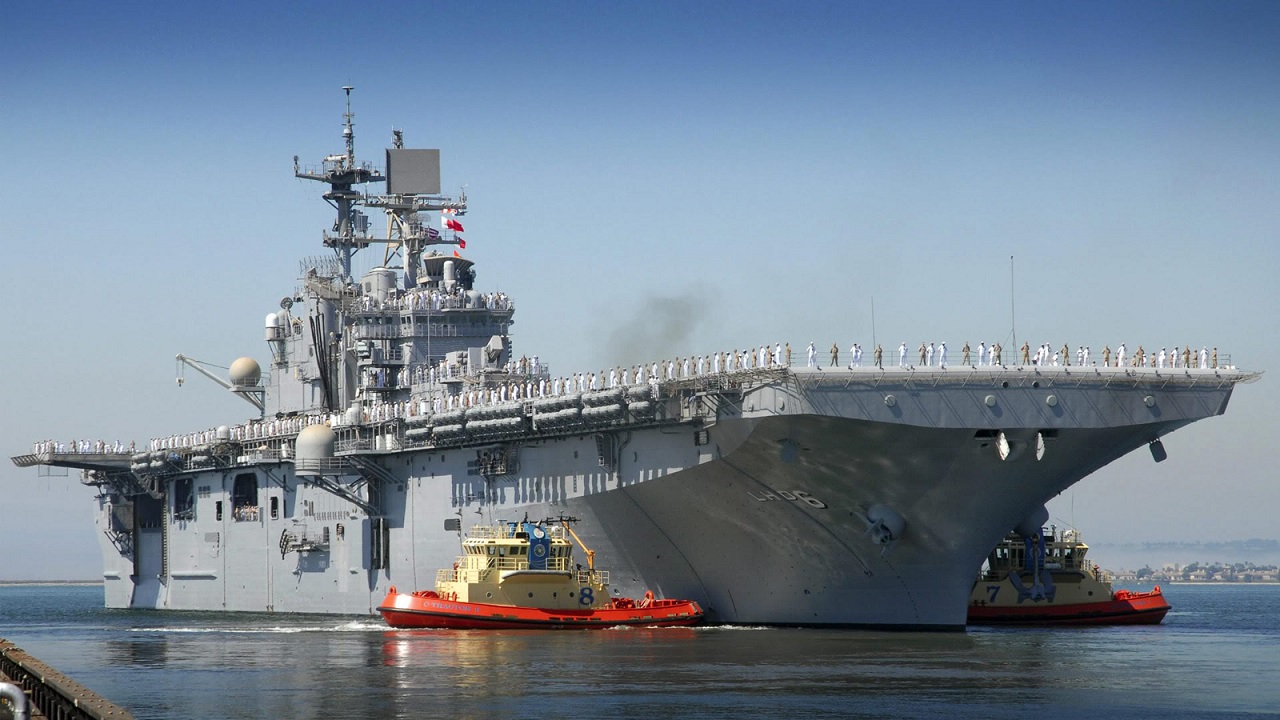
U.S. Navy Assault Ship. Image Credit: Creative Commons.
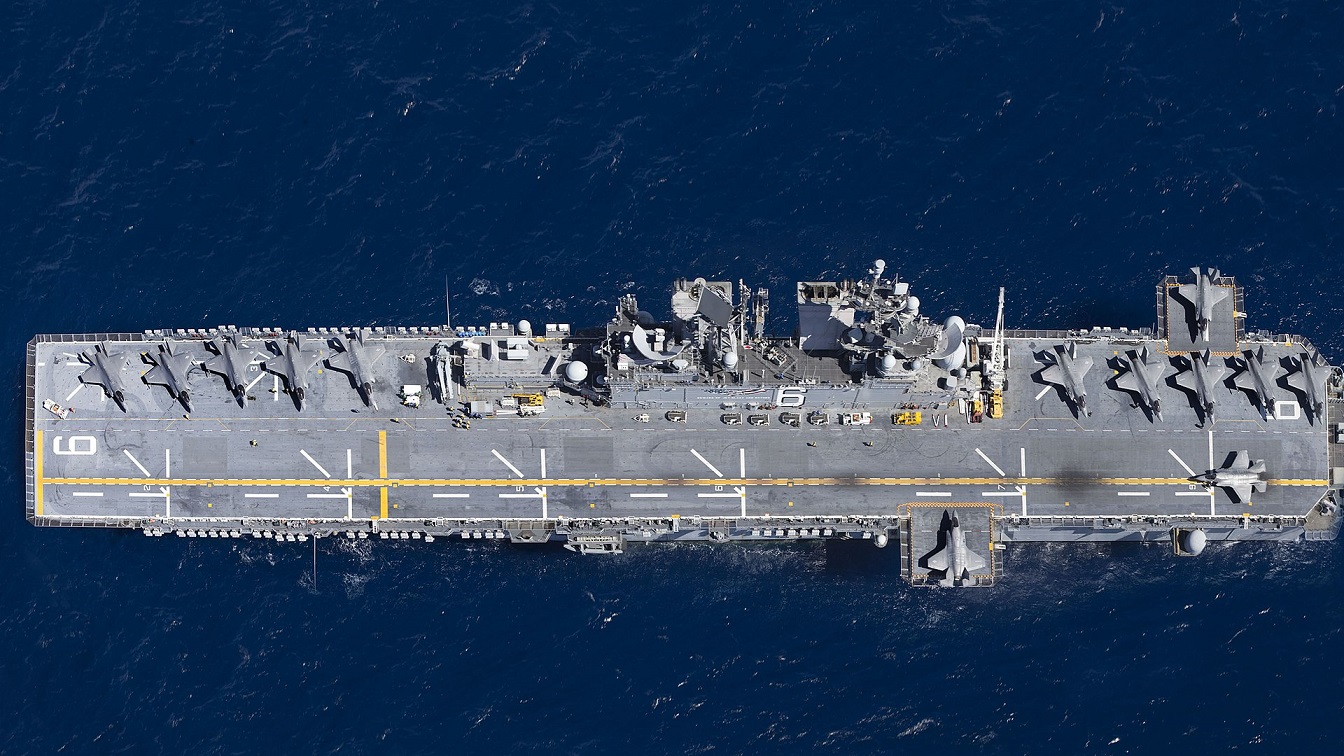
Thirteen U.S. Marine Corps F-35B Lightning II with Marine Fighter Attack Squadron (VMFA) 122, Marine Aircraft Group 13, 3rd Marine Aircraft Wing (MAW), are staged aboard the amphibious assault ship USS America (LHA 6) as part of routine training in the eastern Pacific, Oct. 8, 2019. Integrating 3rd MAW’s combat power and capabilities while conducting realistic training is essential to generate readiness and lethality in our units. (U.S. Marine Corps photo illustration by Lance Cpl. Juan Anaya)
Similar combat missions were conducted during Operations Ballistic Armor and Fortress Attack. During the Battle of Hue, the Cleveland offloaded 600 tons of ammunition. Cleveland also conducted various search-and-rescue missions with its helicopters. The Cleveland sent medical teams to rescue quartermaster personnel during an ammunition dump explosion at Cua Viet.
After the Vietnam War, Cleveland commenced various exercises and amphibious training. By the 1980s, it served as a flagship for numerous deployments to the Middle East. It was active during FleetEx in 1988, transporting more materials, and saw action during RimPac88.
Exxon Valdez Disaster
In 1989, the Cleveland was on duty during the disastrous oil spill in Alaska caused by the Exxon Valdez. “On March 24, the loaded oil tanker Exxon Valdez struck a reef in the sound, causing more than 10 million barrels of crude oil to leak into the environment.
Arriving on site on May 31, the amphibious transport dock spent the next five and a half weeks providing support services for the ongoing cleanup operation for the ecologically devastating disaster. Cleveland provided berthing and other hotel services for cleanup crews and helped to transport people and equipment around the disaster area by helicopter and small craft. On July 6, the ship received the U.S. Coast Guard Special Operations Service Ribbon for her efforts on this task,” Naval History and Heritage Command wrote.
Helping Save People In the Philippines
The Cleveland participated in more emergency relief duties that year during Operation Fiery Vigil in the Philippines to help people affected by “the catastrophic eruption of nearby Mt. Pinatubo on June 15. Cleveland received a Joint Meritorious Unit Award for her work during Fiery Vigil.”
Counter-Drug Activities
In the 1990s, Cleveland collaborated with the Coast Guard on anti-narcotics operations. It once participated in the seizure of 11,000 pounds of cocaine, and the amphibious ship took control of the illegal ship carrying the illicit load. It also helped rescue Cuban refugees during a humanitarian mission, and it assisted in evacuating special operations forces from the coast of Panama.
One of the First Deployments of Drones
In 1999, the Cleveland deployed unmanned aerial vehicles to help enforce the no-fly zone over Iraq and delivered Marines to Kuwait. During the Global War on Terror, the Cleveland was active in transporting Navy SEALs to help fight terrorists and insurgents. The SEALs on the Cleveland also rehearsed boarding ships and oil platforms.
The Cleveland was active in transporting personnel and depositing supplies to Kuwait during the invasion of Iraq in 2003. In the 2000s, it was also the “mothership” for mine sweeping ships. The Cleveland participated in anti-submarine exercises, and it mapped maritime traffic in the Red Sea. The ship used the Scan Eagle drone for anti-piracy operations.
Fast forward to 2024 during the SINKEX. The American Marine Corporation towed the ex-USS Cleveland into position. Ships in the vicinity used Precision Strike Missiles – the first time these weapons were used against a vessel.
The SINKEX is an important exercise for the testing of munitions. It also helps the Navy with ship design and allows technicians and engineers to gather information on how ships can withstand hits from missiles, torpedoes, and guns.
Without SINKEXs, the Navy would be in the dark about how ships perform in combat and how various joint weapons systems can operate under the strain of simulated warfare. The Cleveland served its purpose during the SINKEX, capping off a long history of valuable service to the Navy. Whether it was transporting supplies, deploying Marines, conducting anti-narcotics and anti-piracy missions, or assisting with disaster relief, the Cleveland had a varied, diverse, and valuable service history.
It may have been disappointing to see that it was sent to the bottom during a SINKEX after that kind of service life, but the Cleveland always answered the call. This ship was historic and paved the way for the Navy to collect valuable data on how best to destroy a ship in combat.
So hats off to the Cleveland. This was one historic vessel that served valiantly until the end.
About the Author: Brent M. Eastwood
Author of now over 3,000 articles on defense issues, Brent M. Eastwood, PhD is the author of Don’t Turn Your Back On the World: a Conservative Foreign Policy and Humans, Machines, and Data: Future Trends in Warfare plus two other books. Brent was the founder and CEO of a tech firm that predicted world events using artificial intelligence. He served as a legislative fellow for US Senator Tim Scott and advised the senator on defense and foreign policy issues. He has taught at American University, George Washington University, and George Mason University. Brent is a former US Army Infantry officer. He can be followed on X @BMEastwood.