“There are four ways of doing things: the right way; the wrong way; the Navy way; and my way. So long as they do things my way, we’ll get along.”
Lt. Cmdr. Queeg, portrayed by Humphrey Bogart in the 1954 film The Caine Mutiny.
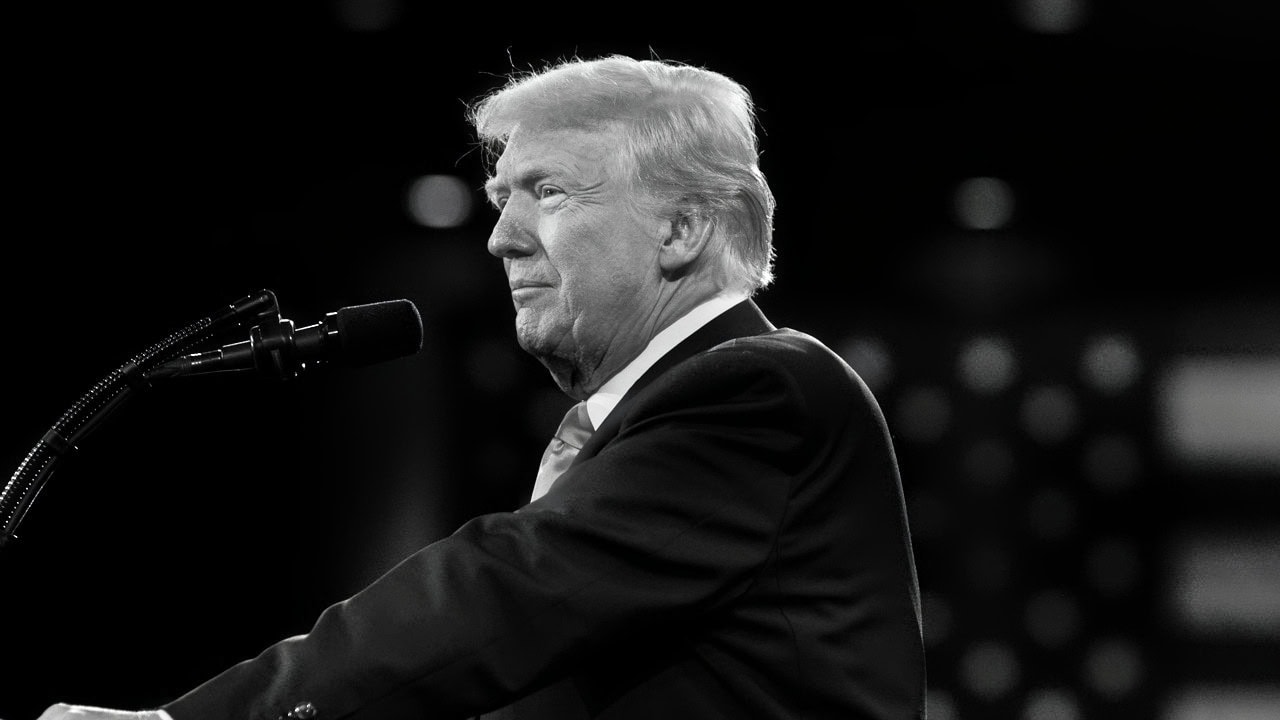
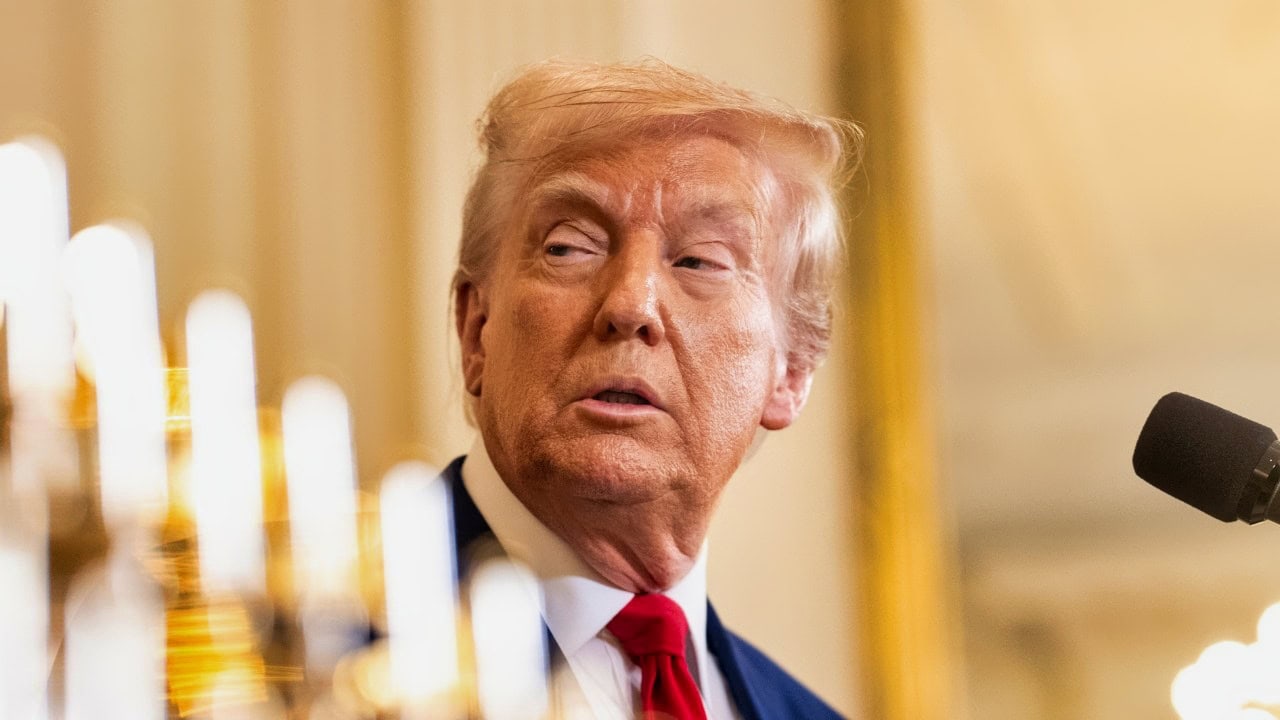
President Donald Trump speaks at the Conservative Political Action Conference at the Gaylord National Resort & Convention Center in Oxon Hill, Maryland, on Saturday, February 22, 2025. (Official White House Photo by Molly Riley
In national security, “my way” leadership isn’t just unpleasant—it can become dangerous when it replaces process, candor, and lawful restraint. In The Caine Mutiny, Herman Wouk offers a vivid archetype: Lt. Cmdr. Philip Queeg. For readers unfamiliar with the story, Queeg’s erratic behavior triggers a chain of episodes that seem manageable in isolation, but together reveal a breakdown in command.
Like many officers, I encountered The Caine Mutiny during my Navy career as part of leadership training. Queeg’s “my way” isn’t merely a management quirk; it becomes a governing theory that treats disagreement as disloyalty, elevates symbolic compliance over mission, and converts institutional procedure into personal control.
Since Donald Trump’s return to the White House, parallels to Queeg’s leadership style have emerged in the President’s governance over the past twelve months. The question is what “my way” governance does to national security when stress arrives.
Queeg’s downfall begins with a training incident that marks the first “hairline crack” in his command climate. During a critical maneuver, he ignores repeated warnings and the ship runs over and severs a towed target cable—then blames others rather than accepting responsibility.
In February 2025, President Trump began removing national security guardrails with a Pentagon shakeup that removed Gen. C.Q. Brown as chairman of the Joint Chiefs of Staff and pushed out other senior leaders, including the service judge advocates general (JAGs), the military’s senior uniformed lawyers. Whatever one thinks of the policy rationale, removing the military’s top lawyers alongside the chairman looks like loosening a legal-and-professional tether at the top of the chain—an early sign that guardrails may be treated as obstacles rather than safeguards.
The cable incident is only the opener. In Wouk’s arc, it is followed by three defining failures: first, mission support becomes unreliable at a decisive moment (Kwajalein); then command climate turns inward, with paranoia and micromanagement replacing trust (the Strawberries); finally, crisis judgment collapses, and subordinates are forced to intervene to prevent catastrophe (the Typhoon).
Those categories map cleanly onto national security: alliance assurance, interagency coordination, and crisis restraint.
Kwajalein Incident: Failure of Support
In The Caine Mutiny, the Kwajalein episode is where Queeg’s leadership is judged against the mission—his actions during an invasion brand him “Old Yellowstain” in the wardroom’s eyes. In modern national security terms, “Kwajalein” is failing to support a mission at the moment it matters most—not by running from danger, but by making mission-critical inputs conditional: intelligence, sustainment, or political backing. Once support becomes contingent, allies hedge, timelines slip, and adversaries recalibrate risk. Deterrence depends not only on U.S. power, but on whether partners believe that power will be there when promised.
In March 2025, the administration paused intelligence cooperation with Ukraine, with CIA Director John Ratcliffe acknowledging the halt and linking it to leverage in negotiations. One can debate whether leverage is sometimes necessary in diplomacy. But intelligence support is not a talking point—it is an operational lifeline. It affects warning, targeting, and survivability against a sophisticated adversary. Once allies see that kind of support can be paused as a negotiating tool, they build new assumptions into their planning: hedging, stockpiling, diversifying suppliers, and discounting U.S. assurances.
The intelligence pause did not occur in isolation: Reuters also reported a halt in U.S. military aid deliveries to Ukraine in the same period, reinforcing the message that support had become conditional leverage rather than an anchored commitment.
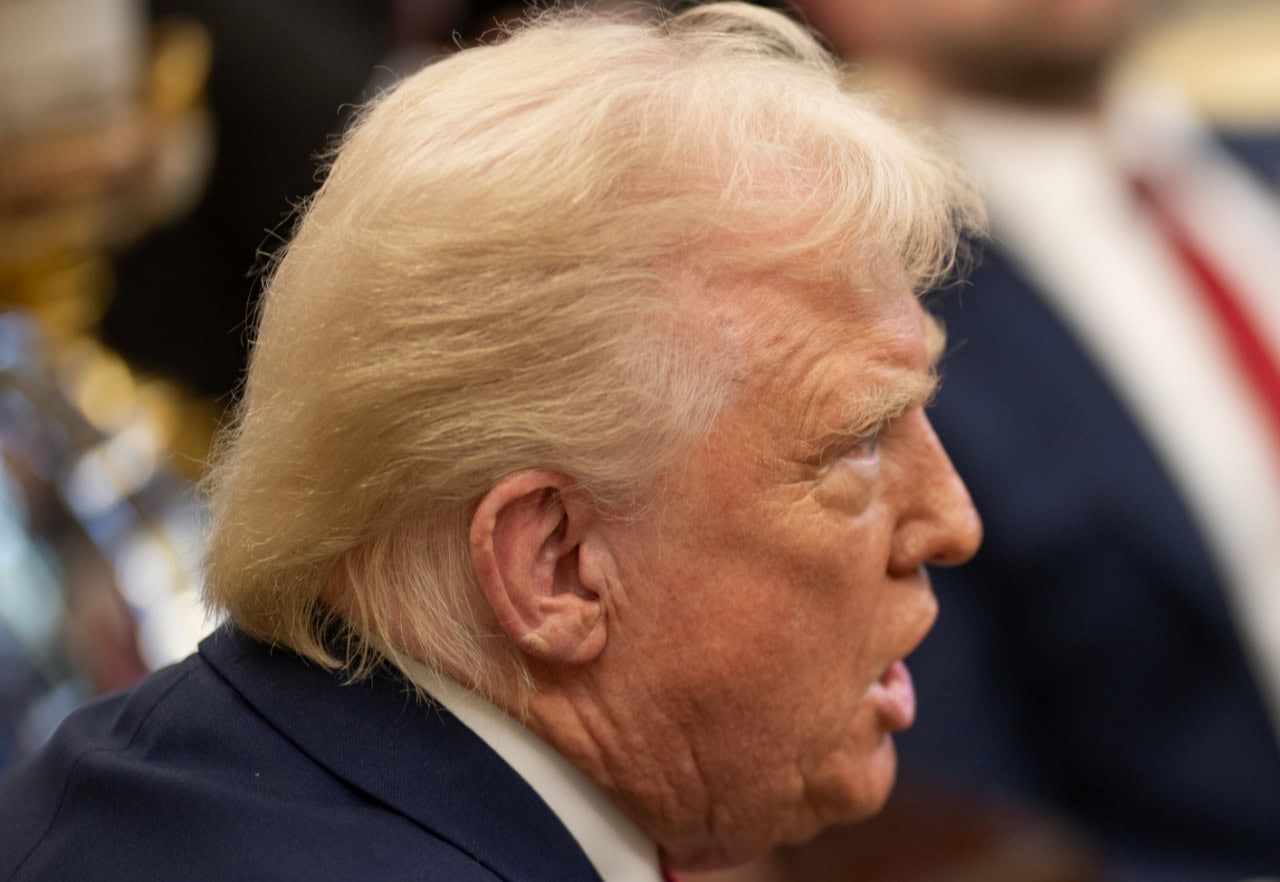
President Donald Trump greets President Volodymyr Zelenskyy of Ukraine, Friday, February 28, 2025, in the West Wing Lobby. (Official White House Photo by Daniel Torok)
The Strawberry Incident: Failure of Trust
In Wouk’s story, Queeg’s obsession over missing strawberries escalates into elaborate procedures and a futile hunt for a nonexistent duplicate key—an episode that turns the ship inward and accelerates the collapse of trust. Strawberries are what leaders obsess over when they can’t—or won’t—manage what matters. Fixation on small infractions becomes a stand-in for control, and control becomes the point. Over time, subordinates learn the wrong lesson: don’t solve problems, avoid blame. Candor dies first, then initiative, then performance.
Beginning in the spring of 2025, the NSC was repeatedly hit by firings and departures, leaving parts of the national security apparatus thinly staffed and shrinking the body that coordinates strategy across agencies. Although any president can reorganize, the question is: what does the reorganization optimize for? When coordination capacity is reduced while loyalty concerns rise, analysis narrows, dissent grows quieter, and decisions pass through fewer filters. That is how small fixations become strategic blind spots—because fewer people are empowered to say, “This is the wrong problem,” or “This course is unsafe.”
The Typhoon Incident Failure During Crisis
In The Caine Mutiny, the typhoon is the moment when ego has to yield to process, because storms punish improvisation. Queeg freezes at the height of danger, and his executive officer relieves him to save the ship. In national security, institutions exist to slow bad decisions just enough to prevent catastrophe: clear authorities, disciplined communications, lawful constraints, and a chain of command that prizes steadiness over performance. In Trump’s first year back, we may not be “in” the typhoon yet—but storm conditions are building, and pressure tests are already visible.
Consider the Greenland episode through the lens of deterrence and alliance management. Reuters reported intense internal scrambling after Trump’s Greenland threats and subsequent effort by aides to reduce alarm around the prospect of force. Coercive rhetoric toward an ally—especially paired with steps that thin alliance staffing and coordination—introduces uncertainty into the very system designed to prevent war. Allies hedge, adversaries probe seams, and the risk of miscalculation rises because credibility becomes contested rather than assumed.
Even if later statements temper the immediate threat, the damage is not fully reversible: once sovereignty and Article 5 solidarity become bargaining chips, confidence becomes conditional—and conditional confidence is how deterrence fails.
Reuters also reported U.S. plans to cut roughly 200 NATO positions across entities involved in alliance military and intelligence operations—an organizational move that can intensify European concerns about U.S. commitment.
The same “storm-building” logic applies at home. When the Insurrection Act is raised as an option in a political conflict—even if later walked back—its introduction signals that extraordinary domestic military authorities may be used as pressure tools. That matters because civil–military legitimacy is a strategic asset. Once the public sees troops as instruments of policy dispute, rebuilding trust is slow, and every future crisis becomes harder to manage without escalation.
Queeg’s “my way” leadership is ultimately judged in a courtroom, where procedures, facts, and testimony strip away bravado and reveal whether a commander was fit to lead in crisis. In the American government, the equivalent is oversight. Courts can test legality. Congress can test policies, budgets, and authorities in public.
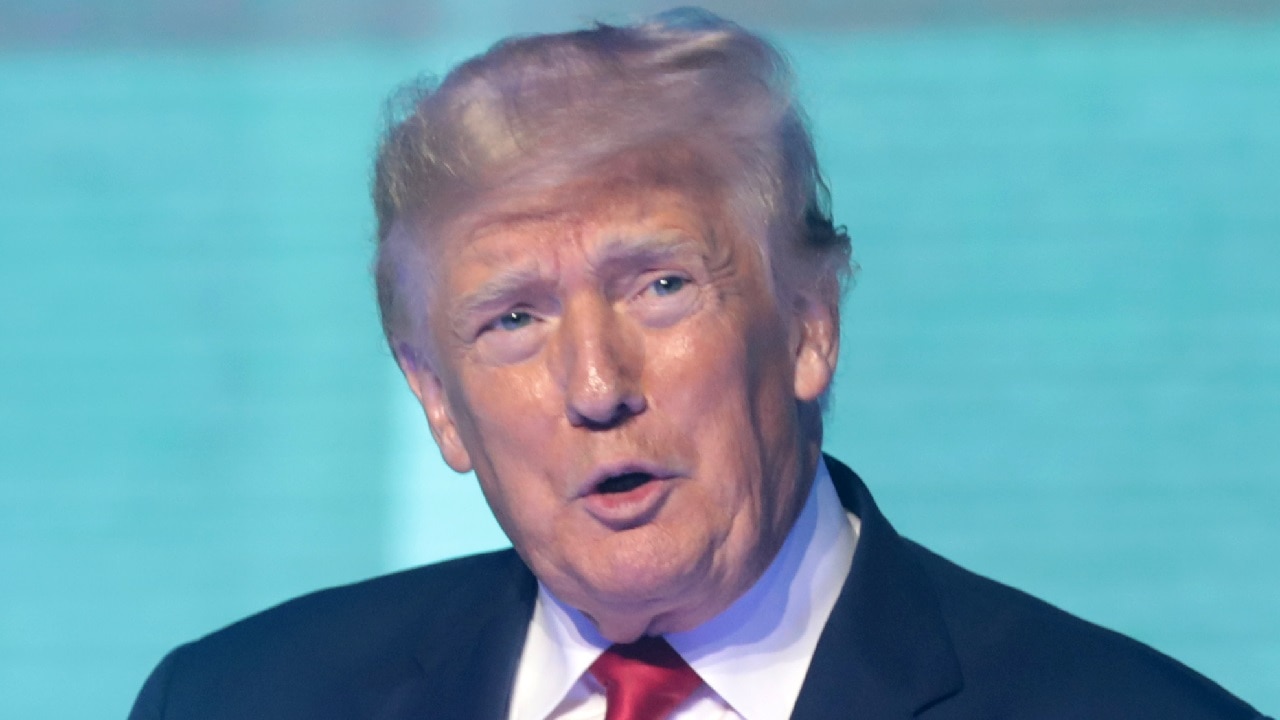
Then-Former President of the United States Donald Trump speaking with attendees at the 2022 Student Action Summit at the Tampa Convention Center in Tampa, Florida. By Gage Skidmore.
If the past year has felt like storms that “stall,” that is not reassurance—it is a warning. Precedents have been floated, boundaries tested, and uncertainty injected into alliances and civil–military norms. This is precisely when the constitutional system is supposed to force clarity on authority, constraints, and commitments—before the sea state worsens.
About the Author: Dave Petri
Dave Petri is a retired United States Navy Commander and currently serves as the Communications Director for National Security Leaders for America.