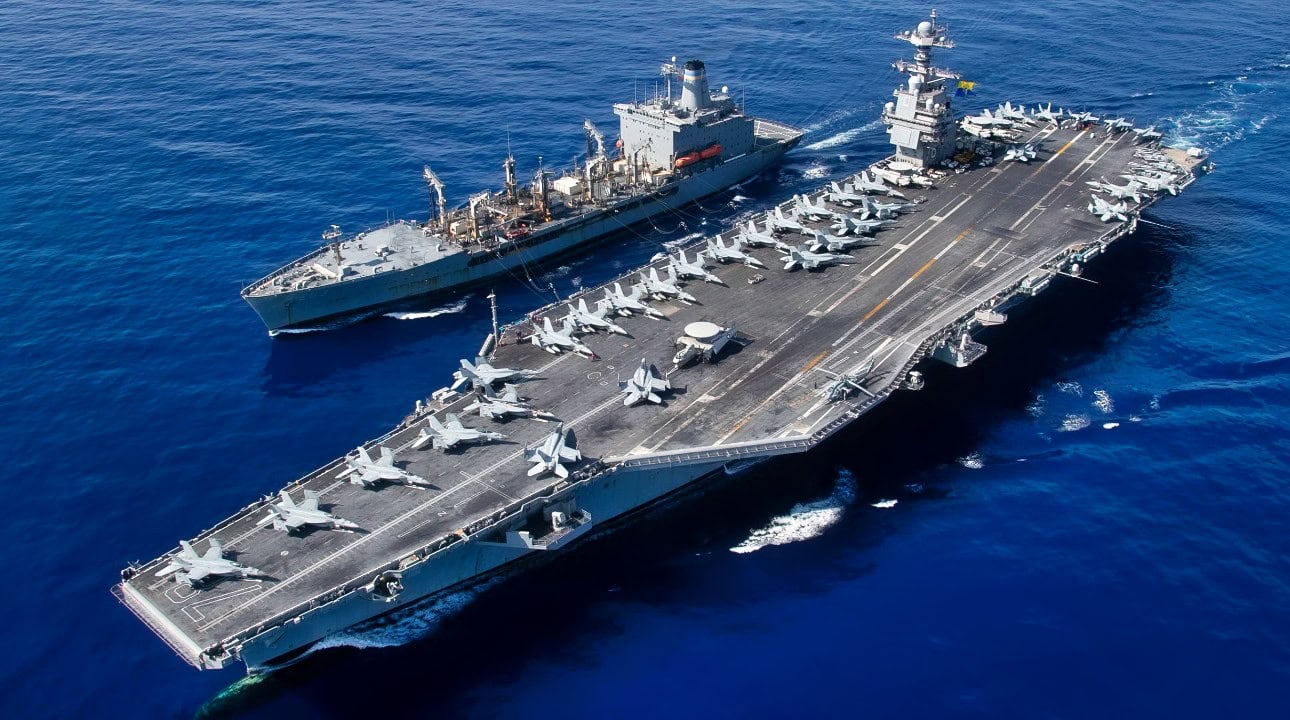
Synopsis: Dr. Rebecca Grant, Vice President of the Lexington Institute, evaluates the massive U.S. military deployment centered on Iran’s ballistic missile infrastructure.
-As of February 2026, the USS Gerald R. Ford and USS Carl Vinson provide a continuous 24/7 combat air patrol (CAP) alongside land-based F-35s, F-22s, and F-16CJs.
-This 19FortyFive report analyzes the targeting of solid-fuel production sites at Shahroud and spaceports like Chabahar, examining how Wild Weasel tactics and the “Angry Kitten” jamming pods are being utilized to degrade Iranian air defenses and prevent the regeneration of Tehran’s 200-missile-per-month production capacity.
How Two Navy Aircraft Carriers Are Redefining U.S. Pressure on Iran’s Missile Program
America is building up for a sustained air campaign against Iranian targets.
Both on land and at sea, the force levels are the biggest seen since the Iraq War of 2003. President Donald J. Trump has once again deployed two aircraft carriers, creating plenty of “sovereign options” for strikes that can be carried out regardless of regional political nuances. Every type of land-based fighter in the U.S. Air Force inventory is in the region. In place are forces to pressure Iran — or carry out a sustained campaign.
Missiles
From a tactical perspective, the reason for the massive force deployment is clear: it’s all about the missiles. “Our missile power today far surpasses that of the 12-day war,” Iran’s Foreign Minister Abbas Araghchi proclaimed in November.
The Trump administration wants Iran to limit its missile production and work with the UN International Atomic Energy Agency to account for the highly-enriched uranium still illegally held by that country.
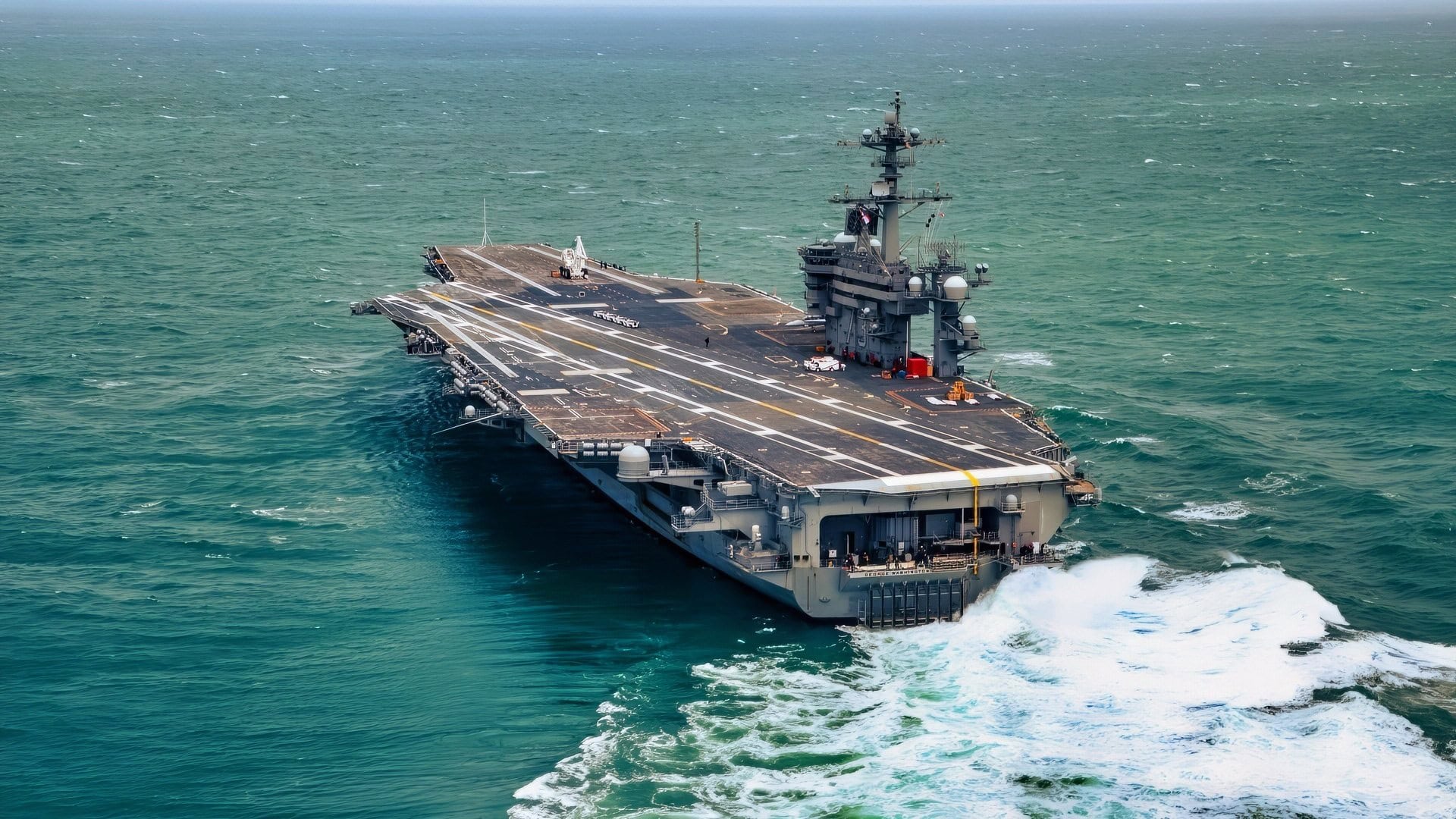
The Nimitz-class aircraft carrier USS George Washington (CVN 73) transits through the Atlantic Ocean May 25, 2023. George Washington was underway after completing its mid-life refueling and complex overhaul and sea trials, a comprehensive test of the ship’s system and technologies. (U.S. Navy photo by Mass Communication Specialist 3rd Class Nicholas A. Russell)
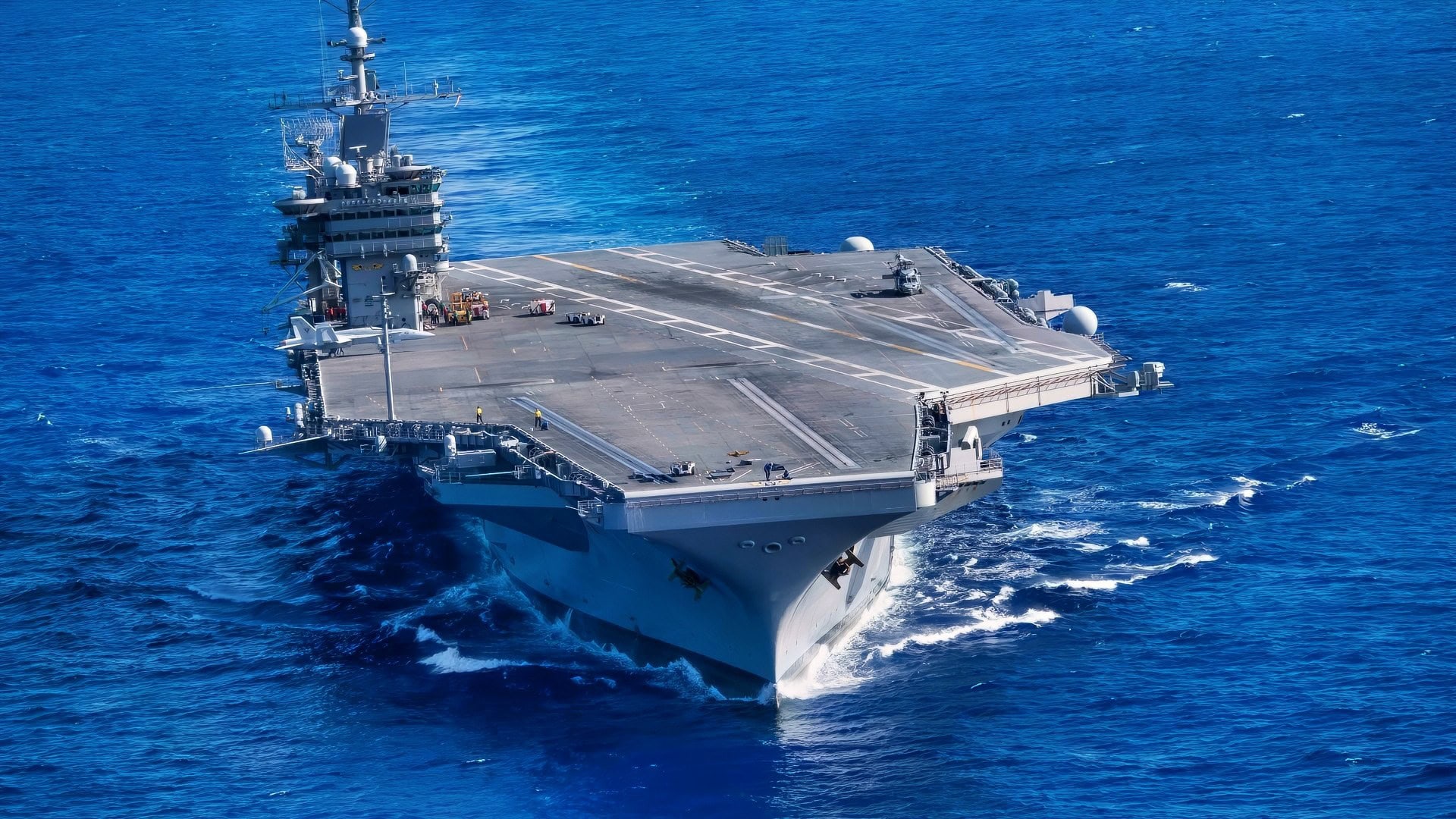
The aircraft carrier USS John C. Stennis (CVN 74) steams through the Atlantic Ocean, Sept. 6, 2019. The John C. Stennis is underway as part of a Commander, U.S. 2nd Fleet ordered sortie ahead of Hurricane Dorian, which is forecasted to bring high winds and heavy rain to the East Coast. Ships are being directed to areas in the Atlantic Ocean where they are best postured for storm avoidance. (U.S. Navy photo by Mass Communication Specialist 3rd Class Grant G. Grady)
“It’s proven to be, over the years, not easy to make a meaningful deal with Iran, and we have to make a meaningful deal,” President Donald J. Trump said on February 19. “Otherwise, bad things happen.”
Trump’s team has had its eyes on Iran’s missiles all along. “Iran’s aggressive development of missiles and other weapons capabilities imperils the safety of the United States and our partners,” said Secretary of the Treasury Scott Bessent in April 2025.
The threat of Iran’s missile terror weapon is real and immediate. It was Iranian missiles that targeted the U.S. airbase at Al Udeid, Qatar, generating the biggest single launch of Patriot missiles back on June 23, 2005. In 2024, their missile and drone packages launched against Israel had to be intercepted by forces ranging from harried U.S. Air Force F-15Es to Navy destroyers using both the older SM-3 Block 1B variant and the wider-angle SM-3 Block 2A developed for the Pacific. In January 2020, Iran launched 27 theater ballistic missiles against U.S. forces at Al Asad airbase in Iraq. Even with forewarning, 330 service members were exposed to concussion blast waves, including 35 who were within 100 meters of the impact points.
If strikes begin, the campaign will not look like the single-stroke masterpiece that was Operation Midnight Hammer. This is a large target set likely to require multiple strikes. Potential targets are arrayed across the country, from the solid-fuel missile production facilities at Shahroud in the northeast to the cratered airbase at Hamadan, near Iran’s western border.
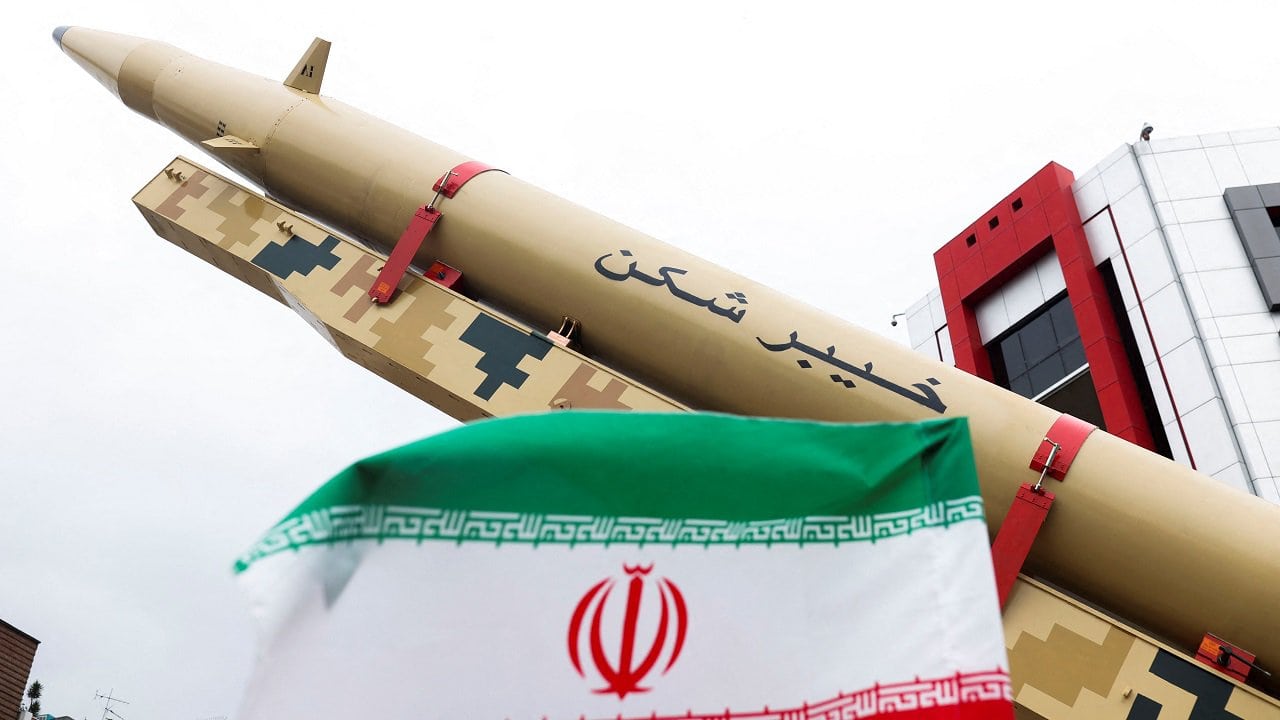
An Iranian missile is displayed during a rally marking the annual Quds Day, or Jerusalem Day, on the last Friday of the holy month of Ramadan in Tehran, Iran April 29, 2022. Majid Asgaripour/WANA (West Asia News Agency) via REUTERS
A sustained campaign would feature a devastating round of opening strikes against key facilities and any active Iranian air defenses. Then will come bomb damage assessment and restrike decisions to achieve a specified level of destruction. Each target will be carefully assessed to avoid collateral damage. However, as a group, they fit the President’s primary objective of making sure Iran cannot wield nuclear weapons – and missile delivery systems – against Israel, or anybody else.
Bigger than Operation Rough Rider
For clues on how an air campaign might unfold, look back at last year’s Operation Rough Rider. From March 15 through April 27, 2025, the aircraft carriers USS Carl Vinson and USS Harry S. Truman joined land-based U.S. Air Force fighters to attack over 800 targets in Houthi-controlled Yemen.
According to U.S. Central Command, “strikes have destroyed multiple command-and-control facilities, air defense systems, advanced weapons manufacturing facilities, and advanced weapons storage locations. These storage facilities housed advanced conventional weapons, including anti-ship ballistic and cruise missiles, unmanned aerial systems, and uncrewed surface vessels,” said the release. Also on the list: “hundreds of Houthi fighters and numerous Houthi leaders, including senior Houthi missile and UAV officials.” IRGC, take note.
U.S. forces were successful in attacking targets at will. However, Operation Rough Rider presented U.S. forces with moments of peril. The Houthis did shoot back. Two F-16CJ “Wild Weasel” pilots dodged six surface-to-air missiles fired by the Houthis, with one coming within 30 feet of an F-16. The pilots were awarded Silver Stars for their combat mission, during which they kept air defenses engaged and away from other U.S. aircraft. The TRUMAN accidentally lost an F/A-18E overboard in April 2025. The Super Hornet was being towed on the hangar deck when the ship turned hard to avoid Houthi fire.
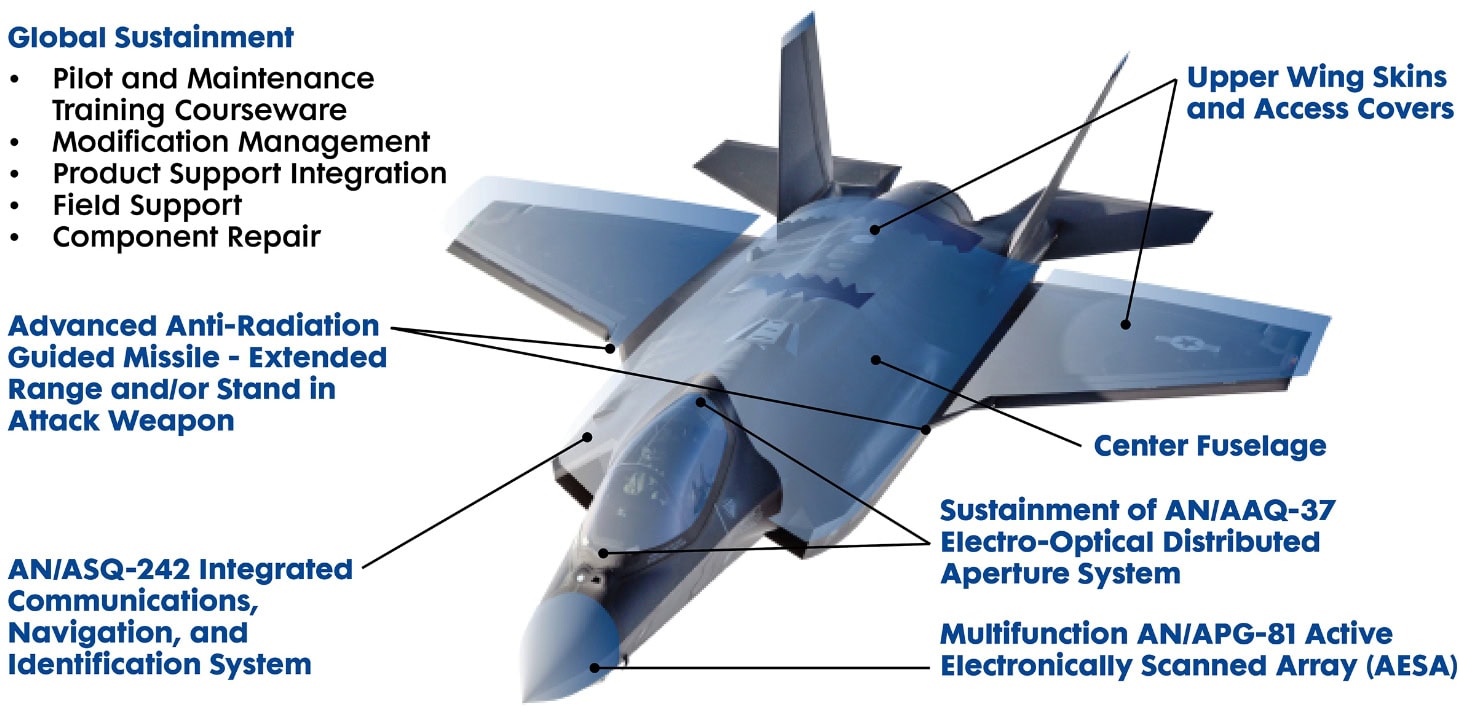
F-35 Fighter. Image Credit: Industry Handout.
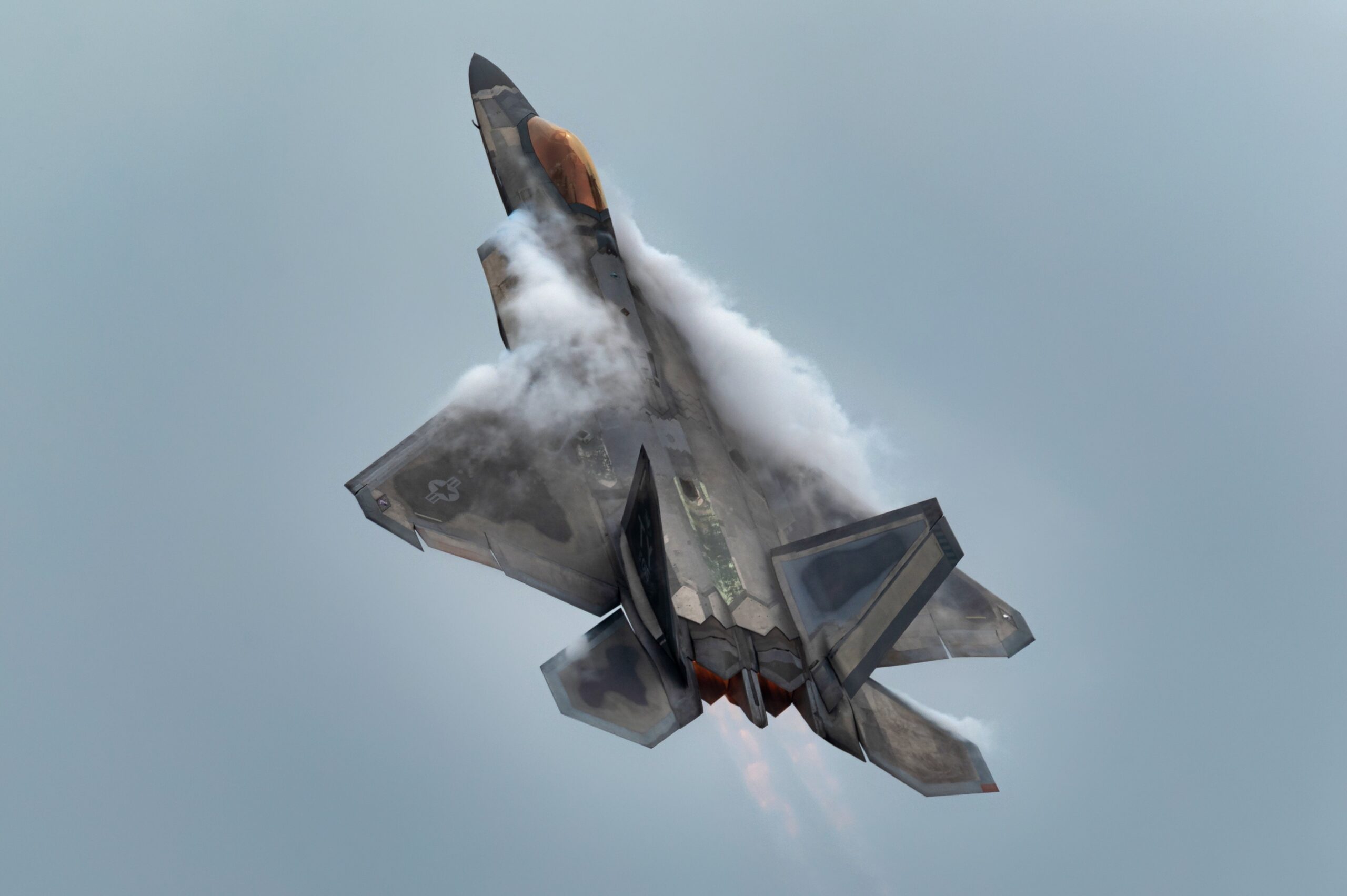
U.S. Air Force Maj. Josh Gunderson, F-22 Demo Team commander, performs maximum power takeoff during a demonstration for the 67th National Security Forum at Maxwell-Gunter Air Force Base, Montgomery, Alabama, May 11, 2021. The F-22 Raptor’s two Pratt and Whitney F119 Turbofan engines bring a combined 70,000 pounds of thrust, allowing the aircraft to takeoff straight into the vertical. (U.S. Air Force photo by Staff Sgt. Don Hudson)
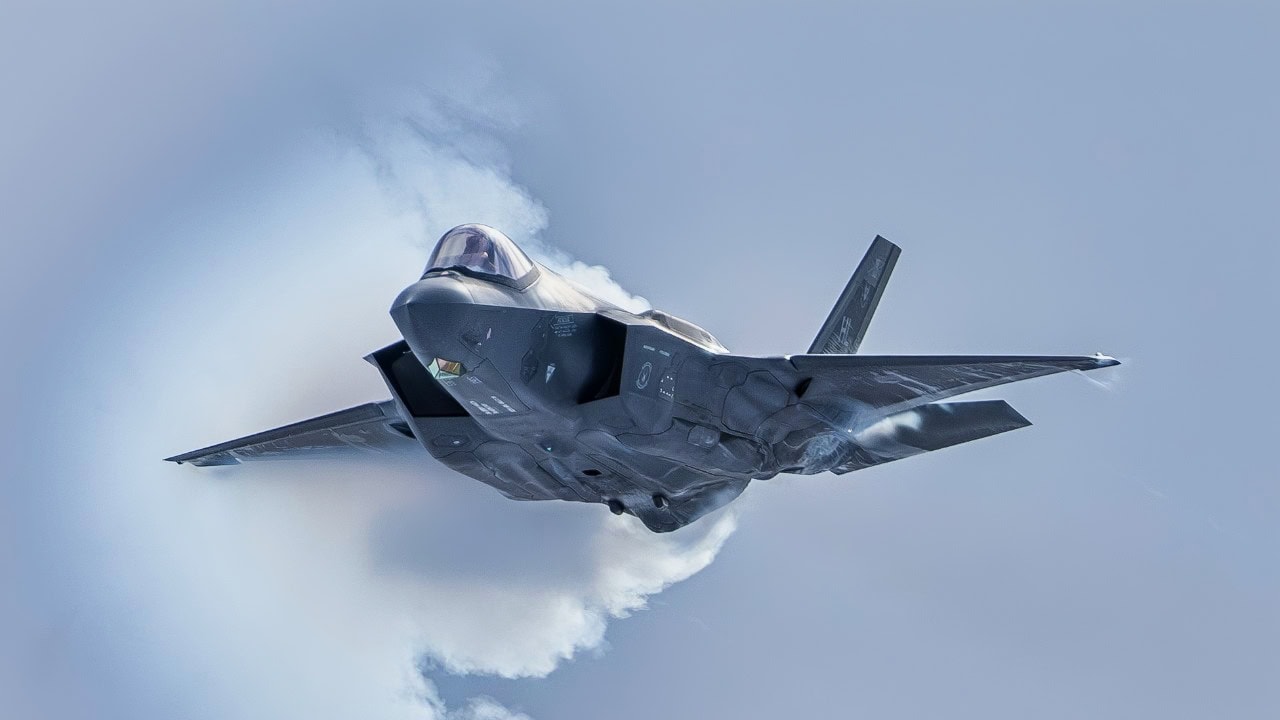
A U.S. Air Force F-35A Lightning II assigned to the F-35A Lightning II Demonstration Team performs a practice airshow performance at Hill Air Force Base, Utah, Jan. 11, 2023. The F-35 Demo Team performs rehearsal flights regularly to maintain required flying certifications and to uphold and maintain their mission and Air Force recruiting standards. (U.S. Air Force photo by Staff Sgt. Kaitlyn Ergish)
Hence, the sheer number of forces in motion. Land bases are bulging with aerial refueling tankers, F-35s, F-22s, F-16s, and more. Numerous C-17 flights have been tracked going into the region. KC-135 tankers, C-17s, C-130s, and even a military-contract Boeing 747 temporarily closed down the airport in Sofia, Bulgaria, while en route to the Middle East.
On February 17, twelve F-16CJs, specialists in Wild Weasel anti-air defense tactics, were spotted on the move at the Azores. These Block 52 F-16s carried the “Angry Kitten” adversary air jamming pod along with a host of other munitions.
Deployment of the US Gerald R. Ford adds more E-2Ds, radar surveillance planes. The E-2Ds are crucial to keeping a constant air picture of the maritime battlespace to spot drones, cruise missiles, and anti-ship missiles. Carrier Air Wing 9 on VINSON has already bagged an Iranian drone with a Marine F-35C. Adding Carrier Air Wing 8 embarked on FORD will extend the Navy’s ability to maintain 24/7 combat air patrols (or “caps”) to detect drones, for example.
Regenerating Missile Production
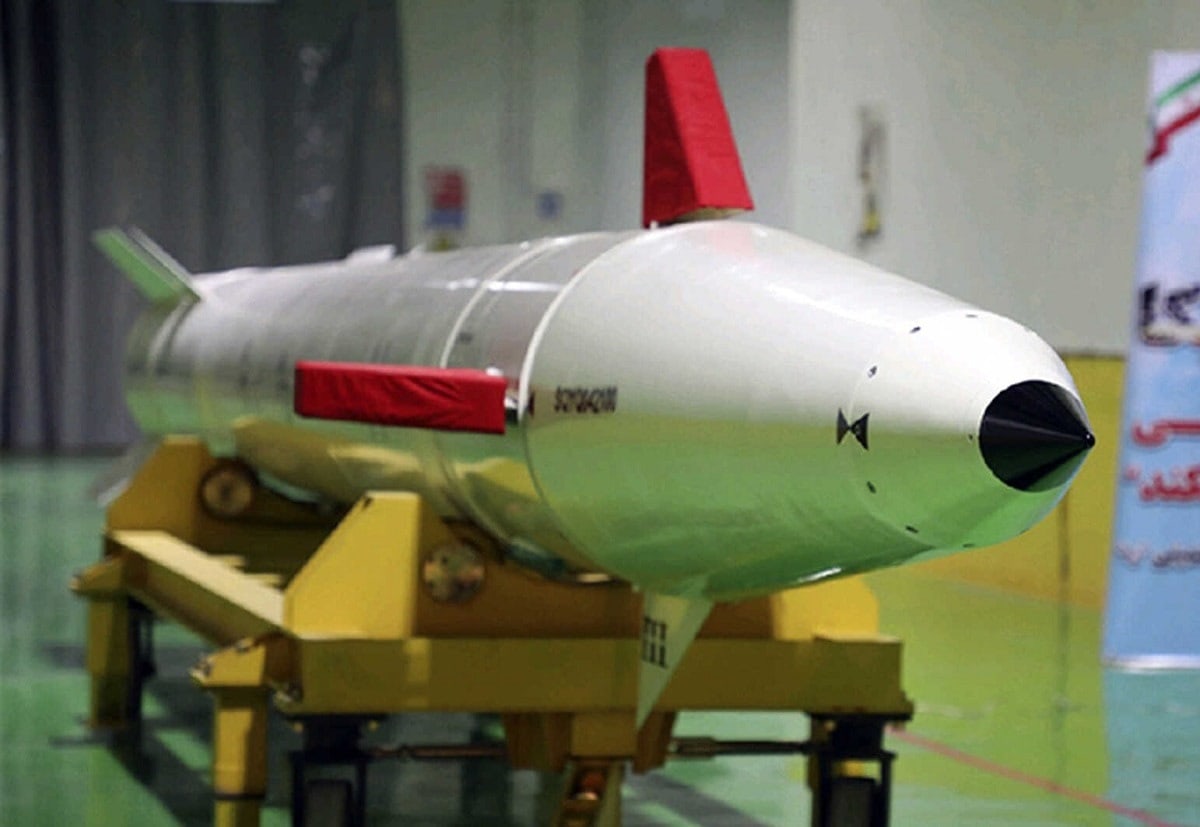
Iranian ballistic missiles. Image: Creative Commons.
All this is happening due to Iran’s dogged pursuit of missile and space launch capabilities. Iran launched missiles at Israel in April 2024, plus an additional 200 in October 2024. Iran then expended another 570 missiles during the 12-day war. Israeli forces struck an estimated 15 of Iran’s 30 to 35 main missile industrial complexes and about 15 of 25 missile bases, with numerous mobile launchers also targeted, Farzin Nadimi, senior fellow at the Washington Institute, told Iran International on December 17, 2025.
However, Iran is operating under the 25-year friendship pact with China signed in 2021. China buys 80% of Iran’s oil, accounting for about 13% of Chinese sea-borne oil imports, according to the Brookings Institution. That arrangement allows deals with China that appear to have kept the source of supply for manufacturing solid fuels open. In April 2025, the U.S. Treasury called out China for a trail of companies exporting sodium perchlorate and dioctyl sebacate to Iran. Those chemicals are used to produce solid fuel for ballistic missiles. By the fall of 2025, reports surfaced that Iran was rebuilding solid fuel sites outside Tehran. Acquiring more “planetary mixer” machines to make the fuel would put Iran’s missile makers back in business. Iran was believed to have the capacity to produce about 200 missiles per month.
Then there is space launch. Iran opened Imam Khomeini Spaceport in 2008 and a second facility. Next, Iran opened a space launch facility at the southern strategic port city of Chabahar on the Gulf of Oman, a sure sign of an expanding military footprint, according to a U.S. Army report.
Destroying Iran’s ballistic missile capabilities may or may not deal a fatal blow to the regime. But it would certainly remove a source of power and prestige, and go a long way to safeguard the region against Iran’s aggression.
About the Author: Dr. Rebecca Grant, Lexington Institute
Dr. Rebecca Grant (Follow Her on X: @rebeccagrantdc), Vice President of the Lexington Institute, is a national security analyst based in Washington, DC, specializing in defense and aerospace research and national security consulting. She has researched and published hundreds of articles on national security and spoken at numerous forums. In addition, Dr. Grant has often appeared on television as an expert on national security for Fox News, Fox Business, CNN, and MSNBC and as a series regular on The Smithsonian’s Air Warriors. Dr. Grant also writes on China, Russia and other technology and national security topics for Fox News Opinion. Her military books include 75 Great Airmen (with Lt. Gen. Chris Miller), The B-2 Goes to War, and Battle-Tested: Aircraft Carriers in Afghanistan and Iraq. Dr. Grant graduated from Wellesley College and earned a PhD in International Relations from the London School of Economics, University of London.