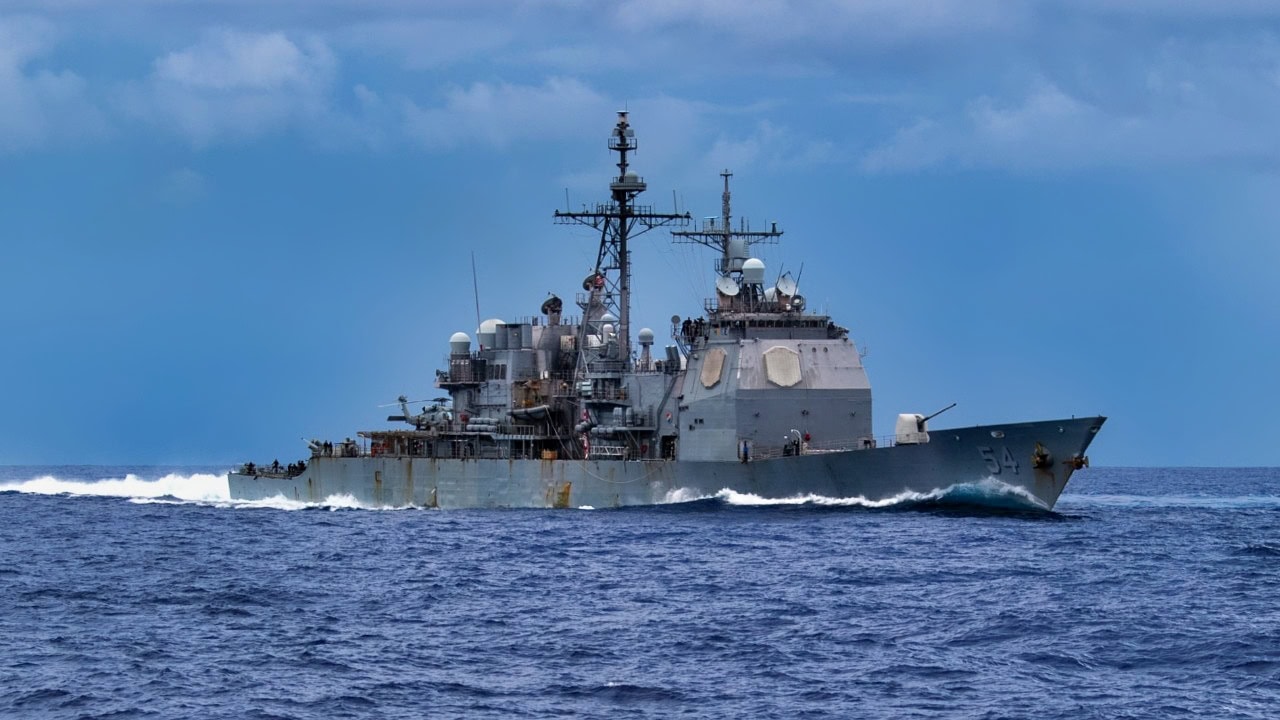
Summary and Key Points: Defense expert Kris Osborn analyzes the strategic impact of decommissioning the Ticonderoga-class cruiser.
-While aging hulls and rising maintenance costs necessitate their retirement, the move creates a significant “VLS gap,” reducing per-ship missile capacity from 122 cells to the 90–96 cells found on Arleigh Burke-class destroyers.
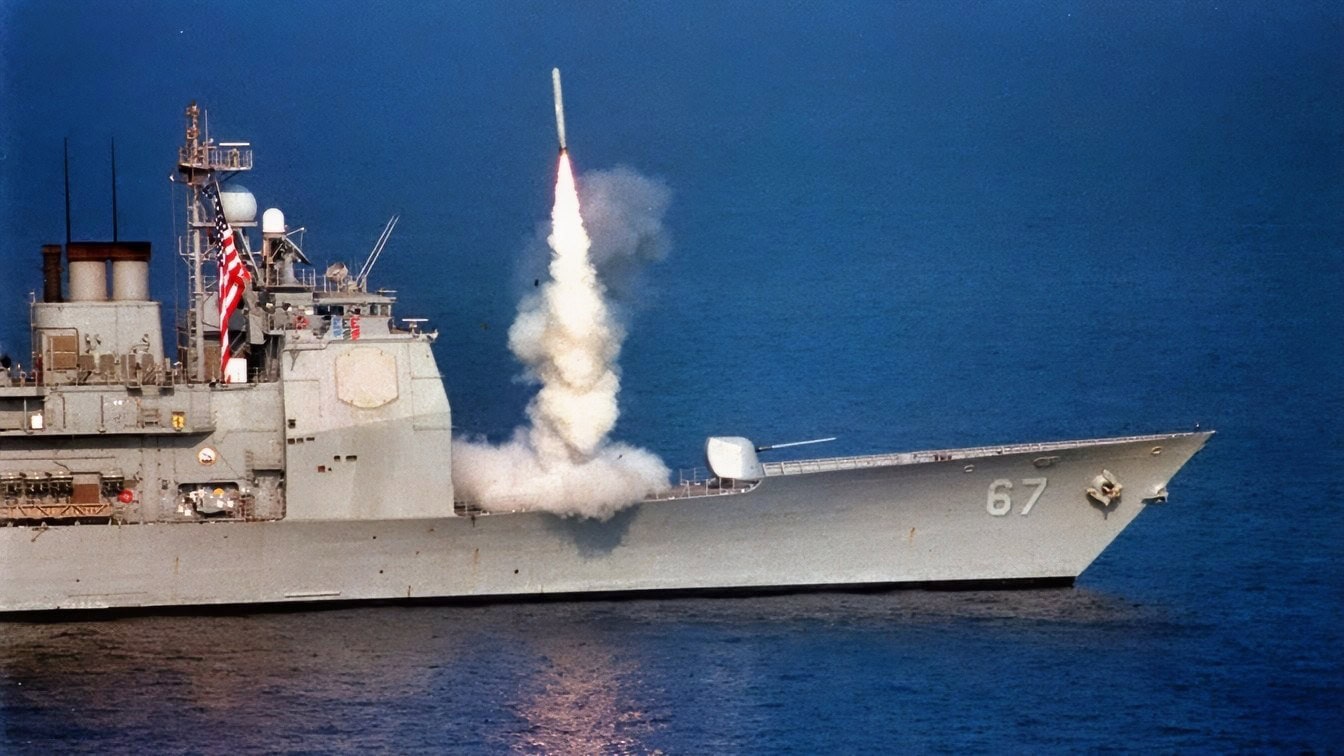
A Tomahawk cruise missile launches from the forward vertical launch system of the USS Shiloh (CG 67) to attack selected air defense targets south of the 33rd parallel in Iraq on Sept. 3, 1996, as part of Operation Desert Strike. The attacks are designed to reduce risks to the pilots who will enforce the expanded no-fly zone. President Clinton announced an expanded no-fly zone in response to an Iraqi attack against a Kurdish faction. The larger no-fly zone in Southern Iraq will make it easier for U.S. and coalition partners to contain Saddam Hussein’s aggression. The U.S. Navy Ticonderoga Class cruiser launched the missiles as it operated in the Persian Gulf.
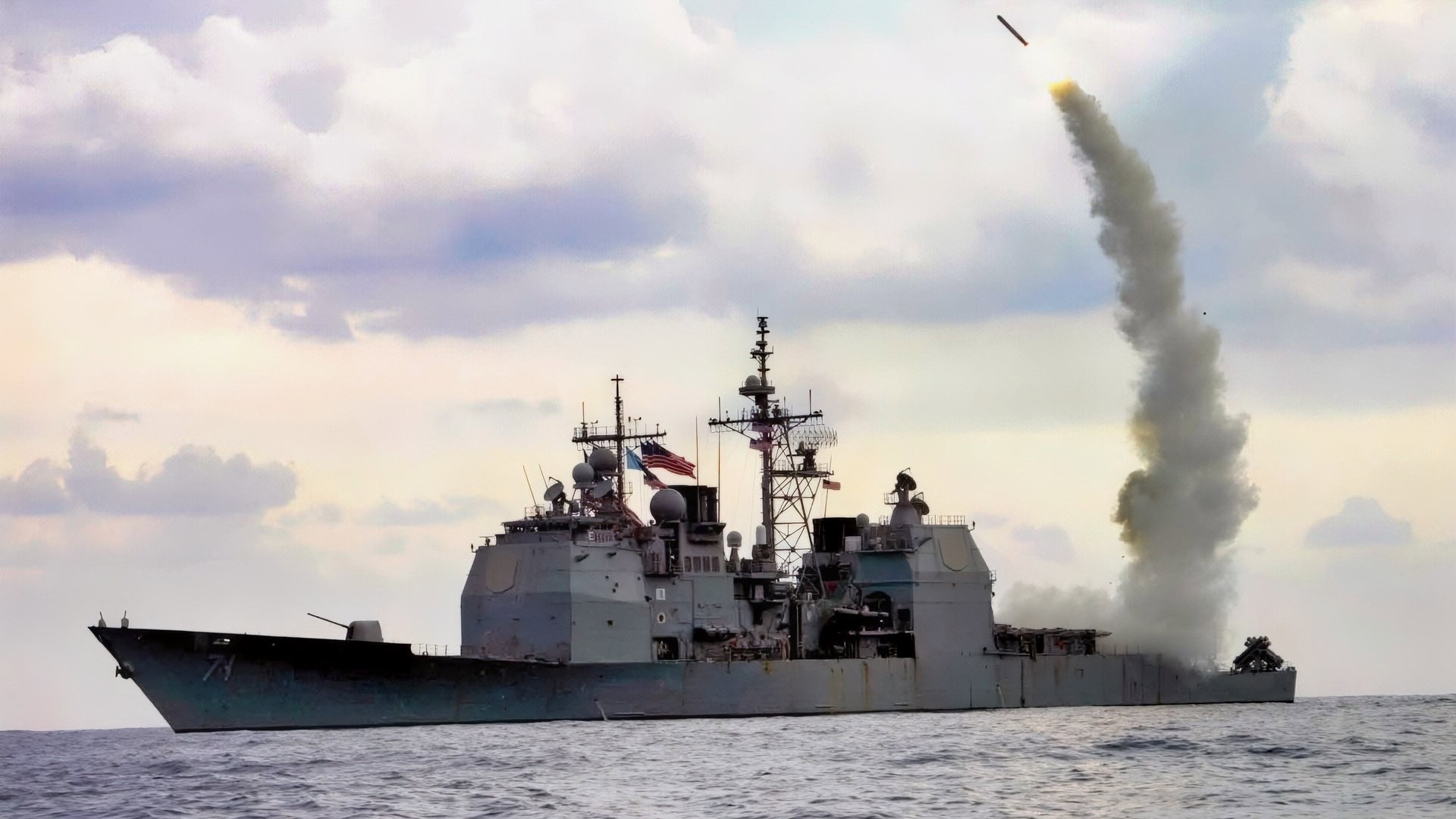
ABOARD USS CAPE ST. GEORGE (CG 71) AT SEA — A Tomahawk cruise missile launches from USS Cape St. George, operating in the eastern Mediterranean Sea in support of Operation Iraqi Freedom. (Photo by IS1 Kenneth Moll, USS Cape St. George) (Released by Sixth Fleet Public Affairs)
-This transition pressures the fleet to reassign Air Defense Commander (ADC) and Ballistic Missile Defense (BMD) roles to smaller platforms.
-As the Navy pivots toward Distributed Maritime Operations (DMO) and the future DDG(X), it must bridge a critical capability deficit in the Indo-Pacific and Middle East.
The 122-Cell Void: Why the Ticonderoga Retirement Strains U.S. Naval Firepower
The retirement of the Ticonderoga-class cruiser marks a significant turning point for the United States Navy, reshaping its operational capabilities, force structure, and strategic outlook.
For nearly four decades, these cruisers have served as the backbone of the Navy’s surface combatant fleet, providing advanced air defense, command-and-control, and long-range strike capabilities.
Their gradual decommissioning has been a double-edged sword, generating both positive and negative results.
One of the most immediate impacts is the reduction in dedicated air defense command platforms.
The Ticonderoga-class ships were uniquely equipped with the Aegis Combat System, enabling them to function as protective defensive nodes for carrier strike groups.
While Arleigh Burke-class destroyers also carry Aegis systems, not all are configured or staffed to assume the same level of command responsibility.
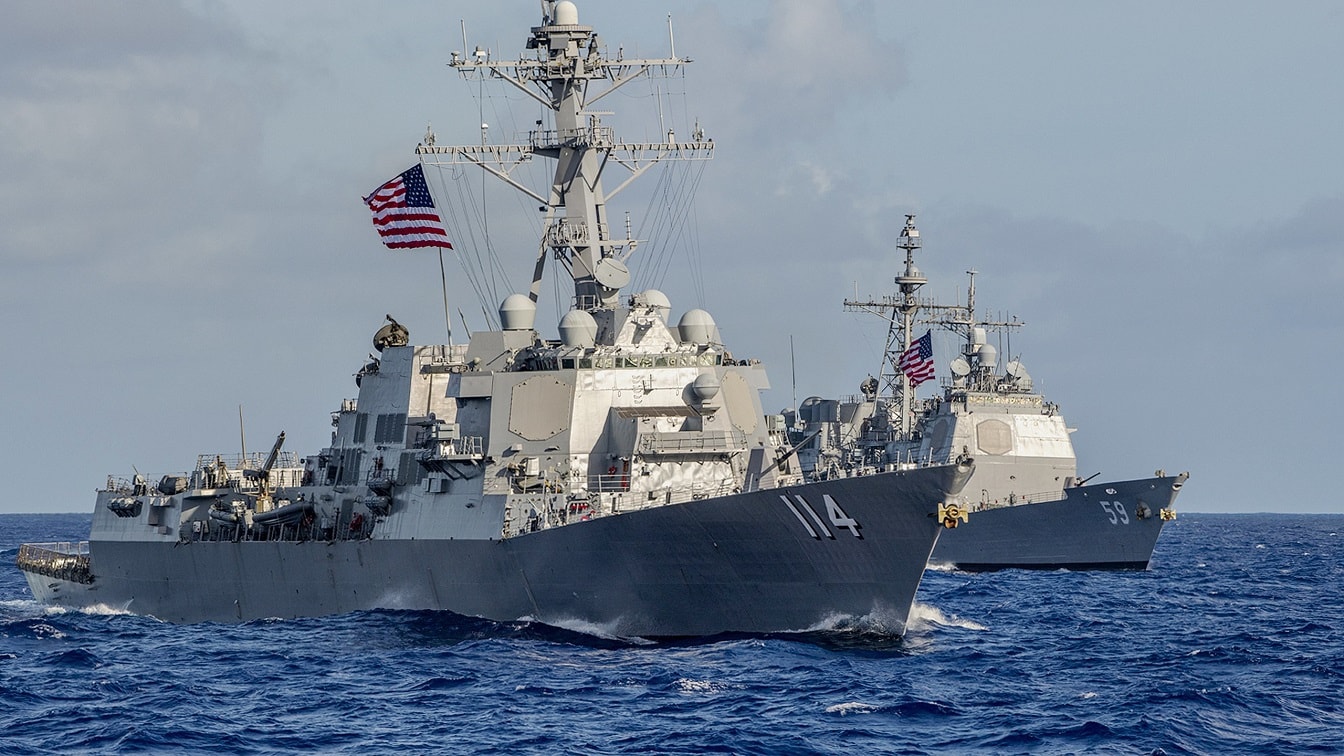
The Arleigh Burke-class guided-missile destroyer USS Ralph Johnson (DDG 114) and the Ticonderoga-class guided-missile cruiser USS Princeton (CG 59) steam in formation during dual carrier operations with the Nimitz and Theodore Roosevelt Carrier Strike Groups (CSG). Dual carrier operations unify the tactical power of two individual CSG, providing fleet commanders with an unmatched, unified credible combat force capable of operating indefinitely. The CSGs are on a scheduled deployments to the Indo-Pacific.
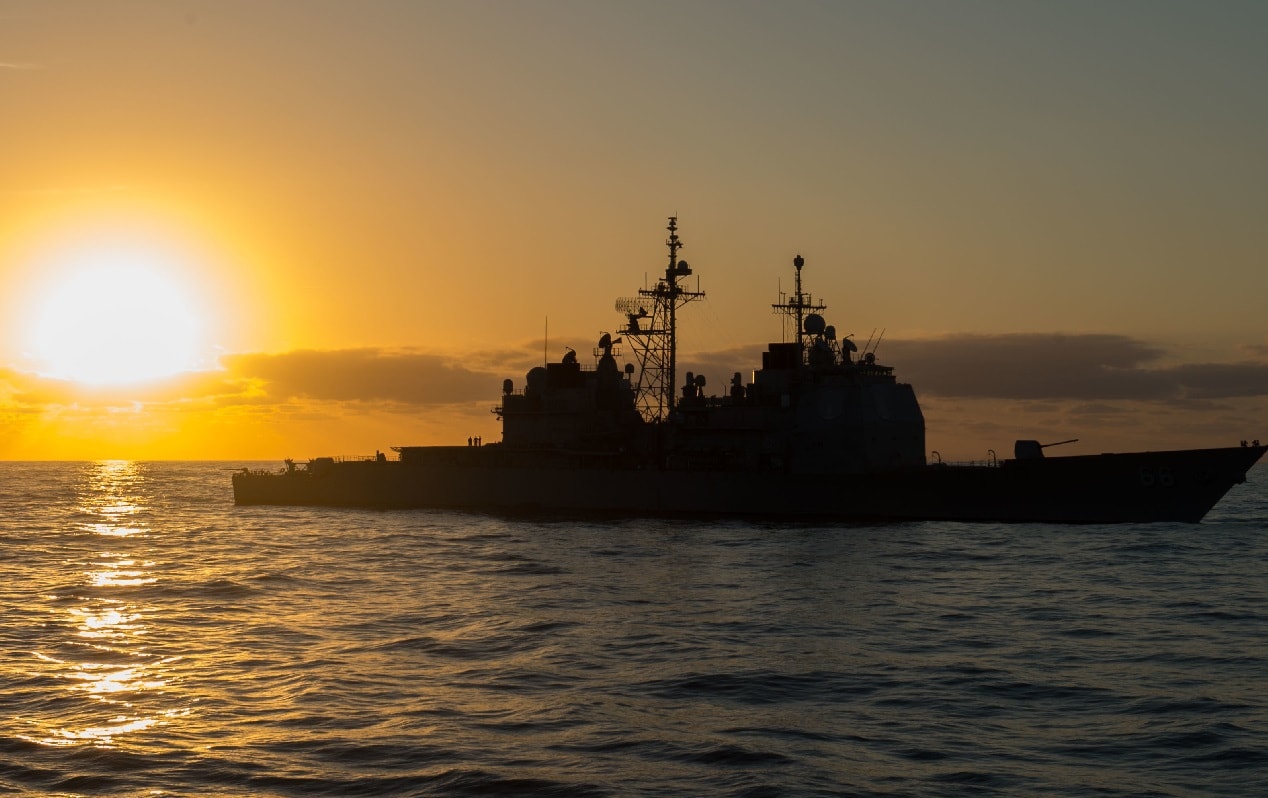
The sun rises over the Ticonderoga-class guided-missile cruiser USS Hue City (CG 66) in the Atlantic Ocean March 28, 2018. Hue City is underway supporting Carrier Strike Group Four Task Force Exercise 18-2. (U.S. Navy photo by Mass Communication Specialist 3rd Class Danny Ray Nuñez Jr.)
The cruisers’ larger size enabled expanded command spaces and additional personnel, making them particularly suited to both offensive and defensive maritime combat operations.
Their absence has likely added pressure on destroyers to expand their mission scope.
Destroyers Pressured
Another major consequence lies in missile capacity. Ticonderoga-class cruisers possess 122 vertical launch system cells, significantly more than the 90 to 96 cells typically found on destroyers.
This difference translates into a substantial loss of missile firepower per ship.
As these cruisers retire, the Navy faces a decline in total VLS capacity unless replacements or alternative solutions are implemented. A reduced missile inventory could limit the Navy’s ability to sustain high-intensity operations in a great power engagement.
The retirement also affects ballistic missile defense capabilities.
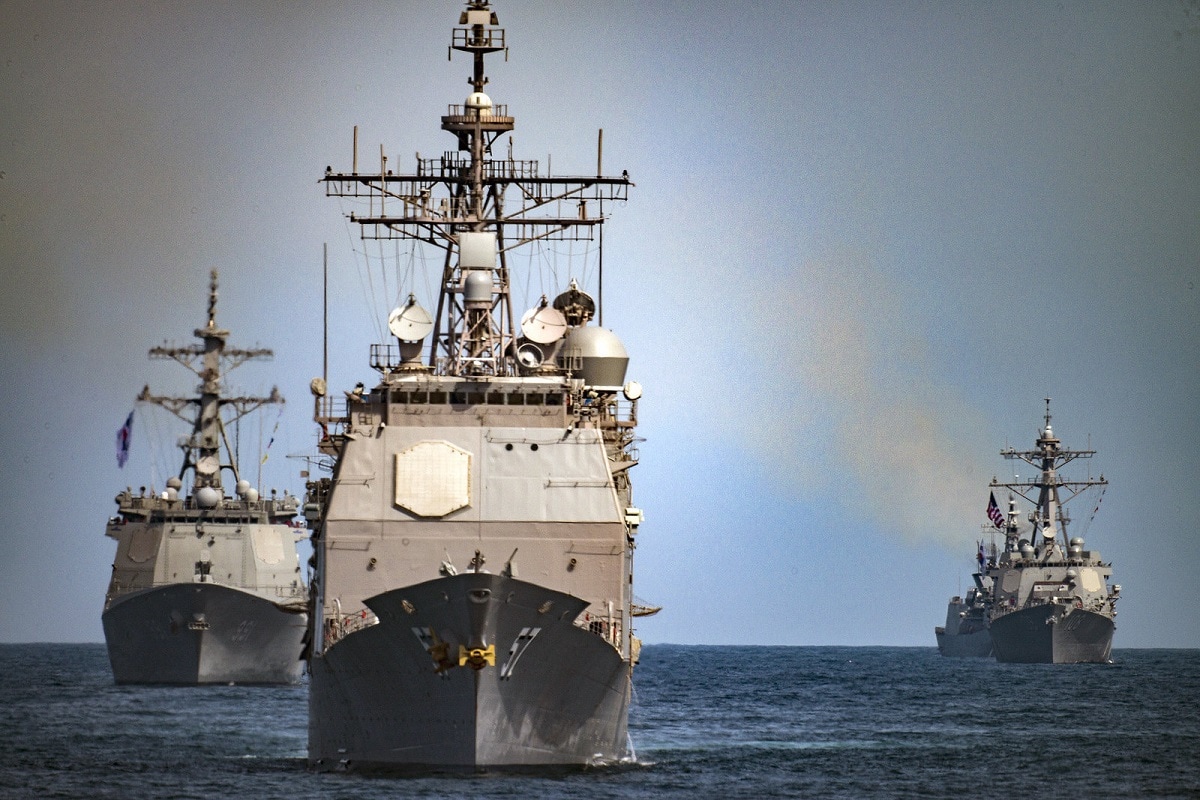
PACIFIC OCEAN (May 3, 2017) The Ticonderoga-class guided-missile cruiser USS Lake Champlain (CG 57), center, leads the Republic of Korea destroyers Sejong the Great (DDG 991), left, and Yang Manchun (DDH 973) while transiting the Western Pacific. The U.S. Navy has patrolled the Indo-Asia-Pacific routinely for more than 70 years promoting regional peace and security. (U.S. Navy photo by Mass Communication Specialist 2nd Class Z.A. Landers/Released) 170503-N-GD109-160
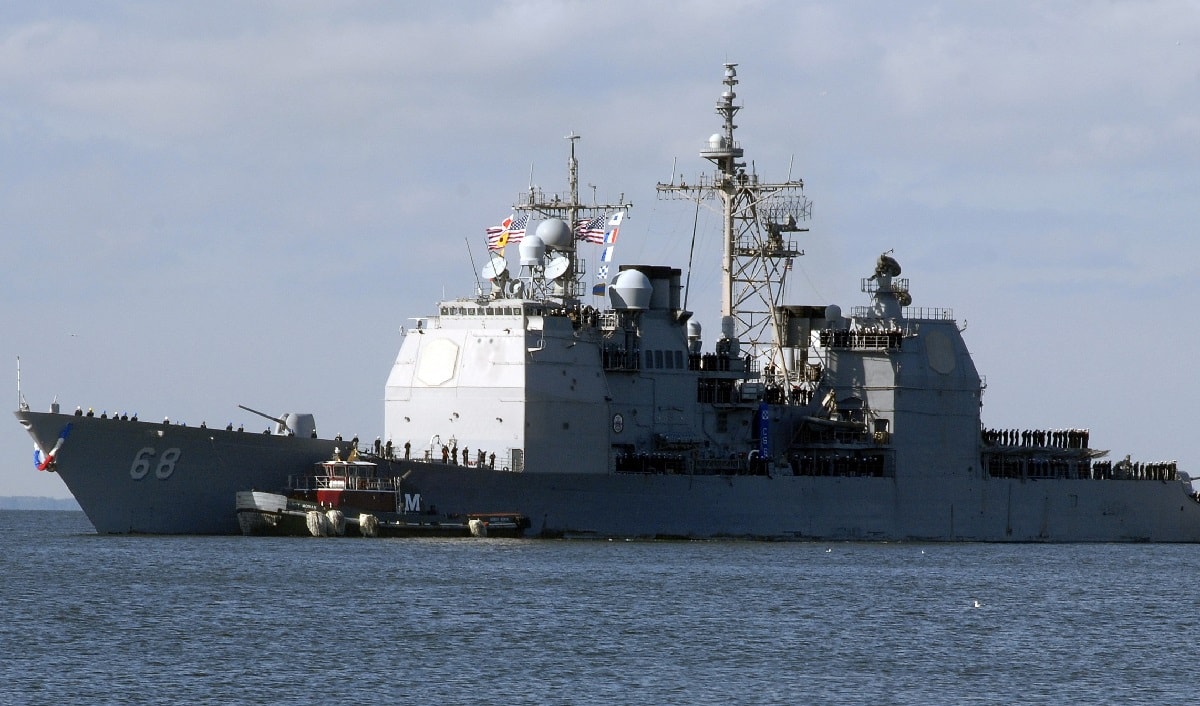
The Ticonderoga-class guided-missile cruiser USS Anzio (CG 68) returns to Naval Station Norfolk after completing a six-month deployment in the U.S. 5th and 6th Fleet areas of responsibility. Anzio served off the Horn of Africa as the flagship of the international anti-piracy task force, Combined Task Force (CTF) 151. (U.S. Navy photo by Mass Communication Specialist 3rd Class John Suits/Released).
Many Ticonderoga-class cruisers have been upgraded to support missile defense missions, contributing to regional and homeland defense.
Their withdrawal places additional pressure on destroyers to assume these roles, potentially stretching the fleet thin. As threats from advanced missile systems continue to evolve, maintaining strong BMD coverage remains a critical priority for the Navy.
From a maintenance and readiness perspective, the decision to retire these cruisers is understandable.
Most Ticonderoga-class ships were commissioned in the 1980s and early 1990s, making them some of the oldest active surface combatants in the fleet.
Aging hulls, outdated systems, and rising maintenance costs have led to decreased availability and increased time in shipyards.
Continuing to operate these vessels would require significant investment, often with diminishing returns.
By retiring them, the Navy can reallocate resources toward newer platforms and emerging technologies.
Enable Modernization
However, the transition is not without risk.
The Navy’s long-term plan includes developing next-generation surface combatants, such as the DDG(X), intended to replace both cruisers and older destroyers. Until these ships are operational, a capability gap may emerge.
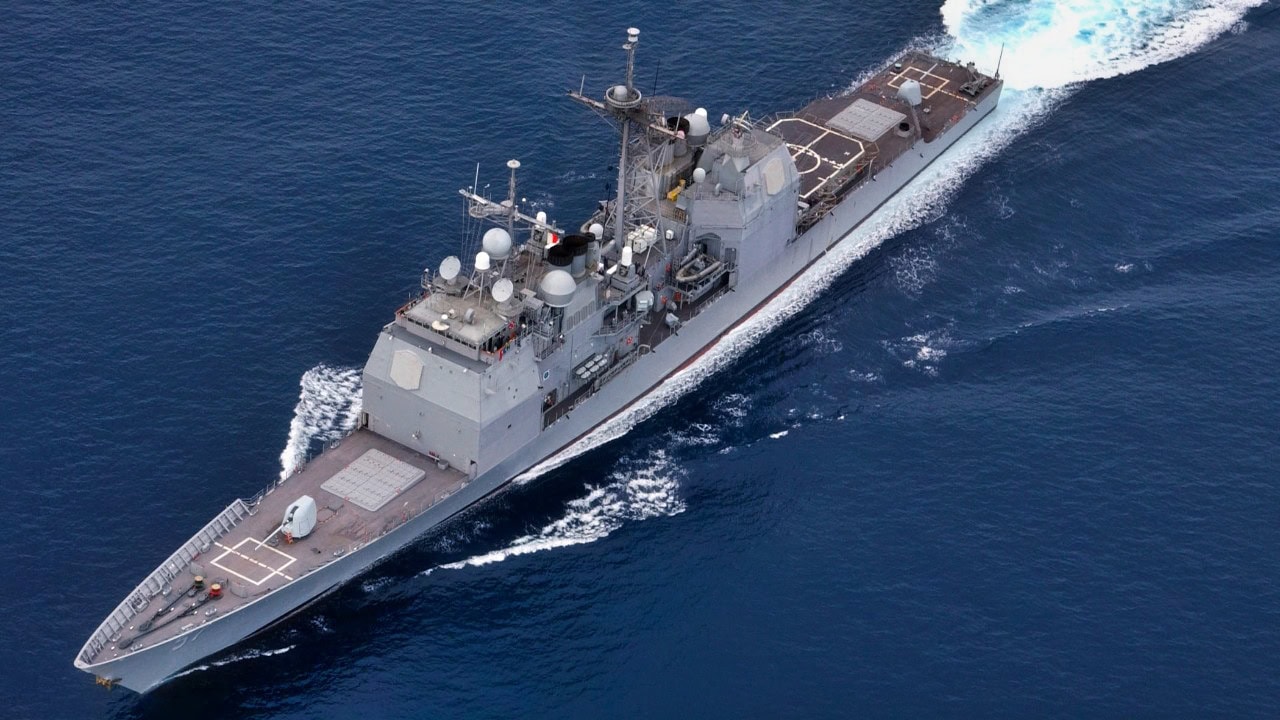
Ticonderoga-Class.
The interim reliance on existing destroyers and other assets may not fully compensate for the unique advantages provided by the cruisers, particularly in high-end conflict scenarios.
Strategically, the retirement aligns with the Navy’s shift toward distributed maritime operations.
This concept emphasizes a broader dispersion of forces, greater reliance on smaller, more numerous platforms, and enhanced networking across the fleet.
While the Ticonderoga-class cruisers were powerful and versatile, they represented a more centralized model of naval warfare.
Their retirement allows the Navy to move toward a force structure better suited to modern threats, including cyber warfare, unmanned systems, and long-range precision strikes.
FirePower “Gap”
At the same time, there are concerns about the pace of this transition.
Critics argue that retiring cruisers before adequate replacements are available could weaken the Navy’s near-term readiness. The geopolitical environment remains uncertain, with tensions in regions such as the Indo-Pacific and the Middle East requiring a strong and flexible naval presence.
Ensuring that the fleet retains sufficient capability during this transitional period is a delicate balancing act.
About the Author: Kris Osborn
Kris Osborn is the President of Warrior Maven – Center for Military Modernization. Osborn previously served at the Pentagon as a highly qualified expert in the Office of the Assistant Secretary of the Army—Acquisition, Logistics & Technology. Osborn has also worked as an anchor and on-air military specialist at national TV networks. He has appeared as a guest military expert on Fox News, MSNBC, The Military Channel, and The History Channel. He also has a Masters Degree in Comparative Literature from Columbia University.