
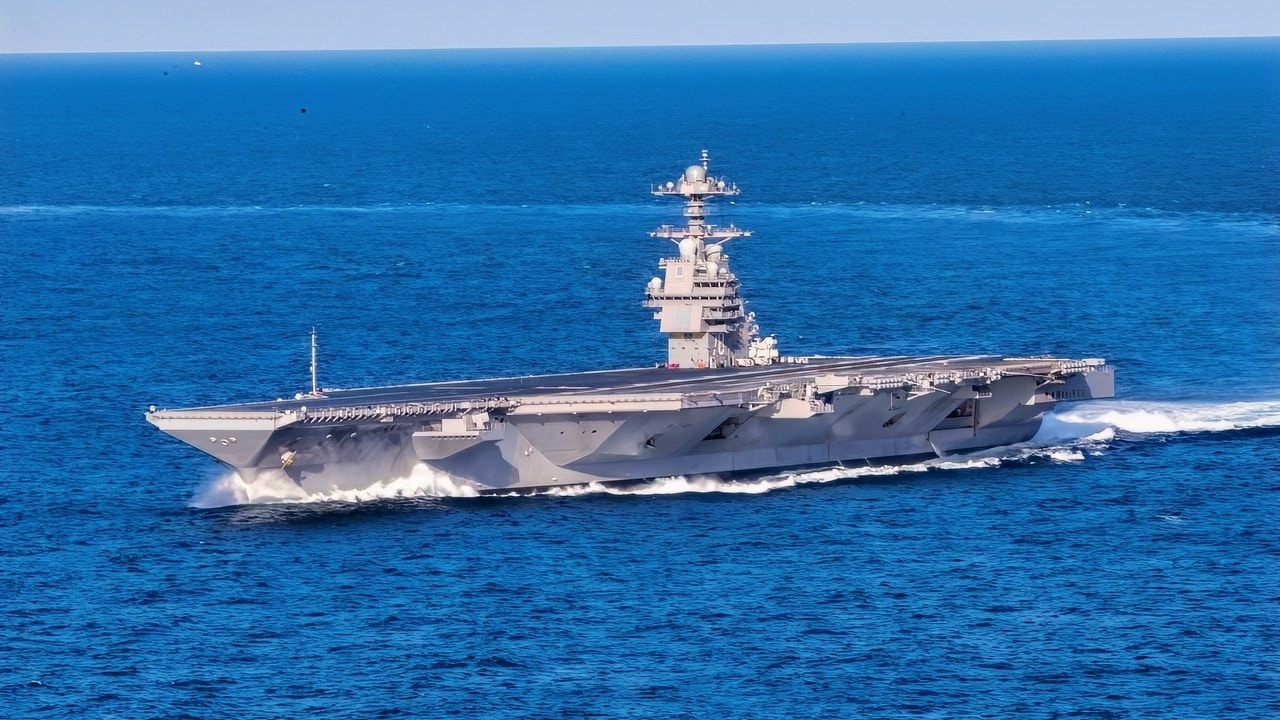
Summary and Key Points: Defense analyst Jack Buckby reports that the USS Gerald R. Ford (CVN-78) has left the Red Sea for Souda Bay, Crete, following a major laundry room fire on March 12.
-The blaze displaced over 600 sailors and destroyed 100 berths, compounding morale issues on a record-breaking 268-day deployment.
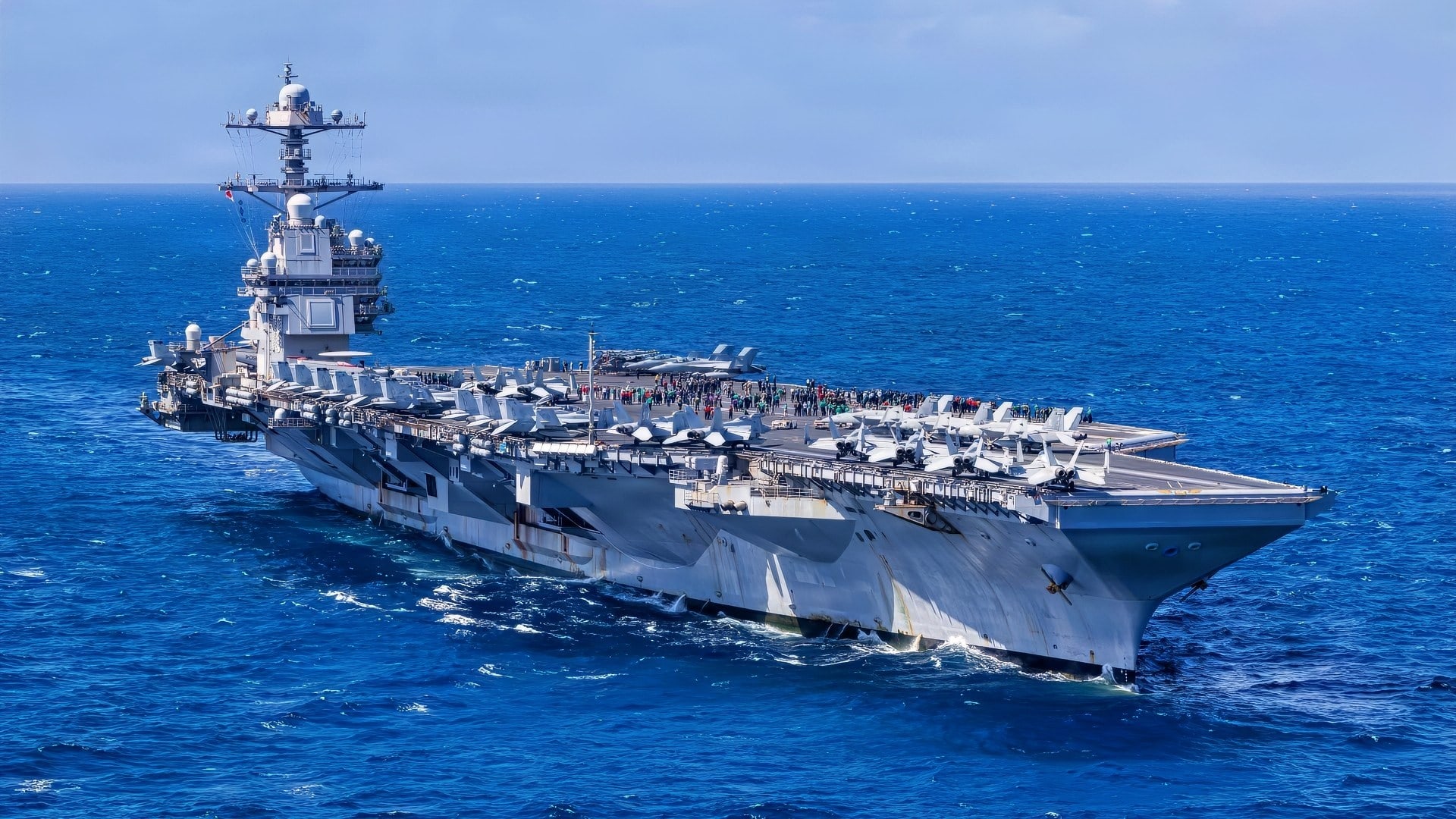
The world’s largest aircraft carrier, Ford-class aircraft carrier USS Gerald R. Ford (CVN 78), transits the Caribbean Sea during Carrier Air Wing 8’s aerial change of command ceremony, Jan. 19, 2026. U.S. military forces are deployed to the Caribbean in support of the U.S. Southern Command mission, Department of War-directed operations, and the president’s priorities to disrupt illicit drug trafficking and protect the homeland. (U.S. Navy photo)
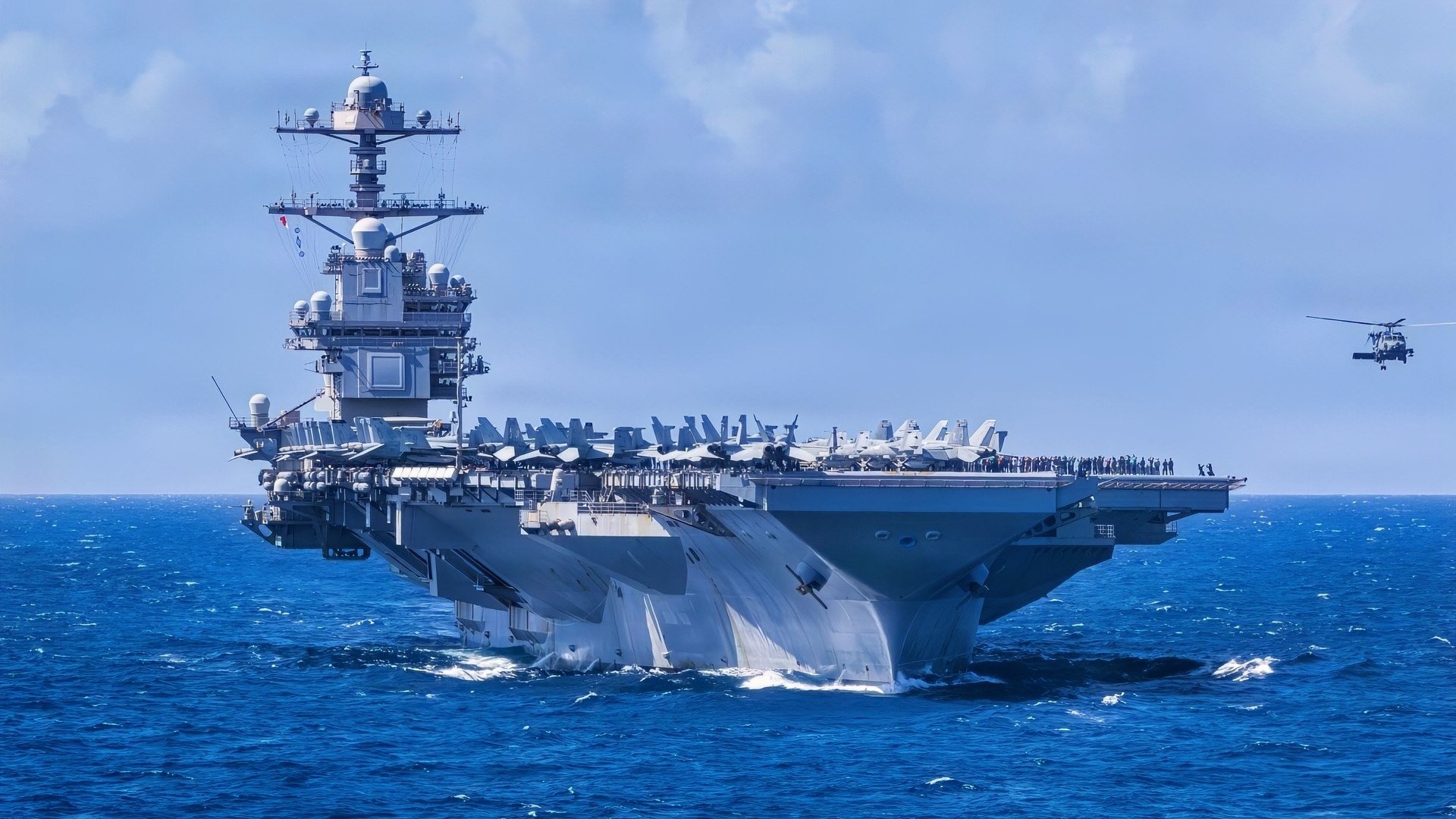
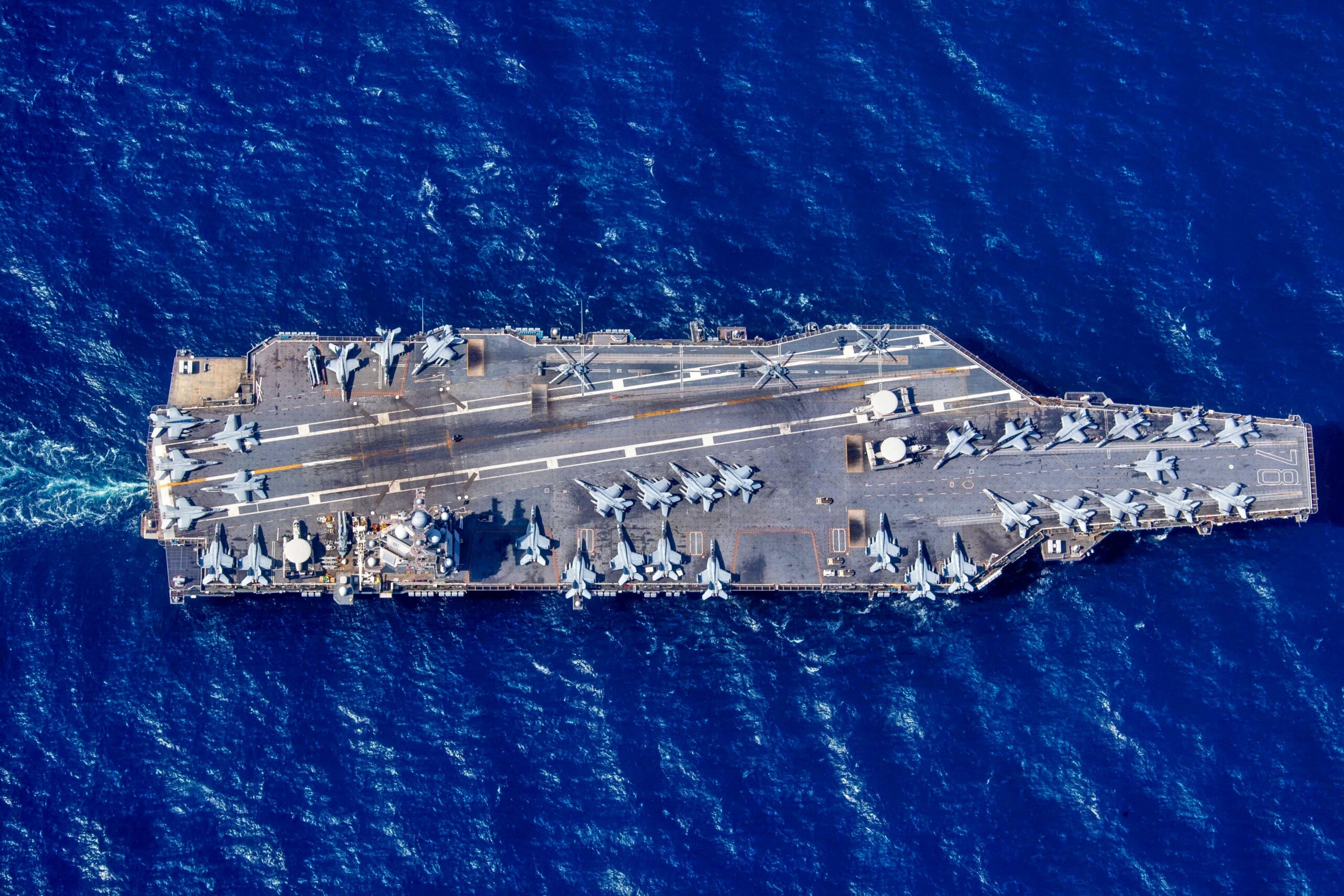
U.S. Navy Carrier Air Wing 8 aircraft fly in formation over the world’s largest aircraft carrier, Ford-class aircraft carrier USS Gerald R. Ford (CVN 78), during Carrier Air Wing 8’s aerial change of command ceremony while underway in the Caribbean Sea, Jan. 19, 2026. U.S. military forces are deployed to the Caribbean in support of the U.S. Southern Command mission, Department of War-directed operations, and the president’s priorities to disrupt illicit drug trafficking and protect the homeland. (U.S. Navy photo)
-Despite establishing air superiority in Operation Epic Fury, the Ford’s absence creates a temporary strike gap in the Iran theater.
-The USS George H.W. Bush (CVN-77) is currently being fast-tracked to relieve the carrier, as CENTCOM works to sustain the 7,000+ strikes conducted since late February.
The Week of the Gap: Why the USS Gerald R. Ford’s Withdrawal to Crete Matters for Operation Epic Fury
The U.S. Navy has ordered the aircraft carrier USS Gerald R. Ford (CVN-78) to leave the Red Sea and head to Naval Support Activity Souda Bay in Crete for repairs. The order follows a major onboard fire, amid mounting technical strain during operations against Iran. The decision, confirmed by U.S. officials on March 17–18, comes after the March 12 fire in the ship’s aft laundry facility injured sailors, damaged living spaces, and triggered an extensive damage-control response.
Although the carrier remained operational and continued flying missions under U.S. Central Command (CENTCOM), the incident—combined with other systemic issues that have cropped up during a prolonged deployment—prompted Navy leadership to pull the ship from the fight for at least one week of repairs.
The move temporarily removes one of the most capable U.S. strike platforms from the Iran theater, raising immediate questions about how the Pentagon will sustain operations.
The Fire and the Damage to USS Gerald R. Ford
The fire on March 12 broke out in the carrier’s main laundry spaces while the ship was operating in the Red Sea under CENTCOM tasking. The blaze required hours of firefighting and extended damage-control efforts, with one sailor medically evacuated and more than 200 treated for smoke inhalation.
U.S. Fifth Fleet officials confirmed the fire was not combat-related and said the cause is under investigation. The damage extended beyond the immediate compartment. Smoke spread into berthing areas, destroying or displacing more than 100 sleeping spaces and forcing the Navy to source replacement materials from shore facilities.
The fire also disrupted core shipboard services, including laundry and habitability systems, compounding existing maintenance issues. The Ford has already experienced persistent problems with its vacuum-based toilet system during deployment, requiring repeated intervention by engineering crews
The vessel has faced a rough combination of acute damage and cumulative wear from sustained operations. After the Ford spent more than eight months at sea, including extended service beyond its original deployment window, officials concluded that continuing operations without repairs risks deeper system degradation.
What Ford Was Doing In the Iran Campaign
The Gerald R. Ford has been a central component of U.S. operations against Iran since the campaign began on February 28. Originally deployed from Norfolk in June 2025, the carrier’s mission evolved over time, moving from Caribbean operations to its Middle East deployment.
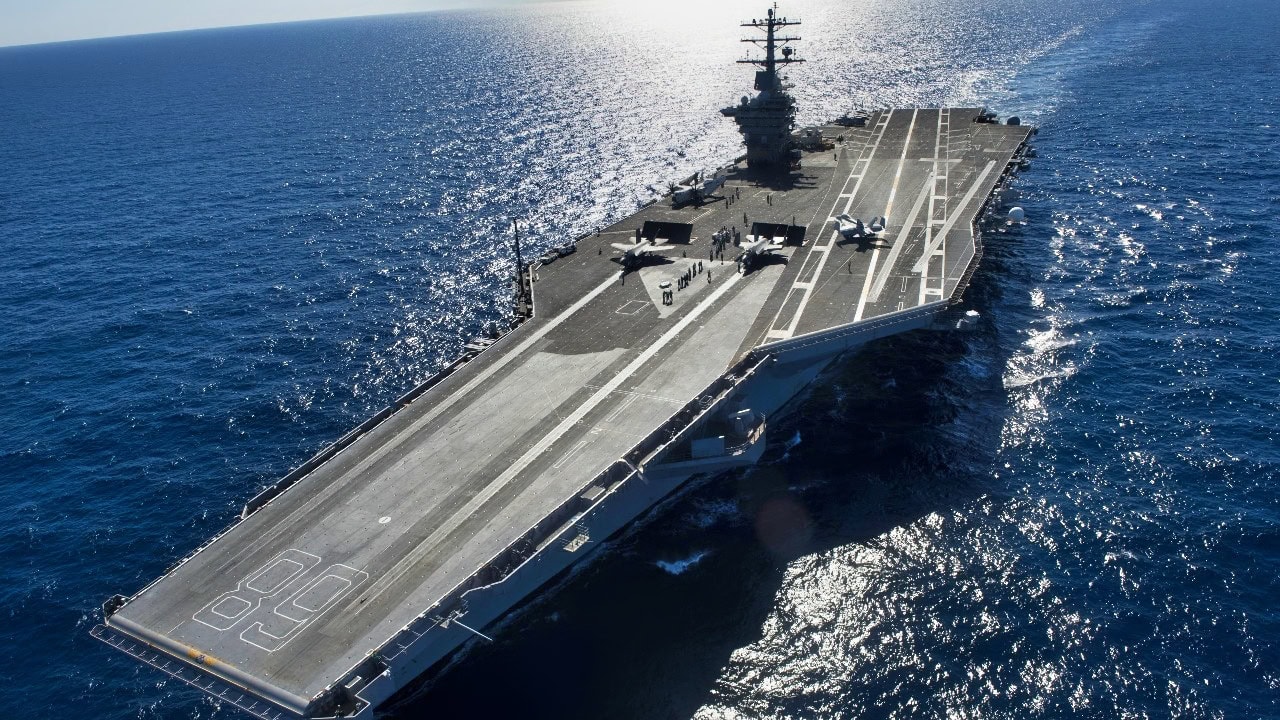
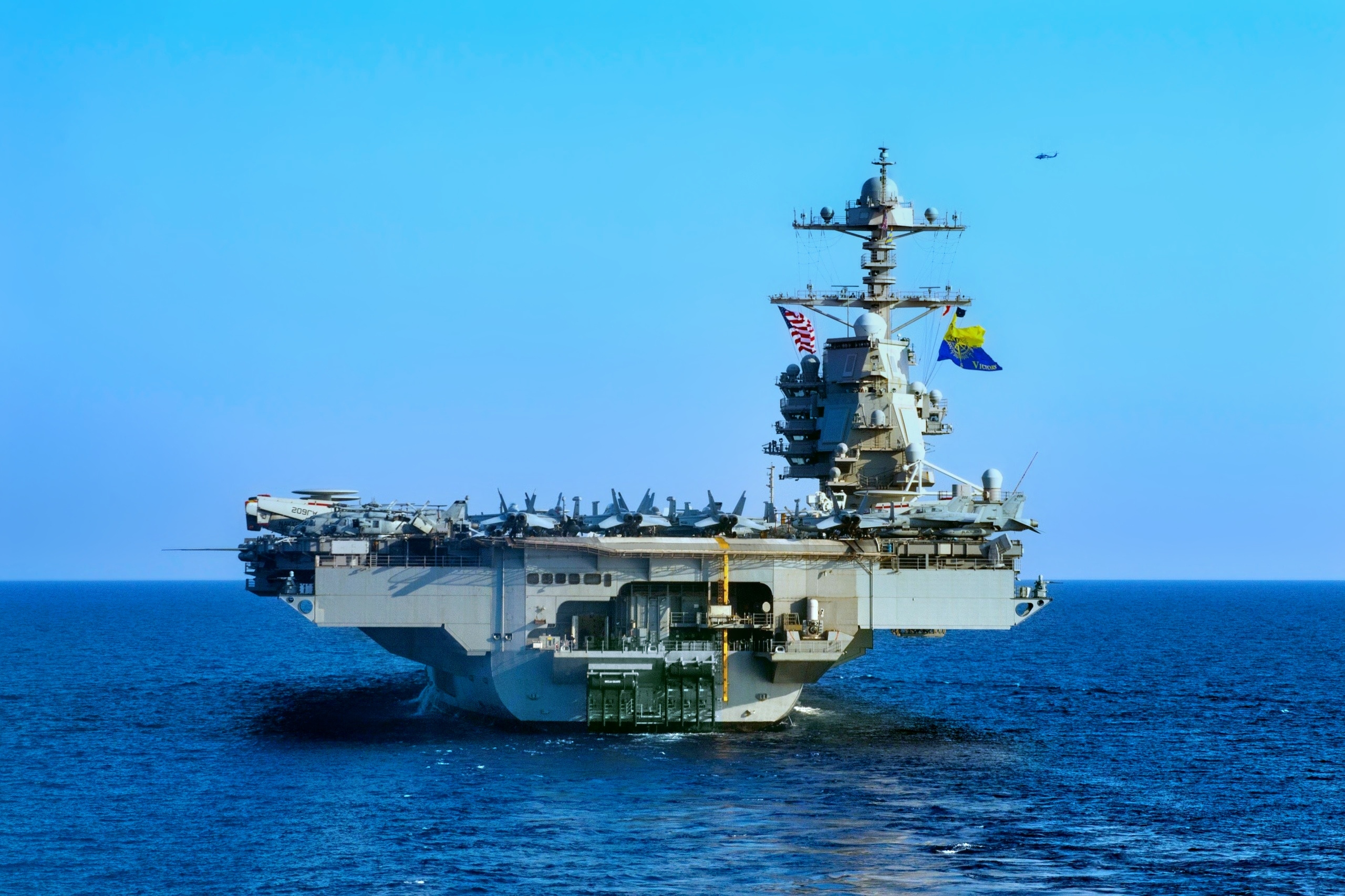
Ford-Class. Image Credit: Creative Commons.
Ford-Class Aircraft Carrier. Image Credit: Creative Commons.
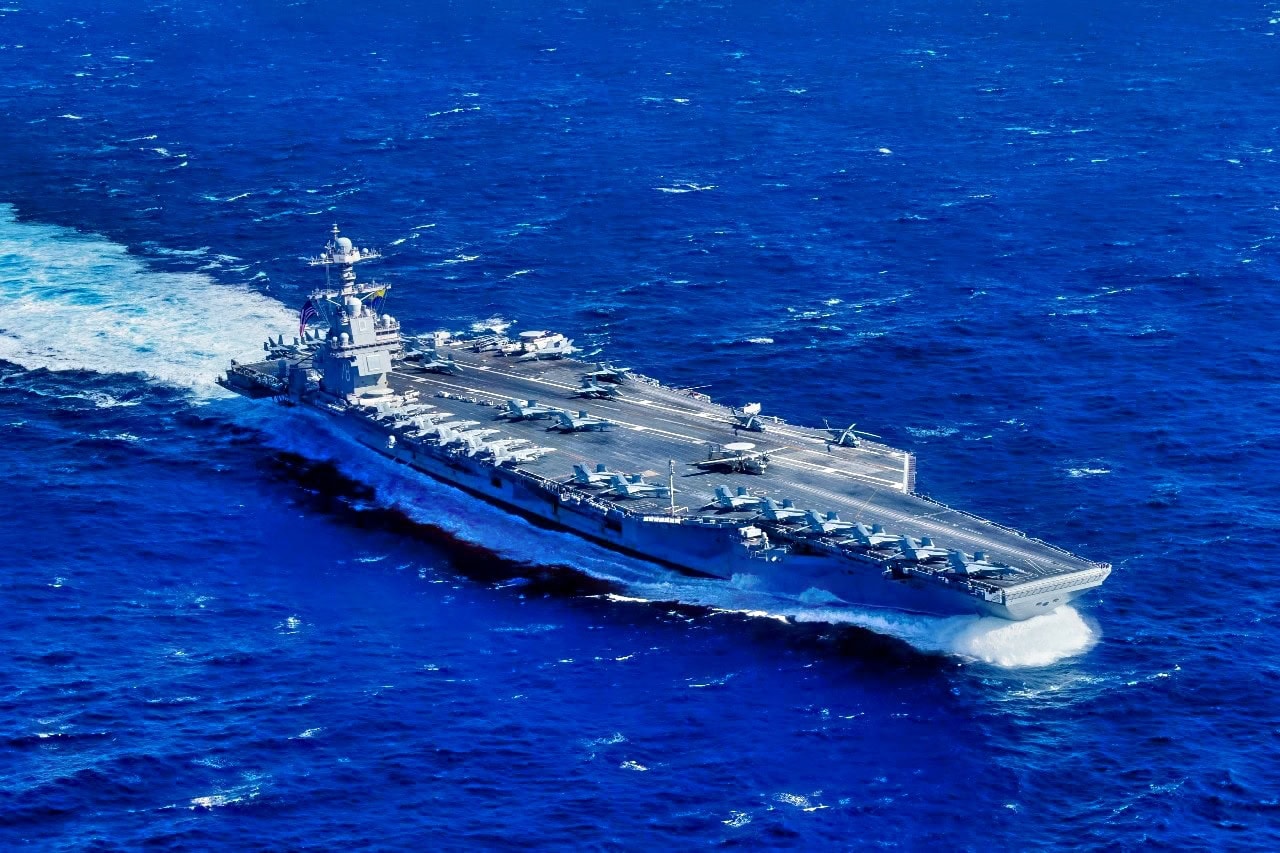
Ford-Class. Image Credit: Creative Commons.
In the Red Sea, the carrier operated under CENTCOM authority, launching air sorties against targets including missile infrastructure and air defense systems while also supporting intelligence and coordination functions across the joint force. And the scale of the operations so far has been significant, with U.S. forces having conducted more than 7,000 strikes since late February, with the Ford’s air wing—comprising more than 75 aircraft—playing a major role in sustaining operations
The carrier’s electromagnetic launch system and new flight-deck layout are designed to generate a higher sortie rate than the older Nimitz-class carriers. Those capabilities have proven extremely valuable during the campaign so far.
What Changes Now
The immediate consequence of the Ford’s withdrawal is a reduction in U.S. carrier-based airpower in the region at a critical moment of the campaign. U.S. officials have so far indicated that the carrier is expected to spend a week in Crete undergoing pierside repairs, meaning it will be temporarily unavailable for flight operations. Reports suggest the USS George H.W. Bush (CVN-77) is being prepared to relieve the Ford, though the timing remains uncertain.
The Ford’s absence removes a specific set of advantages. It offers high-tempo sortie generation from a mobile sea base, as well as immediate strike flexibility, without needing to rely on host nations. It also provides redundant airpower in case of escalation.
But, while the repairs are certainly inconvenient, U.S. and Israeli forces have already established air superiority over Iran. Efforts must now focus on halting the Iranian strikes that are causing chaos throughout the Middle East.
Reinforcements Are Moving In
A military official cited by The New York Times said the Ford will probably be relieved by the Bush, which is preparing to deploy to the Middle East.
The world’s largest aircraft carrier, USS Gerald R. Ford (CVN 78), sails in formation with the Arleigh Burke-class guided missile destroyers USS Winston Churchill (DDG 81), USS Mitscher (DDG 57), USS Mahan (DDG 72), USS Bainbridge (DDG 96), and USS Forrest Sherman (DDG 98) in the Atlantic Ocean, Nov. 12, 2024. The Gerald R. Ford Carrier Strike Group is underway in the Atlantic Ocean completing Group Sail. Group Sail is the first at-sea integrated phase training event during a routine deployment training cycle. It is designed to challenge the Gerald R. Ford CSG’s ability to use the capabilities of the USS Gerald R. Ford (CVN 78), USS Winston S. Churchill (DDG 81), Carrier Air Wing (CVW) 8, Destroyer Squadron (DESRON) 2, and embarked Information Warfare team as a cohesive Strike Group to meet Navy and Joint Warfighting requirements that increases warfighting capability and tactical proficiency across all domains. (U.S. Navy photo by Mass Communication Specialist 2nd Class Maxwell Orlosky)
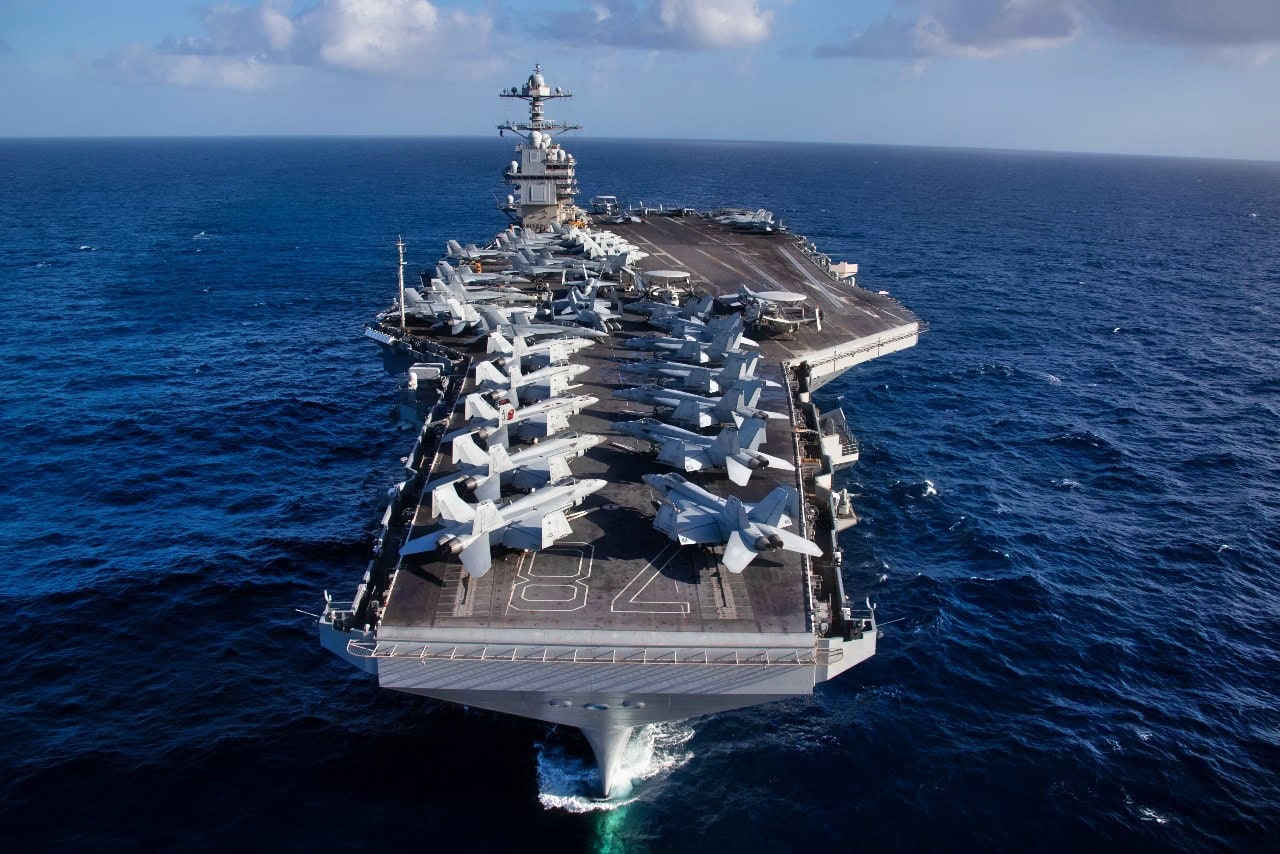
The world’s largest aircraft carrier USS Gerald R. Ford (CVN 78), steams in the Mediterranean Sea, Dec. 24, 2023. The Gerald R. Ford Carrier Strike Group is currently operating in the Mediterranean Sea. The U.S. maintains forward-deployed, ready, and postured forces to deter aggression and support security and stability around the world. (U.S. Navy photo by Mass Communication Specialist 2nd Class Jacob Mattingly)
That matches earlier U.S. Navy reporting showing the Bush Carrier Strike Group completing its final composite training exercise on March 5—a certification milestone that qualifies it for operational deployment.
Separate reporting also indicates the Bush was expected to move toward the region as part of the force buildup, with some outlets noting earlier this month that it could reach the Eastern Mediterranean within roughly 10-12 days of deployment.
About the Author: Jack Buckby
Jack Buckby is a British researcher and analyst specialising in defence and national security, based in New York. His work focuses on military capability, procurement, and strategic competition, producing and editing analysis for policy and defence audiences. He brings extensive editorial experience, with a career output spanning over 1,000 articles at 19FortyFive and National Security Journal, and has previously authored books and papers on extremism and deradicalisation.