
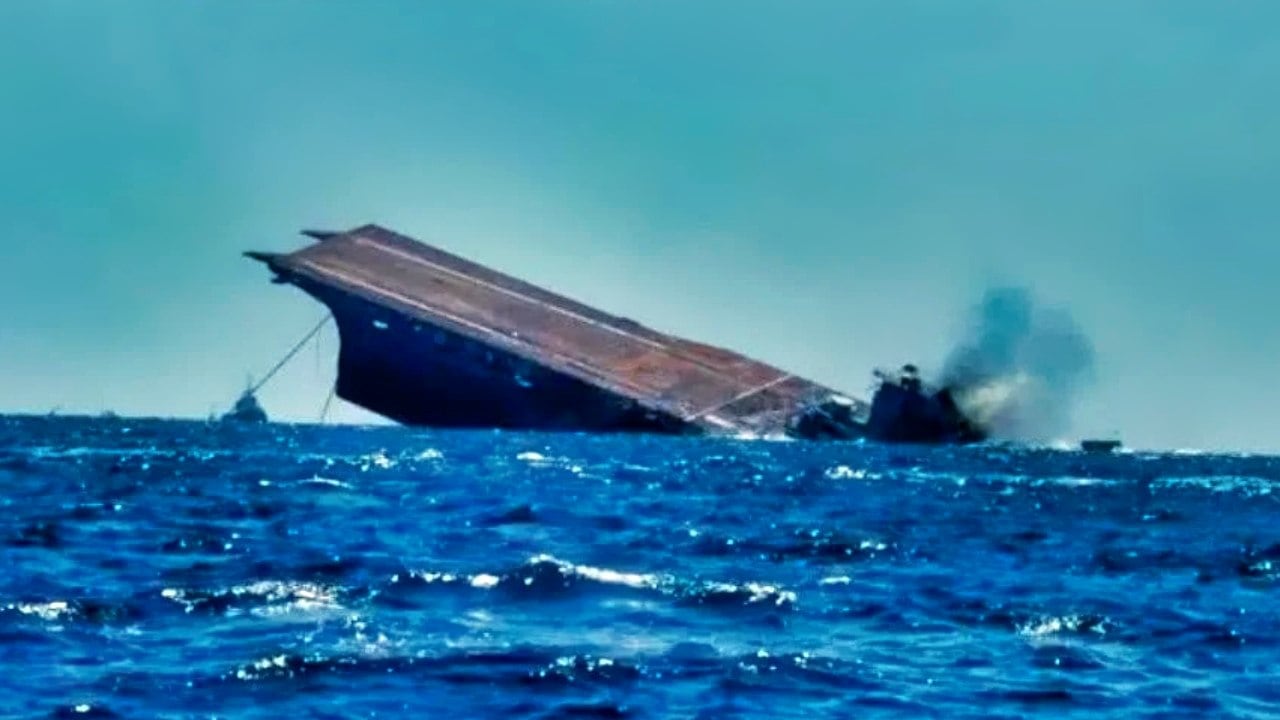
Summary and Key Points: Journalist Harrison Kass explores one of the most glaring asymmetric vulnerabilities in modern naval warfare: the threat of torpedoes to American aircraft carriers.
-While Aircraft carrier Strike Groups (CSGs) are highly optimized to defeat aerial and missile threats, they remain susceptible to strikes from below.
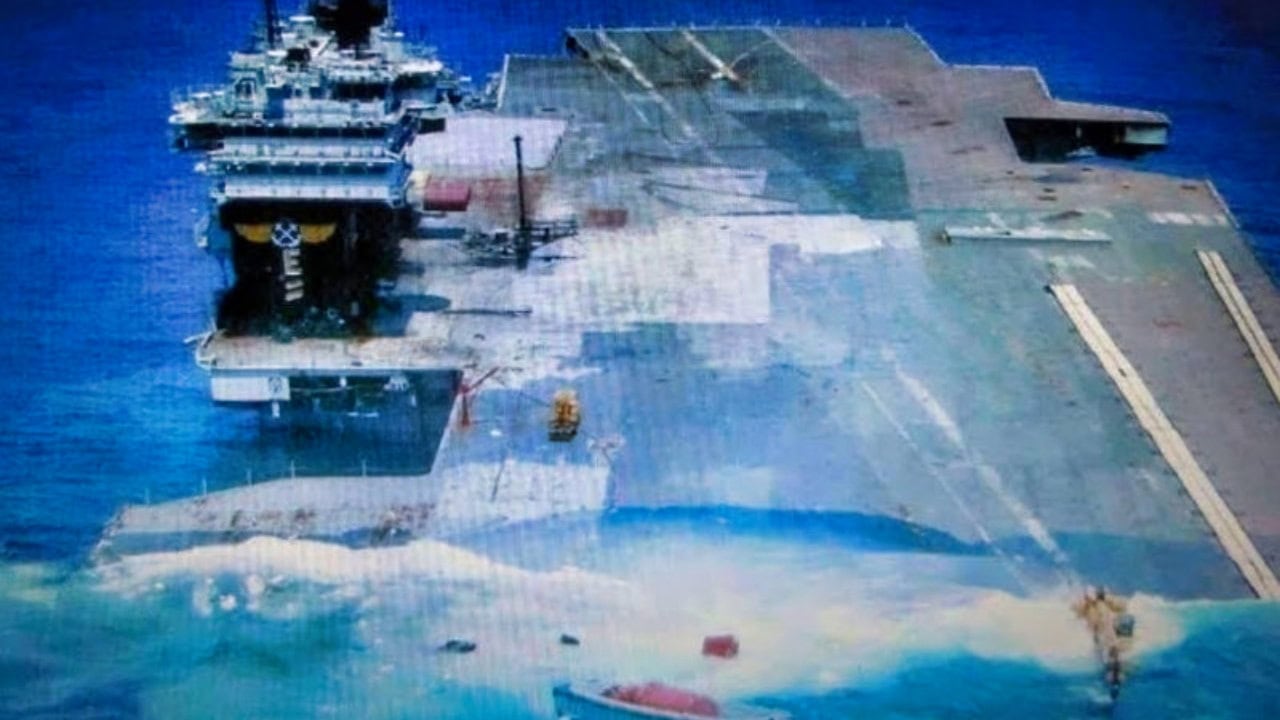
USS America Aircraft Carrier Sinking in a Controlled Detonation in 2005. Image Credit: Creative Commons.
-Kass breaks down the physics of a torpedo blast—which snaps a ship’s keel in half—and warns that as adversaries deploy cheap, wake-homing torpedoes in noisy littoral zones like the Taiwan Strait and Persian Gulf, the $13 billion supercarrier faces an unprecedented operational dilemma.
The $13 Billion Target: Why Aircraft Carriers Remain Vulnerable to Torpedoes
Torpedoes are old and simple, yet arguably the most lethal anti-ship weapon.
Oddly, even the most advanced warships remain vulnerable to one of naval warfare’s oldest threats.
Modern carriers, despite layered defense systems, are mostly optimized to defeat missiles, aircraft, and drones.
But torpedoes attack from below, bypassing most of a carrier’s defensive architecture. The result is that asymmetric vulnerabilities remain for American supercarriers.
The Physics of the Torpedo
Torpedoes are so lethal because they detonate under the keel of a boat.
Here’s how it works. The torpedo explosion creates a gas bubble under the hull. The bubble expands, which lifts the shift.
And then, the bubble collapses, and the ship’s hull snaps downwards violently. The effect often breaks the keel, the ship’s structural spine.
So the decades-old torpedo does not attempt to punch through modern armor.

The USS George H.W. Bush Carrier Strike Group sails in formation during a strait transit exercise in the Atlantic Ocean, Feb. 8, 2026. The George H.W. Bush Carrier Strike Group is at sea as an integrated warfighting team. Composite Training Unit Exercise (COMPTUEX) is the Joint Force’s most complex integrated training event and prepares naval task forces for sustained high-end Joint and combined combat. Integrated naval training provides combatant commanders and America’s civilian leaders highly capable forces that deter adversaries, underpin American security and economic prosperity, and reassure Allies and partners. (U.S. Navy photo by Mass Communication Specialist 3rd Class John R. Farren)
But instead, creates an effect that can break a ship in half.
And it’s not just theory. In World War II, torpedoes routinely sank carriers and battleships.
And while there are no real-world tests against modern supercarriers, no modern carrier has proven itself survivable against a modern heavyweight torpedo hit.
So, survivability against a torpedo is theoretical but unvalidated.
The Modern Torpedo
Modern torpedoes are simple—but not primitive; they feature wake-homing and acoustic tracking and wire-guided updates.
Modern examples include the Russian Type 65/UGST, Chinese Yu-6/Yu-8, and Iranian Hoot. These torpedoes can track ship wake (which is hard to spoof), adjust course mid-run, and target the largest vessel in a formation. The result is that carriers are susceptible to these simple weapons.
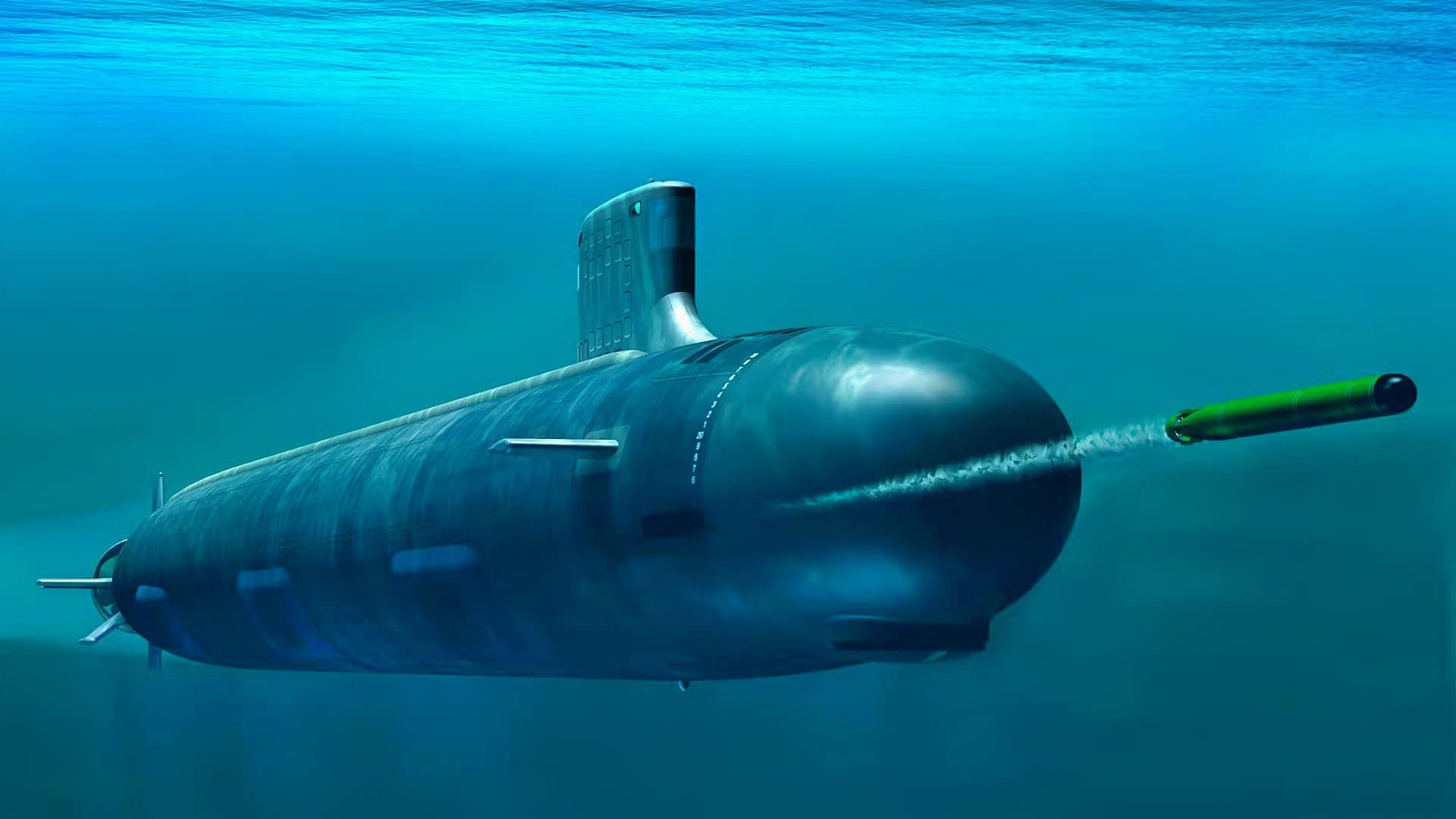
Mark 48 Torpedo.
And torpedoes don’t operate alone; they are delivered by submarines, surface vessels, and potentially in the future, unmanned underwater vehicles (UUVs). Submarines are the biggest threat here—hard to detect and capable of firing from ambush positions. But the combination of platform and weapon makes for a potentially significant problem for carrier operations.
Carrier Defensive Systems
Carrier strike groups (CSGs) are optimized for air and missile defense, while anti-submarine warfare (ASW) systems mostly include helicopters, destroyers, and sonar networks (rather than carriers themselves).
This means that a carrier has certain defensive limitations, notably a limited detection range (especially in the littorals) and a short reaction time. Torpedo countermeasures, like decoys and evasive maneuvering, compound the carrier’s defensive limitations.
Littoral problems are where the vulnerabilities are sharpest. These shallow, noisy waters degrade sonar performance, making it easier for submarines to hide and harder to detect torpedoes.
Coincidentally, many vital chokepoints are located in littoral waters, namely the Taiwan Strait and the Persian Gulf.
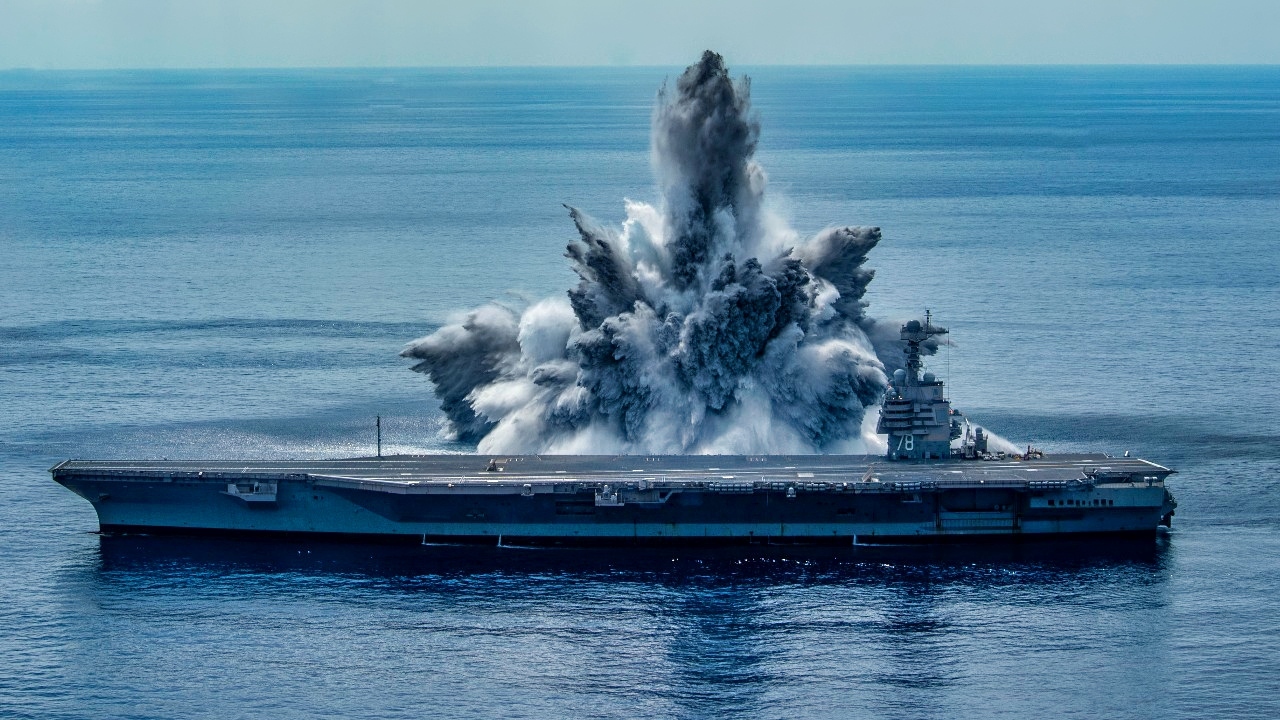
The aircraft carrier USS Gerald R. Ford (CVN 78) successfully completes the third and final scheduled explosive event of Full Ship Shock Trials while underway in the Atlantic Ocean, Aug. 8, 2021. The U.S. Navy conducts shock trials of new ship designs using live explosives to confirm that our warships can continue to meet demanding mission requirements under harsh conditions they might encounter in battle. (U.S. Navy photo by Mass Communication Specialist 3rd Class Novalee Manzella)
The implication here is that carriers are often most vulnerable where they are most needed.
Growing Asymmetries
The modern supercarrier costs $13 billion per unit and nests within a $60 billion dollars CSG ecosystem.
The modern torpedo, meanwhile, costs between $1 and $5 million. The asymmetry here represents an order-of-magnitude cost imbalance, raising questions about the value of ongoing carrier investments.
Torpedoes aren’t the only asymmetric threat; relatively cheap drones have been used to disrupt carrier operations, suggesting that adversaries are adapting, and rather than meeting carriers head-on (which no one currently has the capacity to do), they are deploying cheap yet effective countermeasures, like drones and torpedoes.
There are emerging risks, too. Autonomous underwater munitions have the potential to act as a persistent underwater threat, meaning carriers may soon face continuous torpedo risks from lurking autonomous vehicles.
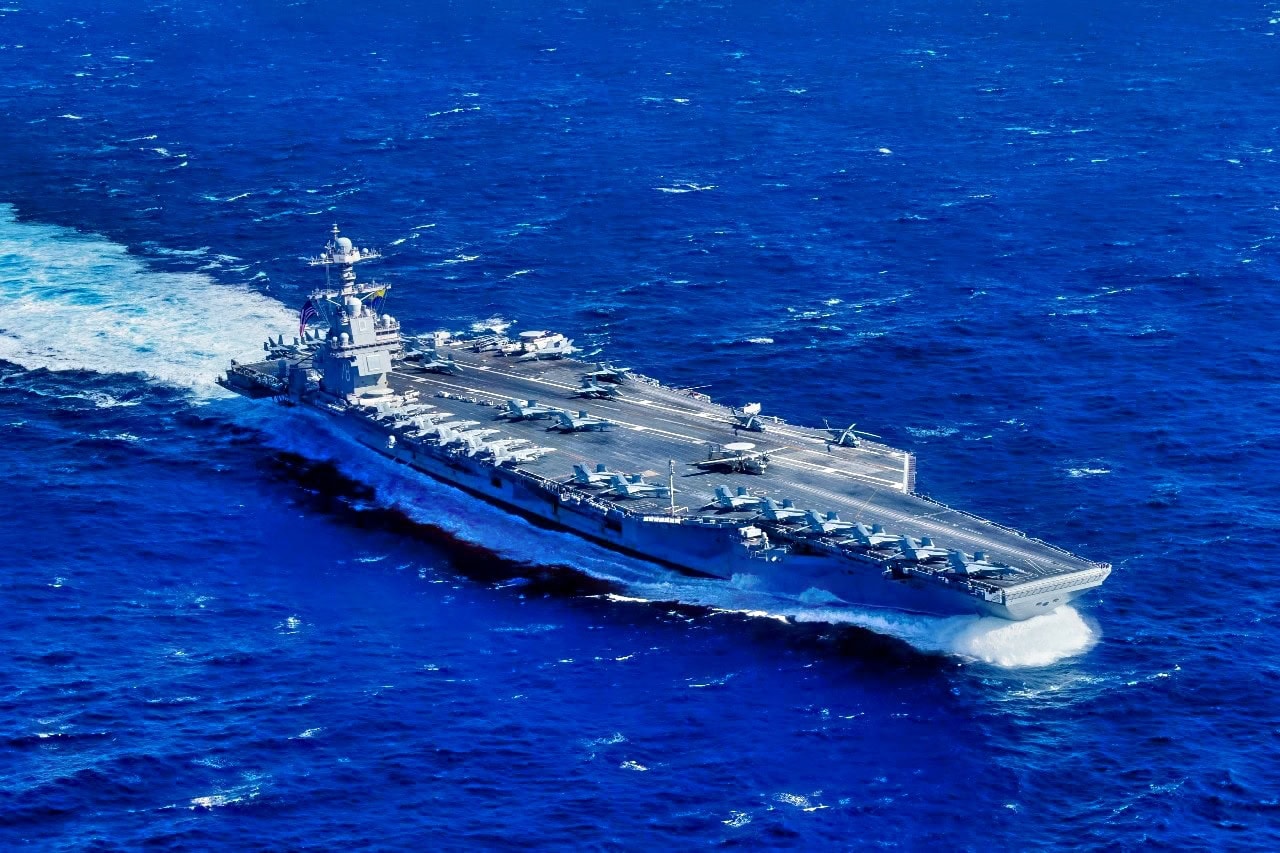
The world’s largest aircraft carrier, USS Gerald R. Ford (CVN 78), sails in formation with the Arleigh Burke-class guided missile destroyers USS Winston Churchill (DDG 81), USS Mitscher (DDG 57), USS Mahan (DDG 72), USS Bainbridge (DDG 96), and USS Forrest Sherman (DDG 98) in the Atlantic Ocean, Nov. 12, 2024. The Gerald R. Ford Carrier Strike Group is underway in the Atlantic Ocean completing Group Sail. Group Sail is the first at-sea integrated phase training event during a routine deployment training cycle. It is designed to challenge the Gerald R. Ford CSG’s ability to use the capabilities of the USS Gerald R. Ford (CVN 78), USS Winston S. Churchill (DDG 81), Carrier Air Wing (CVW) 8, Destroyer Squadron (DESRON) 2, and embarked Information Warfare team as a cohesive Strike Group to meet Navy and Joint Warfighting requirements that increases warfighting capability and tactical proficiency across all domains. (U.S. Navy photo by Mass Communication Specialist 2nd Class Maxwell Orlosky)
Strategic Implications
Carriers are still unmatched for power projection. But they are increasingly risk-sensitive assets. By operating carriers closely, the carrier is more effective—but also more vulnerable.
At stand-off ranges, carriers will be safer, albeit less effective. This is the tradeoff asymmetric tools may soon force, mirroring the broader A2/AD problem.
But it’s worth pointing out: carriers are not defenseless. Layered defenses still matter. And torpedo-firing submarines must still get within firing range, remaining undetected all the while. This is not easy against the US Navy’s ASW capabilities.
While the modern threat environment is complex and the torpedo remains an enduring threat, the carrier remains an effective tool.
Still, there’s something concerning about a $2 million torpedo having the capacity to break the back of a $13 billion supercarrier.
About the Author: Harrison Kass
Harrison Kass is an attorney and journalist covering national security, technology, and politics. Previously, he was a political staffer and candidate, and a US Air Force pilot selectee. He holds a JD from the University of Oregon and a master’s in global journalism and international relations from NYU.