
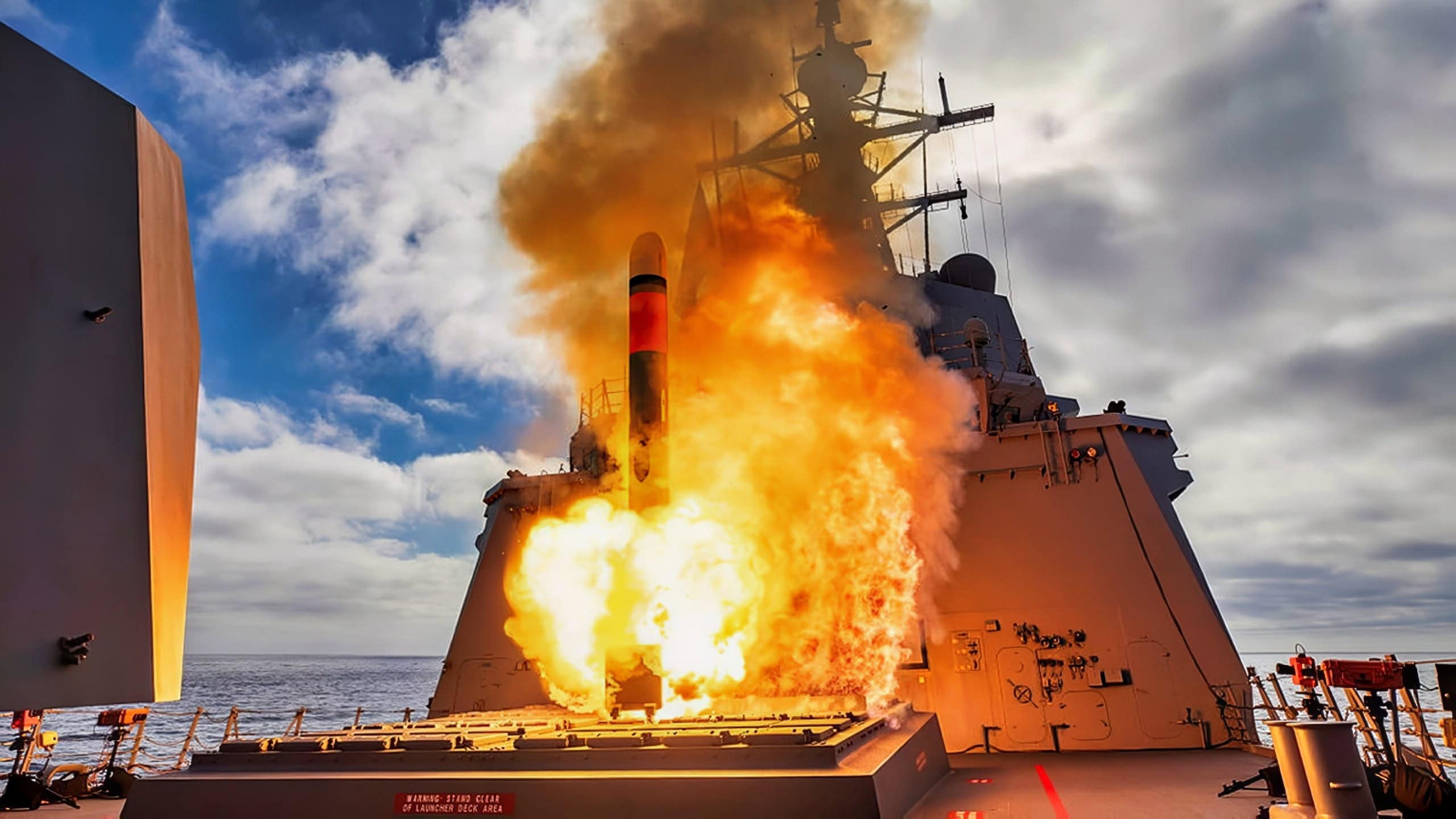
Summary and Key Points: Dr. Andrew Latham — Senior Washington Fellow at the Institute for Peace and Diplomacy, Macalester College professor of international relations and political theory, and daily columnist for 19FortyFive — delivers a strategic indictment of America’s Tomahawk cruise missile consumption model.
-As U.S. forces burn through Tomahawk inventories across ongoing Middle East operations, Latham warns that Raytheon’s production capacity — constrained by single-source components, specialized labor shortages, and supply chain bottlenecks — cannot surge fast enough to replenish stocks before a simultaneous Indo-Pacific crisis with China would demand them.
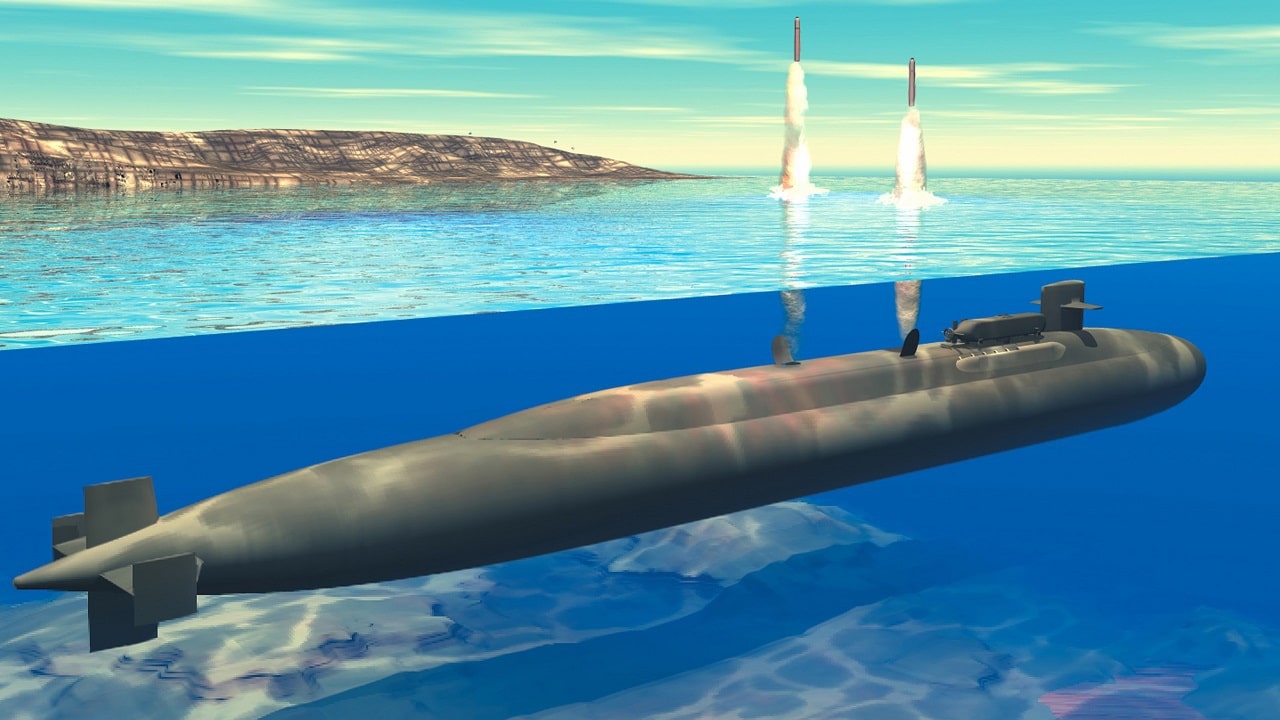
Artist’s concept of an Ohio-class SSGN launching Tomahawk Land Attack Missiles.
-The challenge: the United States has built a globally deployed military that fights with precision munitions at a pace its defense industrial base cannot sustain across multiple theaters simultaneously.
-Latham warns that once the stockpile gap becomes visible during a conflict, it stops being a background planning assumption and begins actively determining what targets get struck — and which do not.
The Tomahawk Stockpile Crisis That Could Force the U.S. Military to Choose Between Iran and China
The United States has been firing Tomahawk missiles again, and by most accounts, the strikes are doing what they are supposed to do. Targets are hit, and the message gets through. From a military standpoint, the opening moves look clean.
That is usually where the story ends.
It shouldn’t.
The Tomahawk missile has become a routine part of how the United States uses force. It allows Washington to act without putting troops on the ground and without committing to something larger at the outset. Over time, it has become the option policymakers reach for first.
What gets less attention is what happens after the missiles are gone. They are not easy to replace. That fact tends to sit in the background until operations stretch out or begin to overlap. The United States is acting as if it can sustain this in more than one place at once. The stockpile suggests otherwise.
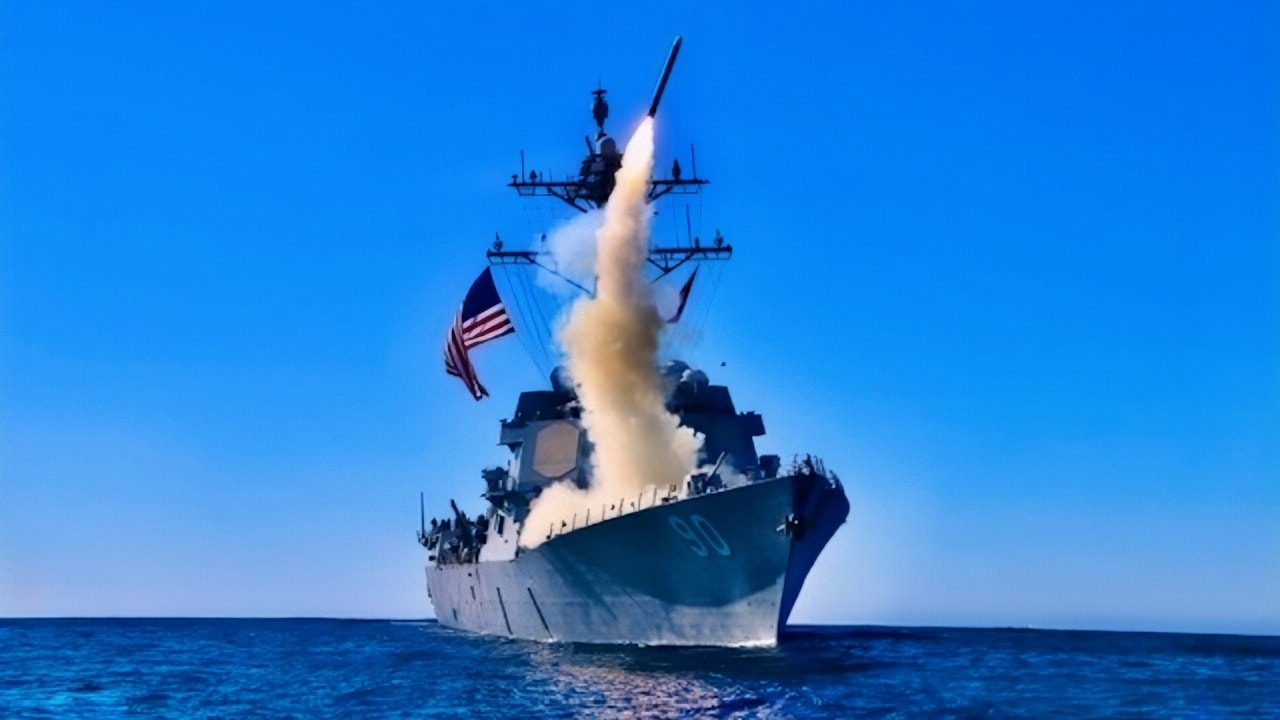
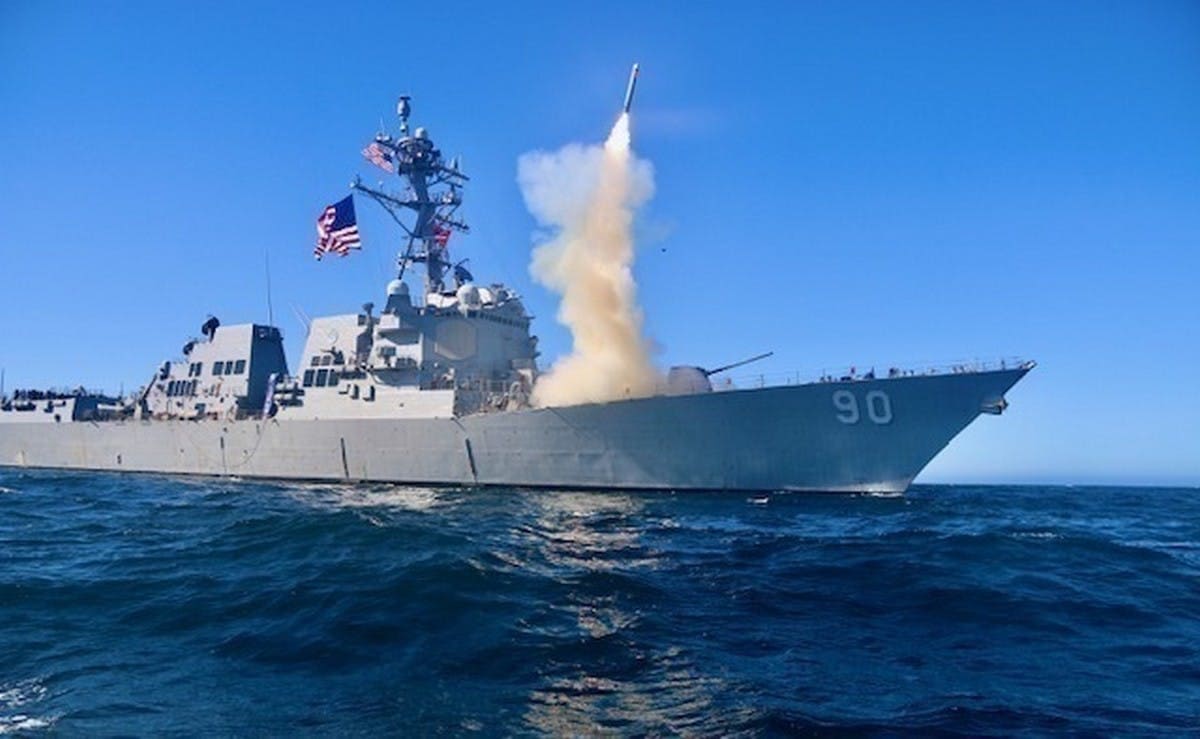
(Dec. 01, 2020) – The guided-missile destroyer USS Chafee (DDG 90) launches a Block V Tomahawk, the weapon’s newest variant, during a missile exercise. This event marked the first time a Block V Tomahawk missile was operationally tested, marking the Navy’s transition to a more advanced capability for the fleet. Block V includes an upgrade that will enhance navigation performance and provide robust and reliable communications. Chafee is currently assigned to Carrier Strike Group ONE and is homeported in Pearl Harbor. (U.S. Navy photo by Ens. Sean Ianno/Released)
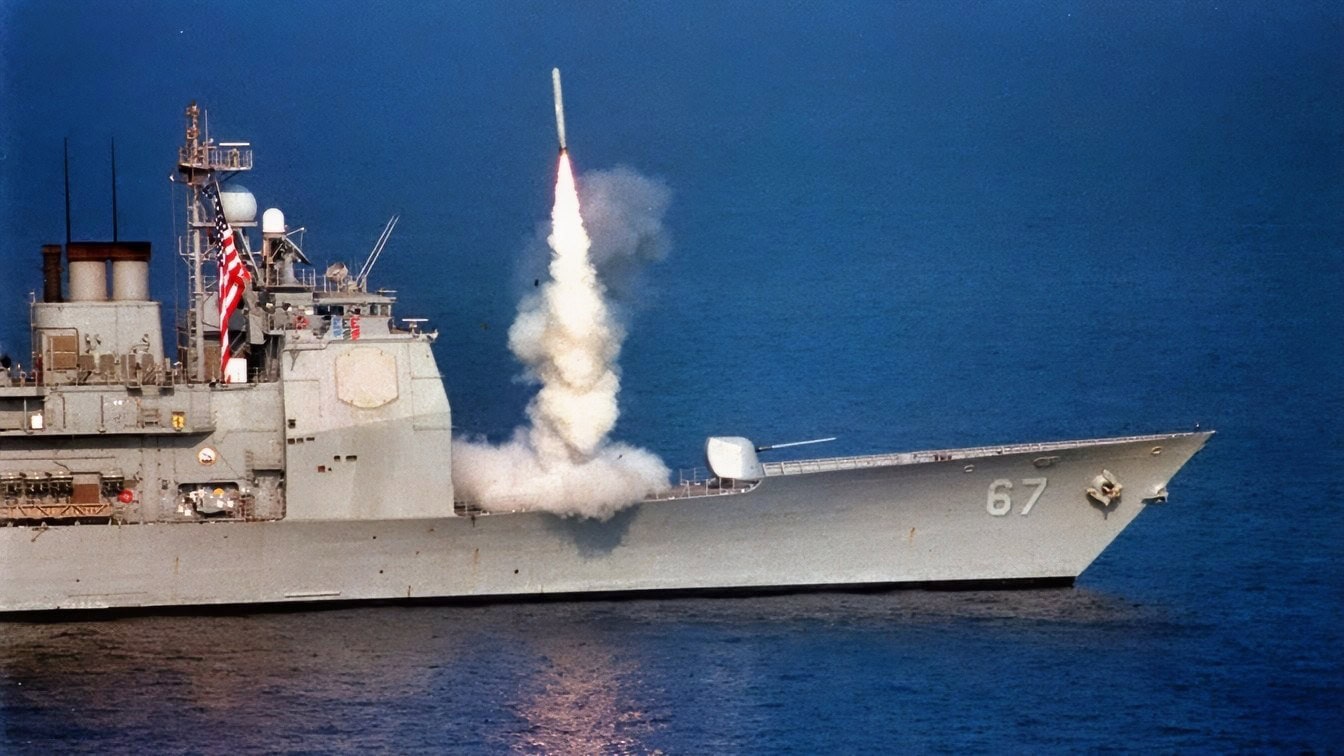
A Tomahawk cruise missile launches from the forward vertical launch system of the USS Shiloh (CG 67) to attack selected air defense targets south of the 33rd parallel in Iraq on Sept. 3, 1996, as part of Operation Desert Strike. The attacks are designed to reduce risks to the pilots who will enforce the expanded no-fly zone. President Clinton announced an expanded no-fly zone in response to an Iraqi attack against a Kurdish faction. The larger no-fly zone in Southern Iraq will make it easier for U.S. and coalition partners to contain Saddam Hussein’s aggression. The U.S. Navy Ticonderoga Class cruiser launched the missiles as it operated in the Persian Gulf.
A Military Built for Everywhere
The United States now operates across several theaters at the same time.
In the Indo-Pacific, any real confrontation with China would lean heavily on long-range strike from the outset. Distance alone would force that. There isn’t much of an alternative. In Europe, commitments to NATO rest on the expectation that American forces can show up with more than words. In the Middle East, things never quite settle. Strikes happen, then more strikes follow. The tempo rises and falls, but it never really disappears.
The Tomahawk sits in the middle of all of this. It is not a niche capability. It is part of the everyday way the United States fights, whether anyone says so directly or not.
That posture has consequences once operations begin.
How the Arsenal Gets Used Up
These operations rarely unfold the way they are planned. A target may need to be hit more than once. Some are hardened. Others come back after the first strike, or they were never fully neutralized to begin with. A campaign takes time. It rarely ends where planners think it will at the start.
We have seen this before. We are seeing it again now. Even limited operations can eat through inventories faster than expected. The issue is not that the United States is about to run out of precision weapons. The problem is how they are being used, as if more will be ready when needed, or at least soon enough.
The pace of use and the pace of replacement are not aligned.
That isn’t how the system actually works. In a crisis, that gap will not stay in the background for long. It will show up in what gets hit first—and what gets left alone.
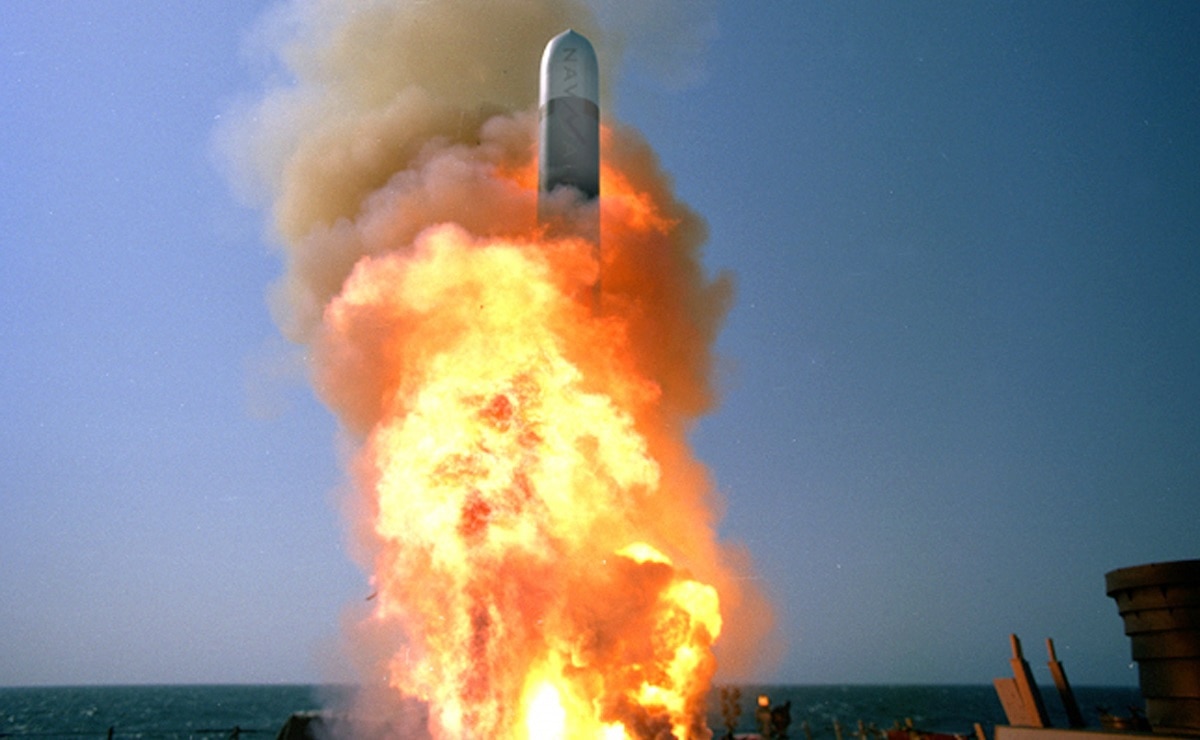
At sea aboard USS Stethem (DDG 63) Ð A Tactical Tomahawk Cruise Missile launches from the guided missile destroyer USS Stethem (DDG 63) during a live-warhead test. The missile traveled 760 nautical miles to successfully impact itÕs intended target on San Clemente Island, part of the Naval Air Systems Command (NAVAIR) test range in Southern California. The Tactical Tomahawk is the next generation of Tomahawk cruise missile, adds the capability to reprogram the missile while in-flight to strike any of 15 preprogrammed alternate targets, or redirect the missile to any Global Positioning System (GPS) target coordinates. It also will be able to loiter over a target area for some hours, and with its on-board TV camera, will allow the war fighting commanders to assess battle damage of the target, and, if necessary redirect the missile to any other target. Launched from the Navy’s forward-deployed ships and submarines, Tactical Tomahawk will provide a greater flexibility to the on-scene commander. Tactical Tomahawk is scheduled to join the fleet in 2004. U.S. Navy photo. (RELEASED)
Tomahawk Missile. Image: Creative Commons.
Why Production Cannot Keep Up
There is a familiar assumption in Washington that production can be pushed higher when the situation calls for it. Put more money in, sign new contracts, and output follows. That sounds reasonable on paper. It is not how things actually work.
Tomahawk production moves at a steady pace. The supply chain behind it is already stretched. Some components come from a single source. Others depend on workers who cannot be replaced quickly, even if funding is available. In a few places, the constraint is not the final assembly line but everything that feeds into it.
It is not set up to move much faster than that.
People still talk about surge capacity. There is some truth to that, but it gets overstated. Output can increase. It just doesn’t jump. It edges upward slowly.
There is no extra capacity sitting idle, waiting to be switched on. What exists now is what you get, for better or worse.
Where the Mismatch Shows
Put all of this together, and the problem becomes hard to ignore. The United States has built a military designed to operate across multiple theaters simultaneously. It also fights by deploying large numbers of precision munitions. The industrial base that supports it does not move at the same speed.
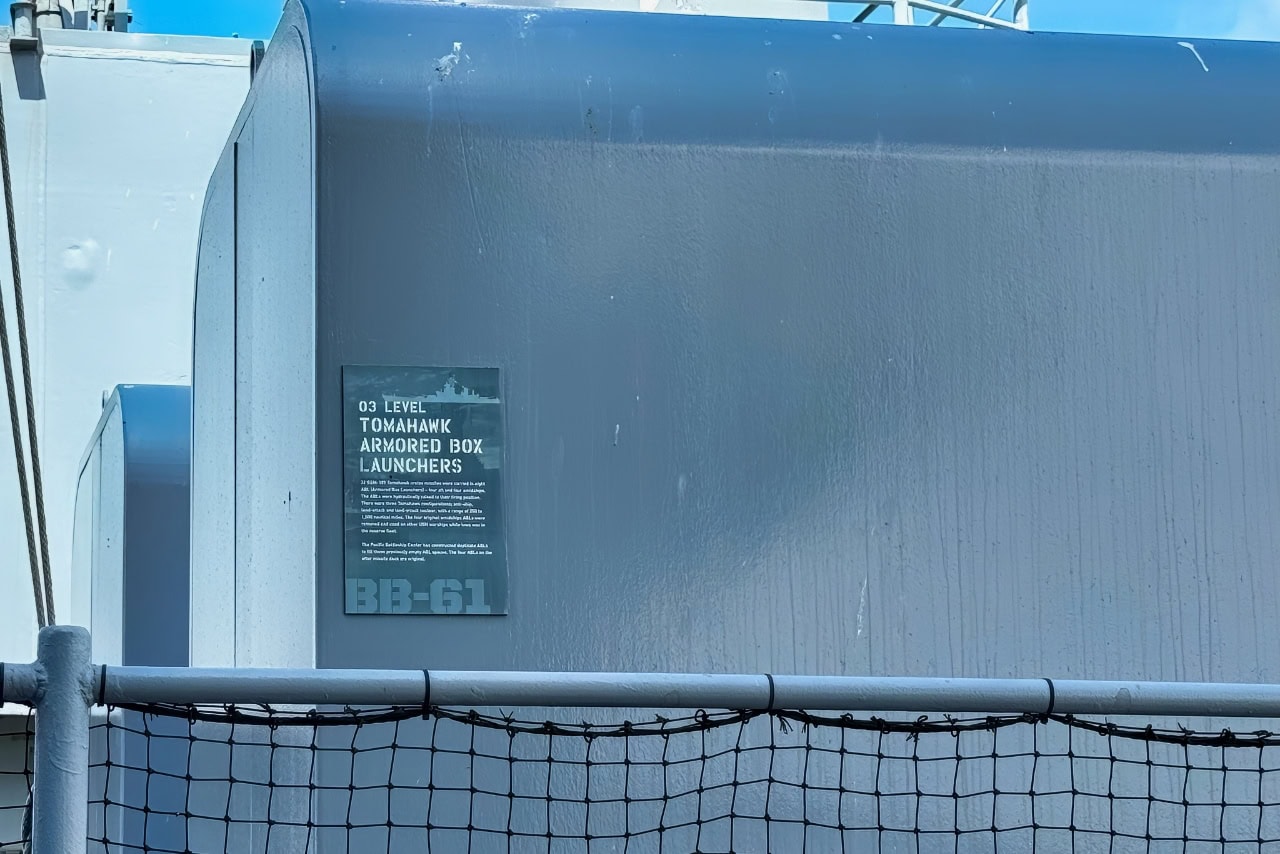
USS Iowa 19FortyFive image of Tomahawk Missiles on USS Iowa.
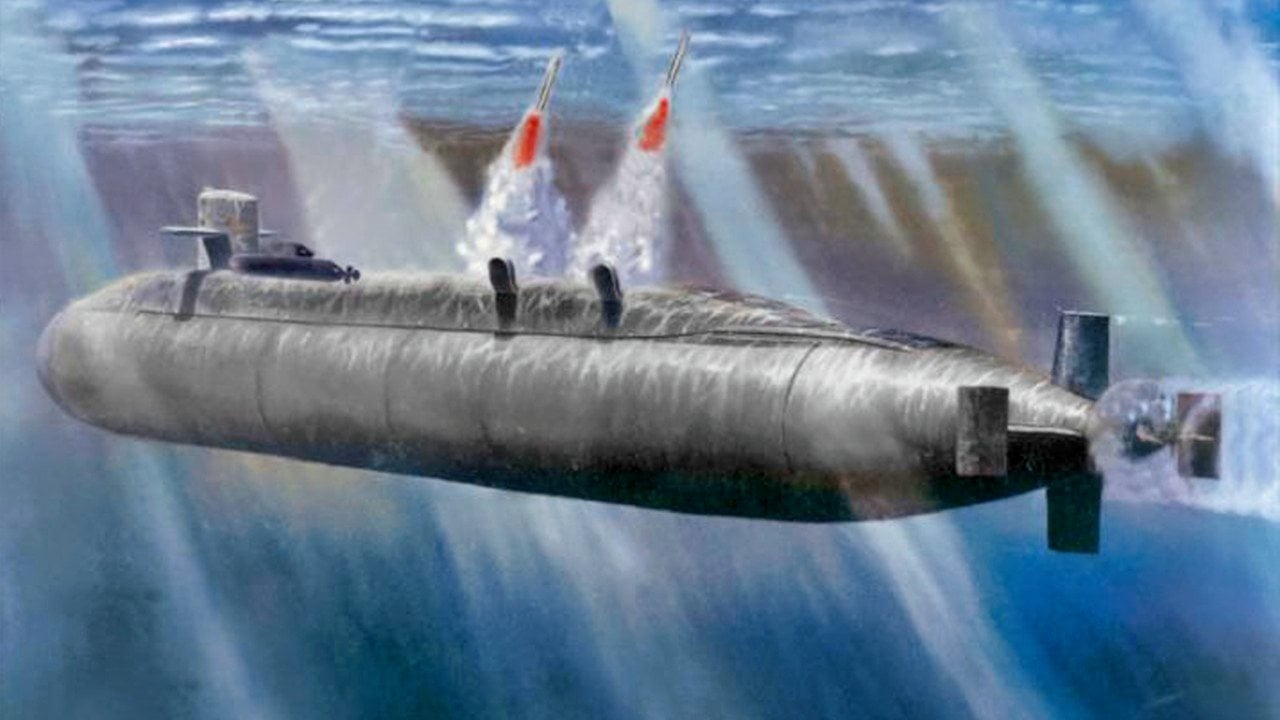
Puget Sound Naval Shipyard, Wash. (Aug. 14, 2003) — Illustration of USS Ohio (SSGN 726) which is undergoing a conversion from a Ballistic Missile Submarine (SSBN) to a Guided Missile Submarine (SSGN) designation. Ohio has been out of service since Oct. 29, 2002 for conversion to SSGN at Puget Sound Naval Shipyard. Four Ohio-class strategic missile submarines, USS Ohio (SSBN 726), USS Michigan (SSBN 727) USS Florida (SSBN 728), and USS Georgia (SSBN 729) have been selected for transformation into a new platform, designated SSGN. The SSGNs will have the capability to support and launch up to 154 Tomahawk missiles, a significant increase in capacity compared to other platforms. The 22 missile tubes also will provide the capability to carry other payloads, such as unmanned underwater vehicles (UUVs), unmanned aerial vehicles (UAVs) and Special Forces equipment. This new platform will also have the capability to carry and support more than 66 Navy SEALs (Sea, Air and Land) and insert them clandestinely into potential conflict areas. U.S. Navy illustration. (RELEASED)
That gap does not matter much in peacetime. It matters once operations begin, and it matters more the longer they go on.
At that point, it becomes a question of allocation. Missiles used in one place are not available somewhere else. The replacement does not arrive in time to smooth it out, or even come close.
The Tradeoff No One Wants to Name
It is not hard to see how this could unfold. U.S. forces are already engaged in ongoing operations in the Middle East. The pace is manageable, but inventories are moving in one direction. Then a crisis develops in the Indo-Pacific. Demand for long-range strike rises immediately. Distances are greater. The number of targets grows quickly. The opening phase alone would require sustained use of systems like Tomahawk.
The United States can respond. That is not the issue.
The issue is how long that response can be sustained while something else is still happening at the same time. At that point, it stops being a planning problem and becomes a constraint.
A missile used in one theater is not available in another. The arithmetic is simple enough. The timing is where things become difficult. If replacement takes years, then early decisions carry weight for longer than anyone would like, and longer than most planning assumptions admit.
Strategy Has to Catch Up
This is not something that can be fixed quickly by announcing higher production targets. Expanding output takes time. Fixing supply chains takes longer. None of that helps in the early stages of a conflict, when demand is highest, and the margin for error is smallest.
The harder question sits at the level of strategy. A military that plans to operate globally needs an arsenal that can support that over time. If the arsenal cannot keep pace, then strategy will adjust, whether that is acknowledged or not.

U.S Air Force Captain Kristin “BEO” Wolfe, F-35A Lightning II Demonstration Team Commander, flies during a demonstration at the Oregon International Airshow in McMinnville, Ore., Aug. 20, 2022. The F-35 Demo team travels around the United States and around the world, showcasing the world’s most technologically advanced fifth-generation fighter jet. (U.S. Air National Guard photo by Master Sgt. John Winn)
The United States can still strike targets at long range. That has not changed. What is less clear is how often it can do it, and in how many places at once, before limits begin to shape the choices being made.
At some point, the stockpile stops being something in the background. It starts to shape what can and cannot be done.
And once that happens, it is no longer just a supporting strategy. It begins to decide what can be done and what cannot.
About the Author: Dr. Andrew Latham
Andrew Latham is a Senior Washington Fellow at the Institute for Peace and Diplomacy and a professor of international relations and political theory at Macalester College in Saint Paul, MN. You can follow him on X: @aalatham. Dr. Latham is a daily columnist for 19FortyFive.com.