
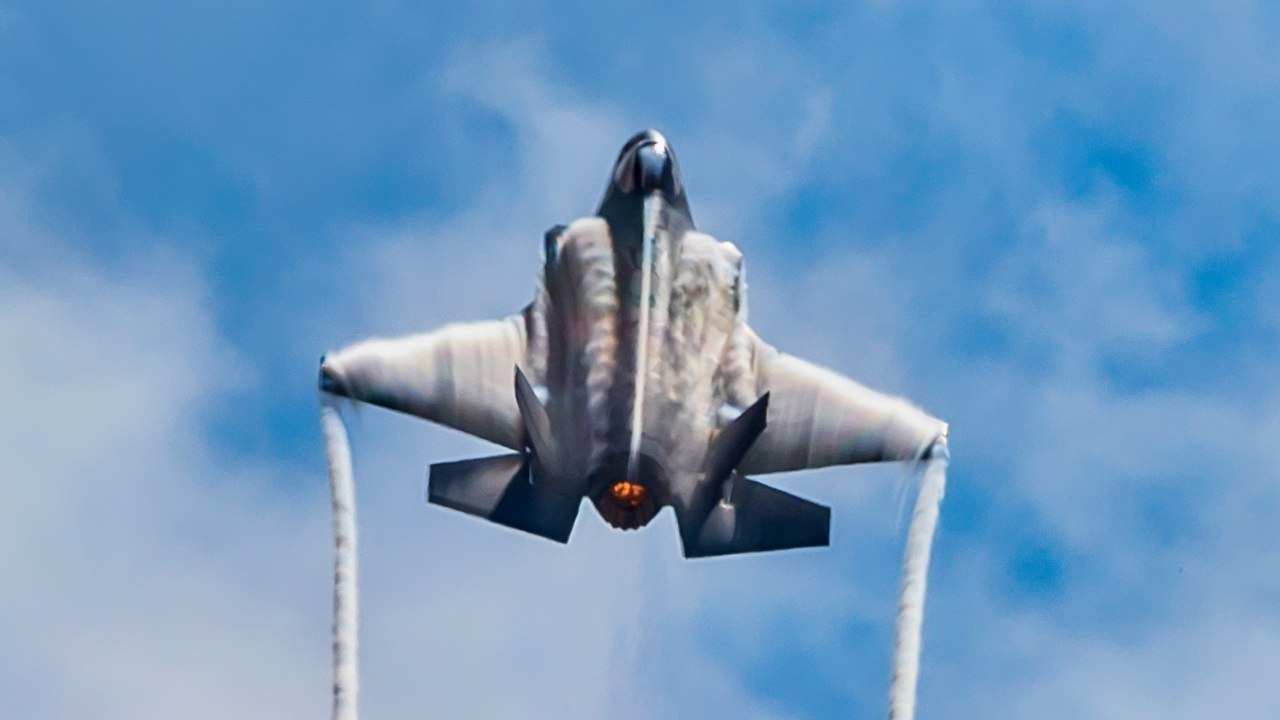
Summary and Key Points: Defense analyst Sebastien Roblin examines the March 19, 2026, incident where a U.S. Air Force F-35A Lightning II sustained combat damage over Iran.
-While the CENTCOM-confirmed emergency landing resulted in no pilot casualties, IRGC thermal footage suggests a successful “Sambush” using passive EO/IR sensors.
-The incident raises critical questions regarding the AN/AAQ-37 Distributed Aperture System (DAS) and its potential failure to trigger a Missile Approach Warning (MAWS).
-As Operation Epic Fury transitions to shorter-range JDAM and Maverick strikes, stealth pilots face increased risks from mobile Iranian systems like the Majid and Ra’ad-1.
How Iran Likely Damaged a U.S. Air Force F-35A Stealth Fighter
A U.S. Air Force F-35A Lightning stealth fighter has sustained damage during a combat mission that required an emergency landing in the Middle East, with a spokesman for U.S. Central Command (CENTCOM) reporting that “The aircraft landed safely, and the pilot is in stable condition. This incident is under investigation.”
That damage may be due to enemy fire, if a video released by the Iranian Revolutionary Guard Corps, seemingly portraying an intercept, is accurate. The IRGC claimed it had “severely damaged” the F-35A at 2:50 am local time.
Of course, it bears recalling that Iran’s military has issued exaggerated claims of military successes and issued fabricated imagery of aircraft in the past. Obviously, modern AI tools make fabricating a video even easier today.
Nonetheless, given the correlation with CENTCOM’s statement, it seems very plausible that an F-35A was damaged by Iranian fire, and that the Iranian footage is genuine. Furthermore, Air and Space Forces magazine has reported that “people familiar with the matter” confirm the F-35A was damaged by ground fire.
In military terms, the loss of a single stealth fighter (out of hundreds in service) isn’t a devastating blow, particularly since F-35As aren’t more expensive to procure than new non-stealth fighters (it’s operating costs that have proven troublesome).
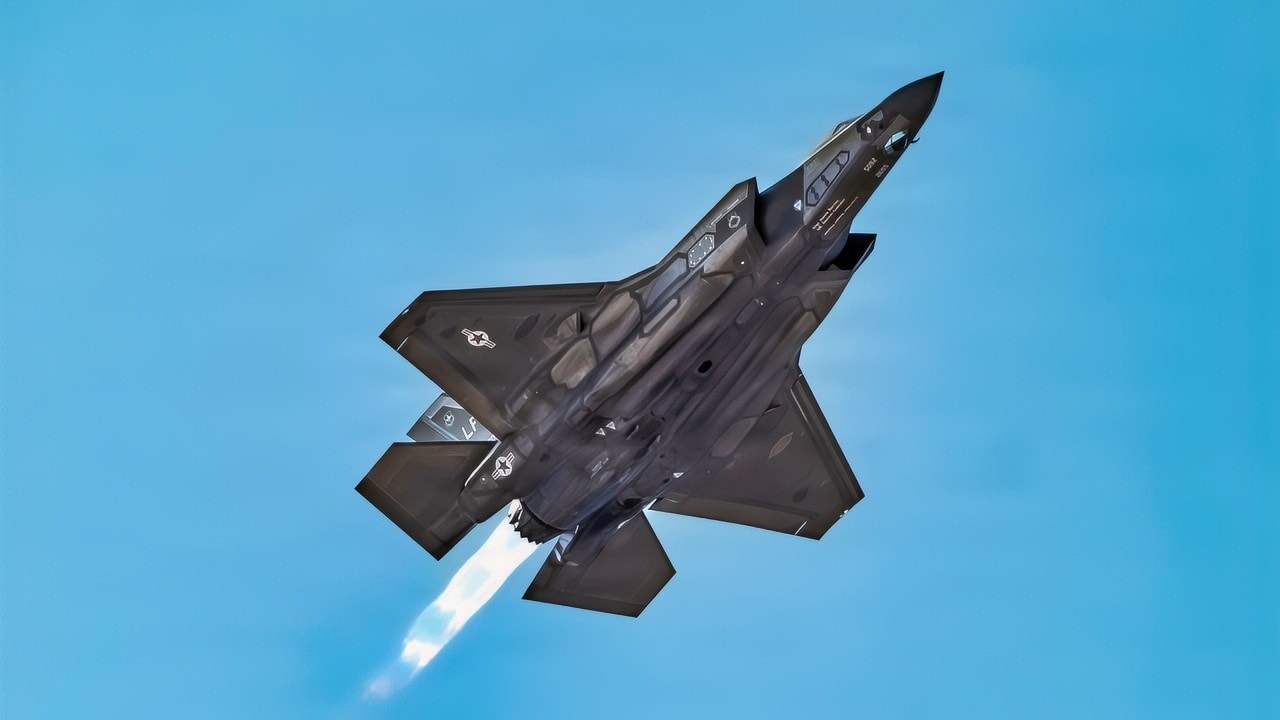
A U.S. Air Force F-35A Lightning II, assigned to the 56th Fighter Wing, takes flight, Nov. 26, 2025, at Luke Air Force Base, Arizona. The F-35A’s is designed for missions ranging from air superiority and electronic warfare. The 56th FW’s training programs emphasize interoperability, ensuring F-35A pilots can effectively collaborate with partner nations to achieve shared objectives. (U.S. Air Force photo by Airman 1st Class Belinda Guachun-Chichay)
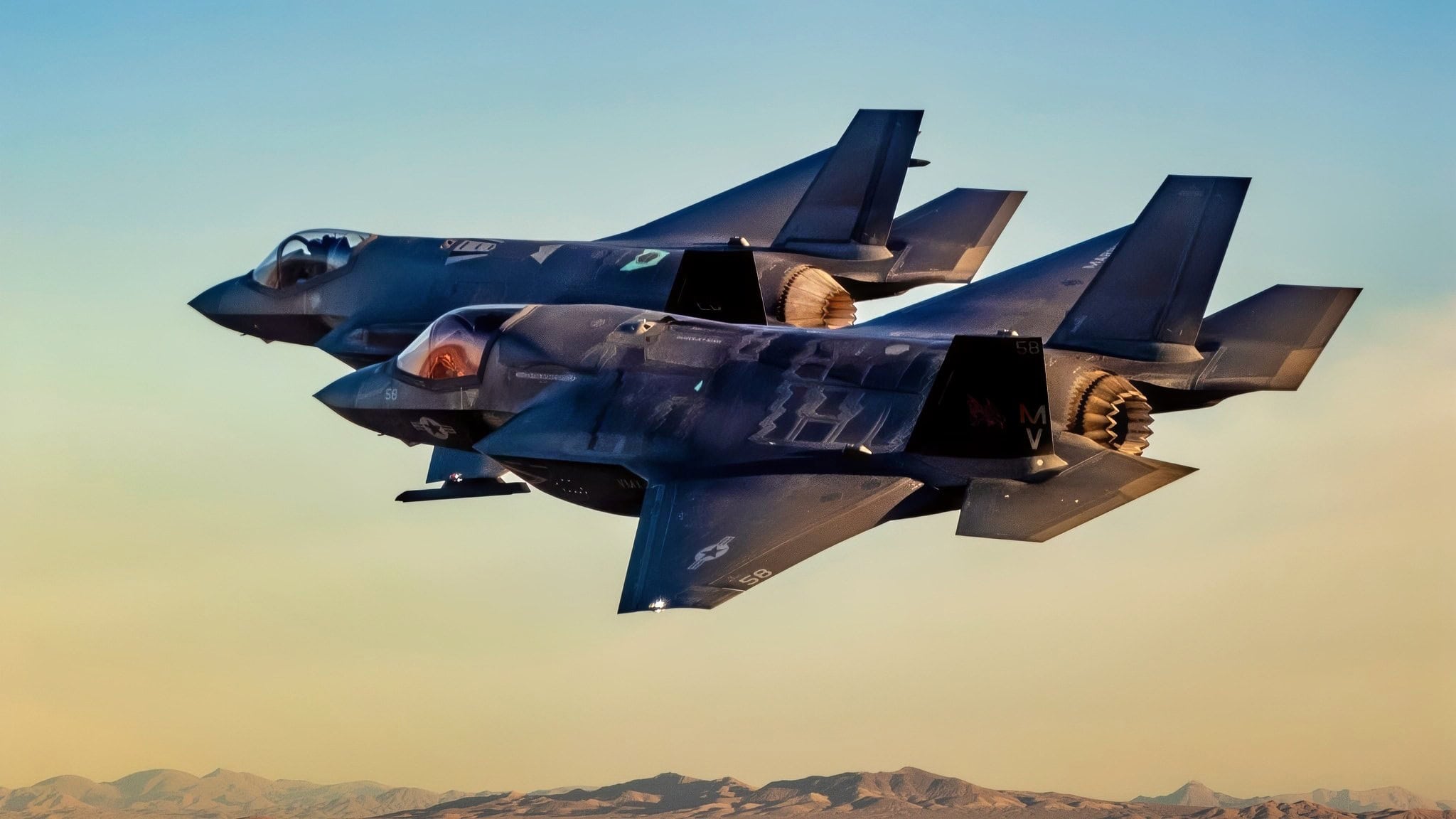
Test pilots with the 461st Flight Test Squadron, 412th Test Wing, return to Edwards Air Force Base, California, on January 21 after conducting a TR-3 AIM-120 live fire mission over the Pacific Test Range. The F-35 Integrated Test Force at Edwards is responsible for developmental testing of all three F-35 aircraft variants across the joint-services. (Courtesy Photo)
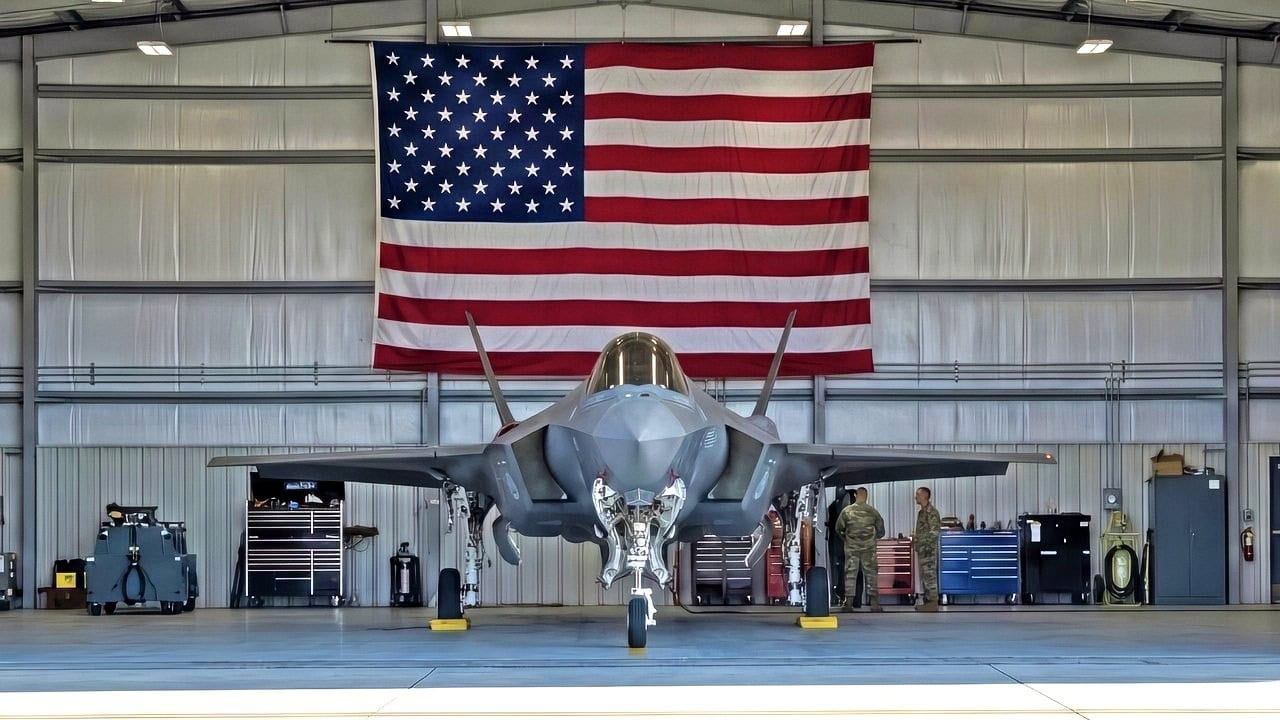
F-35 in the Hanger. Image Credit: Nano Banana Pro.
Nor is hitting a stealth fighter particularly unthinkable to air warfare experts. After all, Serbia managed to down an F-117A Nighthawk stealth jet 27 years earlier using a dated Soviet S-125 surface-to-air missile. While the F-35 is, of course, newer, faster, and stealthier, air defense technologies and tactics have advanced too since then.
Still, wars are fundamentally political events. The incident may boost Iranian morale, and potentially compel U.S. mission planners to act more cautiously at the very moment they would rather accept larger risks to deploy less expensive short-range weaponry. It would also mark the first partially successful adversary attack on a manned U.S. warplane in years. However, in this conflict, the U.S. has also lost three F-15E fighters downed by an ostensibly “friendly” Kuwaiti Hornet jet, and a KC-135 tanker to a mid-air collision with another KC-135.
What does the alleged F-35 interception reveal (if it’s real)?
The IRGC video appears to show an optical/infrared sensor tracking an F-35A mid-flight until a missile (also likely, but not confirmed, to be optical/infrared-guided) approaches from the frontal hemisphere and explodes. At no point does the F-35 attempt to maneuver to evade the attack, suggesting it was surprised.
The abrupt cutoff of the video post-explosion might obfuscate the fact that the airplane was not destroyed outright. (Usually, those releasing attack videos for propaganda purposes will not hesitate to show the dramatic ‘brew up’ confirming a vehicle’s destruction if that footage exists.)
However, in the video’s final frames, the F-35 can still be seen intact (as indicated by an additional plume of smoke trailing it). That implies the jet may not have been hit directly but rather damaged by shrapnel from the missile’s proximity-burst warhead.
Stealth doesn’t mean immunity—especially to non-radar sensors
Stealth fighters are built primarily for minimal radar cross-sections, because radars can detect aircraft hundreds of miles away, far beyond the range of optical sensors. But inevitably, stealth fighters are relatively more vulnerable to optical- and infrared-guided weapons, despite being secondarily engineered to reduce infrared signatures. After all, stealth aircraft aren’t literally invisible to the eye, and efforts to minimize heat signature produced by hot, high-thrust jet engines like the F-35’s F135 turbofan can only go so far.
In air-to-air combat, the F-35’s own radar allows it to detect non-stealth aircraft attempting to close within the optical/infrared engagement range—giving the pilot time to maneuver to avoid an unfavorable encounter. However, ground-based threats are inherently harder to detect, particularly if those threats don’t rely on active radars.
Indeed, modern optical/infrared sensors are passive—they don’t emit active signals that could alert adversaries. Likewise, a missile using an EO/IR seeker doesn’t trigger Radar Warning Receivers (RWRs) on the targeted aircraft.
Some military aircraft have an additional self-defense sensor, the Missile Approach Warning System (MAWS or MWS), which uses multiple optical cameras to detect incoming missiles regardless of their guidance method. While not all fighters have MAWS, the F-35 does, in the form of its AN/AAQ-37 Distributed Aperture System (DAS), which comprises six infrared cameras providing 360-degree coverage.
Thus, arguably, the most worrisome implication of the video (again, if real) would be that the DAS failed to detect the incoming missiles—otherwise, one would expect evasive maneuvers and release of flare decoys by the targeted jet.
On the other hand, missiles typically cause very heavy damage to aircraft, so the fact that the F-35A managed to land safely after being raked by the missile fragments stands as a point to its credit.
Why the U.S. and Israeli warplanes are taking greater risks against Iran
The U.S. and Israeli Air Forces both possess long-range missiles that can deliver attacks from well beyond the range of enemy air defenses. However, weapons like the AGM-158 JASSM stealth cruise missile are very expensive and in limited supply, so both air forces have progressively transitioned to using shorter-range weapons, such as GBU-31 glide bombs or Maverick/Hellfire missiles, wherever Iranian defenses are deemed sufficiently suppressed.
While those weapons still provide useful degrees of standoff and precision, they nonetheless compel aircraft to fly closer to targets and expose them to closer-range defenses.
Stealth fighters, with their minimal radar signatures, are particularly favored for deploying such cheaper, short-range weapons, despite the increased risks. The F-35 also has particularly powerful sensors, making it equally attractive as a deep-penetrating reconnaissance system to identify time-sensitive targets for faraway non-stealth aircraft to attack.
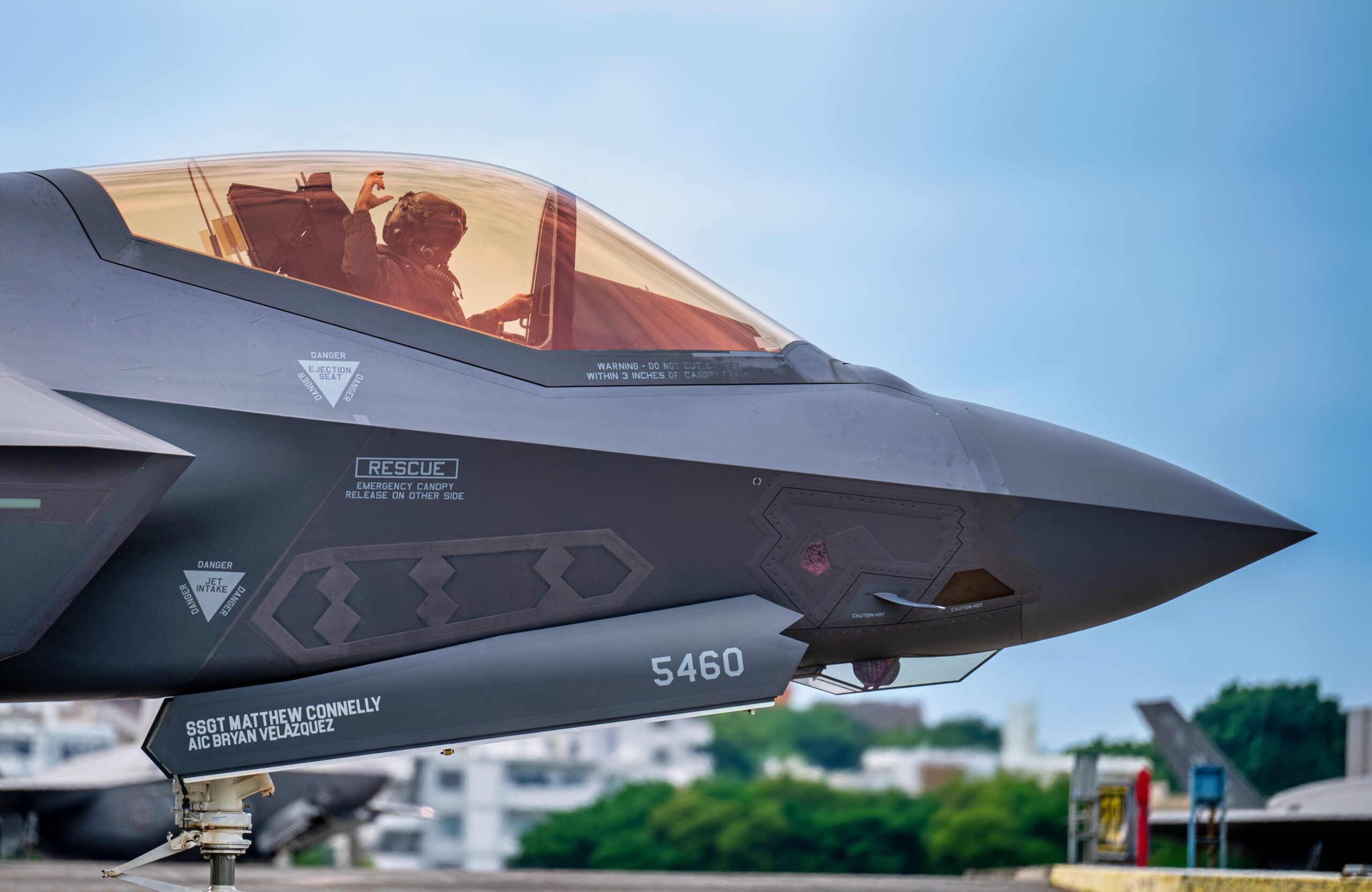
A U.S. Air Force F-35A Lightning II pilot assigned to the 355th Expeditionary Fighter Squadron taxis on the flightline at Marine Corps Air Station Futenma, Japan, during a routine 18th Wing readiness exercise at Kadena Air Base, Japan, May 6, 2025. The U.S. Air Force continues to work on its ability to meet new challenges in dynamic environments. In line with this direction, U.S. Pacific Air Forces is constantly evaluating and validating new warfighting concepts. (U.S. Air Force photo by Senior Airman Catherine Daniel)
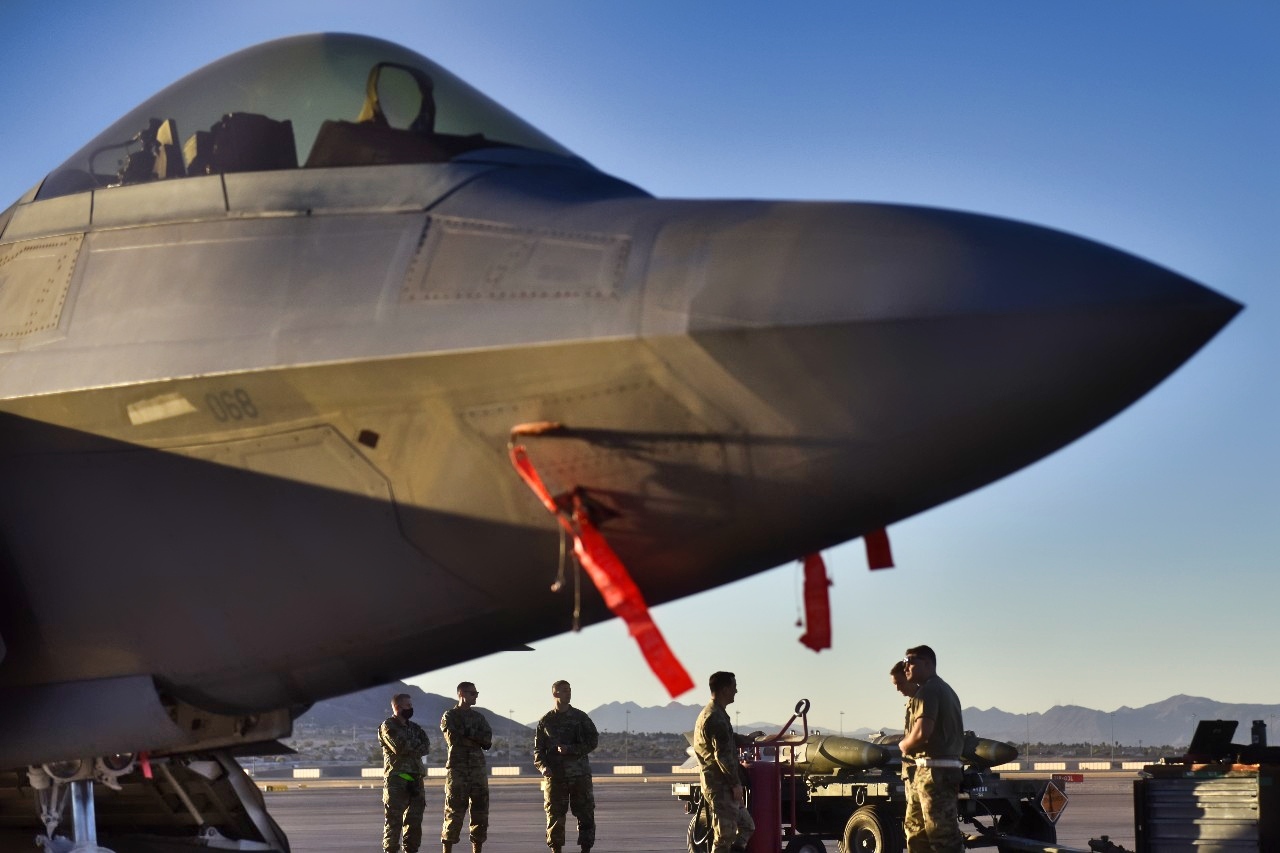
Airmen from the 757th Aircraft Maintenance Squadron talk about their execution plan next to an F-35 Lightning prior to the start of weapons load crew competition at Nellis Air Force Base, Nevada, Oct. 16, 2020. Throughout the year weapons crews are put to the test of safely loading and unloading ordinance to their respective aircraft in front of their peers while being timed. At the end of the year, the winners from each event are pitted against each other to see which team is the best. (U.S. Air Force photo by Tech. Sgt. Alexandre Montes)
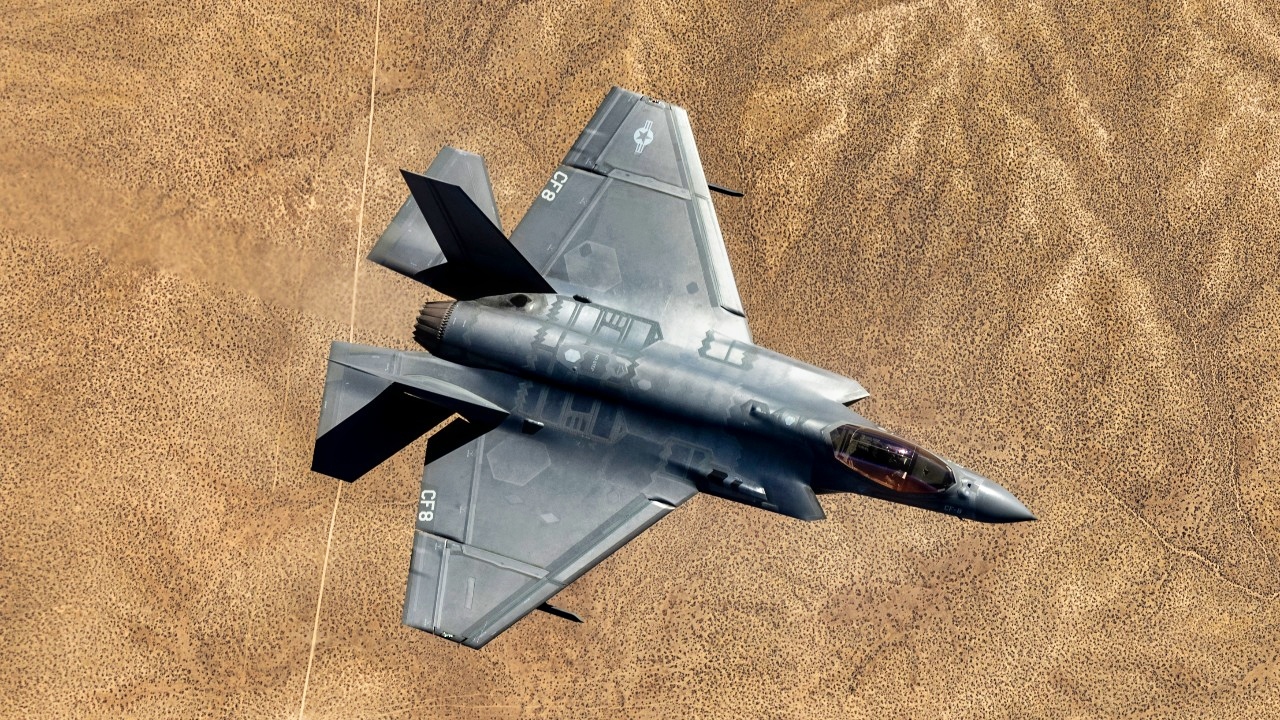
Maj. Nicholas Helmer conducts a mission over the Mojave Desert on October 8, 2024. The F-35C aircraft is assigned to the 461st Flight Test Squadron, F-35 Integrated Test Force at Edwards Air Force Base, California. The aircraft’s dual markings of United States Navy Air Test and Evaluation Squadron Nine (VX-9) and 461st FLTS represents the joint mission of the Integrated Test Force. The F-35 ITF includes people and aircraft from the United States Air Force, United States Navy, United States Marine Corps, foreign partners, Air Force Reserve Command 370th FLTS, and the Air Force Operational Test and Evaluation Center’s 31st TES. (Courtesy Photo, Lockheed Martin Edwards Team)
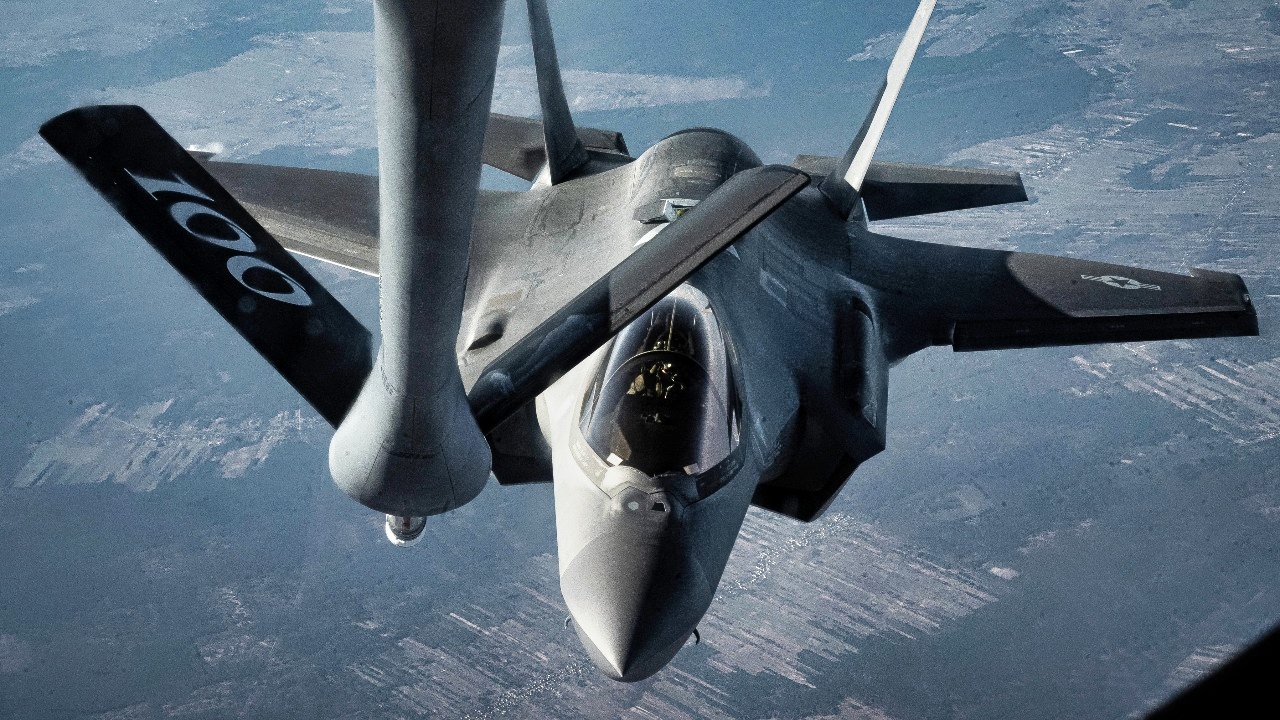
The 388th Fighter Wing’s F-35 Lightning II fifth-generation fighter prepares to receive fuel from a U.S. Air Force Boeing KC-135 Stratotanker attached to the 100th Air Refueling Wing in Eastern European airspace, Feb. 28, 2022. The KC-135 platform is key to enabling U.S. Air Forces in Europe – Air Forces Africa to project credible air power and air operations in concert with NATO allies and partners. (U.S. Air Force photo by Airman 1st Class Edgar Grimaldo)
But while detecting stealth fighters optically isn’t easy due to a lack of early warning and a short detection range, Iranian air defenders may have gotten lucky or identified patterns from prior stealth fighter missions, which they used to pre-position EO/IR sensors to attempt a surface-to-air ambush (or ‘Sambush’).
Alternatively, Iran may be able to leverage low-band or bistatic radars to detect stealth aircraft at low resolution from afar—providing early warning that can cue EO/IR targeting systems to look for approaching aircraft in the right places.
Iranian Air Defenses: Bloodied But Not Extinct
It’s no secret that Iran’s air defenses have taken a beating from Israeli and U.S. strikes in 2025 and 2026, without (until now) managing to touch any manned aircraft in return. The U.S. and Israel are the two armed forces most proficient in air defense suppression (SEAD) on the planet, and accordingly have inflicted heavy losses to Iranian radars and surface-to-air launches, creating the conditions to push warplanes deeper into Iranian airspace.
Nonetheless, the sheer size of Iran’s air defense arsenal gives it the endurance to continue fighting despite those losses and the ability to disperse geographically. Because SAM launchers are so readily concealable, Iran’s adversaries can never expect to eliminate that threat. The loss of over 20 large Israeli and U.S. combat drones (MQ-9 Reapers, Hermes 900s) by mid-March indicates Iran’s SAMs are still in the fight.
Having acquired large numbers of Western and later Chinese and captured Soviet surface-to-air systems during the Cold War, Tehran subsequently took steps to develop domestically-built equivalents to these ageing, imported weapons. In many cases, these indigenous spinoffs have included optical/infrared- guided versions of formerly radar-guided weapons, improving their utility against stealth aircraft.
Some notable Iranian electro-optical/infrared-guided surface-to-air missiles include:
- Sayyad-1A—an infrared-guided derivative of the Chinese radar-guided HQ-1 and HQ-2 missiles, themselves based on Soviet S-75 missiles. Sayyad has an increased range of 51-60 miles.
- Ra’ad-1 (“Thunder”): an electro-optical missile variant related to the Soviet 2K12E Kub (codename SA-6) surface-to-air missile system
- Mersad and Ghadr (self-propelled)—indigenous spinoffs of the American Hawk surface-to-air missile with an optical/infrared seeker
- Ya Zahra (trailer version) and Herz-9 (mobile version)—an optically-guided short-range missile design derived from the French and Chinese Crotale and HQ-7, respectively
- AD-08 Majid short-range system composed of an EO/IR sensor with a range of 9 miles and an electro-optically guided missile with a range of 5 miles
- Saqr-1/2 or 358, novel TV-guided loitering surface-to-air missile/drone
- Various man-portable surface-to-air missiles (MANPADS), like the 9K38 Igla, the Chinese QW-1, and its Iranian Misagh-1 and 2 spinoffs.
The big picture: Stealth Fighters are effective at Penetrating Air Defenses, but Never Invulnerable
Stealth fighters have never been, nor will ever be, completely immune to detection and interception—particularly when it comes to shorter-range optical/infrared sensors. They nonetheless offer unrivaled ability to sustain operations deep inside the enemy air defense zone, even though doing so is not without risk.
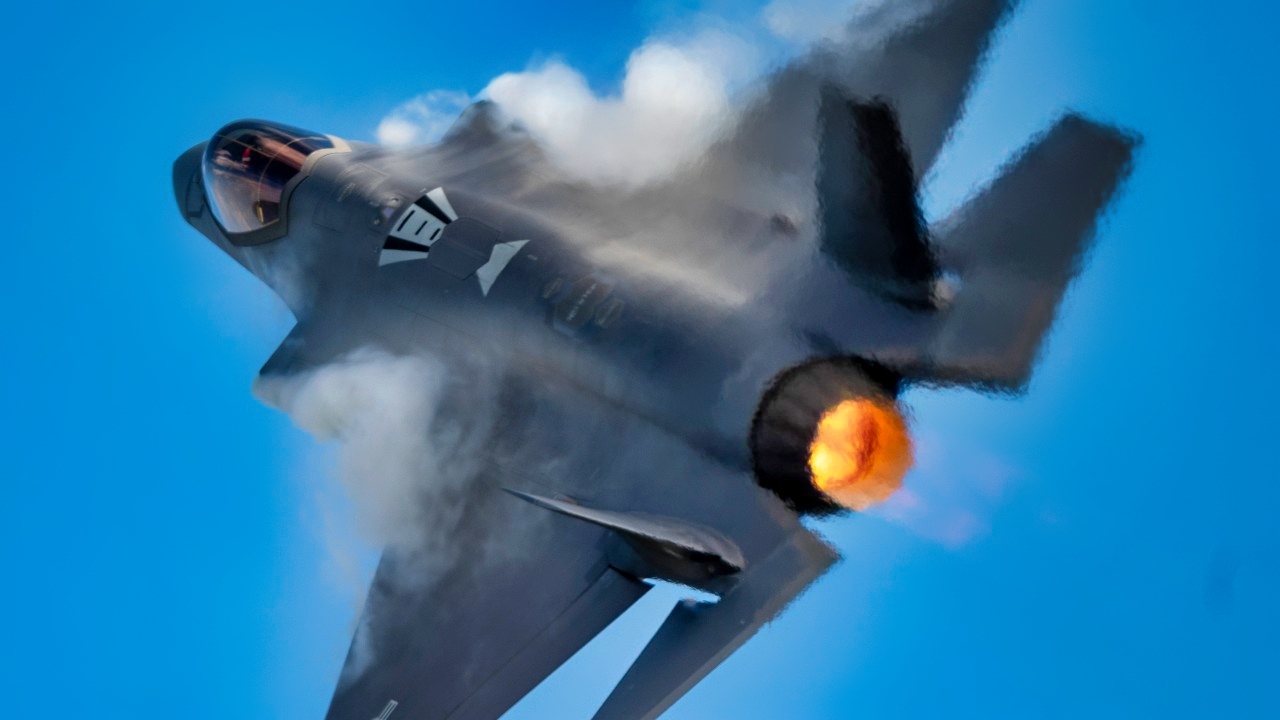
U.S. Air Force Maj. Melanie “Mach” Kluesner, the pilot for the F-35A Demonstration Team, performs aerial maneuvers in a USAF F-35A Lightning II during the practice day before the airshow at Jacksonville Naval Air Station, Florida, on 18 October, 2024. The practice day ensures that the team is able to safely and properly display the power, agility, and lethality of America’s 5th generation fighter jet. (U.S. Air Force photo by Senior Airman Nicholas Rupiper)
Meanwhile, cunning and disciplined air defense commanders can make their surface-to-air missile batteries very difficult to wipe out by continually re-positioning and geographically dispersing sensors and launchers, and leveraging terrain for concealment and ambushes.
That means Iran’s air defense system may continue to pose persistent risks to U.S. warplanes over Iranian airspace despite body blows dealt by U.S. and Israeli strikes.
About the Author: Defense Expert Sebastian Roblin
Sebastien Roblin writes on the technical, historical, and political aspects of international security and conflict for publications including The National Interest, NBC News, Forbes.com, and War is Boring. He holds a Master’s degree from Georgetown University and served with the Peace Corps in China. Roblin is also a 19FortyFive.com Contributing Editor.