The Iran War Proves Aircraft Carriers Aren’t Obsolete: U.S. Navy aircraft carrier vulnerability has been called into question in recent years due to the development of China’s long-range, precision-guided anti-ship “carrier-killer” missile, the DF-26, a weapon that has prompted some to argue that carriers themselves may have become obsolete by virtue of their vulnerability.
Are large carrier platforms still relevant and effective in a modern threat environment consisting of long-range, precision-guided anti-ship missiles?
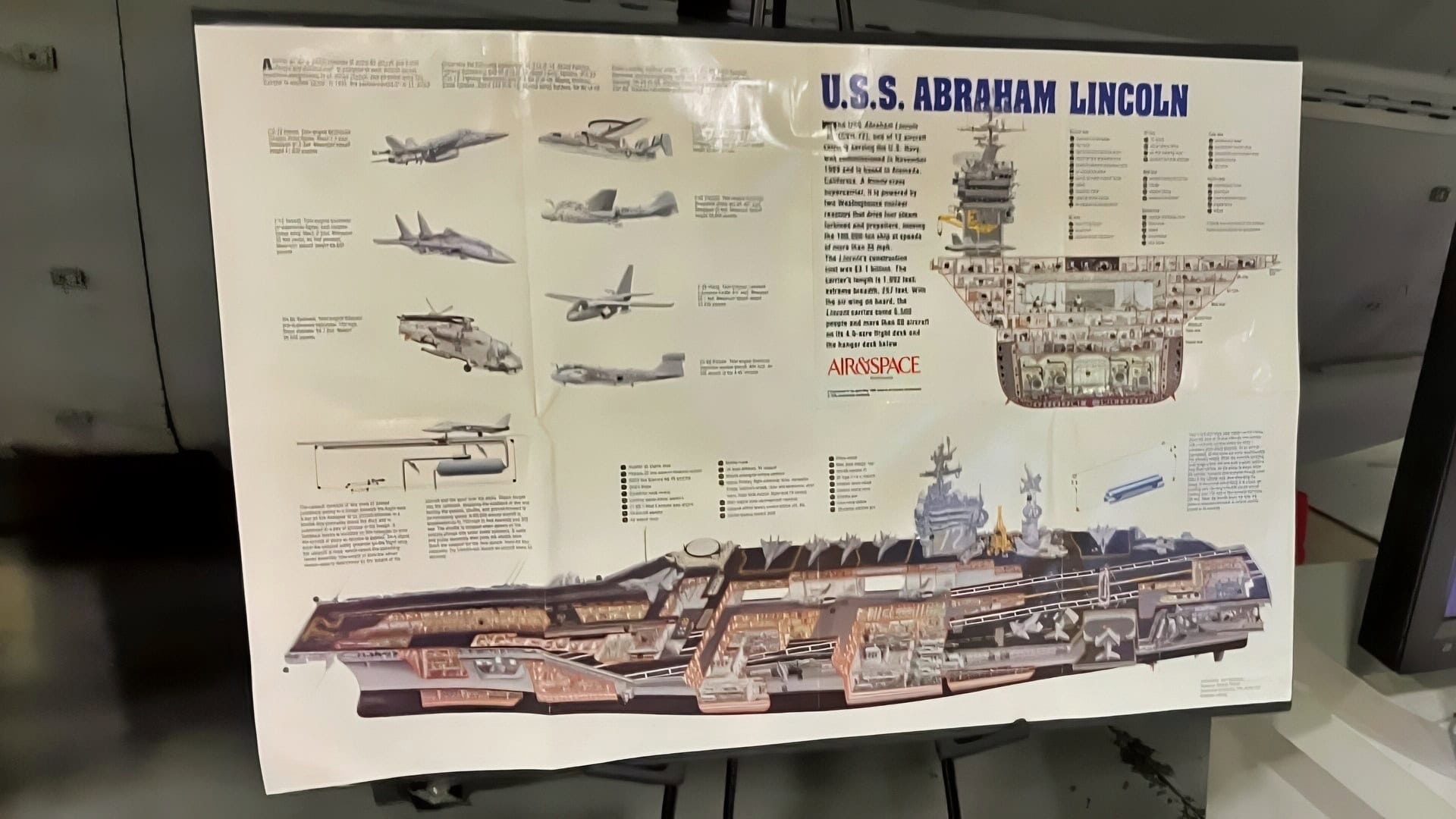
Aviation Museum of Kentucky USS Abraham Lincoln Carrier Photo. 19FortyFive.com Image.
This threat remains an open question, yet Operation Epic Fury has offered new evidence that carriers and carrier strike groups may be able to defend against such weapons. Emerging details from Operation Epic Fury reveal that the U.S. Navy’s aircraft carriers and aircraft carrier strike groups were consistently targeted by Iranian cruise missiles, according to Defense Secretary Pete Hegseth. Despite this consistent targeting and Iranian claims, “zero” carriers and large Navy warships supporting Epic Fury were hit.
“They shot 101 missiles at one of our aircraft carriers, one of the biggest ships in the world, actually. And of the 101 missiles shot, every single one of them was knocked down. So you think of it, think of what that means. 101 missiles, highly sophisticated, very fast missiles shot, and of 101, all 101 were shot down, and now for the most part lying at the bottom of the sea,” President Trump stated, as quoted in Naval News.
While carrier defenses have always been critical to the Navy, the operational concern has reached new heights in recent years with the arrival of these Chinese “carrier-killer” missiles reportedly capable of traveling 2,000 miles to attack carriers positioned off the coast.
The People’s Liberation Army’s (PLA) DF-26, for example, is reported to operate with an ability to track and destroy large carriers from distances up to 2,000 miles offshore. Iran is known to possess cruise missiles with precision guidance as well, in the form of inertial measurement systems and GPS. Yet, it is totally unclear if Iran’s missile guidance technology in any way resembles Chinese capabilities.
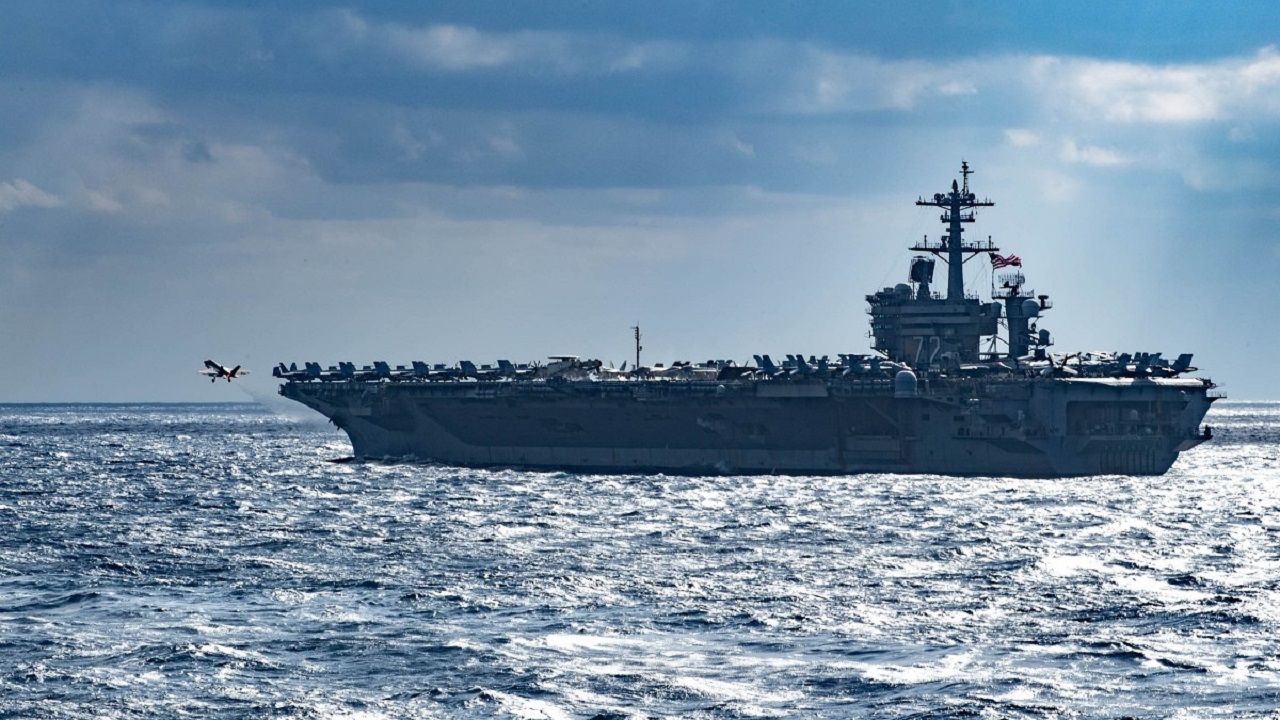
USS Abraham Lincoln. Image Credit: Creative Commons.
Aircraft Carriers Obviously “Not” Obsolete
For many years now, the existence of these weapons has driven debate over the extent to which long-range, precision-guided Chinese anti-ship “carrier killer” missiles could make U.S. Navy carriers obsolete, or at least very vulnerable, and force them to operate at distances within reach of attack to place aircraft within striking distance.
Is this true? The Navy certainly recognizes the seriousness of this threat. It is rapidly developing smaller, faster maritime warfare platforms, a growing sphere of unmanned systems, and an ability to extend fighter-jet attack range from distances where carriers might be less vulnerable.
We’ve all heard of Chinese “carrier-killer” missiles, as they have been widely discussed and hyped by Chinese government-backed newspapers.
What about Iran? Iranian weapons attacks related to this question have been on display in recent weeks during Operation Epic Fury.
Despite Iranian claims, no carriers were hit. What weapons might Iran have used, and what kinds of U.S. Navy ship defenses may have proven effective against these attacks?
Iranian Cruise Missiles
An interesting research essay published by Iran Watch lists two new, testing, and possibly deployed long-range Iranian cruise missiles that might have been used: the Soumar and the Hoveizeh. The Soumar missile, estimated to have a range of up to 3,000 km, could reach a distance that would put U.S. Navy Carrier Strike Groups at risk.
The Hoveizeh is potentially more current as it is described as a variant of the Soumar family and capable of hitting targets out to 839 miles (1,350 km). Perhaps of greatest significance, the Hoveizeh is cited as a precision weapon that uses inertial navigation systems to hit targets within as little as one meter.
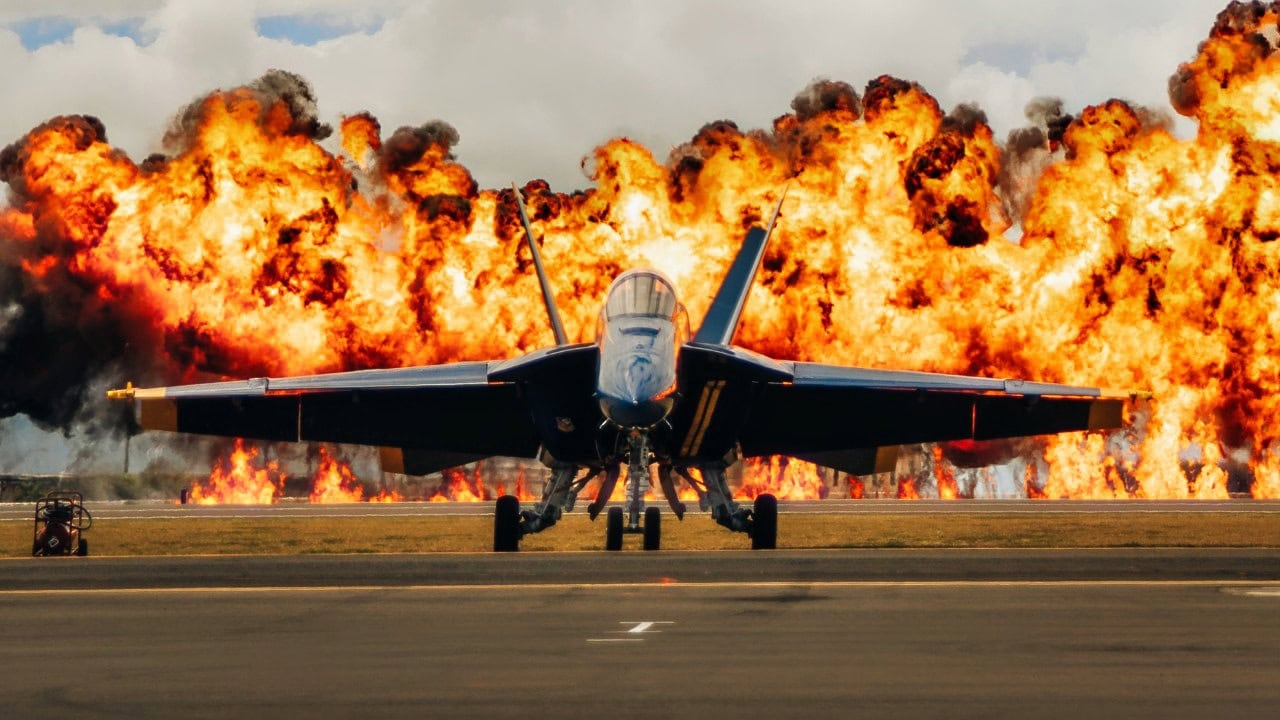
The ‘Wall of Fire” detonates behind two U.S. Navy Blue Angels F/A-18 Super Hornets during the 2022 Kaneohe Bay Air Show, Marine Corps Air Station Kaneohe Bay, Marine Corps Base Hawaii, Aug. 13, 2022. The air show provided an opportunity to demonstrate the capabilities of a Joint Force in the Indo-Pacific Region. The Kaneohe Bay Air Show, which contained aerial performances, static displays, demonstrations and vendors, was designed to express MCBH’s appreciation to the residents of Hawaii and their continued support of the installation. (U.S. Marine Corps photo by Cpl. Patrick King)
This claim may or may not be true, yet INS technology of this kind does exist. The Hoveizeh also operates in “sea-skimming” mode, like many anti-ship cruise missiles, to fly below the radar aperture and avoid detection en route to a target. How dangerous are these missiles? If these weapons were used, they appear to have been stopped, jammed, or intercepted, according to Hegseth.
U.S. Navy Supercarriers “Ruggedized”
Perhaps of greatest significance, the U.S. Navy has in recent years made massive efforts to “ruggedize” its carrier force, add high-tech elements to its layered defense system, and develop new tactics and concepts of operation sufficient to counter the Chinese threat. Some of these efforts include adding refueler drones, such as the emerging MQ-25 Stingray carrier-launched drone refueler.
This new system can potentially refuel fighter jets such as an F-35C or an F/A-18 Super Hornet hundreds of miles from the carrier they launched from, greatly increasing mission dwell time and overall range, enabling air attacks from further offshore. In these instances, carriers could put mainland China at risk from safe stand-off ranges of more than 2,000 miles offshore. Ranges out of the striking range of the DF-26 or Iranian Hoveizeh.
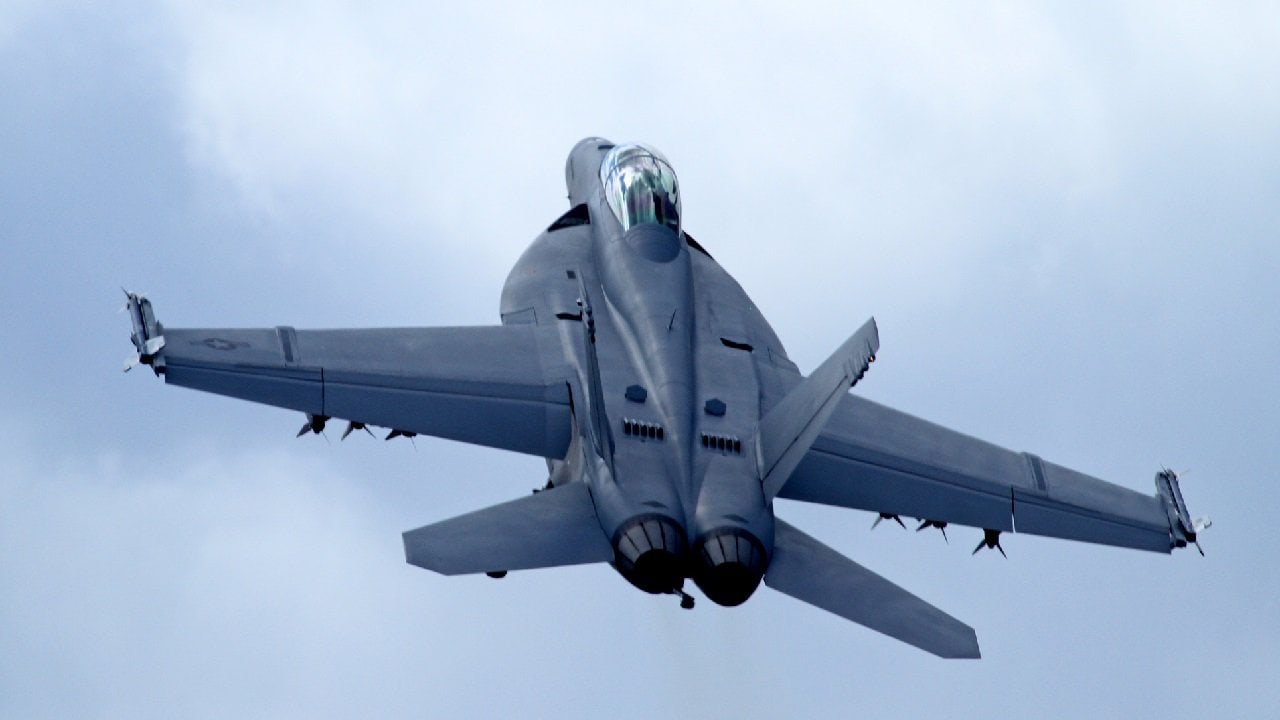
Block III F/A-18 Super Hornet.
While the Stingray was reportedly not operational in Epic Fury, indications are that the drone refueler will arrive in 2026. Ship-based Aegis radar may have been used to track and intercept incoming Iranian missiles.
In the case of cruise missiles, warship defenses such as the Evolved Sea Sparrow Block II can operate in sea-skimming mode to intercept anti-ship cruise missiles flying at lower altitudes parallel to the ocean surface, thereby eluding ship-based radar.
Warships Defend Carriers
For years, U.S. Navy carriers have been capable of self-defense; they typically operate in Carrier Strike Groups, where service destroyers and cruisers protect carriers with advanced Aegis Combat Systems radar, interceptor missiles, and forward-operating reconnaissance platforms such as ship-launched helicopters and drones.
Layered Ship Defenses
Certainly, the specifics of many ship defenses are likely not available for security reasons.
The Navy has, for years, discussed the critical elements of its layered defense systems in general terms. Of course, nearby U.S. Navy Arleigh Burke-class DDG-51 destroyers are armed with SM-2, SM-3, and SM-6 interceptor missiles, capable of blanketing and protecting against short-, medium-, and long-range ballistic missiles, with precision tracking and intercept technology designed to “knock” incoming enemy anti-ship missiles out of the sky.
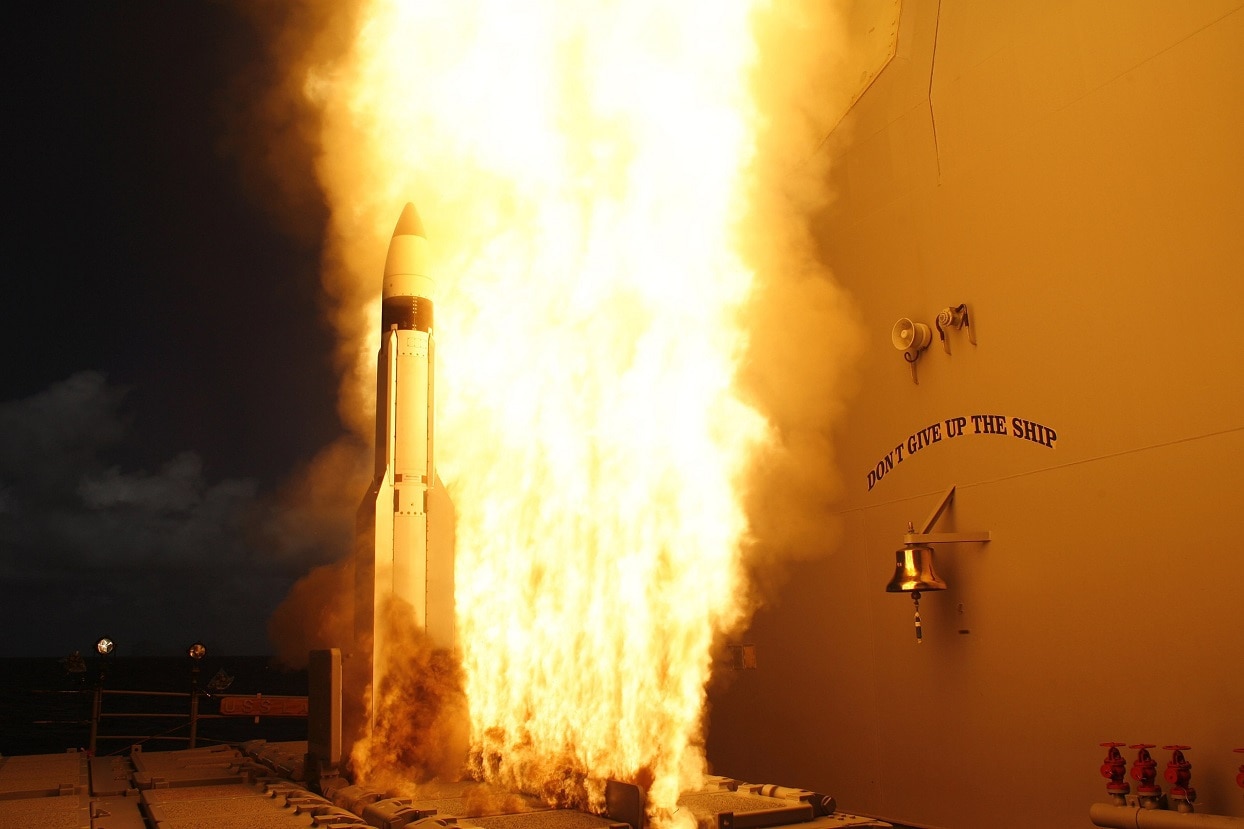
PACIFIC OCEAN (April 26, 2007) – A Standard Missile-3 (SM-3) is launched from the Aegis-class guided missile cruiser USS Lake Erie (CG 70), during a joint Missile Defense Agency, U.S. Navy ballistic missile flight test. Approximately three minutes later, the SM-3 intercepted a unitary (non-separating) ballistic missile threat target, launched from the Pacific Missile Range Facility, Barking Sands, Kauai, Hawaii. Within moments of this launch, the USS Lake Erie also launched a Standard Missile-2 (SM-2) against a hostile air target in order to defend herself. The test was the eighth intercept, in 10 program flight tests. The test was designed to show the capability of the ship and its crew to conduct ballistic missile defense and at the same time defend herself. This test also marks the 27th successful hit-to-kill intercept in tests since 2001. U.S. Navy photo (RELEASED)
In more recent years, the Navy has been innovating and refining a new generation of upgraded ship defenses, many of which are integrated onto carriers. Of course, ships have the Rolling Airframe Missile, yet U.S. Navy destroyers and carriers each have different combinations of additional key ship defenses.
Carriers do not have Vertical Launch Tubes capable of firing SM-2, SM-3, or SM-6 interceptors. Yet, they are often networked with supporting destroyers and operate with EW, Close-In-Weapons Systems, SeaRAM missiles, and even “lasers” to a growing degree.
Close-In Ship Defenses
Some defenses, such as SeaRAM, Standard Missiles, and certain lasers, are only on Destroyers, yet many carriers are armed with RAM, Evolved Sea Sparrow Missiles Block II, and Close-in-Weapons Systems (CIWS), which use Phalanx area-weapons to blanket surface and air areas with hundreds of defensive projectiles per second. Designed as the closest-in-defenses, CIWS can knock out small boats, drones, and some incoming projectiles.
Both SeaRAM and CIWS have been upgraded over the past 10 years as well; Raytheon has engineered SeaRAM to achieve longer range and improved guidance, and CIWS has been upgraded to a “1B” variant capable of defending ocean surface areas against small boats in addition to countering air threats.
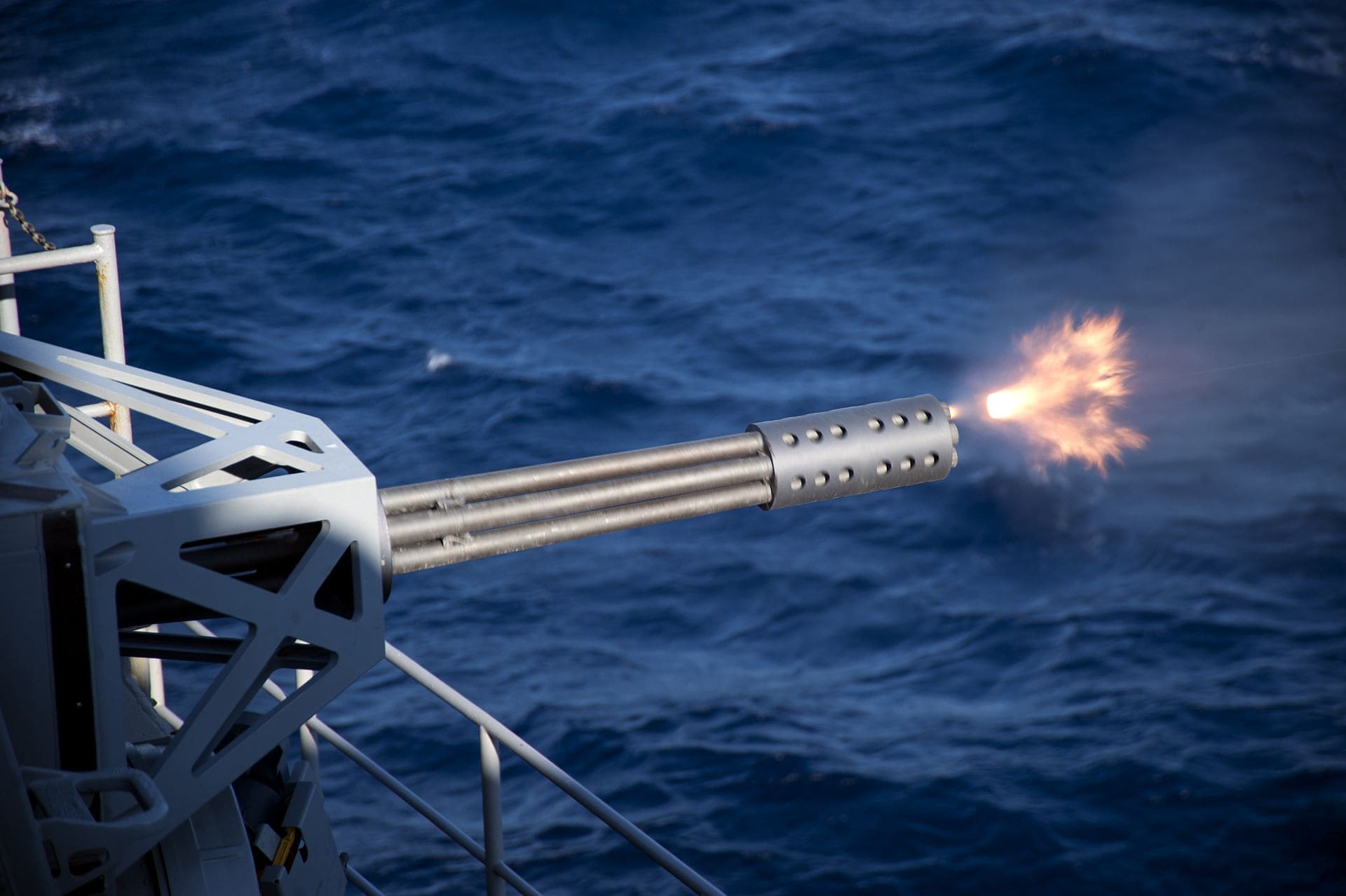
Phalanx Gun. Image Credit: Creative Commons.
Navy carriers are also armed with decoys and electronic countermeasures designed to throw attacking torpedoes off course and, in some cases, jam the electronic guidance systems of incoming enemy weapons.
Navy destroyers, and possibly carriers to some extent, are increasingly armed with an advanced EW technology called Surface Electronic Warfare Improvement Program Block 3 (SEWIP), which uses a new generation of advanced electronic countermeasures sufficient to identify and jam or disable incoming anti-ship missiles and other weapons.
Networked Warship Missile Defense for Aircraft Carriers
All of these layered defenses, however, are increasingly enabled by networking technologies designed to share threat information, target-tracking loop data, and radio communications between ships, drones, helicopters, aircraft, or surfacing submarines. Advanced ship defenses can now operate beyond the horizon using networked aerial nodes or gateways positioned in the sky.
For example, U.S. Navy Hawkeye surveillance planes and even F-35s function as critical gateways within the Navy’s now-deployed Naval Integrated Fire Control — Counter Air (NIFC-CA) system.
In service on destroyers for nearly 10 years, NIFC-CA connects ship-based command and control systems and Aegis radar with aerial gateways to identify and track threats from beyond the detectable radar aperture of ship-based systems.
Using an aerial gateway, ship commanders can identify and destroy incoming enemy anti-ship missiles at distances beyond the radar horizon.
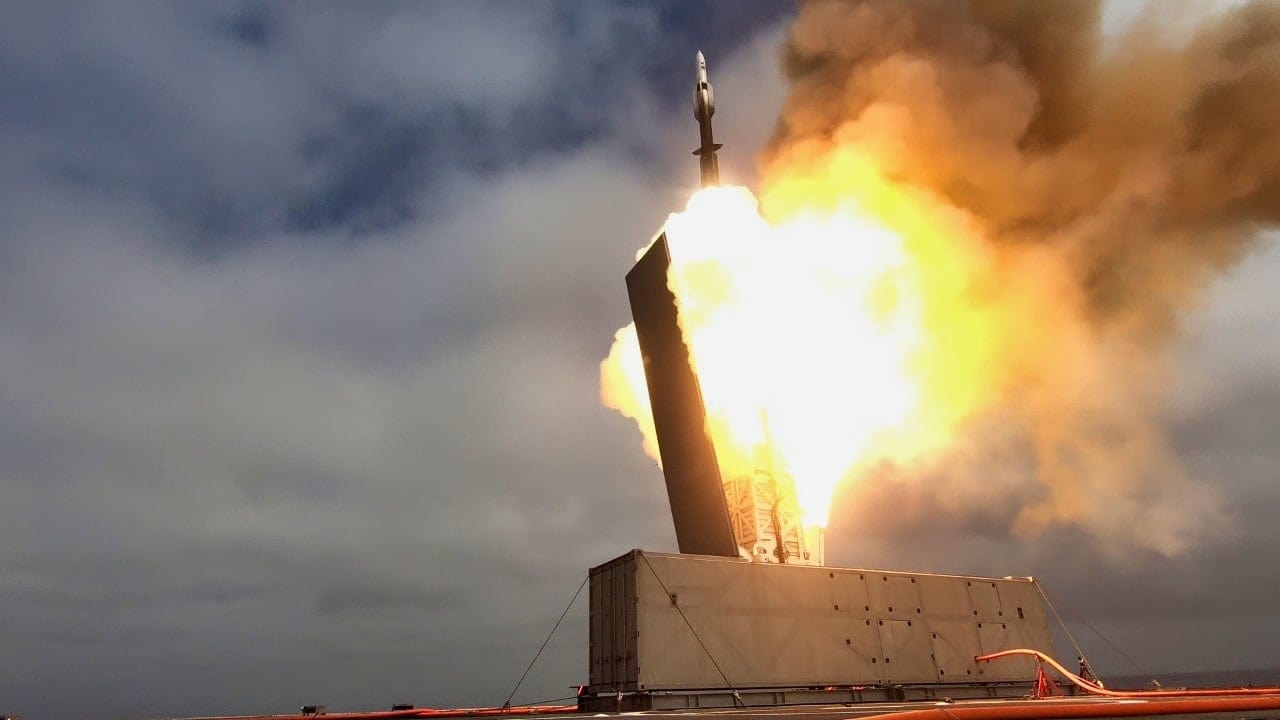
USS Savannah (LCS 28) conducts a live-fire demonstration in the Eastern Pacific Ocean utilizing a containerized launching system that fired an SM-6 missile from the ship at a designated target. The exercise demonstrated the modularity and lethality of Littoral Combat Ships and the ability to successfully integrate a containerized weapons system to engage a surface target. The exercise will inform continued testing, evaluation and integration of containerized weapons systems on afloat platforms.
This gives ship commanders a much-improved time window within which to decide which countermeasure to use or how best to implement ship defenses or counterattacks. A critical element of NIFC-CA is a networked SM-6 interceptor missile that, through the integrated system, can be launched to intercept and destroy attacking anti-ship missiles at otherwise unreachable ranges.
In recent years, the SM-6 has been made increasingly capable with what Raytheon weapons developers have described as a “dual-mode” seeker, meaning software upgrades enable the missile itself to send its own forward “ping” and adjust course in flight to hit moving targets … without needing to rely upon a ship-based illuminator.
Years of Progress
The implementation of NIFC-CA and many of these other ship-defense upgrades and additions go back more than 10 years to the Navy’s fleet-wide Distributed Lethality Program.
This effort, begun more than 10 years ago, represented a sweeping initiative to better arm the surface fleet with offensive and defensive weapons to increase its readiness for great-power, “blue-water” major maritime warfare scenarios.
These adjustments were critical to the service, and the impact of many of them is seen today as the service seeks to transition from counter-terrorism and counter-piracy missions that were primarily focused upon during the 15 years of counter-insurgency in Iraq and Afghanistan.
While these missions, which included operations such as Visit, Board, Search, and Seizure, are still important to Navy concepts of operation, they have been massively supplemented by vastly improved, ship-integrated weaponry and defenses.
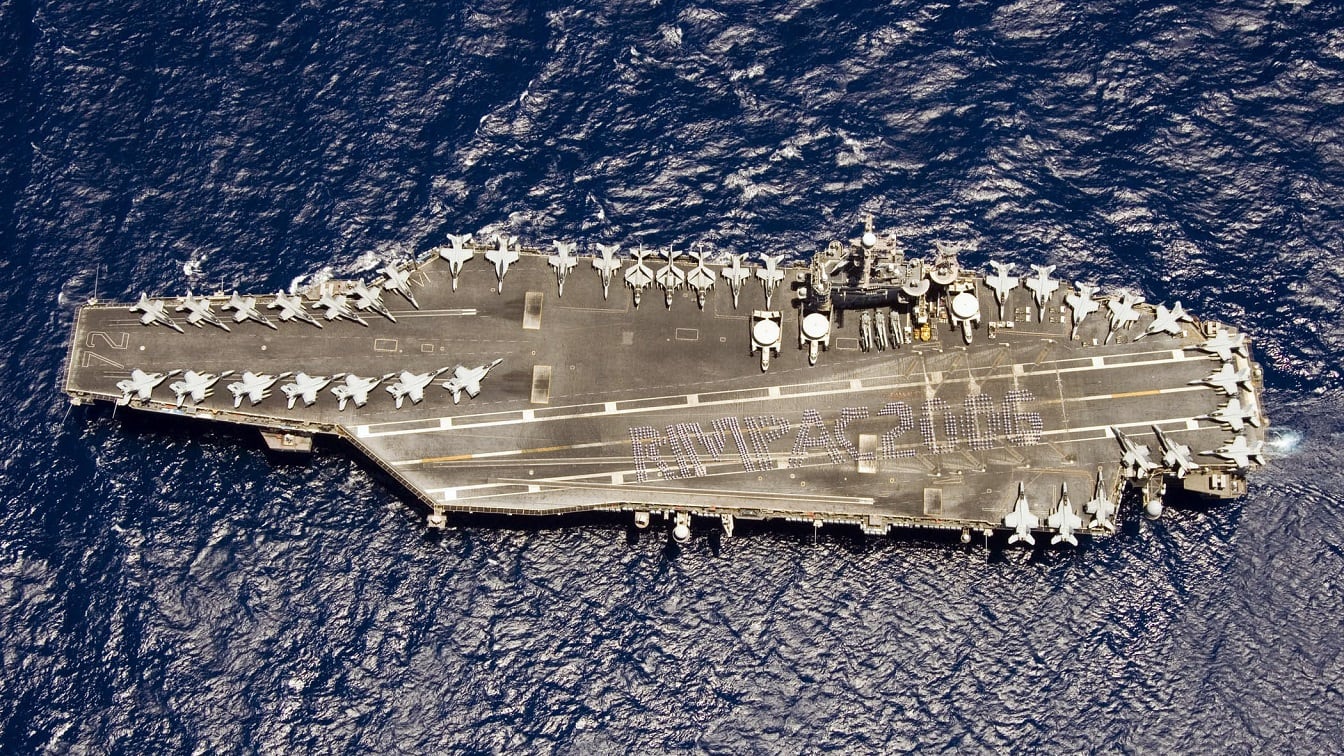
Aerial overhead view of US Navy (USN) Sailors aboard the USN Nimitz Class Aircraft Carrier USS ABRAHAM LINCOLN (CVN 72) spelling out RIMPAC 2006 on the flight deck of the ship during a photo exercise during Exercise Rim of the Pacific (RIMPAC) 2006 in the Pacific Ocean (POC). The exercise is designed to increase the tactical proficiency of participating units in a wide array of combined sea operations. RIMPAC 2006 brings together military forces from Australia (AUS), Canada (CAN), Chile (CHL), Peru (PER), Japan (JPN), the Republic of Korea (KOR), United Kingdom (UK) and the United States (US).
U.S. Navy photo by Mass Communication Specialist Seaman James R. Evans (RELEASED)
The results of this strategic effort are now more clearly evident across the force, as surface ships and carriers operate with new generations of layered ship defenses that better protect carriers at risk of anti-ship missile attack.
Specifically, for example, a Chinese DF-26 or Iranian cruise missile could be seen at much greater stand-off ranges with NIFC-CA, advanced EW might detect its electronic signal, deconflict elements of the electromagnetic spectrum, and “jam” its guidance technology or perhaps even “laser” weapons able to incinerate approaching anti-ship missiles from surface ships or even aircraft.
MORE – North Korea Murdered Two U.S. Officers With Axes Over a Tree and Almost Started World War III
MORE – Japan Built 70,000-Ton Battleships. None Survived WWII
About the Author: Kris Osborn
Kris Osborn is the President of Warrior Maven – Center for Military Modernization. Osborn previously served at the Pentagon as a highly qualified expert in the Office of the Assistant Secretary of the Army—Acquisition, Logistics & Technology. Osborn has also worked as an anchor and on-air military specialist at national TV networks. He has appeared as a guest military expert on Fox News, MSNBC, The Military Channel, and The History Channel. He also has a Masters Degree in Comparative Literature from Columbia University.