The Pakistan Talks Failure Was Predictable. Here’s What Washington Still Gets Wrong About Iran: While President Trump and Secretary of State Rubio were at UFC 327 in Miami on Saturday night, Vice President JD Vance was in Islamabad, finishing 21 hours of talks that went past 6 a.m. local time and produced nothing. When it was over, Vance described what he called a “final and best offer” that Iran had not accepted. Trump, reached in Miami, projected nonchalance. “We win, regardless,” he said. “We’ve defeated them militarily.”
Where We are Now: Iran, the Talks, and Trouble Ahead?
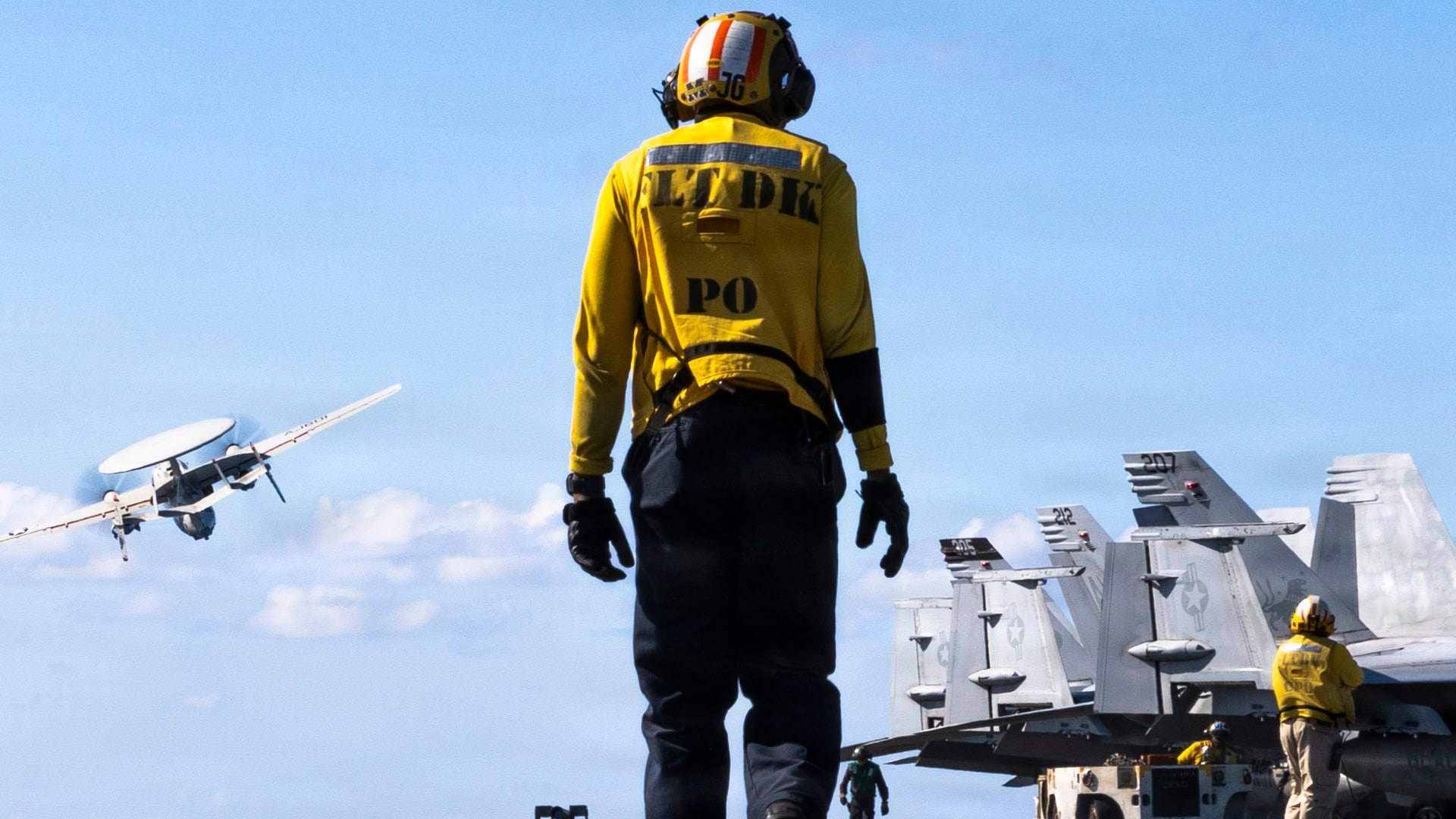
Aviation Boatswain’s Mate (Aircraft Handling) 2nd Class Jawan George transits the flight deck of the world’s largest aircraft carrier, USS Gerald R. Ford (CVN 78), while underway in the Mediterranean Sea, April 6, 2026. Gerald R. Ford is on a scheduled deployment in the U.S. 6th Fleet area of operations to support the warfighting effectiveness, lethality and readiness of U.S. Naval Forces Europe-Africa, and defend U.S., Allied and partner interests in the region. (U.S. Navy photo by Mass Communication Specialist Seaman Paige Brown)
I predicted this outcome in March. The failure was not a surprise. What is worth examining now is why it failed, because the dominant explanation in Washington is wrong, and continuing to escalate will produce more of the same.
The instinct is to read Iranian resistance as ideological rigidity, as negotiating in bad faith, or as simple irrationality. None of that explains what happened in Islamabad.
What explains it is something more structurally predictable, and more difficult for American policymakers to accept: the United States is so powerful that Iran cannot afford to back down. American strength is not softening Iranian resistance. It is the primary cause.
But American strength may also be more limited than Washington assumes, and Iran is proving it.
The Trump Administration, however, appears determined to keep repeating the same mistake and expecting a different result, as evidenced by its threat to block the Iranian blockade of the Strait of Hormuz.
Goliath’s Curse
The evidence on coercive diplomacy makes this plain: militarily inferior states are often the most resistant to coercion, not despite the power gap but because of it.
The research on asymmetric coercion calls this Goliath’s curse: the more credible and overwhelming the threat, the harder the weaker party resists, because capitulation no longer looks like a pragmatic concession. It looks like strategic extinction.
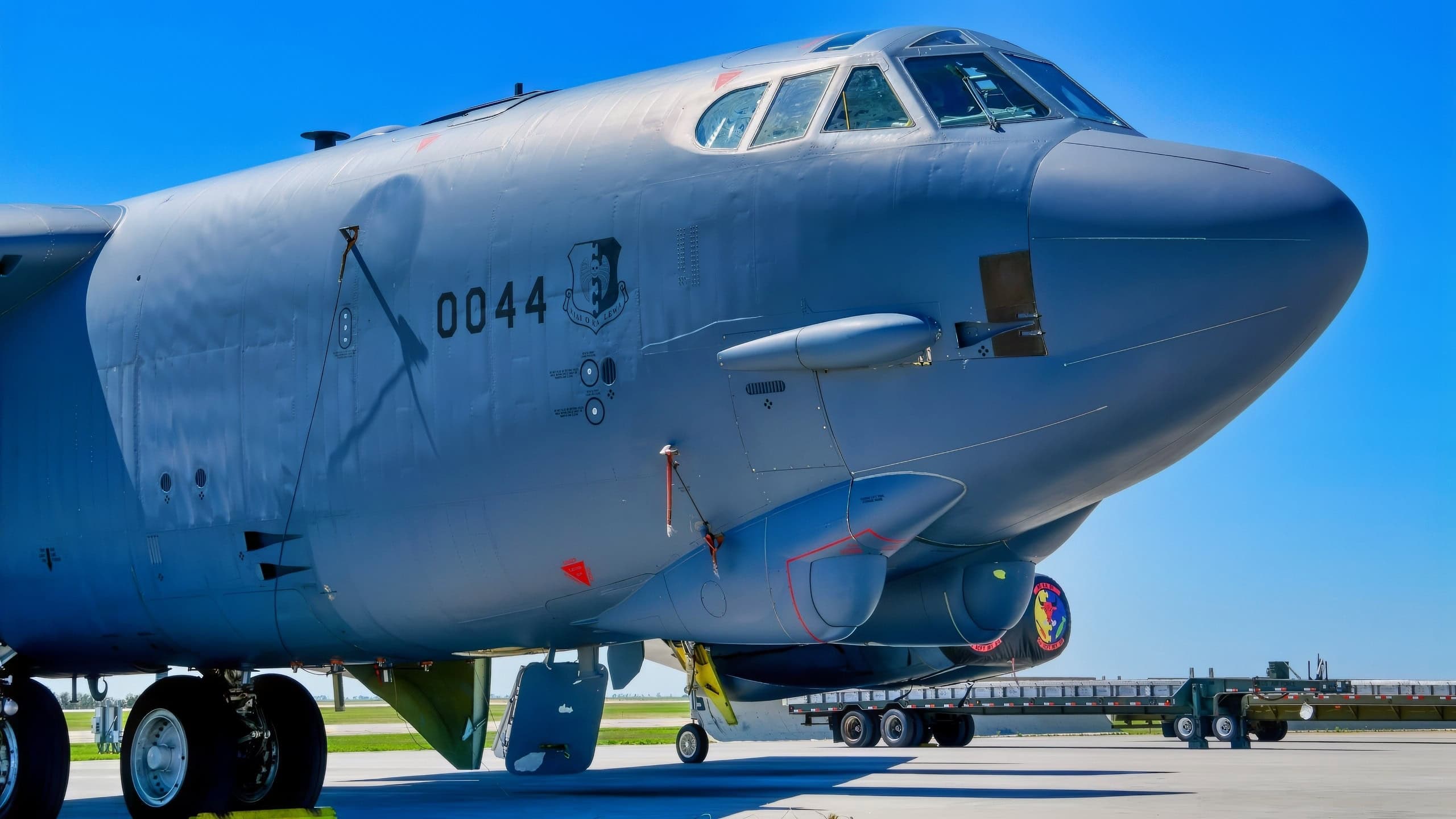
A B-52H Stratofortress sit parked on the flight line at Minot Air Force Base, North Dakota, Aug. 8, 2022. The B-52 is capable of dropping or launching gravity bombs, cluster bombs, precision-guided missiles and joint direct attack munitions. (U.S. Air Force photo by Airman Alysa Knott)
Consider what the United States and Israel are actually asking Iran to do. Six weeks ago, American and Israeli airstrikes killed the supreme leader. Israeli operations have eliminated twenty nuclear scientists across two military campaigns and, according to Netanyahu, left Iran with no active enrichment facility.
Now Washington is demanding zero enrichment and the surrender of 970 pounds of enriched uranium, the last meaningful deterrent capability Iran has left. Vance framed the core issue plainly: “a fundamental commitment of will” that Iran not develop a nuclear weapon, not just now but permanently.
That is not a negotiating position. It is a demand for permanent strategic disarmament from a country that is already losing. And Iran’s negotiators know exactly what permanent disarmament produces, because they have watched it happen three times in their lifetimes.
The Lessons of Iraq, Libya, and Ukraine
Saddham Hussein gave up his nuclear program and was forcibly overthrown in 2003. Muammar Gaddafi gave up his weapons of mass destruction program in 2003 in exchange for normalized relations and economic inducements.
However, the United States and its allies supported the domestic opposition that sought his overthrow during the Arab Spring, and he was killed in 2011. Ukraine surrendered its nuclear arsenal in 1994 under the Budapest Memorandum, receiving sovereignty guarantees from Russia, the United States, and the United Kingdom in return.
Russia invaded in 2014 and again in 2022. The lesson authoritarian regimes drew from both cases is not subtle, and Iranian decision-makers have referenced it explicitly: disarmament under pressure buys vulnerability, not security.
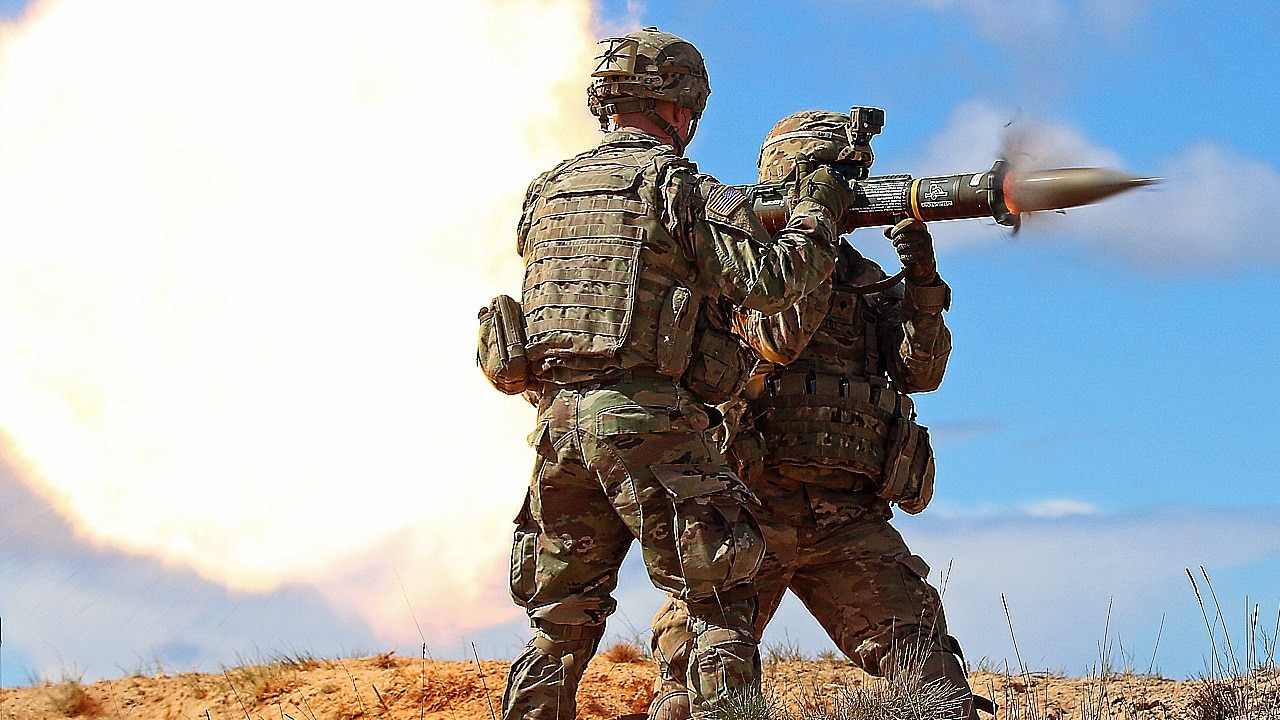
Spc. Chengjie Liu (right), fires an AT-4 anti-tank weapon as Sgt. Jacob Saccameno, both infantrymen assigned to Headquarters and Headquarters Troop, 3rd Squadron, 2nd Cavalry Regiment, supervises and assists during an anti-tank and air defense artillery range, April 23, at Adazi Military Base, Latvia. American and Latvian soldiers trained using a variety of weapons, including Javelin anti-tank missiles, Carl Gustav recoilless anti-tank rifles and the RBS-70 Short-range air defense laser guided missile system. Soldiers from five North Atlantic Treaty Organization nations, including Canada, Germany and Lithuania, have been conducting a variety of training together during Summer Shield XIII, an annual two-week long interoperability training event in Latvia. (U.S. Army photo by Sgt. Paige Behringer)
An Iran that surrenders its nuclear capability today could face future rounds of coercion from Washington, Riyadh, and Tel Aviv, without the one asset that makes coercion costly for the other side: a nuclear deterrent.
What Comes Next: What History Says on Iran and the Future
The talks have not cleanly collapsed. Iran’s government said negotiations will continue despite remaining differences, and an Iranian state TV reporter indicated the talks would resume. But the gap is structural, not procedural. Technical experts exchanging documents will not close it.
The Strait of Hormuz illustrates the strategic muddle better than anything said in Islamabad. Two American guided-missile destroyers entered the strait on Saturday, destroyed an Iranian surveillance drone, and turned around. Iran denied the transit had occurred at all.
Meanwhile, Tehran cannot find all the mines it laid in its own waterway and lacks the capability to remove them, leaving the strait closed partly by Iranian design and partly by Iranian incompetence. Washington is negotiating around Iranian toll demands that would have been unthinkable before February. Neither side controls the strait. Neither side can cleanly claim victory. The global economy is paying the price for a standoff that both parties are now performing as much as prosecuting.
Meanwhile, Netanyahu has been explicit: the campaign is not over. Israel insists its operations in Lebanon fall outside the scope of any US-Iran ceasefire, and Hezbollah has continued to fire rockets into northern Israel. Lebanese and Israeli officials are due to meet in Washington this week, but a settlement is not expected. More than a million people, roughly a fifth of Lebanon’s population, have been displaced.
The Winter War offers the clearest historical parallel. In 1939, Finland faced Soviet demands for territorial concessions framed as security necessities. Finnish leaders calculated that submission was worse than resistance: granting the concessions would not satisfy the Soviet appetite, it would signal that Finland could be pressured indefinitely. Finland fought, lost ground, took devastating casualties — and won strategically.
By proving that invasion was costly enough to deter full absorption, Finland preserved its sovereignty while the Baltic states, which did not resist, disappeared into the Soviet Union for fifty years.
Iran is making the same calculation today. It has lost its supreme leader, twenty nuclear scientists, and every enrichment facility it had. Its economy is in ruins. But it has proven that regime change by air does not work, that America’s commitments to its Gulf allies have limits, and that the Strait of Hormuz is a workable pressure point that Washington cannot simply dismiss.
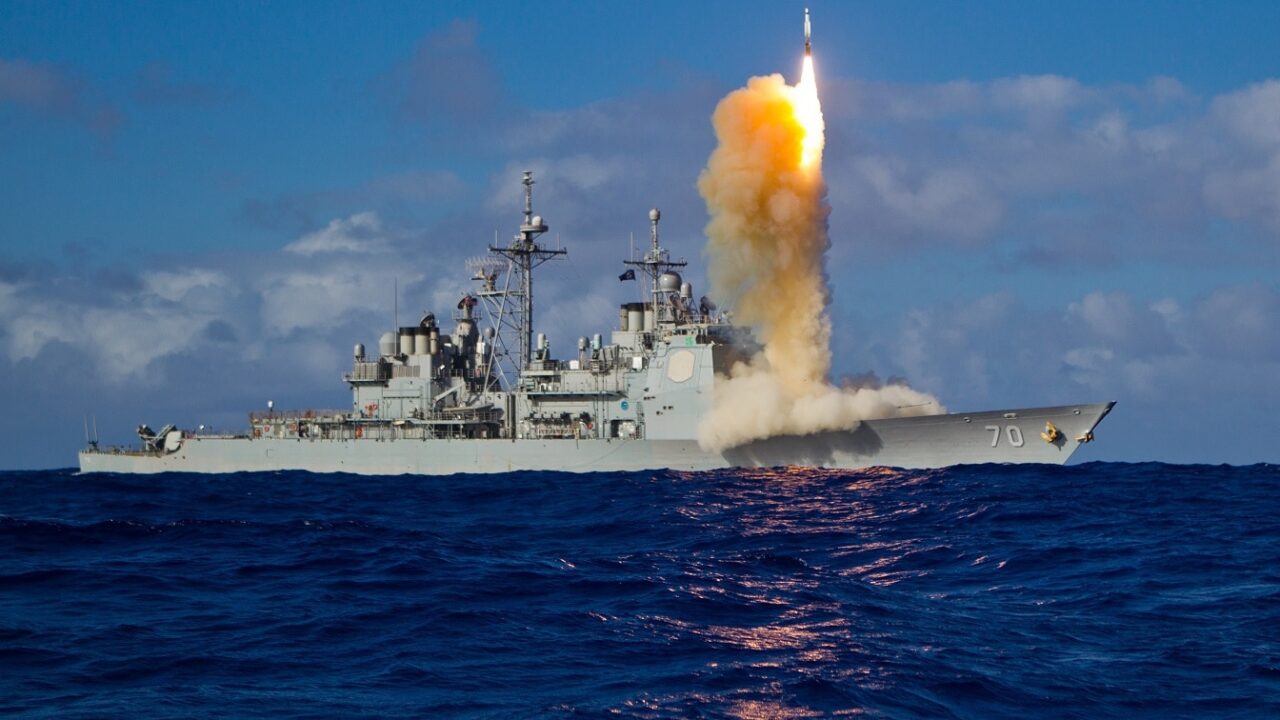
A Standard Missile-3 (SM-3) Block 1B interceptor missile is launched from the guided-missile cruiser USS Lake Erie (CG 70) during a Missile Defense Agency and U.S. Navy test in the mid-Pacific. The SM-3 Block 1B successfully intercepted a target missile that had been launched from the Pacific Missile Range Facility at Barking Sands in Kauai, Hawaii. Lake Erie detected and tracked the target with its on board AN/SPY-1 radar. The event was the third consecutive successful intercept test of the SM-3 Block IB missile. (U.S. Navy photo/Released)
While Iran is not Finland, and this is not 1939, the logic is the same. Washington keeps asking why Iran will not take the deal. The answer is that from Tehran’s perspective, there is no acceptable deal on offer, but only a managed defeat on terms that guarantee worse to follow. The Trump Administration has doubled down on escalation with its new threat to blockade the Strait of Hormuz. This will require two carrier strike groups, twelve destroyers, six warships, and the assistance of the Emirati and Saudi Navies.
As was the case with Finland in 1939, Iran will only continue to resist American demands on the Strait of Hormuz as well as its nuclear and missile programs. Until the US strategy accounts for that logic rather than dismissing it as fanaticism, the gap that produced the Islamabad failure will persist through every subsequent round of talks.
About the Author: Dr. Albert B. Wolf
Dr. Albert B. Wolf is a Global Fellow at Habib University in Karachi. His work has appeared in Foreign Policy, The Washington Post, War on the Rocks, and 19FortyFive.