
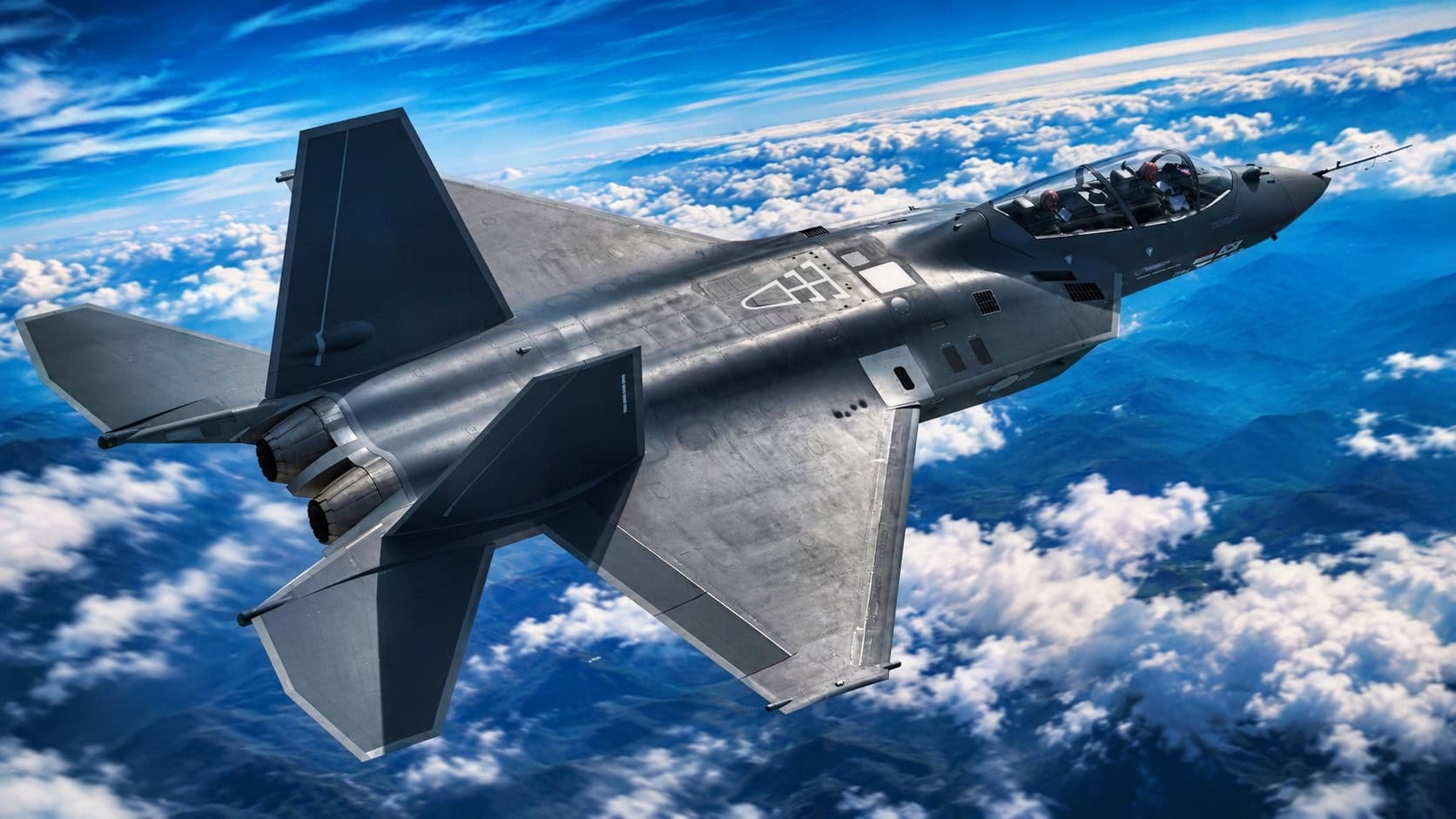
Meet the KF-21 fighter: When South Korea set out to build its first homegrown fighter jet, it expected help from its closest ally. It did not get it.
In 2015, the United States refused to transfer four of the technologies Korea most needed: the AESA radar that serves as the jet’s electronic brain, the infrared search-and-track sensor, the electro-optical targeting pod, and the radio-frequency jammer. These are the sensor cores of any modern fighter, and Washington would not hand them over.
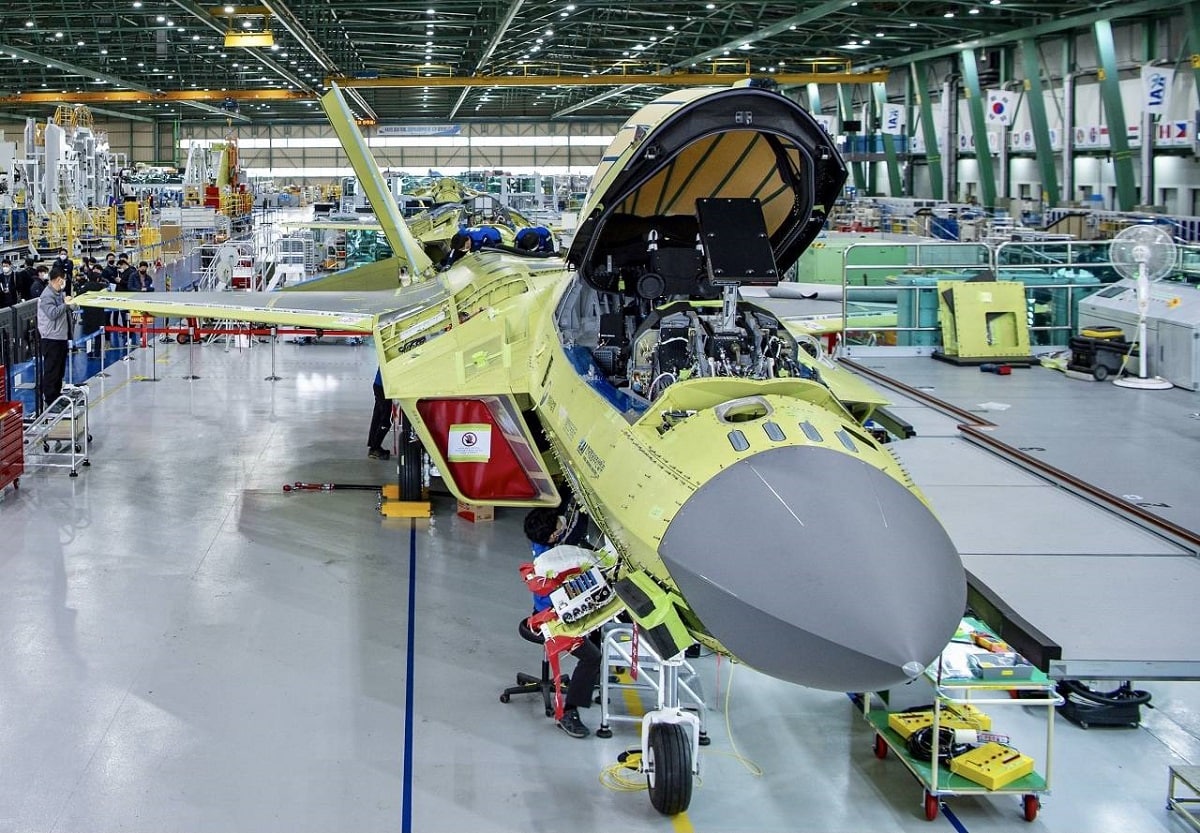
KF-X. Image: DAPA.
It was the same kind of denial that, a generation earlier, had forced Japan to write its own flight-control software from scratch and left Tokyo permanently bitter about depending on the United States. Korea hit the identical wall, and chose a different answer.
Rather than accept a dependent, American-leashed program, Seoul poured years and billions into building all four technologies at home. In 2026, the result flew into service. The KF-21 “Boramae” was declared combat-ready in May, with the first jets due to the Korean Air Force this year, flying with a Korean-made AESA radar that the United States had refused to provide.
KF-21: The Fighter Korea Set Out To Build
The program began in 2010 as the KF-X, a clean-sheet Korean fighter rather than a license-built copy, led by Korea Aerospace Industries. Its purpose was to replace Korea’s aging F-4 Phantom and F-5 Tiger fleets and to cut the country’s heavy reliance on foreign combat aircraft.
This was the most technically demanding program Korea’s defense industry had ever attempted, a 4.5-generation twin-engine multirole jet built largely from scratch. The cost ran to roughly 8.8 trillion won, about $6 billion, across more than a decade of development.
Korea wanted a fighter it could build, sustain, upgrade, and export on its own terms. That ambition ran straight into the limits of what its closest ally was willing to share.
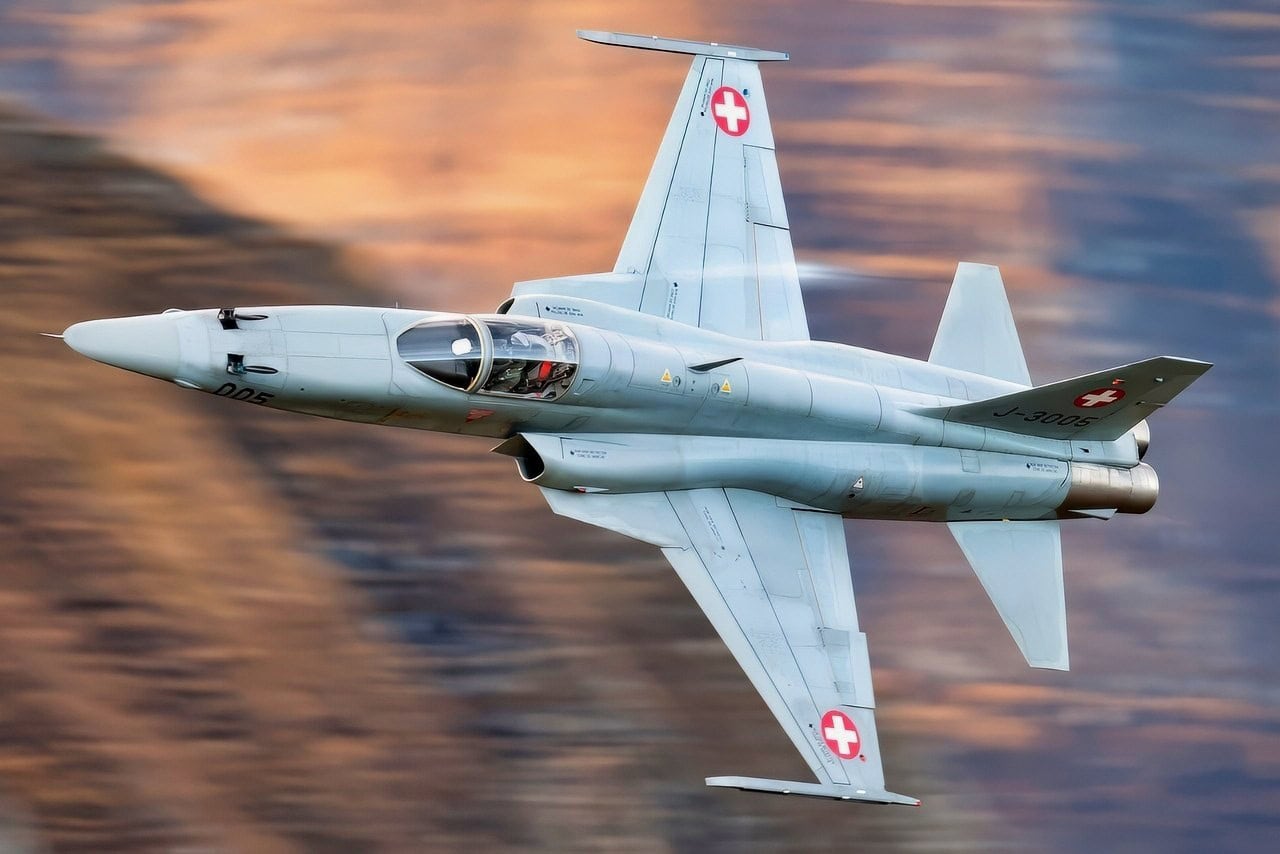
F-5E Tiger II Fighter. Image Credit: Creative Commons.
The Technologies America Wouldn’t Share
The KF-X was tied to Korea’s purchase of 40 Lockheed Martin F-35As. As part of the offset arrangement, Lockheed agreed to transfer 21 technologies to help Korea build its fighter, and at Seoul’s request also agreed to seek approval to transfer four more: the AESA radar, the electro-optical targeting pod, the infrared search-and-track, and the RF jammer.
In April 2015, Korea’s Defense Acquisition Program Administration received notice of the refusal. The US government would not approve the transfer of those four, the most critical of the set. A Lockheed official was blunt about it at the time, saying the company had made clear the transfer was only possible with US government approval and that, in the end, “we tried but failed.”
The denial came citing U.S. arms-export rules, specifically the International Traffic in Arms Regulations. It landed as a national shock in Seoul, with the presidential office launching a probe and lawmakers complaining that Korea had bought fifth-generation jets expecting sophisticated technology transfer, only to come away with nothing on the items that mattered most.
The Lesson From Japan’s F-2
Korea had a recent example of where this road led. A generation earlier, the United States had denied Japan the flight-control source code for its F-2, the software an unstable fighter cannot fly without, forcing Japanese engineers to develop their own.
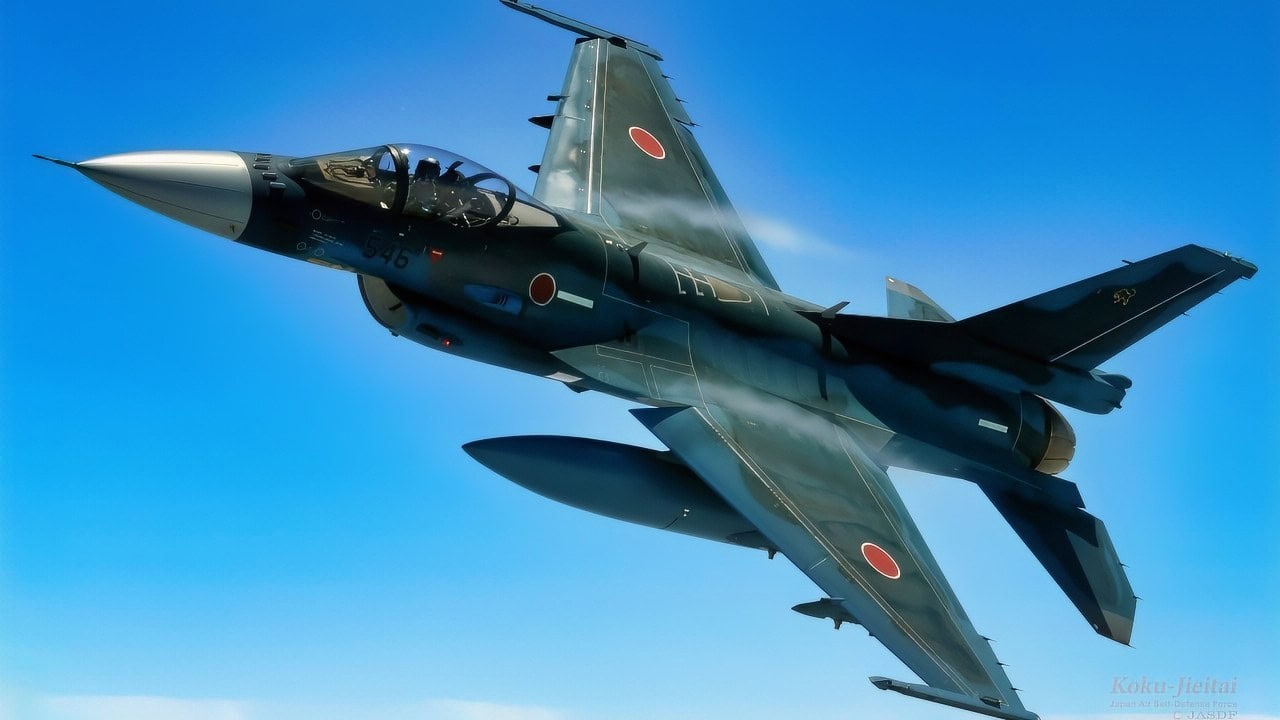
Mitsubishi F-2 Fighter for Japan.
Japan ended up with a capable but very expensive aircraft and a lasting resentment about being strong-armed by Washington and then shortchanged on the technology. The F-2 became a case study in the costs of depending on an ally that could say no.
Korea faced the same kind of denial from the same ally. It made the opposite choice. Instead of accepting a dependent program built around what the United States was willing to release, Seoul decided to build the denied technologies itself.
Korea Built The Denied Technology Itself for KF-21
The centerpiece was the radar. Hanwha Systems, working with Korea’s Agency for Defense Development, began full-scale work on a domestic AESA radar in 2016, a program that emerged largely in response to restrictions the United States had placed on the transfer of the technology.
The result, the APY-016K, carries roughly 1,000 transmit-receive modules and is reported to detect targets out to 150-200 kilometers and track around 20 at once, though Korea keeps the exact performance classified. Hanwha rolled out the first mass-produced radar in August 2025.
Building a working AESA from scratch is a genuine achievement, not a routine one. Only a few countries, among them the United States, Britain, Sweden, France, and Israel, have managed it, and the radar is the single most important sensor on the aircraft.
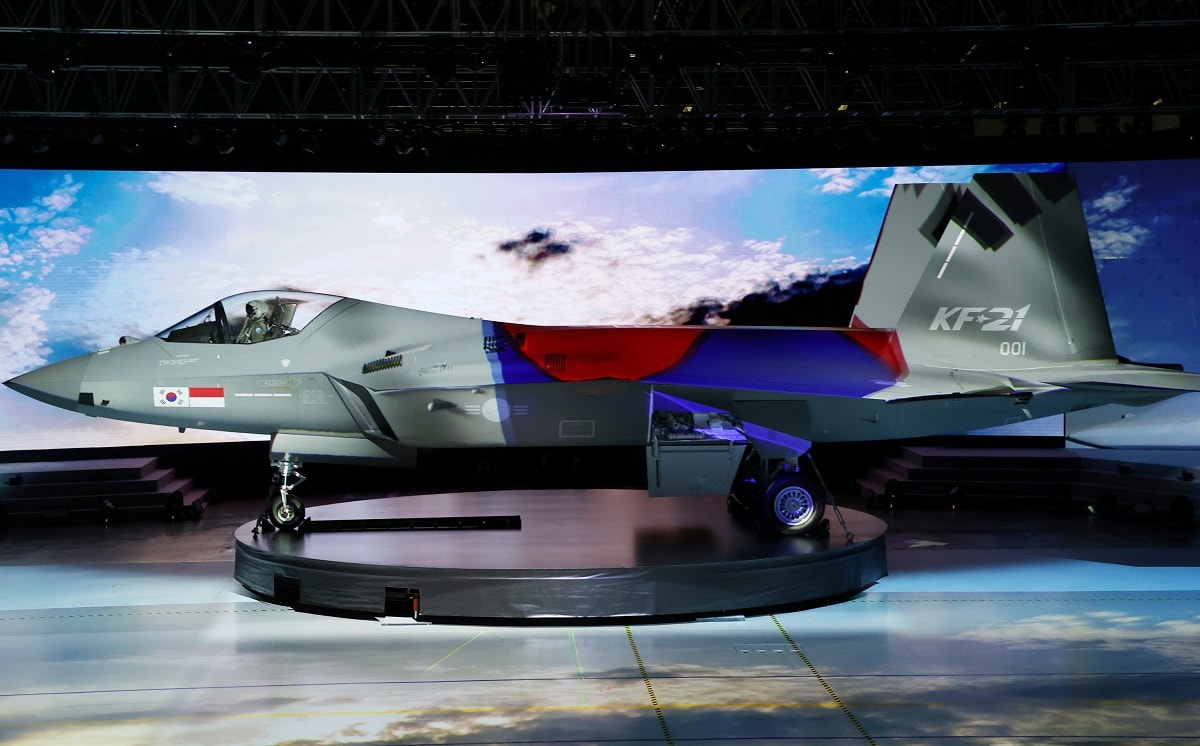
KF-21. Image Credit: Media Handout.
Korea developed the other three denied technologies, the IRST, the electro-optical targeting, and the electronic-warfare suite, domestically as well. Foreign firms were consulted for testing and some components, with Israel’s Elta helping validate the radar and an Italian sensor used in the IRST, so the work was not done in total isolation. The core systems, though, are Korean, and the four technologies the United States refused became four Korean technologies.
The Jet Arrives Combat-Ready
The program has moved fast in 2026. The flight-test campaign closed in January, two months ahead of schedule, after six prototypes flew about 1,600 accident-free sorties and validated some 13,000 test conditions, including Korea’s first aerial-refueling trials.
Korea Aerospace Industries rolled out the first mass-produced jet at its Sacheon facility on March 25, with President Lee Jae-myung present, and the aircraft made its maiden production flight on April 15. On May 7, DAPA declared the KF-21 Block I fully combat-ready, the last formal step before the end of development, which concludes this month.
A DAPA official called the milestone its first domestic fighter coming to life. First deliveries to the Korean Air Force are due in the second half of 2026, with operational service from around September, and Seoul plans to field 120 aircraft by 2032.
The jet itself is a 4.5-generation, semi-stealth design, not a full stealth fighter, a deliberate cost choice that leaves it with a reduced radar signature but external weapons carriage. It flies at about Mach 1.81 and was built to sit between the F-16 and F-35 in both capability and cost, cheaper than the F-35 while carrying a heavy load across ten hardpoints.
The One American Part Left
The KF-21 is not yet fully Korean, and the honest gap is the engine. It flies on two General Electric F414 turbofans, built under license in Korea by Hanwha Aerospace, because GE owns the core engine technology.
The numbers tell the story plainly. The KF-21’s overall domestic-content rate is about 65 percent, but the engine localization rate sits at only 39 percent, the single biggest piece of the aircraft that remains American.
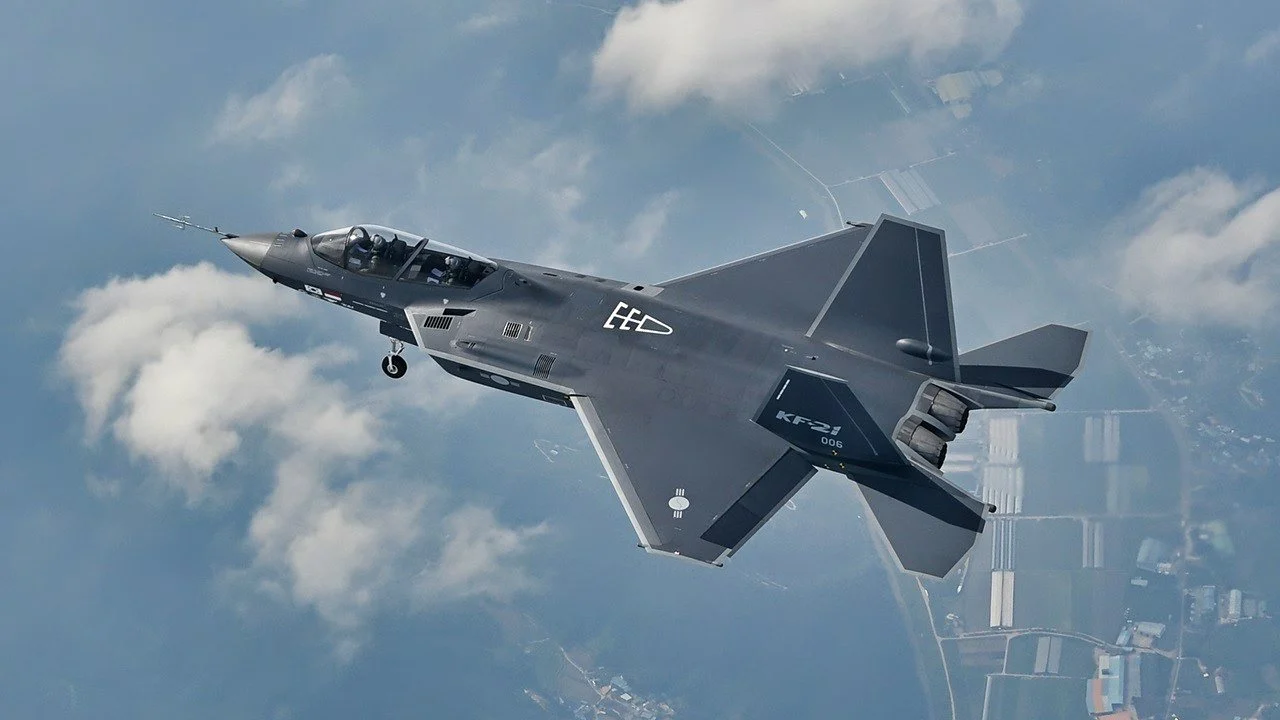
KF-21 Boramae. Image Credit: Creative Commons.
Korea is moving to close that gap. Seoul has committed roughly 3.4 trillion won, about $3.4 billion, to an indigenous fighter engine producing 16,000 pounds of military thrust, a program running from 2027 to 2040 and led by Hanwha Aerospace, intended to power a future Block 3 variant by the late 2030s.
That same block is slated to add internal weapons bays and stealth upgrades to approach fifth-generation survivability.
The denial meant to keep Korea dependent did the opposite. It forced Seoul to build the very capabilities the United States wanted to keep proprietary, and Korea is now one of the few middle powers flying a fighter with a domestic radar and a sovereign kill chain that no longer waits on a foreign government’s approval.
The last gap, the engine, is already funded, with a first test of a smaller demonstrator due before the end of this year.
About the Author: Harry J. Kazianis
Harry J. Kazianis (@Grecianformula) was the former Senior Director of National Security Affairs at the Center for the National Interest (CFTNI), a foreign policy think tank founded by Richard Nixon based in Washington, DC. Harry has over a decade of experience in think tanks and national security publishing. His ideas have been published in the NY Times, The Washington Post, The Wall Street Journal, CNN, and many other outlets worldwide. He has held positions at CSIS, the Heritage Foundation, the University of Nottingham, and several other institutions focused on national security research and analysis. He is the former Executive Editor of the National Interest and the Diplomat. He holds a Master’s degree focusing on international affairs from Harvard University.

