
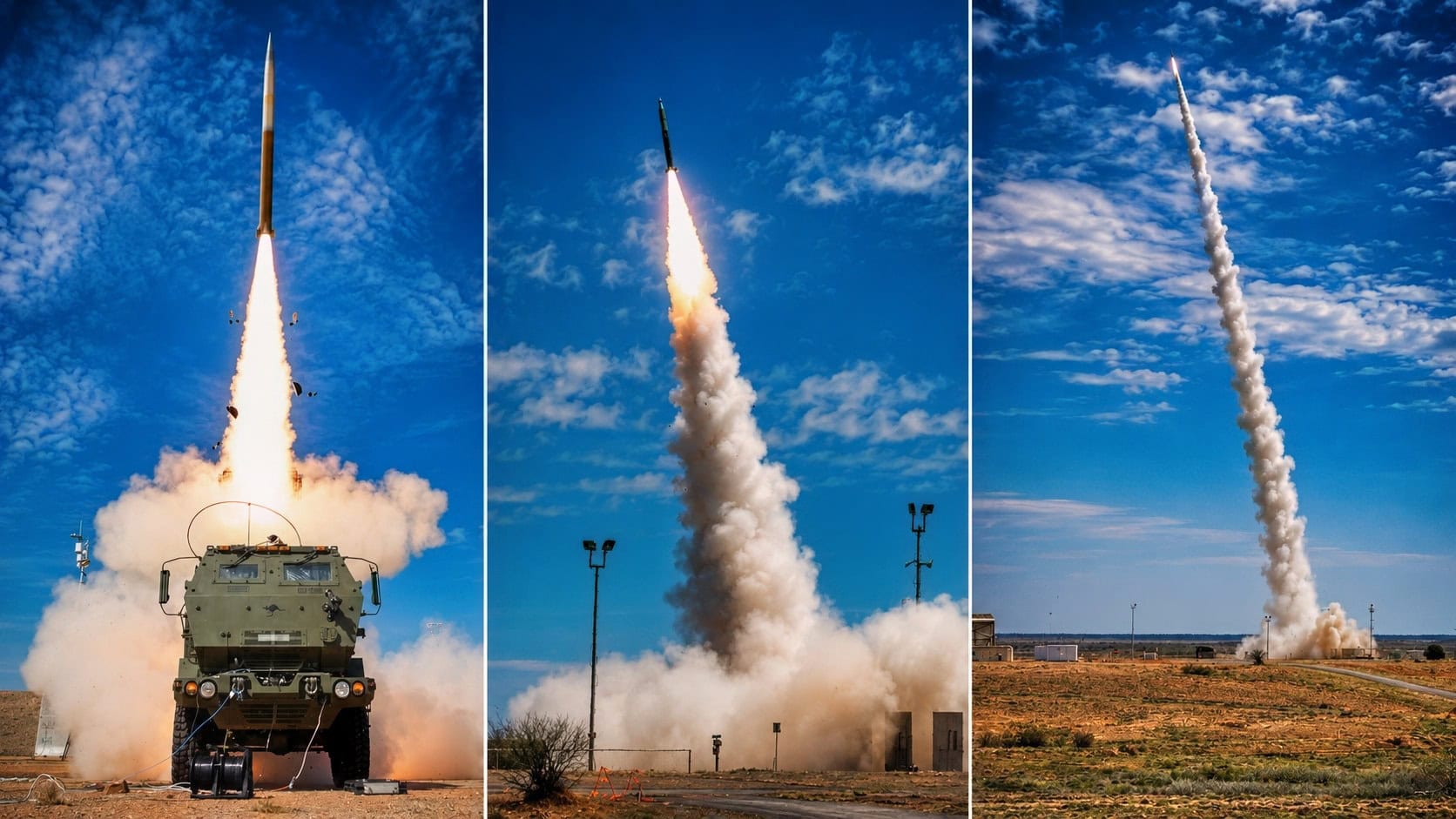
Australia has become the only country outside the United States to build the Guided Multiple Launch Rocket System (GMLRS), the precision rocket fired by the HIMARS launchers that proved themselves in Ukraine. In April, its army test-fired the first rounds made on Australian soil, a genuine milestone for a country trying to build its own missile industry rather than buy everything from overseas. There are two catches, and both matter. The rockets coming off the new line are American-designed rounds assembled from American-supplied parts, with Australian-made content meant to grow over time. And GMLRS is the shortest-range rocket HIMARS fires, the least consequential weapon in the family, while the missiles that actually underpin Australia’s deterrence are still years away and still depend on Washington.
GMLRS: What Australia Actually Test-Fired
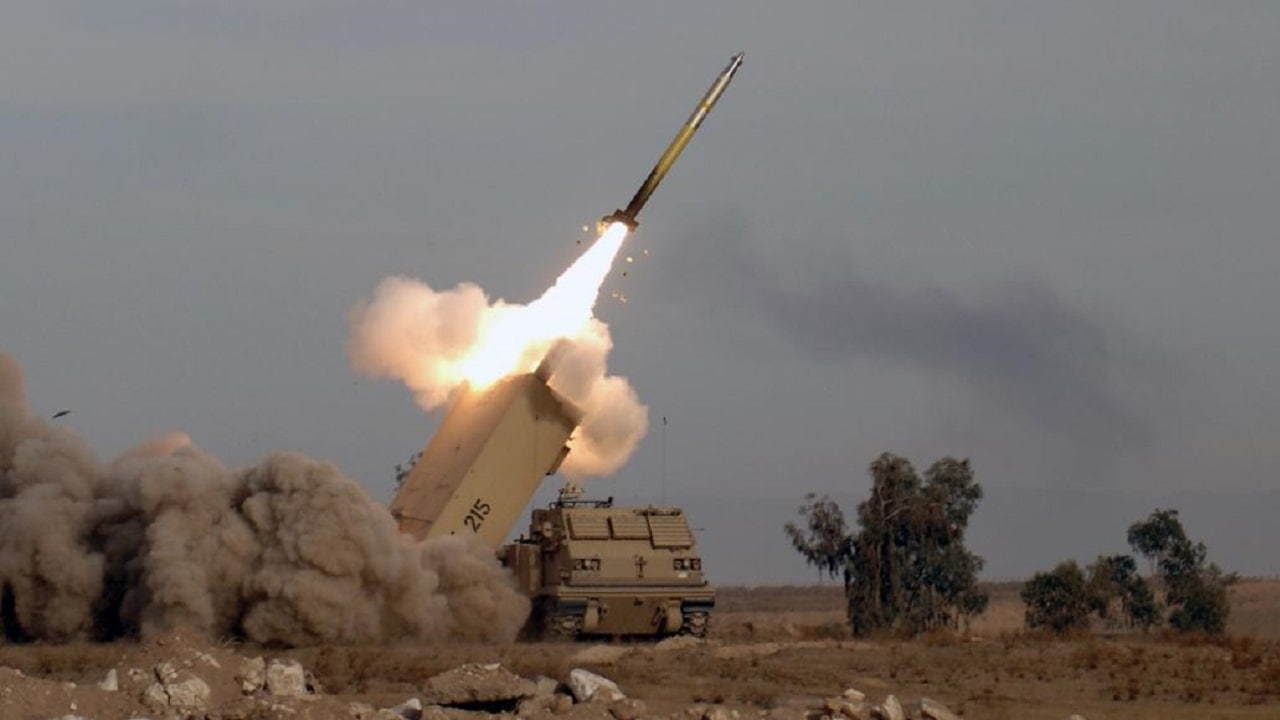
GMLRS. Image Credit: Creative Commons.
The live-fire took place at the Woomera Test Range in South Australia in early April, fired from an Australian Army HIMARS by soldiers of the 14th Regiment, Royal Australian Artillery, part of the 10th Brigade.
The rockets were manufactured by Lockheed Martin Australia to United States standards at a new facility at Port Wakefield that opened in December 2025. Brigadier Jim Hunter, who oversees guided weapons production, said the army had successfully tested the first 12 missiles and would continue building them at Port Wakefield before moving on to more advanced systems. Defense Industry Minister Pat Conroy framed the achievement plainly, saying Australia is now the only country outside the United States to make the GMLRS missile.
The rocket itself is a GPS- and inertially guided round with a range exceeding 70 kilometers (a little over 43 miles), carrying a roughly 90-kilogram high-explosive warhead, and a single HIMARS vehicle fires a pod of six.
It was the third time an Australian HIMARS had fired since the launchers began arriving in March 2025. The capability is real and combat-proven, and producing it locally is a meaningful first for a country that has not manufactured guided missiles since the 1960s, when Australia and Britain built the Malkara anti-tank weapon.
Assembling American Rockets, For Now
The honest description of what is happening at Port Wakefield is assembly, not yet full manufacture.
The Australian engineers who put the first rounds together were trained at Lockheed’s US sites before returning home to stand up the production line, and the first batch completed the final milestone of a contract explicitly labeled a production-capability risk-reduction activity.
James Heading, who runs missiles and fire control at Lockheed Martin Australia, told Defense News the work is moving beyond that risk-reduction phase into what he called stage one production, with the Australian line tied directly into the company’s plant in Camden, Arkansas, so it stays in step with the American build cycle.
The plan over the next several years is to increase the share of locally built components and move toward true domestic production rather than assembly of foreign-made parts, and the government has committed around 320 million Australian dollars to bring local suppliers into the supply chain.
For now, though, the rounds still lean heavily on American parts and oversight, and even the Australian-made rockets await a full US certification flight test, a US certification flight test planned for 2027. The dependence is not gone. It is being chipped away on purpose, starting from the easy end.
The Catch Is Which Missile
The sharper limitation is what GMLRS is. It is the shortest-range rocket that HIMARS can fire, and as Defense News noted, it hardly meets the criteria of Canberra’s stated goal of long-range “impactful projection” across the Indo-Pacific.
Lockheed Martin Australia has said the logical next step would be the Extended Range variant, which roughly doubles the reach to about 150 kilometers, but that is still a tactical rocket, not a theater weapon.
The weapons that actually matter for holding distant targets at risk are the Precision Strike Missile and, eventually, hypersonics; both remain future capabilities that depend on cooperation with the United States.
Australia signed a memorandum of understanding with Washington in June 2025 to become a full cooperative partner in the PrSM program, contributing roughly 310 million dollars over a decade and opening a joint coordination office in Huntsville, Alabama.
PrSM reaches beyond 500 kilometers in its first version, and a maritime-targeting variant under development is expected to extend to striking ships more than 1,000 kilometers away. Australia has already fired a US-supplied PrSM from an army HIMARS during Exercise Talisman Saber in 2025, but building that missile at home, the part that would make the capability genuinely sovereign, is still to come.
A $21 Billion Bet On Making Its Own
The GMLRS milestone sits inside a much larger effort, the Albanese government’s commitment of up to $21 billion over the decade to build a sovereign Guided Weapons and Explosive Ordnance Enterprise.
The output is meant to scale sharply, with government plans calling for a future facility able to turn out up to 4,000 GMLRS rounds a year from 2029, far beyond Australia’s own needs, so that local production is viable enough to export to allies.
Around it runs a broader strike buildup: the 42 HIMARS launchers acquired for about 1.6 billion dollars, a planned long-range fires regiment, work toward a domestic solid-rocket motor capability, and the 200 Tomahawk cruise missiles bought for the Navy’s destroyers.
The driver behind all of it is supply-chain resilience. Australian defense officials have said sovereign manufacturing would allow the country to continue producing missiles even if global supply chains were disrupted in a crisis and would shorten the long delays that come with buying complex munitions off the shelf abroad.
Why Australia Wants Its Own Missiles
The logic is the same one that has pushed America’s allies toward homegrown weapons for decades. Australia’s interest, as one analysis put it, is less about inventing a uniquely Australian rocket than about controlling availability in a crisis, so that a distant patron’s politics or a clogged supply line cannot leave it disarmed when it matters most.
That is the same fear that drove Japan to build the F-2, South Korea to build the KF-21, and Israel to build the Lavi, allies trying to control the supply of their own arms rather than depend entirely on Washington’s.
The difference is that Australia is doing this cooperatively, with American firms and under American agreements, rather than in defiance of US restrictions.
It has taken a real first step, and a sensible one, by starting at the low-risk end with a proven round it can assemble before it learns to build.
The milestone is genuine. So is the distance still to travel, because the rocket Australia can now make is the one that matters least, and the missiles that would make it truly self-reliant remain American for years yet.
Like this article? Add Us As a Preferred Source on Google
About the Author: Harry J. Kazianis
Harry J. Kazianis (@Grecianformula) was the former Senior Director of National Security Affairs at the Center for the National Interest (CFTNI), a foreign policy think tank founded by Richard Nixon based in Washington, DC. Harry has over a decade of experience in think tanks and national security publishing. His ideas have been published in the NY Times, The Washington Post, The Wall Street Journal, CNN, and many other outlets worldwide. He has held positions at CSIS, the Heritage Foundation, the University of Nottingham, and several other institutions related to national security research and studies. He is the former Executive Editor of the National Interest and the Diplomat. He holds a Master’s degree focusing on international affairs from Harvard University.

