
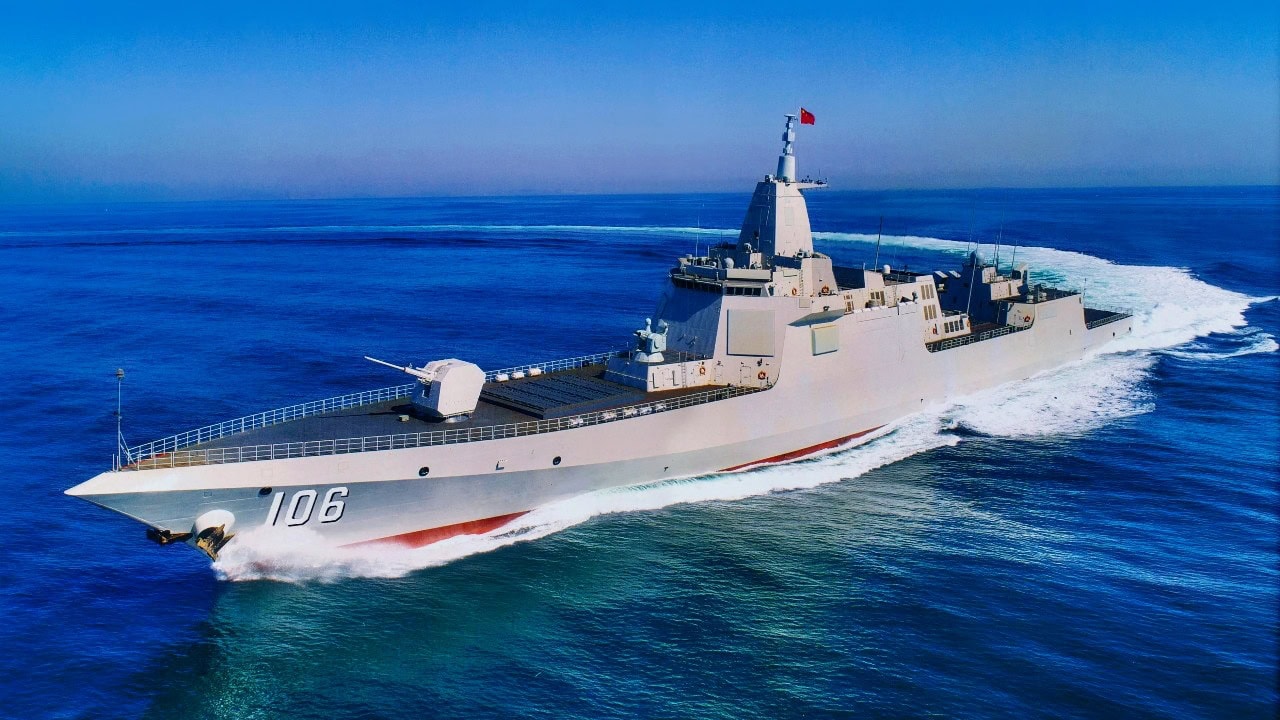
China Calls It A Destroyer — The Pentagon Calls It A Cruiser, Because Admitting What It Really Is Would Be Worse: China’s Type 055 warship sits at the center of a quiet naming dispute that reveals more about the US-China naval balance than any single specification. Beijing calls it a destroyer. The U.S. Department of Defense and NATO refer to it as a cruiser. At roughly 13,000 tons and carrying 112 large vertical-launch cells, the ship is bigger and more heavily armed than any destroyer in the U.S. fleet and rivals the Ticonderoga-class cruisers the Navy is now retiring — so labeling it a destroyer would amount to conceding that China’s destroyers have grown larger and better armed than anything America fields. The label is trivial. What it marks is not: China is building a modern cruiser-class warship at a pace no other navy can match, at the very moment the U.S. Navy is retiring its last cruisers with no dedicated replacement.
The Ship: The Largest Surface Combatant Built In A Generation
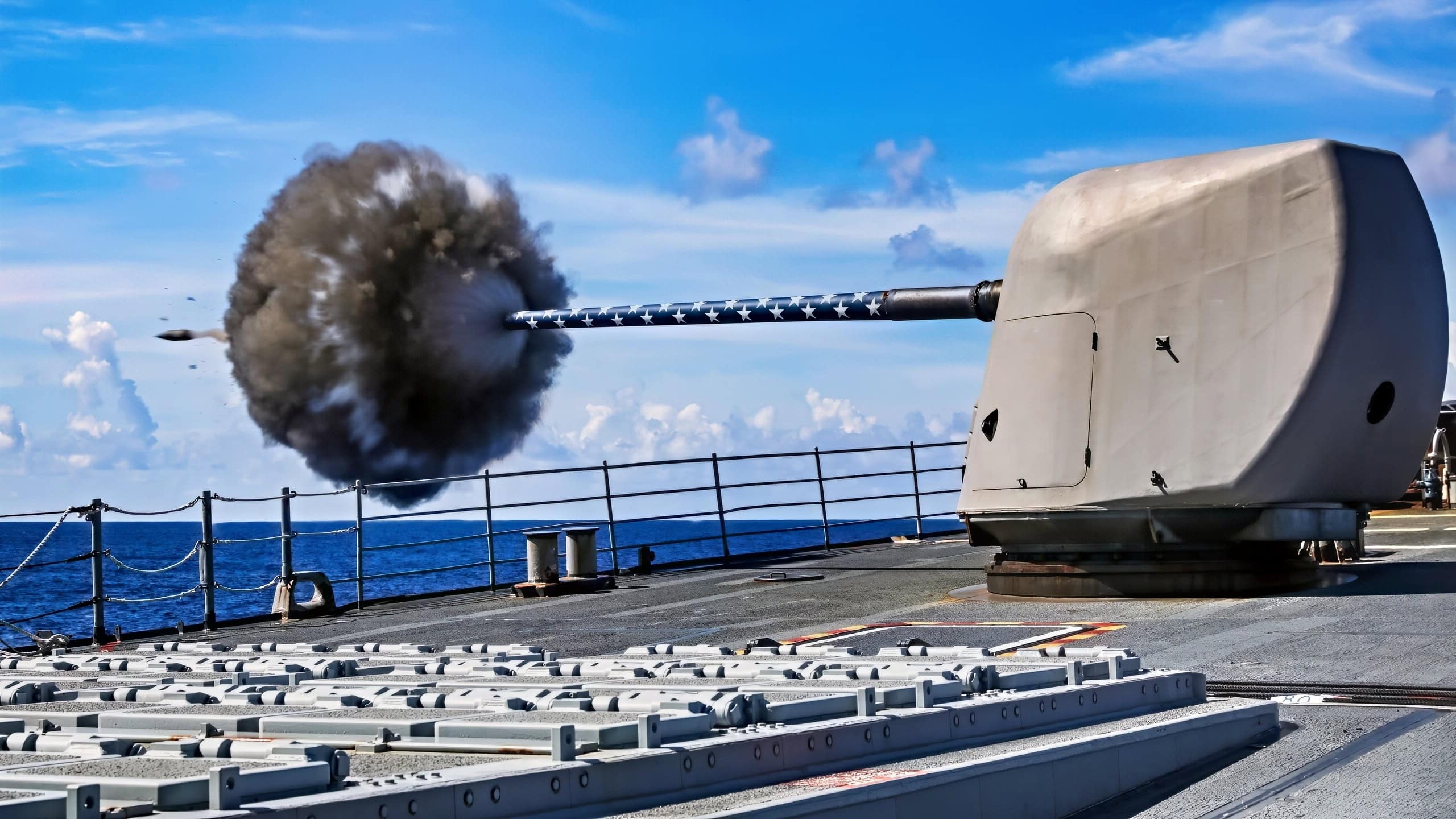
(July 29, 2025) The Ticonderoga-class guided-missile cruiser USS Princeton (CG 59) fires its forward Mark 45 5-inch gun during a weapons maintenance shoot, July 29, 2025. The Carl Vinson Carrier Strike Group is underway conducting routine operations in the U.S. 3rd Fleet area of operations. (U.S. Navy photo by Mass Communication Specialist 1st Class Jacob I. Allison)
The Type 055, known in the West by its NATO reporting name Renhai, is the most powerful surface combatant China has ever built. The first ship of the class, the Nanchang, was commissioned in 2020, and as of March 2026, the People’s Liberation Army Navy operates ten of them, built at the Jiangnan and Dalian shipyards, with around sixteen believed to be planned. Each runs about 590 feet long, displaces 12,000 to 13,000 tons, and carries 112 universal vertical-launch cells alongside an integrated dual-band radar mast.
The weapons fit is comprehensive: the HHQ-9 long-range surface-to-air missile, the YJ-18 anti-ship missile, the YJ-21 hypersonic anti-ship ballistic missile, land-attack cruise missiles, and anti-submarine rockets.
The assessments from American naval professionals are blunt about its quality. Chris Carlson, a retired U.S. Navy captain, told Business Insider that the Type 055 is the most capable warship in anti-surface warfare, though not as capable as a U.S. Arleigh Burke destroyer in the air-defense and ballistic-missile-defense role, with its strike and anti-submarine capabilities roughly on par with those of their American counterparts. It is, in other words, genuinely top-tier — and that quality is exactly what makes the question of what to call it so loaded.
Why The Label Is A Fight
The comparison that drives the naming dispute concerns displacement and firepower. The U.S. Navy’s workhorse surface combatant is the Arleigh Burke-class destroyer, which displaces about 9,900 tons in its latest Flight III version and carries 96 Mk 41 vertical-launch cells.
The Ticonderoga-class cruiser, the type the Navy is retiring, displaces around 10,000 tons and carries 122 cells. The Type 055 out-displaces both by a wide margin — roughly a quarter larger than an Aegis cruiser — and out-arms the Burke on cell count, while approaching the Ticonderoga’s magazine.
That is the heart of the problem. A 13,000-ton ship with 112 cells dwarfs the destroyer that forms the backbone of the U.S. surface fleet, so filing the Type 055 in the same category as a Burke would understate it badly and, by implication, concede that China’s destroyers now outclass America’s.
As one widely shared framing put it, the Pentagon reclassified the ship a cruiser in part because calling a 13,000-ton warship with 112 launch cells a destroyer would mean admitting China’s destroyers had grown bigger and more heavily armed than anything in the U.S. surface fleet. The label, in that reading, is a way to avoid filing the ship in an embarrassing box.
The Honest Nuance: The Case For “Cruiser” Is Real
The optics are part of the story, but they are not the whole of it, and the doctrinal case for calling the Type 055 a cruiser is genuine rather than pure spin. There is no fixed modern definition separating a cruiser from a destroyer; the distinction comes down to displacement, role, and the ability to command a task group. By those measures, the Type 055 fits the cruiser profile.
In its 2024 report, the U.S. Office of Naval Intelligence listed the class as a cruiser, noting it measures 180 meters and displaces more than 12,000 tons, and assessed that it fulfills much the same role as a U.S. Navy Ticonderoga-class cruiser, able to host command-level structures and deliver heavy firepower through its many launch cells.
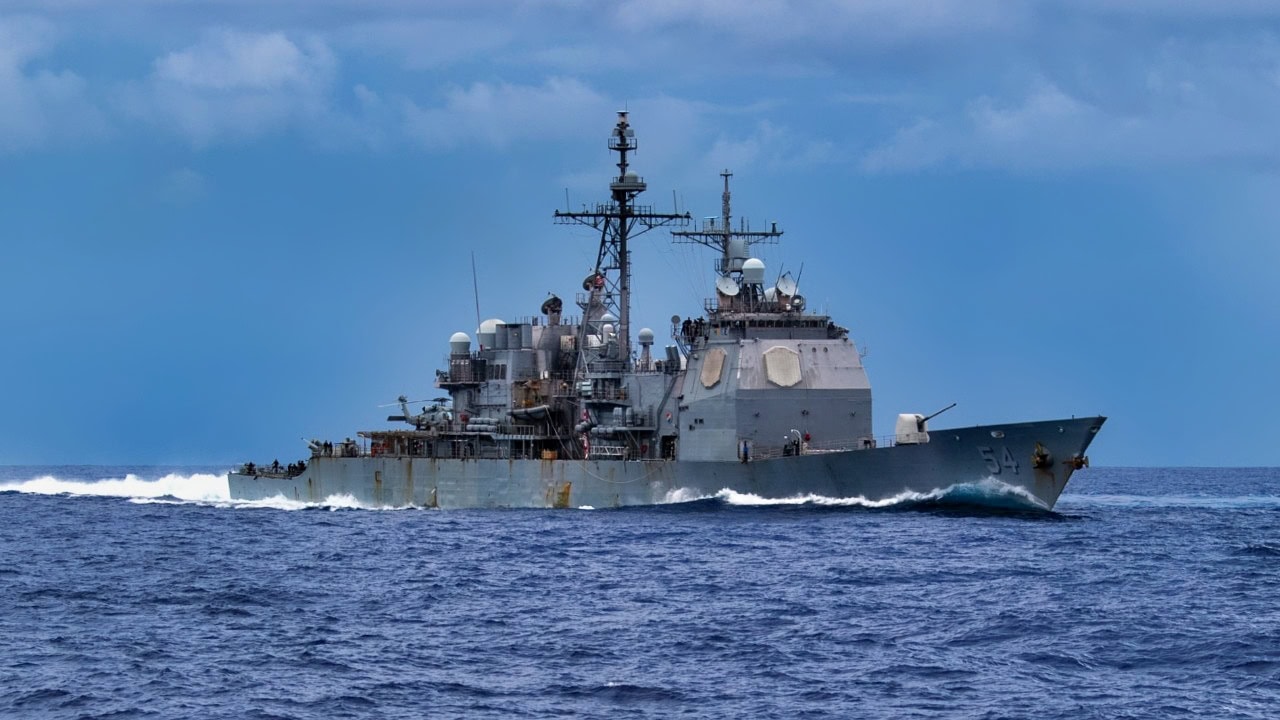
PACIFIC OCEAN (Sept. 14, 2020) The Ticonderoga-class guided-missile cruiser USS Antietam (CG 54) moves in formation during exercise Valiant Shield 2020. Valiant Shield is a U.S. only, biennial field training exercise (FTX) with a focus on integration of joint training in a blue-water environment among U.S. forces. This training enables real-world proficiency in sustaining joint forces through detecting, locating, tracking, and engaging units at sea, in the air, on land, and in cyberspace in response to a range of mission areas. (U.S. Navy photo by Mass Communication Specialist 2nd Class Nick Bauer)
That is a legitimate analytical basis for the label, not merely an exercise in embarrassment-avoidance. The Type 055 was built to provide area air defense and to serve as a flagship directing a formation of other warships — the classic cruiser mission. The honest reading is that the reclassification is both things at once: a defensible doctrinal judgment about what the ship actually does, and a reclassification that conveniently avoids ranking it against the smaller Burke.
The Capability Edge, And Its Limits
Beneath the label, the Type 055 brings real advantages and real shortfalls against its American rivals. Its edge starts with the launch cells themselves. China’s universal vertical-launch cells are physically larger than the American Mk 41 — roughly 0.85 meters in diameter and 9 meters long, significantly bigger than the Mk 41 or Mk 57 — which lets them accommodate oversized weapons the American launcher cannot, most notably the YJ-21 hypersonic anti-ship ballistic missile, a weapon class the United States does not yet field on any surface ship.
The radar tells a similar story: the Type 055 carries an integrated dual-band mast, with S-band arrays for long-range search and X-band arrays for precision tracking, the same architecture the U.S. Navy is only now planning for its next-generation DDG(X) destroyer and an advance over the single-band radar on the latest Burkes, which the Navy has acknowledged are too small to carry the more powerful radar originally intended for them.
The limits are just as real, and they favor the United States where it counts most. The Burke can quad-pack four short-range Evolved Sea Sparrow missiles into a single cell, multiplying its self-defense capacity in ways the cell count alone does not capture.
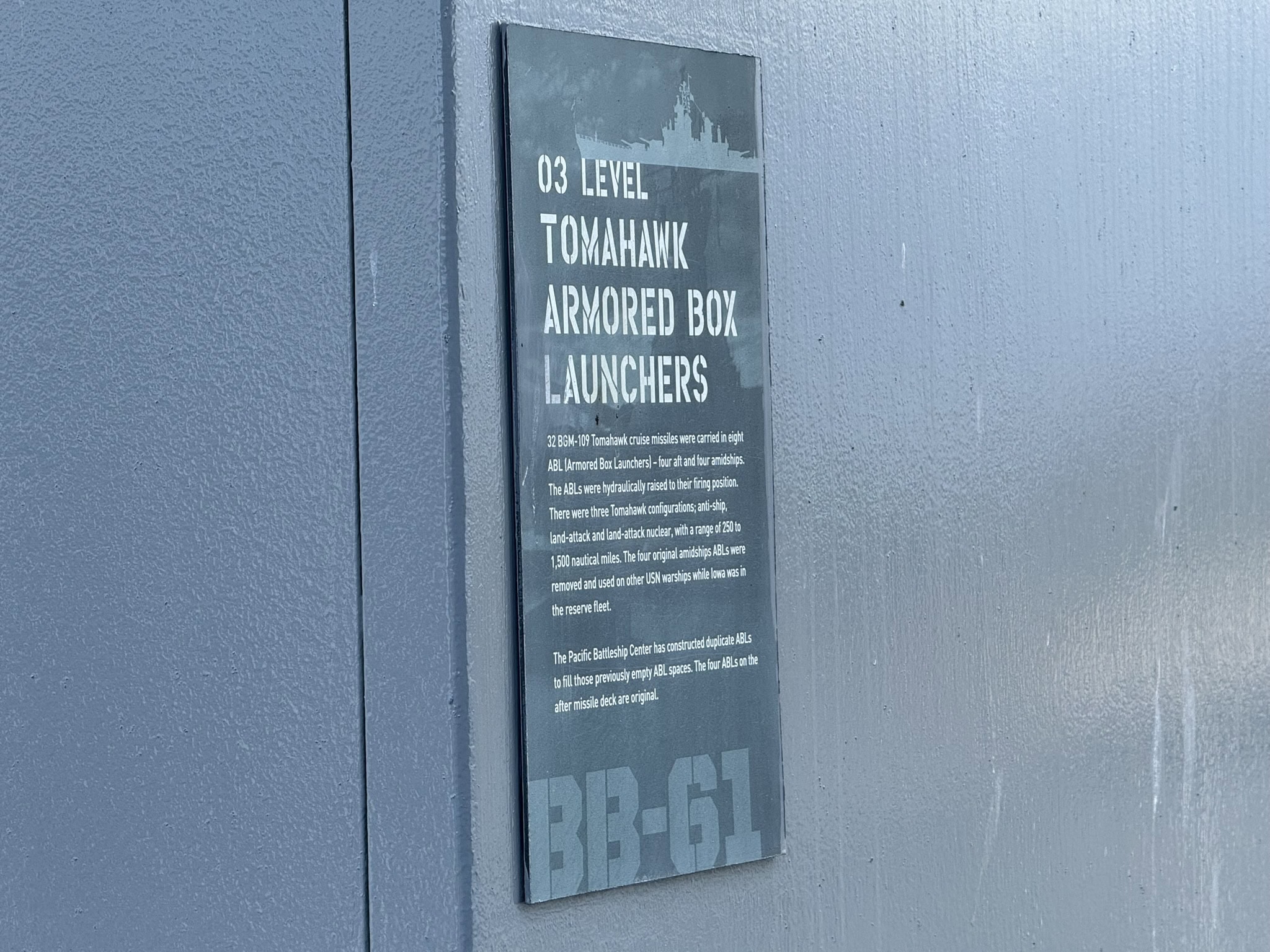
Tomahawk Box on USS Iowa. 19FortyFive.com Image.
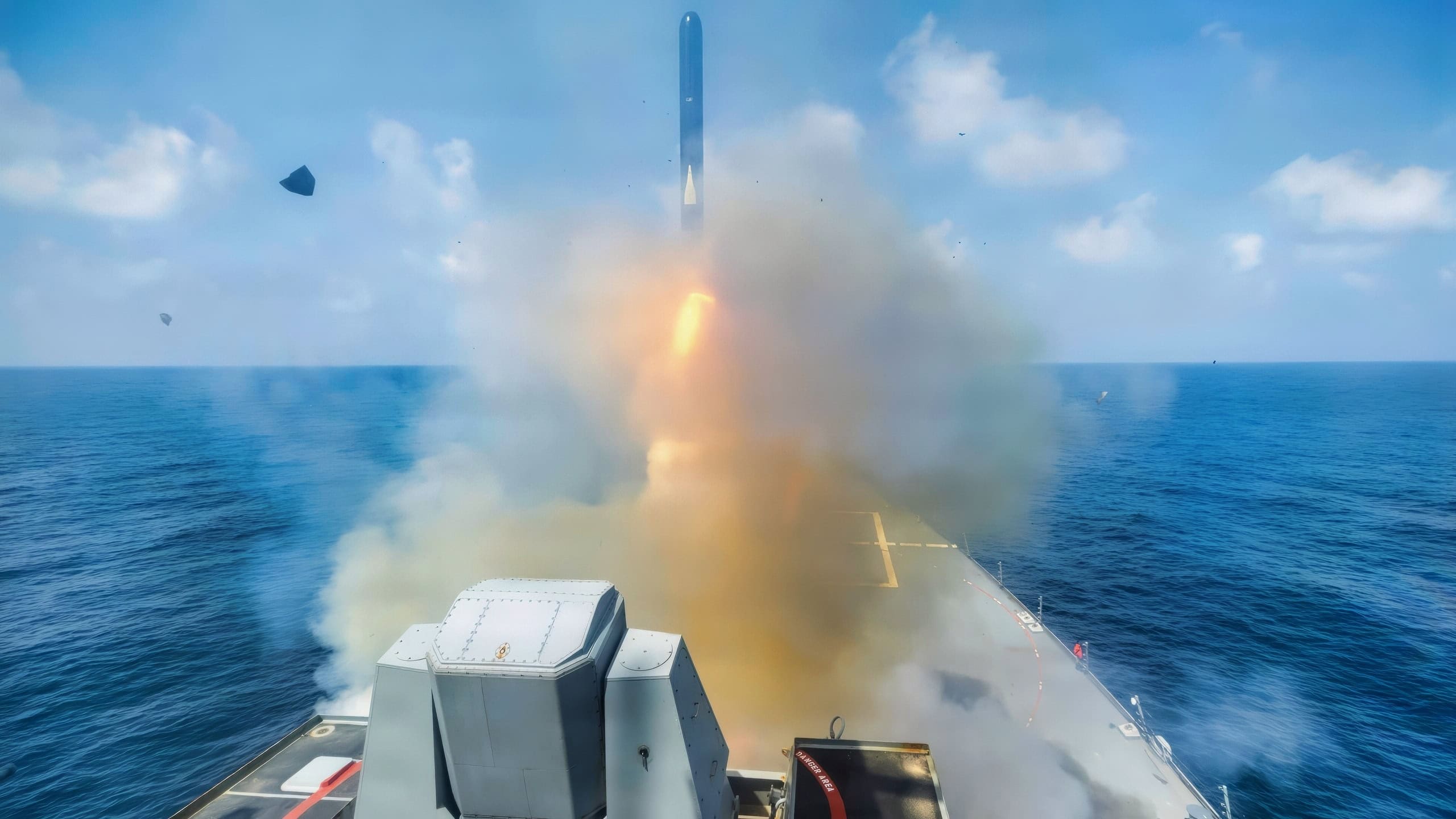
Arleigh Burke-class guided-missile destroyer USS Spruance (DDG 111) fires a Tomahawk Land Attack Missile (TLAM) in support of Operation Epic Fury, Feb. 28, 2026. (U.S. Navy photo)
More importantly, the American ship carries a deep, proven missile inventory — the multi-mission SM-6, the Tomahawk for land attack, and above all the SM-3, the world’s most capable sea-based ballistic-missile interceptor — backed by the Aegis combat system, which has decades of integration work and actual combat engagements behind it. The Type 055’s combat system, however advanced on paper, has no comparable record. Carlson’s assessment captures the balance precisely: the Chinese ship leads in anti-surface warfare, the American ship leads in air and missile defense, and much of the rest is roughly even.
The Kicker: China Builds Cruisers While America Retires Them
The naming fight lands hardest against the backdrop of what each navy is actually doing. China is building the Type 055 at a rapid clip — ten hulls in about five years, with more under construction — producing the largest surface combatants in the world. The United States, meanwhile, is retiring its Ticonderoga-class cruisers as they approach 40 years of age, and it is not replacing them with a cruiser design; the Ticonderogas are giving way to more Arleigh Burke destroyers built on a base design dating to the 1980s. The Navy’s eventual next-generation surface combatant, the DDG(X), is years from production and is officially a destroyer program — even though its planned displacement of around 13,500 tons would make it cruiser-sized in everything but name.
The result is an inversion. The navy operating the most modern cruiser afloat is the one insisting the ship is merely a destroyer, while the navy that invented the modern guided-missile cruiser is walking away from the type entirely. The label points one direction; the shipbuilding points the other.
The Honest Balance: A Real Shift, Not A Verdict
None of this means China’s surface fleet has overtaken the U.S. Navy across the board, and the caveats deserve real weight. The Type 055 is genuinely impressive — the biggest and most heavily armed surface combatant built since the Cold War, fielding some technology ahead of current American ships — but it is combat-unproven, and the Aegis system it is measured against carries decades of integration and real operational experience the Chinese combat system cannot yet claim.
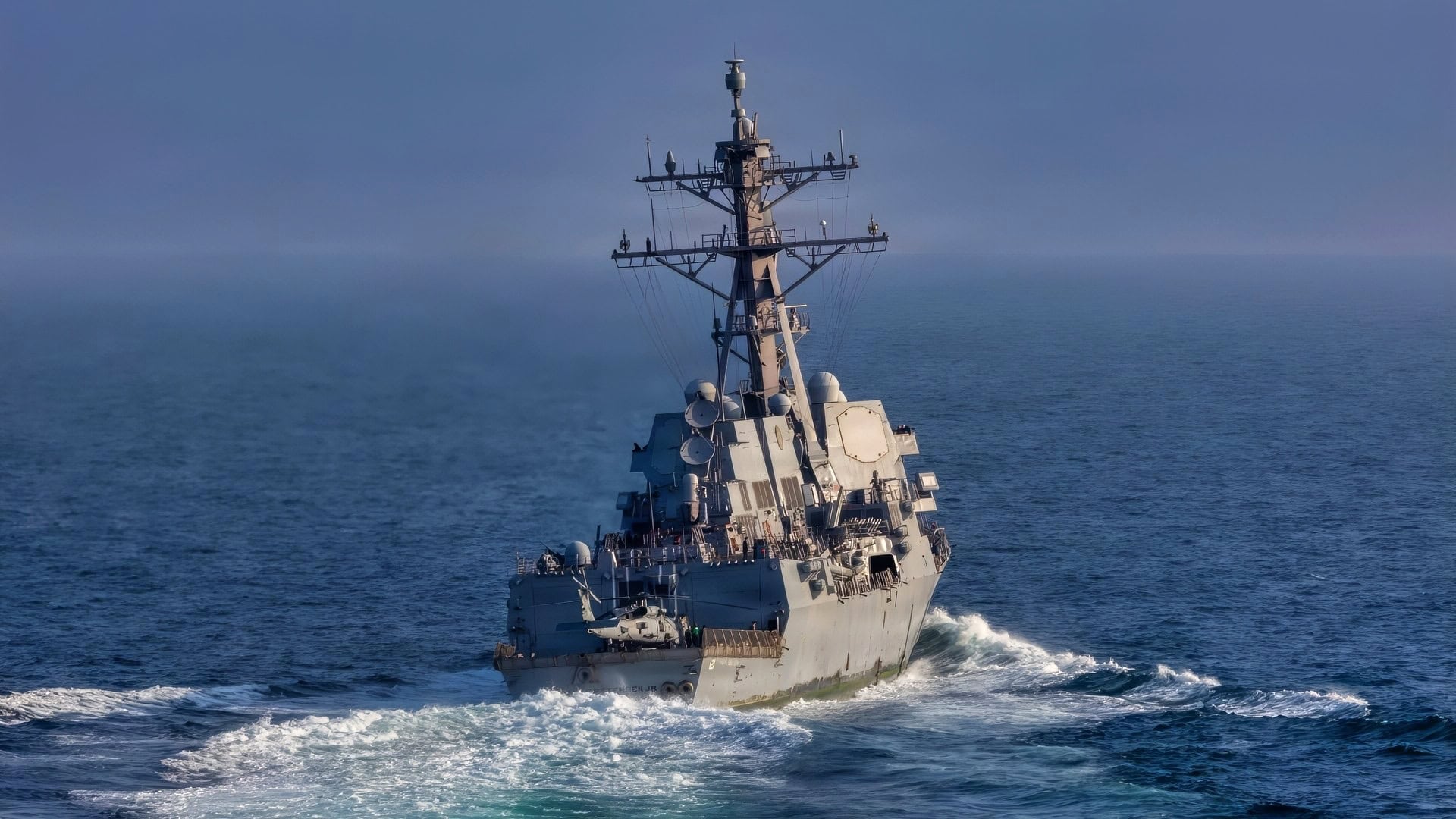
Arleigh Burke-class guided-missile destroyer USS Frank E. Petersen Jr. (DDG 121) sails in the Arabian Sea in support of Operation Epic Fury, March 18, 2026. (U.S. Navy photo)
China now operates the larger navy by hull count, having surpassed the United States several years ago and still building at a far faster rate, but the United States retains advantages that raw numbers obscure: it fields a larger force of large high-end surface combatants, with 67 Arleigh Burke destroyers against China’s ten Type 055s, and it leads in total fleet tonnage, in networking and allied integration, and in the hard-won experience of operating a global navy for generations. A larger Chinese fleet and a superior Chinese ship class are real; surface-warfare parity, ship-for-ship and crew-for-crew, is not yet here.
What the label fight marks is a genuine shift, not a finished result. A decade ago, there was no question that American surface combatants outclassed their Chinese counterparts ship for ship. That automatic advantage in per-ship size and firepower is now gone, and the Pentagon’s careful reclassification of the Type 055 is a small, telling acknowledgment of it. The ship is impressive; the trend it represents is the real story.
The Verdict: The Label Is Trivial, The Signal Is Not
Whether the Type 055 is officially a destroyer or a cruiser is a question of naming conventions that has no clean answer and ultimately does not matter. What matters is what the argument over the label reveals: that China now designs and builds, at speed, a class of warship the United States has chosen to stop building.
Beijing’s insistence on calling its largest surface combatant a destroyer and Washington’s decision to call it a cruiser are two sides of the same uncomfortable fact — the ship is big enough, and capable enough, that the category genuinely matters, and the United States no longer holds the per-ship advantage it once took for granted.
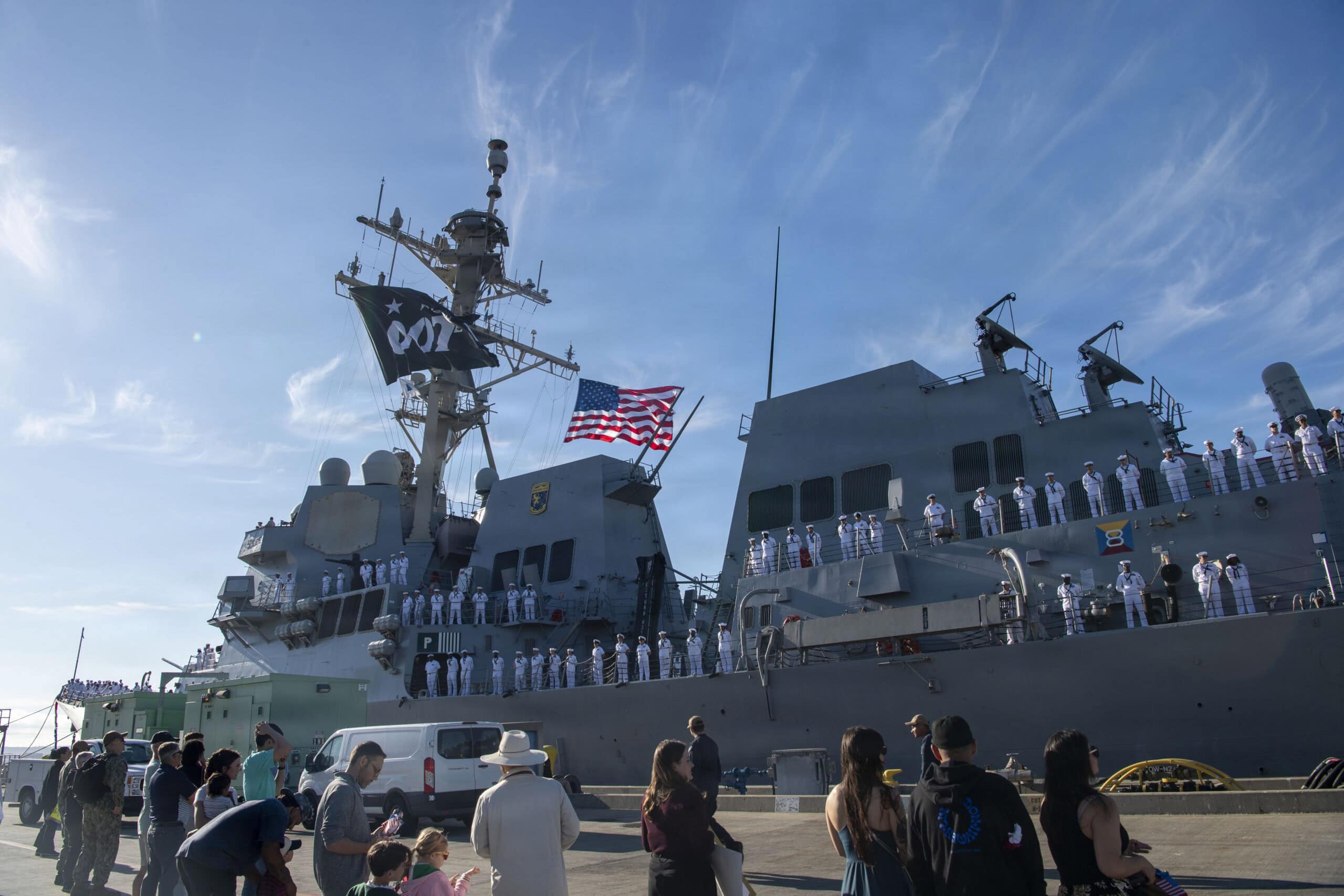
SAN DIEGO, Ca. (April 10, 2026) – Friends and family greet Arleigh Burke-class guided-missile destroyer USS Stockdale (DDG 106) from the pier, as the ship returns to its homeport of Naval Base San Diego following a seven-month underway to the U.S. 4th Fleet area of operations, April 10. Stockdale returns safely home having successfully carried out sustained operations at sea, maintaining peace through strength and sustaining credible deterrence alongside our allies and partners. (U.S. Navy Photo by Mass Communication Specialist 1st Class Sara Eshleman)
The honest conclusion is neither alarm nor dismissal. The U.S. Navy remains more experienced and more combat-tested, and still fields more large surface combatants of this class, and the Type 055 has yet to prove itself in the only test that finally counts.
But the navy that built the modern cruiser is retiring its last ones, and the navy that calls its cruiser a destroyer is launching them as fast as its yards allow.
The label is small. What it marks — a real and continuing shift in the naval balance — is anything but.
About the Author: Harry J. Kazianis
Harry J. Kazianis (@Grecianformula) was the former Senior Director of National Security Affairs at the Center for the National Interest (CFTNI), a foreign policy think tank founded by Richard Nixon based in Washington, DC. Harry has over a decade of experience in think tanks and national security publishing. His ideas have been published in the NY Times, The Washington Post, The Wall Street Journal, CNN, and many other outlets worldwide. He has held positions at CSIS, the Heritage Foundation, the University of Nottingham, and several other institutions related to national security research and studies. He is the former Executive Editor of the National Interest and the Diplomat. He holds a Master’s degree focusing on international affairs from Harvard University.

