
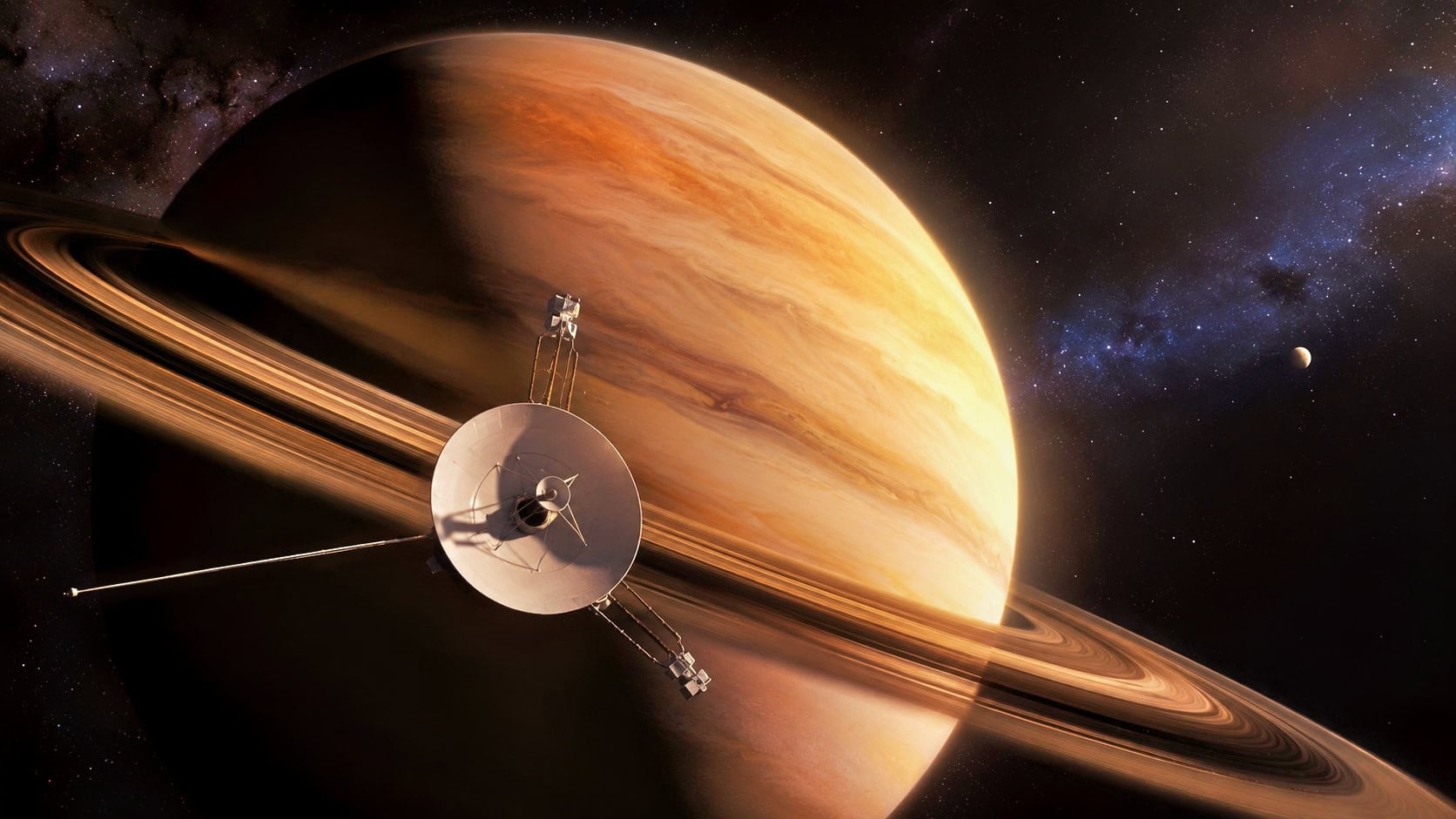
In May 2026, NASA unveiled details of a new plan to establish a permanent base on the Moon, realizing a dream long theorized by everyone from sci-fi fans and children to the most senior government and NASA officials. The multi-phase plan will see robots and cargo vehicles sent to the moon, with habitat modules being deployed to the lunar surface over the coming years. The announcement was one of the biggest made by NASA, not just in recent years, but ever. It reveals that, after years of stagnation, NASA seems to be receiving more attention from the White House – and that support remains steadfast, it seems, even amid ongoing military conflict in Iran and continued support for Ukraine.
Not to mention preparations for a potential future conflict in the Indo-Pacific that are drawing massively on America’s military-industrial complex.
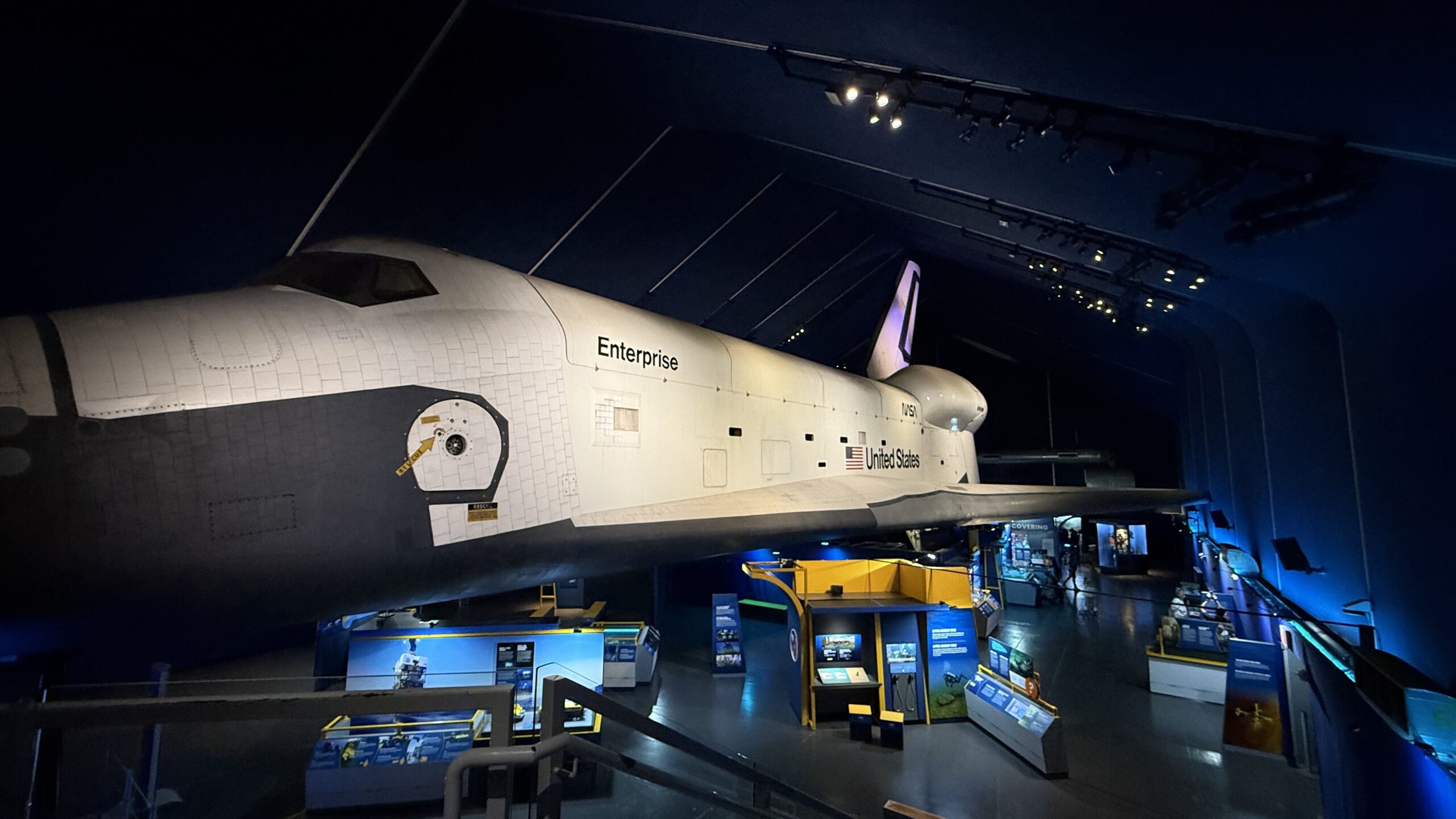
USS Enterprise Space Shuttle. Image Credit: 19FortyFive.com
A Long History Of Space Pioneering
The announcement also comes as SpaceX, Elon Musk’s private space exploration venture, expands its Starship rocket program, which NASA intends to use during future lunar missions. That company has already hit headlines recently after going public and quickly reaching a valuation of more than $2 trillion.
It’s clear that the United States is once again investing heavily in space, but this time it’s not just exploration. The United States is preparing for war to go beyond Earth, for the potential mining of minerals on asteroids, the use of the Moon as a permanent base to support future exploration, and fine-tuning new technologies that make escaping Earth’s gravity easier.
But this isn’t the first time that the U.S. has thought big, even during a time of military conflict. In fact, more than four decades ago, during the height of the Cold War, NASA’s Pioneer 11 spacecraft achieved a milestone that many considered impossible.
In September 1979, the probe became the first human-made object to visit Saturn, opening the outer Solar System to exploration and proving humans could conduct research in the farthest regions of our Solar System.
The Origins of Pioneer 11
Pioneer’s story starts in the 1960s. At the time, NASA was looking beyond the moon and searching for its next big challenge. The Apollo program had proved that NASA could achieve great things by putting astronauts on the lunar surface, but scientists wanted to learn more about the Solar System’s most distant planets. At the time, Jupiter and Saturn were unexplored, and powerful telescopes could reveal only limited information about these enormous planets. No spacecraft had ever traveled that far away from Earth, either.
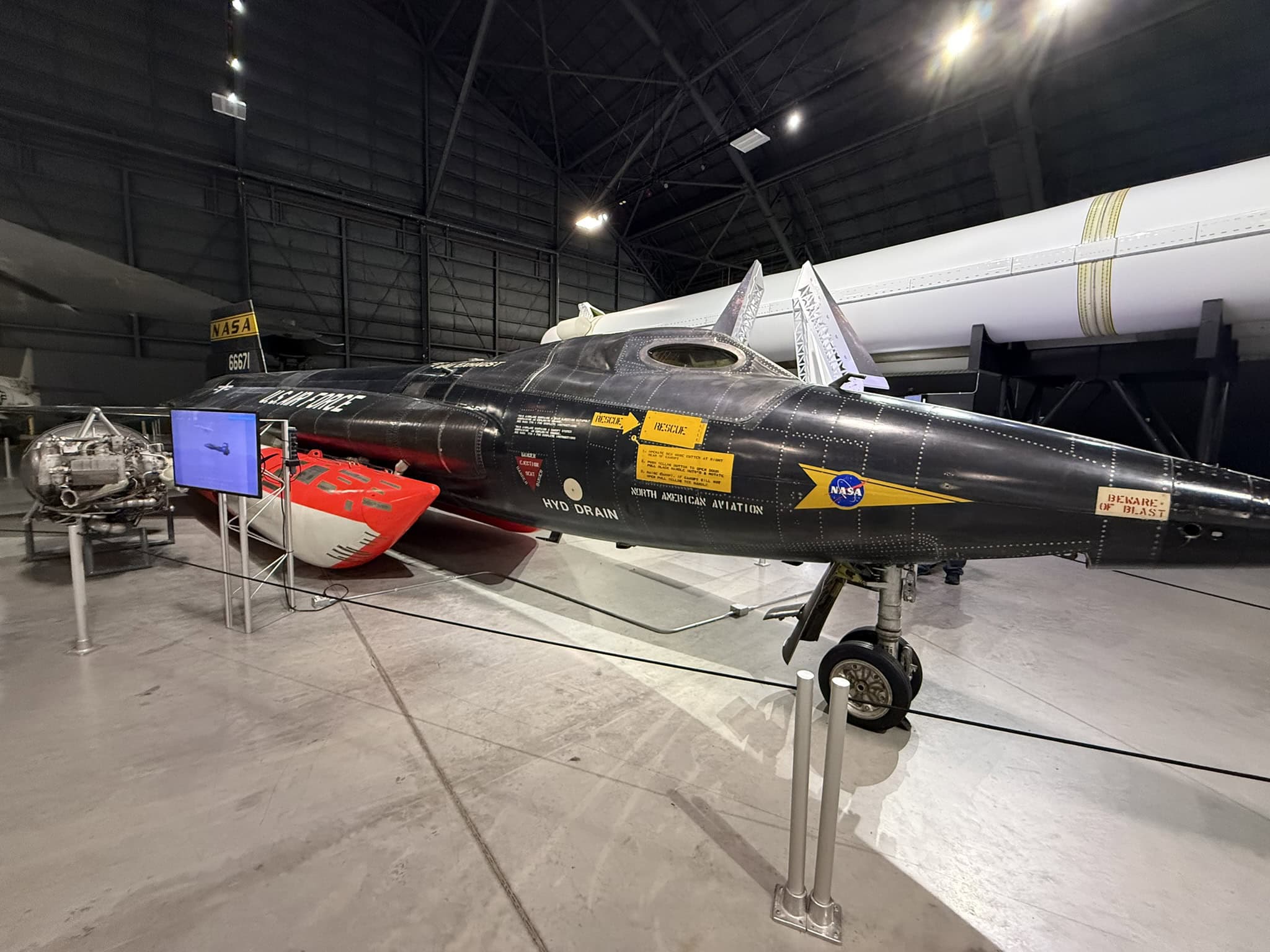
X-15 NASA Program. 19FortyFive.com Photo.
So, NASA approved the Pioneer program – right in the height of the Cold War, when the United States and Soviet Union were competing in every way imaginable; militarily, scientifically, and in space.
Pioneer 11 was built by TRW Incorporated and managed by the Ames Research Center, under the control of NASA, in California. Dr. James Van Allen was among those who helped lead the mission after making major scientific discoveries about Earth’s radiation.
The probe was fairly small when it was built. It weighed just over 570 pounds and was powered by a radioisotope thermoelectric generator, which converted heat from plutonium into electricity. In short: it was nuclear-powered. But despite its surprisingly modest size, it was capable of traveling across the Solar System and through the asteroid belt, flying past Jupiter, and continuing on to Saturn. And that’s exactly what it did.
Pioneer 11 launched from Cape Canaveral, Florida, on April 5, 1973. It came almost a year after its sister spacecraft’s own launch, Pioneer 10. The probes were humanity’s first serious effort to explore the outer Solar System, and the mission succeeded.
Reaching Saturn and Changing Space Exploration Forever
Pioneer 11 traveled for more than six years and covered billions of miles before reaching its destination. The tiny probe successfully reached Jupiter in December 1974, becoming the second probe to ever visit the enormous planet. Once it arrived in the proximity of the planet, it used Jupiter’s incredible gravity to slingshot itself, accelerating and redirecting itself toward Saturn.
That maneuver has become a standard in distant space travel ever since, providing a “boost” to spacecraft and helping navigate to planets as they orbit the Sun.
The spacecraft was carrying around a dozen scientific instruments, ranging from cameras and magnetometers to radiation and plasma detectors. The sensors were designed to study cosmic rays and charged particles.
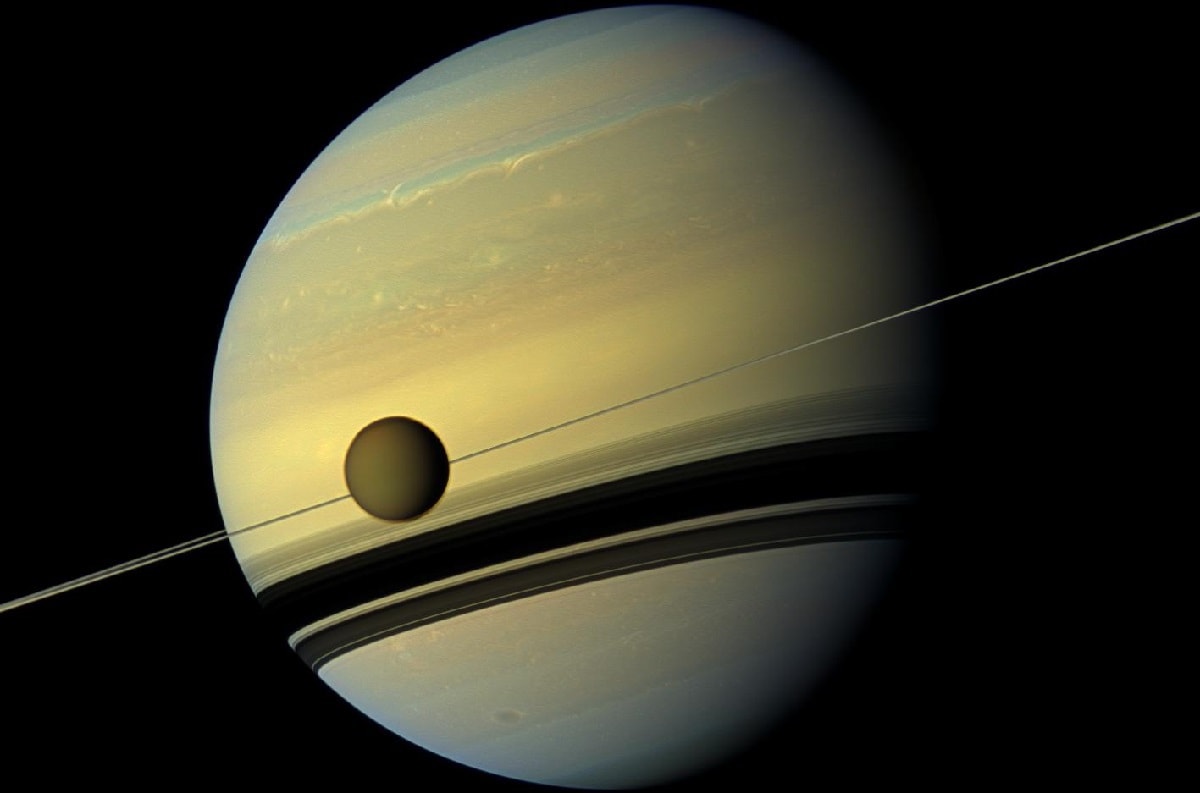
Saturn and Titan. Creative Commons Image.
They allowed Pioneer 11 to do more than just snap photographs of the planet; the probe analyzed its magnetic fields, radiation, atmosphere, and more. And even in the 1970s, the relatively primitive technology onboard the probe was capable of communicating that information through deep space, back to planet Earth.
In September 1979, the probe became the first spacecraft in history to fly past Saturn and, in the process, discovered a previously unknown ring around the planet. It also gathered data about Saturn’s magnetosphere and successfully observed Titan, Saturn’s largest moon. Celestial objects that had only ever been observed via telescope and theorized in mathematics were suddenly real, and a spacecraft built by human hands was within touching distance.
Just as Pioneer 11 reached Saturn during the tensions of the Cold War, today we see humanity pushing even deeper into space while even pursuing new goals much closer to home – right here on our own moon.
About the Author: Jack Buckby
Jack Buckby is a British researcher and analyst specializing in defense and national security, based in New York. His work focuses on military capability, procurement, and strategic competition, producing and editing analysis for policy and defense audiences. He brings extensive editorial experience, with a career output spanning over 1,000 articles at 19FortyFive and National Security Journal, and has previously authored books and papers on extremism and deradicalization.