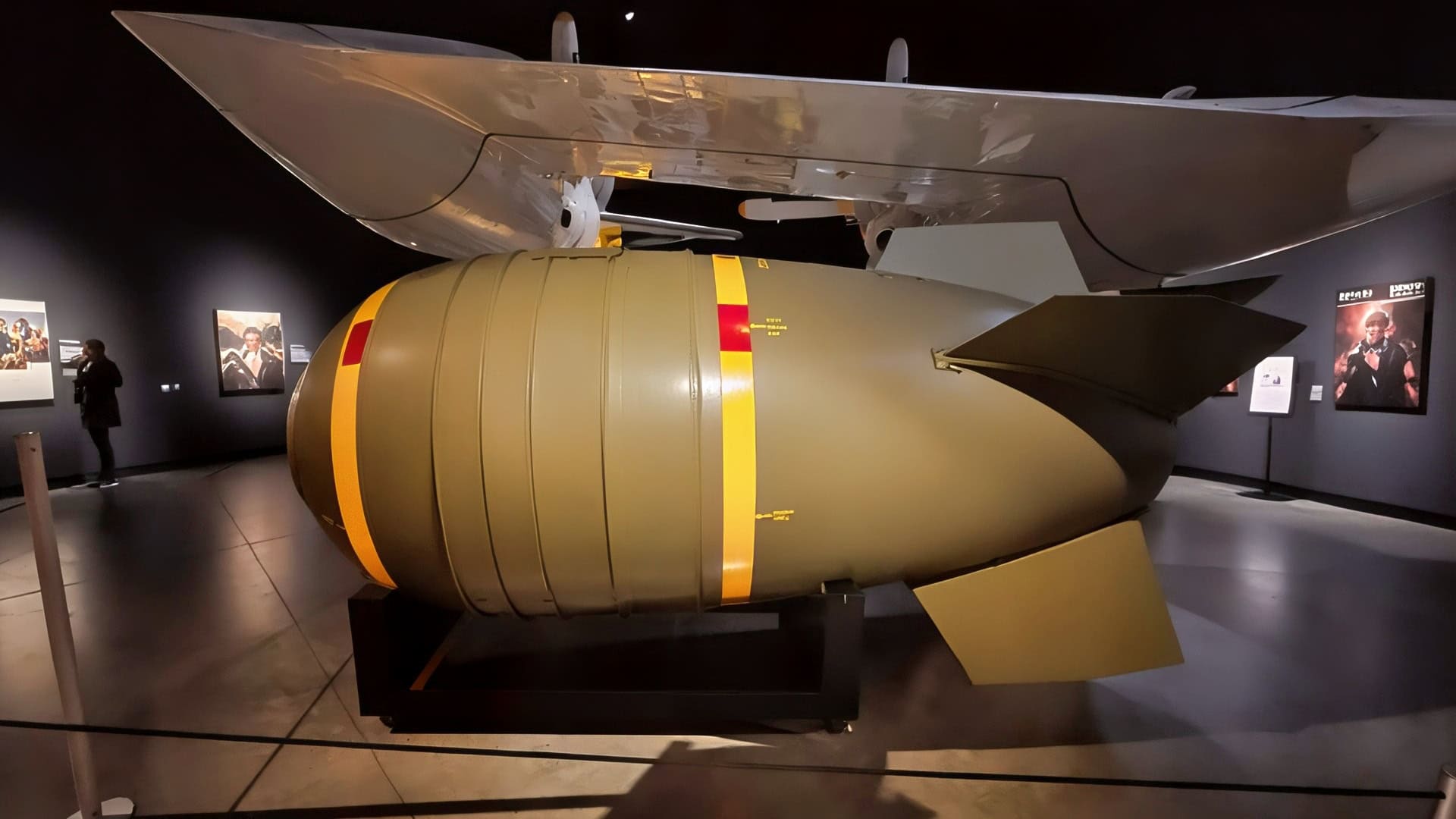
Catalyzed by Russia’s full-scale invasion of Ukraine, as well as American President Donald Trump’s vocal NATO skepticism, the alliance is contemplating an expansion of the nuclear weapon sharing agreement that forms the bedrock of the alliance’s security.
Though only in a very preliminary, hypothetical stage at the moment, the decision, if taken, would be one of the most significant changes to the alliance’s defensive posture since the end of the Cold War and dissolution of the Soviet Union.
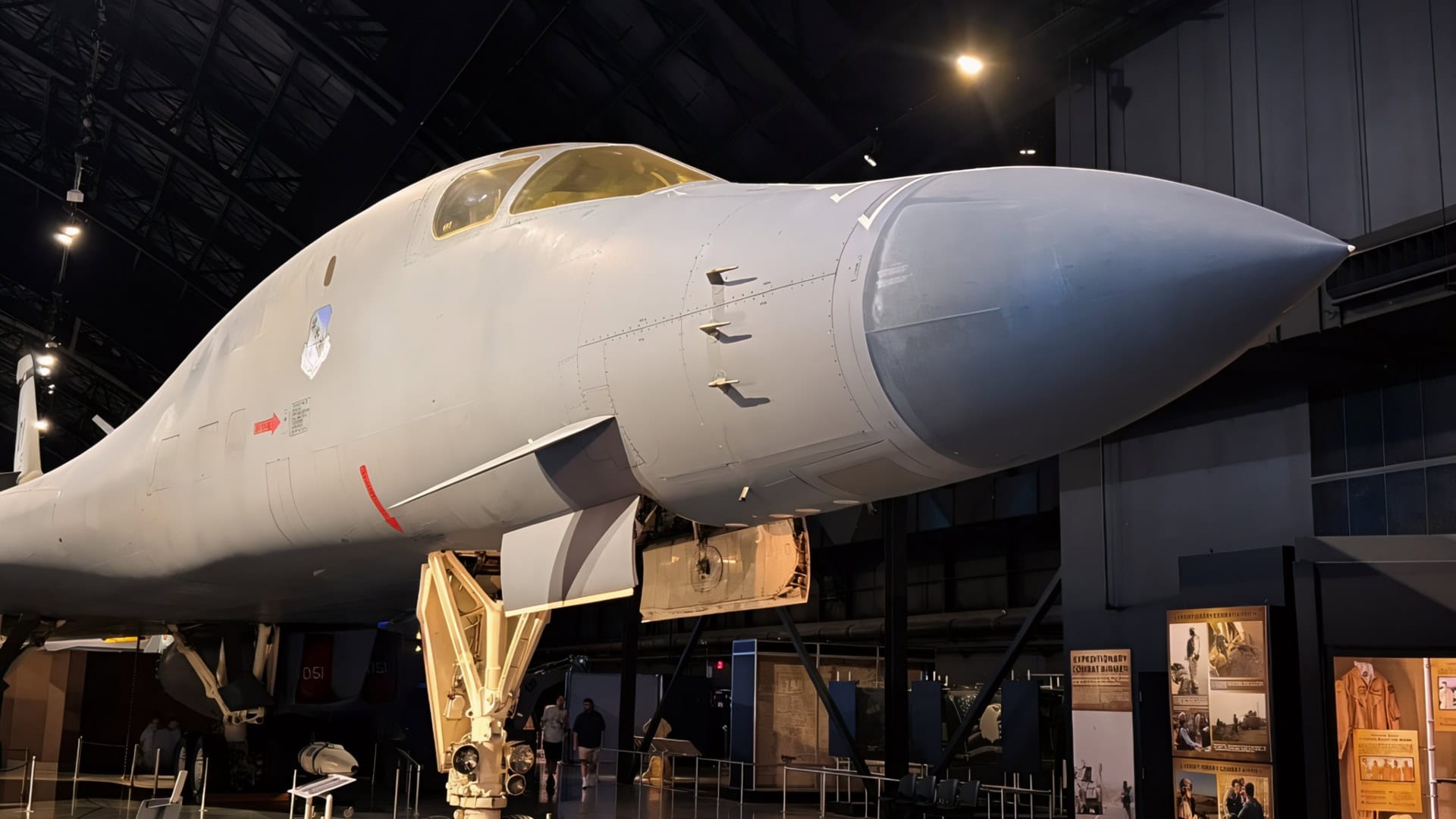
B-1B Lancer Bomber 19FortyFive Photoshoot Photo from National Museum of the U.S. Air Force
NATO’s Nuclear Sharing Agreement
NATO’s nuclear sharing agreement gives the allies “a platform” for… “non-nuclear Nato Allies to shape the Alliance’s nuclear policy and planning as a mean[s] to guarantee their security without acquiring nuclear weapons.”
American nuclear weapons — specifically, B61 gravity bombs — are deployed across the alliance in Belgium, Germany, Italy, the Netherlands, Turkey, and the United Kingdom.
Closely guarded by American troops, the alliance has three platforms available for nuclear weapons delivery from the air: F-35 stealth fighters, F-15s, and Tornado jets.
Although the weapons cannot be armed without permission from Washington, in a wartime scenario, European allies could conceivably deliver American nuclear weapons against an adversary on the battlefield.
Changing Times?
Despite the hand-wringing in European capitals caused by President Trump’s seemingly tepid support for the NATO alliance, the United States is mulling an expanded deployment of American nuclear weapons on the continent, the Financial Times reports.
Should the plan go forward, additional countries that count nuclear-capable bombers among their warplanes would see an expanded role within NATO in what is essentially an expanded nuclear-sharing agreement intended to assuage allies that American support for Europe will remain.
Where exactly additional nuclear weapons would be stored — which countries specifically — has not yet been decided, and the plan is at this stage only hypothetical.
But Poland has been vocal in its desire to host American nuclear weapons. Andrzej Duda, a former Polish president, has called for his country to host American dual-capable aircraft (DCA), which can deliver both conventional and nuclear weapons.
The Baltic countries are also reportedly open to hosting an expanded American nuclear presence on their soil as well.
France’s Forward Deterrence
Even if NATO does not witness an expansion of the American nuclear weapon umbrella on the continent, it would not necessarily spell the end of such an expansion.
One potential alternative would be for France to expand its nuclear alliance coverage. In a speech last month at the Île Longue naval base in Brittany, French President Emmanuel Macron offered to shift parts of France’s nuclear deterrent to other countries in Europe, part of what he called a strategy of “forward deterrence.”
“It could provide, depending on the circumstances, for the deployment of elements of our strategic forces on allied territory,” President Macron said.
If that plan comes to fruition, it would be a dramatic expansion of France’s nuclear umbrella and a surprising policy shift for a country that has historically favored a greater degree of independence in its foreign policy decision-making than other NATO members.
Paris infamously left NATO’s integrated military command structure in 1966 under French President Charles de Gaulle, returning only in 2009.
A Big Stick
During a press conference earlier this year, NATO Secretary-General Mark Rutte did not mince his words. Though it is “common understanding that whilst the US will pivot more towards other theatres,” the Secretary-General acknowledged, “the overall deterrence and defense in Europe has to stay the same.”
“So let me be crystal clear,” Rutte emphasized. “Allies’ commitment to Article Five is ironclad. Our resolve and ability to defend every Ally is absolute.
Were anyone to be foolish as to attack us, the response would be devastating.”
The plan, which is extremely confidential, has yet to become a concrete policy of the NATO alliance.
But with no end in sight to the war in Ukraine, these risks posed by the Russian military are too great to ignore — as is the prospect of a significant American withdrawal from the European continent.
It remains to be seen whether an expansion of the NATO nuclear umbrella will have a French or American accent, but interest in such an expansion certainly appears real. Time will tell if these presently embryonic plans come to fruition.
About the Author: Caleb Larson
Caleb Larson is an American multiformat journalist based in Berlin, Germany. His work covers the intersection of conflict and society, focusing on American foreign policy and European security. He has reported from Germany, Russia, and the United States. Most recently, he covered the war in Ukraine, reporting extensively on the war’s shifting battle lines from Donbas and writing on the war’s civilian and humanitarian toll. Previously, he worked as a Defense Reporter for POLITICO Europe. You can follow his latest work on X.