
JD Vance’s Iran Inspection Deal is No Triumph: Vice President JD Vance has taken charge of negotiations with Iran in Switzerland about the implementation of President Donald Trump’s Memorandum of Understanding with Iran over its nuclear program.
What Vance describes as a triumph or a sign of progress is anything but. Many Trump critics seek to score political points by noting that Vance simply restores inspections that occurred before Trump walked away from the 2015 nuclear agreement.
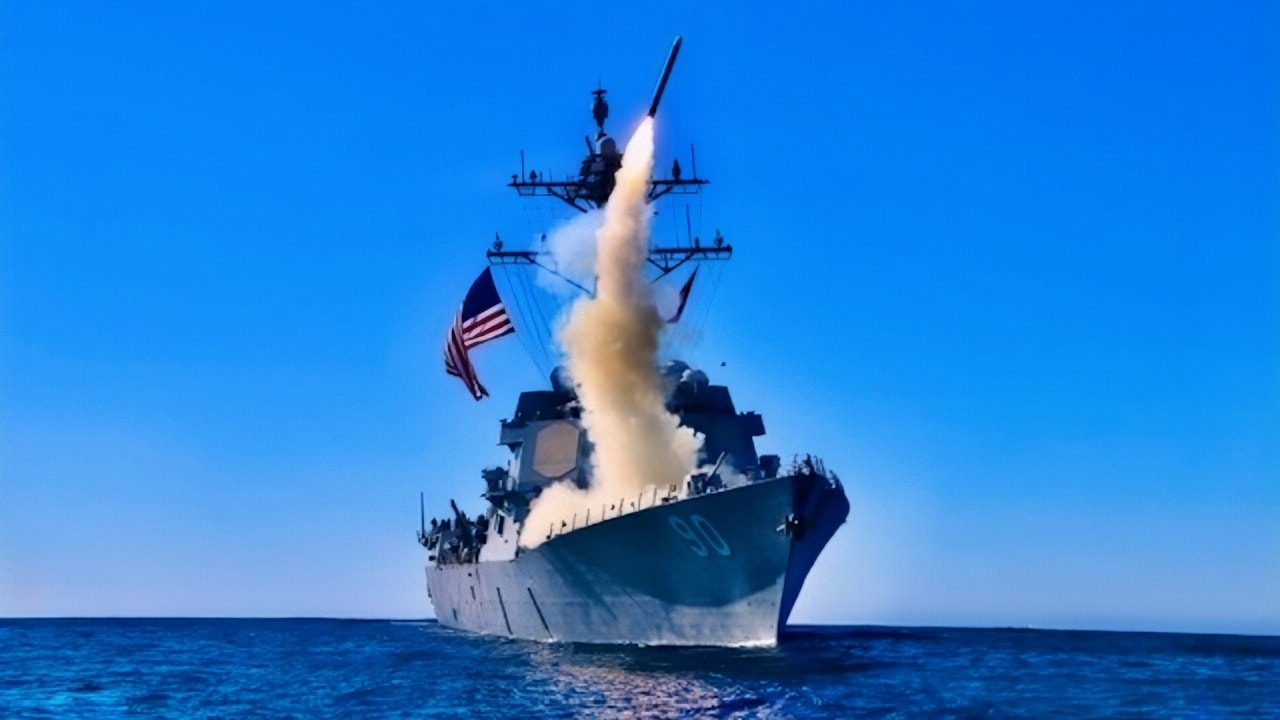
(Dec. 01, 2020) – The guided-missile destroyer USS Chafee (DDG 90) launches a Block V Tomahawk, the weapon’s newest variant, during a missile exercise. This event marked the first time a Block V Tomahawk missile was operationally tested, marking the Navy’s transition to a more advanced capability for the fleet. Block V includes an upgrade that will enhance navigation performance and provide robust and reliable communications. Chafee is currently assigned to Carrier Strike Group ONE and is homeported in Pearl Harbor. (U.S. Navy photo by Ens. Sean Ianno/Released)
The problem is deeper, though. International Atomic Energy Agency (IAEA) inspections are rooted not in the Joint Comprehensive Plan of Action, but rather in the Nuclear Non-Proliferation Treaty (NPT), which still applies to Iran. Indeed, it was the IAEA’s difficulty in ensuring Iran’s compliance with the NPT that first prompted it to refer Iran to the UN Security Council more than two decades ago, setting off a cascade that ultimately culminated in Operation Epic Fury.
What Vance sees as a diplomatic win loses its luster when recognizing that Iran is now receiving billions of dollars for accepting something it had already agreed to do decades earlier when it signed and later ratified the NPT. Precedents can be expensive. As proliferation again becomes a danger throughout the region, might Egypt, Turkey, or Saudi Arabia seek to extort $24 billion under the Vance precedent?
Even if pragmatism means accepting some enticement for Iran, Vance’s superficial understanding of the IAEA should raise concern. The IAEA has had some competent leaders who, unlike other UN agency heads, have been unwilling to sweep inconvenient facts under the carpet for diplomatic reasons.
Here, however, the devil is in the details. The problem with IAEA inspections is that they are limited to declared nuclear sites. If Iran doesn’t declare a site, the IAEA cannot inspect it. This is true even if U.S. or Israeli intelligence points to likely nuclear activity at a suspect site.
Indeed, while Vance looks at Iran’s temporary, theoretical acceptance of IAEA inspections as achieving a goal, he has little sense of Iran’s history of impeding the IAEA nor the IAEA leadership’s own self-constraints.
Prior to the 2003 Iraq war, Iraqi President Saddam Hussein repeatedly suspended IAEA inspections, leading, for example, to President Bill Clinton launching Operation Desert Fox, a multiday bombing campaign in 1998.
While Vance may hope for the best, U.S. national security requires determining how to prevent Iran from adopting the same strategy and, should Tehran go that route, how to respond.
U.S. diplomacy is at its weakest when the administration believes that its previous failures rested in the inability of its American predecessors rather than the agency and strategy of its adversaries. Vance may see an easy victory, but a good rule of thumb with Iranian diplomats is that if an agreement appears easy and complete, there is a problem or trapdoor to which Washington remains blind.
By all means, bring in the IAEA, but Vance’s deal is no triumph unless he can explain both what happens if Iran suspends inspections or kicks out inspectors and how the U.S. and IAEA will compel Iran to open its undeclared and suspect sites to the rigorous inspections it has always previously refused.
About the Author: Dr. Michael Rubin
Dr. Michael Rubin, a Director of Policy Analysis at the Middle East Forum, specializes in Iran, Turkey, and the Horn of Africa. His career includes time as a Pentagon official, with field experiences in Iran, Yemen, and Iraq, as well as engagements with the Taliban prior to 9/11. Mr. Rubin has also contributed to military education, teaching U.S. Navy and Marine units about regional conflicts and terrorism. His scholarly work includes several key publications, such as “Dancing with the Devil” and “Eternal Iran.” Rubin earned his Ph.D. and M.A. in history and a B.S. in biology from Yale University.